

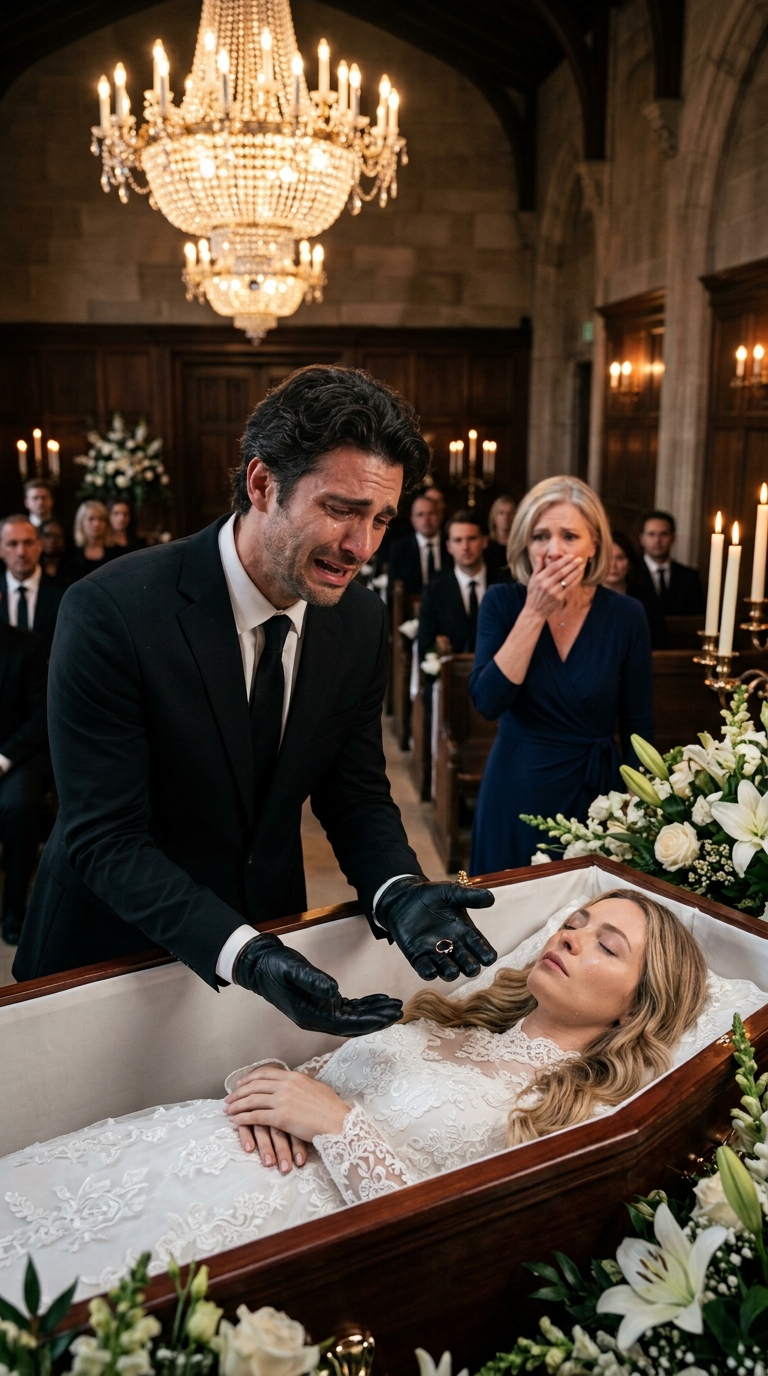
I kissed my wife’s cold forehead inside the coffin… and when I opened her tightly closed hand, I found a navy blue button torn away. I recognized it immediately: it belonged to my brother Rodrigo’s jacket.
PART 1
“Your wife died during childbirth… and the baby didn’t survive either.”
Those were the first words my mother said when I walked into my home, still holding a bouquet of white lilies for my wife.
For three weeks, I had been in Monterrey finalizing a deal to save our family vineyards. Every night, I pictured returning home to Camila. I imagined her smile, her hands resting on her swollen belly, and the way she would laugh while telling me our son had kicked again.
But when I entered our house in San Miguel de Allende, there was no laughter.
There was only a coffin standing in the center of the living room.
Black curtains covered the windows. Candles burned around the room as if someone had carefully created a scene of tragedy. The air carried the scent of melted wax, dying flowers, and something I could not yet identify.
My mother, Teresa Armenta, stood beside the fireplace wearing a flawless black dress. Her hair was perfectly arranged, and her lips were painted a red shade far too bright for someone in mourning. She was not crying. She was not even trying to pretend.
“Where is Camila?” I asked, even though the coffin had already given me the answer.
Teresa slightly turned her head toward it.
“There, son. Be strong.”
The lilies slipped from my hand and scattered across the floor.
I moved toward the coffin as if the entire room had fallen silent around me. Camila lay inside, pale and beautiful, her hair carefully placed on a white pillow. She looked almost as though she were sleeping.
But something was wrong.
Camila hated the way people positioned the dead like saints.
“When I die,” she once told me, “don’t make me look like a statue. I was a woman, not a decoration.”
And yet, one of her hands had been placed across her chest.
The other was tightly closed.
Too tightly.
I leaned closer and reached for it.
“Don’t disturb her,” my mother said.
It was not a request.
It was a command.
I looked at her from across the coffin.
“She is my wife.”
“There is nothing you can do for her now, Julian.”
Her coldness cut through my grief and left behind something much deeper. My mother had always believed I was too weak. She said I felt everything too deeply, that my brother Rodrigo had the strength required to lead a family like ours.
Camila always told me my calm was not weakness.
It was my shield.
I carefully opened my wife’s stiff fingers one by one.
Teresa stepped closer.
“I told you to leave her alone!”
Her voice made the staff in the room step back, but I did not stop.
Then I saw what Camila had been hiding.
A small dark button, ripped away with force.
Beneath her nails was a thin strand of navy-blue fabric.
My mother was dressed in black.
But Rodrigo almost always wore navy-blue jackets.
I placed the button into my pocket before anyone could notice.
“I want to see the medical reports,” I said.
Teresa let out a dry laugh.
“Reports? Your wife died. Your son died. Accept it and stop disgracing this family.”
That was when Rodrigo appeared from the hallway, a glass of whiskey in his hand. He wore sunglasses inside the house, as if mourning were just another expensive accessory.
“Julian,” he said in a rehearsed voice. “Don’t make a scene. It’s already sad enough that you were late to your own wife’s funeral.”
I looked at him.
A fresh scratch marked his neck.
A thin red line rested just below his jaw.
For the first time since entering the house, my hands stopped trembling.
“You’re right,” I said quietly. “I won’t make a scene.”
Rodrigo smiled.
So did my mother.
They thought they had destroyed me.
But there were two things they did not know.
First, Camila and I had signed a legal document six months earlier after discovering that someone had been stealing money from the vineyards.
Second, I had not returned home on the original schedule.
I had arrived two days earlier.
That night, I did not cry in front of them. I allowed my mother to discuss the funeral arrangements. I allowed Rodrigo to accept condolences as if my grief belonged to him. I listened as they talked about closing the coffin quickly, arranging a private funeral, and “not prolonging the pain.”
Then I locked myself inside my father’s old office and switched on the green desk lamp.
The safe remained hidden behind my grandfather’s portrait, exactly where Teresa believed nobody had searched for years.
Inside was the power of attorney Camila and I had prepared. If she died under suspicious circumstances, I would become the sole administrator of her assets, her shares, and any investigation related to her death.
Camila had never trusted my family.
Neither had I.
Before our wedding, my mother tried to convince me to surrender my grandfather’s inheritance. Rodrigo wanted to sell the vineyards to a foreign company. Camila uncovered fake invoices, hidden transfers, and signatures that no one could explain.
One night, while we were reviewing documents at the kitchen table, she told me,
“Your mother isn’t afraid of losing you, Julian. She’s afraid of losing control.”
Now I understood.
But it was far too late.
I picked up my phone and called Dr. Ana Lucía Méndez, Camila’s friend and the director of the private hospital where my mother claimed my wife had died.
She answered on the second ring.
“Julian,” she whispered. “I’ve been trying to reach you for hours.”
My blood turned cold.
“Tell me the truth.”
A long silence followed.
Then her voice became even lower.
“Camila was not brought to the hospital properly admitted. No identification. No file. No admission bracelet. Your mother demanded an immediate cremation. I refused.”
The room seemed to spin.
“And my son?”
Dr. Ana Lucía took a shaky breath.
“I can’t say this over the phone. Come tomorrow at six in the morning. Use the emergency entrance. And don’t tell anyone.”
When I ended the call, I stared at my reflection in the dark window.
I no longer saw a shattered widower.
I saw a man carrying the first clue his dead wife had left behind.
And I knew the darkest truth was still waiting.
## PART 2
The following morning, my mother arranged a reading of Camila’s supposed will.
She held it in the living room, the same place where the coffin had stood the previous night, as if the house already belonged to her. Rodrigo sat with one leg crossed over the other, a scarf wrapped around his neck even though the room was warm.
One button was missing from his navy jacket.
I noticed.
He noticed me noticing.
The family notary, Efraín Salcedo, opened a leather folder and cleared his throat.
“Mrs. Camila Ríos de Armenta signed this document two days before giving birth. It transfers all of her shares, properties, and patrimonial rights to the Armenta family, represented by Mrs. Teresa Armenta.”
My mother lowered her eyes with false humility.
“Camila wanted to protect the family name,” she said.
I extended my hand.
“Let me see it.”
The notary hesitated, but he had no valid reason to refuse. I took the document and examined the signature.
A cold, controlled anger moved through me.
“How interesting.”
Rodrigo lifted an eyebrow.
“What?”
“Camila was left-handed. This signature was written with the right hand.”
The notary froze.
My mother sighed as if I were a child causing unnecessary trouble.
“Grief is making you paranoid.”
“Maybe,” I said.
I placed the paper back on the table.
Rodrigo smiled.
“Rest, brother. No one will blame you for being confused.”
I let them talk. I let them laugh at my silence. I let them believe they had already won.
At 5:40 the next morning, I left the house without warning and drove to Querétaro with the button still in my pocket.
Dr. Ana Lucía was waiting near the emergency entrance. She was not wearing a lab coat. Her face looked exhausted, and her eyes were red.
“We don’t have much time,” she said.
She guided me through a side hallway and into a locked office. On a metal table was an evidence bag.
Inside was Camila’s phone.
The screen was shattered.
“They found this hidden beneath her clothes,” Ana Lucía explained. “It was never included in the report your mother submitted. She wanted it destroyed. But one of the nurses saved it.”
“Does it still work?”
“We recovered one file.”
She handed me a pair of headphones.
I was not prepared to hear my wife’s voice again.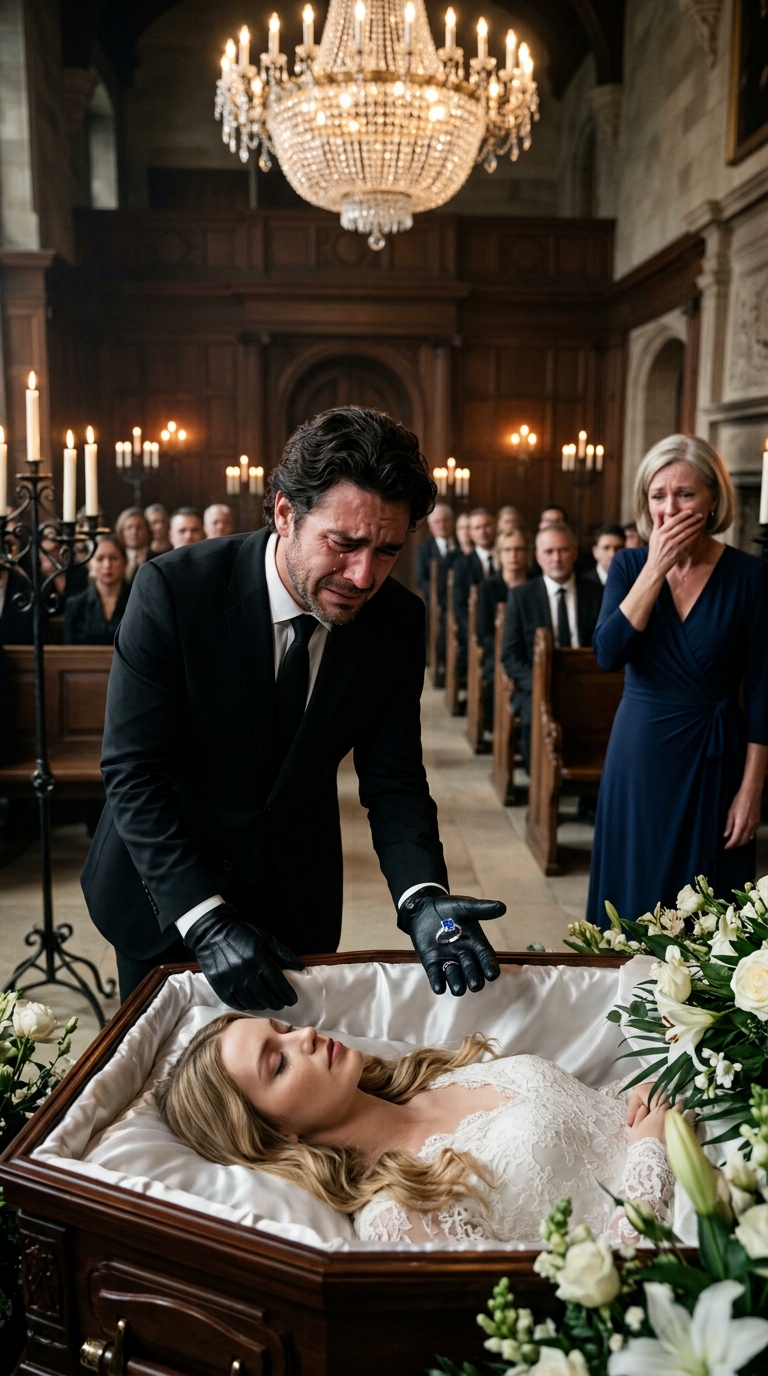
The video started shaking. A portion of our bedroom appeared on the screen. Camila was breathing heavily, struggling to remain awake.
Then Rodrigo’s voice filled the recording.
“Sign it, Camila. Julian will never know.”
My stomach tightened.
Then my mother spoke.
“When the baby is born, we’ll say it was a complication. No one questions a grieving mother.”
Camila forced out a response,
“My son does not belong to you.”
Rodrigo moved closer to the phone, unaware that it was recording.
“That child would inherit Julian’s share. We can’t allow that.”
Then a loud crash echoed.
The video stopped.
I took off the headphones.
I did not cry.
Not yet.
“Where is my son?” I asked.
Dr. Ana Lucía’s face filled with sadness.
“Come with me.”
She opened another door and led me into a restricted newborn care area. Gentle lights filled the room. Small machines beeped softly. Nurses moved carefully between the beds.
Inside an incubator, wrapped in a white blanket, was my son.
Alive.
Tiny.
Breathing.
My legs almost gave way.
“I registered him under temporary medical protection,” the doctor said. “No one outside this hospital knows he survived. Your mother tried to record him as stillborn without an autopsy. I refused.”
I stepped closer to the glass.
My son moved one tiny hand.
That was when I finally understood Camila’s last action.
She had not kept her hand closed only because of pain.
She had closed it to lead me to the truth.
I placed two fingers against the glass.
“Hello, Mateo,” I whispered. “Dad is here.”
Ana Lucía gave me another folder.
“There is more. Medical findings that do not match the story your family told. DNA found beneath Camila’s fingernails. And the notary received three transfers from an account connected to Rodrigo.”
I opened the folder and saw the evidence.
Copies.
Dates.
Stamps.
Proof.
Everything was there.
My mother and brother had not only taken Camila away from me.
They had tried to erase my son.
“What do you need me to do?” I asked.
Ana Lucía held my eyes.
“Hold on until the funeral. The prosecutor’s office has already been informed. We need them to feel secure enough to appear, talk, and not escape.”
The funeral was scheduled for the next day.
My mother had already told me.
“It will be quick and private,” she said when I returned home. “Camila doesn’t need more spectacle.”
Rodrigo came over and placed a hand on my shoulder.
“Let her go, Julian.”
I looked at his navy jacket.
Then at the missing button.
For the first time, I nearly smiled.
“Of course,” I said. “Tomorrow I’ll give her the farewell she deserves.”
Rodrigo did not understand.
Neither did my mother.
But somewhere deep down, I knew Camila did.
## PART 3
The funeral took place in a private chapel outside San Miguel.
My mother selected white flowers, soft music, and a limited guest list. She wanted control over every expression, every tear, and every word spoken near Camila’s coffin. She requested no photographs, no one standing too close, and a ceremony lasting less than thirty minutes.
Teresa Armenta had always confused elegance with innocence.
Rodrigo arrived late, wearing dark glasses and a new navy jacket.
Not the same one as before.
That confirmed what I already knew.
He was starting to feel afraid.
I stood beside Camila’s coffin when my mother approached.
“Julian,” she whispered through clenched teeth. “Do not ruin this.”
I looked at her.
“Ruin what, Mother? The funeral or your plan?”
Her expression barely changed.
But her eyes did.
For one brief moment, I saw the real Teresa.
Not the grieving mother.
Not the respected widow.
Not the family matriarch.
A woman trapped by her own actions.
“Grief is making you talk nonsense,” she muttered.
“That’s what you said yesterday.”
The priest finished the prayer. Some guests made the sign of the cross. Others kept their eyes on the floor, uncomfortable with a tragedy they did not fully understand.
When the priest asked whether anyone wanted to say a few words, my mother stepped forward.
I moved first.
“I will.”
Teresa grabbed my arm.
“No.”
I calmly removed her hand.
“Yes.”
I stood in front of everyone. Vineyard employees. My father’s former business partners. Camila’s friends. Women from her prenatal classes. And in the third row, notary Salcedo sat sweating despite the cold chapel air.
I took a breath.
“Camila deserved an honest goodbye.”
My mother stiffened.
“Julian, this is not the time.”
I looked straight at her.
“No. This is exactly the time.”
I reached into my pocket and pulled out the button.
Then I raised it for everyone to see.
Rodrigo stepped backward.
“What are you doing?”
“Saying goodbye to my wife.”
A whisper moved through the chapel.
“This button was in Camila’s hand when I returned home. Not inside a report. Not inside an evidence bag. In her hand. She tore it from the person who was with her before she died.”
Rodrigo let out a fake laugh.
“That proves nothing.”
“Not yet.”
I nodded toward the entrance.
The chapel doors opened.
Two ministerial agents walked in with a prosecutor from Querétaro, Dr. Ana Lucía Méndez, and a forensic specialist carrying a laptop.
My mother’s face turned pale.
Notary Salcedo stood as if he planned to leave, but an officer stepped beside his seat.
“This is disrespectful,” Teresa said loudly. “We are at a funeral.”
The prosecutor answered calmly.
“We are at a location connected to an investigation involving homicide, document forgery, coercion, and concealment of a minor’s identity.”
The word minor struck the chapel like a blow.
Rodrigo stared at me.
“Minor?”
I slowly walked toward him.
“My son is alive.”
I will never forget his expression.
It was not happiness.
It was fear.
And that fear revealed more than any confession could have.
My mother opened her mouth, but nothing came out.
The prosecutor connected Camila’s recovered phone to the chapel screen. The footage was shaky, but clear enough. Camila’s heavy breathing filled the room.
Then Rodrigo’s voice echoed throughout the chapel.
“Sign it, Camila. Julian will never know.”
Someone gasped.
Then my mother’s voice followed.
“When the baby is born, we’ll say it was a complication. No one questions a grieving mother.”
Several people turned toward Teresa in disbelief.
On the recording, Camila barely managed to whisper,
“My son does not belong to you.”
Rodrigo shouted, “It’s fake!”
Dr. Ana Lucía stepped forward.
“No. The file has chain of custody, date, location, audio authentication, and forensic recovery. The medical findings also contradict the story provided by the family.”
My mother attempted to move toward the exit.
An officer stopped her.
“Teresa Armenta, you are being detained for probable involvement in homicide, document falsification, coercion, and attempted concealment of a minor’s identity.”
“I did everything for this family!” she screamed.
Her voice echoed against the chapel walls.
I looked at her without moving.
“No. You did it for money.”
Rodrigo tried to force his way past the officer. It was desperate and uncoordinated. Within seconds, they restrained him against a wooden bench. His sunglasses fell onto the floor.
The man who had always acted as if he could never be touched began to cry.
“Julian,” he said, his voice breaking. “You don’t understand. Mother said if that baby was born, everything would be over.”
“Yes,” I replied. “Your theft would be over.”
The prosecutor opened another folder.
“There are transfers to notary Salcedo, altered hospital records, an attempted cremation without autopsy, and DNA evidence recovered from the victim. Rodrigo Armenta is also under arrest.”
The notary collapsed onto the bench.
“I didn’t know she would die,” he stammered. “They only asked me to prepare paperwork.”
Teresa turned toward him with fury.
“Be quiet!”
But it was already too late.
The chapel had witnessed the truth breaking through.
The family had heard everything.
And Camila, the woman they believed they had silenced, had left more strength inside one small button than they had ever possessed through their wealth and family names.
As they took my mother away, she screamed my name.
“Julian! I am your mother!”
For the first time in my life, those words had no control over me.
I looked toward Camila’s coffin.
“And she was my wife.”
I did not smile.
Justice does not restore the warmth of a loved one’s hand. It does not bring back laughter. It does not fill the silence of an empty home.
But sometimes justice is the only thing that remains to stop love from being buried a second time.
Six months later, the house no longer carried the scent of candles or deception.
I removed the black curtains and opened every window. I sold the furniture my mother had chosen and filled the living room with plants, sunlight, and pictures of Camila smiling with her hair down, exactly the way she loved it.
Rodrigo remained in custody awaiting trial. Teresa tried to place all the blame on him, but her own words only made her situation worse. Salcedo lost his license and agreed to cooperate with the prosecutors.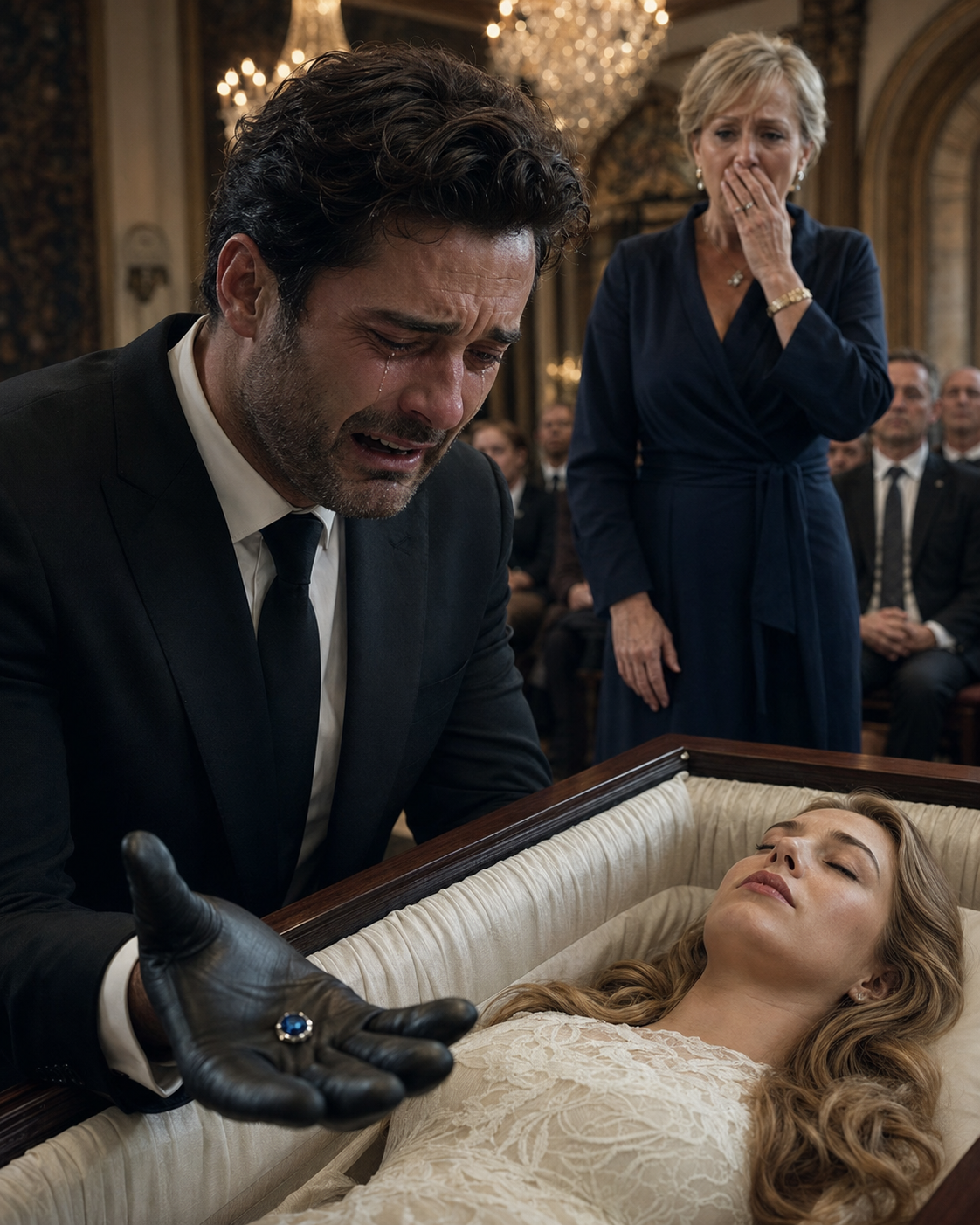
The stolen shares were returned—not to me, but to the foundation Camila had always dreamed of creating for pregnant women who had no family support.
I named it after her.
The Camila Ríos Foundation.
Every morning, I carried Mateo into the garden. He was still tiny, but strong. He had his mother’s eyes and held onto my finger with the same stubborn grip that had saved him.
One afternoon, beneath the jacaranda tree Camila planted when she discovered she was pregnant, I opened a small wooden box.
Inside were her wedding ring and the navy-blue button.
I did not keep the button because I hated it.
I kept it because it reminded me that Camila had never surrendered.
Not even at the very end.
Mateo wrapped his tiny fingers around mine, and for the first time, I felt a small, unfinished, but genuine sense of peace.
I looked toward the clear San Miguel sky and whispered,
“Your mother won, son. She just needed me to understand her final clue.”
