

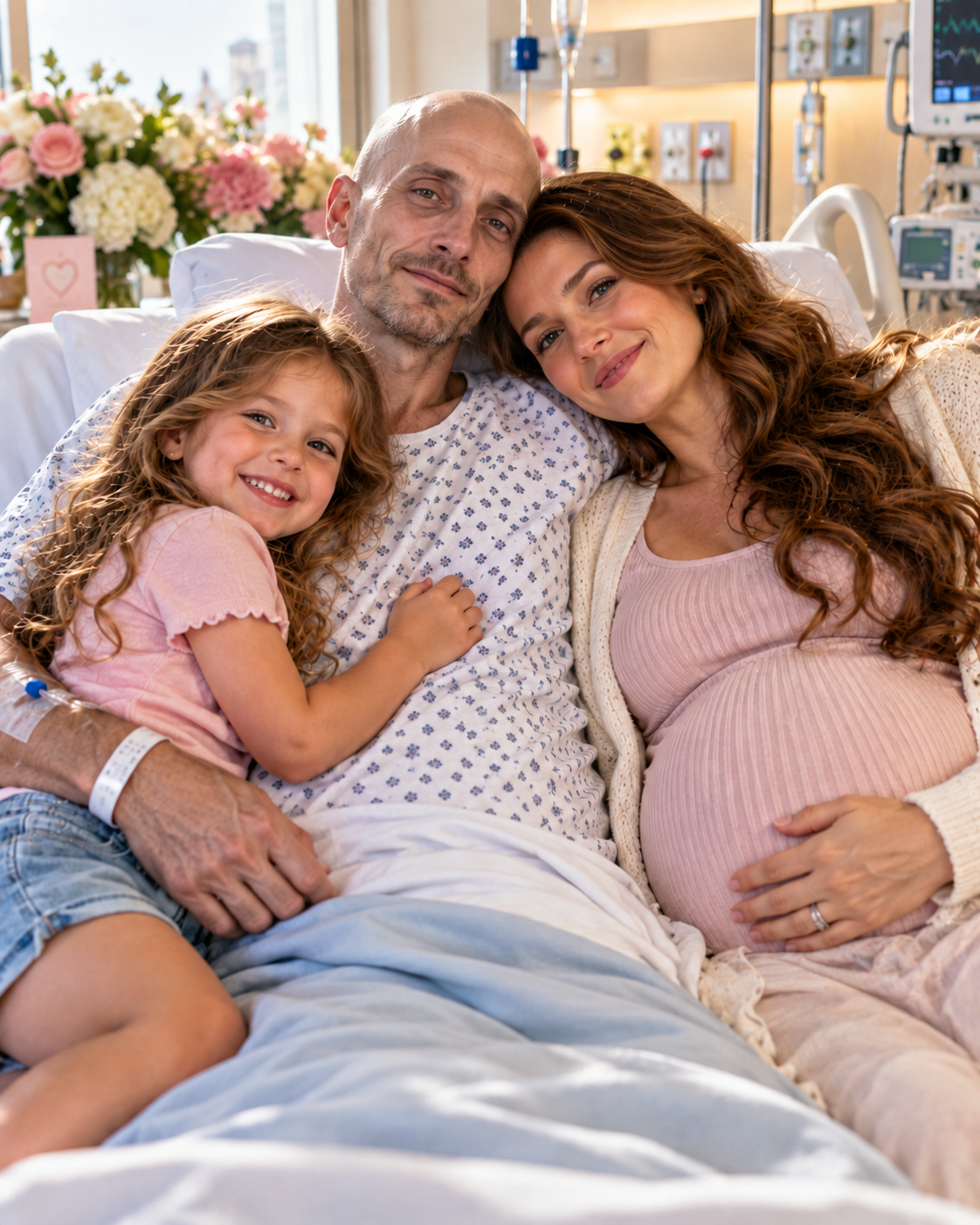
PART 1: THE MYSTERIOUS WOMAN AT MY DOOR
Simon died while I was six months pregnant, leaving me with two children to think about and more questions than I expected. Then a stranger appeared with something he had hidden from me.
I was thirty-five and six months pregnant with our second daughter. Our four-year-old, Sadie, still believed Daddy was going to get better because that was what grown-ups did. For eight months, my life had been lists consisting of medication times, oncology appointments, insurance calls, bills, Sadie’s preschool schedule, and my prenatal appointments.
Simon watched me sorting pills at the kitchen table. “You know you don’t have to control every second of the day, right?”
“I am six months pregnant, Sadie is four, and my husband has cancer,” I answered softly, placing another pill into the organizer. “Which part should I stop controlling?”
“Maybe start with me,” he suggested with a faint smirk.
“You are the least trustworthy one,” I replied, forcing a smile.
“We have been together since high school,” Simon reminded me gently.
“Exactly, so I have evidence,” I countered without hesitation.
He smiled tiredly. “You are terrifying.”
“Good, because cancer should be terrified of me,” I told him fiercely.
He laughed, then coughed until he had to grip the edge of the table tightly. That was us, where I organized and Simon joked, while neither of us said the obvious thing out loud.
During his last few months, Simon started disappearing for long stretches of time.
“Where were you?” I asked him one afternoon when he walked back through the front door.
“Just out,” he replied quietly.
“For three hours?” I questioned, searching his exhausted face.
“I needed air,” he claimed softly.
“You can barely walk through the local grocery store without stopping to rest,” I reminded him, pointing toward his heavy coat. “What is in your jacket?”
“Nothing,” he insisted smoothly.
“Those are papers,” I pointed out, noticing the thick edges sticking out of his inner pocket.
“Gemma,” he sighed softly, reaching out to touch my arm.
“And you were on your laptop at two this morning,” I added, feeling the anxiety rising in my chest.
He kissed my forehead tenderly. “Please don’t interrogate the dying man.”
“I hate that joke,” I whispered, closing my eyes for a brief moment.
“I know,” he replied softly.
“Whatever you are doing, you can tell me,” I begged him gently.
“I wish I could,” he confessed, staring down at his hands.
“Then tell me right now,” I urged him.
He looked down at the documents tucked inside his coat. “You already have enough to carry.”
“That is not your decision to make,” I insisted immediately.
“It should be sometimes,” he replied, looking into my eyes. “If someone needed help tomorrow, you would forget to ask whether you could afford to give it.”
“That sounds like a compliment,” I said softly.
“It scares me,” he confessed sincerely.
“Why does it scare you?” I asked him quietly.
“Because you never know when to let someone else be the problem,” he explained quietly.
I thought he deserved one corner of his life where cancer and I were not watching him constantly. That decision became the first thing I regretted after he died.
Five weeks later, his condition got much worse very quickly.
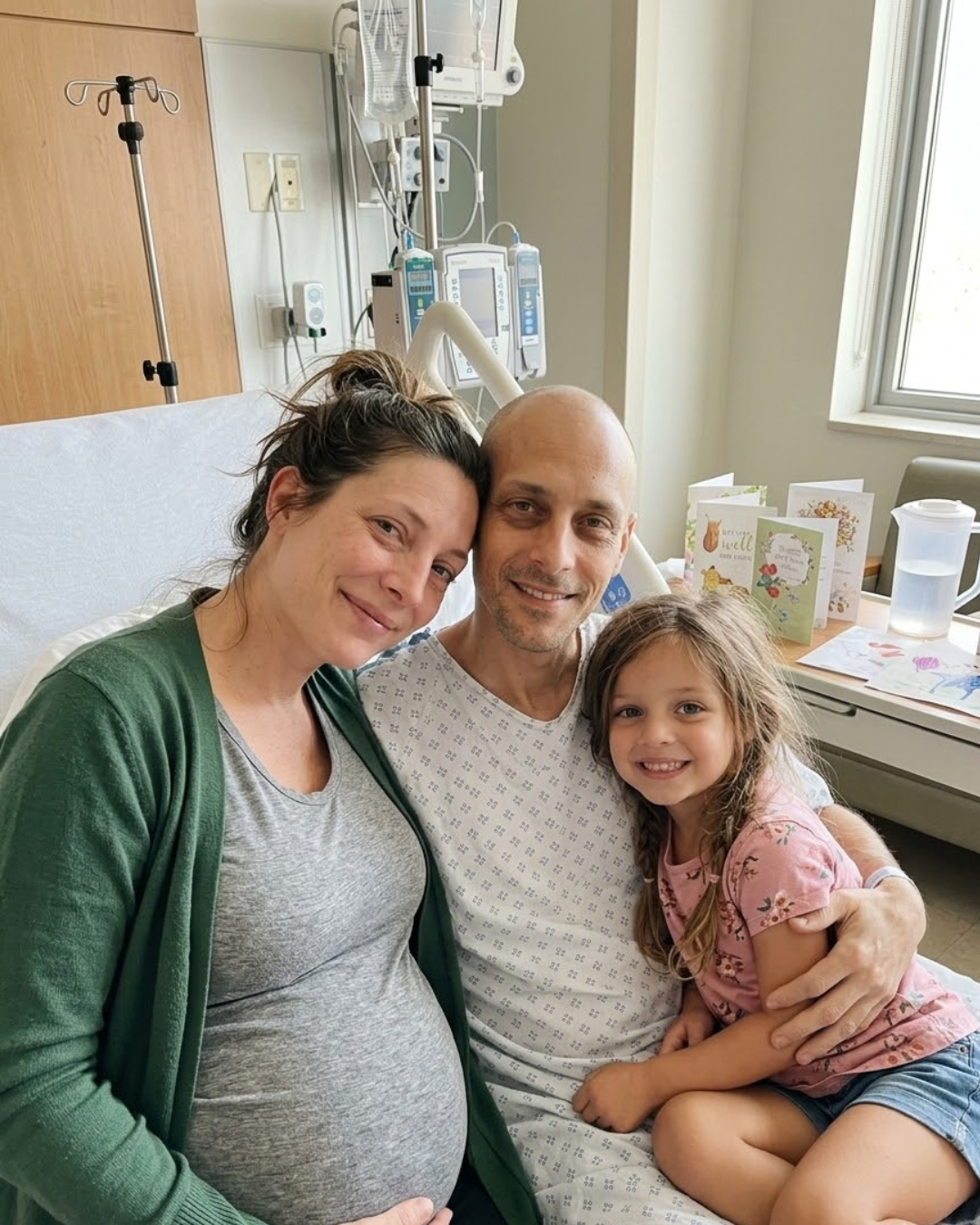
I held his hand tightly in the quiet hospital room.
“You look scared,” he whispered softly, barely able to lift his fingers.
“So do you,” I replied, brushing his pale hand with mine.
“I am allowed to be,” he murmured softly.
“So am I,” I told him, fighting back my tears.
He almost smiled. “You will be okay.”
“Don’t say that,” I begged him, shaking my head.
“You will,” he repeated with certainty.
“No, Simon,” I whispered softly.
“Promise me you will keep going,” he said, squeezing my fingers with the little strength he had left.
“I don’t know how,” I admitted through tears.
“You will figure it out, because you always do,” he reassured me.
Those were the last clear words he said to me before he slipped away.
Three days later, I sat at the kitchen table with a heavy funeral bill and two overdue notices spread out before me.
The woman from the bank cleared her throat awkwardly. “There isn’t enough left to cover next month, Gemma.”
“I know,” I answered quietly, looking down at the numbers.
“And the loan against the house…” she continued hesitantly.
“I know about the loan,” I interrupted gently.
“Do you have any other savings?” she asked me softly.
“We spent them all,” I admitted.
“Anything you could sell?” she inquired, scanning the room.
“I already sold my jewelry,” I told her honestly.
“I am so sorry,” she whispered.
“So am I,” I replied, staring at the financial paperwork.
“Was it for his medical treatment?” she asked carefully.
“Yes,” I answered quietly. “When someone offers one more treatment, you don’t ask whether you can afford hope.”
She went quiet, understanding that when hope dies, the bills stay anyway.
A week after the funeral, I returned to St. Jude Regional Hospital to retrieve Simon’s remaining belongings.
A nurse named Brenda handed me a clear plastic bag. “I am so sorry for your loss, Gemma.”
“Thank you, Brenda,” I replied, holding the bag against my side.
Inside, I found his watch, his phone charger, his toiletries, a paperback novel, and a gray women’s cardigan sweater.
“This cardigan isn’t mine,” I said, holding up the soft fabric with confusion.
Brenda looked at the cardigan in my hands. “I thought it belonged to the woman who visited him frequently.”
“What woman?” I asked, my heart stopping for a moment.
“I assumed she was family,” Brenda explained carefully.
“Simon didn’t have any family left,” I told her, feeling a cold wave of suspicion.
“I am sorry,” Brenda said quickly.
“How often was she here?” I demanded gently.
“Several times, and sometimes she stayed for a few hours,” Brenda recalled.
“What did she look like?” I asked immediately.
“She had dark hair and looked to be in her early forties,” Brenda answered.
“Did they argue while she was here?” I pressed further.
“Not that I ever saw,” Brenda replied softly.
“What did they do during those visits?” I asked, my mind racing.
“Mostly talked, and there were usually papers spread out everywhere,” Brenda noted.
“Papers?” I repeated, remembering the hidden documents in Simon’s coat.
“Yes,” Brenda confirmed with a node.
“Can I see the security footage?” I asked eagerly.
“I can’t show you hospital surveillance,” Brenda told me gently.
“Then tell me who she was,” I pleaded softly.
“I honestly don’t know her name,” Brenda replied apologetically.
After several conversations with hospital administration staff, I was finally allowed to view a few minutes of the footage.
“I have never seen her before in my life,” I whispered, staring at the monitor screen.
“She came in carrying that blue folder,” the staff member explained.
“How long did she stay?” I asked, watching her image on screen.
“Almost two hours,” he replied quietly.
“And that clip there?” I asked, pointing to another file timestamp.
“That was the following day,” he said gently. “She is crying in that segment.”
“Were they alone in the room?” I asked, feeling my stomach knot up tight.
“Gemma…” he started softly.
“Were they?” I insisted loudly.
“Mostly,” he admitted reluctantly.
I stared at the screen, feeling an overwhelming weight crash down on me. For three long days, I replayed Simon’s secret drives, hidden papers, and late-night calls in my mind.
At two in the morning, I whispered into the empty bedroom darkness, “Were you cheating on me?”
I hated myself for asking a question like that to a dead man.
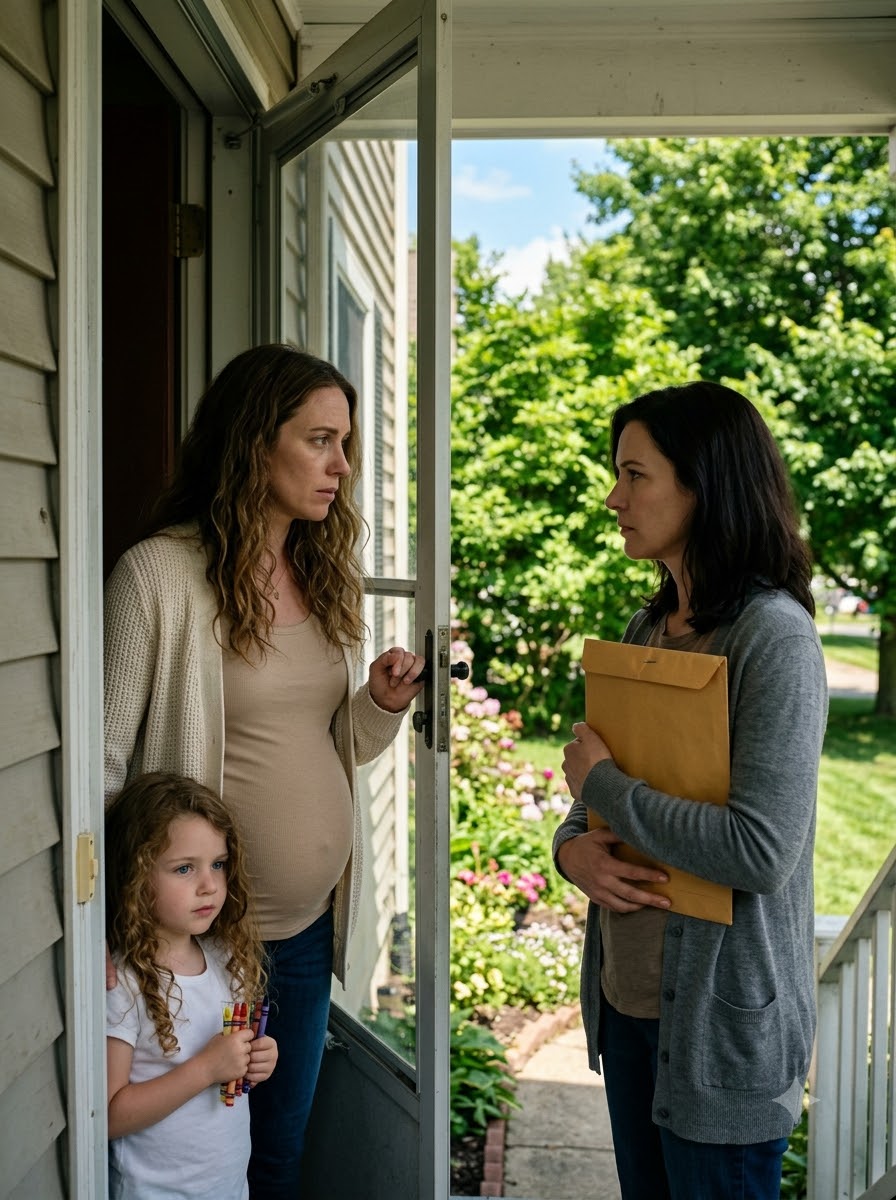
The next morning, someone knocked firmly on my front door. Sadie was sitting at the kitchen table with her crayons.
“Mommy, who is here?” Sadie asked without looking up.
“I don’t know, baby,” I said, walking toward the entryway.
I opened the door, and my breath caught in my throat. It was her, the woman from the hospital footage.
She held a thick brown envelope tightly against her chest. “Are you Gemma?”
“Who are you?” I demanded, gripping the edge of the door.
“My name is Nora,” she replied calmly.
“Why were you visiting my husband in the hospital?” I asked bluntly.
“Simon asked me to bring you this,” Nora said, gesturing toward the brown envelope.
“That wasn’t my question,” I said, my voice shaking with rising frustration.
“I know,” Nora replied, holding out the envelope toward me. “He asked me to give this to you only after his death, never before.”
“What is in there?” I asked, refusing to reach out yet.
Nora looked at me strangely. “So you really don’t know what he left you?”
