

PART 1
“Get your black ass up when I’m talking to you.”
“Sir, I’m giving my testimony.”
“What testimony? You got nothing worth hearing. Ha!”
He erupted into mocking laughter.
Then, bam!
She didn’t move.
“You know what you are. You’re just another loud, lying black woman wasting this court’s time.”
“I’m just telling the truth, sir.”
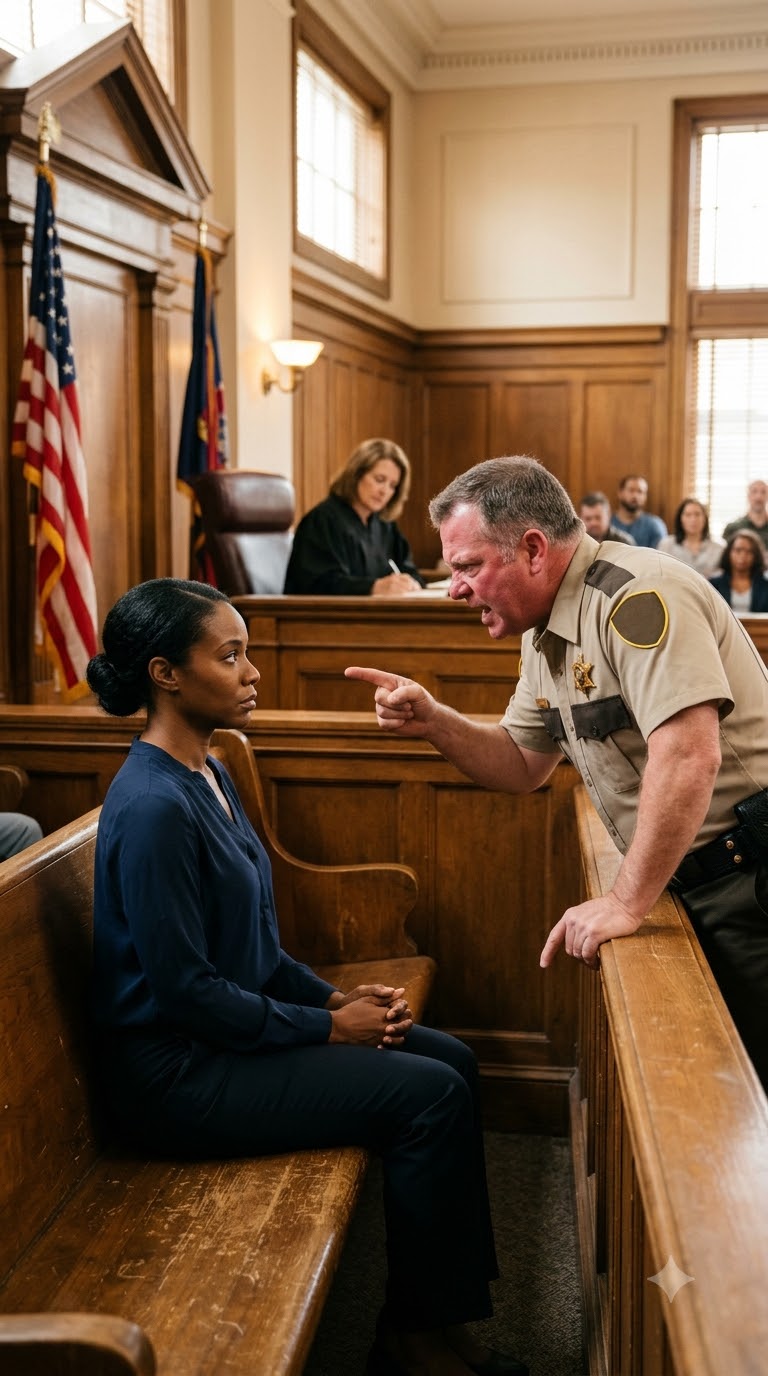
“You don’t know truth. Your kind never does.”
He slapped her across the face with an open hand while she sat on the witness stand, in full view of the judge, the jury, and nearly a hundred spectators. The crack of his palm echoed through the courtroom.
She didn’t cry. She didn’t even reach up to touch her cheek.
Instead, she slowly turned her head back toward him and met his stare without flinching.
What followed made every attorney in that courtroom stop writing.
But the story had actually begun three months before that moment.
PART 1
It was a Tuesday evening in Richmond County, one of those quiet places where nearly everyone knew everyone else’s business, where the sheriff’s department followed traditions that few dared question, and where uncomfortable inquiries were usually met with silence.
Iris Coleman was driving along Route 9, traveling at exactly the posted speed limit. Her windows were rolled up, and soft music filled the car.
It should have been an uneventful trip on an otherwise ordinary evening.
Nothing about her behavior was suspicious.
But Iris was a Black woman traveling alone through a part of the county where, apparently, that was enough to attract unwanted attention.
Without warning, blue emergency lights illuminated her rearview mirror.
There was no siren.
Only the flashing lights.
Iris calmly steered onto the shoulder, put the vehicle in park, and rested both hands visibly on the steering wheel.
She was following the instructions her mother had given her when she turned sixteen, the same precautions countless Black parents teach their children—not because the law requires them, but because those simple actions might mean the difference between getting home safely and never returning.
An officer walked toward the driver’s side window.
He didn’t identify himself.
He didn’t explain why she had been stopped.
Instead, he barked an order.
“License and registration. Now.”
Iris slowly moved her hand toward the glove compartment, taking care to make every movement obvious.
That was the instant everything went wrong.
According to the arrest report later submitted by the sheriff’s department, Iris Coleman had made an abrupt, aggressive movement inside her vehicle.
The report claimed she had refused to comply with verbal commands.
It also stated that the officer had used only the minimum amount of force required to guide the suspect to the pavement and place her in handcuffs.
Guide.
That was the precise word written in the report.
As though he had been helping her.
As though throwing her onto the road had somehow been an act of assistance.
But the reality was entirely different.
The officer reached through the open window and grabbed her arm.
Then he dragged her violently from the driver’s seat.
Her knee struck the asphalt first.
Her chin followed.
Her palms scraped across the rough pavement.
The officer pressed her face against the roadway and secured handcuffs around her wrists while she repeatedly asked, in a voice that remained remarkably controlled:
“What did I do? Can you please tell me what I did?”
He never answered.
Instead, he arrested her for obstructing a peace officer and resisting arrest.
Both charges were dropped within forty-eight hours.
The county made no attempt to prosecute either accusation.
But the bruises on her chin and knee, together with the thin scar that remained across her left palm, lasted considerably longer.
Iris Coleman filed a civil rights lawsuit against Ridgemont County.
She wanted the truth heard in court.
Eventually, she got that opportunity.
What happened afterward, however, would expose something far more disturbing than one unjustified traffic stop.
The trial opened on Monday morning inside the Ridgemont County Courthouse.
The courtroom was modest, with dark wooden walls and an American flag displayed behind the judge’s bench.
It was the kind of room intended to inspire faith in the justice system.
Judge Eleanor Watts presided over the proceedings.
Nearly sixty years old, she had earned a reputation for maintaining strict order.
She disliked interruptions.
She refused to tolerate unnecessary delays.
And she expected every person appearing before her to behave professionally.
The county had hired Graham Ashford as its defense attorney.
Ashford was in his sixties, with neatly combed silver hair and a suit that probably cost more than most local residents earned in a month.
He had spent decades winning cases in the region.
He spoke with measured confidence.
He smiled easily.
And whenever he addressed the jury, he looked directly at each juror, projecting the warmth of a trusted family friend telling a familiar story.
His opening statement carefully presented Iris Coleman as the problem.
He called her agitated.
He characterized her as unwilling to cooperate.
He claimed she had turned a routine traffic stop into an unnecessary confrontation.
Three times, he described the incident as an unfortunate misunderstanding, apparently hoping repetition would make that interpretation seem indisputable.
He assured the jury that the deputies had complied with departmental policy.
He maintained that their actions were reasonable given the danger they believed they faced.
Then he drew attention to something else.
Iris had no professional qualifications recorded in her arrest paperwork.
The report also contained no information about her employer.
Ashford allowed those details to hang in the air.
Long enough for the jury to make assumptions.
Unemployed.
That was the conclusion he wanted them to reach.
Someone without a job.
Without influence.
Without importance.
The injuries she had suffered were described using carefully sanitized language.
Guided to the ground.
Applied restraints.
Minimal contact.
Each expression sounded official, clinical, and harmless.
The words concealed the brutality of what had actually occurred.
There was a technical phrase for every action taken against Iris.
But nowhere was there an apology.
Then came an even more troubling development.
Sergeant Dale Whitmore, the senior officer overseeing the unit involved in Iris’s arrest, had been assigned as the courtroom bailiff.
His own deputies were responsible for the encounter that had brought her before the court.
Yet Whitmore stood barely six feet from the witness stand.
His uniform was immaculate.
His badge shone beneath the overhead lights.
A pistol remained secured in the holster at his side.
He was supposedly there to maintain order and protect the courtroom.
But Iris was expected to testify about misconduct involving officers under his authority while he stood close enough to intimidate her.
Before the trial began, her attorney, Nadine Foster, formally objected.
She argued that Whitmore’s presence created an obvious conflict of interest.
She explained that the assignment was intimidating.
And she insisted that a person accusing law enforcement officers of violence should not be forced to testify under the watch of an armed supervisor connected to those same officers.
The objection went to Captain Raymond Sullivan, Whitmore’s commanding officer.
Sullivan dismissed it immediately.
His response contained just four words.
Standard rotation. Request denied.
Standard rotation.
As though the arrangement had happened by accident.
As though the officer most closely associated with the case had simply been chosen by coincidence.
Whitmore stayed.
Throughout Monday’s proceedings, he stood near the rear of the courtroom with his arms folded.
And he quickly made his disapproval impossible to ignore.
Whenever Nadine Foster spoke, Whitmore shifted his weight and released a loud, exaggerated sigh.
He made sure people seated nearby could hear it.
Whenever Iris’s name was mentioned, he slowly shook his head as though the entire proceeding were a ridiculous inconvenience.
At one point, he leaned toward Deputy Colleen Davis, a younger officer stationed near the entrance, and whispered something.
Davis stared at the floor.
She said nothing.
But her jaw tightened visibly.
An exaggerated breath.
A contemptuous glance.
A quiet remark that made another officer uncomfortable.
Individually, the gestures seemed insignificant.
Each could be dismissed as harmless.
Together, however, they sent an unmistakable message.
This woman is wasting everyone’s time.
Most spectators in the gallery were white.
Several Black families sat quietly on the back benches, watching the case unfold.
A reporter from the Ridgemont Gazette occasionally typed into a laptop, although the proceedings seemed to hold little interest for him.
To anyone looking in from outside, this appeared to be a routine civil lawsuit in a small county.
Nothing extraordinary.
Nothing likely to attract wider attention.
Nadine Foster sat beside Iris at the plaintiff’s table.
She was considerably younger than Ashford, but far more attentive to the details unfolding around her.
She noticed everything.
Whitmore’s theatrical sighs.
Ashford’s carefully constructed arguments.
The subtle shifts in the jurors’ expressions.
Her pen moved almost constantly.
At one point, she slid a small yellow note toward Iris.
Iris looked down, read it, and gave the faintest nod.
Nobody else appeared to notice.
The note contained only three words.
Let him talk.
Iris tucked the paper beneath her dark brown leather portfolio.
The portfolio was old and slightly worn, and she had kept it close ever since arriving at the courthouse.
She had carried it into the courtroom that morning.
After placing it on the table, she had not opened it.
She had not allowed anyone to take it away.
Nobody asked what was inside.
Nobody appeared curious.
To the county’s attorneys, she was simply another plaintiff.
Another Black woman accusing law enforcement officers of wrongdoing.
This was how institutional power often looked when it believed it controlled the story.
Calm.
Experienced.
Comfortable.
And standing only six feet from the person it had injured.
Then Tuesday arrived.
By the time Iris entered the courtroom that morning, nearly every seat was filled.
She dressed simply.
A navy blouse.
Dark trousers.
Flat shoes.
She wore no earrings, necklace, or rings.
The only accessory on her wrist was a delicate gold watch, an unremarkable piece that most people would overlook.
For a moment, its face caught the overhead lighting as she sat down.
Nobody paid attention.
Not yet.
In her left hand, she carried the same worn leather portfolio.
When she was called to testify, she placed it beside the witness stand.
Judge Watts watched as Iris took the oath.
Nadine Foster approached slowly.
Her first questions were straightforward.
She asked Iris to describe the evening of the traffic stop.
Iris explained where she had been driving, how fast she was traveling, and what happened when the police lights appeared behind her.
She described placing her hands on the steering wheel.
She explained how the officer demanded her documents.
Then she described reaching toward the glove compartment.
Her voice remained steady.
When she reached the moment the officer grabbed her, her fingers tightened slightly against the edge of the witness stand.
But she continued.
She described being pulled from her vehicle.
She described the impact of her knee against the road.
She described her chin striking the pavement.
And she repeated the question she had asked while lying handcuffed on the asphalt.
“What did I do? Can you please tell me what I did?”
Several jurors leaned forward.
A woman in the second row of the jury box pressed her lips together.
Nadine asked Iris about the injuries.
Iris showed the narrow scar across her palm.
Then she explained that the criminal charges had been dismissed within two days.
The courtroom was quiet.
For the first time since the proceedings began, Graham Ashford wasn’t smiling.
Nadine returned to her seat.
Ashford rose for cross-examination.
He adjusted his jacket and approached the witness stand with a reassuring expression.
At first, his questions sounded harmless.
He asked whether Iris had been nervous during the stop.
She answered that she had been cautious.
He asked whether she understood that officers sometimes had to make quick decisions.
She agreed.
Then he began suggesting that she might have misunderstood the officer’s instructions.
Iris disagreed.
He suggested that the incident had happened too quickly for her to remember every detail.
She explained that she remembered the sequence clearly.
Ashford’s smile grew thinner.
He began repeating questions she had already answered.
He interrupted her explanations.
He implied that her recollection was unreliable.
Through it all, Sergeant Whitmore stood beside the witness stand.
His expression darkened with every answer Iris gave.
When she described being dragged from the car, he shook his head.
When she mentioned the injuries, he released a contemptuous laugh.
Judge Watts looked toward him.
“Sergeant Whitmore, maintain order.”
Whitmore straightened.
“Yes, Your Honor.”
For several minutes, he remained quiet.
Then Ashford asked Iris whether she had any reason to dislike law enforcement officers.
Iris looked directly at him.
“I have a reason to dislike what happened to me.”
A faint murmur moved through the gallery.
Ashford tried to speak over it.
But Whitmore stepped forward.
His boots struck the wooden floor.
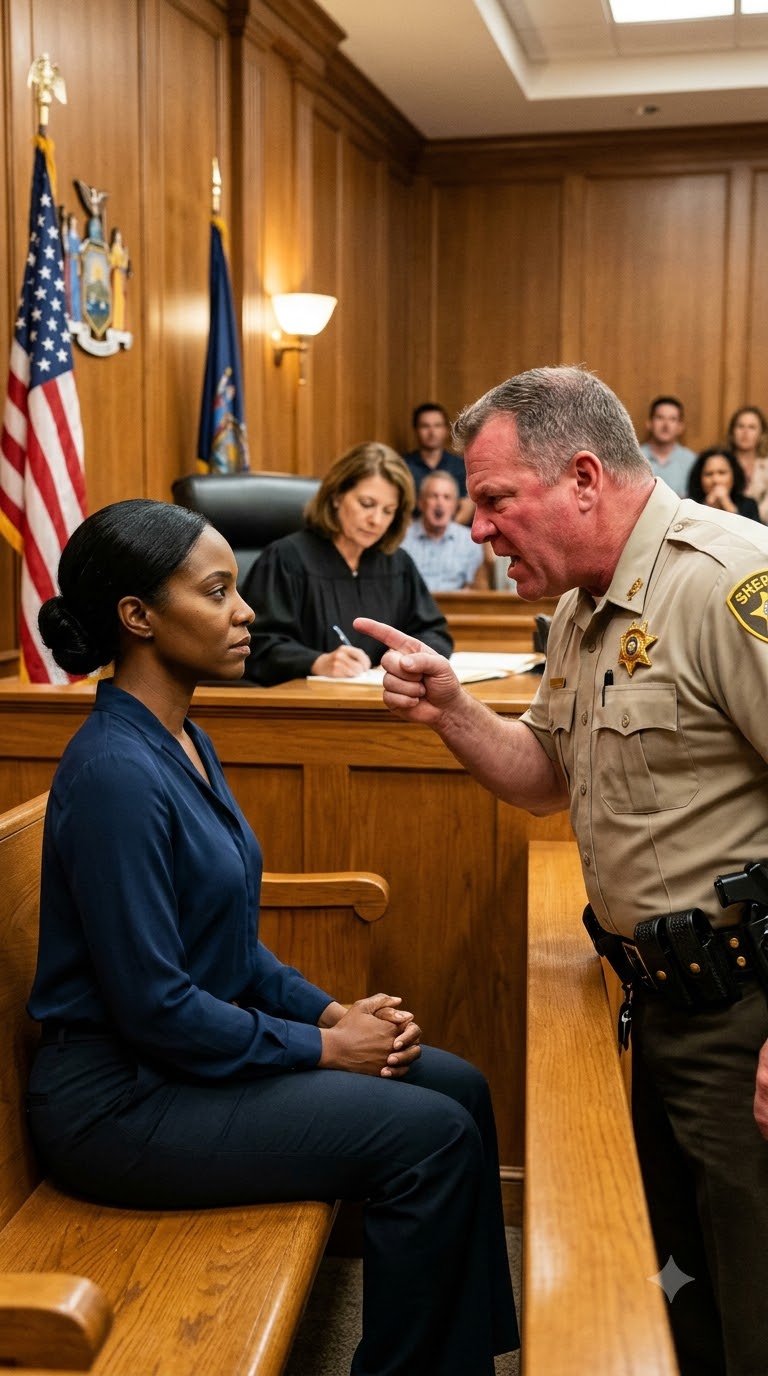
He stopped beside the witness stand and stared down at Iris.
His face had turned red.
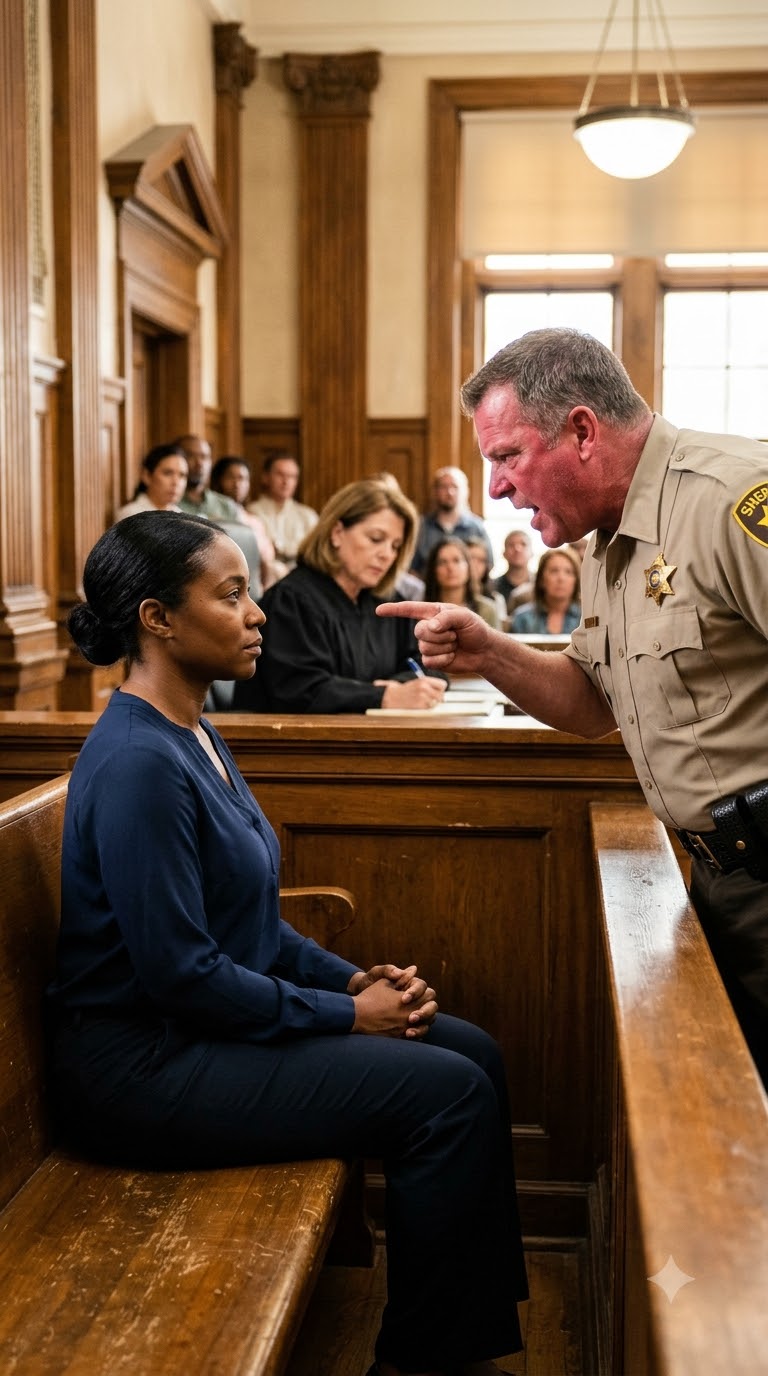
“Get your black ass up when I’m talking to you.”
The courtroom froze.
Iris remained seated.
“Sir, I’m giving my testimony.”
Whitmore laughed.
“What testimony? You got nothing worth hearing. Ha!”
His laughter filled the room.
Then he struck the wooden edge of the witness stand with his palm.
The sound made several spectators jump.
Iris did not move.
“You know what you are. You’re just another loud, lying black woman wasting this court’s time.”
“I’m just telling the truth, sir.”
Whitmore leaned closer.
“You don’t know truth. Your kind never does.”
Then he slapped her.
Hard.
The sound cracked across the courtroom.
Iris’s face turned sharply to one side.
A woman in the gallery gasped.
Someone dropped a notebook.
Nadine Foster was already rising from her chair.
Judge Watts stood behind the bench.
But Iris remained completely still.
She didn’t cry.
She didn’t touch her cheek.
She slowly turned her face toward Whitmore again.
And looked directly into his eyes.
For one suspended moment, nobody seemed capable of moving.
Then Iris spoke.
“Your Honor, I would like the record to reflect exactly what just happened.”
Every attorney stopped writing.
Judge Watts stared at Whitmore.
Her expression had changed completely.
“Sergeant Whitmore, step away from the witness.”
Whitmore opened his mouth.
“Your Honor, she was—”
“Step away. Now.”
Her voice cut through the room.
Whitmore retreated.
Judge Watts immediately ordered another officer to remove him from the courtroom.
Deputy Colleen Davis moved forward, her face pale.
Whitmore looked at her as though he expected her to refuse.
She didn’t.
“Sergeant, you need to come with me.”
He hesitated.
Then he walked toward the exit.
The door closed behind him.
Judge Watts turned to Iris.
“Ms. Coleman, are you injured?”
Iris drew a slow breath.
“My face hurts, Your Honor.”
Nadine moved beside her.
The judge ordered a recess, directed that Iris receive medical attention, and instructed the clerk to preserve the courtroom recording.
Graham Ashford stood motionless beside the defense table.
His carefully prepared arguments had suddenly become meaningless.
As Iris rose from the witness stand, Nadine reached for her arm.
Iris gently shook her head.
Then she picked up her leather portfolio.
She held it against her chest as she walked out.
And for the first time since the trial began, the people in that courtroom looked at her not with suspicion, but with astonishment.
What none of them understood was that Iris had been waiting for something far more important than an apology.
And the next morning, she intended to show them why.
PART 2
Wednesday morning arrived under a gray sky.
Long before the courthouse doors opened, people had gathered outside.
The reporter from the Ridgemont Gazette was no longer alone.
Television crews stood near the entrance.
Photographers waited beside the courthouse steps.
Residents who had ignored the trial for two days were suddenly discussing it in coffee shops, grocery stores, and offices throughout the county.
News of the assault had traveled quickly.
A uniformed sergeant had struck a Black woman while she was testifying in open court.
Before a judge.
Before a jury.
Before dozens of witnesses.
There was no way to describe it as a misunderstanding.
No way to pretend that it had happened somewhere beyond public view.
Yet the sheriff’s department had already issued a statement describing the incident as an isolated disciplinary matter.
The statement said Sergeant Whitmore had been temporarily relieved of courtroom duties pending an internal review.
It did not mention the racial insults.
It did not acknowledge the intimidation.
And it did not explain why Whitmore had been assigned to the courtroom despite the formal objection raised by Iris’s attorney.
At eight forty-five, a dark sedan stopped near the courthouse entrance.
Iris Coleman stepped out.
She wore a charcoal-gray jacket over a white blouse.
The faint redness on her cheek remained visible.
In one hand, she carried her familiar leather portfolio.
Nadine Foster walked beside her.
Reporters immediately approached.
“Ms. Coleman, do you have anything to say about what happened yesterday?”
“Are you planning to file additional charges?”
“Do you believe the county is trying to protect Sergeant Whitmore?”
Iris stopped briefly.
She looked toward the courthouse doors.
Then she answered calmly.
“I came here to tell the truth. That’s what I intend to finish doing.”
She continued inside.
Nadine followed.
The courtroom was already crowded.
Judge Watts had arranged for courthouse security personnel from outside Whitmore’s unit to maintain order.
Deputy Colleen Davis stood near the entrance, but Whitmore was nowhere to be seen.
Graham Ashford sat beside two county officials.
His silver hair was neatly combed, but the confident smile he had worn throughout Monday’s proceedings had disappeared.
Captain Raymond Sullivan occupied a seat behind him.
Sullivan kept his eyes fixed on the front of the room.
When Iris entered, he briefly glanced at her portfolio.
Then he looked away.
Judge Watts called the proceedings to order.
She began by addressing the previous day’s assault.
PART 2
“The conduct witnessed in this courtroom was unacceptable. The court has preserved the relevant record and referred the matter to the appropriate authorities.”
She paused.
“No person should fear physical retaliation for giving testimony under oath.”
The statement was firm.
But Nadine Foster rose immediately.
“Your Honor, before testimony resumes, the plaintiff requests permission to introduce supplemental evidence relevant to the original incident and to the credibility of the county’s witnesses.”
Ashford stood.
“Your Honor, the defense objects to any attempt to turn yesterday’s regrettable incident into a broader accusation unsupported by the pleadings.”
Nadine faced him.
“The evidence concerns the original traffic stop, the official report, and the department’s response to the plaintiff’s complaint.”
Judge Watts considered the request.
“Counsel, approach.”
The attorneys moved toward the bench.
For several minutes, they spoke quietly.
Then the judge returned to her seat.
“I will permit a limited evidentiary hearing outside the presence of the jury to determine admissibility.”
The jurors were escorted from the courtroom.
A restless silence settled over the gallery.
Nadine turned toward Iris.
Iris placed her leather portfolio on the table.
For two days, it had remained closed.
Now she unfastened the brass clasp.
The small metallic click seemed unusually loud.
She opened the portfolio.
Inside were carefully arranged folders, a sealed envelope, printed records, and a compact digital storage device.
Nothing about the contents looked dramatic.
There were no secret weapons.
No threatening messages.
Only documents.
But Nadine knew precisely what those documents represented.
She removed the first folder.
“Your Honor, this contains a certified copy of the plaintiff’s original arrest report, together with the department’s dispatch record and the evidence-retention correspondence obtained during discovery.”
Ashford frowned.
“We have already produced the relevant reports.”
“Not all of them,” Nadine replied.
She placed a second document beside the first.
“The official arrest report states that Ms. Coleman made an aggressive movement before the officer used force.”
She turned a page.
“The dispatch record establishes the time the officer first reported making contact with her vehicle.”
Another page.
“The arrest report places the alleged aggressive movement nearly two minutes before that recorded contact.”
Ashford leaned forward.
Nadine continued.
“The timestamps do not agree.”
Captain Sullivan shifted in his seat.
Nadine lifted another sheet.
“More importantly, the department’s evidence inventory originally listed a patrol-vehicle camera recording from that evening.”
Ashford’s expression tightened.
“The camera system was reported as malfunctioning.”
“That is what the county told us,” Nadine answered.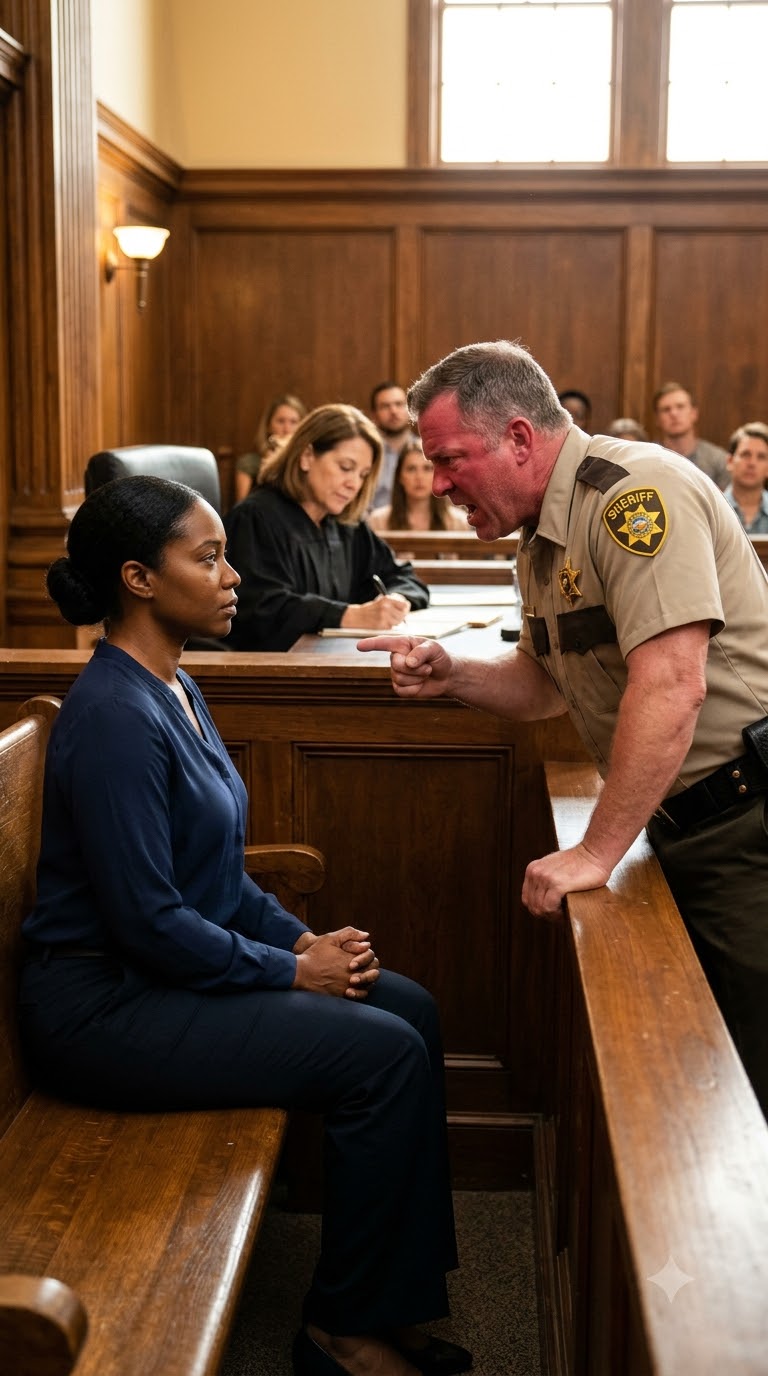
She produced another document.
“But the maintenance record shows that the camera had passed inspection earlier that day.”
The room grew quieter.
Judge Watts examined the papers.
“Where did these records come from?”
“They were obtained through discovery and authenticated by the county’s own records custodian. The inconsistencies became apparent after we compared the production against the original inventory.”
Nadine looked toward Iris.
“And yesterday’s events make the need to examine the missing recording particularly urgent.”
Ashford objected again.
He argued that maintenance records did not prove a camera had been operating during the stop.
Nadine agreed that they did not.
But she pointed out that the county had never produced a diagnostic report explaining the alleged malfunction.
Nor had it identified who removed the recording from the evidence inventory.
Judge Watts ordered a brief recess to examine the documents.
When proceedings resumed, she directed the county to account for the recording and explain the conflicting timestamps.
Ashford requested additional time.
The judge granted a limited opportunity to respond.
Then Nadine opened the second folder.
This one contained copies of internal complaints.
Several names had been redacted.
Each complaint described a similar pattern.
A traffic stop.
An allegation of sudden noncompliance.
A report stating that minimal force had been used.
And injuries that seemed difficult to reconcile with the official description.
Nadine did not claim the complaints proved every allegation.
She explained that the records showed a recurring reporting pattern that warranted scrutiny.
Most importantly, several had been reviewed under Sergeant Dale Whitmore’s supervision.
Captain Sullivan had signed off on the department’s final responses.
Ashford rose sharply.
“These are unrelated allegations.”
“They are relevant to the county’s knowledge and its handling of complaints,” Nadine answered.
Judge Watts raised a hand.
“I will consider their admissibility separately. The court will not treat unproven complaints as established facts.”
Nadine nodded.
“Understood, Your Honor.”
Iris remained silent.
She had expected the judge to proceed carefully.
That was exactly what she wanted.
She had no interest in replacing one unfair process with another.
She wanted the evidence examined according to the law.
Then Nadine reached for the sealed envelope.
It contained a signed statement from Deputy Colleen Davis.
The courtroom became noticeably tense when Nadine announced the name.
Davis was still standing near the entrance.
Her eyes widened slightly.
Judge Watts looked toward her.
“Deputy Davis, were you aware this statement would be submitted?”
“Yes, Your Honor.”
“Are you prepared to testify regarding its contents?”
Davis swallowed.
“Yes, Your Honor.”
She was called forward.
After taking the oath, she sat in the same witness chair where Iris had been assaulted.
Nadine approached.
“Deputy Davis, were you present during the original traffic stop involving Iris Coleman?”
“No.”
“Were you assigned to courtroom security on Monday and Tuesday?”
“Yes.”
“Did Sergeant Whitmore speak to you about the plaintiff?”
“Yes.”
“What did he say?”
Davis hesitated.
She looked briefly toward Captain Sullivan.
Then she faced the judge.
“He said she needed to learn that making complaints against the department had consequences.”
A murmur swept through the gallery.
Judge Watts called for silence.
Nadine continued.
“When did he say that?”
“Monday morning. Before the proceedings began.”
“Did you report the remark?”
Davis lowered her eyes.
“No.”
“Why not?”
“Because I was afraid.”
Her voice trembled.
Whitmore had supervised her for nearly three years.
He had influence over assignments, recommendations, and disciplinary evaluations.
She explained that younger deputies learned quickly which supervisors could make their careers difficult.
Nadine allowed her a moment.
“Did you witness what happened yesterday?”
“Yes.”
“Was Ms. Coleman threatening Sergeant Whitmore?”
“No.”
“Did she physically attack him?”
“No.”
“Did she make any movement that justified his striking her?”
Davis lifted her head.
“No.”
The word carried through the courtroom.
Nadine returned to the table.
For a moment, Iris and Davis looked at one another.
Neither smiled.
But something had changed.
Davis had finally spoken.
And Iris understood what that courage might cost her.
Ashford questioned Davis about whether she had misunderstood Whitmore’s earlier remark.
She insisted she had not.
He asked whether she disliked the sergeant.
She answered that she had previously respected him.
He asked whether she was attempting to protect her own career by blaming a superior.
Davis looked directly at him.
“If I wanted to protect my career, I would have stayed quiet.”
Ashford stopped questioning her.
Judge Watts admitted the testimony for the limited purpose of examining the circumstances surrounding the courtroom incident and possible witness intimidation.
She reserved judgment on the other documents.
But the county’s position had already become more difficult to defend.
Then Nadine removed the final item from Iris’s portfolio.
It was a small digital storage device.
Ashford immediately objected.
“What is that?”
Nadine answered carefully.
“A copy of a recording that may resolve the central factual dispute in this case.”
The judge leaned forward.
“Explain its origin.”
Iris finally spoke.
“Your Honor, after my arrest, I requested the recording from the roadside business across from the location where I was stopped.”
Nadine continued.
“The business had an exterior security camera facing the roadway. Its owner preserved the relevant footage and later provided a copy in response to our request.”
Ashford stared at the device.
Nadine added that the footage had been disclosed during discovery, but the defense had challenged its clarity and significance.
The court had not yet ruled on whether it could be shown to the jury.
Now, with the conflicting reports and newly examined records, Nadine was asking the judge to reconsider.
Judge Watts ordered the footage played for the admissibility hearing.
The courtroom lights dimmed.
A large monitor displayed a quiet stretch of Route 9.
The image was grainy but recognizable.
Iris’s car appeared near the shoulder.
A patrol vehicle stopped behind it.
The timestamp advanced.
The officer approached the driver’s window.
For several seconds, nothing unusual happened.
Then the officer reached through the window.
Iris’s upper body jerked toward the door.
The officer pulled her from the vehicle.
She fell onto the roadway.
The recording had no audio.
But the physical sequence was visible.
The officer had not been forced backward.
Iris had not lunged toward him.
There was no visible struggle before he grabbed her.
Nadine paused the recording.
“Your Honor, this is the moment the report describes as the plaintiff’s aggressive movement.”
Nobody spoke.
She advanced the footage.
The officer forced Iris to the ground.
A second deputy approached.
Then the recording showed Iris being handcuffed.
The judge watched without changing expression.
Ashford stared at the screen.
Captain Sullivan’s face had gone pale.
The video ended.
For several seconds, the courtroom remained silent.
Judge Watts turned toward the defense.
“Mr. Ashford, does the county dispute that this footage depicts the incident?”
Ashford cleared his throat.
“We do not dispute the location or the vehicles, Your Honor. We reserve our position regarding the interpretation of the movements shown.”
“Very well.”
The judge ordered the parties to complete authentication of the recording and permitted additional testimony from the business owner who had preserved it.
By late afternoon, the foundation had been established.
The recording would be shown to the jury.
Iris closed her portfolio.
She had not raised her voice once.
She had not insulted anyone.
She had simply waited for the facts to be examined.
As the hearing ended, Judge Watts looked toward the county’s representatives.
“The jury will return tomorrow. I expect both parties to be prepared.”
Ashford gathered his papers with unsteady hands.
Captain Sullivan left without speaking.
Outside, reporters crowded the courthouse steps.
But the most important development had not yet become public.
Because the following morning, the jury would see the recording.
And the officer who had written the arrest report would finally have to explain what it showed.
PART 3
Thursday morning brought a different atmosphere to the Ridgemont County Courthouse.
The room was just as crowded as before.
The same wooden benches lined the gallery.
The same American flag stood behind Judge Watts.
But the confidence that had surrounded the county’s defense was gone.
The jurors returned to their seats.
Some looked toward Iris.
Others studied the empty space where Sergeant Whitmore had once stood.
A different bailiff now maintained courtroom security.
He remained quiet, professional, and unobtrusive.
Exactly as a bailiff should.
Judge Watts addressed the jury before testimony resumed.
She explained that the previous day’s hearing had concerned the admissibility of additional evidence.
She instructed them to consider only the evidence properly presented during the trial.
She also reminded them that the courtroom assault was a separate incident and that they must not substitute outrage over that event for a careful evaluation of the original traffic stop.
Iris listened closely.
She respected the instruction.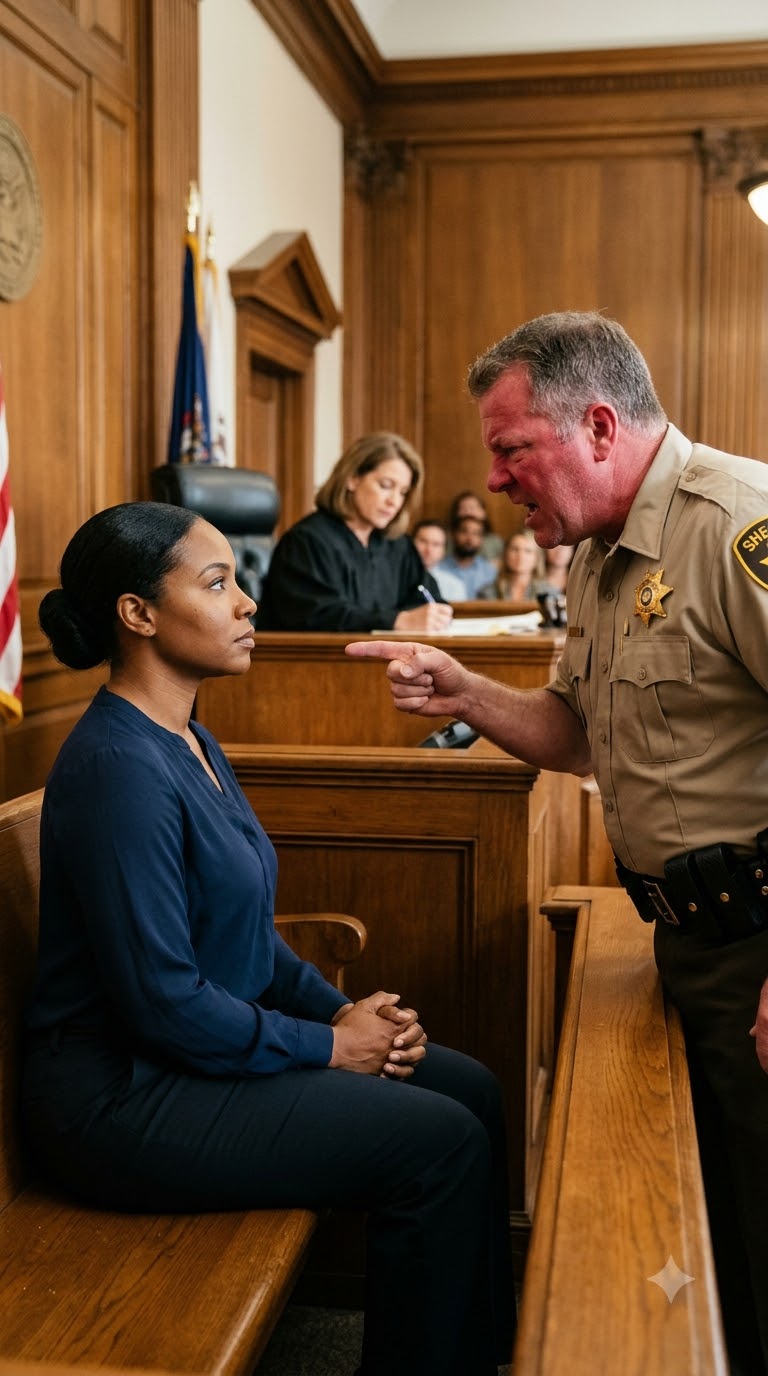
The case was about facts.
And the facts were finally being allowed to speak.
Nadine Foster called the owner of the roadside business.
He was a middle-aged man who had operated a small repair shop along Route 9 for more than twenty years.
He testified that his security system routinely recorded the roadway outside his property.
He explained how he had located the footage, preserved the original file, and provided a copy to Iris’s legal team.
Ashford questioned him about the camera angle.
He asked whether the footage captured every movement inside the vehicle.
The witness acknowledged that it did not.
But he confirmed that the recording had not been altered.
After the necessary foundation was established, Nadine asked permission to play the video.
Judge Watts nodded.
The courtroom lights dimmed.
For the first time, the jurors watched what had happened on Route 9.
They saw Iris’s vehicle pull over.
They saw the officer approach.
They saw him reach through the window.
They watched Iris being dragged from the driver’s seat.
They watched her fall.
Then they watched the officer force her onto the pavement.
Nobody in the jury box moved.
When the recording ended, Nadine allowed the silence to remain for a moment.
Then she called the arresting officer.
Deputy Travis Mercer entered wearing a dark suit instead of his uniform.
He looked younger without the badge and equipment.
He took the oath and sat down.
Nadine approached with the original arrest report.
“Deputy Mercer, did you write this report?”
“Yes.”
“Did you describe Ms. Coleman as making an aggressive movement?”
“Yes.”
“Did you state that she ignored verbal instructions?”
“Yes.”
“Did you describe the force used as the minimum necessary?”
“Yes.”
Nadine placed the document on the evidence screen.
“Did you write that Ms. Coleman was guided to the ground?”
Mercer shifted in his chair.
“Yes.”
Nadine turned toward the monitor.
“Please watch the recording again.”
The footage played.
Mercer watched without speaking.
When it ended, Nadine approached him.
“Deputy Mercer, where in that recording do we see you guiding Ms. Coleman to the ground?”
He looked toward Ashford.
“She was resisting.”
“That wasn’t my question.”
Mercer swallowed.
Nadine repeated it.
“Where do we see you guiding her?”
He remained silent.
“Did she fall because you pulled her from the vehicle?”
“I was attempting to control the situation.”
“Did you pull her from the vehicle?”
“Yes.”
“Did she strike the pavement?”
“Yes.”
“Did you place her in handcuffs?”
“Yes.”
“Before you grabbed her, had she physically attacked you?”
“No.”
“Had she attempted to drive away?”
“No.”
“Had she threatened you?”
“No.”
Nadine stepped closer.
“Then what immediate threat justified dragging her from the driver’s seat?”
Mercer stared at his hands.
He began to explain that he believed Iris might have been reaching for something dangerous.
Nadine asked whether he had seen a weapon.
He admitted he had not.
She asked whether he had ordered Iris not to reach toward the glove compartment.
He said he could not remember his exact words.
She reminded him that his report claimed he had given clear verbal instructions.
He acknowledged the inconsistency.
PART 3
Then Nadine asked one final question.
“Deputy Mercer, when you wrote that Ms. Coleman was guided to the ground, were you describing what happened, or were you choosing language that made what happened sound less violent?”
Ashford objected.
Judge Watts sustained the objection to the question’s form.
Nadine rephrased.
“Does the phrase guided to the ground accurately describe what this recording shows?”
Mercer stared at the monitor.
After a long silence, he answered.
“No.”
The courtroom seemed to release a collective breath.
Nadine returned to her seat.
For the first time, the central language of the county’s official report had been contradicted by the officer who wrote it.
Ashford attempted to rehabilitate Mercer’s testimony.
He emphasized that traffic stops could be dangerous.
He argued that officers had to make decisions under uncertain circumstances.
Mercer agreed.
But when Ashford asked whether the report accurately reflected every important detail, Mercer hesitated.
“I should have written it differently.”
Those seven words changed the atmosphere of the trial.
The defense could no longer pretend that its paperwork was beyond question.
Later that morning, Captain Raymond Sullivan was called to testify.
He confirmed that he had reviewed the complaint arising from Iris’s arrest.
He also acknowledged that he had rejected Nadine’s objection to Whitmore serving as bailiff.
Nadine asked why.
Sullivan repeated the explanation he had provided earlier.
The assignment had been part of the normal rotation.
Nadine presented the security roster.
Whitmore’s name appeared beside the courtroom assignment.
But the original rotation sheet listed a different officer.
Sullivan explained that a scheduling change had been made.
“Who authorized the change?” Nadine asked.
“I did.”
“Did you know Sergeant Whitmore supervised the unit involved in Ms. Coleman’s arrest?”
“Yes.”
“Did you know her attorney had objected to his presence?”
“Yes.”
“Did you consider assigning another officer?”
Sullivan hesitated.
“I didn’t believe it was necessary.”
Nadine glanced toward Iris.
“Do you still believe that?”
Ashford objected.
The judge sustained the objection.
But Sullivan’s answer was no longer needed.
Everyone in the courtroom knew what had happened.
After lunch, Nadine returned to the internal complaint records.
Judge Watts permitted limited testimony about the department’s review procedures and the supervisors’ knowledge of prior allegations.
The court excluded several unverified accusations.
Nadine accepted those restrictions.
She did not need every complaint to prove her case.
She needed the jury to understand how the county had handled warnings.
Records showed that some complaints involving similar allegations had been closed without interviews of independent witnesses.
Other files contained almost identical explanations for the use of force.
The county maintained that those decisions had been proper.
But Nadine established that supervisors had not consistently sought available outside evidence before closing the reviews.
She asked Sullivan whether the department had attempted to obtain the roadside business’s recording before dismissing Iris’s complaint.
He admitted that it had not.
“Why not?”
“We relied on the officer’s report and the information available at the time.”
“Did anyone contact the business?”
“Not that I’m aware of.”
“Did anyone inspect the exterior cameras?”
“No.”
“Did anyone ask Ms. Coleman whether another recording might exist?”
“No.”
Nadine paused.
“Then the department concluded the officer acted appropriately without examining evidence that was available across the road?”
Sullivan said nothing for several seconds.
Finally, he answered.
“Yes.”
By the end of Thursday’s proceedings, the jury had heard enough to understand that Iris’s injuries were not the only issue.
The case also concerned the reliability of official reports, the adequacy of departmental review, and the responsibility of supervisors who accepted conclusions without sufficient scrutiny.
But Iris still had one more thing to say.
On Friday morning, Nadine called her back to the witness stand.
The courtroom fell quiet as she approached.
Her cheek had begun to heal.
The narrow scar on her palm remained.
She sat down and folded her hands.
Nadine stood before her.
“Ms. Coleman, why did you bring this lawsuit?”
Iris took a moment before answering.
“Because what happened to me was wrong.”
“Was it because you wanted revenge?”
“No.”
“Was it because you wanted to embarrass the sheriff’s department?”
“No.”
“Then why?”
Iris looked toward the jury.
“Because I kept thinking about the next person who might be stopped on that road.”
Her voice remained calm.
“I was lucky enough to leave that encounter alive. I had injuries, but I could walk away. I could call a lawyer. I could ask questions.”
She paused.
“But if the report had been accepted without question, there would have been nothing to stop the same thing from happening again.”
Several jurors lowered their eyes.
Nadine asked about the moment Whitmore slapped her.
Iris did not dramatize the experience.
She described the shock.
The pain.
The humiliation of being struck while trying to tell the truth in a courtroom.
Then Nadine asked why she had not reacted.
Iris looked toward Judge Watts.
“Because I knew everyone was watching.”
She turned back to the jury.
“I wanted them to see exactly what he was doing. I didn’t want anyone to be able to say I started it.”
Her words settled heavily over the room.
Then she continued.
“I spent three months being told that I misunderstood what happened to me. That I was confused. That I was exaggerating. That the officer was only doing his job.”
She looked down at her scarred palm.
“But I knew what happened.”
Nadine allowed her to finish.
“And when Sergeant Whitmore hit me in front of everyone, I understood something. He wasn’t afraid of the judge. He wasn’t afraid of the jury. He wasn’t afraid of the people watching.”
Iris lifted her head.
“He believed his uniform would protect him from consequences.”
No one interrupted.
She spoke once more.
“I don’t want anyone else to have to prove their humanity after being treated that way.”
Nadine returned to her chair.
Ashford rose for cross-examination.
He approached slowly.
His earlier warmth had disappeared.
He asked whether Iris acknowledged that officers performed difficult work.
She said yes.
He asked whether mistakes could happen during stressful encounters.
She agreed.
Then he asked whether she believed every deputy in Ridgemont County was corrupt.
Iris looked directly at him.
“No.”
Ashford seemed surprised.
She continued.
“Deputy Davis told the truth even though she was afraid. I know the difference between someone who abuses authority and someone who respects it.”
Ashford glanced toward Davis.
The deputy sat quietly in the gallery.
For the first time, she allowed herself a small breath of relief.
Ashford asked no further questions.
That afternoon, closing arguments began.
Graham Ashford spoke first.
He acknowledged that the recording showed an encounter that had not been handled as well as it should have been.
He conceded that the arrest report contained language that could have been more precise.
But he urged the jury to distinguish poor judgment from a violation of constitutional rights.
He reminded them that officers faced unpredictable dangers.
He argued that the county should not be judged solely by the worst moments of individual employees.
His argument was measured.
Professional.
And noticeably different from the confident presentation he had delivered on Monday.
Then Nadine Foster stood.
She carried no stack of dramatic exhibits.
Only a few pages of notes.
She walked toward the jury and stopped.
“This case began with a traffic stop.”
She let the words settle.
“A woman driving at the speed limit was pulled over. She complied with the visible precautions she had been taught. She reached for the documents an officer demanded.”
Nadine gestured toward the monitor.
“And then she was dragged from her car.”
She reminded the jury of the injuries.
The dismissed charges.
The language used in the report.
She described the missing departmental recording and the failure to investigate the nearby security camera.
Then she addressed the courtroom assault.
“What happened here on Tuesday was not the traffic stop itself. You must decide the original claims on the evidence presented. But you have also witnessed the kind of contempt Ms. Coleman faced when she tried to tell her story.”
She paused.
“Authority is not ownership.”
Several spectators leaned forward.
“A badge gives an officer responsibilities. It does not give him permission to humiliate someone, falsify what happened, or use force without justification.”
She turned toward Iris.
“My client was told that her account was not worth hearing. She was told that her injuries were the result of being guided to the ground.”
Nadine looked back at the jury.
“You saw the recording.”
Her voice became quieter.
“You heard the officer admit that the report did not accurately describe what happened.”
She placed her notes on the table.
“The question before you is not whether law enforcement is important. It is.”
She paused.
“The question is whether the law protects Iris Coleman as fully as it protects the people who wear uniforms.”
Then she returned to her seat.
Judge Watts instructed the jury on the applicable law.
She explained the burden of proof.
She reminded them that sympathy and anger were not substitutes for evidence.
And she directed them to consider each claim separately.
The jurors withdrew to deliberate.
Hours passed.
The courthouse gradually grew quiet.
Reporters waited in the hallway.
Iris sat beside Nadine, her leather portfolio resting on the table.
For the first time all week, she opened it without intending to remove any evidence.
Inside, beneath the legal documents, was a small photograph of her mother.
The picture had been taken years earlier.
Her mother was smiling.
Iris touched the corner of the photograph.
Nadine noticed.
“She would be proud of you.”
Iris smiled faintly.
“She would tell me to eat something.”
They both laughed softly.
It was the first moment of ordinary warmth Iris had experienced in days.
Then the courtroom door opened.
The clerk announced that the jury had reached a verdict.
Everyone rose.
The jurors filed back into their seats.
Judge Watts returned to the bench.
The foreperson stood.
On the central civil rights claim, the jury found in favor of Iris Coleman.
It concluded that the arresting officer had used excessive force.
It also found that the county bore responsibility under the claims and instructions submitted for its consideration.
The jury awarded Iris compensatory damages for her injuries, emotional distress, and the harm caused by the unlawful encounter.
It also assessed punitive damages against the individual officer.
The total award was substantial.
But Iris barely reacted to the amount.
Her eyes filled with tears only when the foreperson finished reading the findings.
For three months, she had carried the memory of the pavement against her face.
For three months, she had heard officials describe that violence as assistance.
Now twelve jurors had examined the evidence and rejected that account.
Nadine placed a hand over hers.
Iris whispered, “Thank you.”
Across the aisle, Ashford lowered his head.
Captain Sullivan stared straight ahead.
Judge Watts thanked the jurors for their service.
Then she addressed the courtroom.
“This verdict concludes the jury’s determination of the civil claims presented here. The separate matters arising from the conduct in this courtroom remain subject to further proceedings.”
She looked toward Iris.
“Ms. Coleman, you were entitled to testify without intimidation or violence. What occurred here was a serious violation of that principle.”
Iris nodded.
“Thank you, Your Honor.”
Outside the courthouse, the crowd had grown.
Cameras flashed as Iris descended the steps.
Reporters shouted questions.
“How do you feel about the verdict?”
“Do you think the county will change?”
“Have you forgiven Sergeant Whitmore?”
Iris stopped at the bottom of the stairs.
She considered the questions.
Then she spoke.
“I’m grateful the jury listened to the evidence.”
She looked toward the courthouse.
“But a verdict doesn’t erase what happened. Accountability has to continue after the cameras leave.”
A reporter asked what she meant.
Iris answered.
“It means complaints should be investigated. It means reports should tell the truth. It means officers who abuse their authority shouldn’t be protected simply because they’re officers.”
She paused.
“And it means people shouldn’t have to be slapped in a courtroom before someone takes their concerns seriously.”
The reporters fell quiet.
Then Iris walked away with Nadine.
But the story did not end with the verdict.
In the weeks that followed, the courtroom assault became the subject of a separate criminal investigation.
Investigators interviewed the judge, attorneys, court personnel, and spectators.
They reviewed the preserved courtroom recording.
Whitmore’s conduct could no longer be reduced to conflicting recollections.
The incident had occurred in full public view.
Sergeant Dale Whitmore was removed from duty and subsequently dismissed from the sheriff’s department.
He faced criminal charges arising from the assault and the intimidation of a witness.
After reviewing the evidence, he entered a guilty plea to the assault charge.
The court imposed a sentence that included a period of incarceration, supervised probation, and restrictions on future law enforcement employment.
His badge was taken away.
His authority was gone.
And the uniform he had once used to intimidate others no longer offered him protection.
Deputy Travis Mercer also faced disciplinary proceedings following the civil verdict and the discrepancies revealed in his report.
The department referred the matter for further review.
Captain Sullivan’s handling of complaints and courtroom assignments became part of a broader administrative investigation.
The county commissioned an outside assessment of its use-of-force reporting procedures.
The review recommended changes to evidence preservation, complaint investigations, supervisory oversight, and conflict-of-interest policies.
Those reforms did not happen overnight.
Some officials resisted them.
Others argued that the county was being unfairly criticized.
But the public record was no longer something the department could simply close and forget.
Deputy Colleen Davis remained with the department during the initial investigation.
Her decision to testify brought difficult weeks.
Some colleagues avoided her.
Others quietly thanked her.
She later transferred to another assignment.
When asked why she had spoken against Whitmore, she gave a simple answer.
“Because I saw what happened.”
For Iris, the months after the trial were not easy.
Winning a lawsuit did not immediately erase the fear she felt whenever flashing lights appeared behind her car.
The scar on her palm remained.
So did the memory of Whitmore’s hand striking her face.
But she began to reclaim the ordinary parts of her life.
She drove Route 9 again.
The first time, Nadine offered to accompany her.
Iris declined.
She wanted to make the journey herself.
She passed the roadside repair shop.
She passed the stretch of pavement where she had been pulled from her car.
Then she continued toward home.
No emergency lights appeared.
No officer stopped her.
The road was simply a road again.
Several months later, Iris was invited to speak at a community forum about police accountability and civil rights.
The room was filled with residents, local officials, students, and families who had followed the case.
She brought her leather portfolio.
The same worn brown portfolio she had carried into court.
She placed it on the table in front of her.
Then she opened it.
Inside were the documents that had helped establish the truth.
The arrest report.
The dispatch records.
The evidence correspondence.
The witness statement.
The security recording.
And the photograph of her mother.
Iris lifted the photograph.
“My mother taught me to keep my hands where an officer could see them,” she told the audience.
“She taught me to speak calmly. To follow instructions. To do everything possible to come home safely.”
Her voice softened.
“She also taught me that being treated unfairly doesn’t make you less deserving of respect.”
The room remained silent.
Iris placed the photograph back inside the portfolio.
“For a long time, I thought courage meant not being afraid.”
She shook her head.
“I know now that courage can mean being afraid and still telling the truth.”
Someone in the audience began applauding.
Then another person joined.
Within seconds, the entire room was on its feet.
Iris did not raise her arms.
She did not celebrate as though she had defeated an enemy.
She simply stood beside the table, one hand resting on the leather portfolio.
Because she understood something the people who had tried to silence her had never understood.
Respect did not come from a badge.
Authority did not make someone right.
And silence did not make an injustice disappear.
Three months earlier, she had been dragged from her car and told through an official report that she had merely been guided to the ground.
Then she had been struck across the face while testifying in a courtroom supposedly dedicated to justice.
The man who slapped her had expected fear.
He had expected humiliation.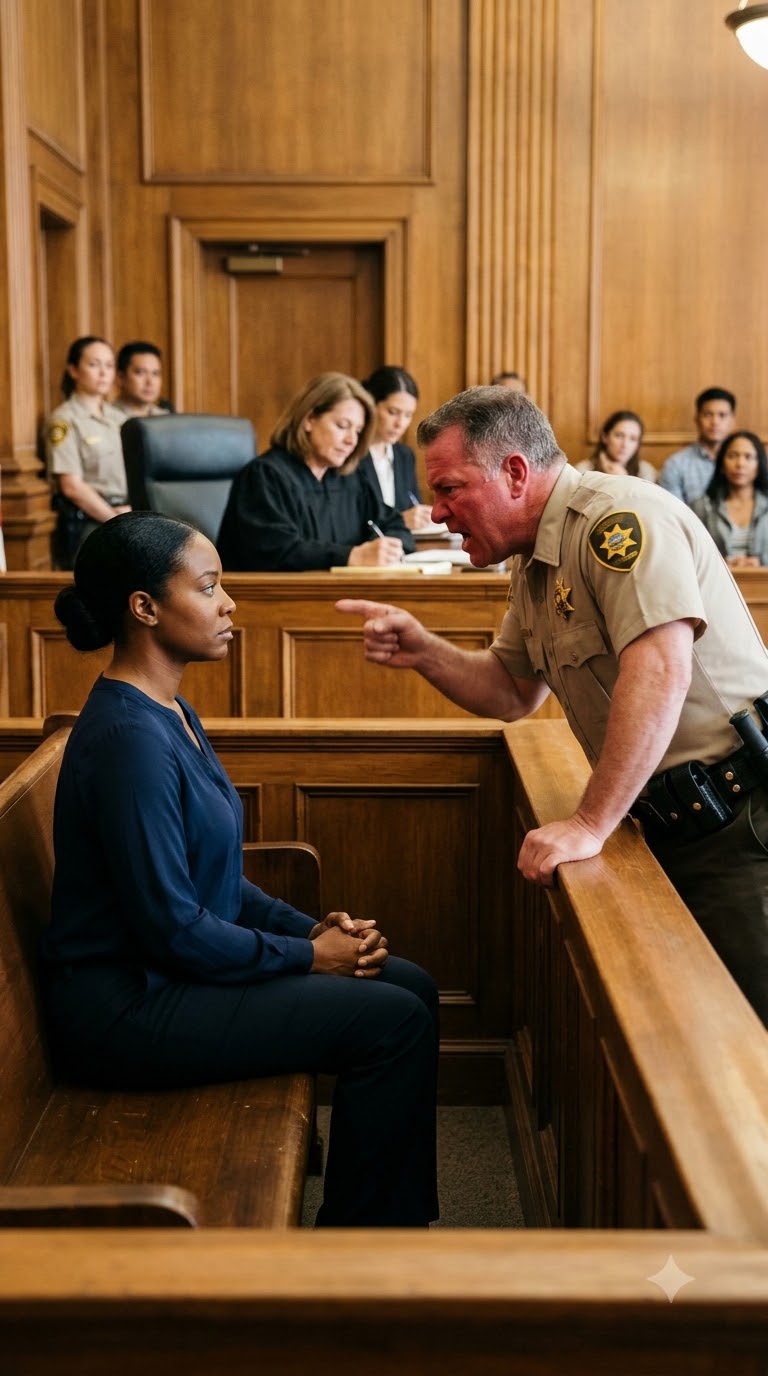
He had expected her to surrender.
Instead, she had looked him in the eyes.
And the next morning, she had opened her leather portfolio.
Inside was something more powerful than his badge.
The evidence.
And once the truth was finally heard, the authority he had abused could no longer protect him.
THE END
