

PART 1
I spent weeks in the hospital fighting to stay alive, but not a single member of my family came to see me.
Neither of my parents visited.
My younger sister never appeared either.
Then, one month after I was finally discharged, my father sent me a message.
“We need $12,000 for your mother’s surgery.”
I transferred exactly one dollar to his account and replied:
“Good luck.”
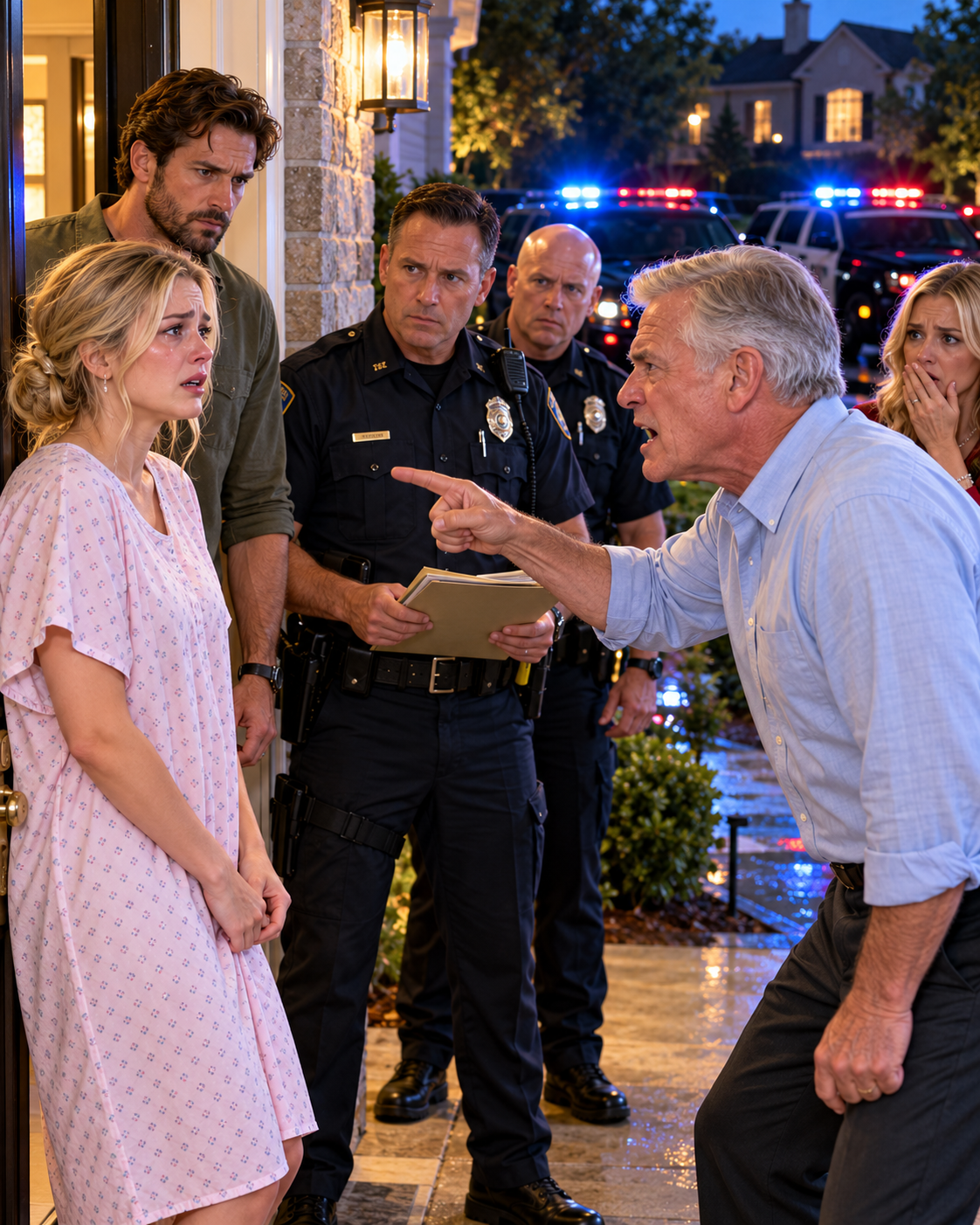
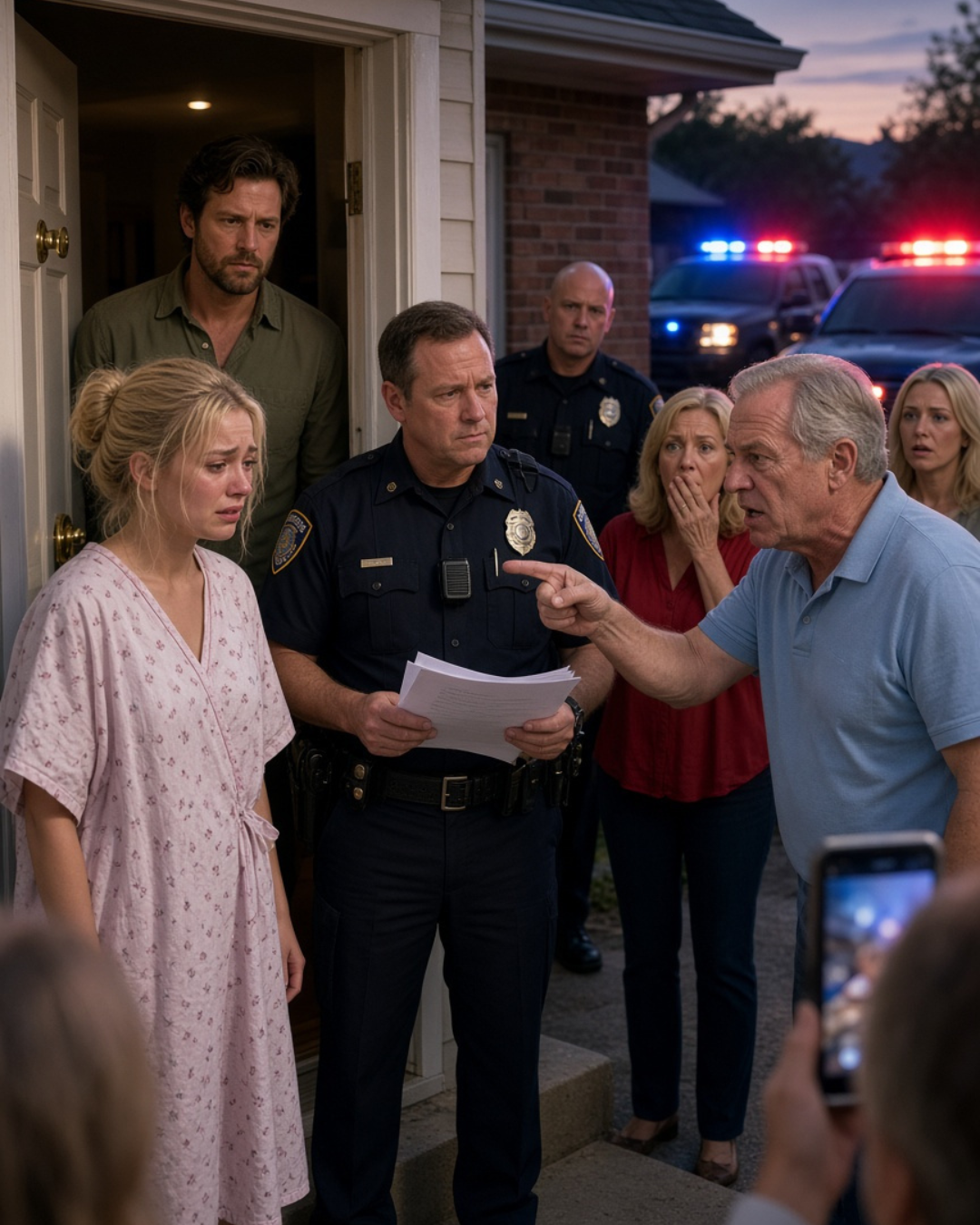
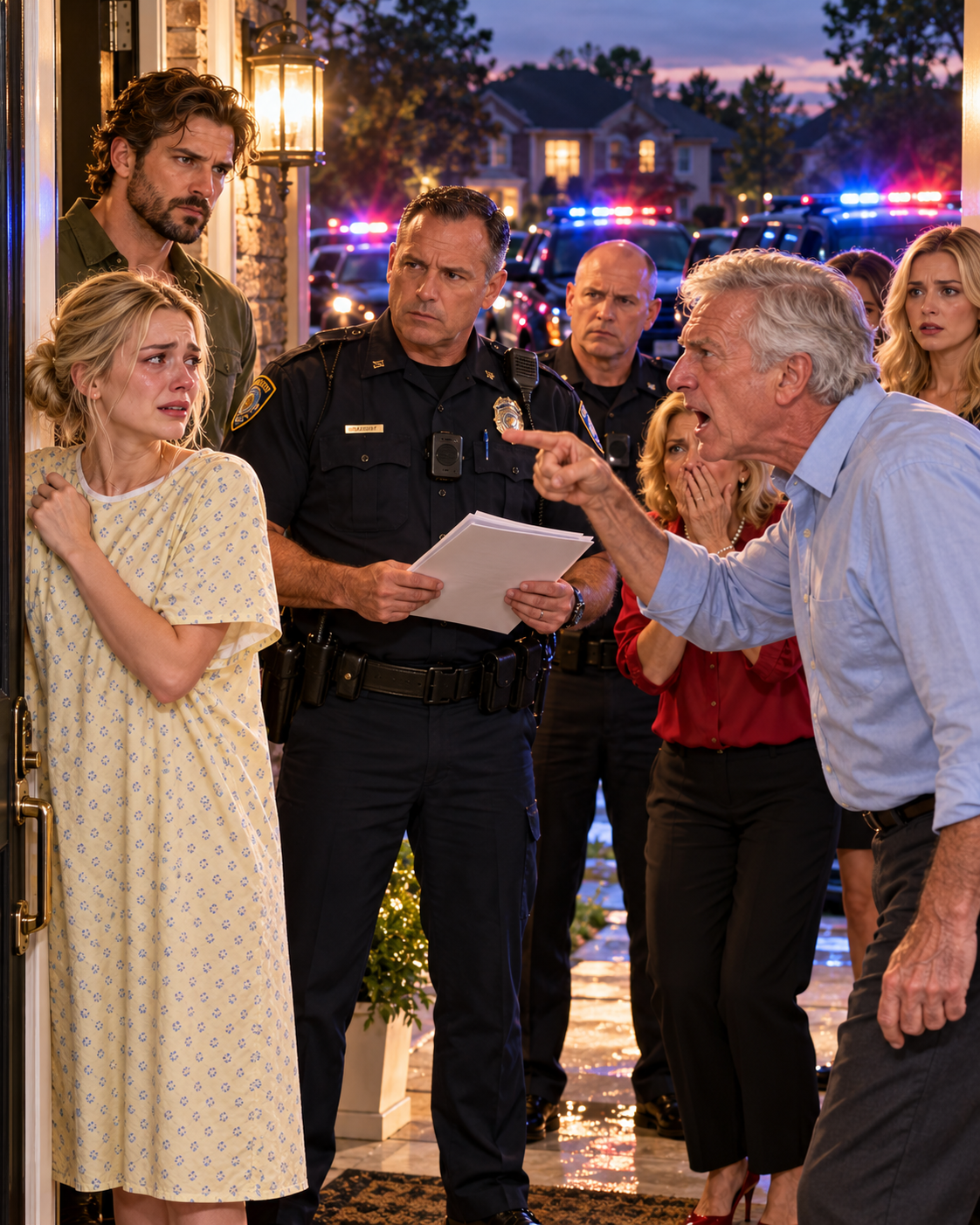
A few hours later, police officers arrived at my front door.
My father had reported me for a crime.
And what began with that accusation would eventually expose years of lies, financial manipulation, and betrayal that my family had worked desperately to conceal.
When I first regained consciousness, the sound of a medical monitor was the only thing I could clearly understand.
Beep.
Silence.
Another beep.
Each electronic tone seemed to measure another moment of a life I’d almost lost.
The hospital room smelled of disinfectant, plastic tubing, and the faint lemon fragrance of lotion used by nurses whose hands had been washed countless times.
Fluorescent lights burned above me.
My throat felt raw, as though someone had scraped it from the inside.
Even swallowing hurt.
“Easy,” someone murmured.
I slowly turned my head.
My husband, Ethan, sat hunched over in a small blue vinyl chair beside my bed.
His gray shirt was wrinkled.
His beard had grown unevenly.
Dark shadows beneath his eyes revealed how little sleep he’d been getting.
He held my hand tightly, almost as though he believed I might disappear if he loosened his grip.
When he noticed that my eyes were open, his expression collapsed.
“Oh, thank God.”
My name is Mallory Hayes.
I’m thirty-three years old, and I work as a senior payroll manager.
For most of my life, I’d confused being useful to people with being loved by them.
I believed that if I helped enough, gave enough, and solved enough problems, my family would always be there when I needed them.
I was about to discover how wrong I’d been.
My last clear memory was standing near the copier at work.
I had payroll reports pressed against my chest.
Jenna from accounting was calling to me from the hallway.
Then something strange happened.
The floor seemed to tilt upward.
The ceiling rushed toward me.
And everything went black.
“How long?” I whispered.
Ethan struggled to speak.
“Nine days since you collapsed. You were unconscious for most of it.”
Nine days.
An entire stretch of my life had vanished.
Ethan pressed the call button beside my bed.
A nurse named Carla entered a moment later.
She checked the monitor, examined my eyes with a small light, and gently adjusted the blanket over my legs.
Her silver braids were neatly pinned behind her head.
There was something comforting about the way she spoke.
She didn’t treat me like a helpless patient.
She made me feel safe.
“You scared everyone,” she said.
Everyone.
That word sounded strange.
I looked toward the window.
Two visitor chairs stood empty beside it.
There were no flowers from my mother.
No balloon from Dad.
No card or handwritten note from my younger sister.
Only Ethan’s jacket draped over a chair, a paperback Jenna had brought, and a fading bouquet from the supermarket standing in a plastic pitcher near the sink.
Those were the only signs that anyone had been thinking about me.
“Where are they?” I asked.
Ethan glanced at Carla.
She looked back at him.
That brief exchange told me something was wrong before either of them answered.
“My parents,” I clarified. “Did anyone call them?”
Carla lowered her clipboard.
“We contacted every emergency number listed in your chart. Your mother answered twice. Your father returned one call. They said they had several things going on and would come when their schedule allowed.”
I stared at her.
“When their schedule allowed?”
Her expression tightened.
“We made it clear that your condition was serious.”
My parents lived forty minutes from the hospital.
My sister lived only twenty-five minutes away.
I’d driven much farther than that for them.
I’d left home late at night when they insisted something couldn’t wait until morning.
I’d interrupted work, canceled plans, and rearranged my schedule whenever they needed help.
But while I lay unconscious in a hospital bed, they apparently couldn’t find time to visit.
For years, I’d handled their unpaid phone bills.
I’d helped with overdue taxes.
I’d covered negative bank balances.
I’d responded to midnight emergencies that usually turned out to be ordinary problems they didn’t want to manage themselves.
Mom had a spare key to my house.
Dad still possessed old banking information from when I’d helped him refinance a loan.
My younger sister knew exactly how to make me feel guilty enough to send money before asking too many questions.
I’d always interpreted that access as proof that we were close.
Now, lying in a hospital bed surrounded by machines, I began questioning why so much of our relationship revolved around what I could provide.
Trust doesn’t always feel dangerous.
Sometimes it simply means leaving a door unlocked for people who already know where you keep your savings.
On the eighth day, Ethan obtained the hospital’s records of attempted family contacts.
The document listed two answered calls to Mom.
One returned call from Dad.
And a notation made during intake:
FAMILY NOTIFIED — CONDITION SERIOUS.
Jenna also helped gather documentation.
She provided screenshots of the workplace incident report filed at 3:17 p.m.
There was an ambulance dispatch record.
And there was the email she’d sent to my emergency contacts before she even left the copier area.
Everything had been documented.
The dates.
The times.
The people who’d been contacted.
When affection disappears, written records have a way of revealing what actually happened.
My hospitalization continued for weeks.
Ethan slept in that uncomfortable chair until his back began cramping.
Jenna brought socks, dry shampoo, and books I was too exhausted to read.
Carla remembered that I preferred extra ice in my water.
She also remembered that I couldn’t stand orange Jell-O.
Those small gestures meant more to me than I could explain.
But my family never appeared.
Not once.
A month after I finally returned home, I was sitting at our kitchen table in my oldest sweatshirt.
Recovery was painfully slow.
Even walking to the sink sometimes left my legs trembling.
Afternoon sunlight filtered through the blinds, casting narrow stripes across the room.
My hospital discharge folder sat beside unpaid bills, a half-finished cup of coffee, and Ethan’s keys.
Then my phone vibrated.
It was Dad.
“We need $12,000 for your mother’s surgery.”
I stared at the message.
There was no greeting.
No question about my recovery.
No acknowledgment that I’d spent weeks in the hospital struggling to survive.
He didn’t ask whether I could walk without assistance.
He didn’t ask whether I was strong enough to return to work.
He didn’t even apologize for never visiting.
He simply wanted money.
Twelve thousand dollars.
I kept staring at the screen until Ethan reached across the table and placed his hand on my wrist.
I didn’t scream.
I didn’t cry.
I didn’t write the furious paragraph that had been building inside me for years.
My jaw tightened until it hurt.
Then I opened my banking app.
I transferred exactly one dollar to Dad.
And I replied:
“Good luck.”
The typing indicator appeared.
Disappeared.
Then appeared again.
Dad: You selfish little witch.
Dad: Mom is sick.
Dad: You owe this family.
That final message seemed to extinguish something inside me.
How could I owe people who’d left two hospital chairs empty while I fought to stay alive?
For a moment, I wanted to throw my phone against the cupboard.
I wanted the sound of breaking glass to express thirty-three years of frustration I’d never allowed myself to show.
Instead, I took a slow breath.
Then I placed the phone on the table.
I saved screenshots of every message.
I downloaded the transfer confirmation.
And I sent copies to Ethan and Jenna.
I wasn’t expecting the police to become involved.
But working in payroll had taught me something important.
When an event isn’t documented, someone else can easily rewrite what happened.
At 7:42 that evening, three sharp knocks sounded at our front door.
Ethan walked into the hallway and looked through the peephole.
When he turned around, his expression had changed.
Red-and-blue emergency lights flashed across our living-room wall.
They illuminated my hospital discharge papers.
The framed photograph on our mantel.
The coffee cup on the table.
And the small American flag our neighbor had placed in the porch planter after Memorial Day.
“Mallory,” he said softly. “It’s the police.”
I slowly stood.
My legs were still weak.
I gripped the back of the chair to steady myself.
Two officers waited outside.
The older one held a printed complaint.
I saw my father’s name at the top.
And before he even explained why they were there, I understood that Dad intended to punish me for refusing his demand.
The officer looked directly at me.
Then he began explaining the accusation.
And I realized my father was prepared to do something far worse than send angry messages.
PART 2
The senior officer introduced himself as Detective Harris.
He confirmed that I was Mallory Hayes before explaining why he and his colleague had come to our house.
My father had filed a complaint accusing me of stealing money from my mother’s bank account.
According to his statement, I’d used my access to her financial information to withdraw thousands of dollars without permission.
He claimed I’d refused to return the money.
I could barely comprehend what I was hearing.
My father had ignored me while I lay critically ill in the hospital.
Then, when I refused to send him $12,000, he’d accused me of theft.

Ethan stood beside me.
“My wife was fighting for her life a month ago, and she hasn’t touched her mother’s money.”
Harris noticed the medical folder on our kitchen table.
He asked whether I had documents that might clarify the situation.
Fortunately, I did.
I’d always kept detailed records of financial transactions.
As a payroll manager, I was accustomed to making sure every figure matched its supporting documentation.
I’d followed that same practice when helping my relatives, even though I’d never imagined I’d need those records to defend myself.
We invited the officers inside.
My hands trembled as I opened my laptop.
Then I began showing Harris the transfers I’d made to my parents over the years.
Rent assistance.
Overdue utilities.
Emergency repairs.
Payments toward my sister’s credit-card bills.
Every amount had a corresponding record.
Not one showed me withdrawing money from Mom’s account for my own use.
Then I opened Dad’s recent messages.
I showed Harris the demand for $12,000.
And the confirmation that I’d transferred one dollar.
He examined the exchange twice.
His expression grew serious.
“Your father specifically told us you had taken twelve thousand dollars,” he said, “but this message appears to show him asking you for that amount.”
Before I could answer, my phone rang.
Dad.
Ethan motioned for me to use speakerphone.
I accepted the call.
Dad began shouting before I could say hello.
“What have you told those people? You’re making your mother’s condition worse, and you need to fix this immediately!”
Harris raised a hand, signaling for me to remain calm.
“Sir, this is Detective Harris with the police department,” he said.
Dad stopped speaking.
For several seconds, nobody said anything.
I could hear a television playing faintly in the background.
Then Dad muttered something about a misunderstanding.
He ended the call.
Harris explained that the complaint still required investigation.
He instructed me to preserve every relevant document and keep a record of any further communication concerning the accusation.
After the officers left, Ethan wrapped his arms around me.
That was when I finally began crying.
I wasn’t crying because I regretted refusing the money.
I was crying because I’d realized how far my own family was willing to go when I stopped financing them.
Later that night, Jenna called.
Ethan had told her about the police visit.
She listened carefully.
Then she asked a question that made me uneasy.
“Mallory, did your father ever have permission to use your name when he handled your mother’s finances?”
I went still.
Suddenly, I remembered paperwork I’d signed years earlier.
Back then, I’d believed that helping family meant trusting them without hesitation.
I hadn’t thought much about the documents.
Now I wondered what authority they might have given my father.
The following morning, I contacted Mom’s bank.
I was still physically weak, but I explained the theft allegation and asked about any financial authorizations associated with my name.
After verifying my identity, a representative confirmed that my name appeared on an old authorization connected to Mom’s account.
It didn’t make me the owner of her funds.
And the records showed no recent withdrawals made by me.
I requested copies of every document bearing my signature.
I needed to know exactly what I’d agreed to years earlier.
Meanwhile, Jenna helped organize evidence for Detective Harris.
We gathered hospital records.
Dad’s messages.
And my complete history of financial support.
Ethan stayed beside me throughout the process.
Whenever exhaustion made my hands shake, he insisted that I take a break.
For the first time in my adult life, I was using my organizational skills to protect myself rather than rescue my family from another financial emergency.
Three days later, Harris contacted me with an update.
Dad was still insisting that I’d had access to Mom’s money.
He remained hostile when investigators pressed him for proof.
But he hadn’t provided banking records establishing that I’d taken $12,000.
The investigation was continuing.
Harris emphasized how useful my documentation had been.
Then I discovered an old forwarded email.
Dad had accidentally included me in a message months earlier while arranging family paperwork.
He’d apparently assumed I would handle whatever he needed without asking questions.
The message was addressed to my younger sister, Brooke.
It discussed Mom’s medical expenses.
And it referred to a plan to demand money from me once I was “back on my feet.”
I read those words repeatedly.
Jenna immediately noticed the date.
Dad had sent the email while I was unconscious in the hospital.
He’d known I was critically ill.
He’d known I was fighting for my life.
And while I lay surrounded by medical equipment, he’d already been calculating when he could ask me for money again.
The request hadn’t been spontaneous.
It had been planned.
That evening, Mom finally called.
She sounded tired and irritated.
She complained that I’d dragged the police into private family matters.
I asked her a direct question.
“Did you know Dad accused me of stealing from you?”
She hesitated.
The silence lasted long enough for me to hear her breathing.
“Your father said you were refusing to help,” she eventually answered.
I reminded her that I’d spent weeks in the hospital.
I reminded her that not one member of our family had visited.
Then I asked whether she’d checked her own bank account before believing Dad’s accusation.
She didn’t answer.
That silence hurt more than his insults.
The following afternoon, Harris invited me to the station to review the documents.
He explained that investigators would examine the text messages, financial records, and timeline before making any decisions.
I handed him the printed email.
His expression changed when he reached the sentence about waiting until I recovered.
“We need to speak with your father again,” he said. “There are inconsistencies here that he will need to explain.”
Ethan accompanied me out of the station.
For the first time since collapsing at work, I felt some control returning.
I didn’t know how Dad intended to explain the evidence.
But I knew I would never again confuse loyalty to my family with surrendering my boundaries.
Two days later, Brooke called.
She was sobbing so hard that I could barely understand her.
“Mallory, please listen to me,” she whispered. “Dad doesn’t know I’m calling you, but there’s something about that $12,000 you need to know.”
She told me the money wasn’t intended for what Dad had claimed.
And she said the real reason he’d reported me would shock both Mom and me.
Her breathing was uneven.
Every sentence seemed to break apart beneath another sob.
She begged me not to hang up.
She begged me not to warn Dad before she could finish.
I silently signaled for Ethan to bring his notepad.
Then I switched the call to speakerphone.
My heart was racing.
But I kept my hands flat against the kitchen table.
The previous weeks had taught me that even when I was frightened, I needed to remain steady.
“Dad didn’t need twelve thousand dollars for Mom’s surgery, Mallory,” Brooke sobbed, her voice breaking into muffled gasps. “The clinic covered her basic outpatient procedure through their charity hardship fund weeks ago. Mom isn’t even in danger.”
The kitchen suddenly felt airless.
Ethan and I stared at each other.
For more than a decade, Dad had used Mom’s supposed medical emergencies to pressure me into giving him money.
And now Brooke was telling me that this latest demand had been another lie.
“Then why did he demand twelve thousand dollars from me?” I asked, keeping my voice flat and completely devoid of pity. “Why send the police to my doorstep with criminal accusations of grand theft?”
Brooke struggled to answer.
“Because he lost forty thousand dollars on private, unregulated sports bets through an offshore platform,” Brooke confessed between shuddering breaths. “The debt collectors found our home address, and they threatened to put a lien on the house.”
I stared at the phone.
Forty thousand dollars.
Dad had lost an enormous amount through gambling.
And when the collectors began demanding repayment, he’d panicked.
He needed money quickly.
His usual explanations weren’t going to satisfy the people pursuing the debt.
So he’d turned to the daughter who’d spent years solving his financial problems.
“He told Mom that you withdrew her emergency savings while she was resting,” Brooke continued, weeping harder. “He convinced her that you were punishing our family for not visiting you while you were hospitalized.”
I felt sick.
Dad had taken the very thing my family should have been ashamed of—abandoning me while I was critically ill—and transformed it into a story that made me the villain.
He’d convinced Mom that I was seeking revenge by stealing her money.
“He thought if he filed a police report, you’d surrender out of sheer terror,” Brooke whispered. “He expected you to pay twelve thousand dollars just to make the criminal investigation vanish quietly without any public embarrassment.”
I finally understood his plan.
He believed I’d be so frightened of a criminal accusation that I’d pay him to make the problem disappear.
He’d relied on my lifelong fear of family conflict.
He’d expected me to sacrifice my money and peace of mind rather than risk public embarrassment.
But he hadn’t understood how nearly dying had changed me.
I was no longer willing to purchase temporary peace by allowing my family to manipulate me.
“Why are you telling me this now, Brooke?” I asked, refusing to soften my tone. “Where was this conscience when I lay hooked to a ventilator for nine days without a single phone call?”
The silence was long and painful.
Then Brooke finally confessed the detail that explained why she was so frightened.
“Because he asked me to forge your electronic signature on an affidavit claiming you confessed to me in private yesterday.”
I stopped breathing for a moment.
Dad wasn’t merely lying to the police.
He was now trying to make my sister participate in fabricating sworn evidence against me.
And suddenly, I understood that Brooke was no longer simply watching him betray someone else.
He was asking her to risk her own future to protect his secrets.
PART 3
Brooke continued crying on the phone.
I could hear how frightened she was.
Dad had asked her to create a false electronic signature on an affidavit claiming I’d privately confessed to stealing from Mom.
He wanted fabricated evidence that could support the accusation he’d already made to police.
And he was willing to involve his younger daughter in the deception.
For years, Brooke had watched me handle our parents’ financial problems.
She’d benefited from my willingness to help.
She’d accepted support when I paid toward her credit-card bills.
And she hadn’t come to see me during the weeks I spent fighting for my life.
But now Dad was asking her to cross a line that could have serious legal consequences.
She seemed to realize that if sacrificing her could protect him, he might be willing to do that too.
I kept my voice firm.
“Don’t touch those documents, Brooke,” I said firmly. “If you sign anything he gives you, you will be committing a class three felony alongside him. Step away from his schemes right now.”
“I left the house an hour ago,” she admitted, her voice trembling with genuine terror. “I packed two bags and drove to a motel near the interstate. Mallory, I’m so sorry for everything.”
I closed my eyes.
Part of me wanted to comfort her.
She was still my younger sister.
But I couldn’t pretend that her apology erased everything that had happened.
“Apologies don’t erase the empty chairs by my hospital bed,” I said quietly. “If you want redemption, you tell every single word of this truth directly to Detective Harris down at the precinct.”
She hesitated.
Then her voice became hollow and exhausted.
“Give me his badge number. I can’t live inside Dad’s poisonous web of lies for another single day.”
Ethan wrote down Harris’s contact information.
I read Brooke the detective’s direct desk number.
When the call ended, our kitchen fell silent.
Something irreversible had happened.
For the first time, one of my relatives had chosen to expose Dad’s lies instead of protecting them.
Ten minutes later, I called Harris.
I explained everything Brooke had told me.
The supposed surgery.
The offshore gambling losses.
The collectors.
The false theft accusation.
And Dad’s attempt to persuade Brooke to forge an affidavit.
Harris listened carefully.
I could hear his pen moving across paper as he took notes.
“This matches certain discrepancies we uncovered during our preliminary check into your father’s finances,” Harris said grimly. “We pulled his domestic banking records under subpoena this morning, and the numbers never added up.”
He explained that investigators had found repeated, hurried transfers from Dad’s accounts to an overseas intermediary.
They’d found no hospital bills supporting the claimed emergency.
No treatment invoices.
And no evidence that Mom required the surgery Dad had used to demand $12,000 from me.
“I am taking your sister’s formal deposition this afternoon,” Harris told me with quiet professional authority. “Stay in your house, do not engage with your parents, and let us handle the rest through legal channels.”
I agreed.
For once, I wasn’t going to rush in and fix the problem.
I wasn’t going to call Dad and demand an explanation.
I wasn’t going to send money to prevent another confrontation.
The situation was now in the hands of investigators.
And I intended to let them do their work.
By that evening, Mom had left eleven frantic voicemails.
I listened to them in order.
Her earliest messages were furious.
She accused me of being ungrateful.
She said I was cruel.
She claimed I was destroying the family.
But as the evening continued, her tone changed.
The anger gradually gave way to confusion.
Then fear.
Police officers had arrived at my parents’ suburban home with warrants authorizing them to seize Dad’s computer and financial paperwork.
Mom no longer sounded certain about what was happening.
Her final voicemail was almost a scream.
“Mallory, please pick up!” her last voicemail shrieked through the kitchen speaker. “The police are taking your father out in handcuffs! They say he filed a fraudulent report and attempted grand extortion!”
I sat on the living-room sofa.
Ethan had wrapped a blanket around my shoulders.
I listened to the message again.
I didn’t feel victorious.
I didn’t feel the satisfaction I’d once imagined I might experience if my family finally faced consequences for the way they’d treated me.
What I felt was relief.
A deep, unfamiliar sense of release.
For thirty-three years, I’d believed it was my responsibility to keep my family from falling apart.
Whenever they had financial trouble, I stepped in.
Whenever bills became overdue, I found a way to help.
Whenever they created another emergency, I rearranged my life to solve it.
I’d given them my time.
My money.
My energy.
And far too much of my peace.
I’d even continued worrying about their problems while recovering from a medical crisis that had nearly killed me.
But now I understood something I should have recognized years earlier.
Their problems were not automatically mine to solve.
Their decisions belonged to them.
And the consequences of those decisions belonged to them too.
I looked down at my hands.
They still trembled occasionally from weakness.
My recovery wasn’t finished.
There were days when walking across the kitchen left me exhausted.
But something inside me had changed.
I no longer believed that refusing to rescue my parents made me a bad daughter.
I no longer believed that keeping the peace required surrendering my own well-being.
And I no longer believed that being related to someone meant I had to accept whatever they did.
The following morning, Harris asked me to return to the station and make a final statement.
Ethan drove.
Steady autumn rain tapped against the windshield.
He kept one hand resting reassuringly over my fingers whenever traffic allowed.
As we approached the station, I thought about the woman I’d been when I first woke in the hospital.
I remembered the fluorescent lights.
The medical monitor.
The raw pain in my throat.
The empty visitor chairs.
I’d felt helpless then.
I hadn’t known whether I’d recover.
I hadn’t known how long I’d been unconscious.
And I hadn’t understood why my parents and sister hadn’t come to see me.
Now I was walking into a police station with evidence that could finally expose the truth.
I was still physically weak.
But I no longer felt powerless.
Inside, we walked along a gray hallway toward a small interview room.
Brooke was already seated there.
A court-appointed advocate sat beside her.
Her eyes were swollen and red.
When she noticed me, she lowered her gaze.
She looked ashamed.
I gave her a small nod.
It wasn’t forgiveness.
Not yet.
But I wanted her to know that I recognized she’d finally chosen to tell the truth.
Together, we reviewed the evidence.
The emergency dispatch records from the day I collapsed.
The hospital’s contact logs.
The emails and messages.
The financial transactions.
The gambling records.
And the documents connected to Dad’s false accusation.
The records I’d kept during twelve years of helping my family proved especially useful.
Every transfer had a date.
Every payment had an amount.
Every financial arrangement could be compared with the claims Dad had made.
For years, my family had probably considered my habit of keeping receipts unnecessary.
Now those same records helped investigators distinguish real transactions from invented debts and false accusations.
I thought about how often Dad had expected me to handle his paperwork.
How often he’d relied on my knowledge of finances.
How frequently he’d assumed I’d fix whatever problem he’d created.
He’d grown accustomed to my competence when it benefited him.
But when I finally used that competence to protect myself, his accusations began falling apart.
Dad was being held two rooms away in an interrogation cell.
He was facing multiple felony charges instead of controlling the conversation as he’d always tried to do.
His attempt to frame his seriously ill daughter for theft had brought serious consequences upon himself.
I couldn’t change what he’d done.
I couldn’t erase the years of manipulation.
But I could finally stop allowing him to decide what the truth was.
When the meeting ended, Harris stood and shook my hand.
“You did the right thing by keeping every record, Mrs. Hayes. Paperwork never lies, but desperate people always do.”
I thanked him.
Then Ethan and I left the station.
Outside, the afternoon clouds had begun to part.
Warm golden sunlight broke through the gray sky.
It felt completely different from the harsh fluorescent light that had greeted me when I woke in the hospital.
I knew my physical recovery would still take time.
But as I stepped into the fresh air, I felt as though an enormous weight had finally lifted from my shoulders.
For years, I’d carried responsibilities that were never mine alone.
Now I was putting them down.
Mom never contacted me again after discovering that the emergency savings she’d believed I had stolen had actually disappeared into offshore gambling accounts.
Eventually, my parents’ house was auctioned to repay accumulated debts.
Brooke moved two states away.
She wanted to build an independent life beyond Dad’s influence.
Each winter, she sends me a simple holiday postcard.
I read it with sympathy.
Then I put it aside.
I haven’t forgotten that she finally told the truth.
But I also haven’t forgotten the empty chairs beside my hospital bed.
Some wounds don’t disappear simply because someone apologizes.
When my doctor eventually cleared me to return to work, Jenna arranged a small welcome-back gathering at the payroll office.
There were colorful decorations.
Warm smiles.
And people who seemed genuinely happy to see me.
It wasn’t an elaborate celebration.
It didn’t need to be.
Standing there among my colleagues, I remembered everything Jenna had done while I was hospitalized.
She’d brought books and supplies.
She’d helped Ethan gather records.
She’d supported me when my family accused me of a crime.
And she’d never made me feel that I owed her anything in return.
That was when I began understanding what belonging to a caring community could actually feel like.
For so long, I’d believed love was something I had to earn through usefulness.
If I paid enough bills, solved enough problems, and made enough sacrifices, perhaps my family would appreciate me.
Perhaps they’d finally show up when I needed them.
But when I lay unconscious in the hospital, none of those sacrifices brought my parents or sister to my bedside.
The people who came were the ones who cared without demanding payment.
Ethan stayed beside me through nine days of unconsciousness.
He held my hand.
He slept in that miserable blue vinyl chair until his back cramped.
He watched the monitors and waited for me to wake up.
Jenna brought the things I needed and helped document what had happened.
Carla remembered the small details that made my hospital stay more bearable.
Extra ice in my water.
No orange Jell-O.
A carefully adjusted blanket.
A gentle voice when I was frightened.
Those acts of care weren’t transactions.
They weren’t favors someone intended to collect later.
They were expressions of genuine concern.
And they taught me more about love than thirty-three years of trying to satisfy my family’s expectations ever had.
I still think about the moment Dad demanded $12,000.
I remember staring at his message.
I remember how angry and exhausted I felt.
And I remember transferring exactly one dollar.
At the time, it seemed like a small act of defiance.
I hadn’t imagined it would lead to a police complaint.
I hadn’t imagined investigators would uncover his gambling debts.
I hadn’t imagined Brooke would reveal his attempt to fabricate evidence.
And I certainly hadn’t imagined that the truth would eventually bring down the elaborate system of lies my family had maintained for years.
But that single decision marked the moment I stopped automatically giving in.
It was the first time I refused to let guilt determine what happened to my money.
The first time I chose my own recovery over another manufactured emergency.
And the first time I allowed my family to face the consequences of their actions without trying to rescue them.
My life is different now.
I protect my boundaries.
I pay attention to whom I trust.
I no longer mistake constant demands for closeness.
And I don’t believe that sharing blood with someone gives them unlimited access to my time, money, or peace.
Most importantly, I know who truly stood beside me when my life was uncertain.
My family had left me alone in intensive care.
But I wasn’t actually alone.
Ethan was there.
Jenna was there.
Carla was there.
And when the lies finally collapsed, I discovered that I didn’t need to keep sacrificing myself to prove I deserved love.
Love was never supposed to be a series of payments extracted through guilt and pressure.
It was Ethan sitting beside my hospital bed, holding my hand through nine unconscious days and sleeping in that uncomfortable vinyl chair.
My life now belongs to the people who stayed when every breath was uncertain.
I protect my limits, choose whom to trust, and hold onto the calm that comes from knowing the truth.
