

PART 1
By the time Marissa turned onto Ridge Hollow Lane that Thursday afternoon, her biggest worry was whether the avocados she bought were ripe enough.
The office had closed early because of a company server failure, so she stopped at the market before heading home. Caleb loved guacamole on Thursdays. It was such a simple, ordinary married routine that remembering it later almost felt painful.
She picked up avocados, limes, cilantro, and the expensive tortilla chips Caleb always said were too salty but somehow finished before dinner. The grocery bag was heavy, and the twisted paper handle pressed into her fingers as she walked toward the house.
From the outside, nothing seemed unusual.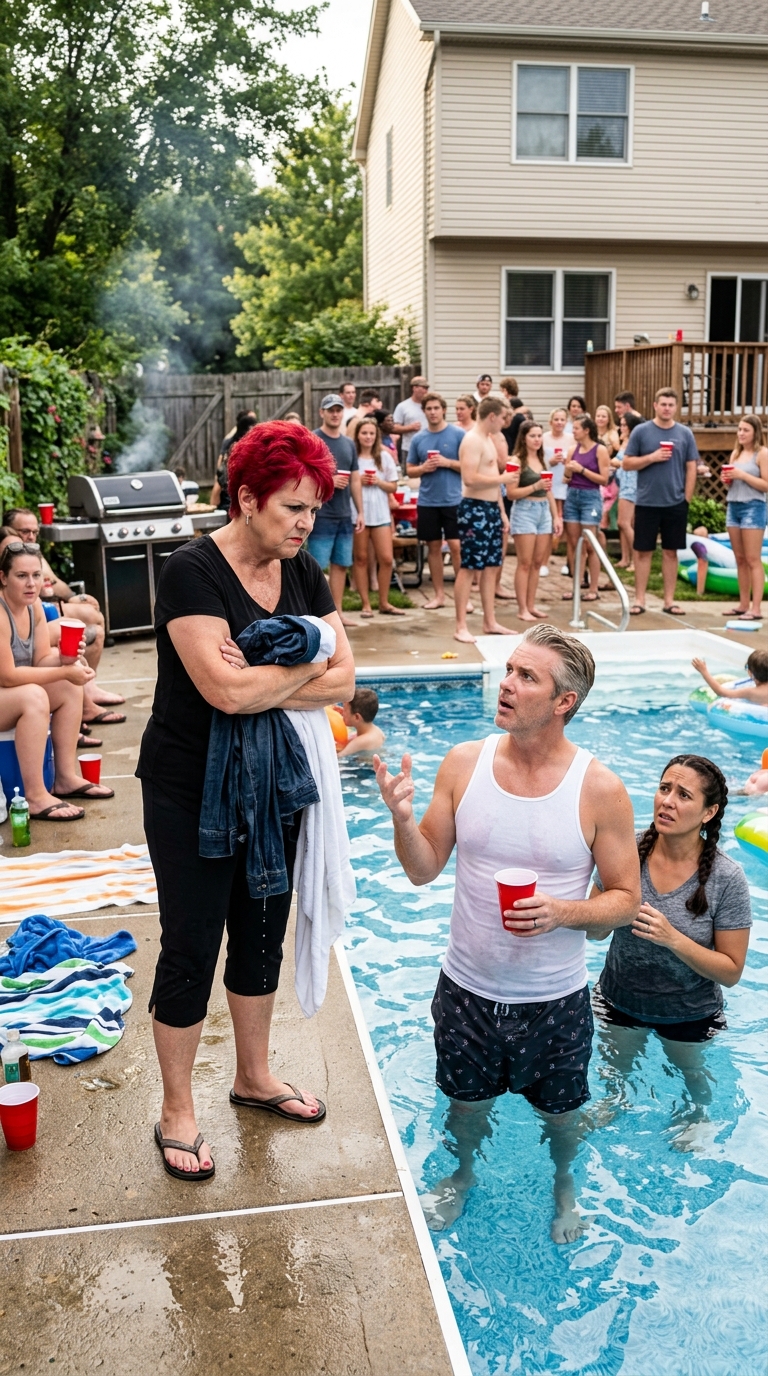
The sprinklers tapped across the lawn. The upstairs curtains were partly open. Caleb’s new truck sat in the driveway, shining like a reward he believed he had earned after a difficult quarter at work. Marissa had questioned the purchase, but Caleb had kissed her forehead and told her she worried in an adorable way.
That was one of his habits.
He knew how to make disrespect sound like affection.
Ridge Hollow was the kind of neighborhood where people acted like tall fences created privacy. The truth was, everyone noticed everything. They knew who purchased a new car, whose dog barked at night, and who spent too much time at someone else’s house.
Vanessa from number 218 had always been one of those familiar faces.
At first, Marissa genuinely liked her. Vanessa remembered birthdays, brought banana bread when Marissa was sick, watered her basil once, and arrived with friendly smiles and harmless reasons to visit. She borrowed sugar even though she hosted flawless dinner parties. She knew the gate code because Marissa had personally shared it with her.
That was the detail Marissa would think about again and again.
Not the pool.
Not the clothes.
The gate code.
Betrayal did not always force its way inside.
Sometimes, you handed it the key and called it friendship.
When Marissa opened the kitchen door, the backyard carried the scent of chlorine, warm stone, and the basil growing near the grill. Sunlight reflected off the glass doors, making her blink for a moment.
Then she heard the water.
One hit against the pool tile.
Then another.
Something felt wrong.
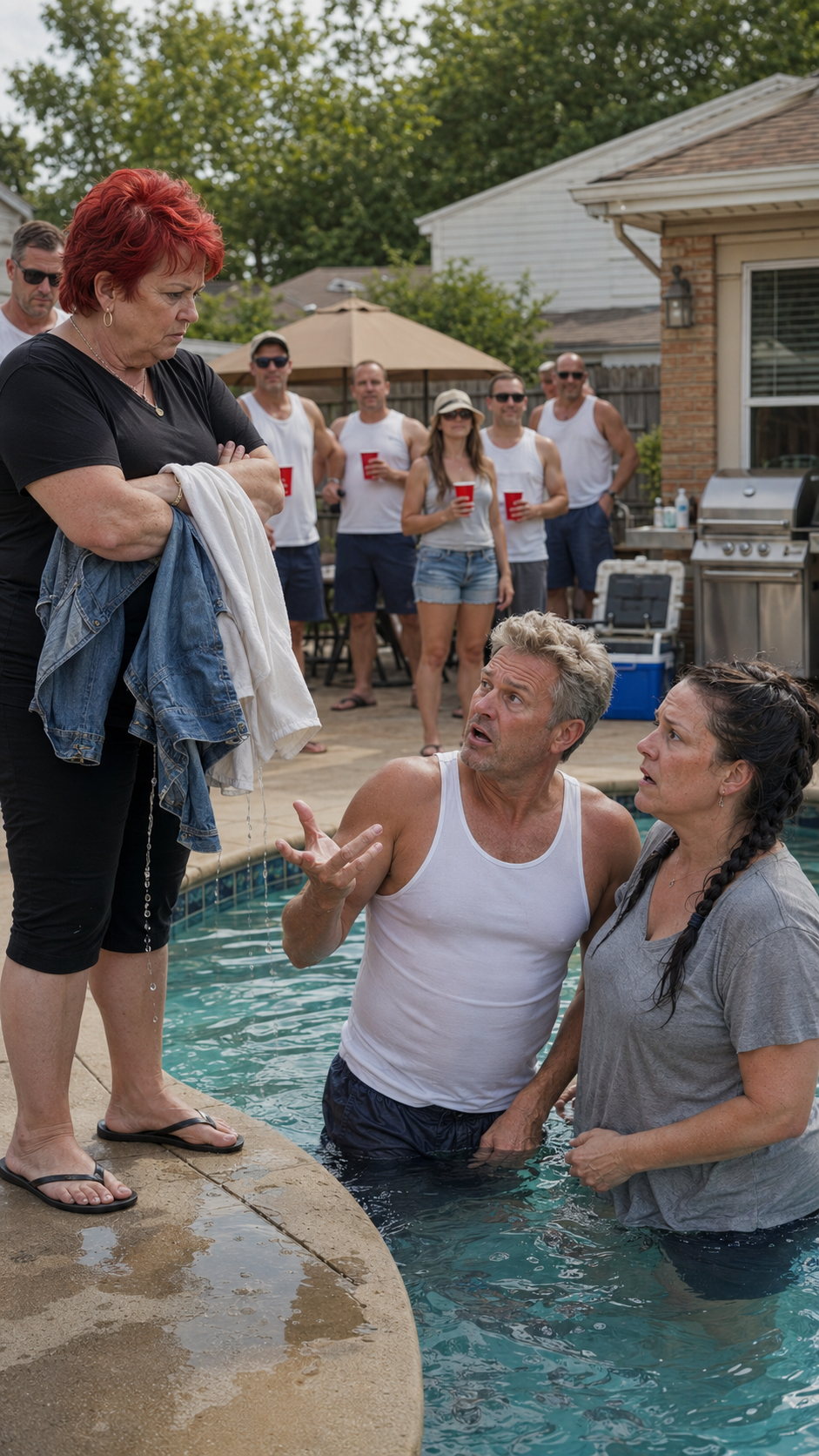
Caleb was in the pool.
Vanessa was in his arms.
Her black bikini top rested on Marissa’s patio chair. Caleb’s linen pants were folded beside it, arranged neatly enough to show that no one had been rushing until the door opened.
Caleb noticed Marissa first.
“Marissa,” he said.
He spoke her name as if she was the problem.
Vanessa lowered herself deeper into the water, leaving only her shoulders and mouth visible. Her red lipstick was smudged at the corner, the same color Marissa had seen on a coffee mug in her kitchen the week before.
That memory came back with painful precision.
Vanessa had stood at Marissa’s kitchen island, holding that mug, asking whether Caleb was still staying late at work so often.
Marissa had answered honestly.
Because she trusted the woman who asked.
Then Marissa saw the wet footprints.
They did not come from the side gate.
They did not come from the guest path.
They came from her kitchen door.
The grocery bag loosened in her hand. One avocado rolled out and tapped against the outdoor sink.
The sound was quiet.
Final.
“Don’t make a scene,” Caleb said.
That was the moment the marriage truly ended.
Not when she saw him with Vanessa.
Not when she noticed the clothes.
It ended when Caleb looked at his wife standing there with groceries in her hands and his first thought was how much noise she might make.
Marissa did not scream.
She did not cry.
She walked toward the lounge chairs and calmly collected their belongings.
Caleb’s shirt.
His belt.
His keys.
Vanessa’s sundress.
Her sandals.
Her phone, lighting up again with missed calls from Mark, her husband.
“Please,” Vanessa whispered. “We can explain.”
Marissa looked at the wet footprints.
“You already did.”
Caleb moved closer to the pool edge.
“Don’t be dramatic.”
There it was again.
The role he had already created for her.
If she shouted, she would be unstable. If she cried, she would be hysterical. If she demanded answers, she would be the one embarrassing him.
Men like Caleb did not just betray you.
They expected to judge your reaction afterward.
Marissa’s fingers tightened around the damp clothes. Then her eyes moved toward the red emergency button beside the kitchen entrance.
The security system.
The same one Caleb had mocked for months.
Marissa had paid for it after several break-ins happened nearby. Caleb called her paranoid during dinner parties, joking that she was transforming their home into a bank vault.
Now that very system was linked to the gate camera, pool camera, doorbell, patrol dispatch, and Ridge Hollow community alert.
Caleb knew that.
And that was exactly why his expression changed.
“Marissa. No.”
She pressed the button.
The siren exploded across the backyard.
Sharp.
Harsh.
Impossible to ignore.
Dogs began barking down the street. Curtains shifted. A garage door opened two houses away. Mrs. Palmer leaned over her fence wearing muddy gardening gloves. Two teenagers stopped their bikes near the curb. A delivery driver froze beside his van.
For a few seconds, the entire neighborhood seemed to stop.
Caleb shouted, “Turn it off!”
Marissa stood beside the alarm panel, their clothes draped over her arm.
“Why?” she asked. “You brought this five feet from my kitchen.”
Vanessa covered her face.
The water could conceal bodies.
It could not erase the truth.
PART 2
Marissa’s phone buzzed.
Security company.
Emergency alert confirmed. Patrol notified.
Then the Ridge Hollow community app illuminated.
Backyard alarm at 214 Ridge Hollow Lane.
That alert meant more than Caleb realized.
It created a timestamp.
It created witnesses.
It created a permanent record of the exact moment the lie stopped being private and became something everyone could see.
At 5:42 that afternoon, Caleb’s secret became an incident.
Marissa reached into Caleb’s pants pocket and pulled out the key fob to his new truck.
Caleb’s mouth fell open.
She held it between two fingers.
“This,” she said, “is the last thing of yours going into my pool.”
Then she dropped it into the deep end.
The key fob vanished beneath the clear blue water.
For the first time, Caleb had no response.
Vanessa turned toward the side gate, but before she could take a step, a car door slammed outside.
Her expression fell.
“Mark,” she whispered.
Marissa stayed still.
A black SUV had stopped at the curb.
Mark, Vanessa’s husband, stepped out and walked toward the house slowly.
He was not rushing.
Somehow, that made it worse.
A man running still believes he can stop the truth before it becomes real.
Mark walked like someone who already understood he was too late.
Then Marissa’s phone buzzed again.
Doorbell camera.
Motion clip saved.
Front entry. 5:39 p.m.
She looked down.
The thumbnail showed Caleb and Vanessa standing at the kitchen entrance.
Caleb’s hand rested low on Vanessa’s back as he guided her inside.
Three minutes before Marissa arrived home.
Not through the side gate.
Not through the patio.
Through the kitchen.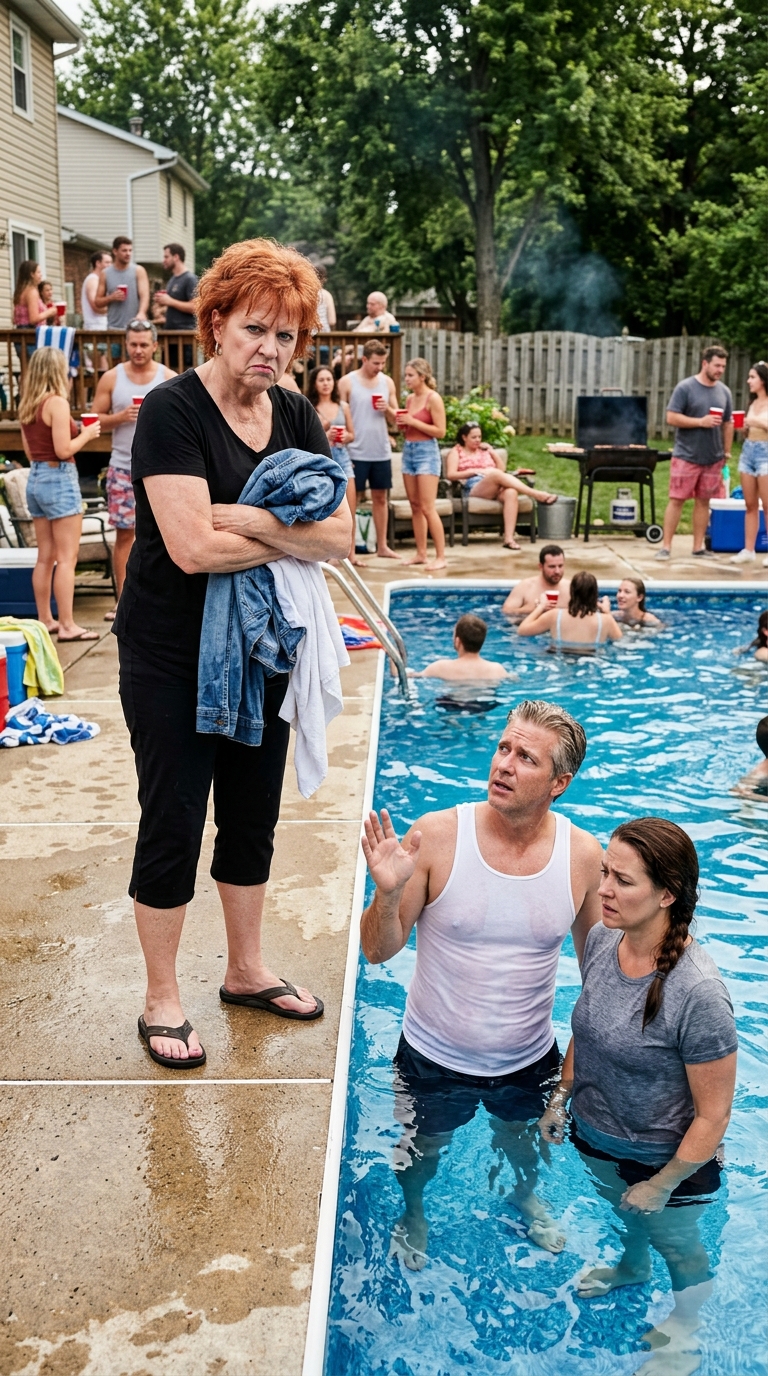
The same kitchen where Vanessa had borrowed sugar.
The same kitchen where Marissa had prepared Caleb’s coffee every morning.
Marissa opened the clip.
There was no sound, but the image said enough.
Caleb looked around before typing in the code.
Vanessa laughed.
He kissed her quickly before the door opened.
Careless.
Familiar.
Something inside Marissa became completely still.
Not numb.
Organized.
Vanessa noticed her expression and whispered,
“What?”
Marissa turned the screen toward Caleb.
His face revealed calculation before guilt.
That hurt more.
“Marissa,” he said, lowering his voice beneath the screaming alarm. “Don’t show him that.”
The doorbell echoed through the backyard speaker, polite and completely out of place against the siren.
Marissa answered through the camera.
“Mark.”
His pale face appeared on the screen.
“Before you open this door,” he said, his voice controlled, “tell me one thing. How long has my wife been using your kitchen door?”
Vanessa made a small broken sound from the pool.
Marissa did not respond immediately.
She scrolled through the camera history.
There were more motion clips from previous Tuesdays.
Some showed Vanessa arriving with an empty measuring cup.
Some showed Caleb opening the door while Marissa was away.
Some showed Vanessa leaving wearing sunglasses, with her hair styled differently from when she arrived.
The camera never knew what it was recording.
Machines do not understand betrayal.
They only keep time.
Marissa opened the front door.
Mark stood there in a dark polo shirt, one hand resting against the frame.
“I’m sorry,” Marissa said.
It was the first meaningless thing she had said all afternoon.
Mark walked inside without asking.
Marissa followed him toward the patio.
When he saw the pool, Vanessa covered her mouth.
“Mark,” she said.
He did not respond.
He looked at Caleb.
Then at the clothes hanging over Marissa’s arm.
Then at the patio chair, the phone, the wet footprints, and the glowing security panel.
The scene told the entire story without anyone needing to explain it.
Caleb tried to speak.
“Mark, listen—”
Mark lifted one hand.
Caleb stopped.
That single gesture accomplished what Marissa’s hurt had never been allowed to do.
It silenced him.
The patrol officer arrived six minutes after the alarm confirmation. By then, more neighbors had stepped outside. Mrs. Palmer watched through the gaps in her fence. The teenagers had moved their bikes farther down the curb but were still there.
The officer asked whether there was an intruder.
Marissa looked at Caleb and Vanessa, still standing in the pool.
“Not the kind you can arrest today,” she said.
Because the emergency alarm had sent patrol a notification, the officer filed a report. He documented the timestamp. He documented that Marissa was the homeowner. He documented that two people had been found in the backyard pool with their clothing nearby. He documented that one person had entered through the kitchen shortly before the alarm activated.
Caleb hated that detail.
He kept trying to make the situation sound smaller.
Privacy.
A misunderstanding.
A marital problem.
Anything unclear enough to hide behind.
But the officer continued writing.
Paper has a way of frustrating people who depend on charm.
Vanessa eventually climbed out and wrapped herself in a towel from the storage bench. Caleb had to wait until Marissa threw his clothes back to him piece by piece.
No one laughed.
Somehow, that made everything worse.
The neighborhood had witnessed enough to talk about it for years, but nobody treated it like a joke.
Humiliation could be deserved and still painful to watch.
Marissa did not need to enjoy it.
She only needed to stop shielding him from it.
When the siren finally ended, the silence felt overwhelming.
Caleb turned toward her.
“Can we talk inside?”
Marissa almost laughed.
Inside.
After everything, he still believed the kitchen was neutral territory.
“No,” she said.
“Marissa, please.”
She looked at the man who had called her careful when he meant boring, paranoid when he meant inconvenient, and dramatic when he meant dangerous to his reputation.
“I’m done discussing my marriage in rooms where you bring other women.”
Mark drove Vanessa home without saying a word.
Caleb’s truck stayed in the driveway because the key fob was somewhere at the bottom of the pool.
That detail spread through Ridge Hollow faster than the alarm itself.
By 7:10, Marissa changed the gate code.
By 7:32, she downloaded every saved security recording.
By 8:04, she emailed copies to herself, her sister, and a divorce attorney whose name she had once saved for a friend.
She barely slept.
Caleb stayed in the guest room after realizing she had locked the bedroom door.
From across the hallway, he sent her a message.
We need to handle this carefully.
Marissa stared at the word.
Carefully.
That was what he called hiding things after being caught.
PART 3
The next morning, Marissa contacted a pool service. The technician arrived before noon and recovered Caleb’s key fob from the deep end using a long net.
It no longer worked.
Caleb stood on the patio watching water drip from the useless plastic shell.
Marissa signed the invoice and kept a copy.
Petty, maybe.
Also documentation.
During the following week, Caleb tried every version of an apology.
He tried shock.
Guilt.
Stress.
Blaming Vanessa.
Blaming the pool alarm.
He even claimed Marissa had made everything worse, as if the siren had destroyed their marriage while he had simply been standing there.
Marissa listened once.
Only once.
Then she played the 5:39 doorbell recording.
Caleb went silent when he saw his hand resting on Vanessa’s back.
He became even quieter when Marissa played the next clip.
A Tuesday.
Then another.
Then another.
Not every piece of evidence arrives dramatically.
Some proof repeats itself until there is nothing left to deny.
Three days later, Mark sent Marissa a message.
Thank you for not letting them make us both stupid.
She sat at the kitchen island and cried after reading it.
Not because of Mark.
Because he understood.
The betrayal itself was one wound.
The deception surrounding it was another.
Caleb and Vanessa had turned normal neighborly routines into a disguise, then expected the people they hurt to feel ashamed for seeing through it.
The divorce was not simple.
Divorces rarely are.
Caleb wanted the house placed on the market immediately.
Marissa refused.
Her attorney used the patrol report, the alarm timestamp, the security footage, and Caleb’s own messages to create a clear timeline.
The security system Caleb had mocked became one of the strongest pieces of evidence.
The backyard pool became less like a luxury feature and more like a witness.
There were mediation meetings downtown in a conference room that smelled like burnt coffee.
Caleb sat across from her wearing a suit that felt too formal for the situation, while his lawyer tried to make betrayal sound like a misunderstanding.
Marissa sat through three sessions before she stopped feeling the need to defend herself.
Dates did more than anger ever could.
Timestamps did more than tears.
At one point, Caleb argued that the security footage invaded his privacy.
Marissa’s attorney calmly dismantled the argument, and even the retired judge overseeing the mediation almost smiled.
Marissa did not receive everything.
Nobody does.
But she kept the house through the settlement.
Caleb received his dead key fob in a plastic bag because his attorney insisted that personal property be returned.
Marissa sent it through the mail with tracking.
She let herself have one small smile.
Vanessa and Mark sold their house before the season ended. Mrs. Palmer left a basil plant on Marissa’s porch with a note that said, “For the grill.”
Marissa stood in the doorway holding it for a long moment.
People surprised her after that.
Some were curious.
Some were compassionate.
Some acted like they had not been watching from their windows, which was somehow kinder than admitting they had.
A woman from two streets away placed a card in Marissa’s mailbox with only four words.
Good for you.
No name.
No explanation necessary.
Marissa kept the card inside a kitchen drawer.
On difficult days, she pulled it out and read it again.
In the weeks that followed, she started noticing the little things she had overlooked for years.
The way evening sunlight moved across the kitchen.
The different scent of basil after rainfall.
The sound of the refrigerator running at night, the same sound Caleb had always complained about.
She realized she had spent years reshaping her life around his comfort.
Without him, the quiet did not feel lonely.
It felt like space to breathe.
In October, her sister flew in for a weekend and helped her repaint the guest room a soft gray, a color Caleb would have described as depressing.
They sat outside on the patio late into the night, drinking inexpensive wine and eating cheese they normally never purchased.
Her sister admitted she had never liked Caleb.
Marissa laughed until she nearly cried.
How many silent opinions had been politely standing outside her marriage all along?
She told her sister about the avocados.
How that tiny detail stayed with her more than the pool, the bikini, or the truck.
Her sister said maybe the avocados mattered because they showed exactly who Marissa had been when she walked up that driveway.
An ordinary woman thinking about dinner.
Not foolish.
Not helpless.
Just someone who had trusted the wrong person.
Months later, Marissa entered the pool alone for the first time.
The water was cold.
The tile still made the same gentle slapping sound.
The basil had grown full and thick in its pot.
She floated beneath the afternoon sunlight and looked toward the kitchen door.
For a moment, she saw herself again standing there with grocery bags digging into her fingers, watching two people expect her to shrink.
She did not shrink.
She pressed one button.
By the following spring, the house finally felt like it belonged to her.
She replaced the lounge chairs—not to make a statement, but because the old ones had simply worn out.
She painted the kitchen a warm yellow, a color Caleb would have called bad for resale value.
That had always been one of his favorite expressions, as if they were constantly preparing the house for strangers instead of actually living there.
In June, she hosted a small dinner with her sister and two coworkers.
No one arrived with banana bread carrying hidden intentions.
No one had the gate code except the people Marissa intentionally chose.
People sometimes asked if she regretted letting the whole neighborhood see what happened.
Marissa always gave the same response.
Caleb brought it five feet from her kitchen.
All she did was refuse to hide it.
