

The January heat on Hacienda El Sol de las Acacias never asked permission to enter. It arrived before dawn, rising from the red earth, slipping through the adobe walls of the barracks, and settling into bodies like a silent punishment.
In that year of 1868, the hacienda always woke the same way: three iron bell strikes sounded by the foreman Eusebio, a thick-voiced man who had learned to command long before he learned to think. Tomás was nine years old and already knew how to read the different silences of that place. The silence of the sugarcane fields when the wind died. The silence of the big house after the master had drunk too much. And the silence of the early morning in the barracks—the only honest one, the one that held dreams no one could steal because no one knew they existed.
Tomás’s mother was named Jacinta. She washed clothes before dawn, and her hands were at once the most battered and the softest on the entire hacienda. Every morning she woke him before the bells, placed a gourd of corn atole in his hands, and repeated the same words:
“Don’t look Eusebio in the eye. Don’t speak unless you’re spoken to. And never, ever go near the front terrace.”
Tomás listened the way children listen to warnings they don’t yet understand with their hearts—only with their heads.
That Tuesday morning, twelve days after Christmas, everything changed because of something small. Small, at least, to anyone who didn’t know what was about to be set in motion.
The hacendado’s daughter had returned.
Ana Lucía de la Vega was back from Mexico City, where she had spent three years at a finishing school for young ladies of good family. Before that she had been in Spain. And before that, the old people in the barracks said, she had known Paris—a city whose name they pronounced with the same reverence others reserved for a shrine.
She was twenty years old, with chestnut hair braided to one side, a white dress so fine it seemed not to belong to the earth, and honey-colored eyes that the De la Vega family had carried in their blood for generations.
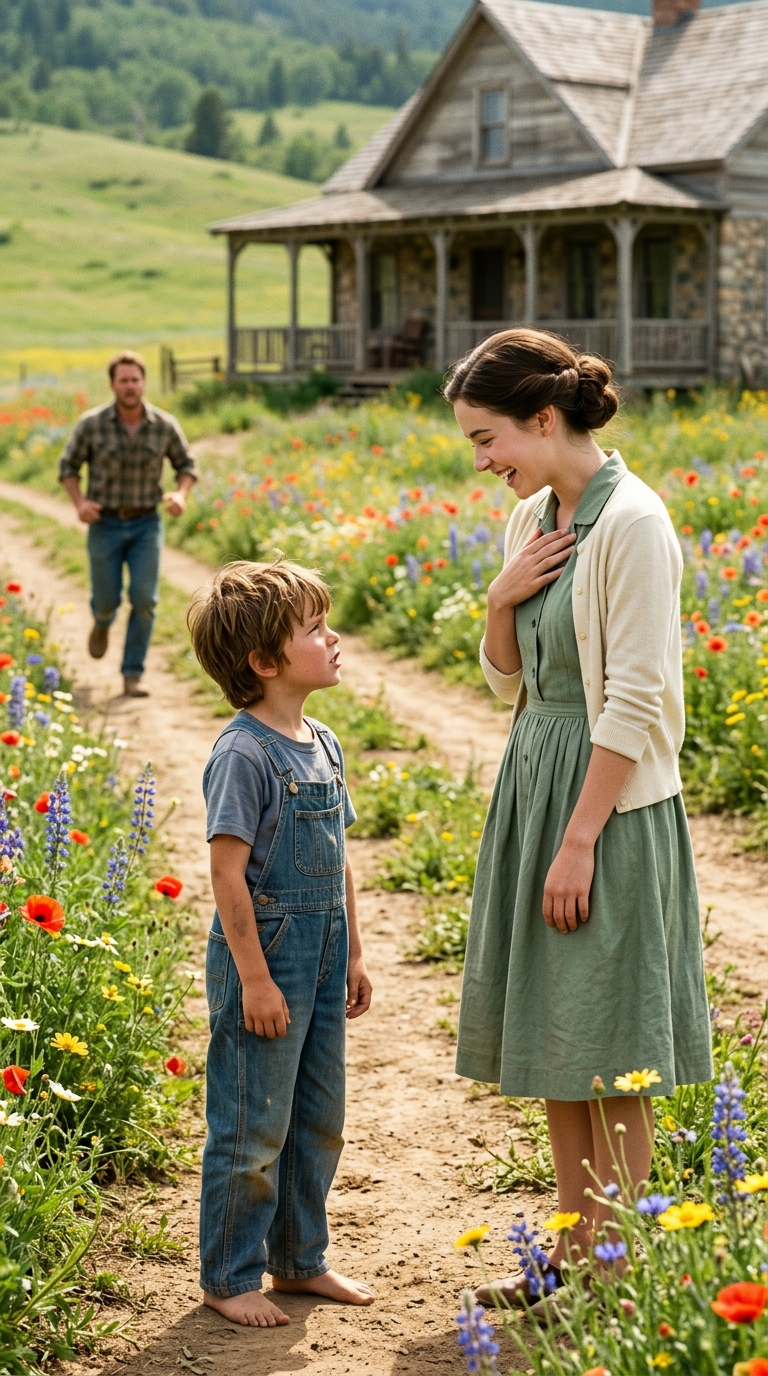
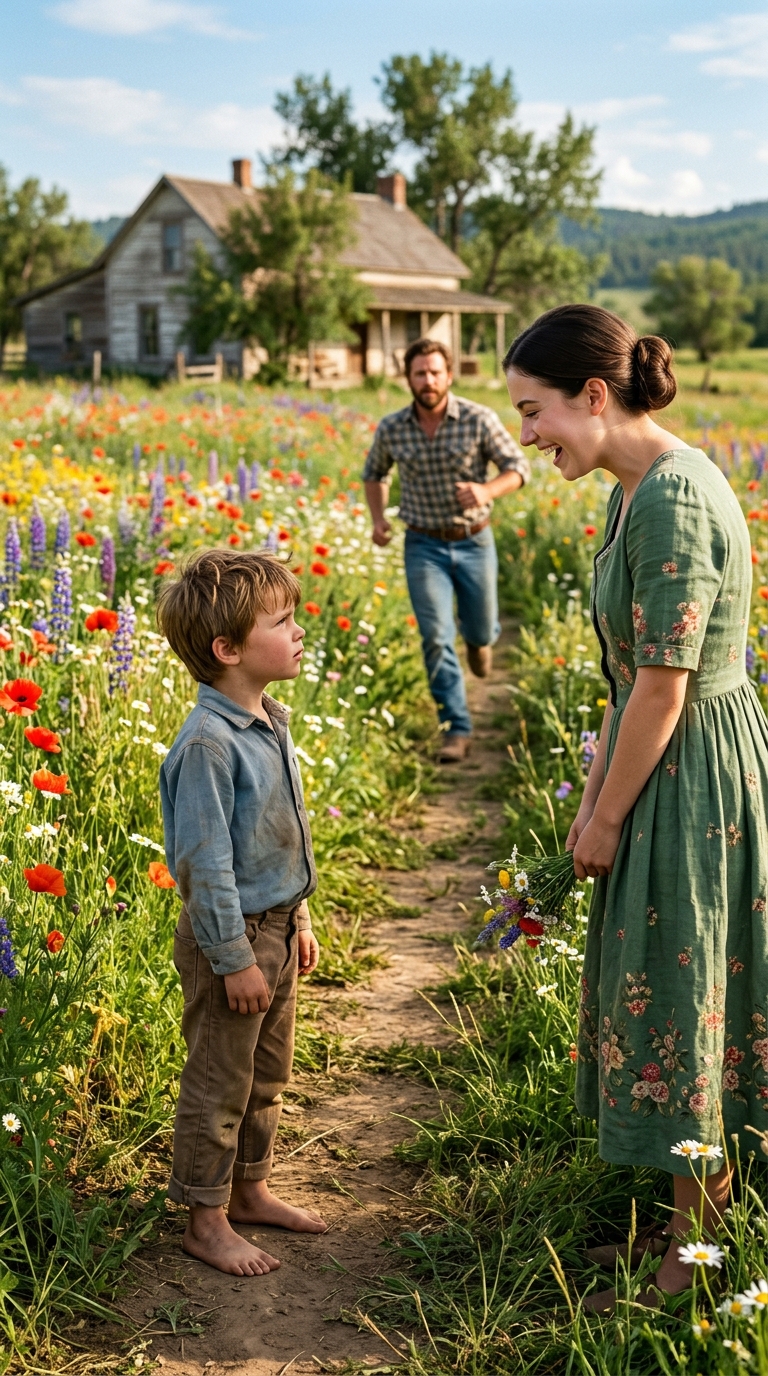
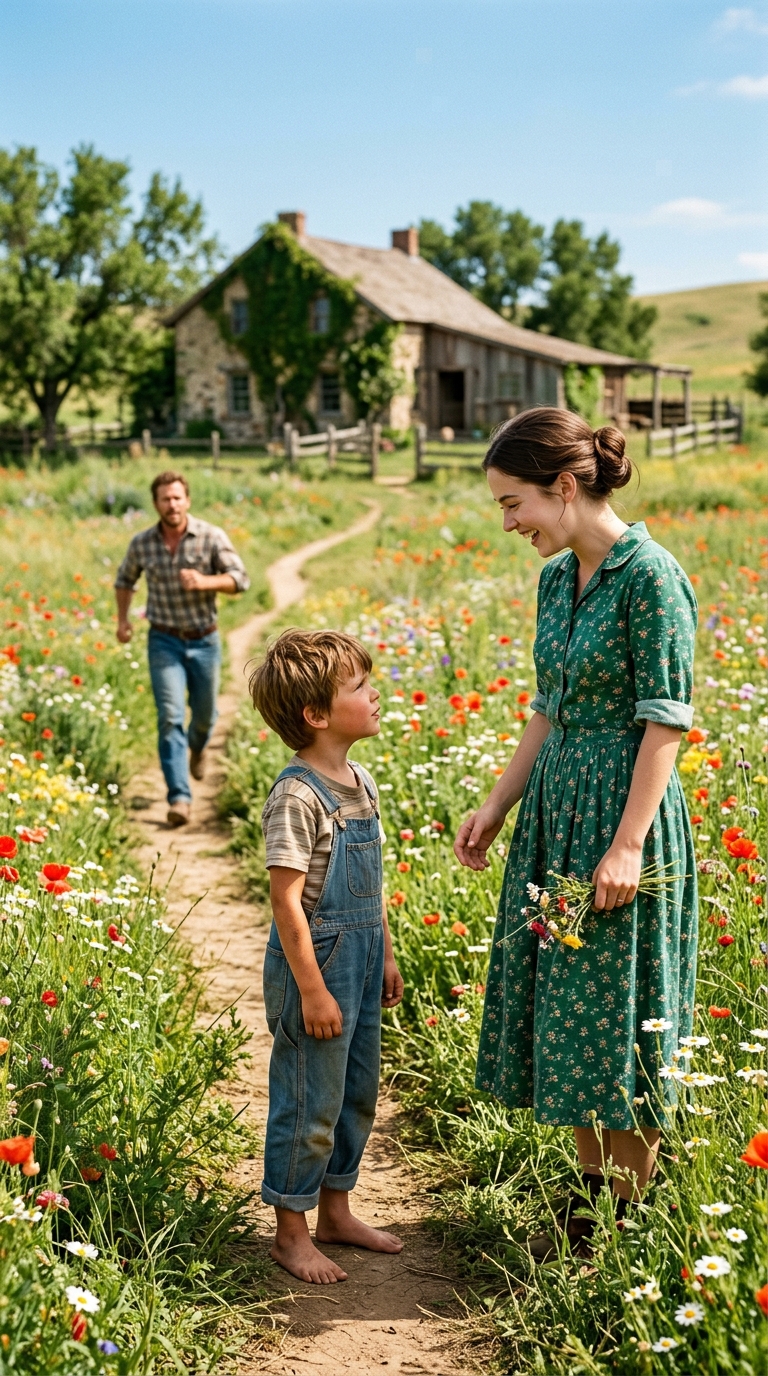
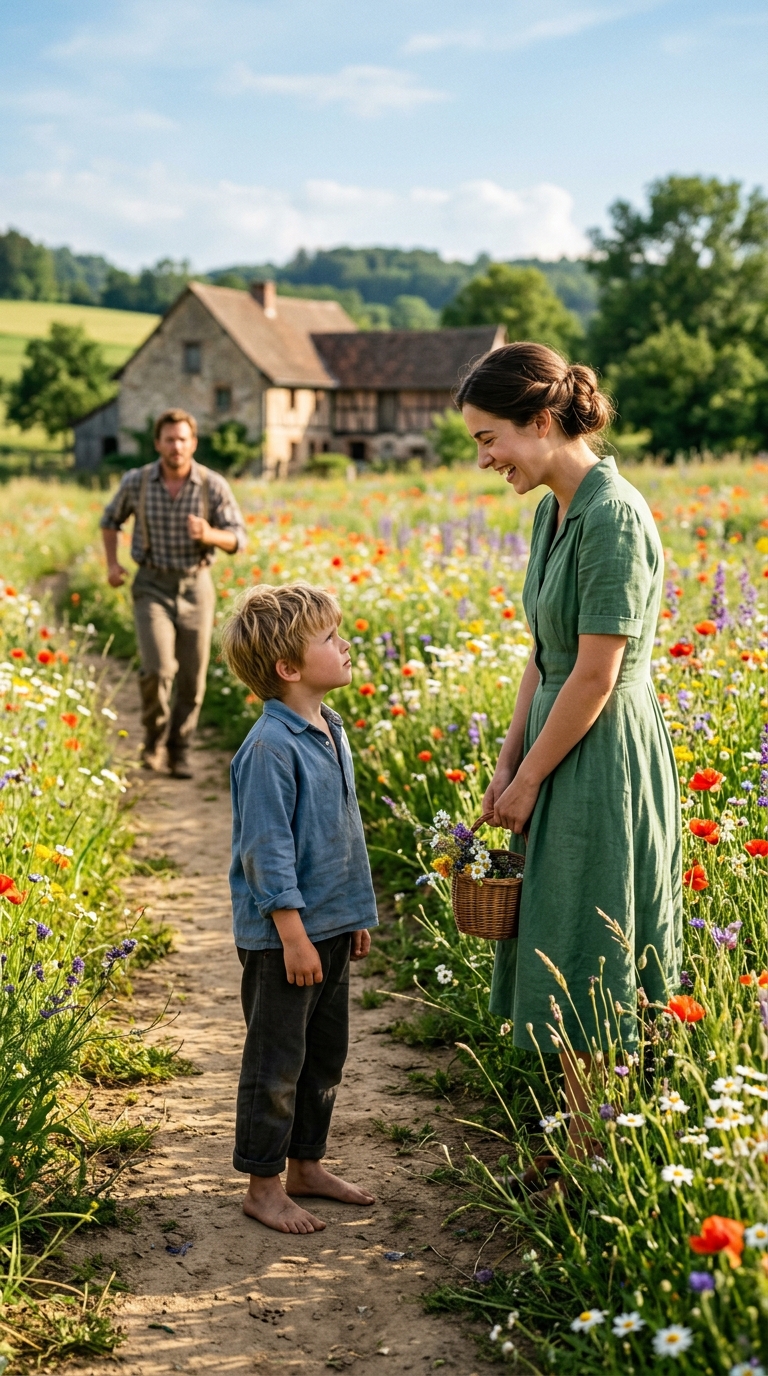
Tomás saw her for the first time in mid-morning, when Jacinta sent him to deliver a basket of ironed clothes to the big house kitchen. He entered through the service corridor as the rules required, left the basket with the cook Petra, and was already leaving when he heard a laugh.
He turned without thinking.
Ana Lucía was on the front terrace, a porcelain cup in her hands, gazing out at the sugarcane fields that stretched as far as the eye could see. The sunlight fell across the side of her face, and there was a clarity in her that Tomás had no name for, yet it etched itself into his memory with involuntary sharpness.
He should have left. He didn’t.
She turned her head and saw him.
There was a brief pause—one of those moments when two worlds that were never meant to touch look each other in the eye.
“Are you lost?” Ana Lucía asked, with genuine curiosity and no malice.
Tomás looked at her with that strange seriousness that made adults say he had been born old. Then he answered with a clarity he himself didn’t understand:
“When I grow up, I’m going to be your husband.”
The silence lasted exactly three seconds.
Then came Ana Lucía’s laughter. Not cruel. Not humiliating. Just surprised—almost enchanted by the impossible boldness of those words.
Her cousin covered her mouth with her fan. The cook let out a stifled gasp. And Eusebio, who was passing through the corridor with papers for the master, stopped dead in his tracks.
Tomás didn’t see the exact moment the scene changed. He only felt the foreman’s hand on his shoulder like a claw and the brutal yank that dragged him off the terrace.
The punishment came that same day in the courtyard between the barracks and the stable, where everyone could see. The owner of the hacienda, Don Hernando de la Vega—a man with a graying mustache and a hard gaze—rarely witnessed punishments. He delegated them. But this time he had heard what happened. He descended the steps slowly, planted himself in front of the boy, and stared at him for a long time.
“Who taught you to speak like that?” he asked.
Tomás lifted his gaze. Not in defiance. With something worse for a man like him: dignity.
“No one, patrón.”
Don Hernando didn’t reply. He made a gesture with his hand and walked away.
That night Jacinta waited for him with warm water and crushed leaves to bring down the swelling. She didn’t speak while she cleaned his wounds. When she finished, she laid her open palm on her son’s back, as if she wanted to pass him strength, or calm, or something that had no name.
“Are you going to forget what you said?” she asked at last.
Tomás took so long to answer that she thought he had fallen asleep.
“No.”
Jacinta closed her eyes. Not in despair. In something more complex: that mixture of pride and fear that only mothers know when they realize their son carries a flame the world will try to extinguish for the rest of his life.
The years passed.
Tomás learned to make himself invisible when it suited him and visible when it was necessary. He learned that Rodrigo, the eldest son of the master, was cruel out of boredom—the worst kind of cruelty. He learned that Petra hid leftovers for the children in the barracks. He learned to read with the accidental help of the administrator’s son, and he learned so quickly that it ended up frightening even those who had started the game.
And above all, he learned to observe.
He observed the hacienda, its accounts, its routes, its abuses, its cracks. He observed Ana Lucía when she returned on visits—first young, then married, then widowed—each time quieter, more self-possessed, less like the girl who had laughed on the terrace.
His mother died in 1883, consumed by a cough that slowly took over her body in silence. On her last night, Tomás held her hand and made her a promise in a low voice:
“I’m going to get out of here, Mom. I swear it.”
She squeezed his hand with a strength impossible for her exhaustion. After that, there was nothing.
Five years later came the news that shook even the walls of the barracks: slavery had been abolished. Freedom now existed on a piece of paper signed far away, but it existed. When the news spread through the hacienda, there was first a strange, immense silence. Then came the embraces, the tears, the laughter that seemed to dissolve in the air.
Tomás didn’t cry.
He felt something else: as if a compass lost for years had finally found north.
That same dawn he rolled up his mat, packed a piece of bread, a broken mirror, and the dark-beaded rosary that had belonged to Jacinta, and set out on the road without looking back. He only said goodbye to Cirilo, a big, quiet man from the barracks.
“Where are you going?” Cirilo asked.
“Far away,” Tomás answered. “But not forever.”
He reached the port of Veracruz months later, his shoes worn out and almost nothing in his pockets. He got a job loading crates in the warehouse of Don Abilio Salas, a Lebanese merchant who had built his business through patience and precision. Abilio soon discovered that this young man could read, write, do mental arithmetic, and spot flaws where others saw only routine.
Within weeks he stopped loading sacks and began sitting down to review books, orders, and contracts.
Abilio taught him what no book could teach: how to negotiate without humiliating, how to detect a lie in a smile, how to earn respect without begging for it. And Tomás learned with the fierce concentration of someone who knows he cannot afford to waste anything.
Five years later the warehouse was thriving more than ever. When Abilio’s heart failed and he realized he didn’t have much time left, he called Tomás to his room.
“I’ve already signed the papers,” he said, his voice faint. “The warehouse will be yours when I’m gone.”
Tomás looked at him for a long time.
“Why?”
Abilio closed his eyes.
“Because you are the best thing that has happened to this business in twenty years. And because someone has to carry it on.”
Abilio died in March of 1892. Tomás stayed by his side all that last night, just as he had with Jacinta. Out of respect. Out of gratitude. Out of love.
During the following year he worked as if every hour had an edge. He expanded the business, opened credit with a bank in Puebla, hired employees, and learned to move among men who at first looked at him with suspicion and later had to treat him as an equal.
And at night, when the port slept with the smell of salt and wet wood, he thought of the hacienda.
Not with nostalgia. Nostalgia is for places that have been good. But with a question that still lived inside him: what had become of Ana Lucía, what remained of that world… and what he was going to do with the promise of a child who had refused to die.
He returned in 1893.
Hacienda El Sol de las Acacias was aged, broken, badly run. The walls were yellowish, the garden overrun with weeds, part of the roof covered with canvas. Don Hernando had died years earlier. Rodrigo had sold off part of the property to pay debts and had left for the capital. Of the old hacendado’s children, the only one still there was Ana Lucía.
Tomás found her on the back terrace, an open book on her lap and her gaze lost in the garden.
She lifted her eyes when she heard his steps.
The recognition was immediate and, at the same time, slow—as if two portraits taken decades apart were trying to fit over each other.
“Tomás,” she said at last.
“Yes, señora.”
Ana Lucía studied him a moment longer.
“Sit down.”
The conversation that afternoon was strange because of the space between the words. He told her about Veracruz, the warehouse, Abilio, what he had built. She told him about the ruin of the hacienda, the death of her husband, the inherited debts, the exhaustion of holding up alone what was falling apart on every side.
When they finished, she closed the book and set it on the table.
“You didn’t come just to tell me this.”
“No.”
“Then tell me why you came.”
Tomás looked her straight in the eye.
“I didn’t come to repeat a child’s promise,” he said. “I came to make a man’s proposal.”
Ana Lucía remained still.
“Do you still think about what you said that day?”
“Every year since.”
There was a long silence.
“People will talk,” she murmured at last.
“People have always talked,” Tomás replied. “I don’t plan to live to please them.”
For weeks they worked together reviewing accounts, measuring land, calculating repairs. Tomás invested part of his money to pay the urgent debts and reorganize the property. Ana Lucía managed the house and the books with admirable efficiency. She was methodical, clear, firm. Almost with astonishment, they discovered that together they understood each other as if they had been doing it for years.
The decisive conversation happened on a clear moonlit night, on the same back terrace.
“I thought about that day many times,” Ana Lucía said. “First with shame. Then with guilt. I laughed.”
“It wasn’t a cruel laugh.”
She looked at him, surprised.
“How can you know that?”
“Because I’ve known the difference since then.”
Ana Lucía lowered her gaze.
“Do you hold a grudge against me?”
“Not against you.”
“Why?”
Tomás took a moment to answer.
“Because you were never cruel. You were simply born into a world made so you wouldn’t see certain things. That doesn’t make you innocent… but it doesn’t make you a monster either.”
She studied him for a long time.
“What kind of man are you?”
Tomás smiled faintly.
“One who waited for you longer than I ever imagined.”
They were married in October, in a small ceremony with few witnesses and many curious glances from a distance. Some people stepped away. Some whispered. Some said the world was turning upside down.
Maybe they were right.
Because in the years that followed, the hacienda changed.
Tomás introduced paid labor with clear contracts and fair wages. He built a small brick school right in the courtyard where he had received his punishment as a child. Ana Lucía managed the house and the accounts with admirable efficiency. Together they turned the old hacienda into a different place: not perfect, but dignified.
They had a son they named Gabriel. And one summer afternoon many years later, Tomás was on the front terrace reviewing a contract when Ana Lucía appeared with the boy in her arms.
She stood watching him in silence.
“What is it?” he asked without looking up.
“Nothing,” she answered. “I was just looking.”
Tomás finally raised his eyes. He saw her, saw the child, saw the sugarcane fields and the sun setting over the acacias.
“Does it still make you laugh?” he asked.
Ana Lucía let out a soft laugh, different from the one of the twenty-year-old girl. A mature laugh, full of time, losses, choices, and tenderness.
“Not anymore,” she said. “But it still amazes me.”
And this time Tomás laughed too.
In that red earth, where for so many years everything had seemed designed so that some lives could never bloom, their story began to be told as one of those rare things that end up seeming like miracles.
Not because a child had spoken an impossible madness.
But because a man kept a promise, a woman had the courage to open a door no one expected, and together they proved that sometimes the world can indeed change… when two people decide not to obey the unjust version they were born to inherit.
