

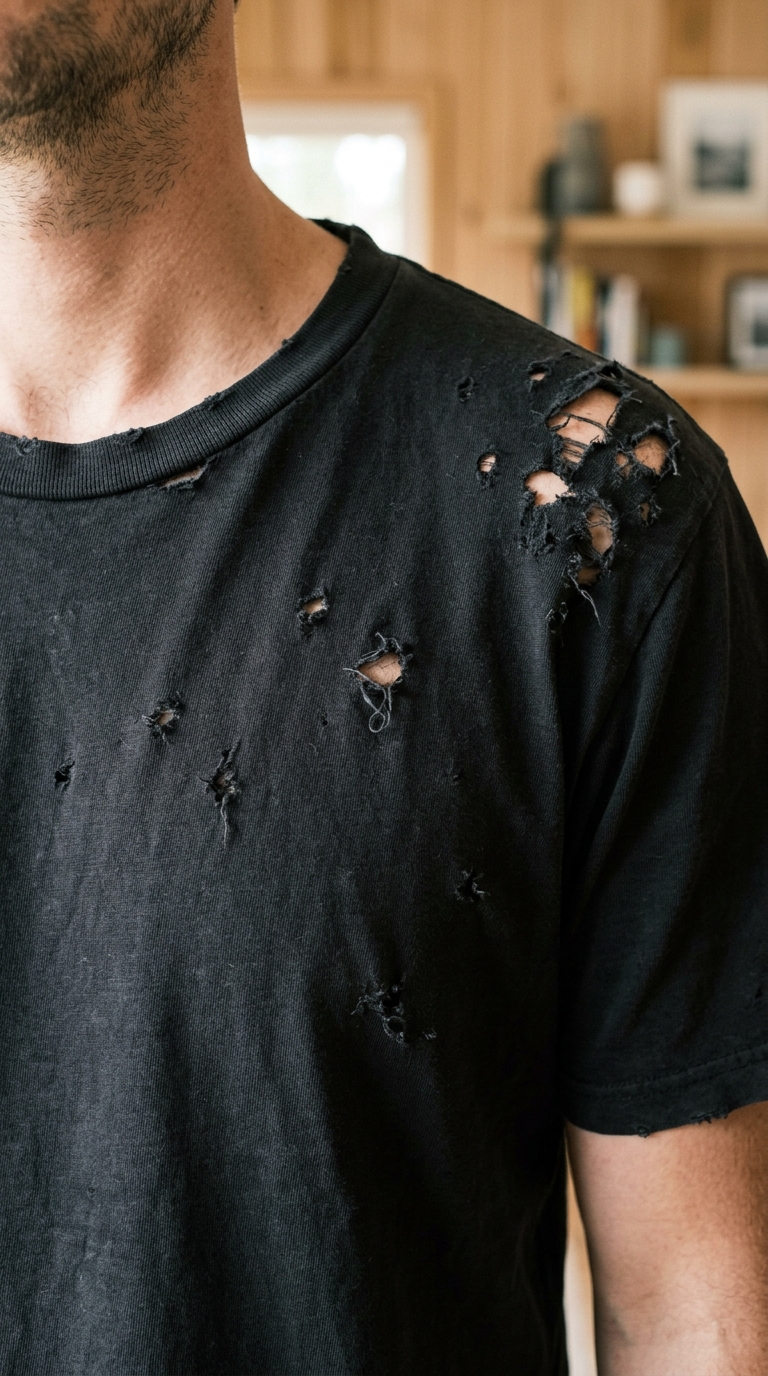
It began as a small annoyance—a tiny puncture near the hem of my favorite cotton T-shirt that I brushed off as a defect from inexpensive manufacturing. But before long, the problem escalated.
Every time I emptied a load of laundry from the dryer, the damage seemed worse—larger holes, unraveling threads, and ruined garments that had once been staples of my wardrobe.
I became convinced that my washing machine was somehow destroying my clothes, or that moths had invaded my closet, but the reality was far more disturbing…
The reality was far more unsettling: I was the one responsible.
For months, I had been blaming everything around me—the detergent, the quality of the fabric, even the appliance technician who repeatedly assured me that my machine was functioning perfectly.
I kept searching for a culprit inside the machine, never realizing that my own laundry routine was quietly destroying my clothes.
After weeks of growing frustration, I finally stopped making assumptions and started looking for answers. I read through forums, sought advice from experts, and closely examined every damaged piece of clothing.
What I uncovered completely changed the way I viewed my laundry room.
The holes were not random accidents; they were the direct result of repeated physical stress that I was unknowingly putting my clothes through during every wash cycle.
THE HIDDEN CULPRIT: THE AGITATOR
In many households, the main offender is actually the component designed to clean your clothes: the agitator. If you own a top-loading washing machine with a central post, your garments are essentially caught in a constant tug-of-war.
During the spin cycle, sections of fabric can become trapped in the narrow spaces between the agitator and the drum. As the machine continues to operate, the material is pulled, stretched, and eventually damaged, creating those familiar round holes that often appear near the bottom of shirts.
THE FRICTION PROBLEM
Aside from the washing machine itself, many people overlook the friction created by everyday accessories. Have you noticed that the holes frequently appear around the waist area?
Consider the items you wear regularly. Belt buckles, jean buttons, and even jacket zippers can behave like tiny cutting tools during the wash cycle.
When a soft cotton shirt is repeatedly pressed against these hard metal surfaces during forty-five minutes of vigorous tumbling, the fabric gradually wears down. This constant grinding motion weakens the weave until holes begin to form.
THE SOLUTION: A FEW SIMPLE CHANGES
The good news is that you do not need to replace your appliances or stop wearing your favorite clothing. The solution is surprisingly straightforward. Begin by turning garments inside out before washing them.
This easy habit allows friction to occur on the inside of the fabric, helping protect the visible outer surface from excessive wear.
You can also place delicate items inside mesh laundry bags. These bags provide a protective barrier that helps prevent snagging on the agitator or rubbing against rough metal components on other garments.
Finally, avoid overloading your washing machine. When the drum is packed too full, clothing cannot move freely, and the pressure against the drum increases significantly.
Giving your laundry enough space allows the water and detergent to work effectively while reducing the mechanical strain that causes those frustrating holes.
Once I made these simple but intentional adjustments, the damage stopped completely.
My clothes are finally protected, and I learned that the best way to preserve the things we value is to understand the hidden forces working against them.
