

PART 1: Four Taps That Silenced a Ballroom
My name is Sophie Vance. That evening, I was nothing more than an exhausted waitress working at New York City’s prestigious Pierre Hotel.
Six exhausting hours standing. Red wine staining my uniform. Painful blisters rubbing against the inside of my inexpensive black shoes.
Before the event began, our supervisor had warned everyone, “Keep your eyes down, your mouths shut, and stay out of the guests’ business.”
I couldn’t afford to lose that job.
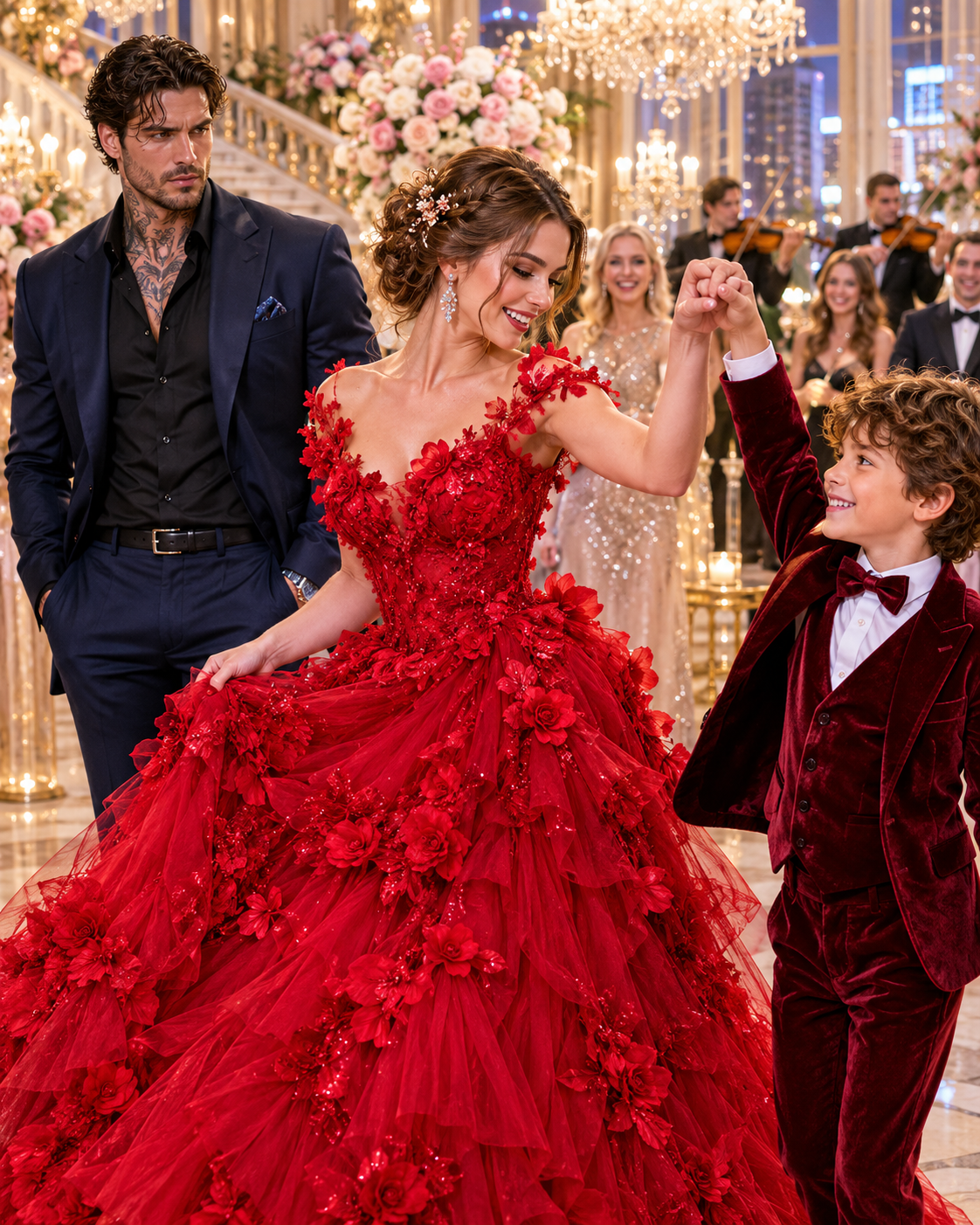
Then I noticed Dante Moretti.
New York’s most notorious Mafia boss stood near the sweeping grand staircase, surrounded by intimidating men who seemed willing to kill without hesitation if he commanded it.
But it wasn’t Dante who caught my attention.
It was the little boy sitting alone a short distance behind him.
He appeared to be around eight years old, dressed in a tiny tuxedo. Both hands were pressed against his ears, his shoulders shook uncontrollably, and his body rocked desperately back and forth.
The music was overwhelmingly loud.
Guests laughed and talked over one another.
Nobody seemed concerned about the child’s obvious distress.
Then a woman wearing a glittering silver gown accidentally brushed against him.
The little boy screamed.
“Good Lord!” she snapped. “Can’t someone remove that embarrassing child?”
Her husband leaned toward her.
“That’s Moretti’s son.”
“Then money clearly can’t buy decent parenting.”
Another guest murmured, “Imagine raising a defective heir.”
My stomach twisted painfully.
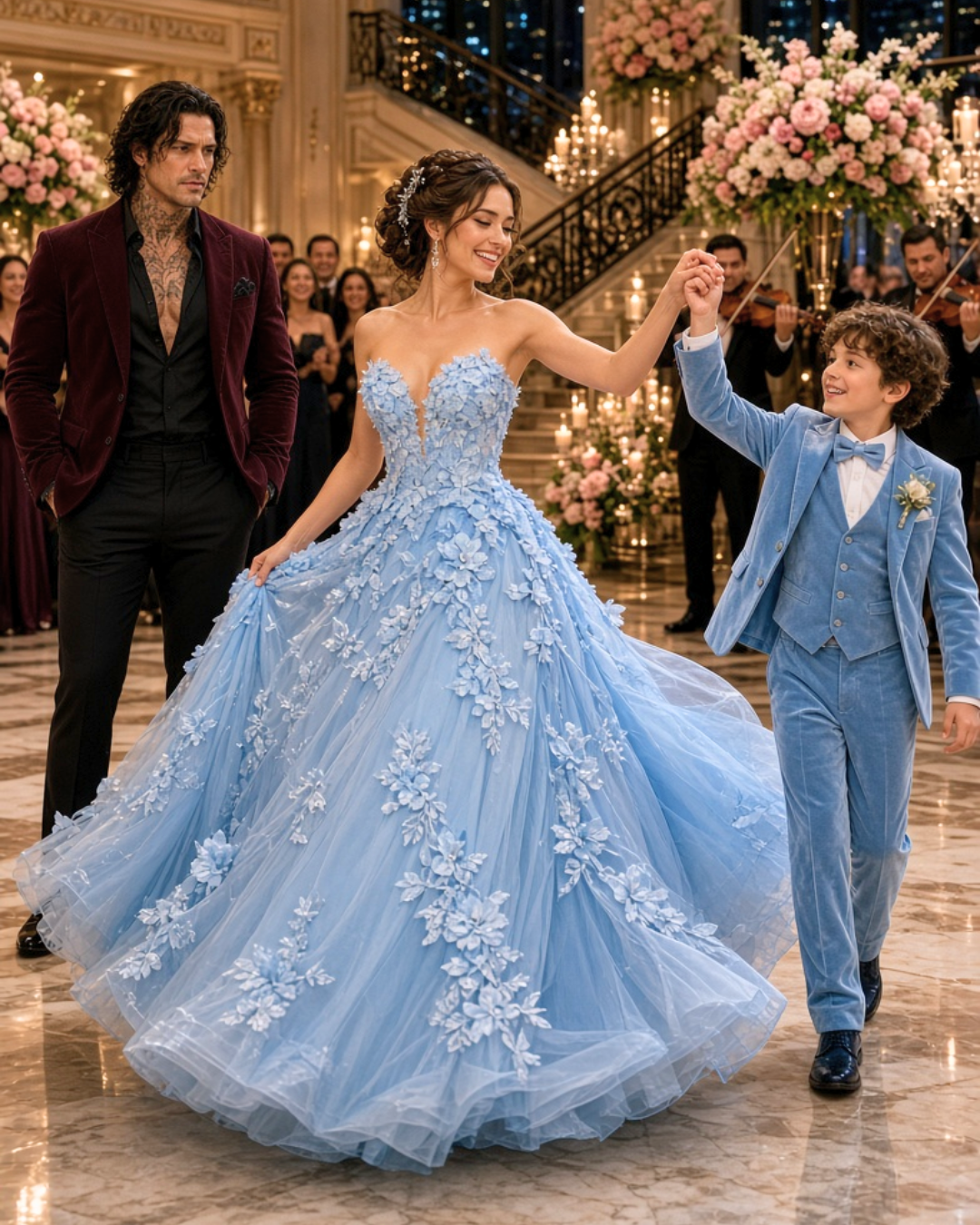
Three years earlier, I had watched my little brother Danny experience the same overwhelming distress.
Whenever loud noises became unbearable, our father accused him of being spoiled.
But I understood what was happening.
I used to sit quietly beside Danny and tap a gentle rhythm until his breathing steadied.
Four little taps.
It was our private signal.
Danny had died three years earlier.
And there was nothing I wouldn’t have given to hear him laugh again.
I lowered my champagne tray.
“Don’t!” another waitress whispered. “That’s Moretti’s kid!”
I continued walking.
Suddenly, someone collided hard with my shoulder.
Champagne spilled over my shoes.
Glasses shattered against the marble.
The child screamed and curled tightly into himself.
Ignoring the broken glass, I dropped to my knees.
Then I tapped the floor.
Once.
Twice.
Three times.
Four.
The boy’s eyes shifted toward my fingers.
For one delicate moment, his frantic rocking slowed.
Then the entire ballroom became silent.
Heavy footsteps approached from behind.
“Who gave you permission to approach my son?”
I looked up.
Dante Moretti stood over me, his face terrifyingly cold.
Before I could explain, he turned to his bodyguards.
“Find out everything about her.”
Then his eyes returned to mine.
“And don’t let her leave.”
His command seemed to weigh more heavily over the room than the silence following his son’s scream.
I remained kneeling among the shattered glass, my fingertips still touching the polished marble.
The little boy had stopped rocking.
His gaze remained fixed on my hand.
Not my face.
Not his father.
Only the place where I had tapped four times.
A dark-suited man approached and extended his hand.
“Please stand.”
His tone was professional, but it made clear that refusing was not an option.
I glanced toward my supervisor, whose face had gone pale near the service counter.
Her lips moved in a silent apology.
I understood immediately.
Nobody intended to defend me.
I accepted the man’s hand and carefully stood, keeping both palms visible.
A small piece of glass sparkled near my uniform’s hem.
Dante noticed it before I did.
“Get that out of her shoe,” he said.
“I can manage,” Sophie replied.
His eyes narrowed slightly.
It was the first time he appeared to regard me as something other than a troublesome interruption.
“You can manage a great deal, apparently.”
“I was doing my job.”
“Your job was serving champagne.”
“My job was also making sure guests didn’t get hurt.”
The sound of our conversation made the little boy flinch.
I immediately softened my voice.
“I’m sorry.”
Dante looked toward his son.
The boy had pressed both hands against his ears again, but his tears had stopped.
His breathing remained shallow and uneven.
Something changed in Dante’s expression.
The tension around his mouth eased.
For an instant, genuine concern replaced his anger.
“What is his name?” Sophie asked.
The closest bodyguard stared at me as though I had committed another offense.
But Dante answered.
“Leo.”
I nodded toward the child.
“Leo, my name is Sophie.”
Leo briefly looked up.
He said nothing.
“That’s all right,” she continued softly.
“You don’t have to answer me.”
Although the music had stopped, the enormous ballroom remained too crowded and brightly illuminated.
Everywhere, wealthy guests watched from behind expensive jewelry and champagne glasses.
Some whispered discreetly.
Others openly stared.
Their curiosity felt almost physical.
Dante seemed equally aware of their attention.
“Clear the east corridor,” he told his men.
One guard hurried away.
“Cancel the music and ask the guests to remain in the ballroom.”
A silver-haired foundation trustee stepped forward.
“Dante,” said a silver-haired trustee nearby, “surely that isn’t necessary.”
Dante turned his head.
The trustee immediately fell silent.
Dante’s expression wasn’t dramatic.
That made it even more intimidating.
“The evening is over.”
A wave of murmuring spread through the guests.
I noticed the woman in the silver dress still watching Leo with obvious irritation.
Her husband took her arm and guided her away.
My hands tightened at my sides.
Dante noticed.
“You’re coming with us.”
“I have to report to my supervisor.”
“You may do that after I ask you a few questions.”
“I don’t think I have a choice.”
“No,” Dante said.
For a fleeting moment, I thought I saw regret in his expression.
“You don’t.”
He approached Leo and crouched before him.
The movement surprised the surrounding guests almost as much as his command had.
The feared Dante Moretti lowered himself until he was level with his son.
“Leo,” he said.
The child did not respond.
Dante tried again, speaking more gently.
“We’re going somewhere calmer.”
Leo’s shoulders tightened.
His eyes moved toward me.
Dante followed his gaze.
“Do you want her to come?”
Leo shifted his fingers.
He tapped his knee once.
Then again.
My breath caught.
Dante looked toward me.
“You understand him?”
“Not exactly.”
“But you know what he’s doing.”
“I know he’s trying to tell you something.”
“What?”
“I don’t know yet.”
Leo tapped three more times in quick succession.
I recognized the rhythm, though I couldn’t determine its meaning.
Danny had relied on tapping whenever speech became too difficult, but our signals had belonged only to us.
One tap meant yes.
Two meant no.
Four meant I’m here.
Over time, we’d developed other patterns.
Wait.
Water.
Too loud.
Please don’t leave.
I never expected to encounter those rhythms again.
Dante offered his hand to Leo.
The child recoiled.
I spoke instinctively.
“Don’t touch him yet.”
Every nearby guard shifted position.
Dante stared at me.
I forced myself to remain calm.
“He may need to know what’s happening before anyone moves him.”
“You seem very certain.”
“I’m familiar with sensory overload.”
Dante considered my words.
Then he lowered his hand.
“Tell me what to do.”
The request surprised me so much that I briefly forgot to answer.
“Give him space.”
“He has space.”
“Not enough.”
I looked around.
Powerful chandeliers blazed overhead.
The marble reflected movement from every direction.
Perfume, alcohol, food, conversations, camera flashes, and equipment noises combined into an exhausting sensory assault.
“Take him somewhere with softer light,” she said.
“And fewer people.”
Dante nodded toward his security team.
Within moments, the corridor was cleared.
Leo remained motionless.
I knelt several feet away.
“Leo, we’re going to a quiet room.”
I paused.
“No one will make you talk.”
He watched me.
“You can walk, or you can hold my sleeve.”
Dante’s jaw tightened.
He probably disliked the thought of his son depending on a stranger.
But Leo leaned forward almost immediately.
His fingers closed around the sleeve of my stained uniform.
A collective gasp moved through the ballroom.
I slowly stood.
Leo followed.
Dante walked beside him, close enough to intervene but careful not to overwhelm him.
We entered a private room beyond the corridor’s carved wooden doors.
It had once been a reading lounge.
Inside were a sofa, two armchairs, a writing desk, and a softly glowing lamp.
Dante instructed everyone to leave except one bodyguard outside.
I expected him to remain with us.
Instead, he said, “You stay with him.”
I looked at him.
“You’re not coming in?”
“I’ll be outside.”
“Why?”
“Because he relaxes when I’m not standing over him.”
There was no self-pity in his confession.
He sounded like a father who had learned something painful but didn’t know how to change it.
I entered with Leo.
Dante shut the door.
For several seconds, we remained motionless.
Leo still clutched my sleeve.
I sat on the carpet rather than the sofa.
After a moment, Leo sat beside me.
His breathing was still irregular.
I rested my palm against the floor.
“Four?”
Leo watched carefully.
I tapped once.
Twice.
Three times.
Four.
He answered with his own fingers.
Once.
Twice.
Three times.
Four.
The atmosphere gradually became calmer.
I felt unexpected pressure behind my ribs.
Danny had been gone for three years.
But grief didn’t disappear merely because time continued passing.
It waited inside ordinary moments.
An empty kitchen chair.
A familiar song playing in a supermarket.
The sound of fingers tapping gently against wood.
I briefly closed my eyes.
When I opened them, Leo was drawing shapes on the carpet with his finger.
First, a square.
Then a smaller square inside it.
A horizontal line across the top.
“Is that a room?” Sophie asked.
Leo added three short marks.
“A window?”
He tapped once.
Yes.
I smiled faintly.
“You like drawing?”
He remained silent.
His finger continued moving.
He drew a small circle beside the window.
Then crossed it out.
Was it a person?
A clock?
I noticed stationery on the desk.
“Would you like a pencil?”
One tap.
I retrieved a pencil and paper.
Leo accepted them carefully with both hands.
He drew the same room again.
The square.
The window.
The circle.
Then he added a narrow figure in the corner.
A bright mark appeared around its middle.
I leaned closer.
It resembled someone wearing a bracelet.
Or perhaps a watch.
“Is that someone you know?”
Leo froze.
He pressed the pencil so firmly against the paper that its tip snapped.
Movement sounded outside.
Dante called through the door.
“What happened?”
“No,” Sophie called quietly.
“He’s all right.”
The door opened slightly.
Dante looked inside.
Leo pressed the drawing against his chest.
Dante noticed the broken pencil.
Then his son’s face.
“Leo?”
The boy turned away.
I approached the doorway.
“He needs you to wait outside.”
Dante looked tense.
“I heard the pencil break.”
“He’s frightened.”
“Of me?”
“Of everything.”
For a moment, Dante watched his son through the opening.
Leo’s shoulders had tightened.
Finally, Dante closed the door.
I returned to the carpet.
“You didn’t do anything wrong,” I told Leo.
He continued holding the drawing.
I placed another pencil nearby.
After a minute, he picked it up.
This time, he drew a short line beneath the figure.
Then another.
Then another.
Four lines.
I felt a strange recognition.
Four taps meant I’m here to Danny.
But four lines beneath this figure might mean something else.
“What does this mean?”
Leo looked toward the door.
Then tapped the carpet four times.
I leaned closer.
“You’re telling me to listen?”
One tap.
I glanced toward the entrance.
“Do you want your father to come in?”
Two taps.
No.
I nodded.
“All right.”
Leo drew another figure.
A slender bracelet.
A hand.
A dark shape behind it.
Then he crossed out the person.
I studied the picture.
“Was someone wearing that?”
One tap.
“Did that person hurt you?”
Leo froze.
Then shook his head vigorously.
“No hurt,” Sophie said.
“Just scared you?”
His eyes filled with tears.
One tap.
A cold feeling spread through me.
“Before tonight?”
One tap.
“Here?”
Two taps.
No.
“Somewhere else?”
One tap.
He added four marks beneath the figure.
I looked closer.
They formed a row.
Four taps.
“Did he make the sound?”
Leo covered his ears.
I immediately softened my voice.
“I’m sorry.”
He shook his head.
Then pointed from the silver mark to the four lines.
Afterward, he pointed toward the door.
I understood one detail.
The person wearing the silver cuff had stood near a doorway.
Through the narrow opening, I saw Dante waiting outside.
Two guards stood farther along the corridor.
One was speaking through an earpiece.
Dante remained focused on the room.
I opened the door.
“Dante.”
He looked at me.
“Come in slowly.”
He entered silently.
Leo moved closer to me but did not flee.
Dante sat in the armchair farthest away.
His hands remained visible.
“What did he draw?”
I hesitated.
Leo tightened his hold on the paper.
“I don’t know exactly,” she said.
“But he’s trying to tell us about someone wearing a silver cuff.”
Dante’s expression became completely still.
“Who?”
“I don’t know.”
“Did he say a name?”
“He hasn’t spoken.”
Dante looked toward his son.
“Leo, did someone frighten you tonight?”
The boy’s breathing quickened.
Dante immediately stopped.
“All right.”
He leaned backward.
“You don’t have to answer.”
I watched him.
He had commanded powerful men for years.
But his son needed something entirely different.
Patience.
Perhaps that was why Dante appeared so helpless.
I placed Leo’s drawing on the floor.
“Is this the person?”
Leo glanced down.
One tap.
Dante studied the silver mark.
“Victor Hale.”
I noticed his reaction.
“Who is Victor Hale?” Sophie asked.
“A trustee of the Moretti Foundation.”
“A charity trustee?”
“Yes.”
“Was he here tonight?”
Dante glanced toward the entrance.
“He was.”
Leo dropped the pencil.
He reached for my hand.
His palm was cold.
Four taps touched the back of my hand.
Then four more.
My throat tightened.
“That may be his way of saying he’s frightened,” she said.
Dante nodded.
“But you think it means more.”
“I think he remembers something.”
Dante spoke softly.
“What could he remember?”
Before I could respond, the door opened.
A tall man in a charcoal suit stood outside.
A silver cuff gleamed at his wrist.
Victor Hale smiled politely.
“I heard Leo was upset,” he said.
Leo immediately released my hand.
His face became deathly pale.
He crawled backward until his shoulders struck the sofa.
I stood between him and the doorway.
Dante rose.
His voice remained calm, but the atmosphere changed instantly.
“Victor.”
Hale’s smile weakened.
“I only came to make sure he was all right.”
Dante stared at the silver cuff.
Then at his terrified son.
Leo began tapping desperately against the carpet.
Four times.
Four times.
Four times.
And in that moment, I understood.
He wasn’t saying I’m here.
He wasn’t asking anyone to wait.
The man wearing the silver cuff had frightened Leo long before tonight.
PART 2: The Dead Brother Who Appeared at the Gala
Victor Hale remained standing in the doorway.
The silver cuff around his wrist reflected the warm lamplight.
Leo had pressed himself against the sofa, covering one ear while gripping my uniform with his other hand.
Dante stood between Hale and his son.
“Leave,” Dante said.
Hale blinked.
“I was only—”
“You heard me.”
The trustee’s smile tightened.
“I’m sure this is a misunderstanding.”
“Then you can explain it somewhere else.”
Hale looked at me.
His eyes moved over my stained uniform, inexpensive shoes, and the way Leo refused to release my sleeve.
“You’ve brought a stranger into a private room with your son?”
Dante’s expression hardened.
“She is here because Leo wants her here.”
“That hardly makes her trustworthy.”
“No,” Dante replied.
“It makes her useful.”
The word stung.
Useful.
Not trusted.
Not safe.
Simply useful.
I understood Dante’s caution.
But that didn’t make the distinction pleasant.
Hale seemed to recognize my discomfort.
“Mr. Moretti, perhaps we should speak privately.”
“Perhaps you should return to the ballroom and allow my security team to escort you from the hotel.”
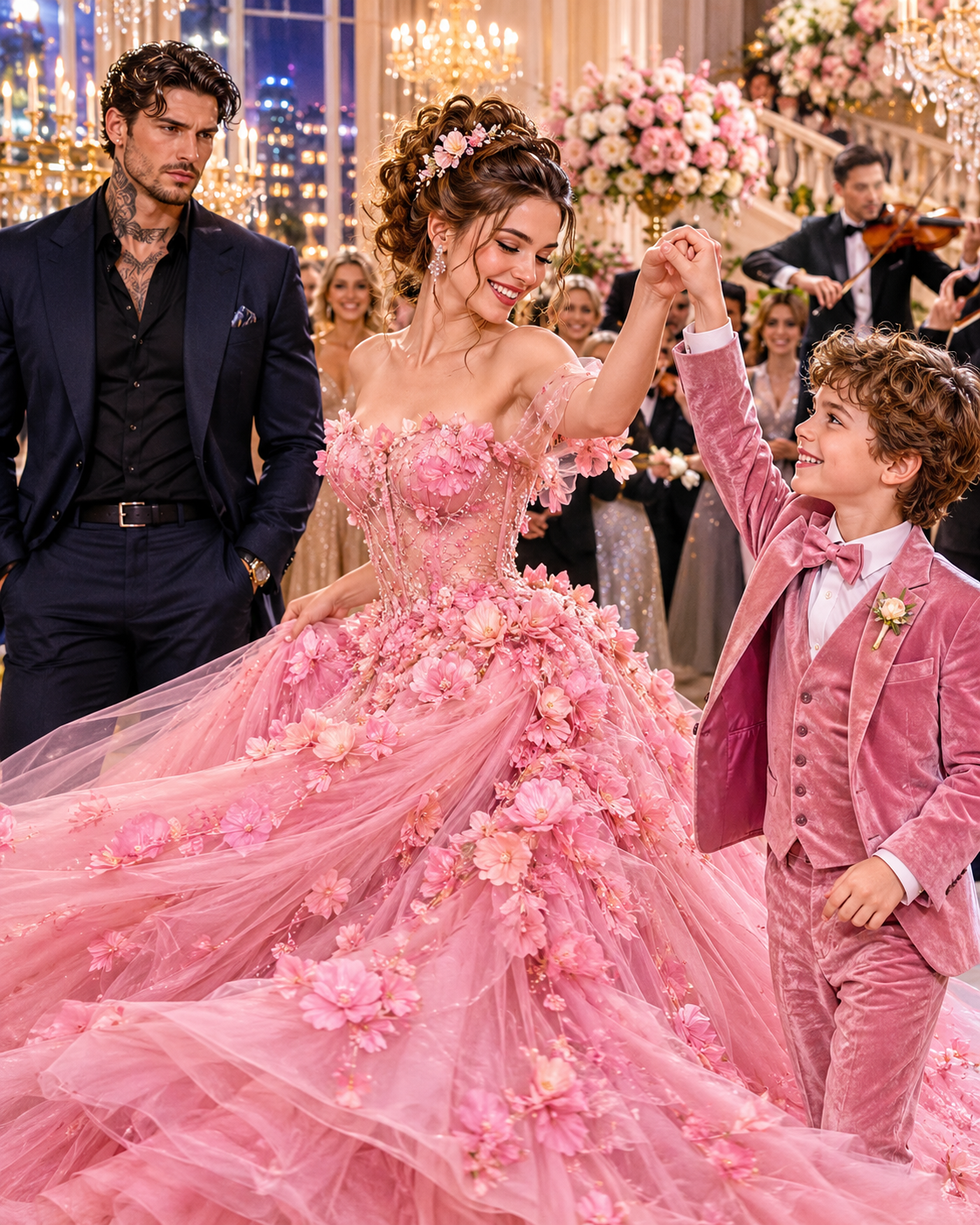
Hale stopped smiling.
“Dante, I have served your foundation for six years.”
“And tonight you frightened my son.”
“I did nothing of the sort.”
Leo began tapping again.
Four sharp taps.
His fingers struck the carpet so forcefully that the rhythm became uneven.
I crouched beside him.
“You’re safe,” she whispered.
He looked toward Hale and buried his face against my shoulder.
Dante witnessed everything.
His expression became colder.
“Get him out,” he told the guard in the corridor.
Hale straightened.
“You cannot simply accuse me because a distressed child reacts badly to a familiar face.”
“No one accused you.”
“Not aloud.”
Dante spoke softly.
“That is your only warning.”
Hale studied him.
Then he adjusted his silver cuff.
Leo recoiled.
Both Dante and I noticed.
Hale lowered his hand.
“I hope you reconsider this hostility.”
“I hope you stop giving me reasons for it.”
The guard escorted Hale away.
Dante remained motionless until the trustee disappeared.
Then he closed the door.
Only Leo’s uneven breathing disturbed the silence.
I kept one hand near his back, moving slowly enough that he could retreat if he wanted.
Dante stood beside the entrance.
His attention remained on his son.
But his questions were directed toward me.
“Did Hale touch him?”
“I don’t know.”
“Did he speak to him?”
“Not tonight.”
“Then what caused that reaction?”
“I don’t know that either.”
Dante examined the drawing.
The silver cuff.
The four marks.
The dark figure behind it.
“Tell me everything you noticed.”
I carefully recalled Leo’s behavior.
“Leo reacted before Hale said anything.”
“He may have recognized him.”
“Not just recognized him.”
“What do you mean?”
“He looked afraid before Hale even entered the room.”
Dante’s jaw tightened.
“He knew someone was outside?”
“Maybe.”
“He could have heard him.”
“The corridor was quiet.”
Dante picked up the paper.
The drawing trembled almost imperceptibly between his fingers.
“You’ve seen that symbol before.”
He remained silent.
The shape behind the silver cuff resembled a doorway.
Or possibly a curtain.
Four lines appeared beneath it.
Dante turned the sheet over.
Nothing was written there.
“Where did he learn these marks?” Sophie asked.
“I don’t know.”
“He may have been trying to show you something for a long time.”
Dante looked up.
My words had wounded him.
“You think I haven’t listened to my own son?”
“I think you may not have known how he was speaking.”
A painful silence followed.
Dante looked toward Leo.
“When he was younger, his mother handled most of this.”
I waited.
“After she died, I hired specialists,” Dante continued.
“Speech therapists, occupational therapists, teachers.”
“Did any of them use rhythms?”
“They tried picture cards.”
“Did Leo use them?”
“Sometimes.”
“And the drawings?”
“He has always drawn.”
Dante lowered the paper.
“I thought they were ordinary.”
I examined Leo’s drawing.
“Children’s drawings are rarely ordinary to the child who makes them.”
Dante looked toward me.
He seemed exhausted.
“Why didn’t anyone tell me?”
“Perhaps they tried.”
“People do not try to tell me things indirectly.”
“That may be the problem.”
He released a humorless breath.
“You’re not afraid of me.”
“I am.”
“Yet you continue to challenge me.”
“I’m more afraid of what happens when people stop telling you the truth.”
He studied me.
For the first time, I saw how isolated he was behind his terrifying reputation.
People obeyed him.
They protected his secrets.
They filtered information before delivering it.
Nobody seemed comfortable telling him that he might be overlooking something important.
Not even when the subject was his own child.
The door opened.
A bodyguard entered.
“Mr. Moretti.”
Dante turned.
“Speak.”
“We reviewed the footage from the ballroom.”
“And?”
“The collision was not accidental.”
My hand stopped moving.
The guard continued.
“A man crossed behind the waitress just before the champagne tray fell.”
“Can you identify him?”
“Not clearly.”
“Show me.”
He placed a tablet on the desk.
The recording showed the gala from above.
Wealthy guests moved beneath bright chandeliers.
I recognized myself carrying champagne.
Leo stood near Dante with one hand over his ear.
Then a dark-suited figure passed behind me.
His shoulder struck mine.
The glasses shattered.
He continued walking without looking back.
“Pause,” Dante said.
The footage froze.
The man’s face was turned away.
But his wrist was visible.
A narrow silver gleam appeared beneath his sleeve.
Leo made a small sound.
Dante immediately looked at him.
The boy’s eyes were fixed on the screen.
“The cuff,” she said.
The guard nodded.
“It resembles Hale’s.”
“Resembles?” Dante asked.
“We checked photographs from the foundation’s records.”
Another image appeared.
Victor Hale smiled beside several donors.
The same silver cuff shone at his wrist.
Dante’s expression hardened.
“Bring him back.”
“He has already left the hotel.”
“Find out where he went.”
The guard hesitated.
“And Sophie?”
Dante looked toward me.
“She remains here.”
“I have a name,” Sophie said.
Both men turned.
“I’m standing in the room.”
The guard lowered his eyes.
Dante looked irritated.
Or perhaps faintly amused.
“You remain here because the investigation concerns what you witnessed.”
“That is not the same as being a prisoner.”
“No.”
“Then I’m free to leave?”
He hesitated.
I stood.
“I need to call my supervisor.”
“You may.”
“And I need to go home.”
“You may not.”
Anger rose through my exhaustion.
“You cannot keep me locked in a hotel room because I helped your son.”
“I am not locking you in.”
“You stationed a guard outside.”
“For your protection.”
“From whom?”
Dante said nothing.
The guard spoke.
“We found someone asking hotel staff about you.”
My stomach tightened.
“Who?”
“We don’t know yet.”
“Did he say my name?”
“He asked about the waitress who approached Leo.”
Dante turned sharply.
“When?”
“About twenty minutes ago.”
“Why wasn’t I informed immediately?”
“We were verifying whether it was connected.”
Dante stepped toward him.
His voice was controlled, but the guard straightened immediately.
“From now on, you tell me first and verify later.”
“Yes, sir.”
I folded my arms.
“If someone is asking about me, I need to know what’s happening.”
“You will,” Dante said.
“You keep saying that after making decisions without me.”
His eyes met mine.
“That is because I am trying to keep you alive.”
The words stunned me.
I looked toward Leo.
He was watching his father anxiously.
Dante softened his tone.
“I am not threatening you.”
“I know.”
“But you don’t trust me.”
“I don’t know you.”
“That may be worse.”
“It may be more honest.”
Silence settled.
Then Leo picked up his pencil.
He drew another line beneath the silver-cuffed figure.
I crouched nearby.
“What is this?”
He added three more lines.
Then drew a second person.
This figure had no silver mark.
It faced a rectangular object.
A door?
A phone?
I looked at Dante.
“Is there someone else?”
One tap.
Dante approached carefully.
“Leo, can you show us?”
Leo pointed toward the second person.
Then toward Dante.
“Me?”
Leo shook his head.
He pointed toward the doorway.
Then back to the second figure.
I examined the picture.
Perhaps the person beside Hale had been holding a key.
Or a file.
Or a phone.
“Was this person with Hale?” Sophie asked.
One tap.
Dante called for the gala guest list.
While we waited, I noticed a dark mark near the edge of Leo’s drawing.
I initially thought it was graphite.
Then I recognized blue-black ink.
“Leo,” she said gently, “did you draw this tonight?”
Two taps.
No.
Dante stared.
“When did you draw it?”
Leo lowered his eyes.
“Before tonight?”
One tap.
The atmosphere changed.
Dante spoke quietly.
“How long before tonight?”
Leo drew another rectangle.
A smaller rectangle appeared inside it.
Several short marks lined the bottom.
Writing.
A receipt.
Perhaps a card.
Four taps.
I felt an unfamiliar tension.
“Is this from someone else?”
One tap.
“Your mother?”
Leo froze.
Dante inhaled sharply.
I looked toward him.
“Leo’s mother?”
“Elena,” Dante said.
Grief filled his voice.
Leo drew a little flower in the corner.
Then crossed it out.
Dante stared.
“Why would he be drawing something from Elena?”
“I don’t know.”
“Leo,” Dante said, “did your mother give you this?”
Two taps.
No.
“Did you find it?”
One tap.
“Where?”
Leo looked toward the door.
Then pointed upward.
Dante understood first.
“The old house,” he said.
One tap.
“You found it at the estate?”
Another tap.
Dante instructed his guard to contact the house manager.
The man stepped outside.
I remained beside Leo.
“Can you show me where you found it?”
He drew a room.
A window.
A small circle.
Then a row of black and white keys.
“The piano.”
One tap.
Dante moved closer.
“Was the paper inside the piano?”
Two taps.
No.
Leo drew a narrow compartment beneath the keys.
“A hidden drawer?” Sophie asked.
One tap.
Dante went pale.
The guard returned.
“The house manager says no one has searched the old piano room in years.”
“What about the piano?”
“It was moved into storage after Elena’s death.”
Dante looked at the drawing.
“Ask him where he found the paper.”
The guard hesitated.
“Sir, Leo may not be able to answer directly.”
Dante looked toward me.
I nodded.
“I’ll try.”
I sat beside Leo.
“Can you show me where you found it?”
He drew the room again.
Then the piano.
Then the hidden compartment.
Dante’s expression grew tense.
The guard returned with another report.
“Mr. Moretti, the guest list is ready.”
“Read it.”
The guard scanned the tablet.
“Victor Hale, his wife, three foundation trustees, hotel executives, press representatives, and staff.”
“Who arrived with Hale?”
“His assistant.”
“What is the name?”
The guard’s face changed.
“Danny Vance.”
My entire body went cold.
“That’s impossible,” she whispered.
The guard looked toward me.
“Miss Vance?”
Dante turned.
“Your brother’s name?”
I could barely breathe.
Danny had died three years earlier.
I had signed the papers.
I had stood beside his grave beneath gray skies.
I had brought his belongings home inside a cardboard box.
His medical records remained in the bottom drawer of my dresser.
Nobody could use his name without reopening everything.
Dante approached.
“Show me,” she said.
The guard turned the tablet.
Victor Hale’s assistant was listed as Daniel Vance.
The date of birth matched Danny’s.
I stared at the photograph.
The man looked older.
Thinner.
He wore an expensive dark suit.
But the eyes were unmistakable.
So was the small scar near his left eyebrow.
The face I had kissed goodbye three years ago was staring back at me.
My brother was alive.
And according to the guest list, he had accompanied Victor Hale to the gala.
I stared until the screen blurred.
Danny’s eyes.
His scar.
The slight curve of his mouth.
Everything was familiar.
“No,” she whispered.
Dante heard.
“Are you certain?”
I looked at him angrily.
“That’s my brother.”
The bodyguard lowered the device.
“I’m sorry, Miss Vance.”
“You’re not sorry.”
My voice trembled.
“You’re looking at a file and telling me it has my brother’s name.”
The guard looked toward Dante.
“Verify the identification.”
“We already matched the date of birth.”
“Match everything.”
The guard left.
I remained near the desk.
Danny was twenty-four when he died.
He hated formal clothing.
He hated stiff collars.
He complained that ties felt like hands around his neck.
Yet the man in the photograph wore a charcoal suit with a black tie.
His hair was shorter.
His cheeks were thinner.
But he looked exactly like Danny.
“What happened at the hospital?” Dante asked gently.
I flinched.
“You think I don’t know my own brother?”
“I think someone may have wanted you to believe he was dead.”
The room seemed to shift.
For three years, grief had shaped my entire existence.
I remembered Danny lying beneath white hospital blankets.
His breathing slowing.
The monitors growing quiet.
A nurse covering him with a folded blanket.
A doctor discussing complications and delayed treatment.
Our father signing paperwork because I couldn’t hold the pen.
Every detail remained vivid.
The green curtain.
The smell of antiseptic.
Rain on the window.
The silver ring on the doctor’s right hand.
“I saw him die,” she said.
Dante did not argue.
“Did you see his face after?”
My throat tightened.
“No.”
The doctor had advised me to remember Danny as he had been.
I accepted because I was too overwhelmed to question him.
There had been paperwork.
A funeral.
An urn because Danny feared burial.
Everything seemed final.
Until now.
“Who was it?” she whispered.
Dante remained silent.
Leo resumed drawing.
He sketched the same room, the piano, and the compartment beneath the keys.
Then two people.
One tall.
One smaller.
A line connected them.
Dante crouched.
“Leo, is that your mother?”
One tap.
“And the other person?”
Leo drew a small scar beside the second person’s eyebrow.
My breath caught.
Danny.
“How?” she asked.
Leo drew a hospital bed.
A person beneath a blanket.
Beside the bed stood a woman wearing a dress decorated with a flower.
Elena.
I looked at Dante.
“Did Elena know Danny?” Sophie asked.
He stared at the paper.
“She worked with vulnerable families through the foundation.”
“My brother was one of those families.”
“What happened to him?”
“He was autistic.”
Dante looked toward Leo.
“Like Leo.”
“Danny was diagnosed when he was six.”
I crouched beside the child.
“Did you see Danny at the hospital?”
One tap.
Dante inhaled.
“Was your mother there?”
One tap.
“Was she with him?”
One tap.
The fragments began forming a disturbing connection.
Danny’s hospitalization.
Elena’s secrecy.
Victor Hale’s foundation.
A forged receipt bearing the foundation’s name.
The silver cuff.
The hidden piano compartment.
Danny’s face appearing on Hale’s guest list.
“What did Elena do?” Sophie asked.
Dante looked up.
“I don’t know.”
This time, his answer sounded broken rather than defensive.
The guard returned with two men.
One was the hotel security director.
The other carried a folder.
“We confirmed the identification,” the first guard said.
“The assistant is using forged credentials.”
My heart pounded.
“What does that mean?”
“The photograph was altered from an old identification file.”
“Whose file?”
The man opened the folder.
“Daniel Vance’s.”
I stared.
“So the man in the picture isn’t Danny?”
“We cannot confirm who he is.”
“Then why did you say it was my brother?”
“Because the database indicates the photograph matches his archived record.”
Dante accepted the folder.
“Where did this database come from?”
“The foundation’s private personnel system.”
I looked toward him.
“Your foundation has my brother’s records?”
“It should not.”
“You told me the assistant was Danny Vance.”
“I said the record carried that name.”
“That is not the same thing.”
“I know.”
His controlled voice concealed obvious strain.
I wanted to be furious.
But Dante was confronting another betrayal himself.
Someone had apparently used Danny’s identity to infiltrate the gala.
Leo pushed another drawing toward me.
He had added four marks beneath a hospital bed.
Then he drew a woman’s face.
A single tear appeared beneath one eye.
I recognized Elena from the foundation photographs.
“She was crying,” Sophie said.
One tap.
“Why?”
Leo drew a rectangle containing several lines.
A medical record.
Then a hand tearing the paper.
Dante leaned closer.
“Was someone changing a record?”
One tap.
My fingers went cold.
“Danny’s record?”
One tap.
Dante stood.
“Get me every medical document connected to Daniel Vance.”
The guard hesitated.
“From where?”
“Everywhere.”
“That may take time.”
“Then begin with the foundation.”
I turned toward Dante.
“Why would his medical records be in your foundation’s files?”
Dante met my eyes.
“They shouldn’t be.”
“Yet they are.”
“Yes.”
“Do you understand what that means?”
“It means someone used my organization to collect information about your brother.”
“Or your organization paid for something involving him.”
Dante remained composed.
“Then we will find out which.”
The room fell silent.
The hotel’s ventilation system hummed softly.
Leo stopped drawing.
His face looked pale.
I lowered the medical chart.
“Danny was treated through the foundation.”
“No,” Dante said.
“He was supposed to be.”
The distinction hurt.
Dante pointed toward the receipt.
“This payment was approved but never released.”
“By whom?”
“Hale had authority over medical grants.”
I recognized the signature.
“Then he stopped it?”
“Possibly.”
“Why?”
Dante glanced toward Leo.
“Because someone wanted vulnerable families to believe help had been provided when it had not.”
I remembered Danny’s last hospital stay.
His hands twisted in the blankets.
I had begged the nurses to lower the lights.
A doctor explained that the specialized team had been delayed because the required authorization was missing.
I thought it was a terrible bureaucratic mistake.
Now I wondered whether the delay had been intentional.
“Danny didn’t die from his condition,” she said.
Dante looked toward me.
“What did the hospital report say?”
“That he suffered complications during a sensory crisis.”
“And what caused the crisis?”
I closed my eyes.
“A medication error, they said.”
“Was the medication error investigated?”
“Not properly.”
“Why not?”
“Because the emergency records showed the specialist consultation had been approved.”
Dante looked at the receipt.
“But it had not.”
My grief became something more painful.
Questions.
Who approved the consultation?
Who redirected the money?
Who altered the records?
Why had Elena been there?
Leo reached for my hand.
Four taps.
I looked at him.
“I’m here,” she whispered.
He tapped four more times.
Dante watched.
Then he crouched.
“Leo,” he said softly.
The boy looked toward him.
“Did your mother know Danny?”
One tap.
“Did she try to help him?”
One tap.
Dante’s face tightened.
“Did she find out someone stopped the help?”
One tap.
Leo’s eyes filled.
Dante lowered his head.
He had spent years believing Elena became secretive because she no longer loved him.
Now every discovery suggested that he had misunderstood her.
“Why didn’t she tell me?” he asked.
Leo drew another picture.
Dante stood near a closed door.
Elena was on the opposite side.
Between them stood a dark figure with a silver cuff.
I understood.
“She tried to reach you.”
Dante whispered.
“And someone stood between us.”
One tap.
The guard spoke.
“Mr. Moretti, there is something else.”
Dante looked up.
“What?”
“The archive included a series of messages between Hale and Elena.”
I stood.
“Messages?”
“They were deleted from the main system, but the backup retained fragments.”
“Read them.”
The first message was dated two months before Elena’s death.
I know what the family grants are being used for, Elena had written.
Hale replied:
You know nothing that cannot be explained.
Elena responded:
The names are real.
The treatments are not.
Then Hale:
Be careful what you accuse people of when your husband’s reputation depends on this foundation.
I looked at Dante.
He remained motionless.
Another message from Elena appeared.
Daniel Vance was denied emergency support after the payment was redirected.
A child in Queens was sent to a facility that did not exist.
You have been billing the foundation for families who never received care.
Hale replied:
Stop searching.
Elena’s final preserved message read:
I will take the evidence to Dante.
Dante closed his eyes.
“She was going to expose Hale,” he said.
“Yes.”
“And she died before she could.”
The security director lowered his gaze.
“There is one final message.”
It had been sent from Elena’s account on the night of the accident.
Dante, if anything happens to me, do not trust the records.
The evidence is where our music still remembers us.
I immediately thought of Leo’s piano drawing.
The old estate.
The hidden compartment.
The place where Dante and Elena had once played music together.
Dante stepped backward.
“I thought she hated that piano.”
“Why?”
“After Leo was born, she stopped playing.”
“Maybe she didn’t stop,” Sophie said.
“Maybe she hid something there.”
Leo pointed toward another drawing.
A car.
A road.
A silver cuff reflected in a window.
Elena stood beside the vehicle.
But another person occupied the passenger seat.
I looked at Dante.
“Who was with her?”
Leo tapped once.
Dante went pale.
“Elena was alone in the car.”
“That’s what the report said.”
“I saw the report.”
“Leo is showing us something else.”
Dante stared at the image.
The passenger’s face was a dark circle.
A diagonal line crossed the chin.
A scar.
I felt my heartbeat accelerate.
“Is that Danny?”
Leo remained silent.
He looked toward the entrance.
The bodyguard stepped aside.
A man stood in the corridor.
He wore the same charcoal suit from the photograph.
He looked older and thinner than I remembered.
But the scar across his chin was unmistakable.
Danny Vance looked directly at me.
And beneath his sleeve, a silver cuff gleamed.
PART 3: The Truth Hidden Inside the Piano
Danny stood in the doorway, alive.
The silver cuff on his wrist reflected the light.
I couldn’t move.
For three years, I had mourned him in every ordinary moment.
His favorite mug remained hidden at the back of my cupboard.
I saved his old voice messages.
I avoided the bakery where he used to buy cinnamon rolls because the smell made me expect him to appear.
Now he stood only a few feet away.
Our eyes met.
“Sophie,” he said.
Hearing my name in his voice shattered something inside me.
I stepped forward.
Then stopped.
Two of Dante’s guards stood behind Danny.
Dante watched him carefully.
Leo sat on the carpet, gripping the drawing of the car.
I looked from the picture to Danny.
“You’re alive.”
He swallowed.
“Yes.”
The answer sounded almost apologetic.
My hands curled.
“Why did you let me believe you were dead?”
Danny lowered his gaze.
“I didn’t.”
“Then explain the hospital.”
“I was never in the hospital.”
I stared.
“You were there,” she said.
“I wasn’t.”
“I saw you.”
“No,” Danny replied gently.
“You saw someone beneath a blanket.”
The words struck painfully.
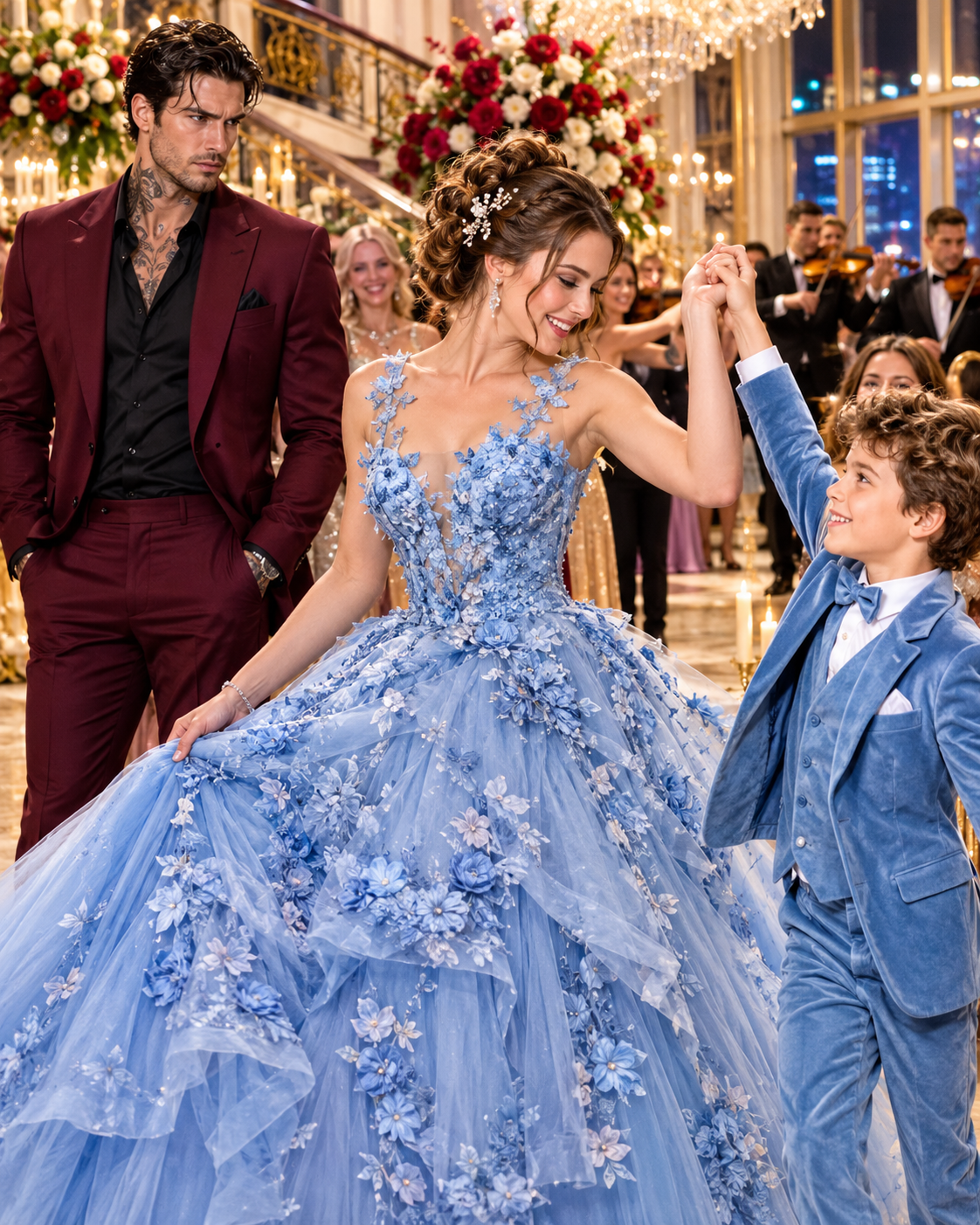
I remembered the hospital.
The green curtain.
The covered face.
The documents.
The doctor urging me not to look.
I thought they were protecting me from a final traumatic memory.
Perhaps they had been protecting a deception.
“Who was it?” she whispered.
Danny looked devastated.
“I never found out.”
“You don’t know?”
“I was taken before I could learn everything.”
“Taken by whom?”
He glanced toward the cuff.
“Hale’s people.”
Dante stepped forward.
“Bring him inside.”
Danny looked toward him.
“I’m not here to hurt Leo.”
“No one said you were.”
“You’re looking at me as if I’m carrying a weapon.”
Dante remained controlled.
“You arrived wearing the symbol my son has been drawing for years.”
Danny glanced at Leo.
The little boy tapped four times.
Danny watched with sorrowful recognition.
“Hello, Leo,” he said.
Leo didn’t respond.
He held the drawing tighter.
I moved between them.
“How do you know him?” she asked.
Danny looked at me.
“Because Elena introduced us.”
Dante froze.
“When?”
“Before the accident.”
Elena.
Danny.
Leo.
The three names seemed connected by secrets nobody had understood.
“You knew him?” Sophie asked.
Dante shook his head.
“No.”
Danny smiled bitterly.
“She wanted to tell you.”
“But she didn’t.”
“She tried.”
Dante stared.
“Why didn’t you come to me after you escaped?”
Danny flinched.
“I tried.”
“When?”
“The night Elena died.”
Dante’s expression changed.
Danny continued.
“She had arranged to meet me at the estate.”
“To show you the evidence?” Sophie asked.
“Yes.”
“Then why were you in her car?”
“I wasn’t.”
Leo’s drawing trembled in my hand.
Danny pointed toward it.
“That is not me in the passenger seat.”
I examined the dark figure again.
The chin scar wasn’t Danny’s.
Someone else had been there.
“Who was it?” Dante asked.
Danny tightened his jaw.
“A man named Marcus Bell.”
Dante narrowed his eyes.
“He worked security for the foundation.”
“He worked for Hale.”
Danny looked at the cuff.
“Hale used those cuffs to identify people inside his network.”
“Why would he have Bell in Elena’s car?”
“Because Elena had the evidence.”
“Where?”
“I don’t know.”
I remembered the piano.
“The hidden drawer.”
Danny nodded.
“She had planned to leave it there.”
Dante’s gaze sharpened.
“Planned?”
“She never reached the estate.”
“She died on the road.”
Danny looked toward him sadly.
“She survived the crash.”
Dante stopped breathing.
“What are you saying?”
“Her car went off the road, but she wasn’t killed immediately.”
Dante’s face drained of color.
“How do you know?”
“I was following her.”
“You were there?”
“I arrived minutes after the crash.”
Danny’s voice shook.
“Bell had reached her first.”
I closed my eyes.
The silver cuff from Leo’s drawing suddenly seemed horrifyingly real.
“What happened to Elena?” Dante asked.
Danny glanced toward Leo.
The child covered his ears.
Danny lowered his voice.
“Bell took the evidence and left her in the car.”
Dante gripped the wall.
“Why didn’t you help her?”
“I tried.”
“Then what happened?”
“Hale’s driver found me.”
Danny swallowed.
“I was taken before I could reach the road.”
I stared at the scar on his chin.
“What happened to you?”
“I was kept in a private clinic under another name.”
“For three years?”
“Not continuously.”
Danny glanced at the guard.
“They moved me whenever they thought someone was searching.”
“Who helped you escape?” Sophie asked.
“Elena.”
I stared.
Danny inhaled.
“She was alive when I last saw her.”
The room became completely silent.
Dante looked sharply at him.
“You said she died.”
“I said I last saw her after the crash.”
“You knew she survived?”
“For a short time.”
“Where was she?”
“I don’t know.”
Dante’s control finally faltered.
“You expect me to believe that Elena survived the accident and disappeared for three years?”
“No.”
Danny spoke gently.
“I expect you to understand that I have spent three years trying to find out what happened to her.”
Dante stepped closer.
“What did she tell you?”
“That the evidence was still safe.”
“Where?”
Danny looked toward the piano drawing.
“She said the music would remember.”
I felt cold.
Leo had repeated that clue through pictures and rhythm.
Four taps.
The piano.
The hidden drawer.
Elena had left a message for someone willing to listen.
I faced Dante.
“We have to go to the estate.”
He nodded.
The bodyguard began issuing orders.
But I interrupted.
“No.”
Everyone looked toward me.
“We cannot arrive with a convoy of armed men and expect anyone connected to Hale not to notice.”
Dante studied me.
“You think we should go alone?”
“I think we should go carefully.”
“You don’t know what is waiting there.”
“Neither do you.”
He looked stern.
“That is precisely why I am bringing security.”
“And if someone inside your security team is working for Hale?”
Silence followed.
I knew the accusation was dangerous.
But someone had manipulated medical files, personnel records, and internal foundation communications.
Trust could no longer be assumed.
Dante considered my words.
“She may be right.”
His guards looked offended.
Dante didn’t apologize.
“Use the smallest team,” he ordered.
“Only people whose loyalty I have personally tested.”
I met his gaze.
“And Danny comes with us.”
“No.”
Danny stepped forward.
“I know where Hale keeps his secondary files.”
Dante looked toward him.
“You’re not strong enough to help anyone.”
Danny’s face tightened.
“I have been helping myself for three years.”
His response was simple and honest.
Dante recognized it.
“Fine,” Dante said.
“But you stay with Sophie and Leo.”
Danny nodded.
Leo began tapping.
Four times.
Then four more.
I crouched.
“What are you trying to tell us?”
He drew a dark rectangle with a white circle inside.
Four small lines appeared beneath it.
Danny turned pale.
“What is it?” Sophie asked.
“A recording.”
“Where?”
Danny pointed at the picture.
“The piano bench.”
Dante called toward the guards.
“Prepare the cars.”
I touched his arm.
He looked at my hand.
I released him.
“You need to understand something.”
“What?”
“If the evidence is there, we cannot simply hide it or use it privately.”
Dante looked guarded.
“Hale has taken everything from us by hiding behind private systems.”
“And we cannot answer by becoming another private system.”
He understood.
“We need the authorities.”
“We need more than that.”
“We need proof that can survive them.”
“And witnesses.”
I looked at Danny.
“And Leo.”
Dante’s expression hardened.
“Leo is not a witness.”
“He may be the only person who remembers what happened.”
“He is a child.”
“He is your son, and he has been trying to tell you the truth.”
Dante looked pained.
“I’m not asking you to put him in danger.”
“Then what are you asking?”
“For you to trust him.”
Dante looked toward Leo.
The boy was drawing piano keys on the carpet.
After a long pause, Dante nodded.
“I will.”
The estate was less than forty minutes away.
But the silence inside the car made the journey feel endless.
Leo sat between Danny and me.
He wore noise-reducing headphones.
The lights had been dimmed.
Dante sat opposite us, watching his son instead of the passing city.
Danny kept his hands folded.
I noticed his silver cuff was missing.
“What is that?” she asked.
Danny looked at his wrist.
“Hale gave it to me when he wanted me to look like one of his assistants.”
“Why did you keep wearing it?”
“Because I wanted him to know I wasn’t afraid of the symbol.”
“Or because you wanted us to find you?”
He looked toward me.
“Yes.”
His honesty hurt.
“You could have come to me.”
“I tried.”
“You never called.”
“I called the number we used when we were children.”
“That phone was disconnected.”
“I know.”
I turned toward the window.
City lights blurred across the glass.
“You let me bury you.”
Danny’s voice cracked.
“I’m sorry.”
I couldn’t look at him.
“I’m not ready to forgive you.”
“I’m not asking you to.”
Leo tapped softly against the seat.
Four times.
I placed my hand near his.
“I’m here.”
Danny watched.
“Danny used to do that when he was frightened,” he said.
I looked toward him.
“How do you know?”
“Elena showed me.”
“Why would Elena know my brother’s signal?”
“Because she saw it during a foundation meeting.”
Danny looked out the window.
“She understood that the families she helped were often forced to communicate in ways other people ignored.”
I remembered the forged receipts.
The promised treatments.
The missing money.
Children whose distress had been treated as inconvenience.
“She tried to expose him alone,” Sophie said.
“She thought Dante would listen if she brought proof.”
Dante spoke quietly.
“I would have.”
Danny met his gaze.
“Would you?”
Dante remained silent.
The estate appeared beyond dark winter trees.
Dante had brought only two trusted guards.
We entered through a side entrance.
The old house smelled of cedar, dust, and piano polish.
Leo walked beside me, holding two of my fingers.
Danny guided us to the music room.
Dante followed.
Tall windows overlooked the gardens.
Old portraits decorated the walls.
A black grand piano stood beneath a linen cover.
Dante stopped.
“Elena hated this room after Leo was born,” he said.
“Why?”
“She said the piano sounded different.”
“Different how?”
“She said it remembered things.”
Leo approached the instrument.
Dante instinctively reached toward him.
Then stopped.
The boy lifted the cloth covering the bench.
Dust rose.
He coughed and covered his ears.
I gently guided him away.
Danny opened the bench.
Inside were old sheet music, concert programs, and a small wooden box.
He removed it.
The box was locked.
Dante examined it.
“No key.”
Leo pointed beneath the bench.
I crouched and searched the wooden frame.
My fingers found a narrow groove.
A brass key was hidden inside.
Dante looked toward Leo.
One tap.
The key opened the box.
Inside were a recording device, three memory cards, and a sealed envelope addressed in Elena’s handwriting.
Dante reached toward the letter.
Then hesitated.
I understood.
For years, he believed Elena chose to abandon him.
The letter might confirm his deepest fear.
Or destroy everything he believed.
“You should open it,” Sophie said.
He looked at me.
“What if it changes nothing?”
“Then at least you’ll know.”
Dante broke the seal.
The letter was brief.
Dante,
If you are reading this, Hale has succeeded in making you doubt everyone around you.
Do not confront him alone.
The recordings contain names, payments, and proof of the emergency records altered after Daniel Vance’s crisis.
I hid the original ledger where our son could find it, because he notices what adults overlook.
Trust the person who answers his four taps.
Dante’s hands trembled.
At the bottom, Elena had written:
I never abandoned you.
He read the final sentence twice.
Then sat on the piano bench and covered his face.
Nobody spoke.
Leo approached.
Four taps sounded against the wood.
Dante lowered his hands.
For a moment, he couldn’t move.
Then he answered with four taps.
The sound was quiet.
But it filled the room.
Leo climbed onto the bench.
Dante carefully put an arm around him after making sure he welcomed the touch.
I turned away.
They deserved privacy.
Danny studied the recording device.
“We should copy everything before listening.”
I nodded.
Dante stood.
“We take it to federal investigators.”
Danny looked worried.
“Hale will know.”
“He may already know.”
“We could use the evidence to draw him out.”
“No,” Sophie said.
Both men turned.
“We are not bargaining with him.”
Dante looked conflicted.
“If we go directly to the authorities, he may disappear.”
“If we keep this private, we become responsible for whatever happens next.”
“He has Leo’s medical records,” Danny said.
“He has connections everywhere.”
“Then we document everything and go public through proper channels,” Sophie replied.
Dante watched me.
“You want me to testify.”
“I want you to tell the truth.”
“That truth includes my criminal organization.”
“Yes.”
Danny looked toward us.
“Hale will use that against you.”
“He already uses it,” Sophie said.
“Every time people assume Dante cannot be a victim, they allow Hale to hide behind him.”
Dante stared.
“You know what this could cost me.”
“Yes.”
“My foundation.”
“Maybe.”
“My freedom.”
“Possibly.”
“My son’s future.”
I stepped closer.
“His future cannot be built on silence.”
The statement visibly affected him.
Dante looked toward Leo.
The boy was examining the piano keys without touching them.
“Would you rather Leo grow up believing powerful men can erase people,” Sophie continued, “or knowing his father chose to stop one?”
Dante closed his eyes.
When he opened them, fear remained.
But so did determination.
“We take it to the authorities.”
Danny nodded.
Suddenly, the recording device clicked.
Nobody had touched it.
A small red light appeared.
Elena’s voice filled the room.
“If you are hearing this, then Leo found the drawer.”
Dante gripped the piano bench.
The recording continued.
“There is one thing I could not place in the ledger.”
Static interrupted.
Then another voice sounded.
A man speaking quietly.
Dante froze.
I recognized the voice as well.
It belonged to somebody who had stood beside Dante at the gala.
Someone who had offered to help uncover the truth.
Elena continued.
“He is not working for Hale.”
The recording paused.
Then she said:
“He is working for Dante.”
Behind us, one of Dante’s trusted guards quietly locked the music-room door.
The guard’s hand remained against the lock.
But he did not turn it.
Dante stared toward him.
Then toward Elena’s recording device.
The man’s name was Marco Bellini.
I had noticed him near the gala’s east corridor, speaking calmly through his earpiece while others searched for Hale.
He had seemed almost invisible.
Now Elena’s voice had brought him into the center of the mystery.
“Marco,” Dante said.
The guard slowly lowered his hand.
“I didn’t know she had recorded that conversation.”
“You were working for Hale,” Dante replied.
Marco looked toward the piano.
“I was working inside the foundation because Hale forced me to.”
Dante remained cold.
“Explain.”
Marco inhaled.
“My younger sister received therapy through one of the foundation programs.”
His fingers tightened.
“Hale controlled the approval system,” Marco continued.
“When I questioned missing payments, he showed me documents suggesting my sister’s care had been funded through stolen money.”
“You believed him,” Sophie said.
“I believed I had a choice.”
Marco looked toward Leo.
“Hale threatened to expose my family to people who would use the information against us.”
Dante spoke quietly.
“You could have come to me.”
“I tried.”
Marco gave a tired smile.
“People do not easily approach you with accusations, Dante.”
His words echoed what I had said earlier.
Dante lowered his eyes.
“What did Hale ask you to do?”
“Monitor the foundation’s records.”
“And Elena?”
“Find out what she knew.”
“Did you cause the accident?”
Marco shook his head.
“No.”
“Did you help cover it up?”
His face tightened.
“I delivered the altered report.”
Dante became motionless.
Marco continued.
“I did not create it, and I did not know Elena had survived the crash.”
“But you knew the report was false.”
“Yes.”
Grief seemed to spread through the room.
“So Elena was right,” she whispered.
“She knew someone inside your organization was helping Hale.”
Marco looked at Dante.
“She believed it was me.”
“Were you?” Dante asked.
“I was helping him without understanding how far the damage went.”
The recording device clicked.
Elena’s voice returned.
“If Marco is the person you find, listen before you judge him.”
Dante closed his eyes.
“He has been trying to protect families from inside the system, but fear has made him careful when courage was needed.”
Marco lowered his head.
Elena had recognized the difference between intentional cruelty and weakness.
She believed both required honesty.
“What happened to her after the crash?” Dante asked.
Marco looked toward Danny.
Danny stepped forward.
“I found her.”
His voice shook.
“She was alive, but injured.”
“Where did you take her?”
“To a safe clinic outside the city.”
Dante stared.
“Why didn’t you tell me?”
“Because the people watching Hale’s records were also watching you.”
Danny looked regretful.
“Elena said that if she contacted you before the evidence was secure, Hale would know.”
“She could have trusted me.”
“She did trust you,” Danny said.
“That was why she was afraid.”
Dante absorbed the words.
The world he built to protect his family had made honesty dangerous.
“Is she alive?” Sophie asked.
Danny looked at me.
“Yes.”
The answer filled the room with sudden hope.
Dante gripped the piano.
“Where is she?”
“She left the clinic two years ago.”
“Where did she go?”
“To gather the remaining evidence.”
Dante struggled to breathe.
Danny removed a folded letter from his jacket.
“Elena sent this to me three months ago.”
Dante hesitated before accepting it.
I stepped beside him.
“You should read it.”
He unfolded the letter.
The handwriting belonged to Elena.
Dante,
I am sorry for the years you believed I abandoned you.
I was afraid that returning without proof would place Leo in greater danger.
Danny tells me he has found a way to reach Sophie, and I trust the four taps will lead you all to the truth.
If you are reading this, then perhaps the truth has finally become stronger than fear.
I am in Vermont, staying under my sister’s name.
I am ready to come home.
Dante read the final line repeatedly.
Then he sat on the bench.
Leo climbed beside him and rested a small hand over his father’s.
Dante tapped the wood four times.
I looked away.
Tears filled my eyes anyway.
Outside, a vehicle approached.
The investigators contacted earlier had arrived with federal agents and a child advocacy specialist.
Dante agreed to surrender the foundation’s records, financial evidence, and recordings.
Marco provided access to the hidden archive.
The evidence was overwhelming.
Diverted payments.
Forged medical records.
False treatment authorizations.
Families promised help they never received.
Elena’s original ledger connected Hale directly to the scheme.
Danny’s testimony established how vulnerable families were monitored and silenced.
Marco explained how fraudulent documents entered the system.
Most importantly, Elena’s recordings proved she had been investigating the fraud before disappearing.
She had never willingly abandoned her family.
Two days later, federal agents arrested Victor Hale as he attempted to leave the country.
He did not immediately confess.
The evidence made his denial irrelevant.
Foundation trustees cooperated with investigators.
Independent oversight took control of the Moretti Foundation.
Dante voluntarily surrendered his remaining criminal operations without demanding protection from prosecution.
The decision cost him nearly everything he once considered powerful.
But it gave him peace for the first time in his adult life.
Months later, I stood beside Dante inside a courthouse.
The official findings were read.
Daniel Vance’s supposed death had resulted from delayed emergency treatment and falsified medical records.
The hospital files were corrected.
The foundation’s failure to provide promised care was formally documented.
No judgment could return the years I lost believing Danny was dead.
But the truth finally gave my grief somewhere to rest.
When the hearing ended, Danny waited outside.
I approached slowly.
Over the preceding months, we had begun learning how to be siblings again.
Some days I asked questions.
Some days he answered.
Other days we simply sat together.
Three missing years could not be repaired in a single conversation.
Forgiveness had grown gradually.
A cup of tea outside my apartment.
A message before an unexpected visit.
A willingness to admit uncertainty instead of inventing explanations.
That afternoon, Danny held out a paper bag.
“I found cinnamon rolls.”
I looked inside.
Suddenly, I remembered being eight years old, following him through a bakery while he insisted the biggest cinnamon roll had chosen him.
I laughed.
Danny smiled.
“I thought you might still like them.”
“I do.”
We stood beneath the pale winter sunlight.
“I’m still angry with you,” she said.
“I know.”
“But I’m glad you’re here.”
Danny’s eyes filled.
“So am I.”
He tapped four times against the paper bag.
I answered against his wrist.
Across the street, Dante stood with Leo.
He no longer looked like a man expecting danger at every moment.
He seemed exhausted.
Changed.
And more open than I had ever seen him.
Leo took my hand when they approached.
His communication had improved steadily since the gala.
He still relied on drawings and tapping when overwhelmed.
But he spoke more frequently when people allowed him time.
He pointed toward the bakery.
“Cinnamon roll,” he said.
Danny lifted the bag.
“Exactly.”
Leo smiled.
It was a small smile.
But it illuminated his entire face.
Dante turned toward me.
“Thank you.”
I understood he meant far more than those two words.
But gratitude wasn’t an apology.
“Say the rest,” she replied.
Dante lowered his gaze.
“I’m sorry I treated your kindness like evidence of danger.”
I waited.
“I’m sorry I kept you in that room,” he continued.
“I’m sorry I assumed protection meant making every decision for everyone.”
He looked at Leo.
“And I’m sorry I thought I was listening when I was only waiting for him to speak in a way I understood.”
Leo tapped once against my hand.
Dante watched.
“I’m learning,” he said.
I studied the man who once ordered an investigation into me simply because I comforted his frightened child.
His nature hadn’t transformed overnight.
He had changed because he finally recognized the damage caused by his intimidating reputation.
“I forgive you,” she said.
Dante looked relieved.
“But forgiveness does not erase what happened.”
“I know.”
“And trust is not something you can demand.”
“I know that too.”
“Then we can begin there.”
Warmth entered his expression.
“Yes,” he said.
“We can.”
The Moretti estate changed afterward.
Previously locked rooms were opened.
Former foundation offices became a support center overseen by independent professionals.
Its funding was transparent.
Its rooms were designed to accommodate sensory needs.
I helped establish a communication program.
Every child would be treated as a person before being viewed as a problem.
Danny joined a medical review board, using his experience to help other families challenge manipulated or incorrect records.
Marco testified completely and accepted responsibility for his actions.
His cooperation helped recover funds for dozens of families.
He began helping the new oversight team, no longer operating secretly.
Elena returned that spring.
Dante met her at the estate gates.
I watched from the music room.
For several moments, they stood facing one another.
Neither moved.
Then Elena reached toward him.
Dante accepted her hand.
Leo rushed down the steps.
Elena knelt.
Her son fell into her arms with a sound that was half laughter and half crying.
I pressed my fingers against the window.
Danny stood beside me.
“She looks the same,” he said.
“She looks tired.”
“So does Dante.”
“They earned it.”
Danny smiled.
“They did.”
Elena spent her first weeks slowly becoming familiar with the house again.
She apologized to Leo without demanding that he comfort her.
She answered when he asked questions.
She waited when he needed silence.
Dante never demanded immediate explanations for her disappearance.
He listened whenever she was ready.
Their marriage did not return to its former state.
It became more honest.
They rebuilt their relationship through difficult conversations, separate rooms at first, and a shared understanding that love could survive betrayal without pretending it never happened.
I remained at the estate.
But nobody called me a servant anymore.
My room overlooked the garden.
I spent mornings helping Leo and afternoons coordinating the family support center.
My friendship with Dante developed gradually.
There were no dramatic declarations before crowds.
Only conversations in the kitchen.
Books left open on the same table.
And the comfort of knowing neither of us needed to pretend we had every answer.
One rainy evening, Dante found me in the music room.
I sat at the piano, playing the four-note rhythm Elena had once used to calm Leo.
Dante approached.
“May I?” he asked.
I moved aside.
He sat next to me.
“I never learned properly.”
“You know enough.”
“That has never stopped me before.”
I smiled.
He played the four notes.
They sounded uneven.
But Leo came running from the hallway.
Elena followed.
Danny appeared carrying documents.
Leo climbed onto the bench between Dante and me.
He tapped four times against the wood.
I answered.
Dante joined.
Elena rested her hand over Leo’s.
Four taps.
Danny added his own.
Four taps.
The gentle rhythm filled the piano room.
A place that once concealed terrible secrets now held the people who had survived them.
One year after the gala, the renewed foundation hosted its first sensory-friendly charity evening.
There were no painfully bright chandeliers.
Music played softly.
Guests received information about different communication needs before entering.
Quiet rooms remained available throughout the event.
No child was treated as embarrassing for needing a peaceful space.
I wore a pale blue dress instead of a stained waitress uniform.
Dante stood beside me with his hand resting gently against my back.
Leo wore a dark suit and had chosen an especially soft shirt beneath it.
Danny and Elena sat near the stage.
The evening honored families whose experiences had been concealed through fraudulent records.
It also honored the people whose names had helped reveal the truth.
Daniel Vance.
Elena Moretti.
When the lights softened, Leo walked toward the podium.
The audience fell quiet.
Not because they feared him.
Because they wanted to listen.
Leo looked toward me.
Then toward Dante.
For an instant, I remembered the terrified boy hiding behind a sofa, tapping desperately while adults argued beyond the door.
Then he raised his hand.
Four gentle taps sounded against the wooden podium.
I answered.
Dante joined.
The familiar rhythm spread across the room.
Danny tapped the table.
Elena placed her fingers over her heart.
Leo smiled.
Then, clearly enough for everyone to hear, he said:
“I’m here.”
Tears filled my eyes.
Dante reached for my hand.
“So are we,” he said.
And around us, the people who loved Leo answered in the only way that truly mattered.
Not through applause.
Not through grand promises.
But through patience, understanding, and four gentle taps that had finally led all of us home.
