

Part 1: The Stop
On the evening two traffic officers put handcuffs on me, neither of them had the faintest idea who I really was. To them I was a woman alone in a car on an empty road, easy to frighten and unlikely to fight back. They took it for granted that nobody would ever ask them to answer for what they did that night. They were wrong, and they would learn it in the space of a few seconds, when they found what was hidden in my pocket. Their swagger would drain out of them, and what followed would drag years of buried misconduct into the light.
My name is Victoria Sokolova, and the evening began like any other. I was tired in the way a long, demanding meeting leaves you tired, with my thoughts still circling the arguments and the paperwork. The only things I wanted were a hot shower, a quiet kitchen and an early night. I was driving home along a lonely country road, with golden wheat fields rolling away on both sides until they met the sky. The sun was sinking low and gilding every stalk, and there were hardly any other cars. It was the kind of peaceful drive that makes the day’s worries feel small.
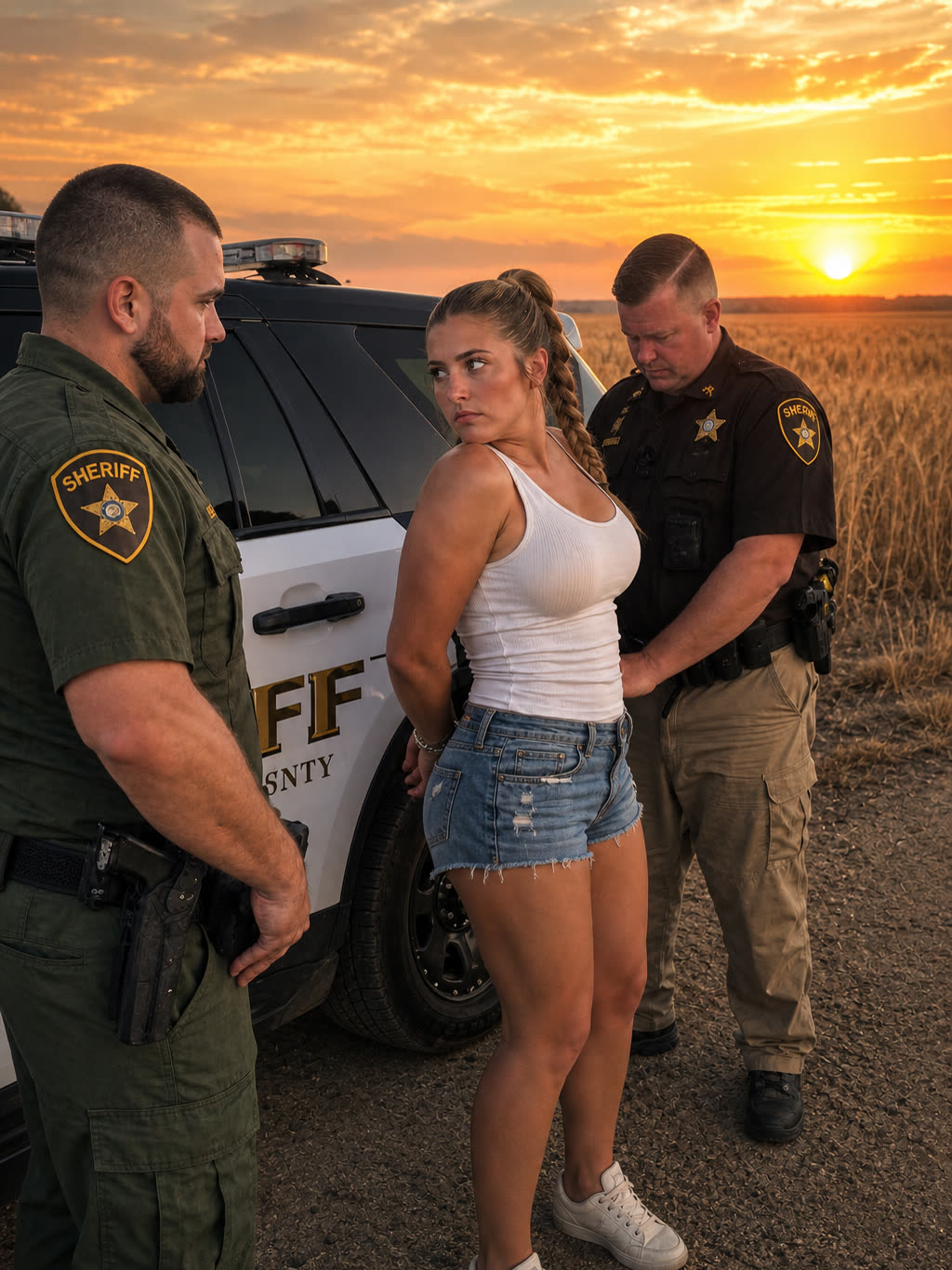
I was keeping well within the speed limit when red and blue light began flashing in my mirror. At first I assumed they were meant for somebody else. But the lights stayed where they were, glued to my rear bumper, and a police patrol car had clearly fallen in behind me. My stomach tightened, though I had no reason to think I had done anything wrong. I had not broken a single traffic rule, and I knew that for certain. Even so, I signaled, eased onto the gravel shoulder, and came to a stop.
I switched off the engine and laid both hands flat on the steering wheel where anyone could see them. Years of training had taught me exactly how to behave during a stop, and I followed every step by habit. No sudden movements, no reaching for anything, no giving anyone an excuse. In the mirror I watched the patrol car’s doors open and two figures climb out. They moved without hurry, in the unhurried manner of men who believe the road belongs to them. The wheat whispered in the evening breeze while they walked toward me.
The first officer was a big, imposing man with a shaved head and a heavy, challenging stride. His shoulders filled his uniform, and his face showed neither courtesy nor curiosity. His younger partner did not come to my window at all. He stopped near the back of my car and stood watching me with a narrow, suspicious stare, as if I were already guilty of something. I felt the unease settle in my chest, but I kept my face calm and my hands where they were.
“Documents,” the older officer demanded, in a tone that left no space for anything else. I passed him my license, my registration and my insurance papers without a word of protest. Then I asked the question any driver is entitled to ask. “Good evening, Officer. May I ask why you’ve stopped me?” He did not even glance up. It was as though I had said nothing, as though my voice were just another sound in the evening air. He took the papers and turned away from my window.
What he did next was strange for a man who claimed to have a reason. He studied my documents slowly, then walked around the entire car. He crouched to inspect the tires and tapped at the plates. He checked the license plates as if he were hunting for a fault, and he plainly meant to find one. I watched him in the mirror and waited, certain it would end quickly. Everything was in order, and a man who knew his job would have seen it within seconds. Yet he kept circling, taking his time, drawing the stop out for no reason I could name.
When he returned, he still offered no explanation for pulling me over. I tried again, as politely as I could. “Is there a problem with my vehicle?” I asked. “Routine inspection,” he answered, flat and bored. That was no answer at all, and we both knew it. “What kind of inspection? Could you please identify yourselves?” I said. His expression hardened at once, as though I had insulted him by asking for something I had every right to ask for.
Behind him, the younger officer stepped forward with a mocking smile that made my skin prickle. “Think you’re clever, sweetheart? Just cooperate and keep quiet.” The word sweetheart hung in the air, meant to make me small. I felt my temper stir, but I held it down, because anger was exactly what they wanted. I kept my voice level. “I’m cooperating. I’m simply asking for your names and the reason for this stop.” Neither of them answered. The older man’s jaw clenched, and with a sharp flick of his wrist he threw my documents onto the roof of my car.
“Get out,” he ordered. “On what grounds?” I asked. “I said get out!” he shouted, his face reddening. My mind raced through the situation and settled on one thing I could do. I wanted a record of this. My phone was lying on the passenger seat, and I moved my hand toward it to record the encounter. I never touched it. The younger officer ripped my door open and seized my wrist. “Put that away!” he barked. “Take your hands off me,” I said firmly. “You’re abusing your authority.” That only made things worse. The larger officer seized my arm and dragged me out of the driver’s seat. He slammed me against the side of my car, and pain shot through my shoulder.
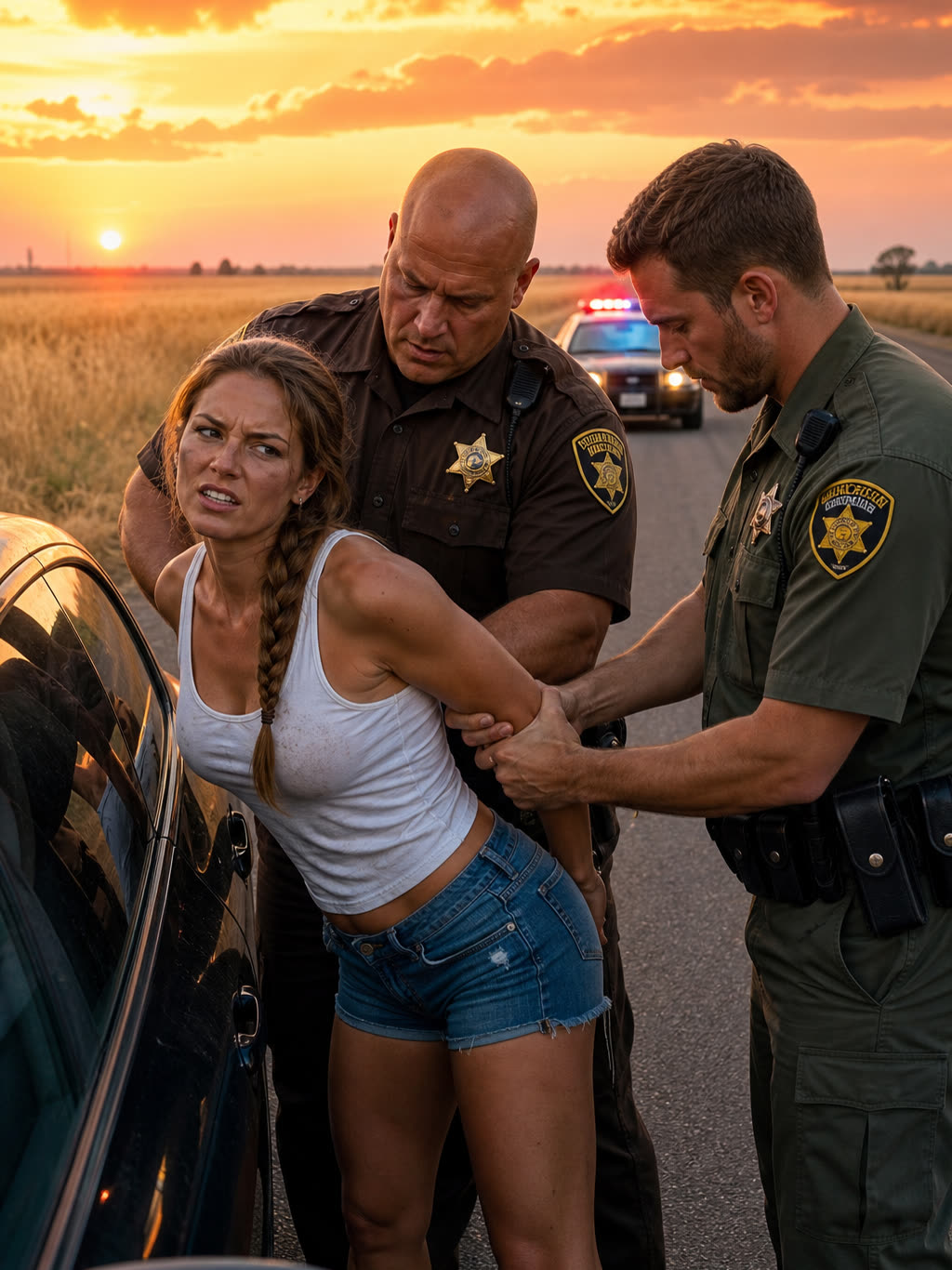
The younger man wrenched my arms behind my back with a force that made my shoulder scream again. Cold metal closed around my wrists, and I heard the ratchet click, one tooth at a time. The handcuffs tightened until I could feel my pulse against them. It was a sound I had heard many times in my working life, but never from this side. I stood pinned against the warm door of my own car, with the wheat swaying calmly behind the men who held me.
“You’ll spend a few hours in a cell,” the older officer sneered. “Maybe that’ll teach you some respect.” His breath was hot and sour against my ear. My heart was pounding so hard I could hear it, but I refused to struggle. Struggling would only give them the excuse they were hunting for. I forced myself to breathe slowly and kept my face turned toward the road, where the light was fading to amber.
“Are you absolutely certain you want to do this?” I asked. He laughed, a short and ugly sound, and turned to share it with his partner. “Is that a threat?” “No. You’ve detained me without explaining why, used unnecessary force, and refused to identify yourselves. You still have an opportunity to correct this.” I meant every word, and part of me truly hoped they would listen. It was a last chance, offered sincerely, and I wanted them to understand that. They didn’t.
“We’ll deal with everything at the station,” he said, tightening his grip on my arm. I took another slow breath. The moment had come, and I could feel it sitting quietly in my pocket like a stone I had carried all day. “Before we leave, there’s something in my right pocket. Since you’ve handcuffed me, you’ll have to retrieve it.” The two officers looked at each other, and their faces filled with amusement, as though I had just told a joke.
“What is it? A bribe?” the younger one joked, grinning. “Just look,” I said quietly. I did not raise my voice or add anything else. The larger officer sighed as if he were humoring a child, then reached into the pocket of my denim shorts. His fingers found something flat and small, and he drew out a black leather identification holder. He turned it over in his thick hand, still smirking, still sure that he was the one in control.
He flipped it open carelessly, the way a man opens a leaflet he has no intention of reading. Then he froze. His smirk stayed on his face for half a second, like a mask nobody had told to leave. His eyes moved across the photograph, then my name, then the official gold seal pressed into the card. He read it again. And again. I watched his lips move slightly, as though the words refused to mean what they said. The color began to leave his cheeks.
“What’s wrong?” his partner asked, the laughter fading from his voice. The older officer did not answer. His hand was unsteady as he held out the document, and the younger man snatched it with a frown. I saw his expression shift in an instant, the sneer dissolving into disbelief. His eyes darted from the card to my face, and then back to the card, searching for some sign that it was false.
It was not false. Inside the holder was my official identification. Victoria Sokolova. Senior Inspector. Directorate of Internal Affairs. It was the department responsible for investigating police misconduct and corruption, the office whose name makes careless officers go quiet. The silence stretched between us, thick and heavy. For the first time since stopping me, neither of them had anything to say. A bird called somewhere over the wheat, and even that sounded loud.
“Why didn’t you tell us?” the younger man finally whispered. I looked directly at him, and I let him see that I was not angry so much as disappointed. “Because I wanted to see how you treat ordinary citizens. Now I know.” He flinched as though I had struck him. Both men hurried to remove my handcuffs, their earlier confidence gone entirely. The older officer was trembling so badly that he dropped the key onto the gravel. He had to scrabble for it on his knees in front of me.
When the cuffs finally came off, a thin line of blood showed around my wrist. I rubbed my arm, and the sting reminded me how tightly they had been fastened. “This was a misunderstanding,” he stammered. “We didn’t know who you were.” “That shouldn’t have mattered,” I replied. The words came out calm, but they were the heart of everything. His partner tried to smooth it over. “Let’s forget this happened. Nobody needs to know.” I raised my injured wrist so that both of them could see it. “Tell me again that nobody was hurt.”
They had no answer. And they did not yet understand the worst of it. What they had not noticed was the small camera fixed above my dashboard, which had been recording since the moment I turned the key. The unjustified stop. Their aggressive language. The physical assault. The handcuffs. Every second was captured, and the footage was already securely backed up. I returned to my car, locked the doors, and made one phone call to my supervisor. Fifteen minutes later, another official vehicle came racing down the road, and the man who stepped out of it would decide what happened next.
Part 2: The Files
The vehicle that pulled up beside us was unmarked except for its official plates. Colonel Gennady Markov, the district police chief, stepped out, accompanied by two colleagues from Internal Affairs. He was a tall man with a weathered face and an expression that gave nothing away. He walked straight to me and asked only to see the evidence. I opened the recording on my screen and handed it to him, and the two officers stood a few paces away, pale and silent, watching his face.
He watched in silence. The footage showed the unexplained stop, the tossed documents, the door ripped open, and the moment I was dragged from my seat and forced against the car. It did not need commentary, and the camera had caught everything exactly as it happened. When the video ended, his expression was grim. He lowered the phone slowly and turned to the two men. The evening wind seemed to stop with him.
He approached the two officers. “Your badges and weapons. Both of you. Now.” “Sir, we can explain—” the older one began, but the colonel cut him off. “You’ll explain yourselves before the disciplinary board.” There was no heat in his voice, only a cold finality that frightened me more than shouting would have. They surrendered their equipment, one piece at a time, with hands that would not stay still. I watched the badges change hands in the last of the light, and I felt strangely hollow.
My colleague Lena photographed the injuries on my wrists, working carefully and quietly, and she insisted that I receive medical attention without delay. I did not argue. At the hospital, the doctors examined me thoroughly and documented the bruising, the abrasions and the strain in my shoulder. Each observation was written down and signed. I sat on the edge of the narrow bed and watched the pen move across the page, knowing that this paper, like the video, would become part of the record.
That night, I barely slept. I lay in the dark with my arm throbbing and my mind refusing to rest. The incident had awakened memories I had carried since childhood, memories I thought I had learned to keep quiet. Every time I closed my eyes I saw the same gravel road and the same flashing lights, only the face in the car was not mine. It was my father’s.
When I was twelve, my father, a quiet physics teacher, had been stopped by two traffic officers on his way home. He was a gentle man who corrected papers at the kitchen table and hummed while he cooked. The officers demanded money. He refused, because it was not in his nature to hand over what he had earned honestly to men who had no right to ask. They beat him badly enough to break his nose and two ribs. I still remember how he looked when he came through the door that night.
He filed a complaint, because he believed that was what honest people did. He waited, and I watched him wait, and he checked the mail every day with a patient hope that broke my heart. Six weeks later, the authorities informed him that no misconduct had been found. That was the whole of their reply, with no explanation or apology, as if the broken ribs had never happened. He folded the letter and put it away, and he never spoke of it again.
My father never drove along that road again. He took a twenty-minute detour for the rest of his life, rather than pass the place where he had been hurt. He never complained about the extra miles, and he never told me that it was fear. But I understood, even as a child, that something in him had been taken and never returned. Watching him suffer without justice had shaped every decision I made afterward.
It was the reason I chose Internal Affairs. I wanted to become someone who actually listened when ordinary citizens reported abuse. I wanted to be the person on the other side of the desk who read the complaint and did not dismiss it. And now, twenty years later, I had experienced the same injustice myself. The following morning, I submitted a detailed report with the recordings, the photographs and the medical documents. Within days, an investigation began. The older officer was identified as Sergeant Igor Volkov, a twelve-year veteran of the force, and his younger partner was Officer Denis Sadov. But what investigators discovered about Volkov was far more disturbing than my encounter alone. My supervisor, Major Irina Kovaleva, called me into her office and placed three old complaint files on her desk.
“These were filed against Volkov over the past four years,” she explained. Her voice was steady, but her eyes held something heavy. I sat down and looked at the three thin folders, each of them gray with age and neglect. They looked like nothing at all. I understood, as I reached for the first, that each one held a person whose voice had been swallowed by silence. I opened it slowly.
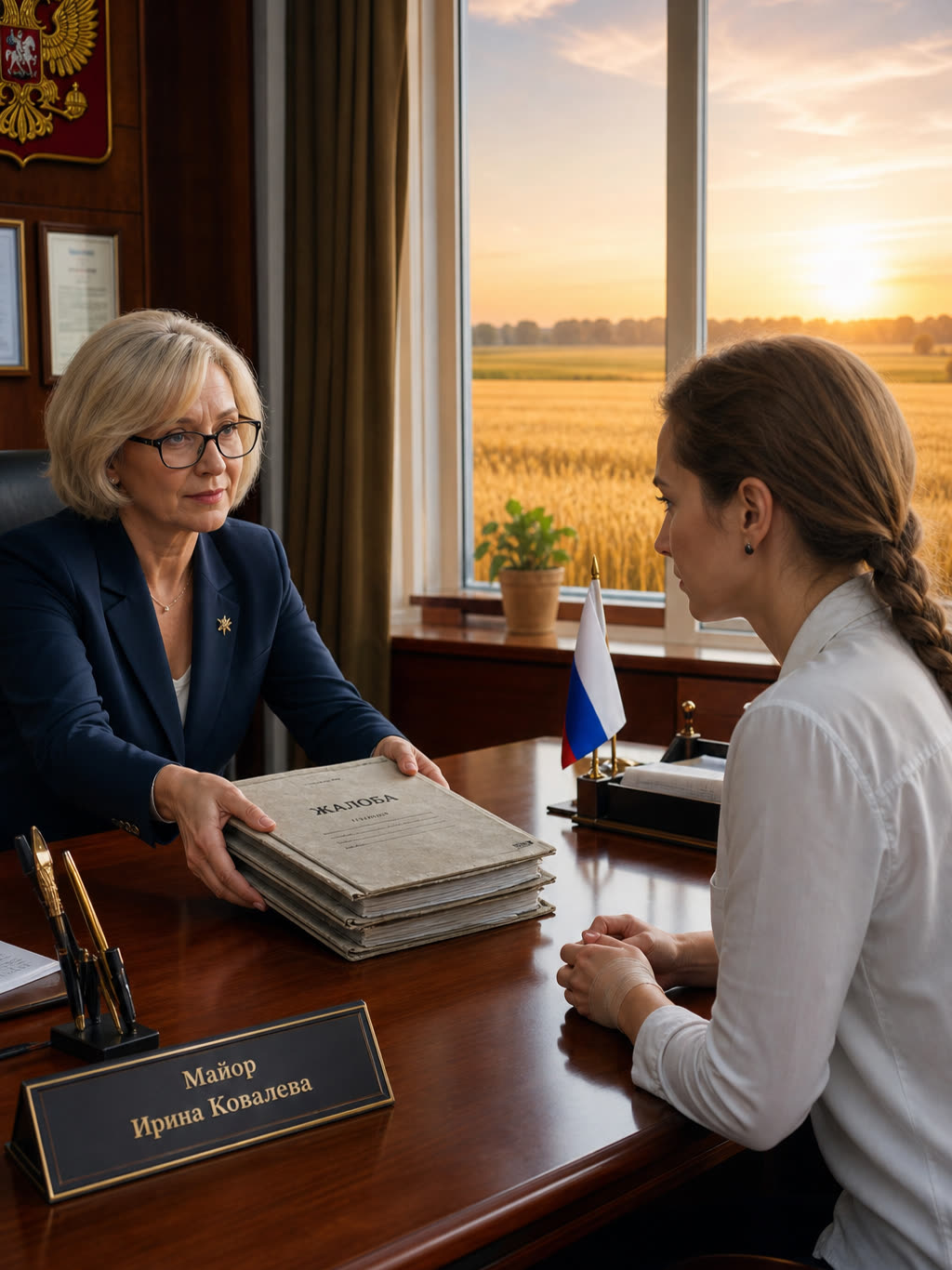
The first file concerned a delivery driver named Ruslan, who had reported being stopped without justification, searched, and robbed of cash. He had written everything down carefully, in a plain, angry hand. His complaint had been dismissed because he couldn’t provide the officer’s badge number. It was a rule that punished the victim for not memorizing the face of the man who frightened him. I read his words twice and felt my jaw tighten.
The second file belonged to Valentina, a seventy-one-year-old pensioner. An officer matching Volkov’s description had falsely claimed her headlights were defective and demanded an immediate cash payment. She had been frightened, alone on a dark road, and she paid. She surrendered an entire month’s pension. Her complaint, written in careful, shaky letters, went nowhere. I imagined her walking home with empty pockets and a pounding heart.
The third involved a teenager named Artyom, who had been handcuffed and forced to sit in the rain for two hours because he allegedly showed disrespect during a traffic stop. He had been a boy, soaked and shivering, while the men who had detained him decided how long to make him suffer. His complaint was also dismissed. I closed the folder and laid my hand flat on top of it, feeling an anger so quiet that it almost frightened me.
Three people had tried to expose the same officer. Three people had been ignored. Until now. The investigation reopened their cases, and with permission from my supervisor, I visited the complainants alongside Lena. I wanted to look each of them in the eye, and I wanted them to know that someone had finally read what they wrote. It was the least I could do, and it felt like the most important part of the work.
Valentina invited us into her small apartment and served tea in thin porcelain cups. The rooms were neat and spare, and everything in them looked carefully made to last. She sat across from me with her hands folded, and I could see how much effort she was making to stay composed. “I couldn’t afford proper groceries after he took my pension,” she admitted. “I had to choose between food and my heart medication.” Her hands trembled as she spoke.
“I thought nobody ever read my complaint.” The words were small and tired, the sentence of someone who had given up on being heard. I leaned forward and met her eyes. “I did,” I told her. “Every word.” She stared at me for a long moment, and then she began crying, softly at first and then without hiding it. Lena reached over and took her hand, and I let the silence stay, because sometimes silence is the kindest thing to offer.
Ruslan was initially angry that authorities had waited four years to take his allegations seriously. He said so plainly, and I did not argue, because he was right to be angry. But as we talked, and as he realized that the investigation was genuine, his shoulders slowly loosened. He agreed to cooperate, and the relief in that decision was visible on his face. It was the relief of a man who had stopped expecting to be believed.
Artyom, now eighteen, struggled to describe what had happened. He kept looking at the floor, turning his hands over as if searching for the right words in them. “They said I had an attitude,” he whispered. “But I only apologized and promised to repair the taillight.” “I believe you,” I replied. He lowered his head and cried, and I understood that those three words were the thing he had been waiting four years to hear.
Those conversations reminded me why I had chosen my profession. The disciplinary hearings began several weeks later, in a long, bare room with a table and a row of stern faces. Volkov insisted that I had been uncooperative and that he had used necessary force because he felt threatened. He spoke with the confidence of a man who had never once been contradicted. Then the board played the recording. The room fell silent. One senior officer leaned forward. “Sergeant, could you identify the precise moment when this woman threatened you?” Volkov stared at the table. He couldn’t answer. But the hearing was far from over, and the next witness was about to say something that nobody in that room expected.
Part 3: The Road Home
The silence in the hearing room stretched on, and Volkov’s refusal to meet anyone’s eyes said more than any argument could. Then investigators presented the previous complaints, one folder after another, laid out in order on the table. Ruslan’s stolen cash. Valentina’s lost pension. Artyom’s hours in the rain. The pattern was impossible to ignore, and I watched the board members exchange the slow, heavy looks of people who understood exactly what they were seeing.
Then it was Denis Sadov’s turn. He sat very straight, and I could see his hands gripping his knees. During his own hearing, he admitted something unexpected. Volkov had selected my car because he believed I looked wealthy. He spoke the words quietly, as if each one cost him something. There had been no genuine traffic violation. There had never been any reason at all for those flashing lights behind me on that peaceful road.
Sadov also admitted that he’d known their conduct was improper but had been afraid to challenge his senior partner. He kept his gaze lowered while he spoke, and his voice nearly broke. “I should have stopped him,” he said quietly. “I’m sorry.” I listened without moving, and I felt many things at once. I felt anger at what he had allowed, and I felt a reluctant understanding of how fear can hold a young man’s tongue.
His confession didn’t erase his responsibility, and nobody in that room pretended otherwise. But it helped investigators understand how the abuse had continued for so long. A senior officer used his rank to frighten, and a junior one stayed silent to protect himself. Between the two of them, the complaints had slipped away unanswered. It was not one rotten act but a whole habit, passed along in silence, and now the habit had been exposed.
Three weeks later, the disciplinary board announced its findings. I sat in the same room and listened as the chairman read each line. His voice was even, and there was no triumph in it, only a sober sense of duty. I held my hands in my lap and waited, and I realized that I had been holding my breath for weeks.
Sergeant Volkov was dismissed for unlawful detention, excessive force, abuse of authority, and misconduct. The reopened complaints also led to a criminal investigation into alleged extortion. The man who had shouted at me on the gravel shoulder sat motionless as the verdict was read. Nothing remained of the arrogance he had carried so easily that evening.
Denis Sadov was demoted and reassigned to administrative duties, with a permanent disciplinary record. It was a heavy consequence, but it was not the end of his story. How he lived with it would be up to him. I watched him leave the room with his head down, and I hoped, quietly, that the lesson would stay with him.
I expected to feel victorious. For weeks I had imagined that moment, and I had assumed it would feel like a door finally opening. Instead, I felt exhausted. A heavy tiredness settled over me as I walked out into the corridor, and I leaned against the cold wall for a moment. Because justice had arrived only after the officers had unknowingly mistreated someone capable of holding them accountable.
What about the people who hadn’t carried official identification? What about those who had no cameras, legal knowledge, or powerful colleagues? The questions followed me home and sat with me through the evening. I kept thinking about my father. About the elderly woman who had gone hungry. About the young driver who had been humiliated in the rain. Each of them had been ordinary, and each of them had been alone, and almost nobody had listened.
The investigation eventually brought some measure of recognition to those victims. Valentina recovered the money that had been taken from her. Ruslan received an apology from the employer who had once doubted his story. These were small victories, but small victories can steady a life. But the most meaningful message came from Artyom. Several weeks later, he sent me a letter. He had been accepted into the police academy. His mother couldn’t understand why he wanted to become an officer after what he’d experienced. But he explained that one simple sentence had changed his perspective. “I believe you.” He wanted to become the kind of officer who listened to people rather than intimidating them. I read his letter several times before placing it beside a photograph of my father.
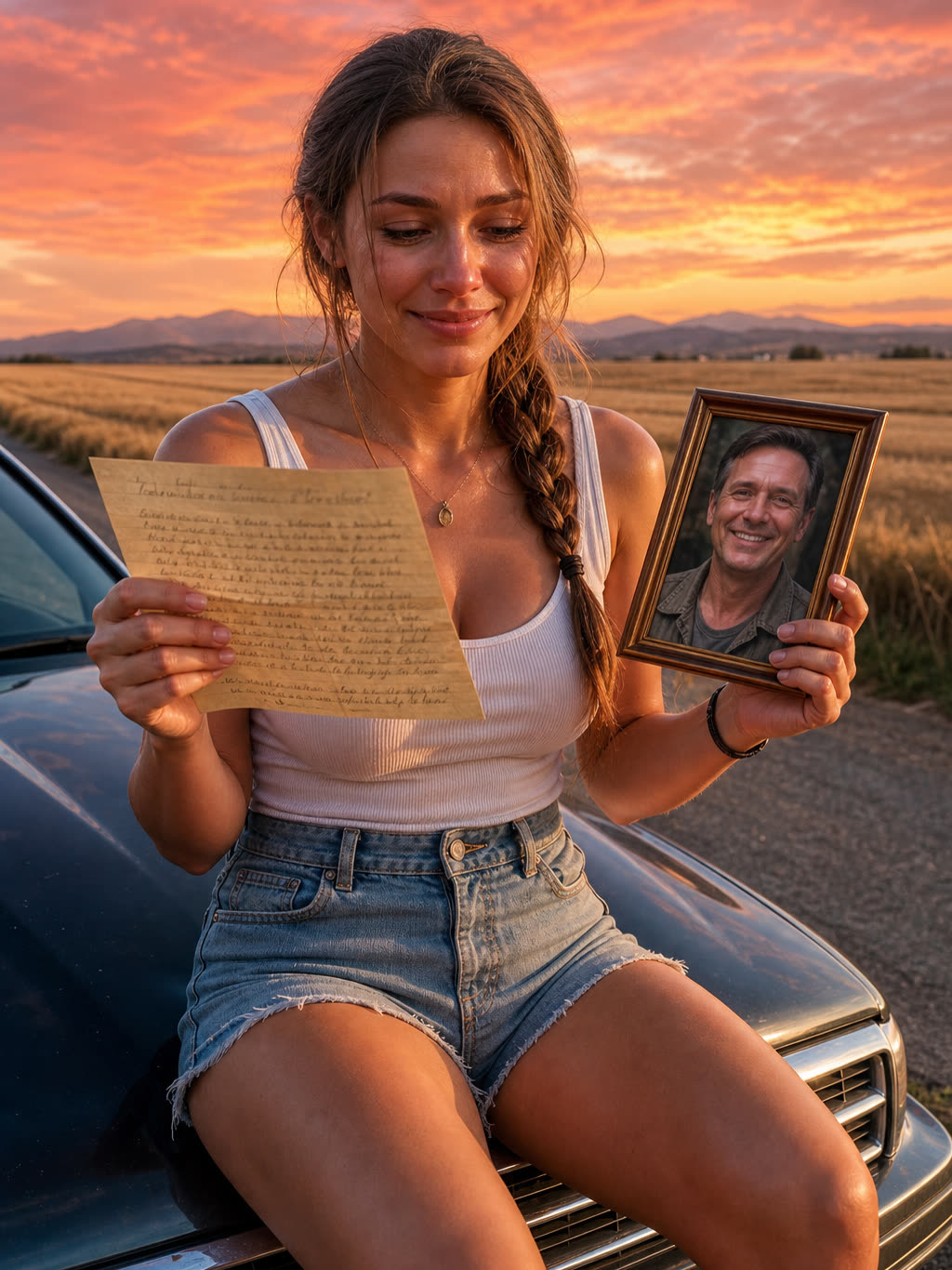
In the photograph my father was smiling, a little shyly, the way he always did in front of a camera. I looked at his face for a long time. I thought about the twenty-minute detour he had driven every day, and about the justice he never received. I like to believe that he would have understood, and that he would have been proud of the boy who wanted to listen. The letter and the photograph rested together in the soft lamplight, and the room felt, for the first time in weeks, a little lighter.
A month after the incident, I decided to drive along the same country road. I had not planned it in advance. I simply woke up one morning knowing that I could not leave it undone. I got into my car, started the engine, and turned toward the fields. The morning was bright and clear, and the sky stretched wide and blue above the empty asphalt.
The wheat had been harvested, leaving golden fields stretching toward the horizon. The stubble caught the light and glowed like a sea of copper, quiet and open. It was the same landscape I had admired on that fateful evening, but it looked different now. It looked like something that had survived. I kept my hands steady on the wheel and let the miles unroll beneath me.
I passed the old bus shelter where Volkov’s patrol car had been parked. It was just a weathered structure with peeling paint, nothing more. The sight of it made my pulse quicken for a moment, and then it settled. I watched it shrink in my mirror, and I felt something loosen inside my chest that had been tight for a long time.
Then I passed the gravel shoulder where I’d been handcuffed. I slowed a little, and I looked at it carefully. The gravel lay scattered and ordinary in the sunlight. There was no sign of what had happened there, no mark of the key that had fallen or the blood on my wrist. Yet I remembered everything, and I knew I always would. Memory, I realized, does not need a mark to stay alive.
For a moment, I remembered my father’s decision to avoid the road where he’d been assaulted. He had taken the longer route home for the rest of his life. I pictured him turning the wheel at that familiar junction, year after year, choosing the detour without a word. I understood him better than I ever had before. I did not judge him, and I never would. His fear had been earned.
I considered doing the same. The thought was real, and I let it pass through me honestly, without pretending that it was foolish. There was an easier road, and it was only twenty minutes longer. But then I continued driving. I wasn’t going to surrender that road to fear. It belonged to everyone who needed it, and it belonged to me too.
The windows were open, and warm air moved through the car, smelling of dry straw and sunlight. An old song my father used to love was playing on the radio. I had not chosen it, and I had not expected it. It simply arrived, as if the road itself wished to say something. I turned it up a little and let the melody fill the space around me.
For the first time since the incident, I felt peaceful. The fields rolled past in long golden waves, and the sky above them was wide and open. I did not feel victorious, and I did not feel broken. I felt steady, like someone who had finally set down a weight she had been carrying for twenty years.
Because justice should never depend on someone’s rank, connections, or the identification they happen to carry. It should belong equally to everyone. And as the song carried me down that open road, I held on to that thought, and I promised myself that I would keep listening.
Disclaimer: This story is a work of fiction inspired by real-life themes. Names, characters, places and events are fictionalized, and any resemblance to real persons is purely coincidental. Images are for illustration purposes only.
