


PART 1 — The Envelope Beside My Daughter
My own overthrow began on a battlefield of white sheets and electronic alarms. It was Thursday, October sixteenth, a little after two, and the sky outside Cape Fear Valley Medical Center in Fayetteville, North Carolina, was a brilliant autumn blue. Sunlight spread across the linoleum while I lay wondering how the world could remain so beautiful on the worst afternoon of my life. My name is Caroline Whitaker. I was thirty-eight, an Army Major stationed at Fort Bragg, and nine years into a marriage I had believed was the most dependable thing I possessed.
I had coordinated difficult deployments, supervised complicated logistics, and handled emergencies that demanded absolute composure. None of that experience helped me confront the manila envelope beside my newborn daughter’s pink blanket. Lily had arrived seventy-two hours earlier, after fourteen exhausting hours of labor. She weighed seven pounds, two ounces, and had a ridiculous little tuft of black hair pointing upward. Ethan had held her for perhaps five minutes. There had been no tears, no kiss against my forehead. He had passed her back and complained about the cafeteria coffee. I had mistaken his distance for fatigue.
The following morning, I tried to reach the bathroom and found myself struggling for air. My lungs felt stuffed with something heavy and damp. A nurse noticed my lips turning blue, checked the monitor, and immediately summoned help. By evening, my ankles were swollen, my heart was racing, and lying down felt as though someone had lowered a concrete slab onto my chest. Blood was drawn. X-rays followed. On Wednesday morning, Dr. Patel brought a chair beside the bed. “Caroline,” he said, his voice terrifyingly gentle, “you have developed a condition known as peripartum cardiomyopathy.”
I made him repeat the unfamiliar diagnosis. Childbirth had severely weakened my heart muscle, he explained, leaving it unable to circulate blood properly. The clinical description was congestive heart failure. “So,” I rasped, my throat dry, “my heart is failing.” “Yes,” Dr. Patel replied, not breaking eye contact. “But that does not mean your life is over. We have aggressive pharmaceutical therapies. Many women recover significant cardiac function with time and strict rest.” I turned toward Lily’s bassinet. “Am I going to live long enough to watch her grow up?”
He offered no comfortable guarantees. Instead, he explained the diuretics, beta-blockers, monitoring, and rest that would govern my immediate future. I appreciated directness; military life had taught me the value of clear instructions. But I could not repair this particular breakdown with a checklist. My own body was failing, and I needed medical expertise. I also believed, with a desperation that now makes me ache, that I needed my husband. When Ethan appeared Wednesday evening in his navy polo, carrying a greasy takeout bag, I waited for concern that never came.
“How much longer are they holding you hostage in here?” he asked, setting his food by the window. “They are still titrating my heart medication, Ethan. I could have a cardiac event.” He glanced at his watch. “What is all this going to cost us?” A cold tightness gathered beneath my ribs. “I have comprehensive military medical coverage,” I reminded him. “There are always hidden fees,” he muttered. Then he wanted to know whether I could return to my desk the following week. I reminded him that I was on parental leave and fighting for my life. “Unbelievable.”
Even then, I supplied excuses for him. Perhaps fear was emerging as irritation. Perhaps he needed practical problems because the medical ones frightened him. By Thursday afternoon, those explanations were gone. Ethan stood beside my bed and said, “I have been miserable for years, Caroline.” His voice contained no uncertainty. “Then why didn’t you speak to me?” I could barely force the question out. “I tried. You were always deployed, or at the base, or obsessed with your career.” I gripped the sheets. “Ethan,” I gasped. “Last month we stood in Lily’s nursery. We painted the walls yellow together. We laughed.”
He turned his face away. “That doesn’t change the reality. My attorney has prepared the filings. If you just sign them, we can make this seamless.” He threw the envelope onto the mattress. It skidded against Lily’s blanket. My fingers shook so badly that I could not grasp the clasp. His impatient sigh cut through the room. “Look at you. This is exactly what I’m talking about. I am not spending the prime years of my life playing nursemaid to a sick woman.”
The room seemed to lose its warmth. “She is your daughter, Ethan. I am the mother of your child.” He stared back with a cruelty I had never recognized in him before. “I am not paying to keep you alive,” he snapped. “Caroline, take the baby and get out.” He meant the house where we had marked nine anniversaries, served Thanksgiving dinners, and struggled to assemble a crib only two weeks earlier. He was telling his newborn daughter and her gravely ill mother to leave the place I had called our sanctuary.
Before I could absorb that, Margaret Whitaker swept through the doorway. At sixty-seven, my mother-in-law wore her silver hair in a rigid arrangement and carried a handbag worth more than my first car. Her eyes moved over the monitors, the oxygen tubing, and my wet cheeks. “Well,” she declared, “This is certainly a catastrophic mess.” Ethan indicated the envelope. “I gave her the papers, Mom.” A thin smile touched her mouth. She reached into her handbag. “I will call her parents to come fetch her.”

“Margaret, do not do that,” I pleaded. Trying to raise myself sent an awful pressure across my chest. She paid no attention. My father answered on the third ring. “Robert,” she barked. “It is Margaret. You need to drive down here and collect your useless, sick daughter.” I looked toward Ethan, hoping that even now he might object. He studied the floor instead. His mother was arranging my removal, and he was allowing it. For one terrible second, nothing came from the telephone.
Then my father spoke, quietly enough to make the silence around him feel dangerous. “Is Caroline safe?” Margaret sounded offended by the question. “She is in a hospital bed, Robert. Don’t be dramatic. Just come get her.” His answer carried no room for argument. “Put my daughter on the phone,” he commanded. She rolled her eyes and thrust it toward me. “Dad?” My voice broke on the single word. His tone changed immediately, becoming the fierce warmth I had known all my life. “Sweetheart, what in God’s name is happening?”
I looked from the man who would not meet my eyes to the tiny rise and fall of Lily’s blanket. “Dad, I need you. I need you to come now.” There was no hesitation. “We are already moving,” he promised. “I am bringing your mother.” I swallowed against the sickness climbing my throat. “And Dad?” Ethan’s order kept repeating inside my head: take the baby and get out. “Bring the lockbox file for the house. And call Rebecca.” My father paused. When he answered, the tenderness had become something colder. “Understood.”
The phone slipped from my hand. Margaret folded her arms, bracelets striking one another. “Do you honestly believe bringing your daddy down here is going to change the facts, Caroline? Ethan wants his house.” His house. I had spent years believing that loyalty meant never keeping score. Now, with my daughter beside me and my marriage collapsing in a hospital room, I heard those two words as though they belonged to a language I had only just begun to understand.
My military training had always given me a way to move through panic: assess the situation, identify the immediate threat, decide what could still be protected. But there was no distance between this threat and my own body. I could not stand without assistance. I could barely hold the telephone. The husband I had expected to help me recover was discussing my departure, while his mother treated my illness as an inconvenience to be collected by someone else.
I wanted to answer Margaret. I wanted to tell her that wanting something did not make it hers to assign. Instead, my heartbeat lurched into a rhythm I could feel everywhere at once. The monitor’s steady sounds broke into a shrill alarm. Red numbers flashed beside the bed. The room began withdrawing from me, its edges dimming while the center sharpened into a narrow tunnel. Another crushing weight settled over my chest, and the breath I tried to draw would not come.
Nurses rushed through the doorway. Their arrival seemed both immediate and impossibly far away. Margaret’s voice, Ethan’s silence, the envelope against the blanket—all of it receded beneath the frantic machinery recording what my heart was doing. I had called my father. I had asked for the house file. I had finally reached beyond the marriage for help. But as the gray closed around my vision, I could no longer tell whether I would remain conscious long enough to see that help arrive.
PART 2 — What the Accounts Revealed
I never lost the world entirely. Through the confusion, I felt hands move Ethan and Margaret away, an oxygen mask cover my face, and medication sting through my IV. Breathe, Caroline. Breathe. The instruction sounded like my father inside my head. Almost an hour passed before my heartbeat settled, leaving me drained and surrounded by additional equipment. An angry charge nurse sent my husband and his mother to the waiting area; the stress they were causing had become a medical danger. Thirty minutes after I stabilized, three black SUVs entered the parking lot.
My parents came with Rebecca Shaw, our formidable family attorney, and Thomas Avery, a lawyer who specialized in protecting assets. They carried leather briefcases and thick files. Later, I learned that Ethan greeted their approach to the consultation room with a nervous laugh. “What is this supposed to be?” he sneered. “A parade?” My father had spent thirty years working with heavy machinery. His hands were enormous, his expression utterly still. Looking toward Rebecca, he gave the instruction that changed the afternoon. “Start with the house.”
Dr. Patel permitted a fifteen-minute meeting on the condition that I remain passive. A nurse wheeled me into the room, where I sat holding ice water while Ethan leaned back in borrowed confidence. “That house is mine. I’ve lived in it, I’ve bled for it. She can pack her things.” Dad slid a document across the table. “Then perhaps you can explain to the room why your name does not appear on the deed.” Ethan stared. “That is a technicality,” he said. “We have been married for nine years. Half of everything is mine.”
Rebecca stood, fastening her blazer. “That is not how equitable distribution works in this state regarding premarital assets, Mr. Whitaker. Caroline purchased the property entirely in her name before your wedding. Any marital interest in the appreciation of the asset will be evaluated, but you cannot unilaterally declare the property yours, nor can you evict the sole legal owner.” Margaret leaned forward. “My son has paid the utility bills in that house for nearly a decade!” Dad’s anger stayed tightly controlled. “And my daughter,” he answered, “has paid the mortgage, the insurance, and the taxes.”
The ice rattled in my shaking hand. “Caroline, we can suspend this immediately if you are fatigued,” Rebecca said. “No,” I whispered. “I want him to hear this.” Thomas opened another ledger. “Records indicate Caroline purchased the Fatayetteville property in 2014 for $310,000. She secured the property using $190,000 inherited from her grandfather as the down payment. The remaining balance was financed solely under her credit profile.” Ethan laughed bitterly. “Ah, yes. The great grandfather. Of course.” I scarcely recognized him. “You stood beside me at his funeral, Ethan. You know exactly what he left me.”
Walter Bennett had owned a successful hardware store near Sanford, driven an old Ford, and worn his brown corduroy jacket until its elbows failed. He had quietly accumulated $240,000 to leave me. Most became the down payment on my sturdy three-bedroom house. Before he died, we had walked through it together. “Solid bones, Caroline. Ugly wallpaper, but solid bones.” Then he had added, “Never confuse having a roof over your head with having a man you can trust under it.” I had thought he meant dishonest roofers. Thomas explained that Ethan’s moving in after our 2016 wedding did not erase my ownership.
Margaret sniffed. “Well, Caroline is an Army Major. She makes excellent money. Her parents are obviously well-off. She can simply afford to go buy another house and leave this one to Ethan.” Dad folded his hands. “Margaret, possessing the financial capacity to afford something does not equate to an obligation to buy it twice just because your son is a thief.” She fell silent. Ethan shoved back his chair. “I am not sitting here being ambushed by a tribunal of lawyers while she plays the dying victim!” Rebecca remained composed. “That is your prerogative,” she said. “Going forward, all communications will be routed exclusively through my office.”
“You have turned everyone against me. You always do this.” Ethan pointed at me before leaving, Margaret following with a final malicious look. As the door closed, my chest seized again. Faces blurred, a ringing filled my ears, and my paper cup collapsed in my fist. Rebecca called for nurses. The following two days dissolved into medication changes, nighttime tears, and watching Lily sleep. Fluid had collected in my lungs, requiring strong intravenous diuretics. My body remained unreliable, but something in my mind had finally begun to clear.
On Saturday, Rebecca asked me to review three years of joint bank statements. After our honeymoon, Ethan had insisted that combining accounts demonstrated “true partnership,” and I had believed him. My dependable Army pay supported our household while his sales commissions arrived in varying amounts. With Mom knitting beside my bed, I opened the banking portal. Ordinary expenses gave way to unfamiliar transfers: $300, $650, $900. Some went toward a high-interest credit card I had never approved; others carried the vague label Family Expenses. Fourteen months earlier, our money had paid Margaret’s property taxes, then her homeowner’s insurance. Another withdrawal repeated monthly: Mom’s Household.
“Did you authorize those?” Mom asked. “No. ” My pulse quickened as I continued. Ethan had always said Margaret lived independently on her late husband’s pension. Then I found an $8,400 transfer made six weeks earlier. I remembered being heavily pregnant in Target when he called about storm damage to her roof. When I questioned insurance, he had answered, “Don’t worry about the red tape, Caroline. Mom is terrified. We’re family. We step up.” I had agreed. Yet there was no roofing company, no invoice—only money sent to a holding account. Mom covered my hand. “Don’t panic,” she said. “Let Rebecca trace the routing numbers.”

The next morning, Rebecca’s voice had lost its usual briskness. “Caroline, I need you to brace yourself. I traced a series of recurring payments Ethan has been making for the past eighteen months. They are connected to a luxury apartment complex in Hope Mills.” I closed my eyes. “An apartment?” “Yes. We pulled the lease agreement via a private investigator. Ethan is a co-signer.” After a pause, she added, “The primary occupant is listed as Vanessa Price.” His junior sales coordinator. The bright, efficient woman he mentioned constantly. The woman who had sent us an expensive cashmere baby blanket.
“The lease,” Rebecca continued gently, “was signed five months before you became pregnant with Lily.” Five months. While fertility treatments made me miserable and hormone injections left me sick, Ethan had been financing an apartment with someone else. While I studied nursery colors, he maintained another household. The sudden divorce papers no longer seemed inexplicable. Mom needed no explanation. She saw my expression, put aside her knitting, and held me while I sobbed hard enough to set the monitors protesting.
Three days later, an unfamiliar number appeared on my phone. Caroline, this is Vanessa Price. Please don’t delete this. I think we urgently need to talk. I wanted to throw the device, then to answer with every furious word I possessed. Instead, I forwarded the message to Rebecca. “Take the call,” she advised. “But remain entirely passive. Do not threaten her. Do not agree to anything. Let her confess.” When Vanessa rang, Lily was asleep beside me. “Hello, Caroline,” she began shakily. “Speak,” I told her.
“Ethan… Ethan told me you two had been legally separated for over a year. He swore you lived in separate wings of the house.” I studied my wedding ring. “We were sharing the same bed until the day my water broke, Vanessa.” She made a strangled sound. “Oh my God.” Then the story poured out. He had described a loveless marriage and painted me as a woman consumed by her career, hostile to motherhood. “He told you I didn’t want my own child?” I asked. For two years, he had watched me cry over negative pregnancy tests.
“Yes,” she sobbed. “He said it was an accident. He promised me that as soon as the divorce was finalized, we were getting married. He told me he owned that massive house outright, and he had a huge trust fund…” A hollow laugh escaped me. “He told you that, did he? Well, Vanessa, I suggest you check the deed. And his bank account.” Before ending the conversation, she asked, “Caroline… did he really abandon you in the cardiac ward?” “Yes.” Silence followed. “I didn’t know,” she whispered. “I swear I didn’t know he was a monster.”
Ending the call brought no satisfaction. I felt contaminated by the scale of his deception, unable to see where it stopped. Shortly before midnight, Vanessa forwarded a screenshot. It showed an exchange dated exactly two weeks before Lily’s birth. Vanessa: I hate sneaking around. When is this going to end? Ethan: Soon, baby. Once the kid comes, her heart condition is going to put her on her back. She’ll be too weak, medically and mentally, to fight me in court. I’ll get the house, and I’ll get full custody. Just hold on.
I read the message until the screen seemed burned into my eyes. This was not panic, confusion, or even an affair ending a marriage. He had described my weakness as an opportunity. He had expected my heart to leave me unable to defend myself, and he intended to use that helplessness to take Lily and the house. The darkness around the hospital bed seemed to deepen. For the first time, I understood that surviving the illness would not be enough. I also had to survive what my husband had planned for afterward.
PART 3 — The Price of His Lies
The next morning, Dad read the screenshot without speaking. Oxygen hissed beside my bed while he read it again, the muscles in his jaw tightening. Finally, he put his glasses into their case and looked toward the window. “Caroline, your grandfather used to say you learn the true measure of a man when he thinks nobody is watching him.” When he faced me again, his eyes were cold with purpose. “It is time we find out exactly what else your husband has been doing in the dark.” This was no longer merely a fight over property. My daughter’s future was inside it.
Within forty-eight hours, Ethan’s attorney, Richard Collins, requested emergency temporary sole custody of Lily. The filing turned my diagnosis into an accusation, emphasizing my weakness and suggesting that a woman struggling to reach the bathroom endangered her infant. I vomited while Rebecca read it. “This is a standard aggressive tactic,” she told me. “He is trying to panic you into trading the house for the baby. We will not let that happen. We will document your medical support system. Your parents are here. We will bury him in affidavits.” Still, every glance at Lily brought terror that a judge might believe him.
I left the hospital on the twelfth day, carrying strict restrictions and a demanding medication schedule. Instead of returning home, I moved into my parents’ guest bedroom. Lavender and old books made it comforting, but it was not mine. Each morning, I expected my blue walls and found a floral watercolor instead. I could barely climb the stairs without my pulse taking off. While I concentrated on getting through ordinary movements, Thomas examined the financial history of my life.
On a rainy Tuesday, he obtained an affidavit from a Fayetteville real estate agent. Five months earlier, while I was away on a weekend deployment drill, Ethan had invited the agent to my house, requested a valuation, and asked how quickly it could be sold. The transaction had stopped because he could not produce a deed proving authority to sell. I remembered coming home exhausted that weekend. He had eagerly proposed “upgrading” to a bigger house with a pool. I had said ours was perfect. What I had mistaken for disappointed ambition was frustration that I would not help him dispose of my grandfather’s legacy.
Then Mom arrived with chicken broth and an expression of disbelief. “You will never guess what your father just heard from Jimmy down at the hardware store.” I barely looked up. “At this point, Mom, nothing would surprise me.” She set down the tray. “Margaret,” she said, “has officially hired a contractor to tear out your kitchen. She is ordering custom white shaker cabinets and a larger granite island. She told Jimmy she is hosting Thanksgiving at ‘her new house’.” A rough laugh escaped me. “She is remodeling a house she does not own, with money her son no longer has access to.” Mom’s smile was grim. “Let her put down the non-refundable deposit. The shock will do her good.”
The brief humor disappeared the following afternoon. In his required financial disclosures, Ethan claimed that $75,000 applied toward the mortgage had come from an old cryptocurrency investment of his. He supplied records of a deposit into our joint savings, followed by a principal payment. Rebecca sent me the date. “Caroline?” she asked. “Does this date mean anything?” I opened Grandpa’s probate papers, suddenly cold. “Yes,” I whispered. “That is the exact date the executor of Grandpa Walter’s estate disbursed the second tranche of my inheritance. It was wired into my personal account, and Ethan convinced me to move it to the joint account for ‘better interest rates’ before paying down the mortgage.”
Silence held between us. “He took my inheritance,” I said, my voice climbing. “He took my dead grandfather’s money, forged the narrative, and is claiming it as his own personal contribution to steal the equity.” Rebecca’s reply was lethal in its calm. “That is called financial fraud,” she said. “And we have the original estate routing numbers to prove it.” I looked at Lily asleep in her bassinet. Something hardened inside me, separate from the damaged muscle doctors were treating. I was finished waiting helplessly for someone to decide my fate. I knew how to prepare for an ambush.
Four months after Lily’s birth, I stood in a courthouse restroom, leaning on the counter while my fingers failed to manage the buttons of my navy blouse. My heart had improved from critical to manageable, but medication left me constantly tired. Mom gently moved my hands aside. “You look beautiful,” she said, fastening the buttons. “You look like a Major.” “I feel like a casualty,” I muttered. She held my face between her hands. “Not today,” she said. “Today, you are the commanding officer.”
We entered Settlement Conference Room B at nine precisely. Ethan sat beside Richard Collins, a silver-haired lawyer with a reputation for aggressive tactics. Margaret wore a cream suit and pearls, looking prepared to take possession of real estate. Supported by Dad’s arm, I took my place while Ethan stared at his legal pad. Collins proposed an “amicable separation,” praising his client’s “generous” offer to accept sixty percent of the house equity and primary custody because of my “tragic medical incapacitation.” Rebecca let him finish. “Are we finished with the fiction portion of the morning, Richard? Because I brought the receipts.”
Thomas displayed the deed and traced the $190,000 down payment to Walter Bennett’s estate. Then came the financial accounting. “As you can see,” he said, “Mr. Whitaker’s actual financial contribution to the mortgage principal, when offset against his unauthorized withdrawals, amounts to precisely negative twelve thousand dollars.” Margaret scoffed. “My son rebuilt that house! The roof! The bathrooms!” Rebecca slid a bank statement across the table. “Ah, yes. The roof. Margaret, do you recall the severe storm last year that supposedly destroyed your roof? The one that required an emergency $8,400 wire transfer from my client’s savings?”
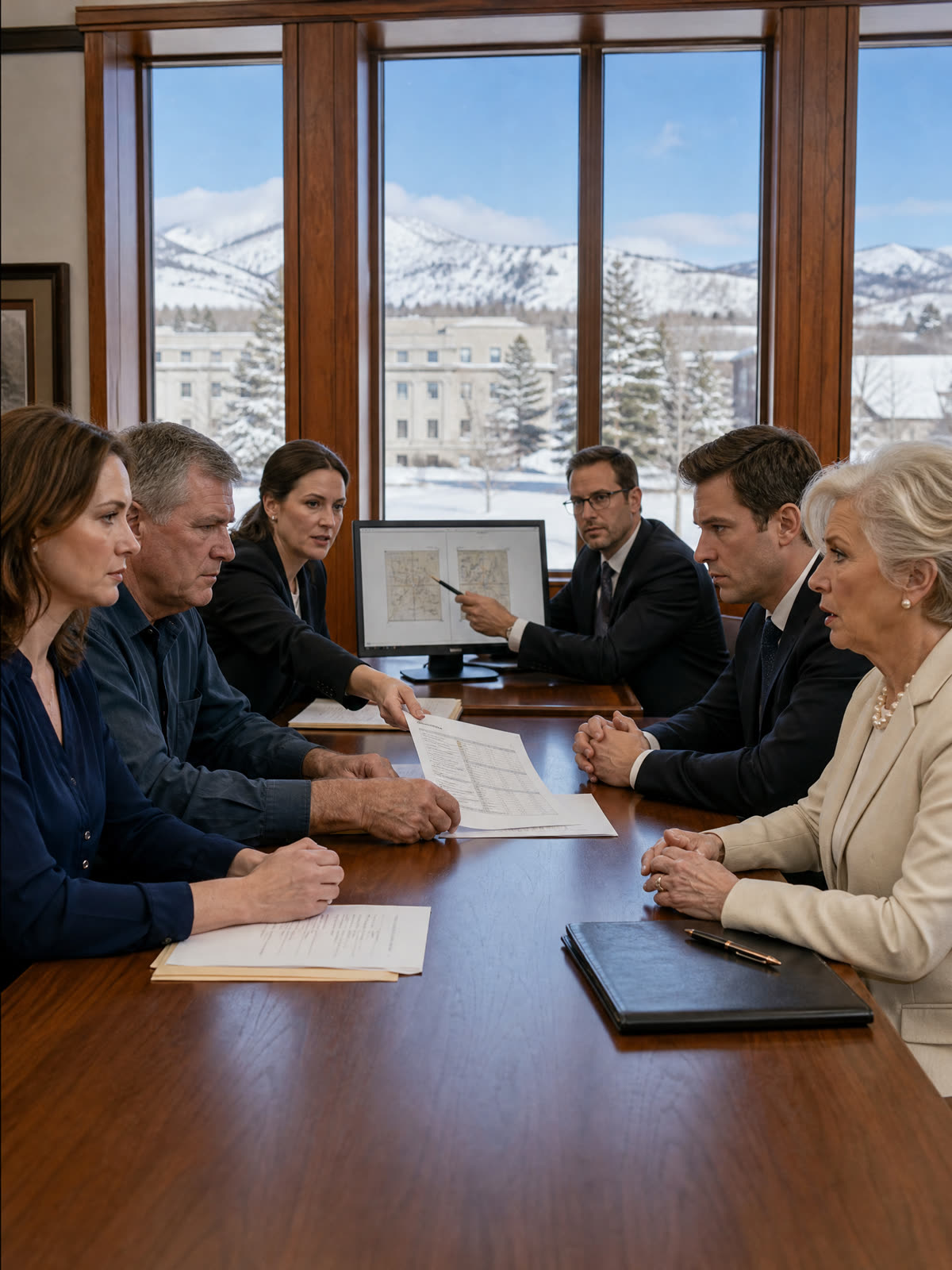
Margaret’s color changed, though she held her chin high. “I don’t handle the finances. Ethan took care of it.” “Indeed he did,” Rebecca answered, producing another document. “He took care of a six-month lease at the Whispering Pines Luxury Apartments in Hope Mills. Co-signed with a Ms. Vanessa Price. We have the ledger matching the $8,400 withdrawal to the exact deposit required by the leasing office.” Ethan’s head jerked upward. His face went white. Collins shuffled papers. “These allegations regarding marital indiscretion are irrelevant to the equitable distribution—”
“They are highly relevant to the dissipation of marital assets,” Rebecca interrupted. “Which brings us to your client’s sworn financial disclosure regarding his $75,000 ‘investment’.” She laid the probate records beside his claim. “Your client committed perjury on a sworn court document, Richard. He attempted to launder my client’s inheritance as his own capital. If we take this to trial, I will not only humiliate him in open court, but I will submit this file to the District Attorney for review of bankruptcy and financial fraud.” Nobody moved.
Collins slowly turned toward the man beside him. The betrayal in his expression would almost have been funny under different circumstances. “Ethan,” he whispered harshly, “did you lie to me about the origin of those funds?” Ethan swallowed but said nothing. Margaret struck the table with her palm. “This is a setup! My son is entitled to half that house! I have already ordered twenty thousand dollars in custom kitchen cabinets!” Dad leaned forward. “Then I suggest, Margaret, you find a very large kitchen in your own home to put them in. Because you are never stepping foot on my daughter’s property again.”
Collins stood abruptly. “My client and I need the room.” We waited in the hallway, where I rested against a cool window while my heart pounded and an ache moved through my chest. This exhaustion was different from surrender. I had sat across from the people who expected to dismantle my life, and the documents had remained stronger than their confidence. Twenty minutes later, we returned to the table. Ethan’s posture had collapsed. Collins spoke in clipped sentences, abandoning the claim to ownership of the house and withdrawing the supposed $75,000 contribution.
They accepted a small, sharply reduced payment for the limited marital improvements, spread over five years. After reviewing the affidavits from my doctors and parents, they also withdrew the emergency sole-custody request. A standard, gradual parenting arrangement would leave Lily primarily in my care. The demands they had carried into the room had fallen apart. I had not recovered the marriage, the trust, or the months of peace my daughter and I should have shared. But I had protected the home and refused the trade they had tried to force on me.
As we gathered our files, Margaret rose with humiliation burning in her face. At the doorway, she turned toward me. “You have destroyed this family.” My answer came steadily. “No,” I replied. “I just survived it.” Ethan remained behind as the others moved out. He studied me as though looking for the woman who had once packed his lunches and excused his behavior. “Caroline,” he began, stepping closer. Dad moved between us without a word.
Ethan stopped before that immovable barrier. For a moment, he looked from my father to me. Then something ugly passed across his face. He leaned just enough to address me around Dad’s shoulder. “Enjoy the empty house, Caroline. Let’s see how long your heart holds out when you’re all alone.” He turned and walked away. The legal papers were being packed, the house was still mine, and Lily would remain in my care—but his last words stayed behind in the courthouse air, making victory feel suddenly unfinished.
Rain tapped softly against the upstairs windows in a steady, soothing rhythm, a sound I had longed to hear throughout four excruciating months. It was 7:15 on a Saturday morning. I stood in the kitchen that finally belonged to me again, wrapped in a heavy wool cardigan as the rich fragrance of dark-roasted coffee drifted through the room.
My home. My fortress.
Beside the kitchen island, Lily sat in her high chair, now a healthy, energetic five-month-old. She enthusiastically banged a plastic spoon against the tray, making her impatience for breakfast perfectly clear. The dishwasher produced its familiar mechanical hum, while the dryer thudded steadily in the laundry room.
“You,” I said, aiming my coffee spoon toward my daughter, “are going to be an absolute menace to society.”
She answered with a brilliant, toothless smile before promptly dropping her spoon onto the floor. I carefully bent to retrieve it, remaining conscious of the strain on my chest. It seemed like a perfectly reasonable exchange. I had surrendered the fantasy of a flawless marriage and gained the wonderfully unpredictable, messy reality of raising this little girl.
Returning home had been nothing like a triumphant scene from a movie. It required weeks of exhausting arrangements, patience, and practical effort. Ethan had eventually moved out, taking what remained of his belongings to a small two-bedroom apartment across Fayetteville. Vanessa abandoned him as soon as she discovered that his finances were ruined and that he had been thoroughly defeated through the legal process. She later sent me a short, remorseful email acknowledging her involvement and offering an apology. My response contained only a few words: *Thank you. Live a better life.* I had no strength left to waste on resentment. Every bit of energy I possessed needed to go toward recovering.
When I finally stepped through my own front door again, reminders of the past seemed to occupy every corner. There was the section of carpet where Ethan and I had fought. There was the sofa where we had once spent evenings watching films together. Yet my parents, friends, and fellow service members refused to let those memories dominate the house. They cleaned every room, stocked the refrigerator, changed the locks, and filled the space with warmth and care. Through their efforts, they gradually erased Ethan’s presence from the very walls.
My physical recovery, however, remained an ongoing struggle. Dr. Patel expressed cautious hope because my ejection fraction continued improving toward the normal range, but I still required a carefully controlled schedule of medication and regular medical monitoring. The Army had begun arranging a medical board evaluation to determine whether I could continue serving in uniform. My illness had taught me a harsh lesson: determination alone could not force my body to recover according to my preferred timetable. I had to accept that healing would happen at the pace my body could endure.
Communication between Ethan and me took place exclusively through a court-supervised co-parenting application. Our exchanges were impersonal, limited to practical matters involving Lily. During his assigned weekends, he made an effort to appear like an attentive father, sometimes asking ordinary questions about infant formula brands as though those inquiries demonstrated his commitment. I responded with factual, unemotional answers. I no longer expected him to become the man I had once loved. All I wanted was for him to avoid causing harm to our daughter.
Margaret returned for one final, deeply unpleasant encounter.
It happened toward the end of April. She had arranged an appointment to retrieve a collection of antique golf clubs Ethan had left behind in the garage. By coincidence, my father was visiting that day to repair a loose hinge on the front entrance.
Margaret entered the foyer and immediately began scanning the surroundings, apparently searching for evidence that the property had deteriorated. Instead, everything was spotless. Warm sunlight spread across the polished hardwood flooring, and Lily was lying on her colorful playmat in the living room, enjoying tummy time.
“She is growing,” Margaret remarked stiffly, making no attempt to come farther inside.
“She is thriving,” I corrected.
Her attention shifted toward the kitchen. I suspected she was remembering the white shaker-style cabinets she had planned to install before being forced to cancel the order at considerable financial expense.
“I never believed you would actually manage to keep this place.”
I approached her calmly. I was no longer the frightened, helpless woman she had confronted in a hospital bed.
“That is because you never respected the fact that it was mine to begin with.”
Margaret clutched her expensive handbag more tightly, her jaw stiffening with irritation. She glanced toward my father, who had stopped using his drill and was watching her with the sharp vigilance of a hawk.
“Well,” Margaret spat, “I suppose you think you won.”
I turned my attention toward Lily, who was enthusiastically attempting to chew on a stuffed giraffe.
“I didn’t win a game, Margaret. I stopped a robbery.”
Without another word, she spun around and left. The substantial oak door closed behind her with a firm click, marking the final boundary between her life and ours.
That evening, after my parents returned to their own house, I carried Lily upstairs to her nursery. The walls were still covered in the gentle, buttery shade of yellow we had originally chosen. For several weeks, I had considered hiring someone to repaint them lilac or green, hoping a different color would remove the memory of Ethan applying the original paint.
But as I stood in the soft glow of the star-shaped nightlight, something became clear to me. Those yellow walls did not belong to Ethan. Although he had painted them, he had also walked away from everything the room represented. The color now belonged to the little girl who slept safely within those walls.
I lowered myself into the rocking chair and held Lily close, resting her warm cheek against my chest. Beneath my hand, I could sense the delicate, steady rhythm of her tiny heart beating alongside my own injured heart as it slowly regained its strength.
“You are going to grow up knowing the truth,” I whispered into the darkness, kissing the crown of her head. “You are going to know that love does not abandon you when you are weak. And you are going to know that nobody—nobody—gets to take what belongs to you.”
During those frightening days in the hospital, I had imagined that getting justice would involve something dramatic and destructive. I had believed I would need to ruin Ethan’s life with the same cruelty he had used to devastate mine.
But genuine vindication turned out to be far quieter than anything I had imagined.
It was the gentle patter of rain against the roof of a house that was legally and unquestionably mine. It was the reassuring, regular sound of a heart monitor showing that recovery was possible. Above all, it was the deep certainty that I had endured an extraordinary battle to protect my daughter’s future and had refused to retreat when everything was at stake.
I had succeeded in keeping our home.
Yet as I gazed down at Lily sleeping peacefully in my arms, I understood that the building itself was only our shelter, the strong walls surrounding something far more precious.
The true treasure was the future we were creating together inside it.
Disclaimer: This story is a work of fiction inspired by real-life themes. Names, characters, places and events are fictionalized, and any resemblance to real persons is purely coincidental. Images are for illustration purposes only.
