

PART 1: The Family Who Wouldn’t Come
The first thing that reached me was the taste of crushed concrete. Not the searing torment of broken bones, the construction workers’ terrified shouting, or the metallic scream of rigging giving way beneath my steel-toed boots. Just cement dust choking my tongue and a mechanical beep that seemed to originate inside my skull. The sound followed me through a black, bottomless place where my awareness kept slipping beneath the surface. Much later, I would discover it was a cardiac monitor recording the heartbeat trauma surgeons had restarted twice inside a speeding ambulance. In that darkness, I understood only that something unbearably heavy pressed against my chest, and I wanted the artificial rhythm to stop.
Then voices filtered through, warped and distant, like conversations heard from the bottom of a swimming pool. “Systolic pressure is bottoming out! Get another unit of O-negative on the rapid infuser, now!” Another voice followed. “Watch the cervical spinal alignment on the transfer. Stay with us, Ms. Vance. Come on, Clara, stay with us.” I tried to answer. I wanted to explain that I was Clara Vance, senior project manager, and that I had only been conducting a routine inspection at the Riverfront Plaza development. I wasn’t even meant to be beneath the third-tier scaffolding when its principal supports failed.
But I couldn’t find my mouth, much less make it work. My body had disappeared, leaving only disconnected flashes: metal splitting with a deafening crack, the sickening freedom of falling three stories, a rusted I-beam rising toward my ribs. After that came nothing. When reality finally returned, it felt like being hauled across broken glass. My eyelids seemed weighted shut. My throat felt scraped raw. Every shallow breath demanded a fresh bargain with pain. The damage wasn’t confined to one place; it felt as though my entire skeleton had been taken apart and carelessly reconstructed.
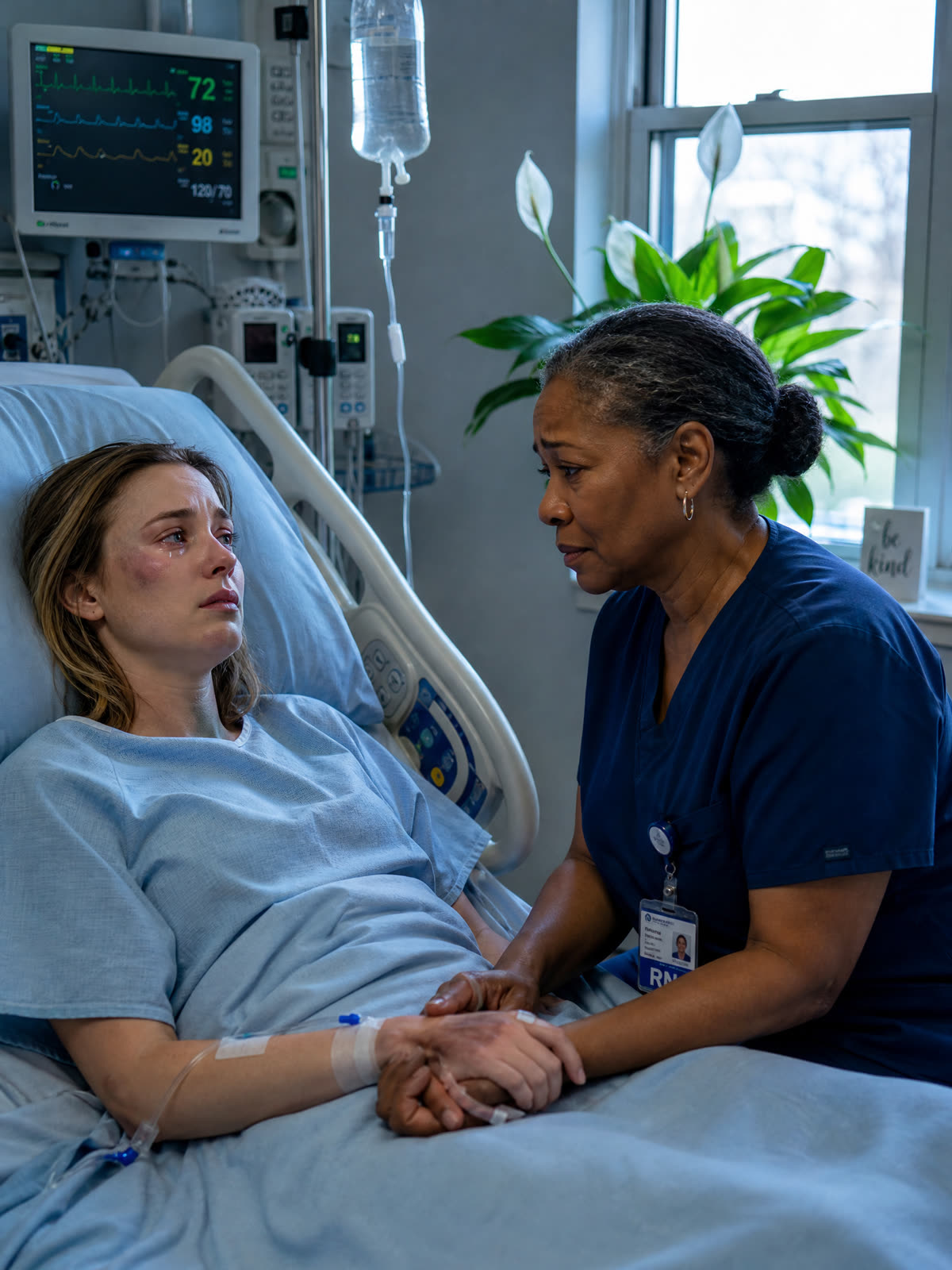
Fluorescent light pierced my vision. Ceiling tiles drifted into focus beneath a faint electrical hum. I smelled iodine, bleach, and the stale metallic trace of blood. Moving my right index finger required enough effort to scatter gray spots across my sight. Beside me, a plastic chair creaked. “Oh, thank the merciful Lord.” A woman leaned over the bed. She looked to be in her late fifties, with deep-brown skin, compassionate, exhausted eyes, and navy scrubs. Her badge identified her as Elena Rostova, RN.
“You’re finally back with us,” she murmured, adjusting the clear tubing secured to my bruised hand. “You gave the trauma unit a truly terrifying forty-eight hours, sweetheart.” I attempted to swallow. My mouth felt packed with sand. “How… long?” Elena watched my eyes as she answered. “Two full days since the emergency spinal surgery. You’ve been drifting in and out of the anesthesia, but this is the first time your pupils are actually tracking my movements.” Two days had vanished while the rest of the world continued without me. Two tons of fallen scaffolding had splintered my ribs, punctured my left lung, and fractured my spine in two places. I would later learn that the paramedics had briefly considered whether they needed a coroner instead of a life flight.
I wet my cracked lips and tasted old blood. “My… phone?” Something shifted around Elena’s mouth. It was slight, but I had spent my career reading tension across conference tables. I recognized someone preparing to conceal unpleasant information. “Let’s focus strictly on your vitals first,” she said. “Do you know your full name?” “Clara. Clara Vance.” The answer emerged as a shredded whisper. “Excellent. Do you know where you currently are?” “Hospital. Columbus, Ohio.” Her sympathetic smile tightened. “ OhioHealth Riverside . You are in the surgical ICU.”
I turned my head a fraction, swallowing a cry when pain blazed down my neck. I expected my mother pacing and turning my injuries into a performance, my father studying his shoes, and my younger sister, Chloe, crying prettily whenever an attractive resident passed. Instead, the room was empty. Elena stood beside me. Nearby equipment hissed, and a small peace lily brightened the otherwise sterile windowsill. “Who’s here?” My pulse accelerated, and the monitor answered with a sharp beep. Elena inspected my IV rather than meet my eyes. “You had a visitor yesterday evening. Your neighbor from the floor below your condo. Arthur ? He brought the plant. He asked me to tell you that he fed your cat, and that the animal is highly demanding.”
Arthur. The retired homicide detective from 3B, a solitary, block-built man whose usual contribution to conversation was a grunt beside the mailboxes. My neighbor had come. My mother hadn’t. Neither had my father or sister. “Did… did the hospital call my family?” Elena stopped adjusting the tubing and drew a stool toward the bed. Sitting down transformed her from nurse into an unwilling messenger. “When the ambulance brought you in, Clara, it was a mass casualty code from the construction site. You were unconscious. We pulled your emergency contact from an old intake file. Your sister.” The room seemed to contract around me.
“What did Chloe say?” Elena covered my bruised fingers with her hand. “A clinical social worker, Miriam , was on the line with the intake coordinator when they made the call. She will come in to speak with you when you are a bit stronger, but… Clara, your sister was informed of the highly critical, life-threatening nature of the accident.” Air seemed to thin inside my lungs. “And?” I pressed, feeling dread collect beneath my ribs. Elena drew a careful breath before giving me the answer.
“And she told our staff, ‘She’s not our problem anymore. Don’t call back.’ ” The sentence remained suspended between us. I waited for grief to tear through me, but what arrived instead was a cold, terrible understanding. Of course Chloe had hung up. For twenty-six years, my spoiled younger sister had treated me as an unlimited credit account and a place to unload every unpleasant feeling. Why would my dying interrupt that arrangement? “No one came,” I whispered toward the ceiling. Elena squeezed my hand. “Your neighbor came,” she corrected softly.
An urgent knock interrupted us before I could absorb the loneliness of that distinction. Beyond the glass stood a woman in a beige cardigan, a thick manila folder pressed against her chest. Miriam entered with an expression that tightened the dread inside me. Her eyes passed briefly over Elena. “Ms. Vance. I am so incredibly sorry to overwhelm you while you are in this condition, but there is an urgent matter regarding your residence. The Columbus police are on the phone.”
I tried to rise on my elbows. Pain shot through my damaged spine and drove me straight back against the mattress. “My residence? The condo? What happened?” Miriam’s fingers tightened around the folder. “Your neighbor, Arthur, caught someone breaking into your apartment late last night. Clara… it wasn’t strangers. It was your family.” Surviving a near-fatal collapse only to discover that your family had invaded your home was a particular kind of torment. Morphine could soften the injuries. It offered nothing for betrayal.
The following morning, orthopedic surgeons examined my fractures and delivered the almost unbelievable news that I would not be permanently paralyzed. Afterward, Arthur appeared carrying a foam cup of hospital coffee. He was in his mid-sixties, thickset and solid, with a permanent scowl and eyes worn by thirty years of confronting the worst people in Columbus. “Kid,” he grunted, settling into a chair that complained beneath his weight. There were no cheerful lies about my appearance, no empty reassurances. “Arthur,” I rasped. “Thank you for the peace lily. And for keeping Mr. Whiskers alive.” He dismissed my gratitude with one broad hand. “The cat is perfectly fine. Eats entirely too much premium salmon. Listen to me, Clara. I need to tell you exactly what happened at the building while you were under the knife.”
I tightened my fingers around the blanket. “Miriam said my family broke in.” “Not broke in. They waltzed right through the front door,” he corrected. “I was coming up from the basement laundry room around eight o’clock. I saw your mother, your father, and Chloe stepping out of your unit into the hallway. They had the spare key from under your mat—the one you told me about two years ago in case of a plumbing emergency.” My chest constricted painfully against my broken ribs. “What were they doing?”
“Carrying heavy cardboard boxes. Duffle bags. I stepped directly in front of the elevator doors to block them. I asked them what the hell they thought they were doing, considering you were currently lying in the ICU with a crushed spine. Your sister looked me dead in the eye, didn’t even blink, and said they were securing your valuables because the hospital had explicitly told them you weren’t going to make it.” Nausea rolled through me. Arthur’s jaw tightened. “I called the precinct immediately,” he continued. “But by the time the patrol boys showed up, your mother turned on the waterworks. Claimed they had a verbal agreement with you to manage your affairs in the event of an accident. The cops said it was a civil matter. Familial access. It’s utter bullshit, if you ask me, but it delayed them from making an on-site arrest.”
“What did they take, Arthur?” He retrieved a battered notebook from his leather jacket. “I went in after they scurried off. The place was completely tossed. Dresser drawers dumped on the carpet. The mattress physically shifted off the box spring. From what I could deduce without a full inventory? Your work laptop is gone. The fireproof document box from your home office is missing. Your jewelry case. And…” His expression softened almost imperceptibly. “The wooden display box from your nightstand, Clara. The one with the vintage watch.” The monitor gave an uneven chirp. Everything else receded.
The watch was a manual-wind Patek Philippe that had belonged to Thomas, the senior architect who had mentored me when I was a frightened junior associate. He had offered the belief and paternal affection my own father never managed. Three years earlier, pancreatic cancer had taken him. His will left me the watch, its gold back engraved: For Clara. Time is the only currency that actually matters. Spend it well. My family knew why I treasured it. They also knew it could fetch more than forty thousand dollars, because Chloe had once secretly arranged an appraisal from a photograph.
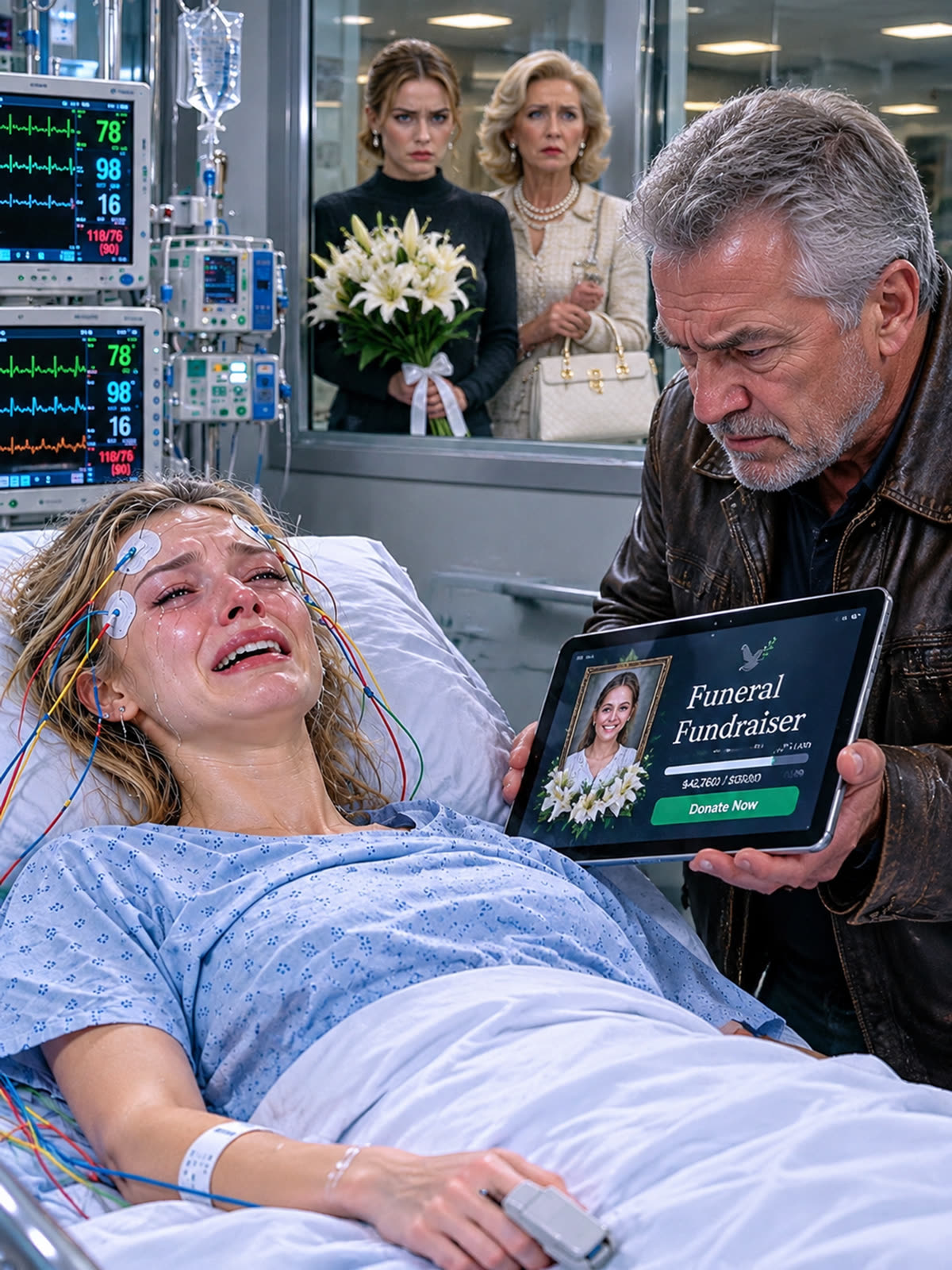
“They took Thomas’s watch,” I whispered. “I filed a formal burglary report anyway, leveraging some heavy old favors at the precinct to push it through,” Arthur said. “But Clara, that is unfortunately not the worst of it.” Angry tears blurred his face. “How could it possibly be worse than looting my mentor’s dying gift?” He produced an iPad and unlocked it, disgust settling over his features. “My niece showed me this last night. It’s been aggressively circulating on local social media for twenty-four hours.”
My bruised hand trembled beneath the tablet’s weight. A crowdfunding page filled its screen. Across the top was a photograph taken at Chloe’s college graduation, cropped so thoroughly that my sister had disappeared and I stood alone. Beneath it, an elaborate appeal described my accident, my family’s supposed vigil, and the funeral they claimed they were preparing. The goal was fifty thousand dollars. Sympathetic relatives, friends, and strangers had already contributed $28,400. And above their donations stood a title that made the hospital room seem to tilt: Memorial and Final Wishes Fund for Our Beloved Clara.
PART 2: The Price They Put on My Life
Chloe’s unmistakable style saturated every line of the appeal: polished sorrow, lavish descriptions of suffering, and just enough flattering language to make strangers feel generous. According to her account, doctors had told the family to expect my final breaths. My relatives were supposedly keeping watch beside me while struggling to afford a funeral, transport my ashes home, and settle my debts. In reality, I lay alive beneath hospital blankets, fighting for each breath, while they collected money for disposing of my body. They had turned the possibility of my death into a business opportunity.
I scrolled to an update posted only hours after the raid on my condo. My mother and Chloe occupied a plush leather booth in an expensive steakhouse, crystal wineglasses lifted before carefully solemn faces. The accompanying message thanked donors for easing the cost of my final journey. “They’re drinking Chardonnay,” I whispered. “They just robbed my house, declared me legally dead to the internet, and went out for a prime rib dinner.” Arthur eased the tablet from my hands. “I’ve already contacted the platform’s legal department to report it as fraud, stating the beneficiary is very much alive and non-consenting. But Clara, these people… they aren’t just vultures circling a corpse. They’re active predators.”
A frightening calm spread through me, cutting past the medication. For thirty years, I had been the dependable daughter, the emergency fund, the person who repaired whatever everyone else destroyed. My savings had rescued my father’s failing businesses. Whenever I tried to establish a limit, my family persuaded me that boundaries made me “selfish” and “un-daughterly.” The collapse had spared my life, but the woman who accepted that treatment had not survived it. “Arthur,” I said, my tears gone, “I need a lawyer. I need the meanest, most utterly ruthless civil litigator in the city of Columbus.” A fierce smile altered his weathered face. “Way ahead of you, kid. I called her this morning. She’ll be here in an hour.”
Before he could rise, the glass doors opened abruptly. Chloe stood there holding an enormous bouquet of white lilies—the kind chosen for funerals. My mother hovered behind her. My sister entered wearing a dark cashmere sweater and makeup arranged to suggest recent tears without sacrificing perfection. My mother clutched a designer handbag and scanned the monitors, tubing, and finally my face. Neither resembled someone shattered by the prospect of losing a daughter or sister. They looked prepared for a camera.
“Oh, Clara,” Chloe gasped, touching a manicured hand to her chest. She extended the lilies. “You’re awake. Thank God. The surgical team told us… they told us there was absolutely no hope.” Arthur remained seated, his folded arms and solid frame blocking the bedside. “Funny,” he growled. “The doctors told you she was in critical condition. Nobody in this hospital said she was dead. But you sure moved awfully fast to cash in on the casket.” My mother stiffened. “Excuse me? Who on earth are you to speak to us like that? We are her immediate family. We have been living an absolute waking nightmare!”
“The only nightmare in this room,” I said, my scraped throat roughening every word, “is that you couldn’t even wait for my heart monitor to flatline before you started picking the meat off my bones.” Chloe’s sorrow vanished, exposing irritation. “Clara, please don’t be dramatic right now. You don’t understand the immense stress we’ve been under. The hospital called us in the middle of the night! We panicked. We had to immediately prepare for the worst-case scenario.” Pain flared beneath my ribs. “By breaking into my home?” I demanded. “By stealing Thomas’s watch from my nightstand? By setting up a fraudulent GoFundMe to pay for my cremation while I was still breathing?”
My mother advanced, chin rigid. “We were securing your vulnerable assets, Clara! You live entirely alone. If you passed away, the state would freeze everything in probate for months. We had to make sure the family was financially protected. And that fundraiser is to cover the massive, crippling medical bills you’re going to have. We were being proactive!” Arthur regarded her without blinking. “You used the donated money for a steak dinner,” he said. “I saw the geo-tag on the photo you posted. Hyde Park Prime Steakhouse. Proactive grieving, is it?” Chloe’s face reddened. “You have absolutely no idea how we cope with trauma! Clara, tell your creepy, stalking neighbor to leave right now.”
“He stays,” I told her. “You leave.” My mother gave a disbelieving laugh. “After everything we’ve done for you? After we rushed all the way down here to be by your side—” Adrenaline lent my voice a strength my body didn’t possess. “You didn’t rush down here,” I interrupted. “You told the clinical social worker that I wasn’t your problem. You looted my apartment like common thieves. You stole my mentor’s watch. You didn’t come here today to see if I was alive, Mother. You came here because the crowdfunding platform froze your payout account this morning due to fraud reports, and you desperately needed a photo of me in a hospital bed to prove you weren’t committing wire fraud.”
Silence answered me. Panic widened Chloe’s eyes, confirming the truth more effectively than a confession. They hadn’t come to comfort me. They needed proof for their defense. Before either could invent an answer, another woman entered. Tall and impeccably dressed in a charcoal suit, she carried a leather briefcase and an air of unshakable authority. Her gaze moved from my relatives to Arthur and then to me. “Clara Vance? I’m Beatrice Sterling ,” she said. “Arthur called me. I specialize in high-stakes civil litigation, hostile asset recovery, and making financial exploiters deeply regret their life choices.” She turned toward my mother and sister. “I assume these are the defendants?”
Chloe stepped back. “Defendants? Are you insane? We’re her family.” Beatrice opened her briefcase and removed several documents. “Under Ohio state law, familial status does not grant you immunity for burglary, conversion of property, or wire fraud. Now, you can leave this hospital room voluntarily, or I can have security physically escort you out and file an emergency restraining order before you reach the parking garage.” My mother straightened, pale with fury. “You’ll regret this, Clara. When you have absolutely nothing left, don’t come crawling back to us.” I held her stare. “I’d rather crawl over broken glass,” I replied.
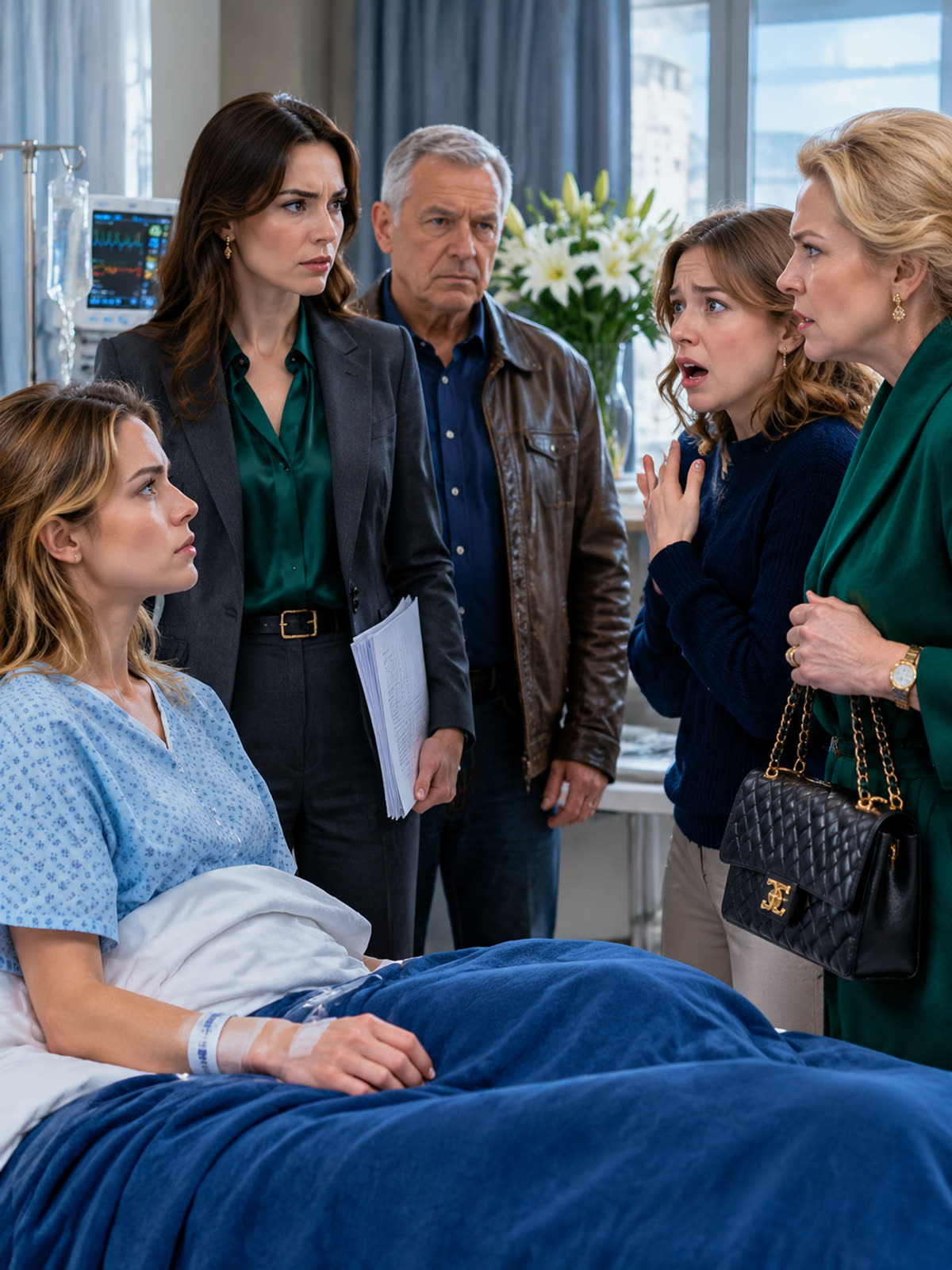
They marched out, abandoning the heavy perfume of funeral flowers. Arthur stood, lifted the vase, and dropped the arrangement into the biological waste bin. The thud was deeply satisfying. Beatrice took the vacant chair. “Alright, Clara. Arthur briefed me on the stolen watch and the fake funeral fund. But while I was running a preliminary cyber-background check on your sister’s recent financial activities this morning, I found something much, much worse.” My heart thudded painfully against my ribs. “What did she do?”
Beatrice laid a printed server log across my lap. “Your sister didn’t just break into your apartment to steal physical, pawnable items. She accessed your home office computer. We know this because at 10:15 AM yesterday, an IP address explicitly registered to your condo’s router attempted to log into the employee portal of your construction firm.” My stomach twisted. “Why?” Beatrice indicated a line on the page. “To access your corporate death benefits policy,” she explained. “She attempted to change the primary beneficiary from your designated charity to herself. She failed because she didn’t have the two-factor authentication code sent to your destroyed cell phone. But Clara… she initiated the transfer request before she set up the funeral fund.”
Three weeks later, leaving the ICU’s carefully monitored protection for my condo became an ordeal of movement and endurance. A rigid plastic brace held my back immobile, biting into my collarbones whenever I breathed. A heavy aluminum cane with four prongs supported each difficult step. Arthur drove me in his battered sedan. Beatrice waited in the building’s lobby beside a uniformed officer she had arranged to document the condition of my home.
Entering 4B felt like stepping into the aftermath of a violation. The apartment wasn’t destroyed at random; my mother was too deliberate for that. But every familiar object seemed altered by the knowledge of their hands. Bedroom drawers stood open, their contents searched. My closet had been picked over, and designer coats were missing. The heavy lockbox in my office bore ugly gouges where something like a crowbar had forced its metal apart. On my nightstand, dust outlined the exact square where Thomas’s wooden watch case had stood.
I stopped in the bedroom doorway, leaning against the cane, and cried. Not over the value of what was missing. Not even over another confirmation of my family’s cruelty. I cried because they had contaminated the one place I had made safe. They had handled everything, searched everything, and erased the security I had built around myself. “Take high-resolution pictures of absolutely everything,” Beatrice told the officer. Her composure remained clinical when she turned to me. “We have secured preservation orders on all your financial accounts. The crowdfunding platform has formally locked the $28,400 they raised, pending the conclusion of our fraud investigation. But we desperately need to locate the watch. It’s the physical anchor of the grand theft charge.”
The replacement phone Arthur had bought and configured vibrated in my pocket. Chloe’s name filled the screen. I showed Beatrice. She nodded, set a digital recorder on the kitchen island, and signaled for speakerphone. “What do you want, Chloe?” My sister’s answer burst into the room. “Are you happy now, you psycho?!” Panic sharpened her voice. “The police just showed up at Mom’s house to formally serve her with a civil suit! Are you actually suing your own family?!” With my lawyer beside me, calm came more easily. “You broke into my home and stole from me,” I said. “What exactly did you expect to happen?”
“We were trying to clean up your mess!” she shrieked. “You were lying crushed under a ton of steel! We didn’t know if you had a will. We didn’t know if your affairs were in order. Somebody had to step up and handle the complicated logistics of your life falling apart!” Beatrice pointed emphatically at the recorder. I understood. “So your personal definition of logistics is stealing a forty-thousand-dollar vintage watch and trying to hack my corporate death benefits?” The line went quiet.
When Chloe spoke again, her outrage had diminished into a defensive whine. “I didn’t hack anything,” she muttered. “And that stupid, ugly watch… you never even wore it out of the house. It was just gathering dust on a table. I needed immediate capital for my new business venture. It’s called repurposing assets within the family, Clara. It’s not stealing.” Beatrice’s eyes brightened. She raised a silent fist and mouthed: Got her. I gripped the edge of the island. “Where is the watch, Chloe?”
“It’s gone, Clara. Get over it. You’re alive, aren’t you? Stop being so incredibly greedy.” She disconnected. The dial tone sounded through the home she had helped strip apart. We had her admission now, recorded and unmistakable. But the last physical gift from the man who had truly loved me like a daughter was still missing—and Chloe had just told us it was gone.
PART 3: What the Evidence Couldn’t Hide
I looked toward Arthur. His hand clamped the kitchen doorframe so tightly that his knuckles had blanched. “I’m gonna lock her up,” he growled. “I swear to God, Clara, I’m gonna personally put the steel cuffs on her.” The promise carried all the force of the detective he had been. My sister had dismissed the watch as an ugly object gathering dust, but we both knew what she had taken. Its value wasn’t measured only by the gold, the mechanism, or the price an estate dealer might offer. It was the remaining weight of Thomas’s belief in me.
The breakthrough came two days later. Arthur’s contacts had been checking the watch’s serial number against pawn records across the tri-state area. A pristine Patek Philippe wasn’t the sort of item someone sold beside stolen drills and used televisions. Whoever wanted a serious payout would look for a specialist. At eight on Thursday morning, Beatrice called. “We found it,” she said, triumph energizing her usual precision. “A luxury consignment broker located in Dublin, Ohio. Chloe sold it the exact same afternoon of the break-in. She was incredibly stupid, Clara. She used her own, valid driver’s license for the transaction because the broker strictly required official ID for any payout over ten grand.”
Relief collided with fresh nausea. “Did she get the money?” I asked. I could hear Beatrice typing. “She received twenty-five thousand dollars in a certified cashier’s check,” she replied. “And Clara? We subpoenaed her bank records late last night. The check was deposited directly into her checking account. Two hours later, she transferred five thousand dollars to your mother, and then spent three thousand dollars on non-refundable first-class tickets for a ‘luxury grief and healing retreat’ in Sedona, Arizona.”
For a moment, the scale of it left me motionless. They had sold the last tangible piece of the man who had treated me as his daughter, then used the proceeds to arrange a luxury desert escape. They planned to recover from a loss they hadn’t suffered, financed by a death they had already learned to exploit. I forced myself back to the one question that mattered. “Can we get the watch back, Beatrice?” Her answer steadied me. “The police have officially seized it as stolen property,” she said. “It is currently sitting safely in an evidence locker at the precinct. Once the criminal and civil trials conclude, it will be returned to you. The trap is fully loaded, Clara.”
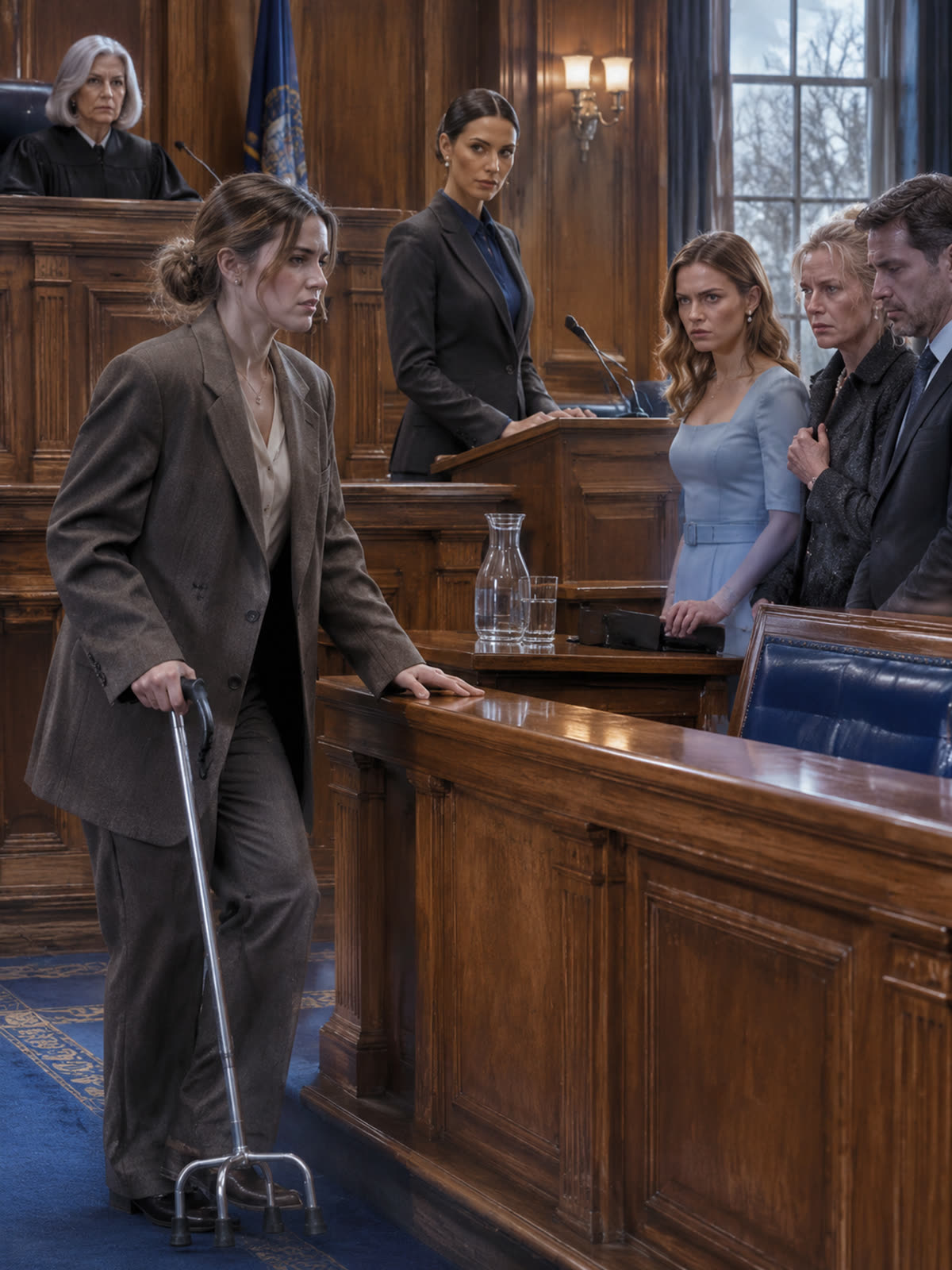
The courtroom smelled of waxed floors and aging paper. Dark oak covered the walls, giving the room a weight that seemed to settle over everyone inside it. Outside was a cold, gray Tuesday in November. I sat beside Beatrice at the plaintiff’s mahogany table with an oversized tailored blazer concealing my brace. Across the aisle sat the three people I had spent years trying to protect from the consequences of their own choices.
My mother looked markedly older. The polished assurance she usually wore had begun to fracture beneath threatened criminal charges and public exposure. My father kept his attention on his hands, as passive now as he had been through decades of her cruelty. Chloe remained defiant. Her pale-blue dress suggested modest innocence, but nothing in her expression resembled remorse. Even here, she seemed committed to playing the wronged younger sister.
This hearing concerned civil restitution and orders preventing further harm. Separately, the District Attorney was pursuing criminal fraud and grand theft charges, using evidence Beatrice had carefully coordinated with that office. My lawyer rose without raising her voice or striking the table. There was no need for performance. She had records, dates, signatures, and my sister’s own words. She presented them with a precision that made exaggeration unnecessary.
A large courtroom monitor displayed the sequence: the scaffolding failure at 2:15 PM; the hospital’s notification that evening; Chloe telling the social worker, “She’s not our problem anymore.” Then came security footage placing my relatives in Condo 4B the next morning, the 10:15 AM attempt to enter my death-benefits account, and the 1:30 PM sale of Thomas’s watch for $25,000. At four came the “Final Wishes” fundraiser soliciting fifty thousand dollars. By six-thirty, my mother and sister were posing together at the steakhouse.
Beatrice guided the judge through bank records obtained by subpoena. She played the recording in which Chloe defended “repurposing assets,” and produced the sales paperwork carrying my sister’s signature. Their explanations could not change the order of events. My family had known I was critically injured. They had entered my home, searched my belongings, tried to redirect benefits, sold my property, and solicited donations. The evidence occupied the room with a certainty none of them could interrupt.
Then Beatrice called me. I rose slowly and leaned on the aluminum cane. Each step toward the witness stand required deliberate balance against the persistent throb in my back. No one spoke. I took the oath, lowered myself carefully into the chair, and adjusted until I could sit without worsening the pain. Beatrice approached the podium. “Ms. Vance, can you briefly describe your relationship with the defendants prior to the accident?” I looked across the room at the family I had spent so long supporting.
“I was their human safety net,” I answered. My voice carried through the silent courtroom. “I funded my father’s debts. I paid for my sister’s endless mistakes. I truly believed that if I was just useful enough, if I bled enough for them, they would eventually love me.” Saying it aloud stripped away the excuses I had once used to make that arrangement bearable. It had never been a temporary imbalance. My usefulness had become the condition under which they allowed me to belong.
“And how did their specific actions following your catastrophic accident impact you?” Beatrice asked. I turned toward my mother. She flinched and lowered her gaze to the table. Chloe stared back with open hatred. Neither reaction surprised me anymore. The accident had damaged my body, but what followed had removed every comforting interpretation I had built around their behavior. There was nothing left to misunderstand.
“The physical pain of having my spine crushed by two tons of steel was horrific,” I said, without tears. “But the most devastating trauma was waking up and realizing that my own family viewed my impending death not as a tragedy, but as a highly profitable liquidation event. While complete strangers were digging me out of the rubble with their bare hands, my own flesh and blood were calculating my net worth and planning a vacation on my ashes.”
Silence settled so completely that even the court reporter paused and looked toward me. I had spent years softening my family’s conduct into explanations other people could accept. My father was struggling. My mother worried too much. Chloe was young. None of those familiar excuses could survive the evidence on the monitor. They could not explain an empty hospital room beside a thriving funeral fund. They could not make a stolen watch into an act of love.
“They did not break into my home out of grief,” I continued, facing the judge. “They did it out of sheer, unadulterated greed. They stole the only physical memory I possessed of the man who actually acted like a father to me. They monetized my intense suffering for the internet. I am not here today just for the return of my stolen property, Your Honor. I am here to ensure that these people can never, ever exploit another human being again.”
The judge looked over her reading glasses at the defense table. Severe silver hair framed a face that made no effort to hide its disgust. The ruling came quickly. My family was ordered to make full, immediate restitution of the twenty-five thousand dollars from the watch sale. The $28,400 collected through the fraudulent campaign would be forfeited and returned to the people who had donated under false pretenses.
There were punitive damages for the conversion of my property and the severe emotional harm they had caused—damages large enough to consume what remained of my parents’ retirement savings. Permanent restraining orders barred them from my residence and workplace and prohibited digital contact. The ruling replaced the boundaries they had always ignored with restrictions backed by law. Their status as my family no longer offered access to my home, my accounts, or my attention.
But the judge was not finished. The civil judgment dealt with money, property, and protection. The evidence Beatrice had assembled reached beyond those questions, into the separate criminal proceedings already moving forward. Across the aisle, my family remained beneath the weight of the record: the footage, the timestamps, the bank transfers, the forged story of a bedside vigil, and Chloe’s unmistakable voice explaining why she believed my possessions belonged to her.
The judge addressed the room again. “Given the profoundly macabre and predatory nature of these actions,” she announced, “I am formally submitting my findings of fact directly to the District Attorney’s office. Let the record reflect that the evidence of grand theft and wire fraud presented here today is overwhelming, systemic, and morally repugnant.” The civil ruling had been delivered. The criminal case—and what it would mean for all three of them—still lay ahead.
When the judge brought down the heavy wooden gavel with a sharp, resounding crack, my mother covered her face with both hands and began to cry with genuine, uncontrollable grief. But her tears were not for me or for the daughter she had permanently lost. She was mourning the complete, unavoidable destruction she had inflicted upon her own life.
Chloe suddenly sprang to her feet, sending her chair scraping harshly across the courtroom floor. Her hand shook as she pointed an accusing finger directly at me.
“You destroyed this family! You’re a monster, Clara!”
Arthur, seated in the gallery’s front row, merely smiled and made a playful gesture as though tipping an invisible hat in her direction.
I offered neither of them a response. Instead, I rose slowly, supported my weight against my cane, and made my way out of the courtroom. Behind me, within those oak-paneled walls, I left the painful remnants of my past for good.
Recovery bears little resemblance to the inspirational montages in films, where suffering disappears beneath cheerful music. Real healing is a relentless, exhausting struggle, measured in the smallest possible victories.
I endured eight punishing months of physical rehabilitation before I could finally walk independently without relying on my cane. Another full year passed before I could make it through an entire night without jolting awake, struggling for air, with the imagined taste of concrete dust still lingering in my mouth.
The criminal proceedings reached their conclusion in early spring. Confronted with the overwhelming collection of civil evidence Beatrice had gathered, Chloe chose the cowardly escape of accepting a plea agreement rather than risking a lengthy prison sentence. Her punishment included five years of tightly supervised felony probation, one thousand hours of community service, and a permanent fraud conviction that anyone could easily discover through a background search. That criminal record completely destroyed her unrealistic ambitions of building a career as an online lifestyle entrepreneur.
My parents, meanwhile, were compelled to abandon their former standard of living. Burdened by enormous legal expenses and widespread public humiliation, they relocated to a small, shabby apartment on the city’s industrial outskirts.
I never contacted any of them again.
For much of my life, the absence of communication had filled me with guilt, dread, and an overwhelming urge to repair relationships that were never mine alone to fix. Gradually, however, that same silence became something entirely different. It became a peaceful refuge, a place where I could finally exist without fear.
When I received the substantial punitive damages awarded in my case, I made no plans to purchase an expensive vehicle or move into a more luxurious condominium. Instead, with Beatrice guiding me through the complicated legal requirements, I established the Thomas Architectural Foundation.
The foundation was built around a substantial scholarship program specifically intended to support young women from financially disadvantaged backgrounds who wanted to pursue careers in construction and structural engineering. I wanted the money to create opportunities, strengthen foundations, and help people build lasting futures rather than contribute to further destruction.
One unusually warm afternoon toward the end of May, I was relaxing on the balcony of my condominium. Bright sunshine stretched across the Columbus skyline, bathing the glass towers in a rich golden glow.
Arthur sat opposite me, contentedly sipping from a bottle of inexpensive domestic beer. Over time, he had become an enduring and deeply appreciated presence in my everyday life. He was neither a replacement father nor a heroic rescuer. He was simply a loyal, wonderfully irritable guardian angel who regularly inspected my smoke detectors and never missed an opportunity to complain loudly about the performance of the local sports teams.
My gaze dropped toward my left wrist.
The Patek Philippe watch was fastened securely around it. Its original leather strap had acquired the gentle wear of age, while the polished gold case reflected the brilliant afternoon sunlight. I raised my wrist and brought the watch close to my ear.
Beyond the distant, softened noise of traffic moving through the city, I could distinguish the delicate mechanical rhythm of the antique movement working inside it.
Tick. Tick. Tick.
Of all the things we possess, time is the only currency that truly matters.
I glanced toward Arthur, then out across the vast city whose buildings and future I was helping shape. I filled my lungs with a long, deep breath, completely free of pain.
My family had attempted to entomb me beneath the wreckage of their own greed. What they had failed to understand was that I was not something they could simply bury and erase.
I was a seed, capable of growing even after everything they had done.
And for the first time in my entire existence, every moment of my life belonged to me alone.
Disclaimer: This story is a work of fiction inspired by real-life themes. Names, characters, places and events are fictionalized, and any resemblance to real persons is purely coincidental. Images are for illustration purposes only.
