

Ines Urrutia signed the police statement with a trembling hand, yet she did not retract a single word.
The officer opposite her observed in silence as the pen crossed the final line. Ines had signed contracts, land deeds, hospital consent forms, and even the paperwork that laid her husband to rest, but nothing had ever felt as heavy as placing her name under a criminal complaint against her only son.
Fabian Urrutia.
Her boy.
The child in the faded photograph still in her purse, smiling at five years old with dusty cheeks and a toy horse clutched in his hand.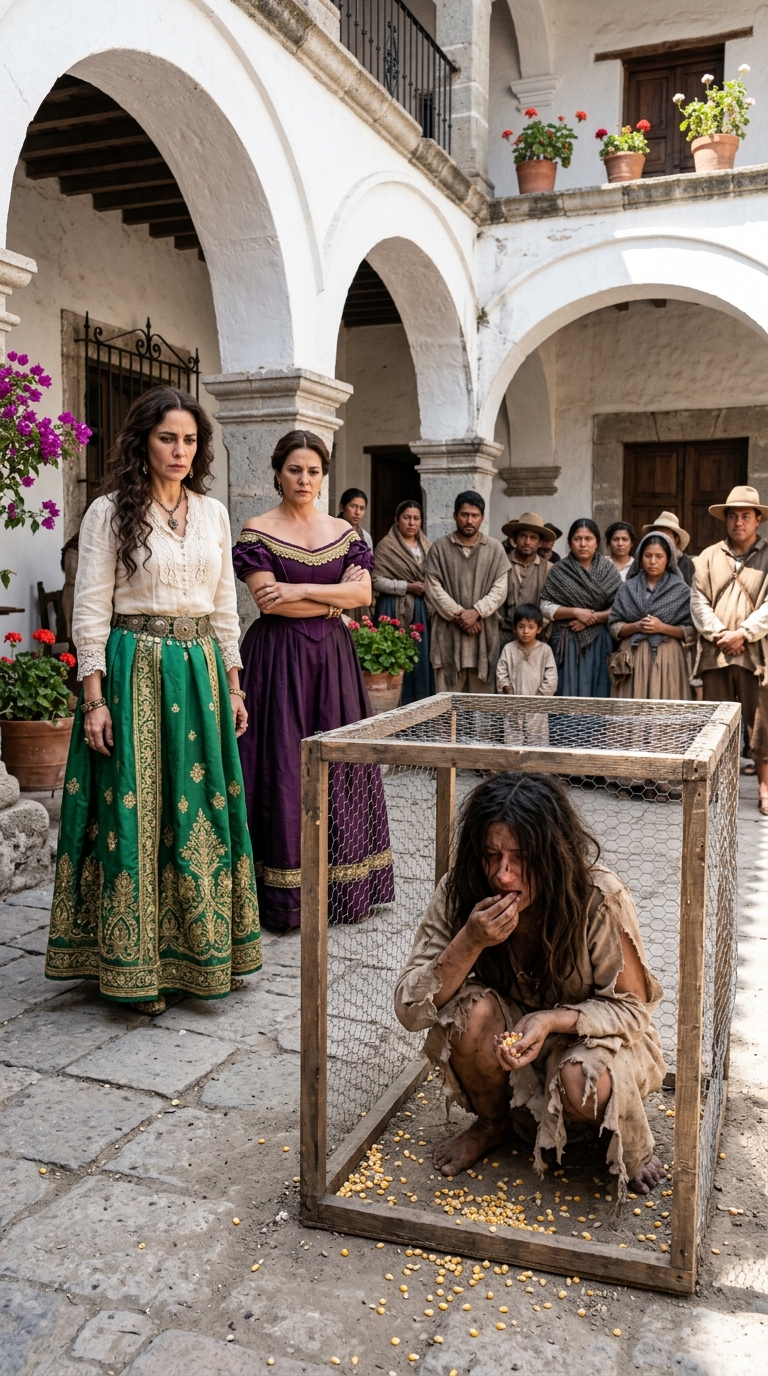
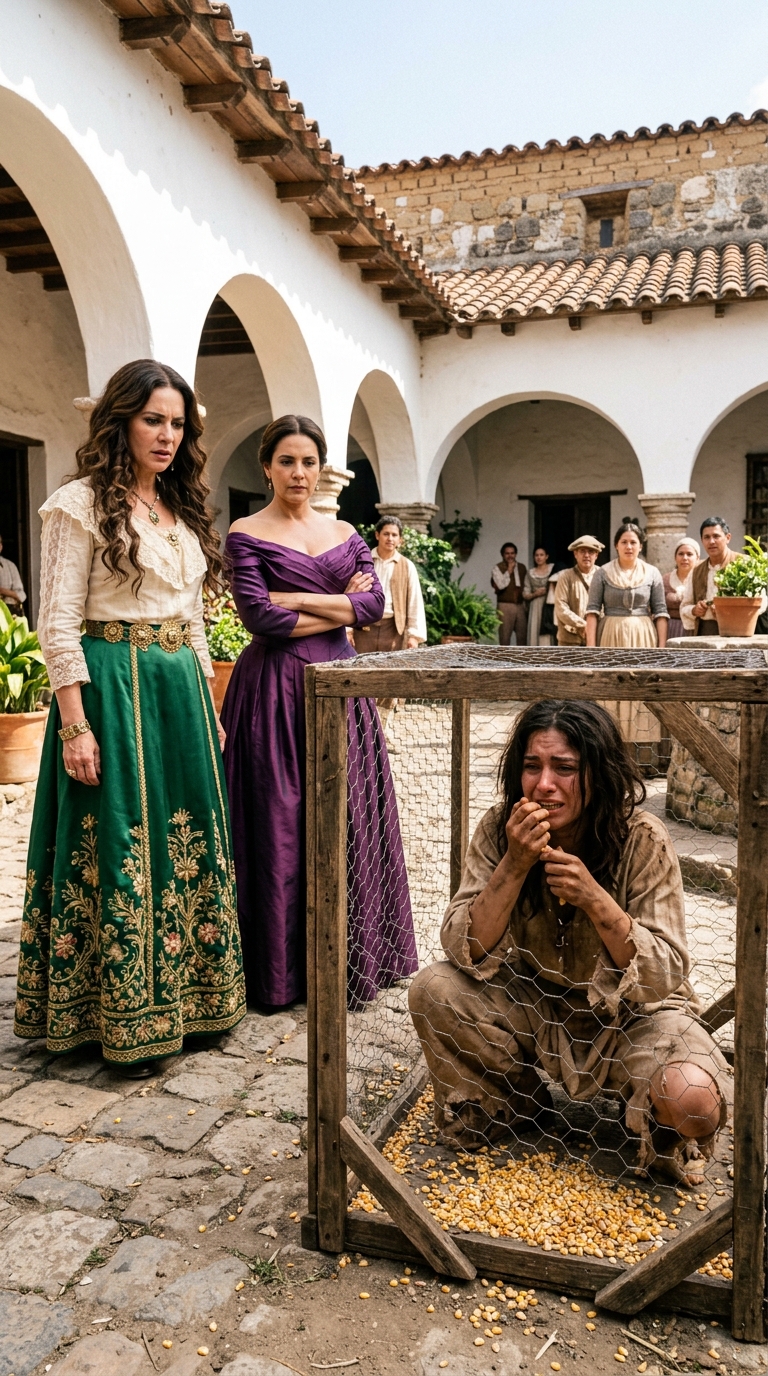
The man who had locked his wife inside a chicken coop and told her she had to earn food like an animal.
Ines set the pen down.
“Are you sure?” the detective asked, gently but not unkindly.
Ines looked through the glass wall of the station toward the corridor, where Bianca sat wrapped in a hospital blanket, her face drained of color, her wrists too thin, her gaze fixed downward. A nurse had cleaned the dirt from her hair, but nothing yet could erase the years. Her daughter-in-law looked like someone who had learned to apologize simply for existing.
Ines turned back to the detective.
“Yes,” she said. “I’m sure.”
The detective gave a small nod and collected the papers.
Outside, the November night in Texas cut sharply with cold. Fredericksburg had always smelled to Ines of cedar, dust, and old wealth pretending to be humble. She had grown up on the Urrutia ranch before leaving for Spain eight years earlier after her husband’s death and a bitter conflict with Fabian that convinced her distance was the only mercy.
Now she understood distance had been cowardice disguised as survival.
She had left her son with the ranch, the house, the finances, the land, and the family name. She had left because grief made every room unbearable. She had left because Fabian insisted he was a man now who needed no hovering mother. She had left because Bianca’s messages grew shorter until they stopped, and when Ines asked, Fabian said, “She’s dramatic, Mom. Don’t feed it.”
And Ines had believed him.
Or worse, she had chosen not to look.
At 2:17 a.m., police vehicles moved toward the Urrutia ranch.
Ines rode with Attorney Morales in another car behind them. Bianca remained at the hospital, sedated, protected, watched over by a nurse who had looked at Ines with the kind of fury reserved for men who harm women trapped behind closed doors.
“You do not need to go,” Morales said from the passenger seat.
Ines stared ahead through the windshield. “Yes, I do.”
“He may say terrible things.”
“He already did terrible things.”
Morales exhaled. “He is your son.”
Ines closed her eyes briefly. “That is why I must see him clearly.”
The ranch emerged from the dark like something refusing to disappear. The iron gate leaned off balance. The long driveway was lined with oaks her father had planted before she was born. The main house, once white and proud under the Texas sun, now looked worn and neglected—paint peeling, windows dull, porch lights flickering. Ines had expected age. She had not expected collapse. Fabian wore luxury boots and an expensive watch while the roof sagged and his wife went hungry.
That told her everything.
Police knocked first.
No answer.
They knocked again, harder.
A light flicked on upstairs. A curtain shifted.
Fabian opened the door in a robe, hair disheveled, face irritated. When he saw the officers, irritation shifted to confusion. When he saw Ines behind them, confusion turned into fear.
“Mom?” he said. “What the hell is this?”
One officer stepped forward. “Fabian Urrutia, we need you to come with us.”
Fabian gave a short laugh. “For what?”
The officer read the charges: unlawful restraint, aggravated assault, domestic violence, neglect, coercive control, and additional counts pending investigation.
Fabian’s expression hardened.
Then he looked at Ines.
“You did this?”
Ines said nothing.
“You called the police on your own son?”
An officer reached for his arm.
Fabian pulled back sharply. “Don’t touch me. This is my property.”
Ines finally spoke. “No. It is family property under trust. And you are not above the law on any acre of it.”
His eyes widened. “You came back after eight years to destroy me?”
“No,” Ines said. “I came back and found what you had already destroyed.”
Fabian’s breathing changed. His gaze flicked toward the chicken coop behind the house. Even in darkness, it stood like evidence: rusted wire, broken wood, dirt floor. The place where Bianca had sat among filth and feed, eating dry corn with shaking hands.
He followed her gaze.
His mouth twisted. “She lied to you.”
The ease of it made Ines feel ill.
“She has medical reports,” Ines said.
“She does that to herself.”
“She has two broken ribs that healed incorrectly.”
“She falls.”
“She was dehydrated.”
“She refuses food when she’s upset.”
“She was eating raw corn in a chicken coop.”
Fabian snapped, “Because she’s insane!”
Officers moved in. Fabian resisted just enough to make it uglier. He shouted that Bianca was unstable, that Ines had always favored weakness, that the ranch was his, that everyone would regret this. When cuffs closed around his wrists, he looked at his mother with raw hatred.
“You’re dead to me,” he said.
Ines felt the words land inside her.
Then pass through.
Because the boy in the photograph had already been gone long before this moment, and what stood there now was only what remained.
“Good,” she said softly. “Then maybe I can finally bury the version of you I kept defending.”
They led him away.
Ines stood on the porch until the patrol lights vanished.
Then she walked to the chicken coop.
Morales followed but kept distance.
Inside, the smell hit again: rot, damp feathers, waste, decay. Her flashlight revealed broken objects, a torn blanket, a dirty water container, scratches along wood, a hair tie, fabric caught on wire.
Ines pressed her hand over her mouth.
This had not been an incident.
It had been a system.
A routine.
A confinement.
Her knees weakened.
Morales steadied her. “Ines.”
She gently pulled away and knelt in the dirt.
For eight years she had lived in Madrid surrounded by order, culture, and grief carefully contained. She told people Fabian managed the ranch. She said he was married. She said, “They are private, but they are well.” When Bianca stopped calling, Fabian blamed illness. When gifts went unanswered, he blamed shame. When neighbors expressed concern, Ines said, “Fabian has always been intense.”
Intense.
A word she used to soften what should have been seen clearly.
At dawn, Ines returned to the hospital.
Bianca was awake.
She tensed when Ines entered, as though safety itself might be temporary.
“Where is he?” Bianca whispered.
“In custody.”
Bianca closed her eyes.
Her lips trembled.
Ines sat beside her. “He cannot come here.”
“He always comes back.”
“Not this time.”
Bianca turned away. “You don’t know him.”
“No,” Ines said, voice breaking. “I thought I did.”
Silence stretched between them.
Then Bianca whispered, “I’m sorry.”
Ines looked at her.
“For what?”
“For causing trouble.”
The nurse in the corner muttered in disgust and left, unable to hear another abused woman apologize for surviving.
Ines carefully took Bianca’s hand, avoiding bruises.
“No,” she said. “You will never apologize to me for what he did to you.”
Bianca broke into tears, first quietly, then fully, as exhaustion finally met safety. Ines held her awkwardly, gently, as if she might break.
“I should have come sooner,” Ines whispered.
Bianca shook her head. “He said you hated me.”
Ines closed her eyes.
“He said you thought I married him for money,” Bianca continued. “He said you left because you were ashamed of me. He said if I wrote to you, you would laugh.”
Shame tightened Ines’s chest.
“I never hated you.”
Bianca’s voice cracked. “I wrote letters.”
Ines froze.
“What letters?”
“To Madrid. At first. For almost two years.”
Ines swallowed. “I never received them.”
Understanding passed between them.
Fabian.
“He said you sent them back,” Bianca whispered.
“No.”
“He showed me one envelope. It had my letter inside and a note that said, ‘Stop begging.’”
Ines began to shake.
“I never wrote that.”
Bianca stared at her.
“He forged it?” she whispered.
Ines did not answer.
She did not need to.
Three days later, the investigation uncovered the letters.
Not all. Enough.
Fabian had stored them in a locked office cabinet along with financial records, trust papers, unpaid debts, and photographs of repairs he never completed. Some letters remained unopened. Others contained cruel notes in his handwriting.
Pathetic.
Still crying.
She thinks Mom will save her.
There were also forged letters pretending to be from Ines—cold, rejecting messages designed to isolate Bianca completely.
Ines read one in Morales’s office and retched into a bin.
The lawyer waited until she recovered.
“There is more,” he said.
And there was.
Fabian had drained accounts, sold assets, taken unauthorized loans, and used the family name for credit. He had failed to maintain the ranch, ignored contractors, and created fake employment records for Bianca while withholding wages under false pretenses. He had also prepared documents to seize additional control from the family trust.
“Did he forge my signature?” Ines asked.
Morales paused.
“Yes.”
The word was quiet but devastating.
Ines leaned back.
Her son had not only become cruel.
He had become fraudulent.
And she had allowed distance to excuse blindness.
“Freeze everything,” she said.
Morales nodded. “Already in motion.”
“I want him removed from authority.”
“That will be filed today.”
“And the ranch?”
“You control it.”
Ines looked at the evidence spread before her.
“I want the chicken coop preserved,” she said.
Morales hesitated. “Evidence team first.”
“After.”
“Yes.”
“No,” she corrected. “Not destroyed. Not yet.”
He waited.
“I want everyone who thought my son was respectable to see what he did,” she said.
The hearing drew nearly the entire county.
People came under polite excuses, curiosity disguised as concern. The courthouse filled with murmurs and judgment.
Ines entered beside Bianca.
That was her first act of public alignment.
Bianca wore a simple gray dress and a borrowed coat. Her face had regained some color, but fear still lingered beneath it. She held Ines’s arm carefully, as if learning what safety felt like in motion.
Whispers followed them.
“She looks terrible.”
“Did he really lock her out there?”
“I heard she was unstable.”
“Poor Ines.”
Ines stopped.
The hallway quieted.
She turned.
“No,” she said. “Poor Bianca.”
The woman flushed.
Ines continued forward.
Fabian entered in custody, eyes scanning for sympathy. When he saw Bianca beside his mother, something in his expression shifted.
Evidence was presented: medical reports, photographs, financial records, testimony, forged letters, threats, and the chicken coop itself.
The courtroom went silent.
The judge denied leniency.
Fabian turned toward Ines as he was led away.
“Mom,” he said softly. “Please.”
For a moment, she saw the child again.
Then she saw Bianca on the dirt floor eating corn.
“No,” she said.
His face collapsed.
Bianca’s recovery was uneven.
She ate too quickly and became ill. She hid food. She woke screaming. She flinched at footsteps. She apologized for everything. She feared closed doors.
Ines learned not to correct fear.
Instead she said, “You are safe right now.”
Right now became survival.
They moved into the guesthouse. Bianca refused the main house. Ines understood.
Staff were replaced. Hidden truths surfaced. A worker admitted he once tried to help Bianca but stopped after threats.
Ines listened in silence.
Fabian had used her absence as cover.
That realization cut deeper than anything.
In Fabian’s office, they found documents, photographs, and a copy of the same childhood image Ines carried. On the back he had written: She left me too.
Ines sat down.
That was the wound beneath everything.
Not justification.
But origin.
The trial came months later.
Bianca testified, describing control, isolation, punishment, and the chicken coop. Her voice broke when she reached that point.
The prosecutor asked for a pause.
She refused.
“He said animals understood discipline better than I did,” she whispered. “If dinner was late, I slept there. If I asked to call someone, I slept there. If I cried too much, I slept there. Sometimes he left corn. Sometimes nothing. I started eating what the chickens ate because hunger makes shame smaller.”
The courtroom was silent.
Fabian did not look up.
Then Ines testified.
She described returning, seeing Bianca, and confronting reality.
When asked why she reported her son, she said, “Because being his mother does not make me his accomplice.”
Fabian finally looked at her.
She did not look away.
He was convicted on multiple charges.
At sentencing, he tried to speak.
“Mom,” he said, voice breaking, “you left me.”
Ines listened.
“I left,” she said. “And I was wrong for that. But I did not turn cruelty into a system. That was yours.”
He lowered his head.
The sentence was long.
Afterward, Ines returned and ordered the chicken coop cleaned but preserved.
It was relocated near the barn and turned into a memorial space.
A plaque was placed:
This place once held cruelty. It now holds witness.
Then she built something beside it.
A shelter.
The Open Gate House.
Bianca initially resisted being associated with it. Ines respected that.
No branding. No naming. Only support.
The first woman arrived with children and a bag of belongings.
Bianca met her and said, “You don’t have to earn dinner here.”
The woman cried.
Bianca did too.
Healing shifted.
Bianca learned to live again, slowly rebuilding identity beyond survival. She studied finance, then nonprofit work. Eventually she became operations director of the shelter.
She was paid fairly.
When the first paycheck arrived, she cried because it belonged to her.
Their relationship was not simple. It was real. Sometimes strained, sometimes quiet, always evolving.
One evening years later, they sat by the pond.
Ines said, “I found something.”
Bianca listened.
“He wrote that I left him too.”
Bianca asked, “Do you believe him?”
“Yes.”
Ines continued, “But leaving grief does not justify what followed.”
Bianca nodded.
“Do you miss him?” she asked.
“Yes,” Ines admitted.
Both truths remained.
After prison letters began arriving, Ines read few. Bianca read none.
One letter to Bianca was burned unopened.
Bianca said, “I don’t need his apology to be free.”
“No,” Ines said. “You don’t.”
Years later Bianca bought her own house.
She learned what silence without fear felt like.
At night she walked through rooms simply because she could.
Then she ate bread standing in her kitchen without permission, without fear.
It was the best moment of her life.
On the tenth anniversary of Ines’s return, survivors gathered at the ranch.
Bianca spoke publicly.
“People ask why I stayed,” she said. “But cages are not always made of metal.”
Ines cried in the front row.
Bianca continued, “Someone came for me. But she also had to choose against someone she loved.”
Her gaze shifted to Ines.
“This place exists because Ines Urrutia refused to protect her son from consequences.”
Applause followed.
Later, they stood at the coop.
“Do you ever want to burn it?” Ines asked.
“Sometimes.”
“Why not?”
“Because he wanted it hidden,” Bianca said. “I want it understood.”
Ines nodded.
Into law.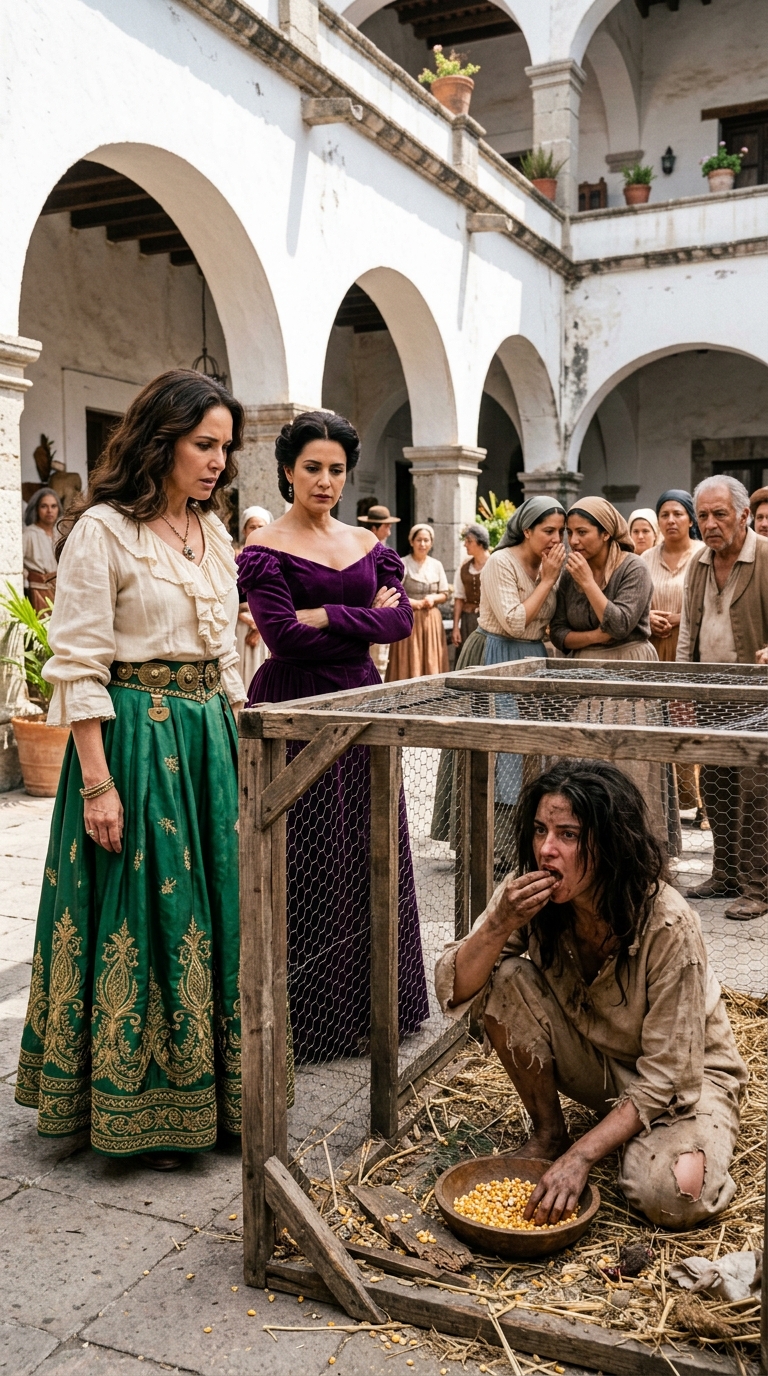
Into shelter.
Into survival.
Years later, Ines passed away peacefully.
Her final words were, “Did I do enough?”
Bianca answered, “You came back. And you stayed.”
That was enough.
Her final letter gave the ranch to The Open Gate House.
Bianca read it alone.
Then she stood at the open gate and watched another woman arrive.
She walked forward and said the words she once needed most:
“You’re safe here. Come inside.”
