

PART 1
Bare feet were the first thing I noticed when another woman opened my husband’s hotel room door on our twelfth wedding anniversary.
Then I saw the shirt.
Daniel’s white linen shirt hung loose over her bare thighs, one cuff unbuttoned where the missing button should have been—the same button I had promised to sew back on before he left.
For a moment, I forgot how to breathe.
I stood in the hallway of the Harbor Grand in Virginia Beach with three gift bags cutting into my fingers and a bakery box balanced against my hip.
The blonde woman stared at me as if she had been expecting someone else.
Then Daniel’s voice came from inside the room.
“Lauren?
Who is it?”
Lauren.
My grip tightened around the handles.
I had driven nearly three hours from Richmond to surprise my husband.
His favorite bourbon.
Courtside basketball tickets.
The watch he had stopped to admire twice in the same store window.
And a chocolate bourbon cake from the bakery that had made our wedding cake twelve years earlier.
Daniel had told me this weekend was a guys’ trip.
Golf.
Drinks.
College friends.
No wives.
I had planned to stay long enough for one anniversary drink, kiss him, watch him pretend to be embarrassed by the surprise, and drive home.
The woman in my husband’s shirt went pale.
“You’re Claire.”
That hurt more than it should have.
She hadn’t asked who I was.
She already knew.
Footsteps sounded behind her.
Daniel appeared.
Bare-chested.
Gray boxer briefs.
Hair mussed.
A hotel robe hanging from one hand.
He stopped the instant he saw me.
“Claire.”
I looked past him into Room 817.
Two wineglasses.
A red dress crumpled beside the bed.
Daniel’s wedding ring on the nightstand.
Everything inside me went strangely still.
“Happy anniversary,” I said.
The bakery box slipped from my hands.
It hit the carpet on its side.
Something inside collapsed with a soft, wet thud.
Daniel flinched.
“Claire, wait.”
I set the gift bags down.
Then I pulled out my phone.
His eyes snapped to it.
Not to me.
To the phone.
“What are you doing?”
“Recording.”
His face changed.
“Claire, don’t.”
I unlocked the screen.
“Why?”
“Because we need to talk.”
“We are talking.”
I pressed record.
My hand was trembling badly enough that the image on the screen shook, but my voice didn’t.
I pointed the phone toward the woman wearing my husband’s shirt.
“What’s your name?”
“Claire—”
“Not you.”
Lauren swallowed.
“Lauren Pierce.”
Daniel stepped forward.
“Put the phone away.”
I ignored him.
“How long have you been sleeping with my husband?”
Lauren looked at Daniel.
Daniel looked at Lauren.
Neither answered.
That was when the fear started.
Not because they were silent.
Because it was the silence of two people deciding how much truth I was allowed to hear.
“How long, Daniel?”
His jaw tightened.
“Claire, this is not the place.”
A laugh escaped me.
Small.
Empty.
“You took off your wedding ring in a hotel room with another woman, and now you’re worried about the place?”
“Please.”
“How long?”
Lauren lowered her eyes.
Daniel said nothing.
I looked at her.
“You knew about me.”
Her face twisted.
Not guilt.
Something worse.
Pity.
“Claire,” she said softly, “there’s something he hasn’t told you.”
Daniel turned so fast the robe slipped from his hand.
“Lauren.”
She looked at him.
“Don’t.”
His voice was sharper now.
“Lauren, stop.”
My heart began pounding so hard I could hear it.
I tightened my grip on the phone.
“What hasn’t he told me?”
Lauren’s eyes moved toward Daniel.
“Don’t,” he said.
One word.
Quiet.
But there was twelve years of marriage inside the way he said it—the same controlled voice Daniel used whenever he wanted to postpone an uncomfortable conversation until he had decided how it should go.
Lauren looked at me again.
“He told me you were separated.”
For a moment, the hotel hallway seemed to tilt.
I actually looked behind myself, as though perhaps another Claire was standing there.
“We’re what?”
Daniel closed his eyes.
“Claire, please.”
“No.
I’d really like to hear this.”
Lauren pulled his shirt tighter around herself.
“He said you’d been living separate lives for almost a year.”
I stared at Daniel.
“We had breakfast together yesterday.”
“I know.”
“You kissed me before you left.”
“I know.”
“You asked me to pick up your dry cleaning Monday.”
“I know.”
“Apparently separation has become extremely domestic.”
Lauren’s face changed.
“He said you were waiting until after your daughter graduated to make it official.”
My breath stopped.
“Emma?”
Daniel stepped forward.
“Leave her out of this.”
I laughed.
“You put her in it.”
Our daughter was seventeen.
A high-school senior.
Applying to colleges.
The center of our lives since the day she was born.
“What exactly did you tell Lauren about my daughter?”
“Our daughter.”
“Tonight, I’m having difficulty with pronouns.”
“Claire.”
“What did you tell her?”
His shoulders dropped.
“That we had agreed not to disrupt Emma’s senior year.”
I stared at him.
“We agreed?”
“No.”
Lauren whispered, “Oh my God.”
Daniel turned.
“Lauren—”
“You said she knew.”
“I said it was complicated.”
“You said she knew.”
Her voice cracked.
For the first time, I stopped seeing Lauren as the woman wearing my husband’s shirt.
She was still responsible for whatever choices she had made.
But she was also standing barefoot in a hotel doorway discovering that the story she had been given was not the story I was living.
I looked at her.
“How long?”
She hesitated.
“Seven months.”
Seven.
I had expected weeks.
Maybe two months.
Seven months meant summer.
Emma’s birthday.
Our family trip to Charleston.
Daniel’s promotion dinner.
Thanksgiving plans.
Seven months meant hundreds of ordinary moments I would now have to remember differently.
“Since March?”
Lauren nodded.
Daniel said, “Claire, can we please go somewhere private?”
I held up my phone.
“We are somewhere private.
You made it private enough to sleep with her.”
A door opened farther down the hall.
An elderly couple stepped out.
I suddenly became aware of where we were.
I stopped recording.
Not for Daniel.
For myself.
I didn’t want the worst moment of my marriage becoming entertainment for strangers.
“Get dressed,” I said.
Daniel blinked.
“What?”
“Get dressed.”
“Why?”
“Because you’re going to sit downstairs with me for fifteen minutes and answer questions.”
He looked toward Lauren.
“No.”
The word came from her.
We both looked at her.
Lauren’s face had gone pale.
“I’m leaving.”
She disappeared into the room.
Daniel followed her.
I remained in the hallway.
Thirty seconds later, Lauren returned wearing the red dress.
Daniel’s shirt was folded over her arm.
She handed it to him.
“I didn’t know.”
He lowered his voice.
“Lauren, please.”
“No.”
She looked at me.
“I’m sorry.”
I didn’t tell her it was okay.
It wasn’t.
I simply said, “Thank you for telling me.”
She picked up her shoes and handbag.
Then she left barefoot.
Daniel watched her walk toward the elevators.
I watched him watch her.
That hurt too.
“Did you love her?”
He turned.
“Claire—”
“That wasn’t difficult.”
His silence answered.
Not completely.
But enough.
“Get dressed.”
Ten minutes later, we sat in a nearly empty hotel lounge overlooking the dark Atlantic.
My anniversary gifts remained upstairs.
So did the destroyed cake.
I didn’t care.
Daniel sat across from me wearing jeans and the white linen shirt.
The missing cuff button was still missing.
I found myself staring at that stupid little gap.
Two weeks earlier, he had held out the shirt and said, “Can my favorite person fix this?”
I had laughed.
“Your favorite person has a sewing basket, so apparently yes.”
I had forgotten.
He had packed it anyway.
Now Lauren had worn it.
There was something almost insulting about how ordinary betrayal looked up close.
No dramatic music.
No thunder.
Just a missing button.
A hotel coaster.
My husband unable to meet my eyes.
I placed my phone face down.
“Seven months?”
“Yes.”
“Did you meet her through work?”
“Yes.”
“Does she work with you?”
“She’s a consultant.”
“Did you use family money on her?”
His head lifted.
“What?”
“Hotels.
Restaurants.
Gifts.
Trips.”
“I never used our joint account.”
That answer told me there had been money.
“Which account?”
He hesitated.
“Mine.”
“We’re married.
You don’t have magical unmarried money.”
“I have my personal account.”
“Funded from your salary.”
“Yes.”
“Which was marital income.”
He rubbed his forehead.
“This is what you want to discuss?”
“Yes.”
“Money?”
“No.
Facts.”
I leaned forward.
“Because right now, facts are the only things I trust.”
He looked exhausted.
I felt nothing about that.
“Did you bring her into our house?”
“No.”
“Our bed?”
“No.”
“Did Emma meet her?”
“No.”
“Did you tell anyone we were separated?”
He looked away.
My stomach tightened.
“Who?”
“Some people at work.”
“How many?”
“I don’t know.”
“You told coworkers your wife knew your marriage was over while your wife was at home planning your anniversary?”
“I didn’t say it like that.”
“How did you say it?”
“That we were having problems.”
“We were?”
Daniel looked at me.
“Yes.”
That hurt because it contained something true.
Not separation.
Not permission.
But problems?
Yes.
We had been distant.
For almost two years, maybe longer.
Daniel traveled more.
I worked more.
Emma’s school schedule consumed us.
We had become very good at running a household and increasingly bad at inhabiting a marriage.
But distance was not an agreement.
Loneliness was not permission.
“You could have told me.”
“I tried.”
“When?”
“Claire.”
“No.
Tell me.”
He struggled.
“Last January.
After New Year’s.”
I remembered.
We had argued because Daniel wanted us to take a trip alone.
I had said Emma had college-prep tutoring.
My mother needed help after knee surgery.
I had a major project at work.
Daniel said there would always be something.
I told him he was being dramatic.
Then we went to bed angry.
“That was you telling me our marriage was ending?”
“No.”
“Then don’t rewrite it.”
He nodded.
“You’re right.”
The ease of his agreement made me angrier.
“Stop doing that.”
“Doing what?”
“Agreeing with me now because you’re afraid I’ll leave.”
His face changed.
“I am afraid you’ll leave.”
“You should have considered that before Room 817.”
Silence.
Then I asked, “What else?”
“What do you mean?”
“Lauren said there was something you hadn’t told me.
Was separation the whole thing?”
He looked toward the windows.
There.
That hesitation.
I knew it immediately.
“No.”
My pulse changed.
“What else?”
“Claire, tonight isn’t—”
“Finish that sentence and I’m leaving.”
He stopped.
“What else?”
Daniel folded his hands.
“I looked at apartments.”
I stared.
“When?”
“Two months ago.”
My wedding ring suddenly felt too tight.
“You were planning to move out.”
“I was considering it.”
“Without telling me.”
“I didn’t know what I wanted.”
“You knew enough to look.”
“Yes.”
“Did you sign anything?”
“No.”
“Put down a deposit?”
“No.”
“Did Lauren know?”
“Yes.”
Of course.
The mistress knew where my husband might live before his wife knew he was considering leaving.
I removed my ring.
Daniel watched.
I placed it on the table.
His face drained.
“Claire.”
“Don’t.”
“I don’t want a divorce.”
A broken laugh escaped me.
“That is a fascinating thing to discover tonight.”
“I mean it.”
“Seven months, Daniel.”
“I know.”
“No.
You keep saying that, but I don’t think you do.”
My voice remained low.
“That’s seven months of waking up beside me while another woman believed I already knew you were leaving.
Seven months of family dinners.
Seven months of asking me what we should get Emma for graduation.
Seven months of putting your arm around me at parties.”
“I know.”
“And tonight is our anniversary.”
His eyes closed.

“I know.”
“Did you know when you booked this weekend?”
“Yes.”
“Did Lauren?”
Silence.
I stood.
“Claire.”
“Did she know?”
“No.”
“So you lied to both of us.”
“Yes.”
Finally.
A clean answer.
I picked up my purse.
“What happens now?” he asked.
“I’m going home.”
“I’ll come with you.”
“No.”
“We shouldn’t drive separately.”
“We have been living separately for almost a year, apparently.
I think we can manage separate cars.”
He flinched.
Good.
Not because I wanted to hurt him.
Because I wanted him to stop being protected from the weight of what he had done.
“Don’t come home tonight.”
“Where am I supposed to go?”
I stared at him.
He immediately looked ashamed.
“Sorry.”
“Yes.”
I left the ring on the table.
Then I drove home.
The three hours back to Richmond were strangely quiet.
I didn’t cry until I reached Williamsburg.
Then I cried so hard I had to pull into a gas station.
I sat beneath fluorescent lights while strangers bought coffee and lottery tickets twenty feet away.
Twelve years.
Daniel and I had met when I was thirty-one.
He was thirty-three.
I was a project manager for an architectural firm.
He worked in commercial insurance.
We married two years later.
Emma was my daughter from my first marriage.
Her biological father, Michael, had died in a car accident when she was three.
Daniel met her at five.
He never tried to replace Michael.
That was one of the things I loved most.
He became Dad gradually.
School pickups.
Pancakes.
Science projects.
Nightmares.
He legally adopted her when she was nine.
When the judge finalized it, Daniel cried harder than I did.
That memory almost broke me.
Because betrayal was inconvenient that way.
It didn’t erase the good person someone had been.
It simply forced you to hold contradictory truths at once.
Daniel had been a wonderful father.
Daniel had betrayed his wife.
Both were true.
At 2:13 a.m., I pulled into our driveway.
Emma’s bedroom light was off.
Thank God.
I entered quietly.
The house looked exactly the same.
Family photographs.
Daniel’s shoes by the mudroom.
His coffee mug in the sink.
A grocery list on the refrigerator.
Milk
Bananas
Coffee
Daniel’s weird sparkling water
I had written that Thursday.
Yesterday.
My phone buzzed.
Daniel.
I’m staying at the hotel.
Please let me know you got home safely.
I stared at it.
Then replied:
Home.
Do not call Emma.
I will tell her only what she needs to know after I’ve slept.
His response:
Okay.
I went upstairs.
Our bedroom smelled like his cologne.
I couldn’t sleep there.
I took a blanket downstairs and lay on the sofa.
At 6:40, Emma appeared.
She was wearing one of Daniel’s old University of Virginia sweatshirts.
“Mom?”
I sat up.
“What are you doing down here?”
She looked at my face.
“What happened?”
“Nothing you need to fix.”
That was my first instinct.
Protect her.
But protecting did not require lying.
“Daniel and I had a serious problem last night.”
She went still.
“Is he okay?”
“Yes.”
“Are you?”
I almost lied.
“No.”
She sat beside me.
“Did he cheat?”
I stared.
Seventeen-year-olds were not children in the ways parents wanted them to be.
“How did you—”
“You drove to surprise him.
He isn’t here.
You’re sleeping downstairs.”
I looked at my daughter.
“Yes.”
Her face changed.
Anger first.
Then hurt.
Then something more complicated.
“How long?”
“I’m not discussing details with you.”
“Mom.”
“No.”
I took her hand.
“This is between Daniel and me.
You are allowed to be upset, but you are not going to become my confidante or his judge.”
“He lied to you.”
“Yes.”
“I’m allowed to be angry.”
“Absolutely.”
“Are you divorcing him?”
“I don’t know.”
She looked terrified.
That frightened me more than my own uncertainty.
“Listen to me.”
I turned toward her.
“Whatever happens between Daniel and me, he loves you.
Nothing about that relationship changes unless you choose to change it.”
“He’s my dad.”
“I know.”
Her eyes filled.
“Then why would he do this?”
“I don’t know.”
That was the only honest answer.
Daniel came home Sunday afternoon.
Not to stay.
To pack.
Emma refused to come downstairs.
He stood in our bedroom putting shirts into a suitcase.
I watched from the doorway.
“You told her?”
“Yes.”
“What?”
“That you were unfaithful and we need time apart.”
He nodded.
“Thank you.”
“Don’t thank me.”
“Sorry.”
He folded another shirt.
Then said, “I’m going to stay with Nathan.”
His brother.
“Fine.”
“I’ll keep paying everything.”
“We’ll discuss finances with professionals.”
He looked up.
“Professionals?”
“Yes.”
“You’ve called a lawyer?”
“I have an appointment Tuesday.”
His face tightened.
“Already?”
I laughed.
PART 2
“You started an affair seven months ago, looked at apartments two months ago, and you think I’m moving quickly?”
He looked down.
“No.”
I had called a family-law attorney that morning.
Not because I had decided to divorce.
Because I refused to make decisions while ignorant.
Information was not aggression.
It was information.
Tuesday afternoon, I met Rebecca Shaw.
Fifty-something.
Silver glasses.
Calm voice.
No dramatic promises.
She explained separation law.
Assets.
Accounts.
The house.
Retirement funds.
What I should document.
What I should not do.
“Do not empty accounts,” she said.
“I wasn’t planning to.”
“Good.
Do not post anything publicly.”
“I won’t.”
“Do not contact the other woman.”
“I already spoke to her.”
“Do you intend further contact?”
“No.”
“Good.”
She leaned back.
“You don’t have to decide today whether you want a divorce.”
“I know.”
“You do need to understand your financial position.”
That afternoon, I began gathering records.
Mortgage.
Savings.
Investments.
Taxes.
Insurance.
Retirement accounts.
Daniel handled most of our long-term investments.
Not because he controlled me.
Because finance interested him and bored me.
I had access.
I simply rarely looked.
That changed.
At 11:30 that night, I found an account I didn’t recognize.
Not hidden exactly.
It appeared in our tax documents.
A brokerage account in Daniel’s name.
Balance:
$184,600.
I stared.
I knew about approximately sixty thousand of it.
Not the rest.
I downloaded statements.
Deposits had been made over three years.
Bonuses.
Stock sales.
Transfers.
Then I found withdrawals.
Not for Lauren.
At least, not primarily.
Payments to a property management company.
Every month.
For nearly eighteen months.
I called Rebecca the next morning.
She reviewed the statements.
“This appears to be rent.”
“On what?”
“Let’s find out.”
The property management company handled apartments in Richmond.
One address appeared repeatedly.
West Franklin Street.
Fifteen minutes from our house.
My husband had been paying for another apartment for eighteen months.
My hands went cold.
I drove there.
Then stopped myself.
No.
I was done arriving unexpectedly at doors.
I called Daniel.
“We need to meet.”
He heard something in my voice.
“Where?”
“Rebecca’s office.”
“Your lawyer?”
“Yes.”
“Claire—”
“Bring your attorney if you want.”
He arrived two hours later with no attorney.
Rebecca offered to leave.
I asked her to stay.
I placed the statements on the table.
“What is West Franklin Street?”
Daniel’s face changed.
Not guilt.
Something else.
Fear.
“Where did you get this?”
“Our taxes.”
He looked at Rebecca.
Then me.
“Claire.”
“What is the apartment?”
He rubbed his hands over his face.
“It’s not what you think.”
“Please never say that sentence to me again.”
“It isn’t for Lauren.”
“Then who?”
Silence.
I waited.
Finally:
“My mother.”
I stared.
“Your mother lives in Charlottesville.”
“She did.”
My confusion deepened.
Daniel’s mother, Patricia, was seventy-four.
We saw her at holidays.
She had always been independent, elegant, slightly formal.
“What are you talking about?”
“She moved to Richmond eighteen months ago.”
“No.”
“Yes.”
“Why?”
Daniel’s eyes filled.
And suddenly I knew this secret was different.
“She has Alzheimer’s.”
I stopped breathing.
“What?”
“Early-onset symptoms started almost three years ago.
She was diagnosed eighteen months ago.”
I sat back.
“You knew.”
“Yes.”
“Nathan?”
“Yes.”
“Emma?”
“No.”
“Why didn’t you tell me?”
“She asked us not to.”
“I’m your wife.”
“I know.”
“She is my family too.”
“I know.”
“Stop saying you know!”
Rebecca quietly left the room.
Daniel’s voice broke.
“She was ashamed.”
“That is heartbreaking.
It still doesn’t explain eighteen months.”
“She made me promise.”
“And you chose the promise over your marriage.”
He looked at me.
“Yes.”
At least he understood it.
“Why the apartment?”
“She didn’t want assisted living.
Nathan and I rented a place near a memory-care clinic.
She has a caregiver during the day.”
“You visit?”
“Twice a week.”
All those late meetings.
The sudden errands.
Some had been lies covering an affair.
Others had been lies covering his mother.
My marriage had contained so many secret rooms I no longer knew which one I was standing inside.
“Does Lauren know?”
“Yes.”
That hurt.
Again.
Of course Lauren knew.
The woman who had known him seven months knew something his wife of twelve years did not.
Daniel looked at me.
“She met Mom.”
I stared.
“When?”
“By accident.
She came with me once after Mom fell.”
I stood.
“Claire.”
“You introduced your mistress to your sick mother?”
“No.
It wasn’t like that.”
“Stop.”
“I didn’t introduce her as—”
“Stop.”
He stopped.
I walked to the window.
This was worse than infidelity in a way I couldn’t explain.
Not because his mother’s illness belonged to me.
It didn’t.
Patricia had a right to privacy.
But Daniel had built an entire second emotional life around the secret.
An apartment.
A caregiver.
A diagnosis.
Fear.
Grief.
And when that burden became too heavy, he had shared it with Lauren instead of me.
“Was that how it started?”
He nodded.
“She was consulting on a case at work.
I got a call that Mom had wandered outside.
Lauren saw me panic.”
“And you told her.”
“Eventually.”
“Why her?”
“She didn’t need anything from me.”
The words hit hard.
I turned.
“What does that mean?”
His face changed.
“I don’t mean—”
“Say it.”
“At home, I felt like I had to keep everything running.”
I laughed.
“You?”
“I know that sounds—”
“Who scheduled Emma’s doctors?”
“You.”
“College visits?”
“You.”
“Groceries?”
“You.”
“Your father’s birthday gifts?”
“You.”
“Your dry cleaning?”
“You.”
“Tell me again how you kept everything running.”
He looked ashamed.
“I meant emotionally.”
I stared.
“I felt like everyone needed me to be okay.”
“And Lauren didn’t.”
“No.”
“So you rewarded yourself by sleeping with her.”
“No.”
“Then explain it better.”
He struggled.
“I was scared about Mom.
I was scared about us.
I felt like every time I tried to talk about our marriage, there was another task.”
“That part may be true.”
He looked surprised.
“I was busy.
I avoided things.
I made our household more important than our relationship sometimes.”
My throat tightened.
“But I did not make you cheat.”
“No.”
“You could have told me you were lonely.”
“Yes.”
“You could have told me you were angry.”
“Yes.”
“You could have demanded counseling.”
“Yes.”
“You could have left.”
“Yes.”
“You chose deception.”
“Yes.”
I nodded.
“Then don’t use our marriage problems as an explanation that quietly becomes an excuse.”
“I won’t.”
I gathered my papers.
“Does Patricia know I know?”
“No.”
“I want to see her.”
Daniel looked uncertain.
“Claire—”
“Not because I’m entitled to medical information.
Because she has been my mother-in-law for twelve years and I love her.”
His eyes lowered.
“I’ll ask.”
“No.”
He looked up.
“She gets to decide.”
For once, I was not going to arrive at someone’s door believing relationship gave me automatic access.
Patricia called me herself the next afternoon.
“Claire?”
Her voice sounded almost normal.
Almost.
“Hi, Patricia.”
“Daniel tells me he finally made a disaster large enough to require honesty.”
Despite everything, I laughed.
“That sounds accurate.”
“I’m sorry.”
“You don’t owe me an apology.”
“I asked him not to tell you.”
“You had the right to decide who knew about your diagnosis.”
“That isn’t entirely why.”
I waited.
“I didn’t want Emma to know.”
“I understand.”
“I was afraid she would look at me differently.”
“She loves you.”
“I know.”
Then Patricia said quietly, “I also didn’t want you to know because I knew you would help.”
I didn’t understand.
“That’s bad?”
“For you, sometimes.”
“You help everyone, Claire.”
My chest tightened.
“Daniel lets you.”
That hurt differently.
“He has always let you carry more than you should.”
I sat at my kitchen table.
“I’m not sure I understand.”
“You remember Thanksgiving three years ago?”
“Yes.”
“You cooked for seventeen people.”
“That was my choice.”
“Was it?”
I smiled faintly.
“Yes.”
“All right.
But Daniel sat watching football while you did it.”
“That sounds less good.”
“He should have noticed.”
“He should have.”
“And you should have told him to get off the sofa.”
I laughed.
Patricia did too.
Then her voice softened.
“My son is not a monster.”
“I know.”
“He has done something deeply selfish.”
“I know that too.”
“Don’t stay because he isn’t a monster.”
I went quiet.
“And don’t leave because you think leaving is the only way to respect yourself.”
Tears filled my eyes.
“What should I do?”
“Oh, no.”
She laughed gently.
“I have Alzheimer’s, not magical wisdom.”
I laughed through tears.
“Decide what you can live with.”
That night, Emma asked to see Daniel.
I drove her to Nathan’s house.
I did not go inside.
Two hours later, she returned with swollen eyes.
“Are you okay?”
“No.”
“Want to talk?”
“Not about details.”
I almost smiled.
Apparently she had listened to me.
“He apologized.”
“Good.”
“I told him I’m angry.”
“Good.”
“I still love him.”
“Also good.”
She looked at me.
“Are you mad that I love him?”
“No.”
That answer was immediate.
“He is your father.
My marriage does not get to decide your relationship.”
She leaned her head against the window.
“Everything is weird.”
“Yes.”
“Will it stop being weird?”
“Probably.”
“When?”
“No idea.”
She sighed.
“Terrible parenting.”
“I’m doing my best.”
Over the next month, Daniel and I separated properly.
He rented an apartment.
Not the one he had considered with Lauren.
A different one.
Lauren ended their relationship the morning after Virginia Beach.
Daniel told me that once.
I told him I didn’t need updates.
He respected it.
We began marriage counseling.
Not because I had decided to stay.
Because twelve years deserved an honest examination before I decided whether to end them.
The counselor’s name was Dr. Miriam Cole.
During our third session, she asked Daniel:
“Why did you tell Lauren you were separated?”
He answered, “Because I wanted to believe we were.”
“Why?”
“Because then I wasn’t the kind of man who was cheating on his wife.”
That was the first answer he gave that felt completely honest.
Miriam turned to me.
“What do you want from him?”
“I don’t know.”
“What do you want to know?”
I looked at Daniel.
“Whether the man I married still exists.”
He swallowed.
Miriam said, “That may be the wrong question.”
I looked at her.
“People change.
The useful question may be whether the man sitting here is someone you would choose now.”
That stayed with me.
Would I choose Daniel now?
Not the twenty-three-year-old memory of our first date.
Not Emma’s father.
Not the man who held my hand when my own father died.
Not the husband in our wedding photographs.
The man sitting across from me now.
I didn’t know.
So I stopped rushing toward an answer.
I returned the anniversary watch.
Refunded the basketball tickets.
The bourbon survived the hotel room, but I gave it to Nathan.
The cake, according to Daniel, remained collapsed on the carpet until housekeeping removed it.
That image bothered me for months.
Eventually, less.
I changed too.
I stopped automatically solving everything.
Emma forgot a permission form?
She handled it.
Daniel needed information about the plumber?
He could call him.
My mother complained that nobody had scheduled her December appointment?
I gave her the number.
At first, everyone seemed startled.
Then something wonderful happened.
They adapted.
The world did not collapse because Claire stopped managing it.
At work, I applied for a senior project-director position I had avoided for two years because it required occasional travel.
I got it.
My first trip was to Boston.
Three nights.
Alone.
I ate dinner by myself one evening and realized I enjoyed my own company.
That felt important.
Christmas came.
We celebrated together for Emma.
Not pretending.
Daniel arrived at ten.
Left at eight.
He and I exchanged no gifts.
Patricia came for four hours.
Her memory was inconsistent that day.
At one point, she asked Daniel whether he had met “that nice Bennett girl yet.”
Everyone went silent.
Then I said, “He did.”
She looked at me.
“Did he marry her?”
“Yes.”
“Smart boy.”
Daniel looked down.
Ten minutes later, she remembered everything again.
Grief had become strange like that.
In January, six months after Virginia Beach, Daniel and I sat in counseling.
Miriam asked whether either of us had reached a decision.
Daniel looked at me.
“No,” I said.
He nodded.
Miriam asked, “What is preventing a decision?”
I thought.
“Something feels unfinished.”
Daniel’s expression changed.
“What?”
I looked at him.
“You said you looked at apartments because you were considering leaving.”
“Yes.”
“Were you going to leave me for Lauren?”
He was silent for a long time.
Finally:
“I don’t know.”
I hated the answer.
I also believed it.
“I thought I might.”
My chest tightened.
“But every time I imagined actually telling you, I couldn’t.”
“Because you loved me?”
“Yes.”
“That didn’t stop the affair.”
“No.”
“Because of Emma?”
“Partly.”
“What else?”
He looked down.
“Because leaving would have forced me to admit I was the problem too.”
Silence.
Daniel continued.
“With Lauren, I could tell myself I had found the thing missing from our marriage.”
He looked at me.
“But I was taking the easiest parts of myself to her.”
I said nothing.
“She got dinners.
Hotels.
conversations without bills, laundry, parents, college applications, schedules.”
His eyes filled.
“You got real life.”
That sentence hurt.
Then he said:
“And instead of bringing more of myself into our real life, I escaped into a version where nobody expected anything difficult from me.”
For the first time, I understood something.
Not forgiveness.
Understanding.
The affair had not happened because Lauren was more beautiful.
Or younger.
Or easier to love.
It had happened because Daniel had created a relationship where he could temporarily become a simpler version of himself.
That did not make his choices less selfish.
But it made them less mysterious.
Miriam asked me, “Does understanding change what you want?”
“No.”
Then I paused.
“It changes what I’m deciding about.”
Daniel looked at me.
I wasn’t deciding whether I could erase what happened.
I couldn’t.
I wasn’t deciding whether Daniel deserved punishment.
That wasn’t a marriage.
I was deciding whether trust could exist again in a different form.
Then, two weeks later, Lauren contacted me.
One email.
I almost deleted it.
Instead, I read.
Claire,
I won’t contact you again after this.
There is something I believe you should have, because it concerns your life more than mine.
Attached was a PDF.
A lease application.
Daniel’s. For an apartment.
Dated six weeks before Virginia Beach.
My stomach tightened.
I had known he looked.
I had not known he applied.
Then I reached the section marked:
Proposed Occupants.
Two names.
Daniel Whitmore.
Lauren Pierce.
I stared until the words blurred.
He had not merely considered leaving.
He had planned a home with her.
At the bottom was another document.
The application had been withdrawn.
By Daniel.
Three days before our anniversary.
Before I found them together.
Three days before.
I called him.
“Come over.”
He arrived forty minutes later.
I placed the application on the kitchen table.
His face told me immediately that it was real.
“You applied.”
“Yes.”
“You lied in counseling.”
His eyes closed.
“Yes.”
Something inside me became very still.
“When you said you only looked—”
“I lied.”
“Why?”
“Because I thought if you knew how close I came to leaving, you’d be done.”
I stared at him.
“You are still deciding what truth I can handle.”
He looked devastated.
“Yes.”
“And you learned nothing.”
“No.”
“Why did you withdraw it?”
He looked at the application.
Then at me.
“Because of a letter.”
“What letter?”
He reached into his coat pocket.
Not immediately.
Slowly.
Like the paper weighed something.
“I’ve been carrying it for months.”
He placed an envelope on the table.
My name was on the front.
Not Daniel’s handwriting.
Patricia’s.
I looked at him.
“What is this?”
“She wrote it during one of her clearer weeks.”
“When?”
“Three days before our anniversary.”
The same day he withdrew the apartment application.
“What does it say?”
“I don’t know.”
I stared.
“You didn’t read it?”
“She sealed it.”
“Why do you have it?”
“She gave it to me.”
His voice broke.
PART 3
“She said if I was about to destroy my marriage, I should at least stop pretending I understood what I was destroying.”
I looked at the envelope.
Daniel continued.
“She told me to give it to you whether I stayed or left.”
“Why didn’t you?”
“Because that weekend happened.”
“No.”
I looked at him.
“That explains when you didn’t give it to me.
Not why.”
His eyes filled.
“Because I was ashamed.”
I touched the envelope.
“What did she know?”
“About Lauren?”
“Yes.”
“Everything.”
I looked up sharply.
“My mother knew I was having an affair.”
The room went silent.
“She knew before Virginia Beach.”
“How?”
“She figured it out.”
“Did she meet Lauren knowing?”
“Yes.”
My stomach twisted.
“And what did she say?”
Daniel looked toward the window.
“She told Lauren I was married.”
I stared.
“She already believed you were separated.”
“Yes.”
“What happened?”
“Lauren confronted me.
I convinced her the separation was real but private.”
I closed my eyes.
Another lie.
Another room.
Another person given only enough truth to keep Daniel comfortable.
“Then Mom wrote the letter.”
I looked down.
My name.
Patricia’s handwriting.
Slightly uneven.
I opened it.
Dear Claire,
There are things memory takes without permission.
Names.
Dates.
Where I put my glasses while they are sitting on my head.
But there are also things we surrender ourselves because keeping them would require courage.
Those are different losses.
I stopped.
Daniel remained silent.
I continued.
My son is frightened.
Frightened of my illness, frightened of getting older, frightened of a marriage that has become too quiet, and apparently frightened of telling the truth until the truth corners him.
I love him.
That does not make his choices yours to repair.
Tears filled my eyes.
Then:
I also love you.
And because I love you, I will not tell you to stay.
My hands began shaking.
You have spent much of your life making homes comfortable enough that everyone else forgets comfort requires labor.
Daniel forgot.
I sometimes forgot too.
I am sorry for that.
I covered my mouth.
But please do not make the opposite mistake now.
Do not believe leaving automatically makes you strong, or staying automatically makes you weak.
Strength is not a direction.
It is the honesty with which you choose it.
I looked at Daniel.
He was crying silently.
The final paragraph was shorter.
If you ever decide to choose my son again, make him earn the privilege of being chosen by the woman you are now, not depend upon the promises made by the woman you were twelve years ago.
And if you do not choose him, know that you were my daughter long before he remembered how lucky he was.
I couldn’t continue for several minutes.
Then I reached the final handwritten line.
Whatever happens, Claire, build a life large enough that love is part of it—not the walls around it.
I folded the letter.
Daniel said nothing.
Good.
There was nothing he could say.
The letter did not save our marriage.
It was not permission to forgive.
It was not Patricia asking me to return to her son.
It was something far more useful.
Permission to stop treating the decision as a verdict on my worth.
I looked across the table at Daniel.
“I need you to leave.”
He nodded.
At the door, he turned.
“I’m sorry I lied in counseling.”
“I know.”
“I’ll tell Miriam.”
“You should.”
“And Claire?”
“Yes?”
“I withdrew the apartment before Mom gave me the letter.”
I stared at him.
“Why?”
“Because Lauren asked me what our ordinary Tuesday would look like.”
I waited.
“I couldn’t answer.”
He swallowed.
“I realized I knew how to have an affair with her.
I didn’t know how to build a life with her.”
“That isn’t the same as choosing me.”
“No.”
For once, he did not try to turn an incomplete truth into a comforting one.
“No,” he repeated.
“It wasn’t.”
Then he left.
I stood alone in the hallway.
Patricia’s letter remained in my hand.
For twelve years, I had thought the question inside marriage was whether two people could keep choosing each other.
Now I understood there was a question that came before it.
Could each person still choose themselves?
I had no answer yet.
But for the first time since Room 817, I was no longer afraid of not knowing.
I did not take Daniel back.
That surprised almost everyone.
It surprised Daniel most.
Not because he expected forgiveness.
Because six months of counseling had taught both of us to expect decisions.
Stay.
Leave.
Divorce.
Reconcile.
Instead, I chose something neither of us had been particularly good at.
Time.
“I want a legal separation,” I told him during our next counseling session.
His face tightened.
“For how long?”
“I don’t know.”
Miriam looked at him.
“Can you tolerate not knowing?”
Daniel laughed without humor.
“Apparently I need to learn.”
We separated our finances.
Not cruelly.
Not strategically.
Clearly.
The house remained jointly owned.
I stayed there with Emma until graduation.
Daniel rented his apartment.
We divided expenses.
Rebecca handled the legal paperwork.
Daniel hired his own attorney.
For once, our marriage had boundaries written by people who were not emotionally inside it.
Strangely, that helped.
I removed my wedding ring.
Not dramatically.
One Tuesday morning, I simply realized I didn’t want to wear it.
I placed it in my jewelry box.
Then went to work.
Life continued.
That became one of the most important lessons of that year.
Life continued.
Even after betrayal.
Even after terrible conversations.
Even when a marriage stopped being the structure around which every other decision was arranged.
Emma graduated in June.
Daniel and I sat together.
Not because we were pretending.
Because our daughter wanted both parents beside her.
When her name was called, Daniel stood so quickly he knocked his program onto the floor.
I laughed.
He looked at me.
For one second, we were simply Emma’s parents again.
She crossed the stage.
Beautiful.
Terrified.
Proud.
Afterward, we took photographs.
One with me.
One with Daniel.
One with all three of us.
Emma examined the last picture.
“This is weird.”
“Yes.”
“But good weird.”
“I’ll take it.”
She left for college in August.
University of North Carolina.
The night before we drove her down, she sat on my bed.
“Are you and Dad waiting until I leave to divorce?”
“No.”
“Are you waiting until I leave to get back together?”
“No.”
She frowned.
“You two are incredibly inconvenient.”
I laughed.
“We’re trying not to make our marriage your responsibility.”
“It isn’t.”
“I know.”
“Then what are you doing?”
I thought about it.
“Learning whether we like the people we are becoming.”
She considered that.
“That sounds exhausting.”
“It is.”
She hugged me.
“Whatever happens, don’t be lonely because you think you’re protecting me.”
I closed my eyes.
“When did you become thirty-seven?”
“Trauma.”
“Not funny.”
“A little funny.”
I kissed her forehead.
After Emma left, the house became unbearably quiet.
For three days.
Then it became mine.
I moved furniture.
Not because Daniel had chosen it.
Because I had always hated the enormous leather chair in the family room.
I painted my office green.
Daniel hated green.
That was not why I chose it.
Mostly.
I traveled for work.
Boston.
Atlanta.
Seattle.
I joined a Saturday pottery class and produced several objects with no identifiable purpose.
My mother called one of them “a brave bowl.”
I started running again.
Badly.
I had forgotten how much of adulthood could be done without being good at it.
Daniel changed too.
I knew because Emma told me occasionally.
Not details.
Just enough.
He cooked now.
Apparently badly.
He volunteered with Patricia’s memory-care organization.
He reduced his work travel.
He continued therapy alone.
He also stopped asking me for a timetable.
That may have been the first real evidence of change.
In October, Patricia declined.
Memory did not disappear all at once.
It flickered.
Some days she knew exactly where she was.
Other days she believed Daniel was sixteen.
Once, she introduced me to a nurse as “my daughter Claire.”
Daniel stood beside us.
Patricia looked at him.
“And that’s my son.
He’s difficult.”
I laughed.
Daniel said, “Thanks, Mom.”
She leaned toward me.
“Don’t marry him.”
I laughed harder.
Ten minutes later, she remembered our entire history and became mortified.
“I didn’t mean it.”
“I know.”
“Unless you don’t want to.”
“Patricia.”
“What?”
“Stop trying to manage my marriage.”
She smiled.
“Fair.”
By Christmas, Daniel and I had been separated almost a year.
We met for coffee two days before the holiday.
Not counseling.
Not logistics.
Coffee.
He arrived carrying nothing.
No flowers.
No apology letter.
No jewelry.
That mattered.
“How are you?” he asked.
“Good.”
“Really?”
“Yes.”
He smiled.
“I’m glad.”
I believed him.
That mattered too.
“How are you?”
“Better.”
“Patricia?”
“Mixed.”
We talked about her.
Emma.
Work.
My brave bowl.
His disastrous attempt at lasagna.
Then Daniel said, “Can I ask you something?”
“Yes.”
“Do you still think about Virginia Beach?”
I looked through the café window.
“Sometimes.”
“I do too.”
“I imagine for different reasons.”
“Yes.”
Silence.
Then he said, “I’m sorry.”
I almost smiled.
“That apology used to make me angry.”
“I know.”
“It doesn’t anymore.”
“Is that good?”
“I think so.”
He looked down.
“Claire, I don’t expect us to get back together.”
Something inside me tightened.
Not painfully.
Just enough to notice.
“Okay.”
“I want to.”
There it was.
“But I finally understand that wanting something from you isn’t a reason you should give it to me.”
I stared at him.
“You’ve been practicing that sentence.”
“My therapist charges two hundred dollars an hour.
I’m getting value.”
I laughed.
He smiled.
Then became serious.
“I lied because I was afraid of consequences.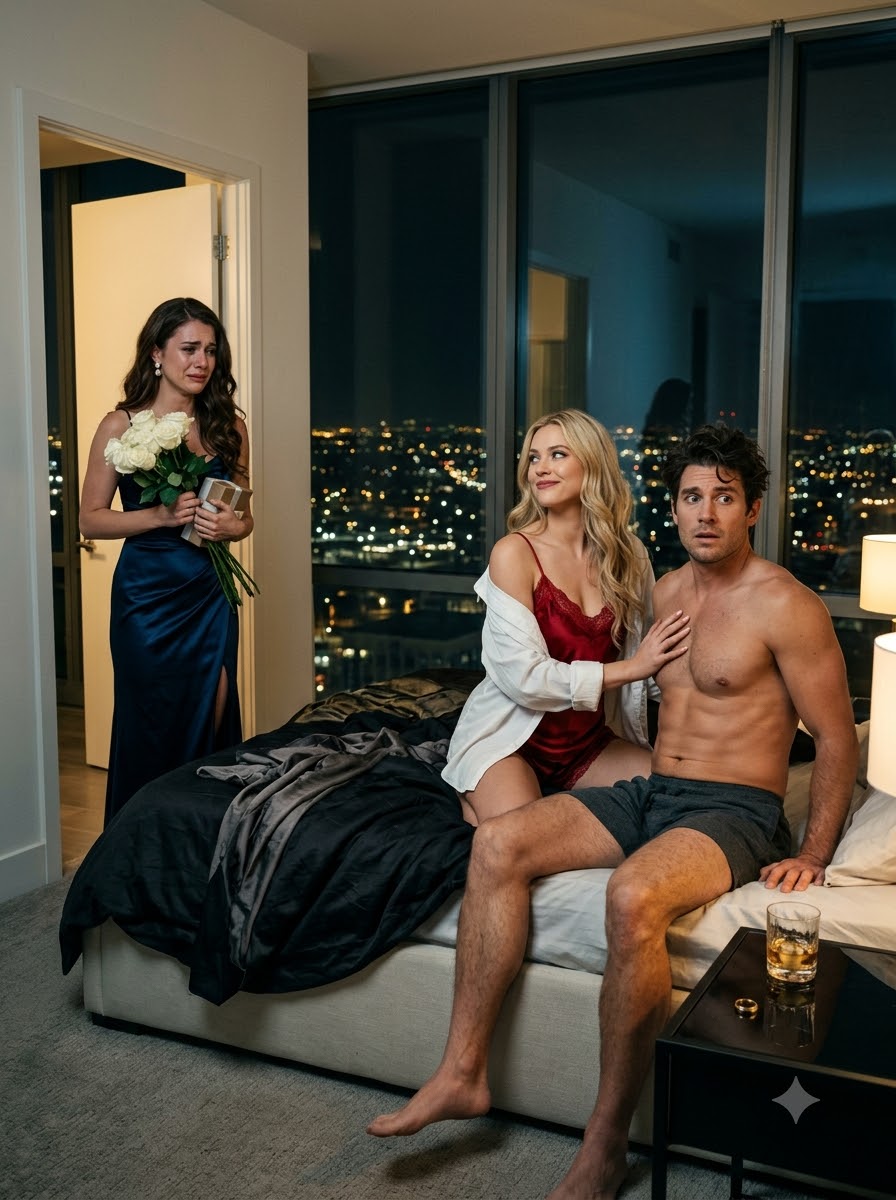
Then I lied more because the consequences became larger.”
“Yes.”
“I made Lauren responsible for a fantasy she didn’t fully understand.
I made you responsible for a marriage you didn’t know was in danger.
I made Mom’s illness into an excuse for shutting you out.”
He paused.
“And every time someone got close to the whole truth, I managed the information.”
I said nothing.
“I don’t want to live that way anymore.”
“Good.”
“Even if you never come back.”
That was the sentence I needed.
Not I changed for you.
Not I changed to save us.
Change that depended on reward was another transaction.
“I’m glad,” I said.
We left separately.
I did not invite him home.
But something shifted.
In February, Patricia forgot my name.
Not temporarily.
For the first time, she looked at me with no recognition at all.
Daniel was beside her bed.
I was across the room.
She smiled politely.
“You have lovely hair.”
My heart broke.
“Thank you.”
“Are you one of the nurses?”
“No.”
Daniel looked down.
I said, “I’m Claire.”
“Claire.”
She repeated it carefully.
“That’s pretty.”
I went into the hallway and cried.
Daniel followed.
He stopped several feet away.
“Can I hug you?”
That question.
Such a small thing.
“Yes.”
He held me.
Not as my husband.
Not exactly.
As someone who understood the same loss.
I cried into his shirt.
He cried too.
Then we returned to Patricia together.
She died the following spring.
Peacefully.
Daniel and Nathan were with her.
I arrived shortly afterward.
On her bedside table was a photograph from our wedding.
Daniel later found three copies of the letter she had written me.
Apparently, memory loss had made Patricia distrust her own filing system.
One was in a cookbook.
One in her underwear drawer.
One inside a book about Eleanor Roosevelt.
That made me laugh for the first time after her funeral.
At the service, Daniel gave the eulogy.
He did not describe his mother as perfect.
He talked about her stubbornness.
Her red lipstick.
Her terrible habit of giving unsolicited advice.
Her courage when memory began failing.
Then he said:
“My mother taught me something late in her life that I wish I had learned earlier.
Loving people does not mean deciding what truth they can handle.”
Our eyes met.
He looked away first.
Not because he was ashamed.
Because the moment did not belong to us.
I noticed that too.
After the funeral, I returned home alone.
I read Patricia’s letter again.
PART 4
Build a life large enough that love is part of it—not the walls around it.
I had.
That was when I realized I might be ready to make a decision.
Not because I needed Daniel.
I had spent almost two years proving something I no longer needed proved.
I could live without him.
I could manage money.
Travel alone.
Sleep alone.
Fix things badly.
Call plumbers.
Attend weddings without a husband beside me.
I could have a full life without Daniel.
The question was no longer whether I could leave.
I already had.
The question was whether I wanted to choose him again.
That was different.
I called him.
“Dinner?”
He went quiet.
“Is everything okay?”
“Yes.”
“Where?”
“Somewhere neutral.”
He laughed.
“You sound like we’re negotiating a treaty.”
“We might be.”
We met at a small restaurant in Richmond.
Nothing sentimental.
Not our first-date restaurant.
Not an anniversary place.
No history.
I wanted a room where nothing had already happened.
Daniel arrived early.
We ate.
Then I said, “I’m ready to decide.”
His fork stopped.
“Okay.”
“I don’t want our old marriage.”
His face tightened.
“Neither do I.”
“I don’t want to go back to managing your life.”
“I don’t want you to.”
“I don’t want access to your phone.”
He looked surprised.
“You can have it.”
“I know.
I don’t want a marriage built around inspection.”
He nodded.
“I need honesty before certainty.”
“Yes.”
“If you’re unhappy, I need you to say it while it’s still small.”
“Yes.”
“If you ever feel yourself building another life somewhere else, you tell me before you invite another person into it.”
His eyes filled.
“Yes.”
“And I need something else.”
“Anything.”
I raised an eyebrow.
He caught himself.
“Sorry.
What?”
“I need you to understand that I may never trust you the way I did before.”
He looked down.
Then back at me.
“I know.”
“That version of trust was partly blindness.”
“Yes.”
“I don’t want blindness again.”
“Neither do I.”
I breathed.
“I want to try.”
He didn’t move.
“What?”
“I want to try being married again.”
His eyes closed.
For several seconds, he simply breathed.
Then:
“Are you sure?”
“No.”
He opened his eyes.
I smiled.
“I’m sure enough to try.”
He laughed through tears.
That was how we began again.
Not with moving boxes.
Not immediately.
We dated.
A married couple with lawyers and separate addresses went on dates.
It was ridiculous.
Useful.
Daniel came to my green office and admitted he hated the color.
I told him he didn’t live there.
He agreed.
We went to movies.
Took walks.
Cooked.
Talked.
Sometimes we argued.
The difference was that neither of us treated conflict as evidence the relationship was failing.
It was simply information.
Six months later, Daniel moved back into the house.
But not all at once.
First a toothbrush.
Then clothes.
Then books.
I made him keep the leather chair in storage.
Marriage required compromise.
Not that much compromise.
Our first night sleeping in the same bed again was surprisingly awkward.
Daniel lay on his side.
I lay on mine.
There seemed to be three feet of diplomatic territory between us.
Finally, I said, “This is ridiculous.”
“Yes.”
“You can move closer.”
“Are you sure?”
“Daniel.”
“Right.”
He moved.
His hand found mine beneath the sheets.
That was all.
Enough.
The next morning, I woke first.
For a few seconds, I watched him sleep.
I remembered Room 817.
The bare feet.
The white linen shirt.
The ring beside the wineglass.
The cake falling.
The woman who knew my name.
The husband who had already begun describing our marriage in the past tense without telling me.
Those memories remained.
But they were memories now.
Not instructions.
Three years after Virginia Beach, Emma graduated from college.
Daniel and I sat together again.
This time, when she crossed the stage, he managed not to drop anything.
“Growth,” I whispered.
“I’ve worked hard.”
Afterward, Emma insisted on photographs.
She looked at one of the three of us.
“Less weird.”
“Good,” I said.
She looked at Daniel.
“Dad, Mom told me about the leather chair.”
He looked betrayed.
“That was private.”
“There are no secrets in this family anymore.”
All three of us went quiet.
Then Emma’s eyes widened.
“Sorry.”
Daniel laughed first.
Then I did.
Eventually, Emma laughed too.
Some words lost their sharpness only when enough life grew around them.
Lauren wrote once more.
Years later.
She had married.
She and her husband were expecting a baby.
Her message was short.
She said therapy had helped her understand why she accepted Daniel’s convenient version of reality even when parts of it felt wrong.
She apologized again.
I replied:
Congratulations.
I wish your family well.
Nothing more.
Nothing less.
She was no longer a villain in my story.
Neither was she my friend.
She was a person who had made choices inside a complicated situation and eventually moved forward.
So was I.
So was Daniel.
On our seventeenth wedding anniversary—five years after Virginia Beach—Daniel asked what I wanted.
“No surprises.”
He smiled.
“Understandable.”
“No expensive gifts.”
“Fine.”
“No hotel.”
“Very understandable.”
“Cake.”
He looked nervous.
“What kind?”
“Chocolate bourbon.”
He stared.
“The same one?”
“Yes.”
“Claire.”
“What?”
“Are you sure?”
I was.
For years, I had avoided that cake.
As though chocolate and bourbon had betrayed me personally.
It was ridiculous.
I wanted it back.
We drove to the same bakery that had made our wedding cake.
I carried the box myself.
At home, Daniel opened it.
Perfect.
Blue string.
Chocolate icing.
Nothing collapsed.
We ate it in the kitchen.
“Good?” he asked.
“Very.”
He smiled.
Then placed something on the table.
A tiny white button.
I stared.
“What is that?”
“The cuff button.”
I laughed.
“No.”
“Yes.”
“From the shirt?”
“I found it in an old suitcase last month.”
I picked it up.
For five years, I had forgotten the missing button.
Now it sat in my palm.
Small.
Ordinary.
Powerless.
“What happened to the shirt?”
“I donated it years ago.”
“Without fixing it?”
“Yes.”
“Sloppy.”
“I’ve changed.”
I smiled.
Then put the button in the trash.
Daniel stared.
“That was anticlimactic.”
“What did you expect?”
“I don’t know.
Symbolism.”
“It’s a button.”
He laughed.
That might have been the moment I knew we were finally okay.
Not healed perfectly.
Not restored to what we had been.
Okay in a more honest way.
The past had become something we could remember without building an altar to it.
Our marriage was different.
So was I.
I still organized too much.
Daniel still occasionally avoided difficult conversations for approximately six hours longer than necessary.
I still hated his sparkling water.
He still left cabinet doors open.
But now he noticed when I carried too much.
And I noticed when I volunteered to carry it before anyone asked.
Sometimes he said, “I’ve got that.”
Sometimes I let him.
Sometimes I said, “No, I want to.”
The difference was choice.
On our twentieth anniversary, we returned to Virginia Beach.
My idea.
Daniel resisted.
“You hate that place.”
“I hate one room in one hotel.”
“We can go literally anywhere else.”
“I want the beach.”
So we went.
Not to the Harbor Grand.
A smaller hotel farther north.
We walked barefoot along the water at sunset.
Daniel held my sandals.
I carried nothing.
At one point, we could see the Harbor Grand in the distance.
Room 817 was somewhere inside it.
I wondered who was staying there.
Maybe newlyweds.
Maybe exhausted parents.
Maybe business travelers who cared only about Wi-Fi.
That room had been the center of my universe once.
Now it was one square among hundreds of windows.
Daniel noticed where I was looking.
“You okay?”
“Yes.”
He waited.
That was another thing he had learned.
Not every silence required management.
“I used to think that night destroyed our marriage,” I said.
He looked at the ocean.
“Didn’t it?”
“Yes.”
His answer surprised me.
Then he continued.
“It destroyed the marriage we had.”
I looked at him.
“I don’t think we ever got that one back.”
“No.”
“Good.”
He smiled sadly.
“Good?”
“Yes.”
I thought about Patricia.
Emma.
The green office.
Boston dinners alone.
Pottery bowls.
Separate apartments.
Therapy.
Funerals.
Graduations.
Ordinary Tuesdays.
“The old marriage had too many things we weren’t saying.”
Daniel nodded.
“I’m sorry.”
“I know.”
He looked at me.
“I’ll probably always be sorry.”
“That’s okay.”
“I don’t want you to have to comfort me about it.”
I smiled.
“Excellent, because I wasn’t planning to.”
He laughed.
We kept walking.
After a while, he asked, “Do you regret staying?”
I thought carefully.
“No.”
“Do you regret leaving?”
“No.”
That confused him.
I smiled.
“I needed both.”
I had needed to leave long enough to discover that staying was not my only option.
I had needed to build a life that worked without Daniel before I could know whether choosing him was actually a choice.
And Daniel had needed to change without knowing whether change would bring me back.
Otherwise, we might simply have recreated the old arrangement with better apologies.
I slipped my hand into his.
“The thing Patricia wrote was right.”
“What thing?”
“Love shouldn’t be the walls around your life.”
He nodded.
“What is it, then?”
I looked toward the ocean.
“Maybe a room.”
“A room?”
“A good one.”
He smiled.
“With doors?”
“Definitely doors.”
“Windows?”
“Obviously.”
“Can I have my leather chair?”
“No.”
He laughed so loudly a couple walking ahead turned around.
We continued toward the hotel.
Barefoot.
I noticed that halfway back.
Bare feet.
The first thing I had noticed when Lauren opened Room 817.
For years, that image had represented humiliation.
Another woman barefoot in front of my husband.
Now my own feet were sinking into cool sand while Daniel walked beside me.
Same city.
Different anniversary.
Different marriage.
Different woman.
Me.
That was perhaps the part I understood only years later.
Betrayal had changed me.

But it did not create me.
Daniel’s affair did not make me strong.
Lauren did not teach me independence.
Patricia did not give me permission to have a life.
Those things had already existed inside me.
The crisis simply removed enough noise for me to notice them.
When we reached the boardwalk, Daniel stopped.
“What?”
He held up my sandals.
“You want these?”
“No.”
“My arm is tired.”
“Tragic.”
“I’ve been carrying them for forty minutes.”
“You’ll survive.”
“Marriage is sacrifice.”
“Don’t start.”
He smiled.
Then we walked on.
The Harbor Grand disappeared behind us.
I did not turn around.
Not because I was afraid to look.
Because there was nothing left there I needed.
The gifts I dropped were long gone.
The basketball tickets had expired.
The watch had been returned.
The bourbon had been drunk.
The cake had been thrown away.
Room 817 belonged to strangers.
Even the white shirt was gone.
For years, I had believed the most important moment of that night was opening the door and discovering Daniel’s betrayal.
It wasn’t.
The important moments came afterward.
Calling a lawyer before making decisions.
Refusing to make Emma choose sides.
Learning about Patricia without making her illness about me.
Separating.
Traveling.
Living alone.
Reading that apartment application.
Demanding the truth again when Daniel failed to give it.
Letting time pass.
Building a life large enough that marriage became one part of it.
And eventually looking at the man Daniel had become and deciding—not because I was afraid to leave, not because twelve years had to be saved, not because Emma needed married parents, not because forgiveness was morally superior—but because I wanted to.
Yes.
Again.
Not the yes I gave at our wedding.
That woman loved Daniel.
But she did not yet understand how easily love could become a structure people stopped examining.
My second yes had no ceremony.
No witnesses.
No dress.
No ring exchange.
It happened over dinner when I told him I was willing to try.
That yes was smaller.
Quieter.
And infinitely more informed.
Daniel opened the hotel door for me.
I walked inside.
There was a bottle of champagne cooling beside the window.
I looked at him.
He froze.
“I can explain.”
I laughed.
“You look terrified.”
“I suddenly realized hotel champagne may have been a poor thematic choice.”
“It’s fine.”
“Really?”
“Yes.”
He relaxed.
Then I saw the bakery box.
Blue string.
I looked at him.
“Again?”
“I like the cake.”
“So do I.”
We sat beside the window overlooking the Atlantic and ate chocolate bourbon cake directly from the box because neither of us had remembered plates.
At fifty-one, Daniel still cut cake badly.
At forty-nine, I still corrected him.
Some things survived.
Not because they had to.
Because we wanted them to.
Later, when the lights were off and the ocean was only a dark shape beyond the glass, Daniel reached for my hand.
“Happy anniversary.”
I squeezed his fingers.
“Happy anniversary.”
Then he said, “Thank you.”
“For what?”
He thought about it.
“Choosing me again.”
I turned toward him.
“Don’t make it sentimental.”
“Too late.”
“You’re welcome.”
He laughed softly.
Then I added, “Thank you too.”
“For what?”
“Becoming someone I could.”
Silence.
His fingers tightened around mine.
That was enough.
Outside, waves moved toward shore and away again.
Coming close.
Pulling back.
Returning differently each time.
For years, I had wanted a marriage that could never break.
Now I knew better.
Anything built by human beings could break.
Trust.
Promises.
Families.
Even the stories we told ourselves about who we were.
The goal was not to become unbreakable.
It was to become honest enough to know what could be repaired, brave enough to admit what could not, and whole enough to choose without fear deciding for us.
Daniel had broken my trust.
I had rebuilt my life.
Then, much later, we built something together.
Not the same thing.
Something better suited to the people we had become.
And the strangest part was that I no longer wished I could return to the woman standing outside Room 817 and warn her.
I sometimes imagined her there.
Three gift bags.
Blue-string cake.
Hands beginning to shake.
Heart seconds away from breaking.
I wouldn’t tell her to stay.
I wouldn’t tell her to leave.
I wouldn’t tell her she would forgive him.
That decision belonged to a future version of herself she had not met yet.
I would tell her only one thing.
Your life is about to become much larger than this hallway.
Then I would let her discover the rest herself.
Because that was what I eventually did.
I walked out of that hotel believing another woman had taken my husband.
Years later, I understood the truth was more complicated.
Daniel had lost himself before he nearly lost me.
I had lost parts of myself long before I found him behind that door.
Lauren had not stolen my life.
The affair had not ended it.
And forgiveness had not restored it.
I had rebuilt it deliberately, piece by piece, until I could stand inside it without needing anyone else to tell me whether I should stay.
Only then did I choose Daniel again.
And this time, when I reached for his hand in the darkness, there was no closed door in front of me.
No secret room.
No story being written without my knowledge.
Only two imperfect people inside a life large enough for both of them.
And doors neither of us was afraid to leave unlocked.
