


PART 1 — The Invitation That Disappeared
On December 21, I was examining two packages of fresh thyme at the Kroger on Princeton Road when my Christmas invitation disappeared. I had called Owen to ask about wine, but Camille answered his phone. “Hi, Brenda.” I greeted her and explained why I was calling. After a brief silence, she said, “Owen’s in the shower,” followed by the words that left me motionless beside the herbs. “But actually, Brenda, I’m glad you called. We’re spending the holidays with my family this year. You don’t need to come.”
“Oh,” I said. “I thought dinner was still at your house.” Her answer was immediate. “It is. My mother’s coming over to cook.” I asked, “Does Owen know?” Camille’s voice sharpened. “Of course he knows.” Then she added, “We’ve talked about it.” Behind me, a shopper wanted access to the display. I returned both packages and shifted my cart. “All right,” I said into the phone. “Okay. Great. Merry Christmas, Brenda.” I wished her a merry Christmas, too. After she disconnected, I remained near the bananas, unable to make myself move.
Over Thanksgiving weekend, Owen had sat in my kitchen after dessert and said, “Same plan for Christmas, Mom. Come around noon.” I had recorded it on the covered-bridge calendar beside my refrigerator. Now I stared into a cart filled with the small particulars of loving my family: whole-berry cranberry sauce for Owen, clementines for ten-year-old Tessa, yellow mustard for seven-year-old Wyatt. Beneath those were pecans and refrigerated crusts. I had made the Christmas pecan pie for thirty-six years. Apparently, nobody had thought to tell me that this year there would be no place for me to bring it.
I was sixty-two. Dennis had been dead for two years, and this would be my third Christmas without him. I had been anticipating an afternoon on Owen’s couch, coffee in hand, listening to the grandchildren argue about distributing presents. That had always been Dennis’s job. Wearing his old Walgreens Santa hat, he announced gifts as though introducing hockey players. “And now, from Grandma, number twelve, the right winger, WYATT JAMES KESSLER!” The children shrieked whenever he did it. Last Christmas, Tessa had inherited the responsibility, along with a hat that kept slipping over her eyes.
Somehow, I completed my shopping. Leaving a loaded cart behind felt impossible, although I could hardly explain why buying everything still seemed necessary. The total was eighty-seven dollars and forty cents. Outside, bitter wind sent discarded receipts skittering across the parking lot beneath Hamilton’s dirty-gray sky. I loaded my Buick, started the heater, and composed a message to Owen. I removed the sentence explaining that I was hurt, then deleted the one saying he should have told me himself. What remained simply said Camille had changed the plans and asked him to call. Instead of going home, I drove to Westdale.
The Westdale Community Resource Center occupied a low brick building that had once housed a Kresge’s. A smiling sun remained painted on a front window. Inside were a pantry, donated clothes, help with bills and housing, and a dining room in the former stockroom. Dennis had volunteered there for his last six years. After thirty-four years carrying mail, retirement had left him unsure what to do with his hands. Westdale supplied an answer: grocery deliveries, rides to appointments, broken shelves, unsteady tables, a freezer making an alarming noise. He returned home tired, cheerful, and full of other people’s stories.
Denise was sorting canned goods behind the counter, reading glasses resting above her short gray hair. “Brenda,” she said. “Hi there. Dropping something off?” I told her I had groceries because my dinner plans had changed. She studied my face, removed her glasses, and reached for her coat. “Let’s see what you’ve got,” she said. Outside, she explained that the pantry could accept unopened shelf-stable food and fruit, but not refrigerated groceries. We carried the donations inside in two trips. The pie crusts, butter, and cream remained with me. I could have left then, but my empty house held no appeal.
“Do you need help sorting?” I asked. Denise looked at me. “You want to?” I thought I did. For the next hour and a half, I worked beside two Miami University students and Harold, a retired dentist. We separated vegetables, soup, pasta, beans, and fruit while Christmas songs played from a little speaker. Carrying boxes toward the supply closet afterward, I stopped before a dented gray cabinet. Dennis had repaired its hinge in 2021. “That door’s going to outlive me, Bren.” Now a crooked paper snowflake hung above masking tape labeled DENNY’S CABINET. Denise found me staring and quietly invited me for coffee.
Behind her desk hung a photograph I had never seen: Dennis carrying a folding table over grass, his head thrown back in laughter. Looking at it brought back the slow dismantling of his possessions. His clothes had mostly gone to Westdale, his tools to Owen, his fishing gear to my brother-in-law. His hockey collection had taken longest. For nearly thirty years, he had gathered programs, photographs, ticket stubs, equipment, and signed pucks. An auction company had cataloged everything and sold it in separate lots. Six weeks earlier, the last payment arrived. After expenses, the collection had brought thirty-one thousand dollars.
I had already told Denise that some of those proceeds would honor Dennis through Westdale. Sitting beneath his laughing photograph, I finally asked about the housing fund. “We have applications waiting,” she said. “More than we’ve ever had. People behind on rent. People who need a security deposit to get into a new place. Families facing eviction in January.” Only about four thousand dollars remained against twenty-two applications. “What would thirty-one thousand dollars do?” I asked. Denise watched me carefully. “Brenda,” she said gently. “You don’t have to decide today. You’re upset. Something happened. I can see it on your face. Don’t make a decision like this on a bad day.”
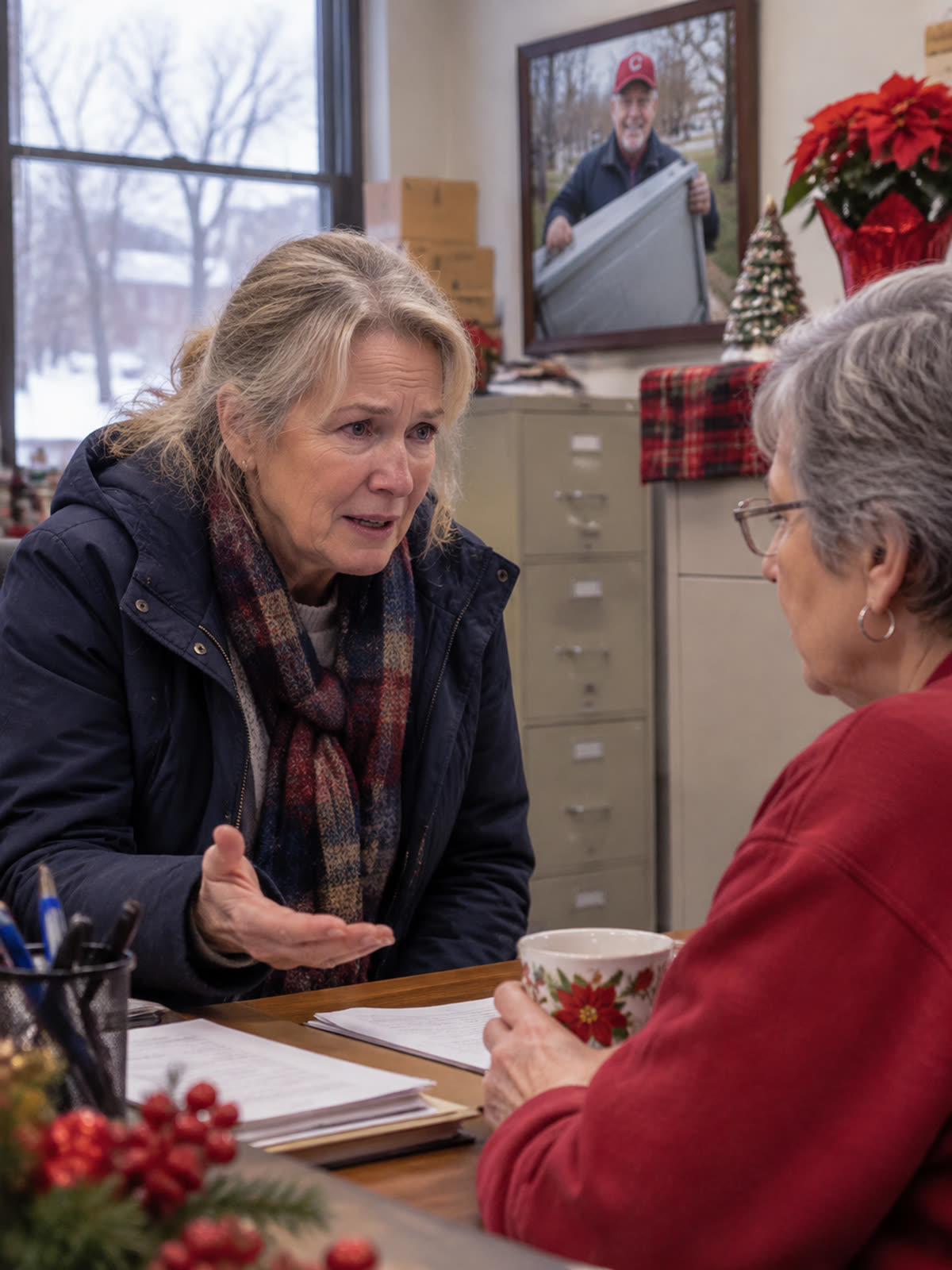
“I’ve been thinking about this for months,” I said. That was true, although so was the hurt. I was sitting there because Camille had excluded me and Owen had let her deliver the news. Part of me was angry; pretending otherwise would have been dishonest. But my home was paid for, my school-district retirement and Dennis’s postal pension covered my expenses, and I had emergency savings. Giving this money would not threaten my security. Dennis had spent decades recognizing worth in things others discarded. I believed the proceeds belonged somewhere that practiced the same generosity toward people.
Owen knew about the auction. He and Camille had been searching for a house while renting a split-level in Fairfield, and he regularly sent listings with bigger yards and finished basements. When I mentioned the final auction payment in October, he asked how much. After I answered, he said, “Wow. That would make a pretty decent down payment.” “It would,” I replied. Nothing else followed. He never asked for assistance; I never promised it. Nevertheless, the conversation had stayed with me. At night I had considered what he might have meant, though neither of us had returned to the subject.
Denise explained how the donation could provide hot winter meals, heating assistance, overdue rent, and security deposits. We completed a three-copy gift form. Then, under Dennis’s photograph, I wrote the check to Westdale for thirty-one thousand dollars. In the memo space, I wrote For Denny. Denise held it before asking, “May we acknowledge you publicly?” She explained that the center usually thanked donors on Facebook and in its newsletter. “Yes,” I said. “In Dennis’s memory. You can use both our names.” When she asked about publishing the amount, I hesitated. I knew Camille followed the center’s page. I knew Owen might see it.
A kinder version of myself might have requested privacy. I understood that even then. Still, I answered, “Yes.” Denise nodded without comment. Before leaving, I asked whether they needed anyone on Christmas Day. She consulted a worn green binder. “We serve a hot Christmas dinner,” she said. “Eleven to three. We usually get about two hundred people. We’re short in the kitchen.” Then she looked over her glasses. “It’s not glamorous. It’s peeling potatoes and washing pots.” For the first time that afternoon, I had somewhere definite to be. “I’ve been peeling potatoes for forty years,” I said. “Put me down.”
Owen called at eight fifteen that evening. I was at the kitchen table with tea and an unfinished crossword. He apologized for his busy day, then explained that Camille’s mother was struggling after her husband left in spring and she lost her factory job in September. They had decided to make Christmas about her family. “You could have told me.” He said he thought Camille already had. I explained that I had learned about it only that afternoon, three weeks after his invitation. He released the same weary sigh he had used as a teenager. “Can we please not make this a thing, Mom?”
I looked toward the calendar. “It’s not a thing,” I said. “It’s fine, Owen. Enjoy your Christmas. Give the kids a hug from me.” His relief was unmistakable. He promised we would do something the following weekend. We exchanged declarations of love and ended the call. Then I fetched a pen, crossed out the noon visit at Owen’s, and carefully wrote Westdale at ten in the morning underneath. I went to bed knowing where I would spend Christmas, but not feeling any less alone. The calendar had changed; the ache behind it had not.
At seven fifteen the next morning, someone pounded on my front door hard enough to rattle the storm-door glass. “Mom! Mom, open up!” Still wearing my robe, I left my half-finished coffee and went down the hall. Even recognizing Owen’s voice, I fastened the security chain before opening the door a few inches. He stood in the cold in a gray fleece and sweatpants, unshaven, his hair sticking up. Without offering a greeting, he raised his phone. Westdale’s Facebook page filled the screen: Denise holding an oversized check beneath a cheerful announcement thanking me for the donation in Dennis’s memory.
“Thirty-one thousand dollars, Mom?” Owen demanded. “You gave away thirty-one thousand dollars? To a food pantry? Yesterday?” I answered, “Good morning, Owen.” Camille had found the post while scrolling in bed at six, he told me. Now she was crying in the bathroom. When I said I was sorry she was upset, he gave a disbelieving laugh. “Mom. That was supposed to help us. That was our down payment.” “Was it?” I asked. Through the narrow opening, I reminded him of our entire October conversation. Nobody had asked me for anything. He said they intended to talk after Christmas.
“After Christmas,” I said. “After the Christmas I wasn’t invited to.” His face reddened. He accused me of punishing them, of giving away his father’s money out of spite. The question hurt because I had asked myself something similar in the dark. I explained that the donation had been under consideration since summer, though I chose the amount yesterday. “Was I hurt when I decided it? Yes. Was it the reason? No. Did it make it easier? Probably.” I believed Dennis would have wanted Westdale to benefit. Owen challenged how I could know what his father wanted.
I answered too sharply. I mentioned our thirty-six-year marriage, then reminded him that he had not visited while the collection was cataloged or asked to keep even one item. He recoiled. “That’s not fair,” he said quietly. “No,” I admitted. “It isn’t. I’m sorry. I shouldn’t have said that.” He lowered his eyes to the phone, and for a moment neither of us spoke. I still had my hand against the door. Between us hung the security chain, the public announcement, and everything we had failed to say before this morning.
Then Owen spoke again, so softly that his anger seemed to have emptied out of him. “Camille’s mom is about to lose her apartment,” he said. I went still. Nothing about cranberry sauce, canceled invitations, or a hoped-for down payment had prepared me for that. Looking at my son through the chained doorway, I realized there was something behind this Christmas argument that nobody had trusted me enough to explain. “What?”
PART 2 — The Woman in the Serving Line
Owen said Gail’s landlord had filed for eviction in November. She owed three months’ rent and had until January fifth. Camille had wanted Christmas to protect her mother from embarrassment, not to display her troubles. Then he explained the house: a Fairfield ranch with a bedroom and bathroom in the finished basement. They hoped Gail could live there. “Why didn’t you tell me?” I whispered. Camille believed I looked down on her family, he said. My paid-off home and Dennis’s valuable collection made their circumstances feel even more humiliating. “And because I’m a coward, Mom. I didn’t know how to ask. I’ve never known how to ask you for anything.”
I could not find an answer before he turned toward the steps. I called his name, and he stopped without facing me. “I’m sorry,” I said. “I didn’t know.” He acknowledged that nobody had told me, that the fault was theirs. Then he added, “But it’s still gone, Mom. It’s still gone.” I watched him drive away while standing in my robe behind the fastened chain. Over the next two days, neither he nor Camille contacted me. On Monday, I called Denise and quietly asked whether any portion of the donation could be returned.
After a long silence, Denise explained that the board had already allocated most of it. Eighteen housing applications had been approved, and the checks went out that morning. “Eighteen families who were going to lose their homes in January aren’t going to now. Because of you. And because of Denny.” Once we hung up, I cried at the kitchen table, unable to separate gratitude from shame. On Christmas Eve, Tessa texted to ask why I was not coming. Owen had said I was busy, but she pointed out that I was never busy on Christmas. I told her about serving dinner where Grandpa had volunteered.
Tessa replied that it was nice, but she wanted me there. She could not reach the presents tucked high beneath the tree. I put down the phone and covered my face. At nine that evening, I made the pecan pie anyway, using the refrigerated ingredients I still had and pecans left from Thanksgiving. My mother’s old glass dish had a little crack Dennis always said gave it character. I let the pie cool, covered it, and placed it in the refrigerator. The following morning, I arrived at Westdale at ten in my oldest jeans and Dennis’s red flannel shirt.
The stockroom had become a Christmas dining room. Red and green tablecloths covered folding tables, tiny illuminated trees stood in their centers, and paper snowflakes hung overhead. Gus was putting lights around a doorway while a white-bearded Santa arranged his chair. Turkey, gravy, and coffee scented the kitchen. Denise handed me a red apron. “Potatoes,” she said. “Sixty pounds of them. The peeler’s in the drawer. Harold’s on gravy. Don’t let him put anything weird in it.” When I asked what he might add, she answered, “Last year it was nutmeg,” and then, “We don’t talk about last year.”
I peeled for two hours while Harold sang and the students worked in reindeer antlers. Women from an Oxford church prepared stuffing, and a teenage boy washed pots with solemn concentration. At eleven, the guests began coming through the doors: elderly men, mothers carrying babies, teenagers, a family living in their car, a woman with oxygen, a man with a dog. Denise later counted two hundred and twelve. I moved to the serving line and spooned potatoes onto plates. “Merry Christmas,” I repeated. Some people answered; others kept their eyes lowered. A little girl in purple asked whether I was Mrs. Claus.
At about twelve thirty, the next tray belonged to a thin woman in a loose navy coat. A knit hat covered much of her gray-blond hair, and she was staring down. I recognized her despite having met her only four times: Owen and Camille’s wedding, Tessa’s christening, Wyatt’s fourth birthday, and Dennis’s funeral. “Merry Christmas, Gail,” I said quietly. She froze, looked up, and nearly lost her grip on the tray. “Brenda,” she said. “Oh God. Oh my God. What are you doing here?” I explained that I was volunteering. Her gaze flicked toward the exit as though she might flee.
I asked Gail to eat and wait until my shift ended at one. She finally nodded and chose an isolated corner table. When Denise relieved me, I carried over two coffees. Gail had barely eaten. After a silence, she admitted Camille did not know she was there. She was expected at three with a turkey she had promised to cook. “I don’t have a turkey, Brenda,” she said. “I couldn’t afford one. I’ve got forty-one dollars in my checking account until my unemployment comes on the second.” She had come for a holiday food box so she could prepare its turkey breast and pretend she had bought it.
Her voice shook as she described three months of lies about savings, severance, and a patient landlord. I told her Owen had explained the eviction and their plan for the ranch house. Gail began crying. Camille had shown her the basement bedroom, but Gail had refused, insisting she would not become a burden. Then she mentioned Westdale’s Facebook post and Camille’s furious interpretation of it. “She said you’d always looked down on us.” “I’ve never looked down on you, Gail,” I said. “Never once.” Gail believed me. She had even told Camille she was wrong. Then she explained that Denise had called her Monday morning.
Gail had applied to Westdale in November and joined the housing waiting list. Now her application was approved. A donation had made it possible to pay three months’ arrears and January: forty-two hundred dollars, sent directly to her landlord. Denise had said the donor was a widow honoring her husband. Gail looked at me through tears. “Your money is paying my rent, Brenda,” she whispered. “Dennis’s money. Your husband’s hockey cards. They’re keeping me in my apartment.” I covered my mouth. Around us, Christmas dinner continued beneath turning paper snowflakes while we sat facing each other, unable to speak.
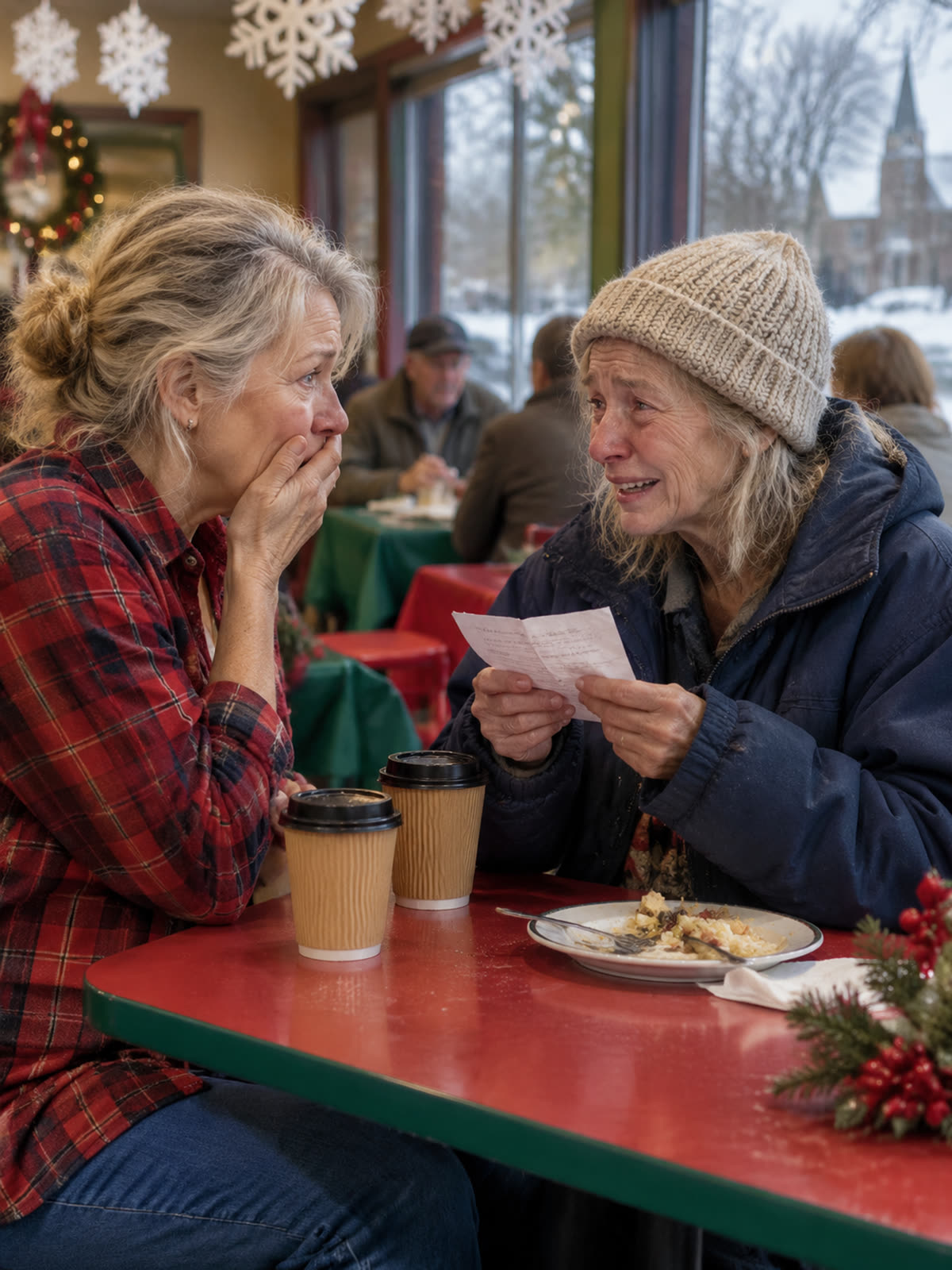
For a long while, neither of us tried. Harold’s singing carried from the kitchen, children crowded around Santa, and plates clattered across the room. Eventually Gail dried her face with a paper napkin. She had not told Camille about the rent payment. Accepting help already felt humiliating; discovering the connection to the mother-in-law Camille had excluded made explaining it seem impossible. She worried her daughter would see her as a charity case. I told her she had applied to a fund designed for exactly this need. She had taken nothing from me personally. This was what Dennis would have wanted the money to accomplish.
I reached across the table for her hand. “And you’re not a charity case. You’re a woman who worked at a plant for twenty-two years and lost her job and got left by her husband and kept going anyway. That’s not charity. That’s courage.” Gail stared. “Twenty-two years,” she said. “Making plastic bottle caps.” Almost laughing, she added, “Nobody’s ever called it courage before.” “Well,” I said. “I’m calling it that.” Her hand remained around mine. Then, abruptly, she asked me to come with her to Camille’s at three. She could not walk inside and explain everything alone.
I reminded her that Camille had specifically told me not to come. Gail said Camille was wrong, and so was she for allowing it. As her mother, she should have insisted that I was family, too. Instead, she had been too occupied concealing her own troubles. I thought of Tessa asking who would reach the high presents. After a moment, I said, “I’ll need to go home first,” and explained that a pie was waiting in my refrigerator. Gail laughed through her tears. When I told her it was pecan, she said it had been Camille’s favorite since childhood.
“Bring the pie, Brenda.” Before we left, Denise met us with a holiday food box. Inside were a turkey breast, stuffing mix, green beans, and whole-berry cranberry sauce—the kind I had carried through the pantry doors after losing my Christmas invitation. “For Mrs. Gorski,” Denise said quietly. “Everybody gets one.” Gail looked from the box to me. “Take it, Gail,” I said. “It’s yours. You earned it.” She accepted it. Together, we left the center with the food she had been ashamed to need and the conversation neither of us had expected to have.
We went first to Gail’s second-floor apartment on Hamilton’s east side. The brick building had a bent metal mailbox and an old wreath on the door. Her kitchen was tiny and spotless. We cooked the turkey breast in her oven, prepared stuffing, and opened the beans. Much of the work passed in silence, but it was no longer an uncomfortable silence. Afterward, we stopped at my house. I collected the pie and the can of Owen’s favorite cranberry sauce I had kept. Then, before returning to the car, I went down to the basement.
On Sunday, I had told Owen almost everything from Dennis’s collection was gone. Almost was the part I had forgotten until lying awake at three in the morning. Above the washing machine sat a shoebox containing the one thing I had kept. I took it from the shelf and tucked it under my arm. Then Gail and I drove to Fairfield carrying dinner, dessert, and something whose importance no auction could have measured. I had no idea whether Camille would welcome any of it. Her last words to me had been clear enough, and a pie could not erase them.
Owen and Camille rented a gray split-level with white shutters and a basketball hoop above the garage. Their minivan was in the driveway, and lights glowed throughout the house. Through the front window, I saw the Christmas tree and the children sitting on the floor in pajamas. It was three ten. Gail climbed onto the front step carrying the foil-covered turkey pan. I followed with the pecan pie and the shoebox. We had cooked together, cried together, and finally told each other the truth. Now we faced the daughter who had tried to keep both our vulnerabilities apart.
Gail rang the bell. Camille appeared in an apron over a red sweater, her dark hair pulled back, a wooden spoon in her hand. She was smiling at her mother. “Mom! You’re late, I was getting worried, I…” Then she noticed me. Her smile disappeared. She looked at the pie, the shoebox, Gail, and finally my face. Nothing about her expression suggested she had changed her mind since our telephone conversation. Standing behind Gail, I could see the warm house I had expected to enter that Christmas, but I remained on the cold side of its threshold.
“What is she doing here?” Camille said. Gail did not retreat. “Camille,” she said. “Let us in, honey. We need to talk.” Her daughter began objecting. “Mom, I told you. I told everybody. I don’t want…” Gail interrupted in a voice I had never heard from her before. “Camille Marie,” she said. It was not pleading or apologetic. It was unmistakably a mother’s voice. I stood still with the pie balanced in my hands while the turkey pan remained between mother and daughter.
“Let us in. Now. It’s cold.” Camille stared at Gail. Behind her were my son and grandchildren, the dinner I had been told not to attend, and the explanation that could change what all of them believed about my donation. Beside me stood a woman who had almost run from a serving line rather than let me see her needing help. Now she refused to let her daughter close the door. I waited without speaking, unable to tell whether Camille would move aside—or send me home again.
PART 3 — What Dennis Kept
At last, Camille stepped aside. The house smelled of ham, warm rolls, and her usual vanilla Christmas candle. Owen appeared from the kitchen with a dish towel and stopped. “Mom?” “Hi, Owen.” Then Tessa screamed, “GRANDMA!” She came around the couch with Wyatt behind her, and both children collided with me. I nearly dropped the pie. “You came! You came! Dad said you were busy! I told him you’d come! I told him!” Wyatt insisted he had said so, too. Holding dessert in one hand and my grandchildren with the other, I looked over their heads and saw something soften in Camille’s face.
Gail delayed explanations until she had taken control of the kitchen. She put the turkey in to warm, placed my pie beside Camille’s cookies, and emptied the cranberry sauce into a bowl. The children went back to the living room; Owen was sent to add another place setting. Then Gail led Camille into the laundry room and closed the door. Her low, steady voice carried through it. Eventually, I heard Camille ask, “Mom, why didn’t you tell me?” Crying followed. Owen looked at me and quietly asked what was happening. I told him about the serving line, the forty-one dollars, and the housing payment.
At the food-box turkey, Owen covered his mouth. “Your money,” he said. “Dad’s money. It paid her rent.” I confirmed it. He sank into a kitchen chair, overwhelmed that the donation they thought had ruined their rescue plan had helped Gail anyway. Then he remembered accusing me on my porch. “I called you spiteful.” “I was a little spiteful,” I said. I sat across from him and explained how deeply it hurt to learn in a grocery aisle that I was unwelcome after already buying his cranberry sauce and the children’s favorites. My voice trembled. That pain had been real, even if the donation served something larger.
I admitted that I had knowingly allowed Westdale to publish the amount because some part of me wanted Camille to see it. “That’s not a part of me I’m proud of,” I said. “But it was there. And I’m sorry for it.” Owen finally acknowledged that he should have asked plainly for help in October instead of waiting for me to understand hints. Dennis would have asked anyone without embarrassment, he said, even a stranger at a flea market to help carry a bench he never bought. Owen had somehow learned the opposite lesson. “I always thought asking meant you’d failed.”
When the laundry-room door opened, Camille emerged with swollen eyes and a crooked apron, Gail’s hand against her back. She stopped before me, arms folded around herself. “I told you not to come,” she said finally. “On the phone. In the grocery store. I was so rude to you.” “You were,” I said. She apologized, then described the fear and shame she had been hiding. My paid-off house, dependable pie, and Dennis’s collection had seemed like proof that my life was perfectly arranged. Meanwhile, her father had left and her mother was about to lose her apartment. Excluding me had seemed easier than being seen.
I explained that the house represented thirty years of tuna casserole, the pie was my mother’s recipe, and the collection came from decades of flea markets. “I’m not together, honey. I’ve been falling apart for two years. I just do it quietly. In my kitchen. By myself.” Camille whispered that she had not known. “Nobody does,” I said. “Nobody asked.” Then, for the first time in twelve years, she hugged me without politeness or hurry. She thanked me for her mother, the rent, bringing her home, and the pie. I corrected her gently: Gail had brought me. Gail shrugged and said somebody had needed to tell her daughter she was wrong.
Dinner began at four thirty. We had ham and turkey, stuffing and casserole, bakery rolls, and whole-berry cranberry sauce Owen ate secretly with a spoon. Wyatt put mustard on almost everything. Camille took two pieces of pecan pie without comment; Gail caught my eye and winked. Afterward, Tessa produced Dennis’s faded Santa hat. “Grandma,” she said. “It’s your turn.” She explained that Grandpa always handled presents, she had done it last year, and her father was terrible at the voices. I took the hat, pulled it over one eyebrow, and lifted the first package in my biggest announcing voice.
“And now,” I said, “from Grandma Gail, number seven, the left winger, TESSA ROSE KESSLER!” The children screamed. Gail laughed until she clutched the couch arm, and Owen watched from the doorway with wet eyes. I announced all fifty-three presents, assigning Camille goalie, Gail captain, and Owen coach. By the end, my voice was rough, the hat sat crookedly, and the grandchildren lay among torn wrapping paper like snow angels. Only then did I reach for the shoebox I had left on an end table. “Owen,” I said. “Come here a minute.” He sat beside me, and I placed it in his lap.
I explained that one part of his father’s collection had stayed behind. The auction men had found it on their last day and said it held little value for collectors, but I would probably want it. Owen opened the lid. Yellowing tissue surrounded a photocopied program from a February 2002 peewee tournament at Hamilton Ice Arena. Beneath it lay a team photograph: fifteen boys in blue jerseys, Dennis grinning at one end, nine-year-old Owen in front with a missing tooth, an oversized helmet, and a plastic trophy. Then Owen saw the scuffed black puck beneath the photograph.
White tape circled the puck, carrying Dennis’s careful handwriting: OWEN’S FIRST GOAL. 2/17/02. HE DIDN’T EVEN SEE IT GO IN. Owen stared before asking, “He kept this?” I told him it had occupied the front of the binder containing the valuable 1952 Barons championship program. He turned the puck over in his hands. Two years after that photograph, he had quit hockey and told Dennis he hated it—that it was his father’s interest, not his. He had even accused him of caring only about the collection. Owen’s voice caught as he admitted what he had believed ever since: his father had never forgiven him.
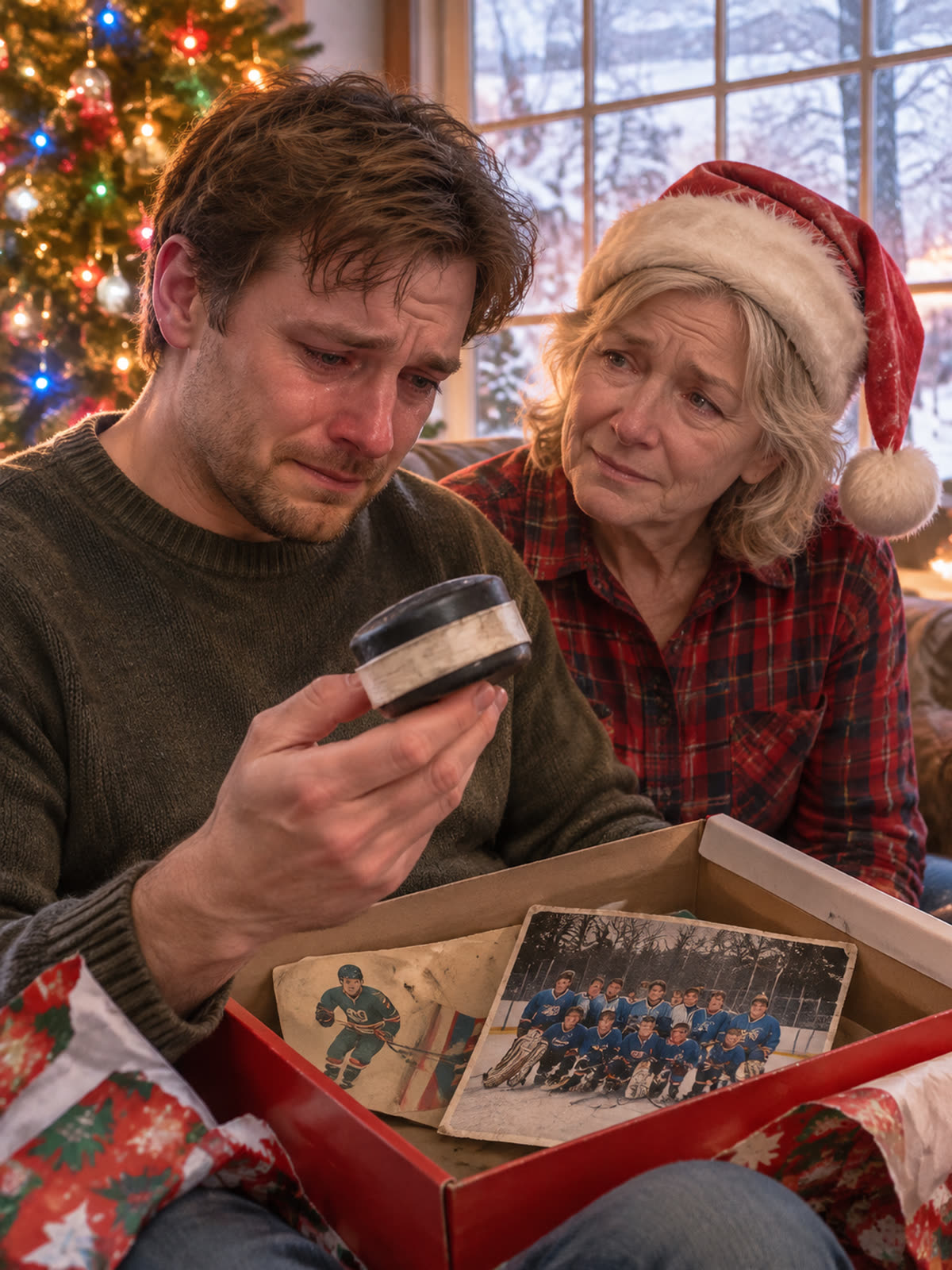
“I thought he was disappointed in me.” I pointed out that Dennis had kept this memory ahead of his most valuable collectible. On Sunday evenings, while updating his spreadsheet, he sometimes took it out simply to look at it. I had seen him doing so. “He was never disappointed in you, Owen. He just never knew how to say so. You two were exactly alike that way.” Owen’s shoulders began shaking. Tessa climbed onto the couch and studied the photograph, asking whether the gap-toothed boy was her father and the smiling man was Grandpa. Owen answered both questions through tears.
Tessa examined Dennis’s face. “He looks really happy,” she said. Owen pulled her close and cried openly, holding the battered puck among the discarded wrapping paper. Camille sat on his other side and rested a hand on his back. Across the room, Gail stood near the tree with her hand over her mouth. I remained beside my son in his father’s flannel shirt and ridiculous old hat, watching a misunderstanding finally give way. He had mistaken silence for disappointment for years. Now, in something collectors considered worthless, he had found the reassurance he never knew his father had preserved.
A year has passed. Gail stayed in her apartment, with January covered as well as the overdue rent. In February, she became a receptionist at a Hamilton dental office—the same place where I used to have my teeth cleaned. She jokes that it is the first job that lets her sit. Every Tuesday evening, she calls, and we spend an hour talking about the grandchildren, Camille, or nothing important. She still says I am the only person who called her brave. Owen and Camille postponed buying the ranch and continued saving. In March, he finally asked directly whether I could contribute a little toward a down payment. I said yes.
Camille and I now meet for lunch once a month. She talks about her father leaving, growing up short of money, and the shame that taught her to reject people before they could judge her. I tell her about Dennis and the quiet unraveling I once kept to myself. In October, she admitted she followed Westdale again and had reread the donation post perhaps fifty times. “I hated it at first,” she said. “I thought you were showing off. Rubbing it in.” Now she returns to it on bad days, she told me, as a reminder that people can be good even when you suspect otherwise.
On the first Tuesday of each month, Owen volunteers at Westdale after work. Denise assigned him to repairs. He lacks his father’s skill, but Gus is teaching him. Recently, he called to announce that he had fixed the cabinet hinge. It took three hours and repeated instruction. He sounded almost sheepish telling me how easily Dennis could have done it. Then he said, “It closes perfectly now.” “It’ll outlive us both,” I replied, and he laughed. The cabinet still carried its paper snowflake and the strip of tape with his father’s name. Now his own hands had helped keep its door working.
In early December, Camille called to discuss Christmas. My heart tightened before she finished. This time, she suggested Westdale—all of us serving dinner from eleven until three, then returning to my house for presents and pie. Denise needed kitchen help again. “If that’s okay.” Sitting at my kitchen table, I pressed the phone closer. “That’s okay,” I said. “That’s more than okay.” On Christmas morning, our family entered the familiar stockroom. Denise distributed red aprons. Owen joined Gus and Harold with the turkeys, while Camille and Gail handled stuffing. Tessa took rolls; Wyatt folded napkins into careful triangles. I returned to sixty pounds of potatoes.
At eleven, the doors opened. This year, Denise later counted two hundred and thirty-one guests. Tessa stood beside me offering everyone a roll and announcing that she had personally tested how good they were. Around noon, a tired young mother approached with a toddler on her hip and asked whether I was Brenda. She recognized me from the previous year’s Facebook picture. Her name was Brianna, and her little boy was Trevor. They had faced eviction on January third until Westdale called on December twenty-third to say three months’ rent had been paid. They were still in their apartment. She had wanted to thank me for an entire year.
I struggled to answer. “You’re welcome, Brianna,” I finally said. “Merry Christmas. Merry Christmas, Trevor.” The boy waved with a fistful of bread before they moved along. Beside me, Tessa had fallen unusually quiet. “Grandma,” she asked, “Was that Grandpa’s money?” I told her it was. She considered that carefully before saying, “Grandpa would like that. More than the hockey cards.” “Yes,” I said. “He would.” I remained at the line with my spoon, surrounded by the ordinary business of dinner, while the meaning of his collection continued arriving on people’s plates and in the homes they had kept.
After three, with the dishes washed and decorations being packed away, Denise found me beside the supply cabinet. Wyatt had made its newest snowflake, uneven and full of holes. Under DENNY’S CABINET, someone had added AND BREN’S. Denise credited Gus, who thought it was only fair. Then she directed my attention into her office. A new frame hung beside the photograph of Dennis carrying the table. It held the peewee hockey team picture. Owen had brought it the previous month and asked that it stay there. He said Westdale was where Denny would want to be.
I lingered in the doorway, looking at the two versions of my husband: laughing across the grass and grinning behind those boys. Owen came up and put an arm around my shoulders. The children were in the car, he said, and Gail had the pie warming at my house. Tessa was already wearing the hat and insisting I should handle the voices again. We teased him about his own terrible announcing voice before he squeezed my shoulder. “Come on. Let’s go home.” I removed my red apron and hung it by the back door among the others.
One apron remained different from all the rest: faded, grease-marked, and labeled DENNY in iron-on letters. Denise had kept it on that hook for two years without allowing anyone else to wear it. I brushed it once with two fingers before following my son outside. The car waited with its engine running and heater blowing. In the back seat, a little girl wore a faded Walgreens Santa hat that slipped over her eyes. As I opened the door, she gathered the biggest, boomiest voice she could manage. “And now,” she was shouting, “from Grandma Brenda, number one, the CAPTAIN of the whole TEAM…”
Disclaimer: This story is a work of fiction inspired by real-life themes. Names, characters, places and events are fictionalized, and any resemblance to real persons is purely coincidental. Images are for illustration purposes only.
