

PART 1
THE MESSAGE THAT TURNED ME AROUND
My mother’s text came while I was parked at a gas station outside Pueblo. My three-month-old daughter was sleeping in her car seat, and a wrapped birthday present for my mother was tucked beneath the passenger seat.
Don’t bother coming. We need a break from your baby.
I read it once, then read it again, almost expecting the words to change or become less painful. They didn’t. Outside my windshield, trucks rushed along the highway, carrying other families toward their destinations, while I sat with one hand on the steering wheel, trying to comprehend how I had gone from being invited to my mother’s birthday to becoming someone she needed a break from.
My daughter, June, made a tiny noise in her sleep. I turned to look at her, noticing the soft hat slipping toward one ear, and felt my remaining uncertainty turn into determination.
I turned the car around.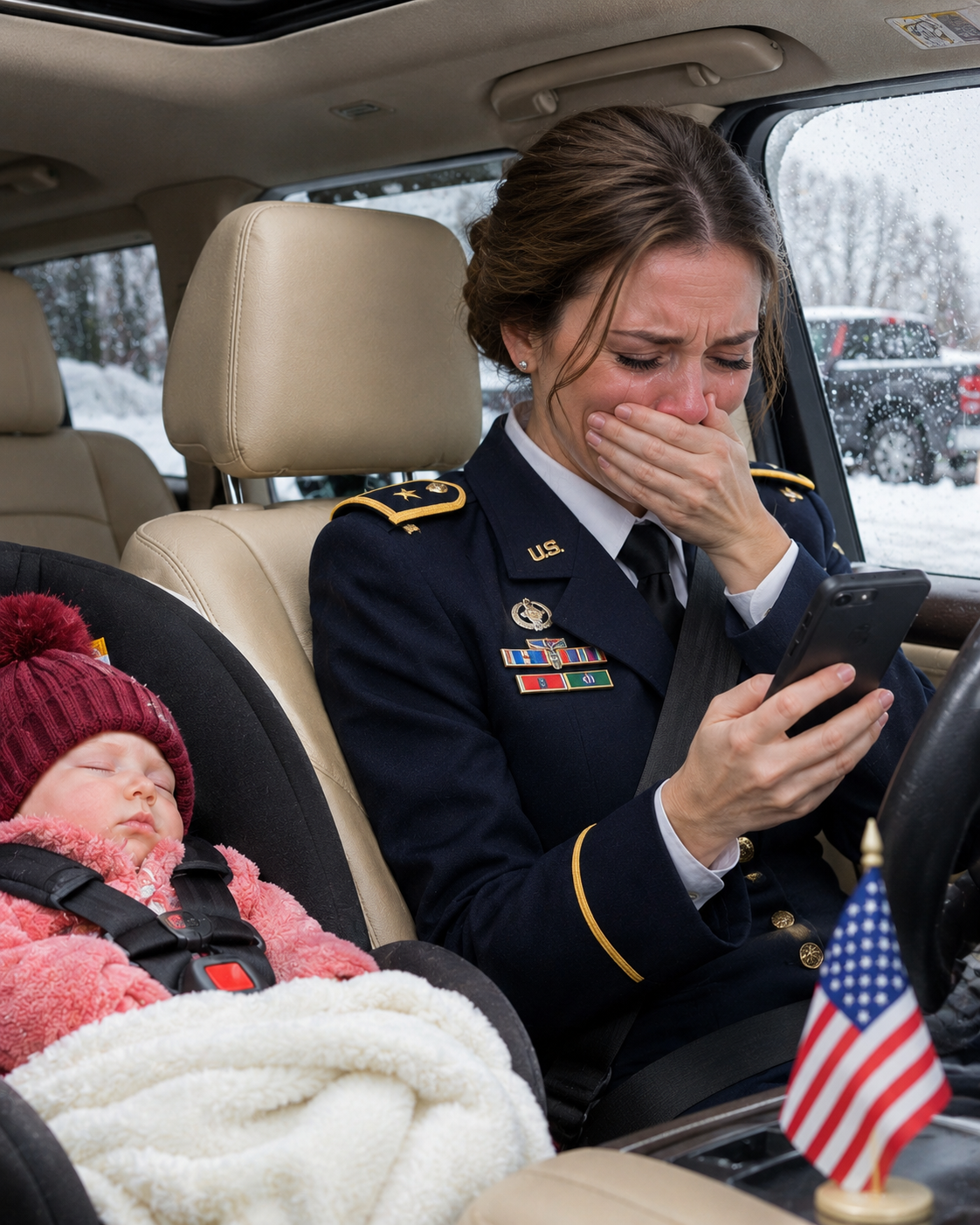
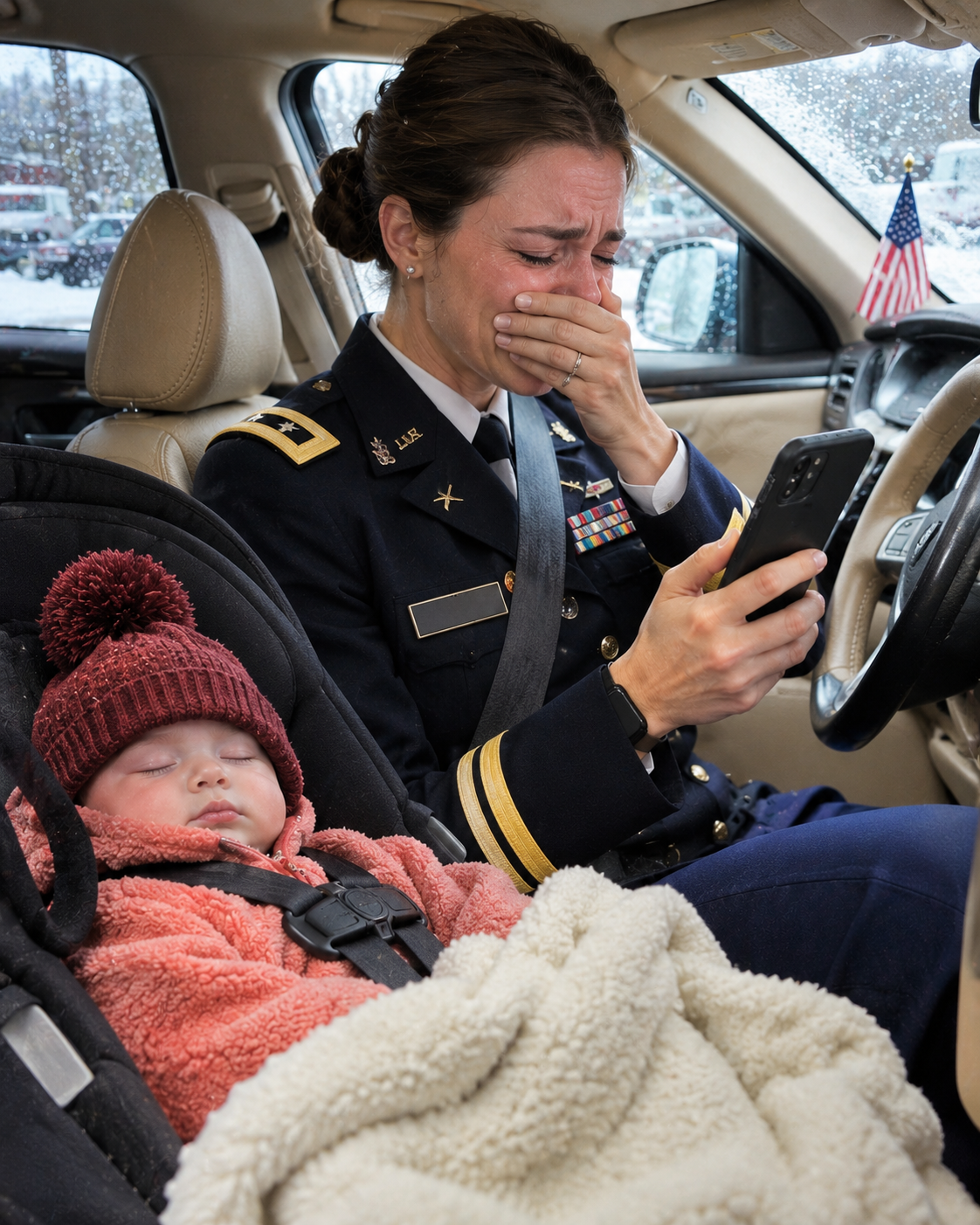
The journey home to Denver took almost four hours. I held back my tears until I carried June into our apartment and carefully placed her in her crib. Then I lowered myself onto the floor beside her and finally let myself cry.
For months, I had convinced myself that my family was simply adjusting to our circumstances. My partner, Owen, had left before June was born, and initially, everyone had tried to show compassion. My mother, Linda, assured me I would get through it. My father, Frank, said I was stronger than I realized. My sister, Holly, brought baby clothes, while my brother, Seth, put together the crib.
Eventually, their sympathy faded, and the comments started.
Whenever June cried during a phone conversation, Mom would say, “This is why babies need two parents.” Dad questioned whether I had genuinely considered the consequences of continuing the pregnancy after Owen walked away. Holly once confessed that seeing me handle everything alone made her husband hesitant about having children. Seth joked that family dinners had become “a lot louder lately.”
When June was six weeks old, she went through a particularly difficult period of colic. I told Mom I had barely slept for a few hours over two days. I was in the kitchen, holding June against my shoulder as she cried, when Mom fell silent before saying, “Well, nobody forced you into this situation.”
I had always been the reliable daughter, the person who could solve everyone’s problems without making anyone feel obligated. When Seth’s online store drained his savings, I gave him three thousand dollars. He called it a loan, but I never pursued repayment. When Holly exceeded her wedding budget, I paid for the photographer and flowers, which came to almost four thousand dollars. When a storm damaged my parents’ roof and their insurance didn’t cover everything, I sent them five thousand dollars. Dad said he would repay me. He never did.
I had a dependable position in medical software sales and managed my finances carefully. I saved, invested, and supported my family whenever they needed me. I believed that was what family members were supposed to do for each other.
That evening, my closest friend, Nora, called. We had known each other since college, and she could recognize the difference between my usual exhausted voice and the one I used when I was struggling to keep myself together.
“You’re home already?” she asked.
I sat beside June’s crib and explained everything: the drive, the text, the long journey back, and the silence afterward.
Nora listened patiently without interrupting. Then she said, “Your family started treating you differently after you became a single mother.”
“I know.”
“No, I mean really differently. They used to call when they needed money or help or someone to solve a problem. Now they keep making you feel like you should apologize for having June.”
I looked through the crib rails at my daughter, sleeping with one little hand resting beside her cheek.
“You see it, don’t you?” Nora asked.
“Yes.”
“Then maybe it’s time to stop chasing them.”
I continued thinking about her words after we ended the call. I had endured plenty, but the issue was no longer whether I could tolerate their treatment. It was whether I wanted June growing up thinking love could disappear whenever she became inconvenient, or watching her mother continually pay for a place at a table where neither of them was wanted.
I already knew the answer.
THE BIRTHDAY I MISSED
My mother’s celebration was scheduled to begin at six. At 5:45, June was sleeping against my chest while I sat on the couch in the same sweater I had planned to wear to the party. My phone remained silent.
At 6:15, I looked at it. At seven, I checked once more. By nine, nobody had called to find out whether we had gotten home safely or whether I was okay after turning around on the highway.
At 9:37, Holly uploaded pictures from the celebration. Mom was standing beside a large cake, Dad held a champagne glass, and Seth was making a silly face behind them. The photographs included aunts, cousins, neighbors, and children. My cousin’s two boys were there. One of Holly’s friends had brought her five-year-old, and a neighbor had brought a toddler.
Mom hadn’t wanted a break from children. She had wanted a break from my child.
I closed the app and remained quietly beside June. I didn’t send the present or arrange flowers the following morning. Nobody contacted me, and as the days passed, the silence hurt less than I had expected. Once I stopped looking for an innocent explanation, the pattern became impossible to ignore.
Two weeks later, Thanksgiving was getting closer. I purchased a small turkey breast, potatoes, stuffing mix, and a pumpkin pie that I knew I couldn’t finish alone. My intention was to prepare dinner, watch a movie, and take a few pictures of June wearing the turkey onesie Nora had bought her.
Then Nora called.
“Promise me you won’t immediately say no.”
“That sounds like a trap.”
“My friend Mallory rented a lodge in Montana for Thanksgiving. Two couples had to cancel, and there are empty rooms. She invited me, and I told her I didn’t want to leave you alone for the holiday.”
I glanced toward June’s bassinet. “Flights this close to Thanksgiving cost a fortune.”
Nora hesitated. “Mallory offered to use her airline credits for you, me, and June.”
“I can’t let someone I’ve met twice pay for us.”
“She likes you.”
“She barely knows me.”
“Apparently she knows enough. And when I told her you had a baby, she said, ‘Perfect. Tell her to bring June. Babies belong at Thanksgiving.’”
I didn’t respond immediately. The word welcome had been absent from my life for months, and I hadn’t understood how much I needed to hear it until then.
“She specifically said June is welcome,” Nora added.
I watched my daughter moving her legs beneath the blanket.
“All right,” I said. “We’re coming.”
We departed Wednesday morning. I had never traveled with a baby before and expected the journey to be exhausting, but June slept through most of the flight while Nora handled the stroller and I kept the diaper bag nearby. Mallory had even arranged transportation from the airport.
As we traveled farther into Montana, snow-covered mountains appeared beyond the dark evergreen trees, and frozen streams glimmered between the branches. The road wound around a ridge until the lodge appeared above a lake covered in ice. Timber beams surrounded the windows, and warm light spilled across the snow.
“Nora, this place is ridiculous.”
“I know.”
“It looks like somewhere a fictional billionaire goes to hide from the press.”
She laughed, and for the first time in weeks, I found myself laughing alongside her.
Mallory greeted us at the front door wearing jeans and thick socks. The moment she noticed June, her expression lit up.
“She’s even cuter than the pictures. Can I hold her, or would you rather keep her with you?”
There was no reaching for her without asking, no sighing, no impatient expression. Just a genuine smile and a question.
“You can hold her,” I said.
Mallory gently picked up June. “Hello, beautiful girl. Welcome to Montana.”
Her husband, Peter, was friendly and relaxed, while their nine-year-old son, Henry, became interested in June almost immediately. Mallory’s business partner, Jules, had arrived with her wife, Erin. Within thirty minutes, Erin was showing Henry how to fold napkins into turkeys while Jules and Peter discussed whether anybody actually enjoyed cranberry sauce.
Nobody treated me as though I were a charity case. Nobody made uncomfortable comments about Owen. Nobody seemed disappointed when June became fussy. They simply made room for us.
That first evening, I realized just how tense I had become around my own relatives. During family gatherings, I was constantly watching June: Was she crying too loudly? Was somebody irritated? Should I take her into another room or leave early?
At the lodge, when she started crying during dinner, Peter stood up and gently bounced on his heels.
“This used to work with Henry,” he said.
Mallory smiled. “Nothing worked with Henry.”
“That’s slander,” Henry replied. “I was a good baby.”
“You cried for eleven months,” Mallory said.
Everyone burst into laughter, and I joined them. It wasn’t the cautious laughter I had grown accustomed to around my family. It was genuine, and even I was surprised by how naturally it came.
A PLACE AT THE TABLE
Thanksgiving morning arrived with large snowflakes drifting past the tall windows. A white haze concealed the lake, the kitchen carried the scent of cinnamon rolls, and Henry watched cartoons while Nora sat at the counter drinking coffee. June slept against my chest.
At some point, I realized I wasn’t thinking about Mom, Holly, or Seth anymore. I wasn’t wondering whether they had noticed my absence. I was simply enjoying myself.
That evening, dinner covered the long wooden table with roasted turkey, mashed potatoes, stuffing, fresh bread, vegetables, and two varieties of pie. Candles flickered beside the windows, and June sat next to me in a borrowed infant seat.
After everyone finished eating, Mallory raised her glass.
“We have one mildly annoying tradition before dessert. Everybody says what they’re thankful for.”
Peter groaned. “She makes us do this every year.”
“You love it,” Mallory said.
“I tolerate it because pie follows.”
When my turn arrived, I looked at June, who was watching the candlelight with wide eyes.
“I’m thankful for the people who stepped in and became family when I needed one.”
Nora reached across the table and held my hand. Mallory lifted her glass.
“To the family we choose.”
Everyone raised their glasses. “To the family we choose.”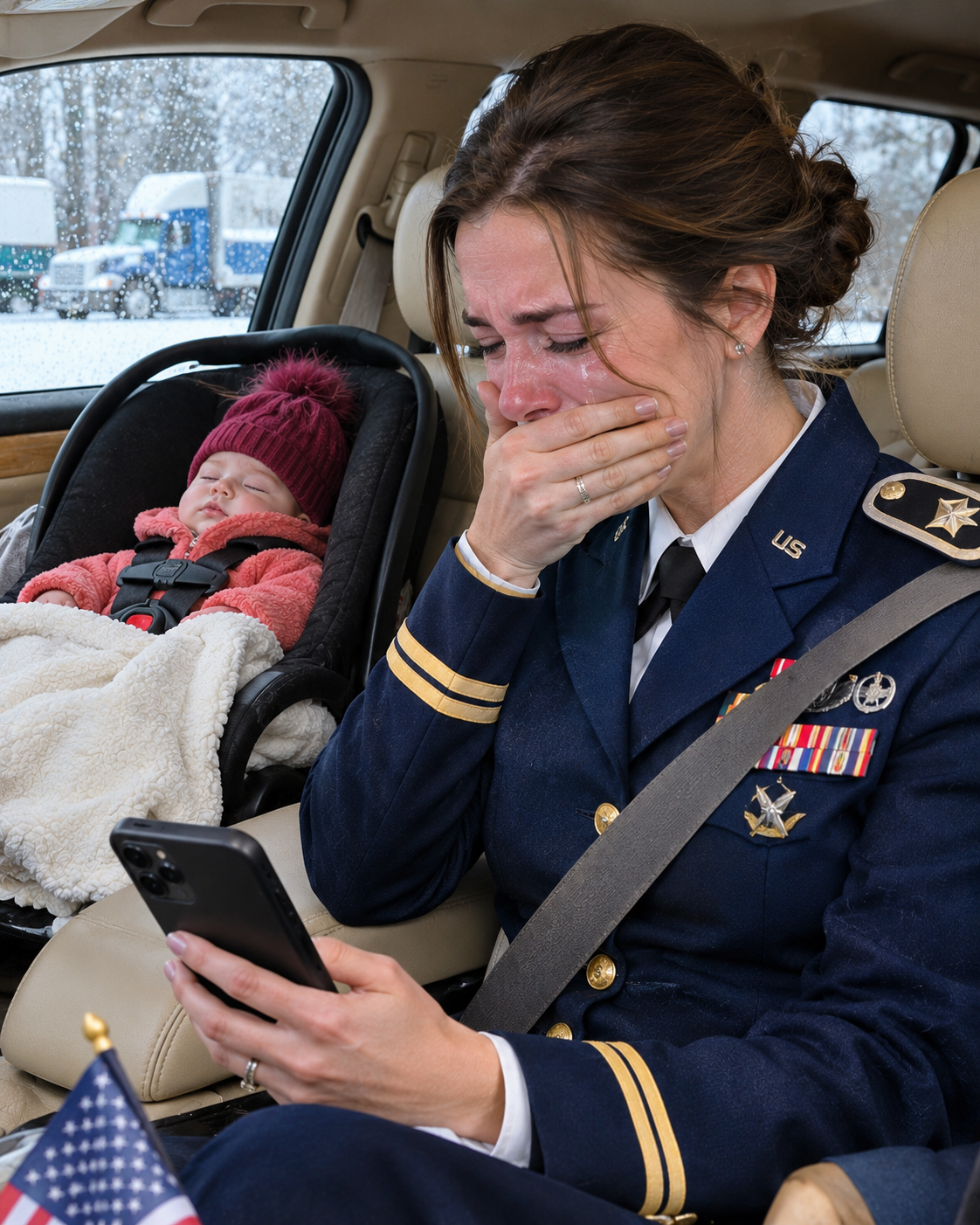
Later, after June had fallen asleep, I stepped outside onto the deck alone. Snow covered the railing, and the lake stretched into the darkness below. Through the windows, I could see everyone laughing together beside the fireplace. These people had no obligation to love my child or do anything for us, yet in just three days, they had shown us more kindness than my relatives had in three months.
On our final morning, the clouds cleared, and the sunrise painted the lake a pale golden color. I photographed the lodge, the water, and the mountains, then shared the picture with two words: Grateful.
I didn’t tag Mallory or mention who had paid for the flights. I wasn’t trying to make anyone jealous. I genuinely felt grateful, and nothing more.
Two days after returning to Denver, my phone vibrated while I was folding laundry.
Mom had sent a message: Why didn’t you tell us you were spending Thanksgiving in Montana? We thought you were home alone.
I stared at the screen. Nobody had called to ask whether June and I were okay. Nobody had invited us anywhere. Yet suddenly, our holiday mattered because they had discovered we had enjoyed it.
Holly’s message arrived next: Must be nice having money for fancy vacations while everyone else has bills.
Then Seth sent: Guess you’re too important for your own family now.
Dad followed with a message explaining that Mom was hurt because I hadn’t told them about our plans. I put the phone down, hoping the messages would end. A few minutes later, Mom sent another one. She had searched for the lodge, noticed its expensive appearance, and explained that my parents were struggling with property taxes and could use some financial assistance.
Not We missed you. Not How was June’s first Thanksgiving? Not I’m sorry about my birthday.
Money.
Across the room, June happily kicked beneath her toy elephant. I watched her tiny fingers opening and closing before looking at Mom’s message again. For years, I had mistaken being useful for being loved. Whenever my family needed something, I felt important. But when I needed acceptance instead of having something to offer, Mom had told me to stay away.
This time, I didn’t compose a polite excuse. I explained exactly what had happened: she had told me to turn around after I had already driven hours toward her birthday; nobody had called afterward; nobody had invited us for Thanksgiving; and she had contacted me only after seeing our holiday photograph. I reminded her that friends had covered the trip and that I had financially supported the family for years.
Then I made it clear that I wouldn’t contribute money toward their property taxes and that June and I would maintain our distance until they could treat her with genuine affection and respect.
I hit send before I could reconsider.
Mom called. I declined. She called again, followed by Holly, Dad, and Mom once more. I silenced my phone. Almost immediately, the messages started arriving.
Mom wrote, I cannot believe you would speak to your mother this way.
Holly said I was overreacting because Mom had been stressed before her birthday.
Seth insisted nobody disliked June and accused me of twisting everything.
Dad told me to call Mom because things had gone too far.
I read the messages once and turned my phone facedown.
June squealed from her play mat. I sat down beside her.
“You’re not a problem,” I whispered.
She smiled, and something inside me finally settled.
WHAT THE FAMILY HEARD
That evening, the family group chat became crowded with messages. My aunt Ruth privately contacted me, explaining that Mom had told relatives I was keeping June away because she had requested one quiet evening.
I sent Ruth a screenshot of the original message.
After a lengthy pause, she responded: She actually wrote that?
“Yes,” I replied.
Ruth apologized and admitted Mom had left out that detail when explaining what happened. I suddenly understood how the story would be presented if I remained silent: Mom would become the exhausted grandmother who wanted one peaceful evening, while I would be portrayed as an overly sensitive daughter punishing everyone.
I didn’t publish anything publicly, but whenever someone repeated an inaccurate version, I shared the screenshot. No insults or arguments. Just the exact words Mom had sent.
Several days later, Seth called me from a different number. I answered because I thought it might be a work call.
“You really aren’t going to help Mom and Dad with the taxes?”
“That’s why you called?”
He explained that they were short approximately sixty-four hundred dollars.
I gave a brief laugh. That amount was slightly more than what I had contributed toward their roof.
“I’m not paying it.”
“You have money.”
“That isn’t the point.”
“Then what is?”
“Nobody has apologized.”
Seth argued that Mom had been overwhelmed and had simply chosen her words poorly. I asked why she had needed a break from a three-month-old baby she hardly ever saw. He fell silent before explaining that Mom had thought the party might feel awkward because Owen had left and guests could ask questions.
“So she excluded me and her granddaughter because she was embarrassed I’m a single mother?”
“I didn’t say embarrassed.”
“You didn’t need to.”
I asked whether he had defended us when Mom sent that message. He admitted he had told her it was her birthday. That answer told me everything.
“Then you agreed with her,” I said before ending the call.
A few days later, Holly arrived at my apartment without warning, carrying two coffees. I allowed her inside, although June was sleeping and I had no intention of pretending everything was fine.
She began with casual conversation about the weather and holiday shopping until I asked why she had come.
“Mom is really upset that you aren’t talking to her.”
“Is she upset about what she did?”
Holly lowered her eyes toward her cup. She explained that Mom sometimes said things badly. I told her I wasn’t willing to keep accepting that as an excuse.
I reminded her how frequently I had helped whenever someone in the family needed something, and how quickly they had returned asking for more money after telling June and me to stay away.
“You offered to help,” Holly said.
“I did. I’m not asking for it back. I’m explaining why asking for another six thousand dollars after excluding my daughter felt so wrong.”
PART 2
Holly visibly flinched. After a moment, she confessed that she knew Mom wanted a quieter birthday, although she hadn’t realized I was already on my way.
“Would it have mattered if you had known?” I asked.
She remained silent.
Then she spoke more softly, admitting that she had told Mom the message was mean. But she hadn’t called me, sent me a message, or asked Mom to apologize.
“It didn’t cost you anything to disagree,” I said.
Holly began crying. She explained that our family had become accustomed to me being the person who never needed anything. Because I always managed to handle things, they had gradually started behaving as though my feelings were unimportant.
It didn’t excuse their behavior, but it was the first time anyone in my family had acknowledged the truth.
She apologized for her comment about Montana and admitted she had been jealous. She had assumed I was spending a fortune while our parents were asking for financial help. She also revealed that Mom had described the birthday celebration as an adult-only party.
“There were children there,” I said.
Holly’s expression changed. She understood what that meant. Yet another version of the story had fallen apart.
Before leaving, she paused beside June’s crib. June was awake, watching the mobile spinning above her.
“Hi, sweet girl,” Holly whispered.
It was the first time in months that I had heard genuine tenderness in my sister’s voice. I appreciated it, but I also knew that one apology couldn’t undo everything. Forgiveness and access were not interchangeable.
LEARNING TO KNOCK
Christmas arrived without an apology from my parents. Dad sent messages explaining that Mom missed me and that a family shouldn’t be divided over a single text. Mom mailed me a card containing a photograph from her birthday celebration. On the back, she had written, Hope we can put all this behind us.
I threw the card away.
Three days before Christmas, Dad called. He explained that they had managed to pay the property taxes, with Seth contributing part of the money and my parents using their savings to cover the remainder. Then he mentioned that Mom had expected me to help.
“I know,” I said.
He asked what I expected them to do. I told him I wanted them to stop pretending money was the actual issue. For years, I had been useful to everyone, but the moment I needed acceptance instead, they began treating June and me differently.
I asked why nobody had invited us for Thanksgiving, why nobody had called, and why Mom had only reached out after seeing the photograph from the lodge.
Dad remained silent for quite some time.
“We assumed you wanted space,” he eventually said.
“You assumed what was easiest.”
He explained that Mom felt ashamed—not of me, he insisted, but of her own behavior. She simply didn’t know how to admit it.
“That isn’t my responsibility,” I said.
“I know.”
We ended the conversation without resolving everything, but it felt more genuine than pretending nothing had happened.
On Christmas Eve, Nora came over with Mallory, Peter, and Henry, who were visiting Mallory’s parents nearby. Mallory brought enough food for twelve people, Nora brought wine, and Henry had brought June a stuffed moose from Montana.
We gathered around my small dining table while Henry made silly faces until June started laughing.
My phone buzzed. Mom had written, Merry Christmas, Jenna. I’m sorry.
She followed with another message, admitting that what she had written before her birthday was cruel. She had been embarrassed about Owen leaving and worried that people would ask questions. Rather than standing up for me, she had made me feel as though June and I were the embarrassing part of her life.
She confessed that when she saw the photograph of the lodge, her first thought had been about money rather than whether I had finally enjoyed a good holiday. She apologized for referring to June as “your baby” as though her own granddaughter were a burden. She also acknowledged that I owed her neither money nor forgiveness.
I read the messages twice. It wasn’t a flawless apology, and it couldn’t erase what had happened, but it was the first time Mom had accepted responsibility without blaming her stress or my reaction.
Nora read the messages after I handed her my phone. “That’s different,” she said.
“Yes.”
I thanked Mom for apologizing, but explained that I wasn’t prepared to return to our old relationship. If she wanted to have a place in June’s life, it needed to be because she genuinely loved her, not because she was afraid of losing access to us.
There would be no more financial demands, guilt, jokes about my being a single mother, or treating June as less welcome than anyone else.
We could begin slowly after the holidays.
Mom replied: That works for me.
In January, she traveled to Denver alone, just as I had requested. She brought no presents or flowers, only herself. When I opened the door, she looked unusually nervous.
“Hi,” she said.
“Hi.”
She noticed June sitting in her infant seat, chewing the corner of a fabric book.
“Can I say hello?” she asked, then waited for my response.
I nodded. Mom knelt beside the seat.
“Hi, June.”
June looked at her for a moment before smiling. Mom covered her mouth, and I turned away—not because everything had been repaired, but because it hadn’t, and we both understood that.
Mom spent two hours sitting on the floor with her granddaughter. She didn’t mention money or ask when I would visit. Before leaving, she admitted that she should have supported me after Owen walked away.
“Yes,” I said.
She nodded, accepting my response. “I thought being disappointed in the situation was the same as being concerned about you. It wasn’t.”
“No,” I said.
She glanced toward June. “I lost time with her because I cared too much about how your life looked and not enough about what you were carrying.”
I didn’t make the truth easier for her to hear. She didn’t ask me to.
Over the next few months, Holly started calling without needing anything. Seth took longer to come around. One afternoon, he transferred three thousand dollars to me—the amount I had given him when his business was struggling.
The transfer note read, Should have repaid this years ago.
I responded, Thank you.
Dad was the last to apologize. His words were somewhat awkward, but straightforward. He admitted he should have stopped Mom from sending that message, contacted me afterward, and never assumed I would continue rescuing them financially.
Then he asked how June was doing.
“She’s great,” I told him. By then, she was nearly six months old, rolling over, laughing, and reaching for everything within her grasp.
“I miss her,” he said.
“You can visit.”
He sounded surprised. “Really?”
“Yes. Visit.”
Not take control or act as though the past never happened. Visit. It was enough to start rebuilding.
THE TABLE WE BUILT
I stopped functioning as the family’s bank. When Holly mentioned that she needed a new washing machine, I expressed sympathy without offering to pay. When Seth complained about rent, I listened but didn’t transfer money. When Dad mentioned that his car needed repairs, I recommended a mechanic.
My family managed.
Once money no longer filled every silence, I could finally see what kind of relationships existed underneath it all. With Holly, there was something genuine, although it needed time. With Dad, trust returned gradually. With Mom, it developed cautiously. With Seth, I stopped trying to predict what would happen.
June celebrated her first birthday the following September. I organized a party at a park near Denver, complete with balloons, cupcakes, sandwiches, and a pink cake that she enthusiastically destroyed with both hands.
Nora attended, along with Mallory, Peter, and Henry. Jules and Erin joined us, as did Mom and Dad, Holly and her husband, and Seth.
I stood beneath a tree, watching Mom wipe frosting from June’s cheek while Henry chased bubbles and Nora laughed alongside Holly.
“You okay?” Mallory asked.
“Yeah.”
“Looks like things have improved.”
“They have.”
“Back to normal?”
I considered her question before shaking my head.
“Better than normal.”
Normal had meant I gave too much, everyone expected me to absorb the hurt, and I continued sending money as though it could purchase closeness. I didn’t want that arrangement back. I wanted something healthier.
Later, Mom handed me an envelope. My body tensed before I could stop myself.
“What’s this?”
“Open it later. It isn’t a request.”
That evening, I discovered a check for five thousand dollars inside—the money my parents had borrowed for the roof. A note accompanied it:
You helped because you loved us. We got too comfortable receiving. Keep building a life for you and June. Love, Mom.
I remained seated at the kitchen table for a long time. The money itself mattered less than what it represented: an acknowledgment that I had given, that they had accepted my help, and that they should have made things right.
I had learned that boundaries weren’t created to punish people. They showed others where the door stood. Some people became angry because they could no longer walk through whenever they pleased. Some walked away entirely. But sometimes, someone stopped outside, considered what they had done, and learned to knock.
Mom had learned to knock—not flawlessly, but sincerely.
The following Thanksgiving, I hosted dinner in the common room of a friend’s building because my apartment couldn’t accommodate everyone. Nora came, along with Mallory, Peter, Henry, Jules, and Erin. My parents attended too, as did Holly and her husband. Seth arrived late, carrying two pies and offering no complaints.
There were more guests than available chairs. June, now walking with more confidence than balance, wandered beneath the table, stealing dinner rolls. Mom picked her up and laughed, and nobody sighed or complained about needing a break.
When it was Mom’s turn to share what she appreciated, she looked at me before turning toward June.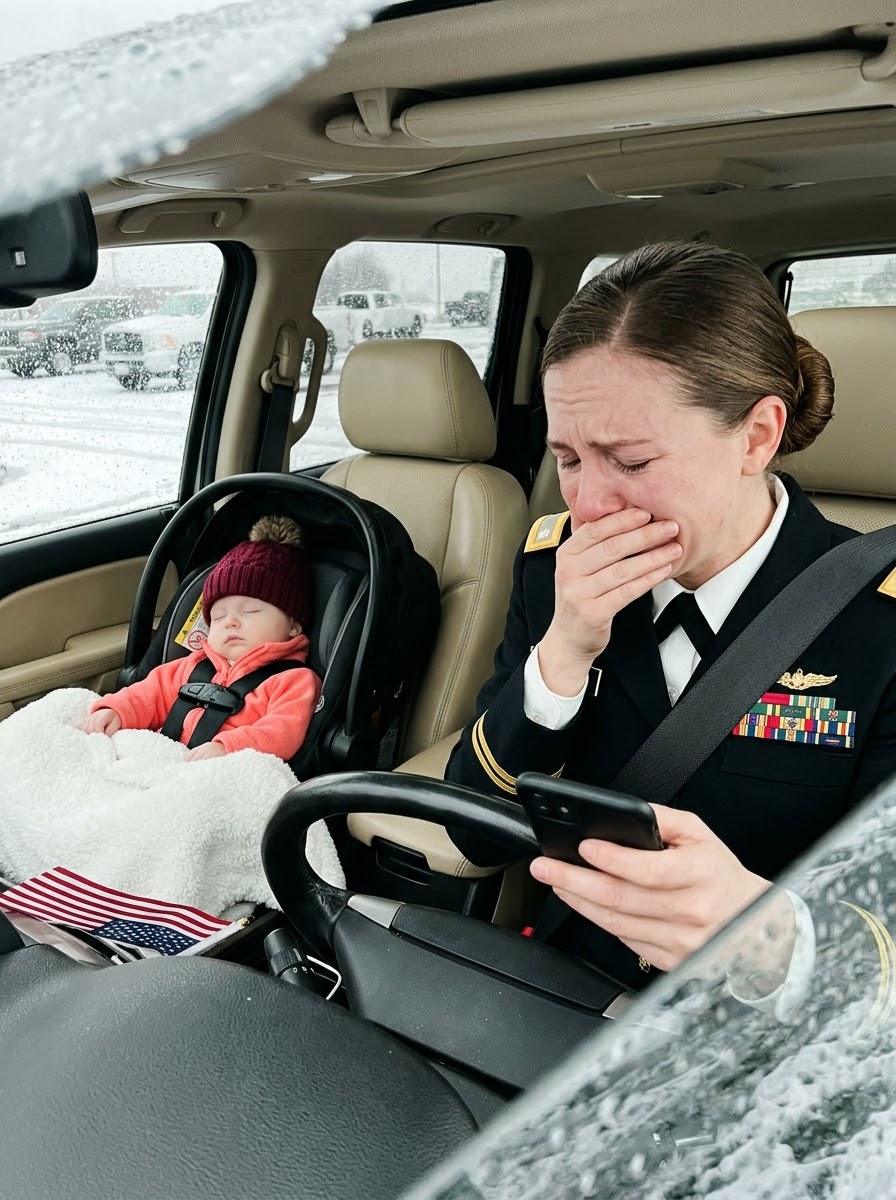
“I’m thankful for second chances,” she said. “And for daughters brave enough to teach their mothers when they’re wrong.”
When my turn arrived, I looked around the table: family by blood and family by choice, people who had disappointed me, people who had shown up, and people who had worked to earn their way back.
June sat in her high chair, mashed potatoes scattered through her hair.
“I’m thankful June will grow up knowing she never has to earn a place at the table.”
Mallory lifted her glass.
“To always having a place at the table.”
Everyone joined in, including Mom.
That was when I understood that standing up for yourself doesn’t necessarily destroy a family. Sometimes, it simply brings an end to the version that depended on your silence. What remains might be smaller or different, and rebuilding it may take time, but when people are willing to change, the result can become stronger than what existed before.
The moment that changed everything wasn’t the lodge, the snow, or the expensive rooms. It happened at a gas station outside Pueblo, when I read Mom’s message and decided I would never beg someone to love my daughter.
For years, I had kept driving toward people who made me feel most valuable when I was useful to them. That day, I finally turned around. I went home to June, to our little apartment, and to the life I had spent too long treating as something I needed to apologize for.
I still remember that first Thanksgiving in Montana. I remember Mallory opening the door and asking permission before holding June. I remember Henry making funny faces at her, Nora holding my hand across the table, and everyone lifting their glasses to the family we choose.
More than anything, I remember one word: welcome.
My relatives had made us feel like an inconvenience. Other people had made us feel welcome, and once I understood the difference, there was no going back.
Several months later, Mom and I sat together on my balcony after June had fallen asleep. The city lights shone below us while Mom held a cup of tea between both hands.
“Do you ever think about that birthday?” she asked.
“Yes.”
She lowered her gaze toward her cup. “I keep thinking about you already being halfway there.”
“I was.”
“Nearly four hours?”
“Almost.”
She closed her eyes briefly. “I’m sorry you had to drive home feeling like nobody wanted you.”
Her words affected me differently because, for once, she had acknowledged what actually happened instead of explaining what she had meant to do.
I glanced toward June’s bedroom.
“I didn’t feel like nobody wanted us,” I said. “Nora wanted us. Mallory wanted us. Eventually, I realized I wanted us too.”
Mom’s eyes filled with tears. She reached across the little table but didn’t take my hand. Instead, she rested hers palm-up and waited.
I placed my hand in hers—not because the past had vanished, but because she had spent months demonstrating that she understood love couldn’t be demanded. It had to be shown through actions.
The people who had once excluded June could apologize, change their behavior, and earn another chair. But I would never again spend four hours driving to prove my love to someone who needed a break from my child.
I would never again finance a relationship that couldn’t provide basic respect, and I would never teach my daughter that rejection was the price of belonging.
That day on the highway, I believed I was driving home defeated.
I wasn’t.
I was driving toward the first healthy decision I had made for myself in years.
