

PART 1 — The Call Before the Funeral
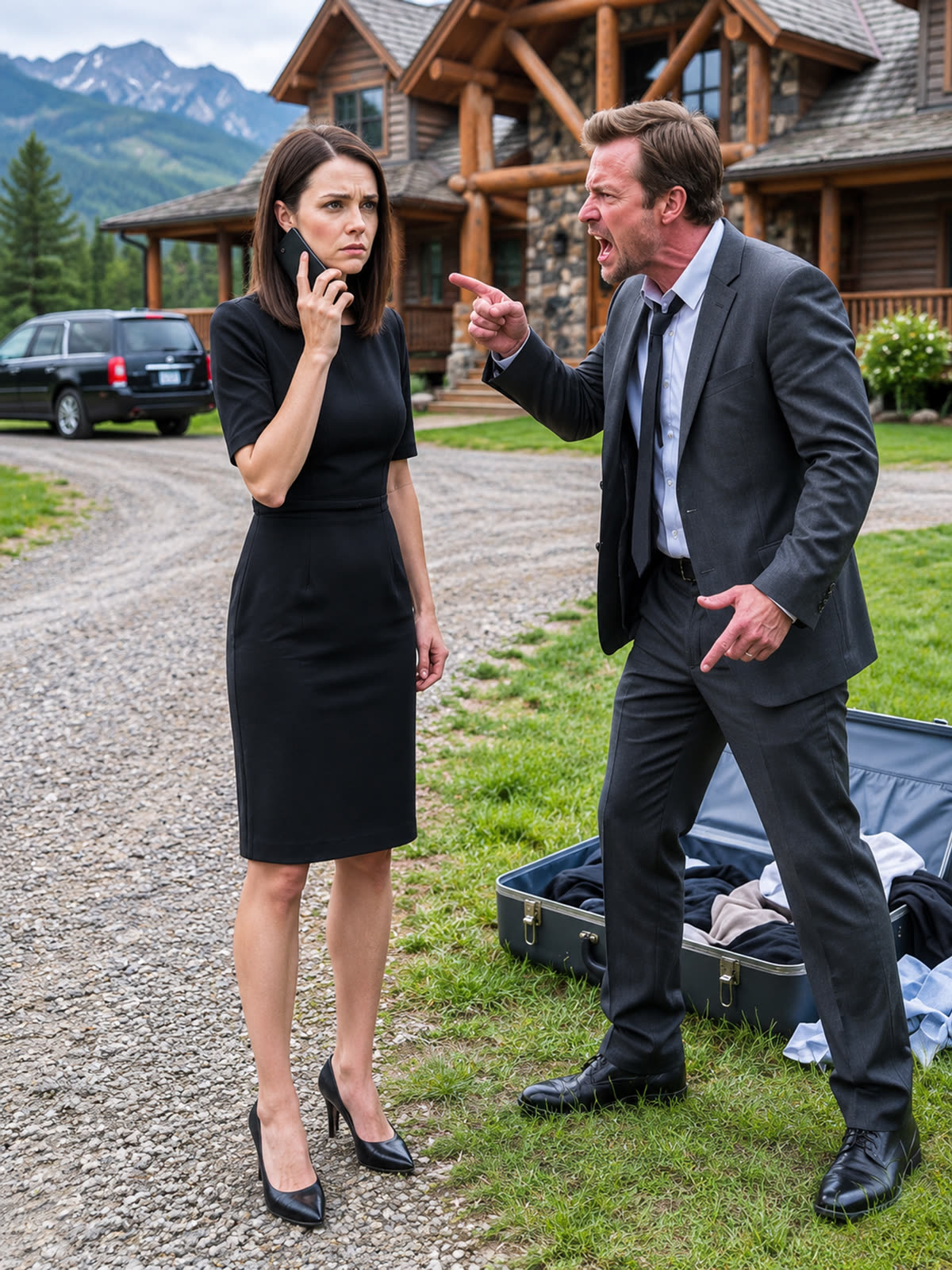
The morning of my father’s funeral, his lawyer called with news I could scarcely absorb: Dad had left me everything—an estate valued at $31 million, including our Montana ranch. I said nothing to my family. After the burial, my brother hurled my suitcase onto the lawn. “DAD’S GONE. SO IS YOUR ROOM.” My aunt laughed. My only answer was, “OKAY.” Then, standing in the driveway, I made a phone call.
On the day we laid my father to rest, I learned that I was the sole beneficiary of the life he had spent decades building. I kept that knowledge to myself. My brother knew nothing. Neither did my aunt, nor the relatives who had spent years making me feel like an unwelcome obligation.
Once the burial was over, my older brother, Michael, carried my luggage outside and threw it onto the grass. “Dad’s gone. So is your room,” he snapped. “You have ten minutes to get off my property.”
Aunt Patricia stood behind him, laughing as my possessions spilled across the wet lawn. I was still wearing my black funeral dress, and the phone trembled in my hand. Looking directly at Michael, I said, “Okay.” His pleased expression told me he believed he had finally forced me into the lesser place he had always assigned me.
What he did not know was that the ranch he was claiming already belonged to the estate Dad had specifically left to me.
My name is Claire Bennett, and I was thirty-two. Before that day, I had believed nothing could hurt more than losing my father. William Bennett had built a successful farm-equipment company outside Bozeman, Montana, while tending the expansive ranch that had belonged to our family for generations.
Michael was forty and had always seemed to be the favored child. Dad financed business ventures that went nowhere, while Michael drove expensive trucks and discussed the ranch as though taking ownership were merely a formality.
My life followed another path. I worked as an accountant in Denver, paid my own way, and returned to see Dad whenever I could. Michael called me a city woman who understood nothing about ranch work. Patricia supported that judgment, reminding me that I had moved away instead of staying to help.
Three weeks before Dad died, he called me privately. His voice sounded tired, but his words were unmistakable. “Claire, when the time comes, don’t let anyone pressure you into giving up what I leave you.”
I thought he was referring to keepsakes, perhaps a few belongings with personal meaning. I never imagined he was preparing me for a struggle over his entire estate. Then, at 8:15 on the morning of his funeral, Richard Hayes called. “Claire, your father’s will has been reviewed, and the estate documents are in order. You are the sole beneficiary of his $31 million estate, including the Montana ranch.”
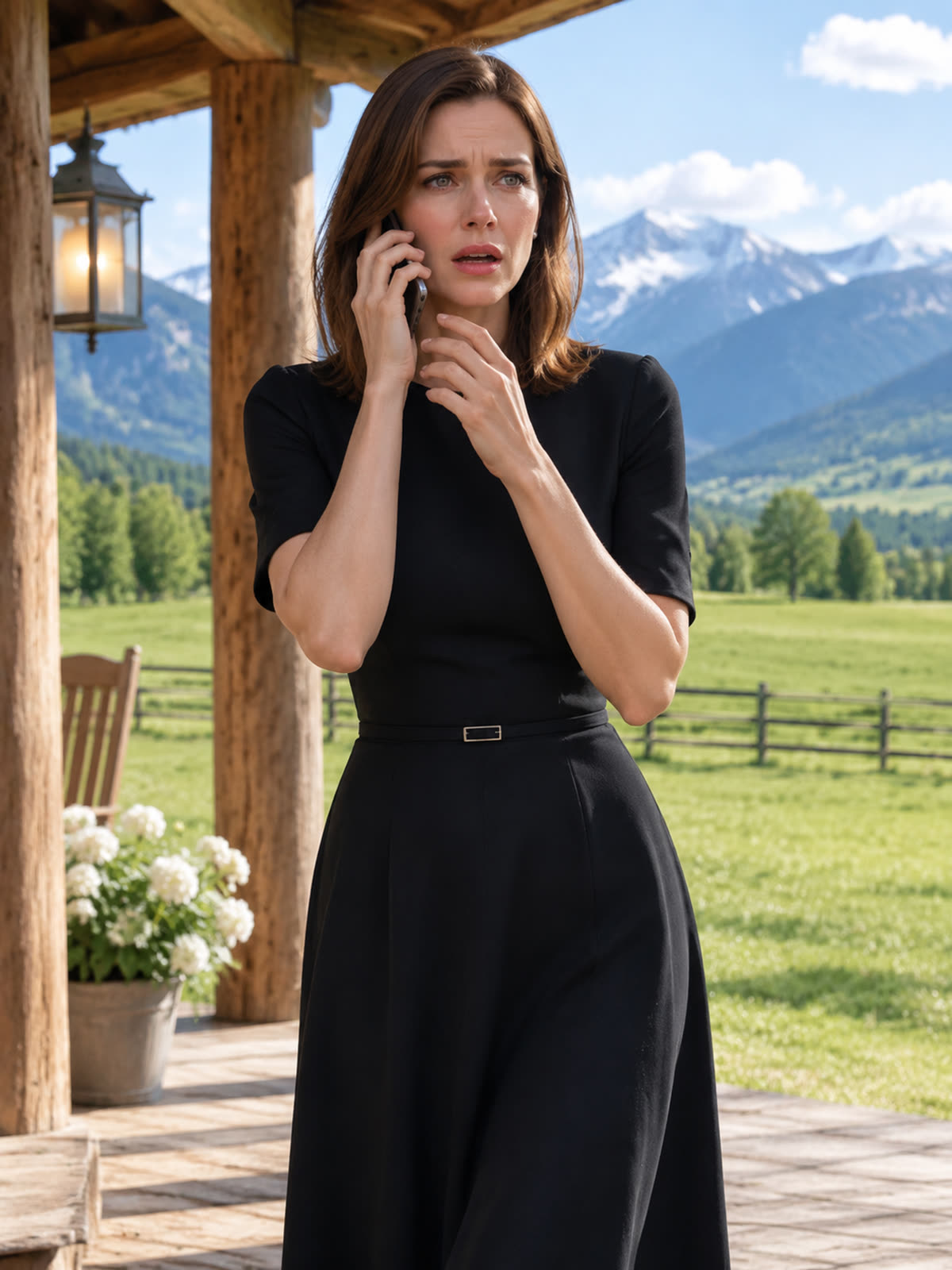
My grip nearly failed, and I almost dropped the phone. Richard went on to explain that the usual estate administration still had to take place. Nothing could simply be distributed that morning. Nevertheless, Dad’s signed documents and supporting records left no uncertainty about what he wanted.
I agreed not to discuss the inheritance until Richard advised me otherwise. Then I went to my father’s funeral, carrying both my grief and information I could barely comprehend.
Afterward, Michael ordered me out, scattered my belongings, and announced that the house was his. Patricia found the whole scene amusing. I took my phone and walked toward the driveway. Behind me, Michael called, “Who are you going to cry to?”
I stopped beside my car and turned back with a small smile. “No one,” I said. “I’m making a business call.” Then I called Richard Hayes.
“I’m ready,” I told him. “Please begin the process we discussed.” For the first time that afternoon, Michael’s confident grin faltered. He could not have known what those few words would begin.
Richard answered while I sat in my car. Through the windshield, I could see Michael standing on the porch with his arms crossed. Patricia leaned toward him, whispered something, and they laughed again. “Claire,” Richard said, “before we proceed, I want to make sure you understand the situation. Your father’s will names you as the sole beneficiary. However, the estate must still be administered properly. We need to verify outstanding obligations, confirm the property records, and follow the applicable legal procedures.”
“I understand,” I replied. “I’m not asking you to do anything outside the law. I just want to make sure nobody sells, transfers, or interferes with the estate before everything is settled.”
“That is exactly what we need to address. I’ll review the available options and take any appropriate steps to protect the estate.”
When our conversation ended, I looked toward the house again. Michael kicked my bag farther across the grass. He was still enjoying himself, still convinced that the only person who might have challenged him was gone. I opened the car door and walked back toward him.
PART 2 — What Dad Had Put in Writing
Michael had always approached family disagreements as competitions he expected to win. Now that Dad was gone, he appeared certain there was no one left who could stand in his way. As I came toward the house, he looked at me impatiently. “Still here?” Michael asked. “I thought you were leaving.”
“I am. I just want to make one thing clear. You should not make any decisions about Dad’s property until the estate has been properly settled.” He burst out laughing. “Dad promised me this ranch. Everyone knows it.”
“Did he put that promise in his will?” His smile tightened. “You wouldn’t understand how these things work.” I held his gaze. “Then perhaps you should talk to a lawyer before making any assumptions.”
Patricia intervened, her expression turning severe. “Your father would be ashamed of you. He dies, and all you can think about is money.” I looked straight at her. “I haven’t asked for a single dollar. I’m simply telling Michael not to act as though he owns everything.”
“Because he does!” she snapped. Michael grabbed the suitcase handle and shoved the bag toward me. “Get off my property, Claire. I’m done discussing this.”
I picked up my luggage without arguing. I refused to make a spectacle of my father’s funeral, but I was equally unwilling to let Michael bully me into surrendering my rights. I went to a nearby hotel. That evening, I read through old messages from Dad, looking for the comfort I could no longer ask him to provide.
One message held my attention. He had sent it six months earlier, after Michael requested another rescue from an unsuccessful investment. “Some people think inheritance is something they deserve. Remember that what matters is what you build, not what you expect someone else to hand you.” At the time, I had read it as frustration with my brother. Now I wondered whether Dad had already foreseen the conflict unfolding around me.
Richard contacted me the next morning. He had gathered the will, financial statements, and property records, and was speaking with estate professionals about the appropriate legal steps. He advised me not to confront Michael or make public claims while the documentation was still being assembled. “There is one more thing you should know,” he added. “Your father anticipated that there might be disagreements over the estate. He left detailed records explaining his decisions.”
“What kind of records?” I asked. “Letters, financial documents, and notes concerning the property and his intentions. We’re organizing everything now.” My stomach tightened. “Did he mention Michael?” Richard answered, “He did. I would rather discuss the contents with you in person.” We arranged to meet that afternoon at his Bozeman office. Before I checked out, Michael texted me: “Dad’s business accounts are being reviewed. If you think you can come back and take control of everything, forget it. You abandoned this family years ago.” I read it again, saved it, and forwarded it to Richard without answering.
At his office, Richard greeted me with a thick file and a solemn expression. Dad had considered the inheritance carefully, he explained. Michael’s expectations could not override properly signed legal documents. Then he opened the file and showed me a letter in my father’s handwriting. Its first words brought tears to my eyes. “If you are reading this, Claire, then I was right to worry about what would happen after I was gone.”
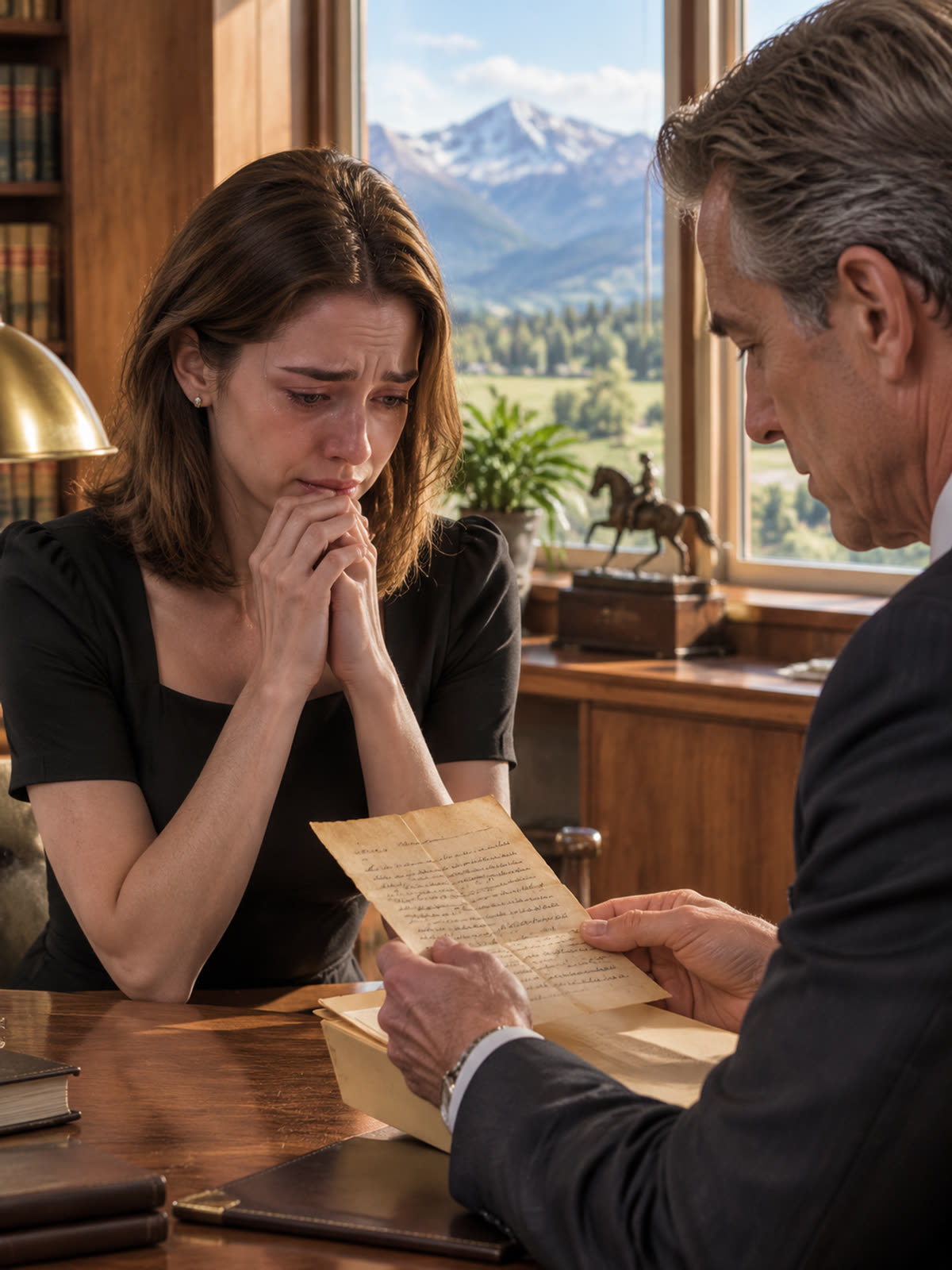
My fingers shook as I accepted the pages. I knew that handwriting from birthday cards and the little notes Dad used to leave beside my breakfast at the ranch. Until that moment, I had understood only what he had left me. Now I was about to understand why.
“My dearest Claire,” it began, “if Richard has given you this letter, then I am no longer there to explain my decisions myself. I hope you understand that leaving you the estate was never about punishing your brother. It was about trusting the person I believed would protect what this family built.”
I had to stop reading for a moment. Dad described the years he had spent watching Michael handle money irresponsibly. Again and again, he had stepped in, hoping that each failure might finally lead to accountability. Instead, every rescue had made Michael more certain that another rescue would follow.
Dad did not excuse himself. He recognized that the imbalance between his children had not appeared on its own. By protecting Michael from the consequences of his choices, he had helped create the resentment that now stood between us.
“I should have been fairer to both of you,” the letter continued. “I thought I was helping Michael, but sometimes I was only postponing the moment when he would have to stand on his own.”
Tears fell onto the paper. For years, I had seen Dad’s financial support for Michael as evidence that my brother mattered more. Here, in his own handwriting, Dad acknowledged the harm his decisions had caused. But the passage that followed would change how I understood the inheritance itself.
PART 3 — The Responsibility He Left Behind
“The ranch is more than land. It is the home your grandparents built, the place where our family worked, and the responsibility I have carried all my life. I leave it to you because you understand that owning something means caring for it, not simply claiming it.” Those words changed the meaning of everything Richard had told me that morning. Dad had not merely chosen who would receive the ranch. He had chosen whom he trusted to care for it.
He had instructed Richard to preserve the records of his property, assets, and debts. He wanted the process handled by professionals, not dictated by relatives who assumed that threats or entitlement could substitute for legal authority. Once I finished the letter, Richard gave me time to steady myself.
“Your father was very clear about his intentions,” he said. “But we still need to follow the legal process. The will does not give us permission to ignore creditors, taxes, or any legitimate claims. We must document everything properly.” I nodded. “That’s what Dad would have wanted.”
Over the following weeks, Richard worked with other estate specialists to examine the records. The $31 million figure represented an estimated combined value of Dad’s business interests, investments, property, and ranch. The amount ultimately available for distribution would depend on debts and the expenses of administering the estate. It was not a sum that could simply be handed over without accounting for those obligations.
The ranch underwent a separate, careful appraisal. The professionals also reviewed its title and ownership records to determine precisely what Dad owned and what passed under his will. Michael’s belief that the ranch should be his did not establish a claim to it. Even so, he continued demanding that I authorize him to manage the property. When I refused, he accused me of influencing Dad near the end of his life and threatened to contest the will. Richard advised me to let the legal process address those claims. Eventually, Michael hired an attorney, who reviewed the documents and explained that disappointment alone was not grounds for a challenge. In time, the threats subsided.
Then Patricia called. Her voice carried much less certainty than it had on the porch. “Claire, your brother is devastated. Surely you can find a way to share the ranch with him.” I answered, “I can decide what to do once the estate is settled. But I won’t be pressured into giving away something Dad deliberately left to me.”
“He’s still your brother.” I reminded her, “And I’m still his sister. That didn’t stop him from throwing my suitcase onto the lawn hours after we buried our father.” She offered no answer. I did not ask for an apology. I simply ended the call.
Months later, after the administration of the estate was finished, I went back to the Montana ranch and walked through the familiar property. The house still held its weathered timber beams and wide windows. The porch was the same one where Dad had sat with his coffee before sunrise. Without him, those familiar places carried the weight of what I had lost.
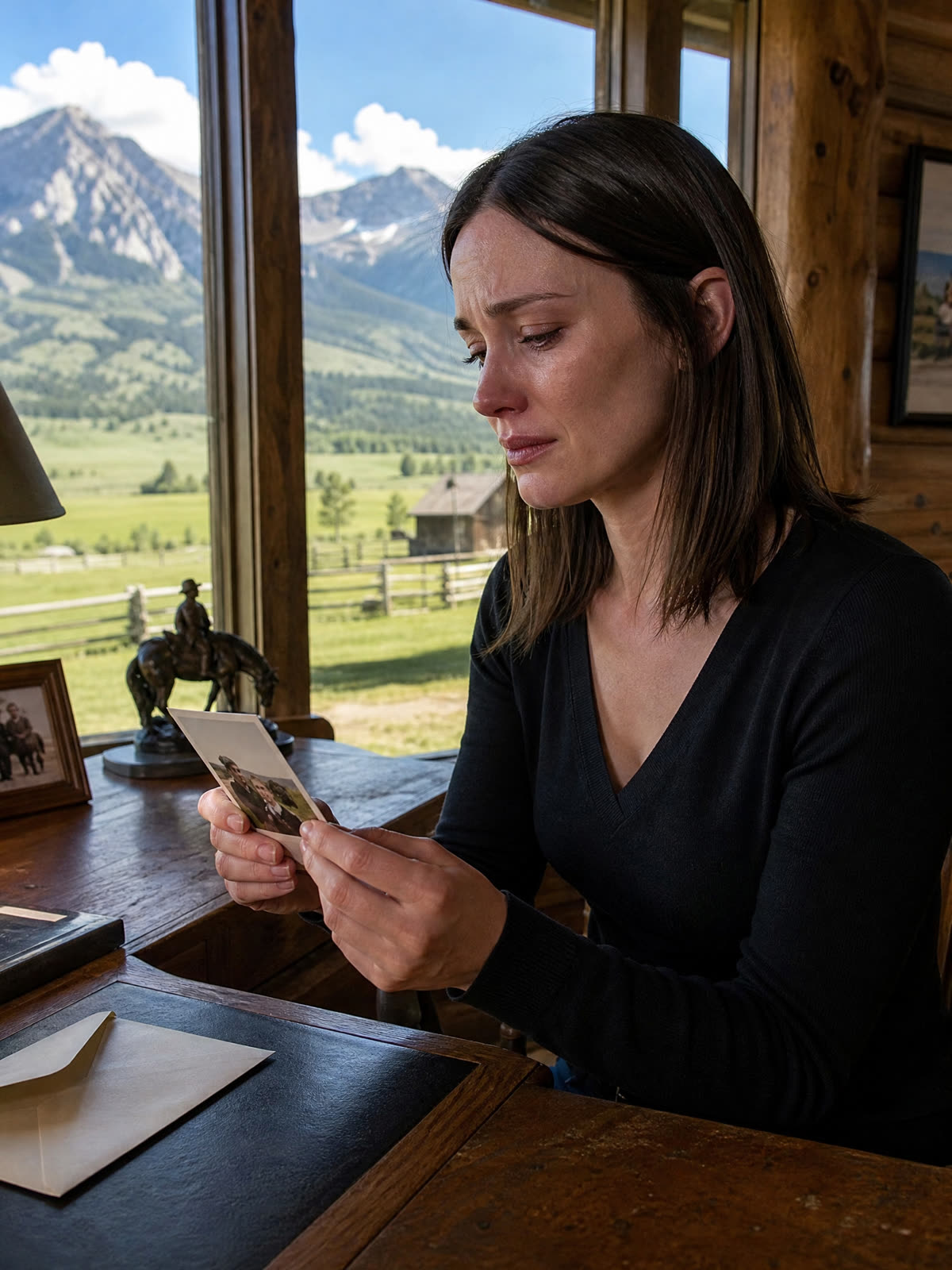
Inside his desk, I found an envelope containing a photograph of the two of us beside the barn when I was twelve. I turned it over. On the back, Dad had written, “The people who care for a place are the ones who keep its spirit alive.”
I stayed at his desk for a long time, holding the photograph. The words on its back echoed the explanation in his letter. The ranch was a home our family had built and cared for, and Dad had trusted me to continue that care.
The end of the estate dispute did not suddenly repair my relationship with Michael. What he had done still stood between us. Trust could not be restored through a few awkward conversations, and I was not prepared to pretend his behavior had never happened. Any possibility of reconnecting would have to begin with honesty and respect on both sides.
I chose to keep the ranch. Walking away would have meant setting aside the responsibility Dad had deliberately entrusted to me. Instead, I hired experienced people to oversee its daily operations and sought professional advice about protecting the land and managing the family business responsibly. I did not have to claim expertise I lacked in order to take that responsibility seriously.
Sometimes I still remembered the sight of my suitcase landing outside while Patricia laughed. They had mistaken my restraint for weakness. Because I did not shout back, they assumed there was nothing I could do and nothing I had the strength to defend.
Yet I had never needed their methods. No threat, public humiliation, or shouting match had been necessary. One phone call, my father’s written instructions, and patience with the lawful administration of his estate had accomplished what arguing on the lawn never could.
Dad had left me an estate valued at $31 million and the Montana ranch, but his final lesson mattered more than either. I did not need to establish my worth before people determined to underestimate me. Their approval was no longer the price of taking my place. The ranch was now mine to protect—and what I would build with that responsibility was still ahead of me.
Disclaimer: This story is a work of fiction inspired by real-life themes. Names, characters, places and events are fictionalized, and any resemblance to real persons is purely coincidental. Images are for illustration purposes only.
