

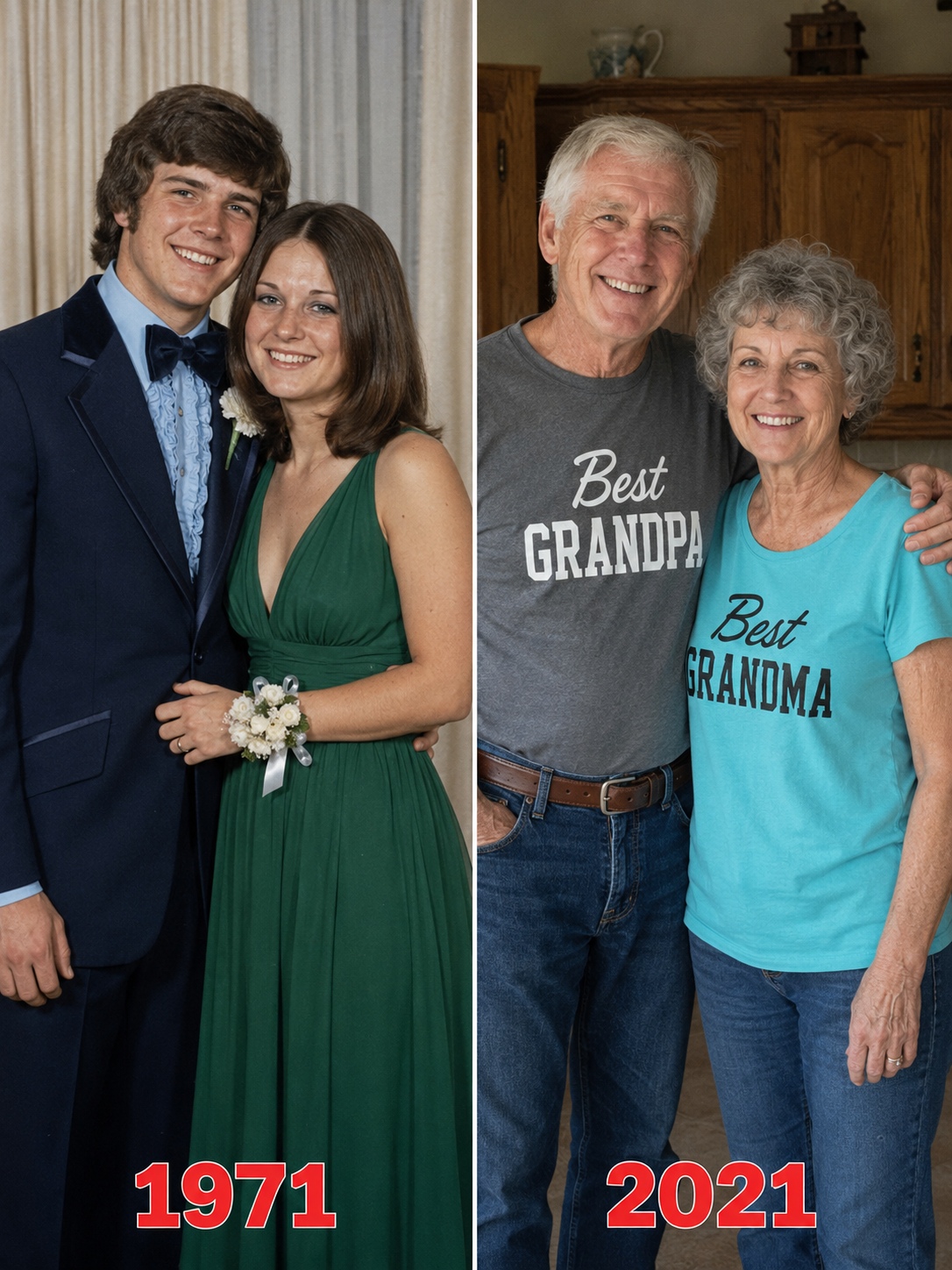
My name is Sylvie, and after fifty years of marriage, my husband Walter left our home carrying two leather suitcases and a bank card.
He set it on the kitchen table beside my worn blue teacup and said, “There’s two thousand dollars in there. For emergencies.”
I looked at him, then at the suitcases waiting by the door, then through the window where Marcy’s red car sat in the driveway. Marcy was the woman from his book club, the one he suddenly needed to see every Thursday evening.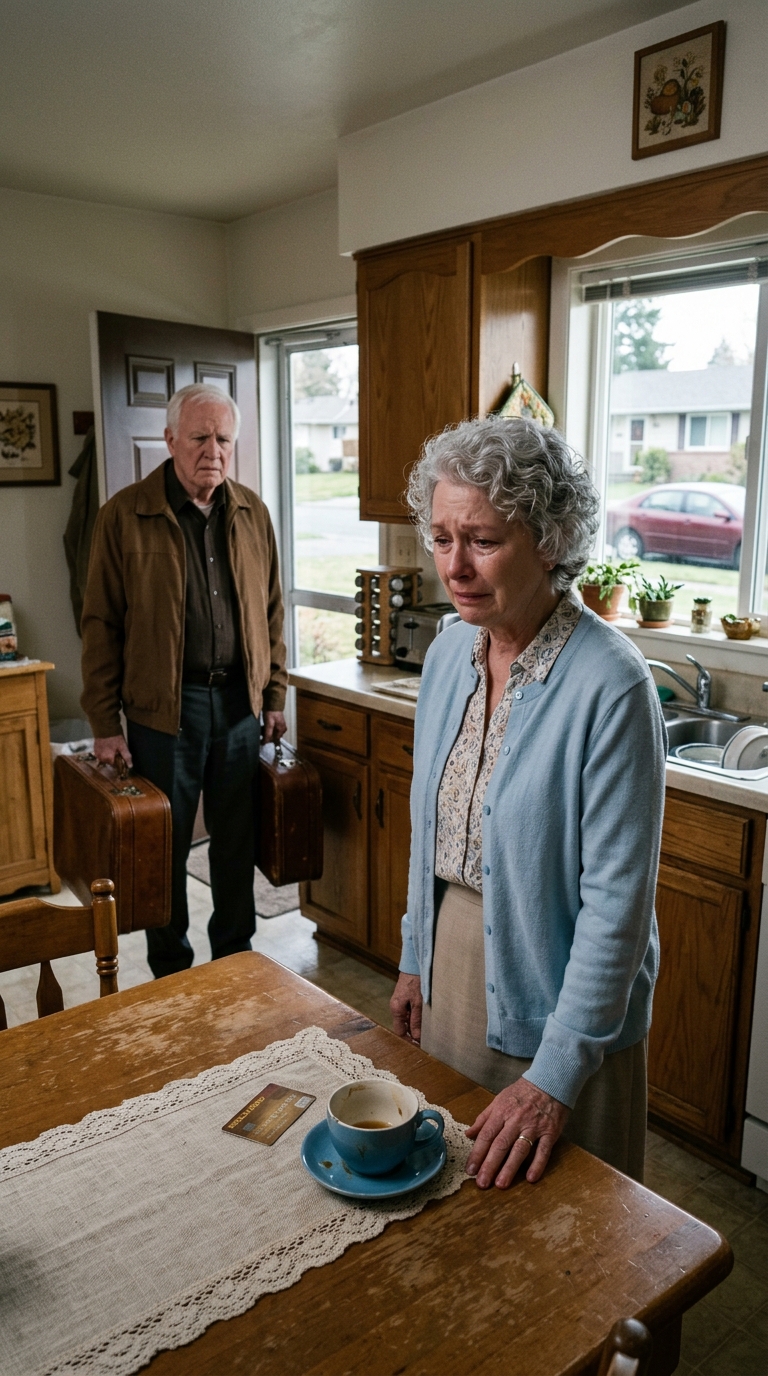
“Fifty years,” I said quietly, “and all I get is emergency money?”
Walter’s expression tightened. “Don’t make this ugly, Sylvie.”
“No,” I said. “You already did.”
He insisted he didn’t want me struggling. I nearly laughed. That concern would have meant more before he traded me in for someone else.
As he headed toward the door, he patted his pockets, searching for something.
“Your blood pressure pills are on the counter,” I said.
For a brief second, guilt crossed his face. Then he picked up the bottle and walked away.
I stood there until Marcy’s car disappeared from sight before taking the card and placing it inside an old cookie tin above the stove. I promised myself I would never use it. I would rather stretch every dollar than spend Walter’s remorse.
For five years, I kept that promise.
I learned how to live carefully. I repaired small problems around the house using online tutorials. I stretched groceries further than they should have gone. At church, when people asked if I was adjusting, I smiled.
Adjusting was such a gentle word for being abandoned.
My children called often. Adele always heard more in my voice than I intended. Jeremiah offered to repair things that weren’t broken. Chanel called every Wednesday and asked whether I had eaten.
They loved me, and I loved them. But I hid my struggles because I never wanted to become a burden.
Then Dr. Evans stopped smiling during one of my appointments.
“Tell me plainly,” I said.
He sat down with my chart. “Your heart valve has gotten worse. We need to schedule surgery soon.”
“How soon?”
“Weeks, Sylvie. Not months.”
In the parking lot, I sat behind the wheel and couldn’t move. A woman my age passed by with her husband supporting her arm. I looked away and pulled Walter’s bank card from my purse. Recently, I had started carrying it with me, even though I still hadn’t used it.
“Not yet,” I whispered.
But eventually, I had no choice.
The surgery would cost more than I could manage on my own. Insurance would cover part of it, but not enough. There would be hospital expenses, medication, and recovery costs afterward.
So one Thursday morning, I put on my best church shoes, slipped the card into my purse, and took the bus to the bank because my hands were shaking too much to drive.
The young teller greeted me with a kind smile.
“I’d like to withdraw the balance,” I told her. “It should be two thousand dollars. I need it for medical expenses.”
She typed for a moment, then requested my identification. When she checked the screen again, her smile faded.
“Is there a problem?” I asked. “Did he cancel it?”
“No, ma’am,” she said softly. “But I need my branch manager.”
A few minutes later, Mr. Cooper approached holding a sealed envelope with Walter’s handwriting across the front.
“Walter left instructions,” he said. “We were supposed to give you this the first time you used the card.”
“He told me it was emergency money.”
“It was,” Mr. Cooper said. “At first.”
Then he showed me the balance.
$48,216.73.
I sank into a chair.
“That isn’t mine.”
“It is,” he said. “Walter’s pension has been depositing money into this account every month for five years.”
I could barely find my voice. “Why?”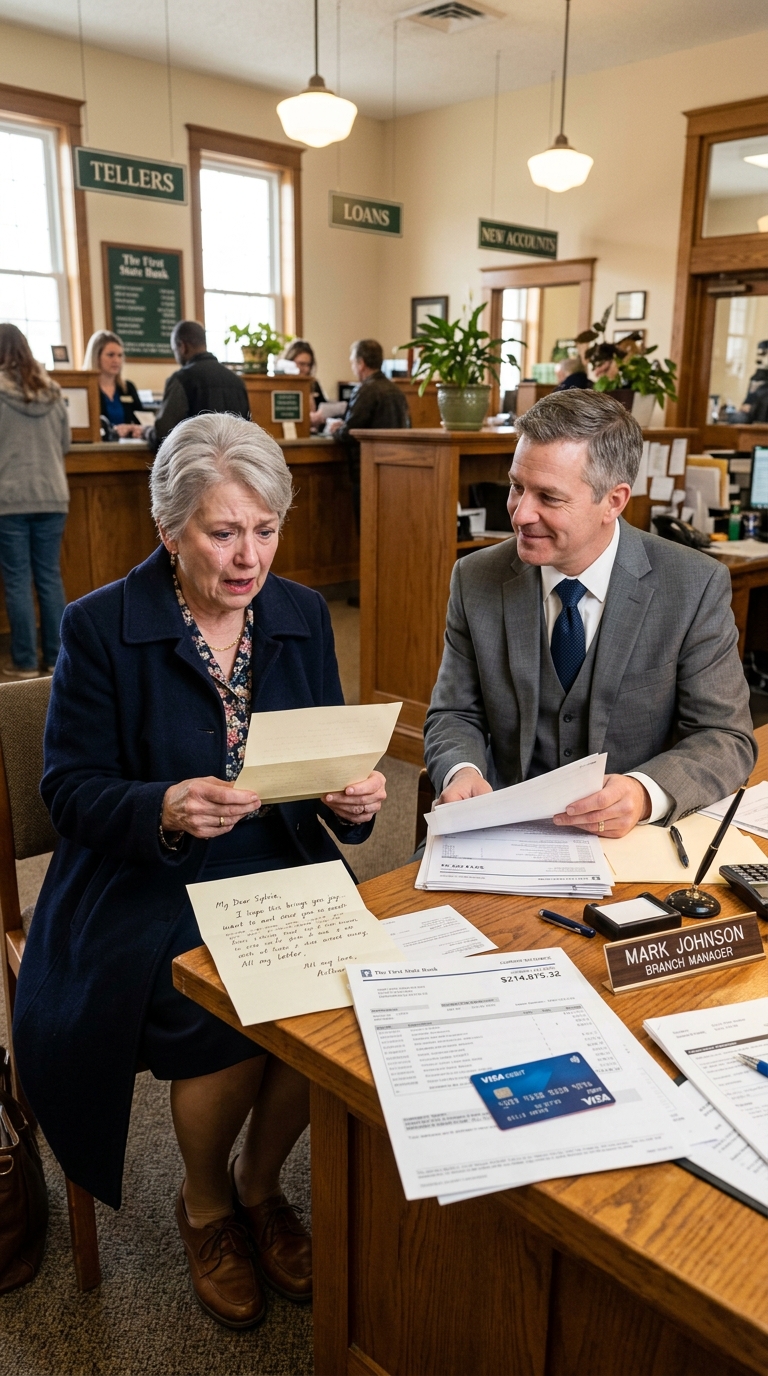
Mr. Cooper pointed to the memo line.
Every deposit carried the same message.
For Sylvie’s due.
My throat tightened.
Inside the envelope was a letter.
Walter wrote that if I was reading it, then I had finally used the card. He admitted he had told me it contained only two thousand dollars because that was the only amount he thought I might accept. He called it a coward’s number—enough to make him feel decent, but not enough to make me feel truly valued.
He wrote that I had raised our children, stretched every paycheck, hosted holidays, remembered birthdays, and cared for his mother when he couldn’t handle hospital visits.
Then came the sentence that broke me.
This money isn’t a gift. It isn’t kindness. It’s part of what I owe.
I read it over and over again.
It didn’t heal the hurt. It didn’t erase the betrayal. But it proved Walter understood exactly how much I had carried.
He understood enough to write it down, but not enough to say it to my face.
I asked Mr. Cooper to transfer every penny and print three copies of the letter and account history.
“I have three children,” I said. “They need the truth on paper, not just from me.”
That afternoon, I invited Adele, Jeremiah, and Chanel to my house.
Adele arrived first. Jeremiah brought his tool bag because fear always made him fix things. Chanel showed up carrying soup I hadn’t requested.
“What broke?” Jeremiah asked.
“Me,” I said.
They froze.
I handed them the hospital folder.
“Heart surgery?” Adele whispered.
“Next week.”
Jeremiah stood up too quickly. “Were you planning to tell us from the operating table?”
“I didn’t want to scare you.”
Chanel set down the soup. “Hiding it scares us more.”
“I didn’t want to be a burden,” I said.
Adele squeezed my hand. “Loving us doesn’t mean protecting us from your life.”
Then I placed Walter’s letter on the coffee table.
“There’s more.”
They read it together.
Adele covered her mouth. Chanel gripped the couch cushion. Jeremiah stared at the memo line.
“For Sylvie’s due,” he said. “He wrote that every month?”
“Yes.”
Jeremiah leaned back. “Maybe this was Dad’s way of apologizing.”
Chanel looked at him. “He could have just said it.”
Adele’s voice hardened. “And an apology shouldn’t need a hiding place.”
“No,” I said. “But guilt usually does.”
Then Jeremiah checked his phone. The senior golf club was honoring Walter the next evening with a family award.
Chanel gave a short, sharp laugh.
Adele tapped the letter. “He doesn’t get to stand there and make himself the hero.”
I looked again at Walter’s words.
If I ever try to call it generosity, don’t let me.
So we went.
The banquet hall was filled with white tablecloths, soft music, and people prepared to celebrate Walter. The moment he saw us, the color drained from his face.
“What are you doing here?” he asked.
“I came for the award,” I said.
“You weren’t invited.”
“I was married to the honoree for fifty years. I think that counts.”
Marcy blinked. “Walter said you two had an understanding.”
I looked at her. “Walter had many understandings. Most of them benefited Walter.”
He lowered his voice. “Sylvie, not here.”
“Funny,” I said. “That’s what you said when I asked why you were leaving.”
Soon, Walter was called to the podium. He smiled stiffly and began speaking about family.
“Everything I built,” he said, “I built because of family.”
I stood.
“Then say my name, Walter.”
The room went silent.
“Say the name of the woman who raised your children, cooked those dinners, remembered every birthday, and cared for your mother when you didn’t want to visit hospitals.”
Walter gripped the podium. “I always respected you.”
I opened the folder. “Then why did you hide the money?”
Marcy turned sharply. “What money?”
I read Walter’s own words aloud.
“This money isn’t a gift. It isn’t kindness. It’s part of what I owe.”
Then I looked at him.
“You called it my due. So don’t stand there and call it family.”
I walked out with my children beside me.
The surgery took place the following Wednesday.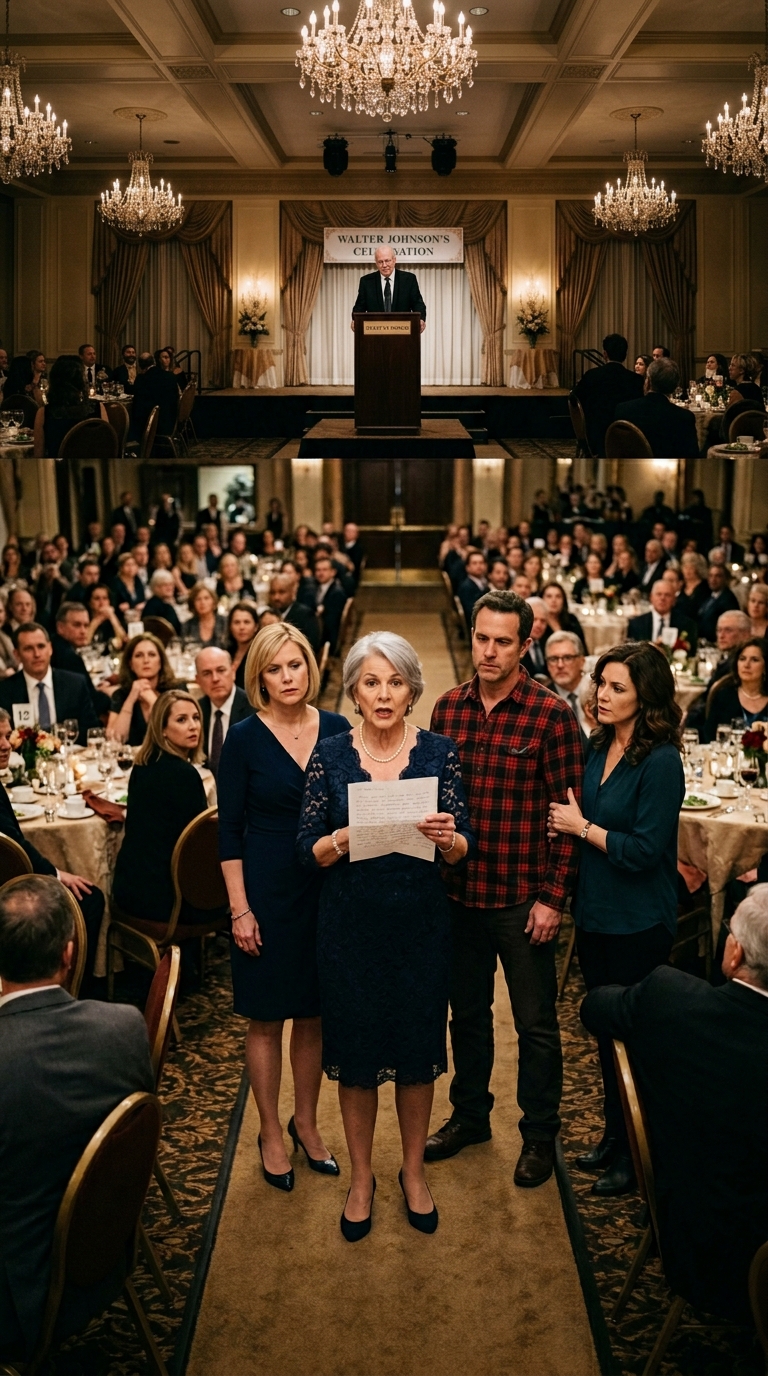
When I woke up, Adele was holding my hand, Jeremiah was wiping tears from his eyes, and Chanel was telling me that next time something hurt, I had to call them.
Three Sundays later, they brought dinner to my house. For once, I sat at my own table and allowed others to care for me.
Walter had called that card emergency money.
But the real emergency was that I had spent fifty years believing I needed to be useful in order to be loved.
Now, I finally understood otherwise.
