

PART 3: THE VICTORY THAT TRULY MATTERED
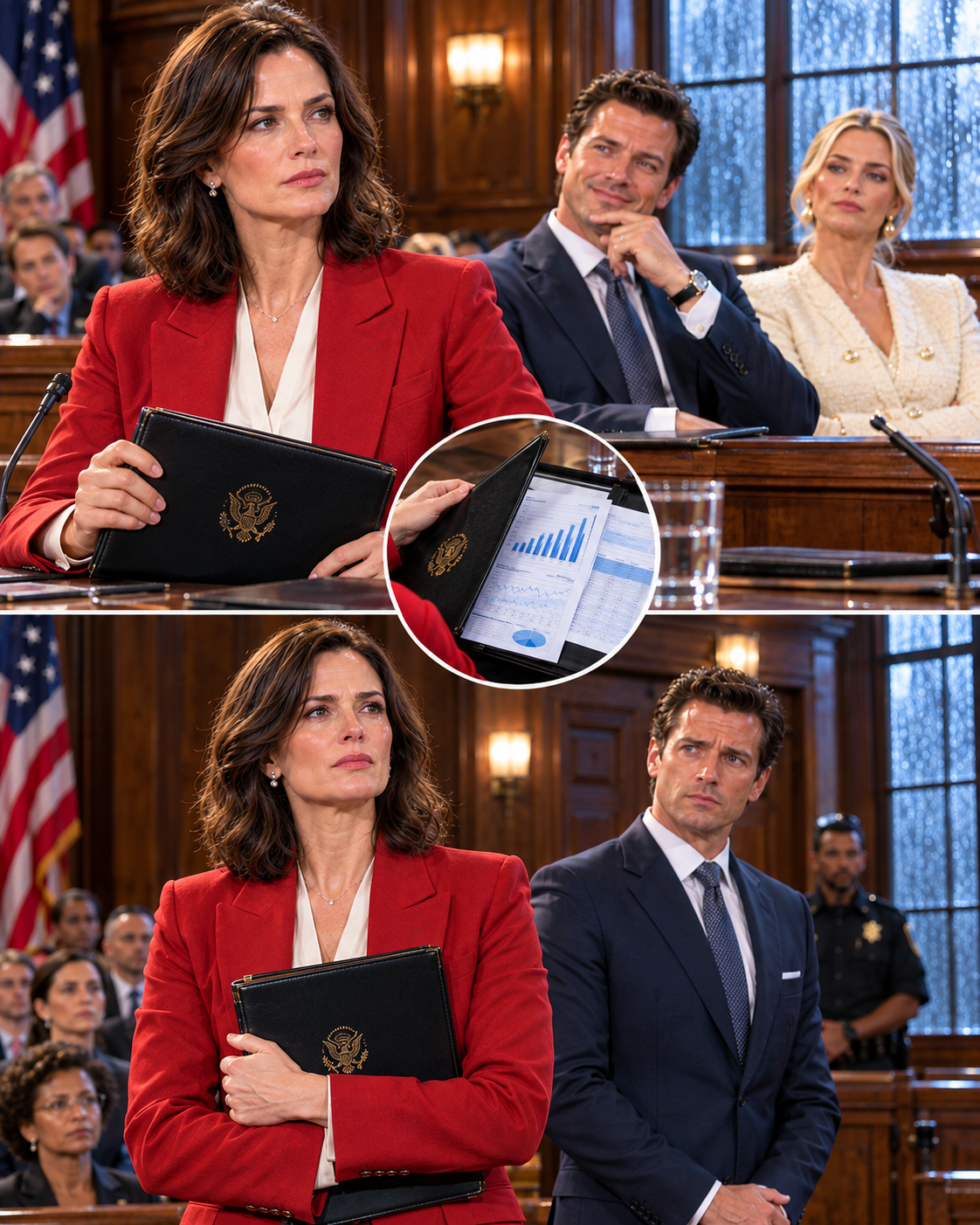
When Judge Calder returned, the courtroom fell silent.
He settled into his chair and reviewed several pages.
Then he removed his glasses.
“I want to make something clear before we proceed.”
His gaze moved from Adrian to me.
“This is a custody proceeding. It is not an opportunity to reward one parent for professional achievement or punish another for marital misconduct.”
I nodded.
“The court’s primary concern is the welfare of Samuel and Owen.”
Adrian sat rigidly beside his attorneys.
Judge Calder continued.
“Mr. Hollis has demonstrated that he possesses substantial financial resources and that he has played a meaningful role in his sons’ lives.”
For a moment, Adrian seemed to relax.
“The evidence also shows that Mrs. Lane has been the primary organizer of the children’s daily care, education, medical appointments, and household routines.”
I felt Claire straighten beside me.
“The court has reviewed the available employment verification and financial documentation. Mrs. Lane is employed, receives compensation, and has independent resources.”
The judge turned toward Adrian.
“Mr. Hollis’s statements concerning her lack of employment and inability to provide for the children were materially inaccurate.”
Adrian looked down.
Judge Calder paused.
“More concerning is the evidence that the children were told the custody outcome had already been decided.”
I thought about Owen asking whether I would still be allowed to call.
My hands tightened beneath the table.
“These boys are eight years old. They should not be made to believe that a parent will vanish because of a legal proceeding.”
The judge’s voice grew firmer.
“They are not property. They are not negotiating instruments. And they are not responsible for managing their parents’ emotions.”
Nobody moved.
Then Judge Calder turned to me.
“Colonel Lane, your service obligations are relevant. The court must consider your availability and the possibility that your assignment could change. Your childcare arrangements will need to remain reliable.”
“Yes, Your Honor.”
“Your professional accomplishments do not eliminate those responsibilities.”
“I understand.”
He looked toward Adrian.
“And Mr. Hollis, your financial success does not give you a superior claim to your children.”
Adrian said nothing.
“The court will not determine custody according to which parent earns more money, possesses a more recognizable title, or can afford more attorneys.”
I lowered my head.
For the first time all morning, I could breathe.
Judge Calder outlined an interim custody arrangement.
The boys would remain primarily in my care while the case proceeded.
Adrian would have structured parenting time, including alternating weekends and a midweek visit, with additional arrangements to be considered as the court gathered more information.
We would continue sharing responsibility for major parental decisions under the temporary order.
Neither parent could unilaterally relocate the children.
Both of us would be required to support the boys’ relationship with the other parent.
The court would also appoint a professional to assess the children’s needs and make recommendations before the final custody determination.
Then the judge addressed the issue that mattered most to me.
“Neither parent is to tell these children that the other is abandoning them, that a future ruling is certain, or that their affection for one parent constitutes disloyalty toward the other.”
He looked directly at Adrian.
“Mr. Hollis, do you understand?”
Adrian’s voice was barely audible.
“Yes, Your Honor.”
“Mrs. Lane?”
“Yes, Your Honor.”
The judge made a final notation.
“The financial and property issues will be addressed separately. Today’s custody arrangement is temporary and subject to further review.”
The gavel came down.
And just like that, the hearing was over.
No applause.
No dramatic announcement that I had won everything.
No declaration that Adrian was a terrible father.
Just a legal order placing our children’s immediate stability ahead of the accusations that had brought us there.
I sat perfectly still.
Claire touched my shoulder.
“Evelyn.”
I turned toward her.
“The boys can stay with you.”
That was when I finally cried.
Not loudly.
Not dramatically.
I simply covered my mouth as twelve years of swallowed words, three weeks of terror, and one exhausting morning came rushing out of me.
Claire waited.
She didn’t tell me to be strong.
She didn’t tell me I had won.
She just sat beside me until I could stand.
Adrian remained at his table after the judge left.
His attorneys surrounded him, speaking quietly.
Paige stood several feet away.
Her expression was impossible to read.
I didn’t look at her for long.
Whatever she and Adrian had imagined their future would look like, that was no longer my concern.
I wanted my sons.
I gathered my folder.
Then I heard Adrian speak.
“Evelyn.”
I stopped.
He was standing beside his chair.
For the first time in years, he looked like a man who didn’t know what to say.
“Can we talk?”
Claire glanced at me.
I nodded.
“Briefly.”
Adrian approached.
His expensive suit was still perfect.
His hair was still carefully styled.
His silver watch still gleamed beneath the courtroom lights.
But the confidence that had filled the room that morning was gone.
“I didn’t know,” he said.
I waited.
“About the Army. Your rank.”
“No.”
“Why couldn’t you have just told me?”
I looked at him for a long moment.
“Would you have listened?”
He opened his mouth.
Then closed it.
I continued.
“I tried to tell you that my work mattered. I tried to explain why I needed privacy. I tried to ask you to stop describing me as someone who had given up everything to become your wife.”
His eyes lowered.
“Every time, you told me I was making a big deal out of nothing.”
He ran a hand over his face.
“You still should have told me.”
“Yes,” I said quietly. “I should have.”
He looked surprised by the answer.
I wasn’t going to pretend that every choice I had made was perfect.
Secrecy had become a habit.
Silence had become an escape.
And somewhere inside our marriage, I had mistaken avoiding conflict for maintaining peace.
I owned that.
But I would not accept responsibility for Adrian’s decision to use our children as leverage.
He looked toward the documents in my folder.
“And the company?”
I almost smiled.
Of course.
The company.
“You knew Lane Capital funded it.”
“I knew you had investments.”
“You signed the original capitalization agreement.”
“I thought…”
He stopped.
“What?” I asked.
He swallowed.
“I thought that after all these years, after everything I built, it was mine.”
There was no anger in his voice now.
Only disbelief.
I understood what he meant.
He had spent twelve years expanding a business until it became inseparable from his identity.
The name on the trucks was his.
The name on the buildings was his.
The magazine covers carried his photograph.
Every speech had reinforced the same message.
Adrian Hollis had built an empire.
He had repeated the story so many times that he could no longer distinguish his contribution from his ownership.
“You did build it,” I told him.
He looked up.
“You helped turn an investment into something extraordinary. I have never denied that.”
“Then why are you doing this?”
“Because you tried to use what we built to leave me powerless.”
His face tightened.
“You didn’t have to expose me.”
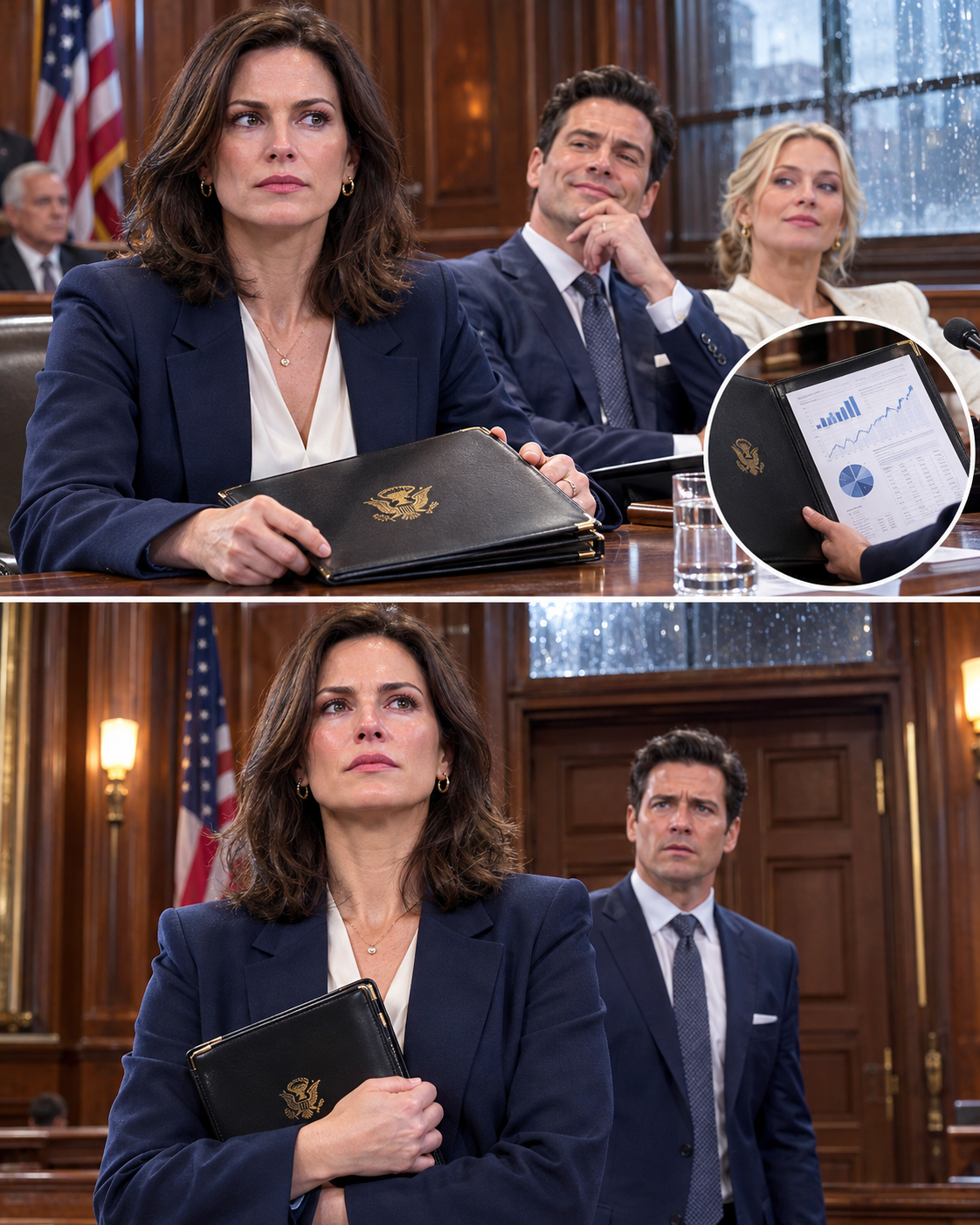
I stared at him.
“You told a judge I was unemployed. You told our sons I had abandoned them. You asked the court to take them away from me because you claimed I had no way to support them.”
He looked away.
“What did you expect me to do, Adrian?”
Silence.
“Let you win by lying?”
He didn’t answer.
I tightened my grip on the folder.
“I didn’t come here to destroy you.”
My voice softened.
“I came here because you were destroying our family.”
For a moment, I thought he might apologize.
Instead, he whispered, “I never thought you’d fight me like this.”
I looked at him.
“That’s the problem.”
He raised his eyes.
“You never thought I’d fight at all.”
Then I walked away.
Samuel saw me before I saw him.
The moment I entered the family waiting area, he jumped out of his chair.
“Mom!”
He ran toward me.
Owen was only a step behind.
I dropped to my knees, and they crashed into my arms.
For several seconds, neither boy spoke.
They just held me.
I pressed my face into Samuel’s hair.
Then Owen’s.
They smelled like crayons, rain-damp sweaters, and the peanut butter sandwiches Margaret had packed for them.
The most ordinary things in the world.
The most precious.
Samuel pulled back first.
“Did the judge say we have to go with Daddy?”
I brushed the hair from his forehead.
“The judge made a temporary plan so you can spend time with both of us.”
Owen’s face tightened.
“But where are we sleeping tonight?”
“At home with me.”
His shoulders dropped.
“And tomorrow?”
“With me.”
Samuel studied my face.
“So you’re not leaving?”
I held his cheeks.
“No, sweetheart.”
He blinked.
“Ever?”
I took a breath.
There were promises I couldn’t make.
My military career meant there might be future assignments.
The divorce meant our lives would change.
I couldn’t promise I would never have to travel.
I couldn’t promise I would always be in the same house.
But I could promise something more important.
“I may have to go away for work sometimes, just like before. And there will be days when you stay with Dad. But I am not disappearing from your lives.”
Samuel’s eyes filled.
“Really?”
“Really.”
Owen wrapped both arms around my neck.
“I thought he was going to make you stop being our mom.”
My chest hurt.
I held him close.
“No judge can change the fact that I’m your mother.”
Margaret turned away, wiping her eyes.
Then Samuel asked another question.
“Is Daddy in trouble?”
I looked at him.
It would have been easy to say yes.
To tell him that his father had lied.
That he had tried to hurt me.
That the judge had finally seen the truth.
But I remembered Judge Calder’s words.
The boys weren’t responsible for our anger.
So I said, “Daddy and I have some difficult things to work through. That’s our responsibility, not yours.”
“Are you mad at him?”
I hesitated.
“I’m upset about some choices he made.”
Samuel looked down.
“Are we allowed to love him?”
The question nearly broke me all over again.
I drew both boys closer.
“Of course you are.”
Owen looked confused.
“Even if you’re mad?”
“Even then.”
I kissed his forehead.
“You don’t have to stop loving your dad to love me.”
Samuel leaned against my shoulder.
And for the first time in weeks, he seemed to relax.
The next several months weren’t easy.
Anyone who tells you that a court victory instantly fixes a broken family has probably never watched two children adjust to divorce.
Samuel began waking up early.
Sometimes I found him sitting on the stairs before sunrise, waiting to see whether I was still home.
Owen became quieter.
He stopped asking about the future because he was afraid of hearing another answer he didn’t like.
I arranged counseling for both boys.
I adjusted my schedule where I could.
When duty required me to travel, I made sure they knew who would care for them, when I expected to return, and how we would communicate.
I also stopped pretending that everything was fine.
When Samuel asked whether I was sad, I didn’t give him a fake smile.
“Sometimes,” I said. “But I’m getting help with the grown-up problems, and they’re not yours to fix.”
When Owen asked whether I hated his father, I told him no.
That was the truth.
I didn’t hate Adrian.
There were days when I was furious with him.
There were nights when I remembered something tender from our marriage and felt grief so sharp that I had to sit down.
But hatred wasn’t what I wanted to carry into the rest of my life.
And it wasn’t what I wanted to hand to our sons.
The divorce proceedings continued.
The corporate ownership records were examined.
The prenuptial agreement was reviewed.
Financial experts evaluated the various interests and questions concerning the growth of the business during our marriage.
The eventual settlement recognized the separate ownership structure documented through Lane Capital, while addressing Adrian’s compensation, minority interests, and the financial claims arising from our marriage.
My controlling ownership remained intact.
That didn’t mean Adrian walked away with nothing.
He had earned compensation.
He had legitimate financial interests.
And I had no desire to manufacture a new injustice simply because he had tried to create one for me.
But he could no longer claim that the entire company belonged to him.
He could no longer use the prenup as a threat to erase my financial independence.
And he could no longer pretend that the woman he had described as dependent and unemployed had contributed nothing to the business he celebrated.
The company itself required careful attention.
Hollis Transit employed thousands of people.
Drivers.
Dispatchers.
Warehouse workers.
Mechanics.
Managers.
People with mortgages, children, medical bills, and plans for their futures.
They had nothing to do with our marriage.
They didn’t deserve to suffer because Adrian and I were getting divorced.
I met with the independent directors through the proper corporate channels.
I made one thing clear.
The company would not become an instrument of personal revenge.
Its operations would continue.
Its employees would be protected as far as responsible management allowed.
And decisions about executive leadership would be made through legitimate governance procedures.
Adrian initially fought every suggestion that his role might change.
He believed remaining CEO would prove he hadn’t lost.
Eventually, after months of negotiations and discussions with the board, he agreed to a managed transition.
He stepped down from the chief executive position.
A successor was appointed.
The company continued operating.
I didn’t stand outside the headquarters with a camera crew.
I didn’t arrange for reporters to photograph him leaving.
I didn’t issue a statement announcing that I had taken back my empire.
There was no need.
The corporate records had always told the truth.
The only thing that had changed was that Adrian could no longer persuade everyone to ignore them.
The final custody arrangement took longer.
A professional reviewed our parenting routines.
The boys’ teachers provided information.
Both households were evaluated.
The process wasn’t comfortable for either of us.
I had to discuss my military obligations in detail within appropriate limits.
I had to acknowledge the emotional impact of my absences.
I had to explain the ways I planned to maintain stability if my assignment changed.
Adrian had to address his decision to tell the boys that the custody outcome was predetermined.
He also had to explain why he had described me as financially incapable of caring for them.
The final parenting plan maintained the boys’ primary residence with me and provided Adrian with regular, meaningful parenting time.
It also established procedures for schedule changes, communication, and future disagreements.
Neither of us got everything we initially wanted.
But the arrangement gave Samuel and Owen something we had almost destroyed.
Predictability.
They knew where they would sleep.
They knew when they would see each parent.
They knew they could call either of us.
And they gradually stopped asking whether loving one parent would hurt the other.
That mattered more to me than any courtroom declaration.
One Friday afternoon, approximately six months after the first hearing, Adrian arrived to pick up the boys for his weekend.
I opened the front door.
He stood on the porch wearing jeans and a gray sweater.
No expensive suit.
No attorneys.
No polished public smile.
Just Adrian.
Samuel came downstairs carrying his backpack.
Owen followed, dragging a small suitcase.
“Did you remember your inhaler?” I asked.
Owen nodded.
“Front pocket.”
“And your homework?”
Samuel held up a folder.
“Already packed.”
I smiled.
“Good.”
Adrian watched the exchange.
Then he looked at me.
“Can I speak to you for a second?”
I glanced at the boys.
“Go put your things in Dad’s car. I’ll be right there.”
They ran outside.
Adrian waited until the door closed.
Then he said, “Samuel asked me something last weekend.”
I folded my arms.
“What?”
“He asked if I was still trying to make you go away.”
The words landed heavily.
Adrian looked toward the driveway.
“I told him no.”
I nodded.
“He asked if I’d lied about what the judge was going to do.”
For a moment, neither of us spoke.
“What did you tell him?” I asked.
Adrian swallowed.
“I told him I had been wrong to say the decision was already made. I told him grown-ups can make mistakes, and that it wasn’t his fault.”
I studied his face.
It wasn’t a perfect apology.
It didn’t undo the nights Samuel had cried.
It didn’t erase the fear Owen had carried into the courthouse.
But it was the first time Adrian had acknowledged his behavior without blaming me for it.
“Thank you for telling him,” I said.
He nodded.
Then he looked down.
“I didn’t understand how much it scared them.”
I thought about responding sharply.
About reminding him that I had warned him.
That I’d asked what he was telling them.
That he’d known Samuel and Owen were frightened and continued anyway.
All of those things were true.
But the boys were waiting outside.
And this conversation wasn’t about proving I was right.
It was about whether we could become better parents after failing so badly as partners.
“They need us to keep doing better,” I said.
Adrian nodded again.
“I know.”
He turned to leave.
Then stopped.
“Evelyn?”
“Yes?”
“I’m sorry.”
I looked at him.
He didn’t specify what he was apologizing for.
Maybe he wasn’t ready.
Maybe he didn’t fully understand it himself.
I wasn’t going to pretend that two words could repair twelve years.
But I could acknowledge them.
“Thank you.”
He walked down the front steps.
I stood in the doorway and watched the boys run toward him.
Owen jumped into his arms.
Samuel began excitedly talking about a science project.
Adrian listened.
Really listened.
Then he buckled them into the car.
As they pulled out of the driveway, both boys waved.
I raised three fingers.
Samuel grinned.
Owen pressed his hand against the window and raised three fingers back.
I love you.
Nearly a year after the divorce began, I attended a military ceremony in Washington.
It wasn’t a public spectacle.
Just an ordinary professional event marking years of service, responsibility, and the continued work of people who rarely appeared in newspaper headlines.
I wore my Army service uniform.
My insignia rested on my shoulders.
My name appeared above my pocket.
LANE.
For so long, I had kept that part of my identity separated from the life the public associated with Adrian Hollis.
Not all of that separation had been necessary.
And I had finally understood that protecting legitimate information did not require erasing myself.
Samuel and Owen attended the ceremony.
They sat near the front with Margaret.
Both wore button-down shirts.
Samuel had polished his shoes.
Owen had somehow managed to get a small stain on his collar before we even arrived.
When the ceremony ended, they ran toward me.
Samuel stopped first.
He looked up at my uniform.
Then at the insignia on my shoulders.
“Mom?”
“Yes?”
“Are you really a colonel?”
I laughed softly.
“Yes, sweetheart.”
He considered that.
“Does that mean you’re in charge of a whole bunch of people?”
“It means I have responsibilities to a lot of people.”
Owen studied my uniform.
“Do they have to do everything you say?”
“Not everything. And part of my job is making sure the decisions I give them are responsible.”
He thought about that for a moment.
Then he asked, “Are you still our mom when you wear this?”
I crouched in front of him.
“Always.”
He smiled.
“Good.”
Then he threw his arms around me.
Samuel joined him.
And there I was, a senior officer in the United States Army, standing in the middle of a room filled with uniforms, holding two little boys who didn’t care about my rank at all.
They cared that I was there.
That I had come back.
That I would be there when they needed me.
That evening, we returned home and made dinner together.
Nothing elaborate.
Spaghetti.
Garlic bread.
A salad neither boy particularly wanted.
Samuel set the table.
Owen spilled water on the counter.
I helped them clean it up.
After dinner, we sat on the living room floor and worked on Samuel’s science project.
Owen insisted on helping.
His contribution was mostly asking questions and moving things he wasn’t supposed to touch.
At one point, Samuel looked up from his poster board.
“Mom?”
“Yes?”
“Are we rich?”
I almost laughed.
It was such an unexpected question.
“What makes you ask?”
He shrugged.
“Some kids at school said Dad doesn’t own the company anymore.”
I put down the marker.
The boys knew their father and I had divorced.
They knew the business situation had changed.
But I had deliberately kept them away from the financial disputes.
Those weren’t burdens children needed to carry.
“Your dad and I have both worked hard,” I said. “We have enough to make sure you’re cared for.”
Samuel considered that.
“But are we rich?”
I looked around the room.
At the unfinished school project.
At Owen sitting cross-legged beside his brother.
At the photographs on the mantel.
At the backpacks waiting by the door for tomorrow.
Then I smiled.
“We’re very fortunate.”
Owen frowned.
“That’s not the same thing.”
“No,” I said. “It isn’t.”
He returned to his drawing.
Samuel looked thoughtful.
Then he asked, “Do we still have to go to school tomorrow?”
“Absolutely.”
He groaned.
Owen laughed.
And for the first time in what felt like forever, our home sounded completely normal.
Sometimes I think about that rainy Thursday morning in Fairfax County.
I remember Adrian walking into Courtroom Four surrounded by three attorneys.
I remember Paige sitting behind him in cream silk and pearls.
I remember the polished watch.
The confident smile.
The prenuptial agreement he believed would protect him from me.
I remember the moment he called me an unemployed woman who had abandoned her children.
And I remember the silence when the court learned that I was a colonel in the United States Army.
I remember his expression when the ownership documents were examined.
When he discovered that the empire bearing his name was controlled by a company I had established before we married.
When he finally understood that being the public face of something did not make him its sole owner.
But those weren’t the moments that stayed with me the longest.
What I remember most is Owen’s frightened voice.
Will you still be allowed to call us?
I remember Samuel squeezing my hand.
Please don’t let him make you leave.
And I remember the moment I walked into the waiting room after the hearing and saw both boys running toward me.
That’s the memory I carry.
Not the company’s valuation.
Not the headlines that followed.
Not Adrian’s humiliation.
The weight of two small bodies in my arms.
The sound of my sons calling me Mom.
The knowledge that I had finally stopped protecting a false version of my marriage and started protecting the truth.
Adrian had entered that courtroom believing money was power.
He believed reputation was power.
He believed three expensive attorneys and a prenuptial agreement could erase everything I had contributed to our family.
He had mistaken my discretion for weakness.
My silence for ignorance.
My patience for surrender.
He learned that morning how wrong he had been.
But I learned something too.
I didn’t need the entire world to know who I was.
I didn’t need magazine covers.
I didn’t need my husband’s name printed across a fleet of trucks to prove that my work mattered.
I didn’t need to destroy him to establish my own worth.
I needed to stop disappearing inside a life someone else had written for me.
And I needed my sons to understand that no amount of money, no title, and no courtroom argument could make their mother love them any less.
Adrian walked into court expecting to leave with an empire and two little boys.
He discovered that the empire had never truly belonged to him.
And the little boys?
They were never possessions either of us could win.
They were our children.
They deserved love, honesty, and the freedom to have two parents without being forced to choose between them.
That was the truth I had fought for.
That was the life I had finally reclaimed.
And when I turned off the lights that night, I walked past the boys’ bedrooms and paused in the hallway.
Samuel was asleep.
Owen had kicked off his blanket again.
I pulled it gently over his shoulders.
He stirred.
“Mom?”
“I’m here, sweetheart.”
His eyes stayed closed.
“Love you.”
I kissed his forehead.
“Love you too.”
Then I stood there for one more moment, listening to the quiet breathing of my sons.
The house was peaceful.
No cameras.
No reporters.
No attorneys.
No one telling me who I was supposed to be.
Just a mother standing in the hallway of her home.
And for the first time in twelve years, I no longer felt invisible.
THE END.
