

PART 1
My water broke at 32 weeks, at 2:14 in the morning, on the bathroom floor of our Scottsdale home.
I called Preston.
He didn’t answer.
I called again while ambulance lights swept across the ceiling. Again in the elevator. Again while a nurse sliced open my sleeve for the IV.
Twenty-three calls.
Twenty-three times his voicemail answered: “This is Preston Whitford. Make it quick.”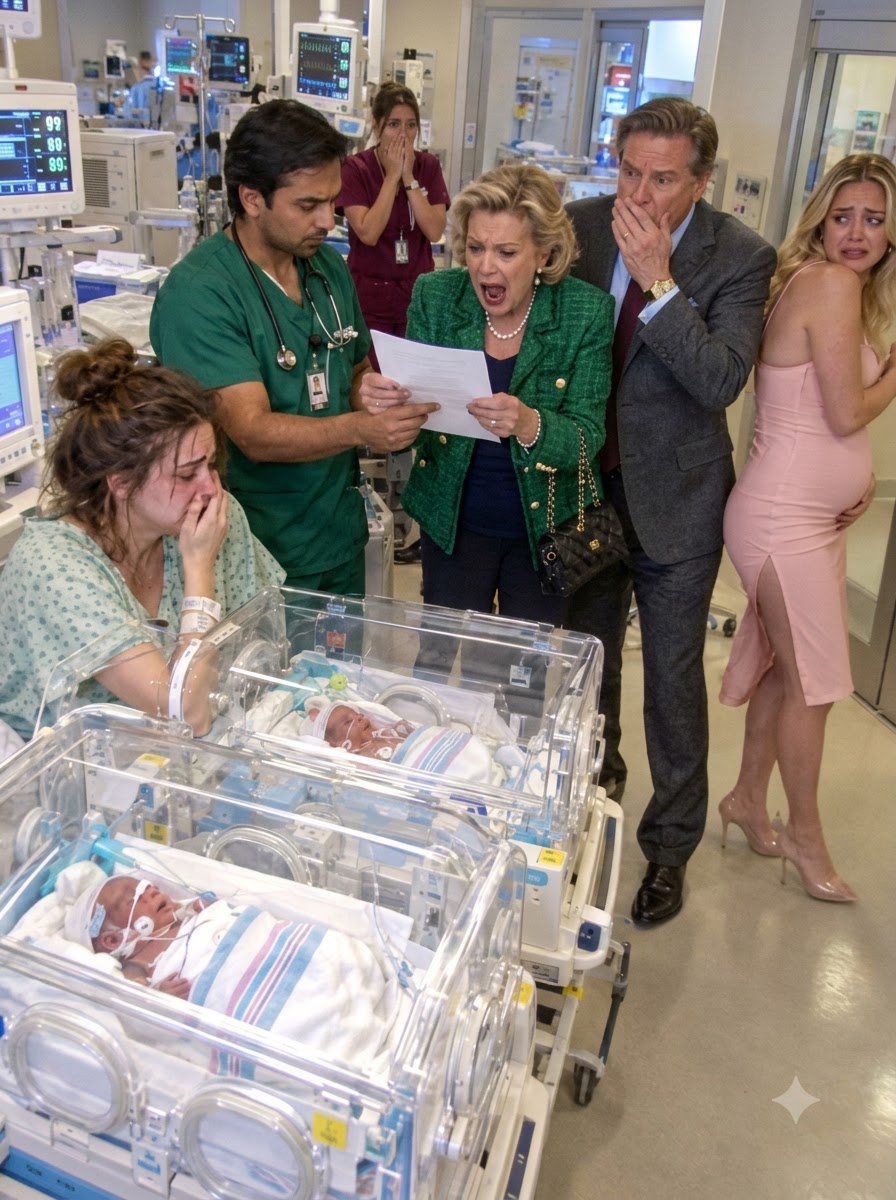
At 4:51 a.m. I delivered Ruby and Owen by emergency C-section. Three pounds, one ounce. Three pounds, six ounces. They were carried away before I could touch them.
The nurse who held my hand through surgery asked, “Is there anyone we should call for you, sweetheart?”
I kept my eyes on the ceiling.
“No,” I replied. “There’s no one.”
For four days I lived between two plastic incubators, learning how to slide a hand no larger than my thumb through a circular port.
On the fifth morning Preston finally appeared.
He brought company.
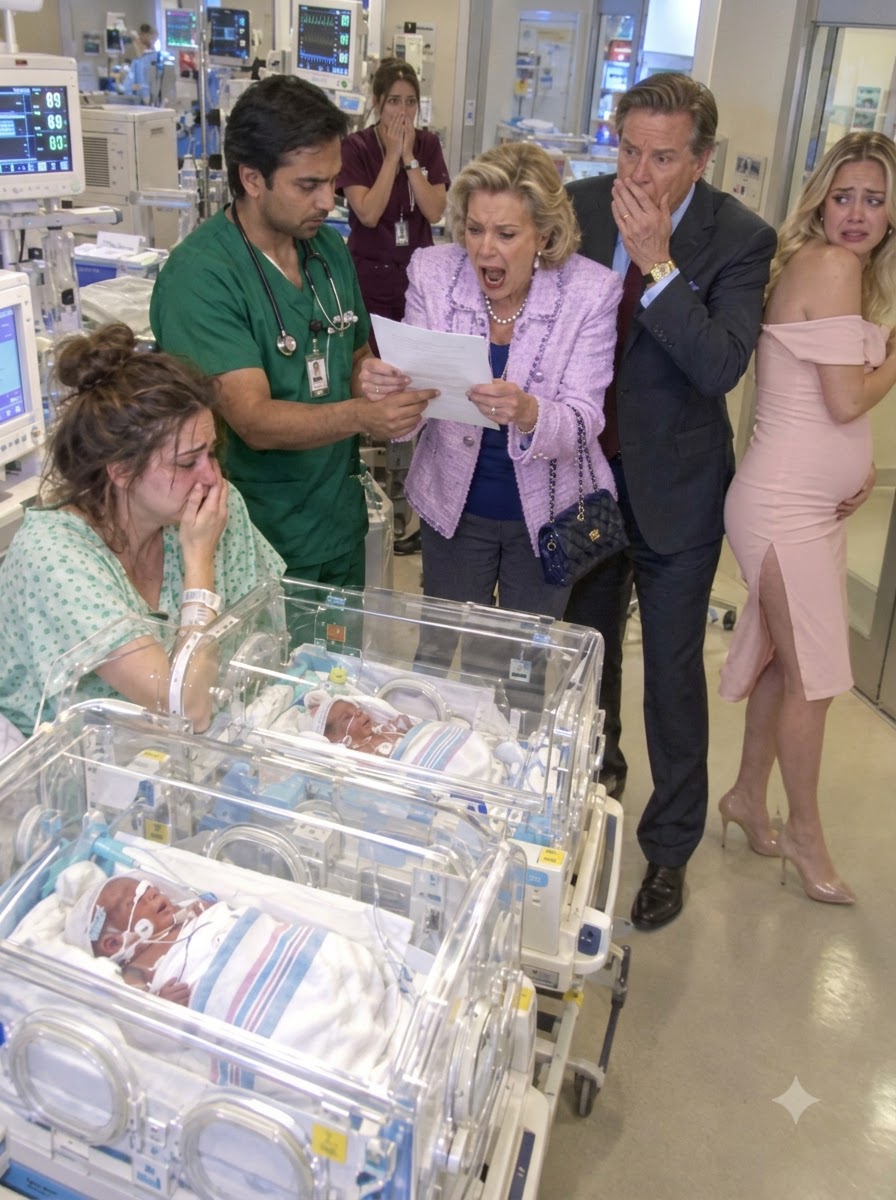
His mother, Lorraine, came in first, wearing a cream Chanel jacket and gripping her handbag as if the room itself might stain it. A young woman followed, in a fitted white dress, one palm resting on her small, rounded belly.
Then Preston. Fresh haircut. Gold watch. Not a single glance toward the incubators.
“This is Sienna,” he announced, as though introducing a new assistant.
Sienna smiled. “Congratulations.”
Lorraine peered through the glass at my babies and wrinkled her nose.
“Small,” she remarked. “Preston was nine pounds. Nobody in our family has babies that small.”
Then Preston drew a white box from his jacket and dropped it onto my bed.
PATERNITY TEST.
“Two years of nothing, Megan, and then suddenly twins?” he said. “I’m not paying a $186,000 NICU bill for another man’s kids.”
The nurse at the station stopped typing.
A father two incubators away slowly turned his head.
I stared at the box.
Two years of nothing.
He meant two years of fertility clinics. Three rounds of IVF. Every injection I gave myself in the bathroom so he wouldn’t have to watch. Every invoice paid from my account because Preston insisted “medical stuff” was my department.
He had never attended a single appointment.
He kept his own concierge doctor. His own mail. His own locked drawer in the study.
I had never opened any of them.
I had never needed to.
Lorraine leaned closer, her voice low and poisonous.
“Sign the divorce papers quietly, and Preston will cover the hospital,” she said. “Fight us, and everyone at the club will know exactly what kind of woman you are.”
Sienna stroked her stomach and turned away, hiding a smile.
“She’s having a boy,” Lorraine added. “A real Whitford.”
I could have screamed.
I could have thrown the box at his face.
Instead I turned it slowly in my hands and spoke the calmest word I had managed in four days.
“Okay.”
Preston blinked. “Okay?”
“Run the test,” I said. “But if we’re doing this, we test everyone.”
Dr. Patel, the neonatologist, had stood in the doorway long enough to hear every word. He stepped forward.
“A legal paternity test goes through the lab,” he said. “We’ll have results by tomorrow morning.”
Preston laughed. “Pull my records too. Blood type, history, all of it. I want proof she’s lying.” He snatched the clipboard and signed the release with a flourish. “Share it with anyone in this room. I’ve got nothing to hide.”
I almost felt sorry for him.
Almost.
The next morning they all returned. Lorraine carried coffee for herself and Sienna. Nothing for me.
Dr. Patel entered with a single sheet of paper.
“The twins,” he said, “are Mr. Whitford’s children. Ninety-nine point nine nine percent.”
Preston’s smirk vanished.
Lorraine set her coffee on the table.
“That’s impossible,” Preston said. “She must have—”
“There’s one more thing,” Dr. Patel interrupted. “Something in the file you asked me to review.”
He didn’t look at me.
He didn’t look at Preston.
His eyes settled on Sienna.
“Ms. Sloane,” he asked quietly, “how far along are you?”
Sienna’s hand froze against her stomach.
“Fourteen weeks,” she answered. “Why?”
Dr. Patel turned the page around and handed it to Lorraine.
“You signed the release, Mr. Whitford,” he said. “So your mother may as well read it herself.”
Lorraine’s eyes traveled down the page.
Once.
Twice.
Then she screamed.
And Sienna was already backing toward the door.
The scream was short, sharp, and ugly. It cracked against the glass of the incubators and made the monitors jump. A nurse hurried over, one hand raised. Lorraine’s coffee had tipped; brown liquid spread across the laminate and dripped onto her cream sleeve. She didn’t notice. The paper shook in her fist.
Preston snatched it from her. His eyes raced down the same lines. Color left his face in a single wash.
“This is bullshit,” he said. His voice was too loud for the unit. “Patel, what the hell did you put in here?”
Dr. Patel remained where he was, hands folded. “Those are the semen analyses from your concierge physician, Dr. Ellison, dated eighteen months ago, eleven months ago, and six weeks ago. All three show azoospermia. Zero sperm. The note at the bottom is Ellison’s recommendation that you consider donor sperm if you wished to conceive. You declined and asked that the results not be shared with your wife.”
Sienna had reached the door. Her fingers were white on the handle. “Preston?”
He didn’t turn. “She’s lying. The twins are mine. The test just said—”
“The twins are yours,” Dr. Patel said evenly. “The samples used for their conception were collected during the second IVF cycle, before the counts dropped to zero. That is documented. What is also documented is that you have produced no viable sperm since last spring. Fourteen weeks ago you were already azoospermic. Medically, you cannot be the father of Ms. Sloane’s pregnancy.”
Lorraine made a sound like fabric tearing. She looked at Sienna as if the younger woman had grown a second head. “You told me it was Preston’s. You sat in my living room and let me plan a shower.”
Sienna’s mouth opened, then closed. The fitted white dress suddenly looked costume-like under the fluorescent lights. “I—I didn’t know. He said the doctors were wrong. He said—”
“I never said that,” Preston snapped. He was still staring at the paper. “Ellison must have mixed the samples. I’ll have him in court by noon.”
“You signed the release,” Dr. Patel repeated. “These records were already in the system you authorized me to open. If you believe there is an error, you are free to request independent verification. In the meantime, the paternity results for Ruby and Owen Whitford stand.”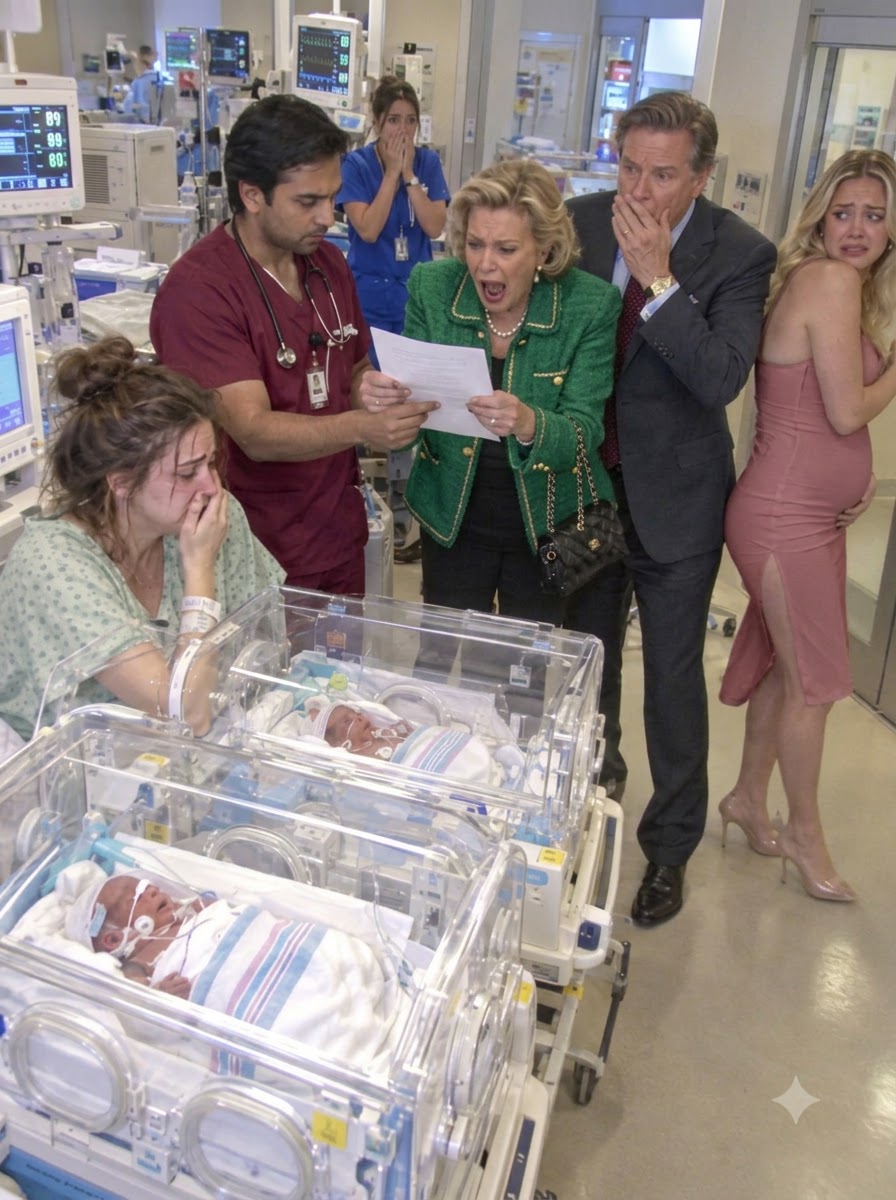
A security officer had appeared at the end of the corridor, summoned by the scream. The father two incubators down had stood up, one protective hand on his own baby’s isolette. Megan stayed seated on the edge of the bed, the white paternity box still in her lap. She had not moved since Dr. Patel began speaking.
Preston finally looked at her. The gold watch caught the light. “You knew. You knew about the counts and you still—”
“I didn’t know,” Megan said. Her voice was the same calm register she had used the day before. “You never let me in the room. You locked the drawer. You told me the problem was my eggs.” She set the box on the rolling table. “Ruby and Owen are yours. The bill is yours. Everything else you brought into this room is not my concern.”
Lorraine had recovered enough to aim her fury. “Sienna, if that child is not a Whitford, you will not receive one cent of the arrangement we discussed. Do you understand me?”
PART 2
Sienna’s eyes flicked to Preston, searching for a cue that did not come. She pushed the door open and slipped into the hallway. The soft soles of her flats made almost no sound on the tile. Lorraine started after her, then stopped when the security officer stepped into her path.
“Ma’am, this is a neonatal unit. If you cannot lower your voice, I will have to ask you to leave.”
“I am Lorraine Whitford,” she said, as if the name were a key. “My son—”
“Is welcome to stay if he can remain quiet,” the officer said. “You are not.”
Preston still held the paper. His thumb had smeared the ink where Ellison’s signature sat. He looked at the incubators for the first time. Ruby’s tiny chest rose and fell under the warmer lights; Owen’s monitor traced a steady green line. Neither baby knew the room had just rearranged itself around them.
“I want a second test,” Preston said. “On Sienna. Today.”
Dr. Patel nodded once. “That is between you and Ms. Sloane. It is not a matter for this unit.” He turned to Megan. “Mrs. Whitford, the twins’ blood gases improved overnight. If you feel ready, we can try skin-to-skin with Ruby this afternoon. Owen may need another day.”
Megan nodded. The motion felt enormous. “Thank you.”
Preston took a step toward the bed. The security officer shifted his weight. Preston stopped. “Megan. We can fix this. The lawyer can—”
“There is nothing to fix,” she said. “You ignored twenty-three calls. You walked in here with her. You threw that box on my bed in front of my children. The test is done. You can leave now.”
He opened his mouth, closed it, and looked at his mother. Lorraine’s jacket was ruined; coffee had soaked through to the silk lining. She clutched the strap of her handbag so tightly the leather creaked.
“This isn’t over,” Lorraine said. The words were meant for Megan, but her eyes kept sliding toward the door Sienna had used. “You will hear from our attorney before the end of the day.”
“I’m sure I will,” Megan answered.
They left. The officer walked them as far as the elevator. When the doors closed, the unit exhaled. The nurse who had stopped typing earlier approached with a fresh gown and a basin of warm water.
“Let’s get you cleaned up before the babies’ care time,” she said. Her voice was ordinary, which felt like a kindness. “Do you want me to call anyone?”
Megan thought of the twenty-three voicemails still sitting on her phone. “No. There’s no one.”
By late afternoon Ruby lay against Megan’s chest, a knot of warmth no heavier than a paperback. The baby’s skin was translucent; veins mapped blue rivers beneath it. Megan counted the rises of that miniature rib cage and tried not to think about the man who had signed a release that exposed his own sterility in front of the woman he had brought to humiliate her. Owen watched from his isolette, eyes half-open, one fist curled near his mouth. A respiratory therapist adjusted a setting and gave Megan a small nod.
The attorney arrived the next morning, not Lorraine’s, but Megan’s. Her name was Denise Alvarez. She had handled two of Megan’s friends’ divorces and did not waste time on sympathy.
“He wants the house, the joint accounts frozen, and a stipulation that you will not speak to anyone at the club about Sienna,” Denise said, flipping through the petition that had been served at the nurses’ station. “In exchange he offers to cover the current NICU balance and three months of COBRA. That’s the entire offer.”
Megan was pumping; the machine’s soft rhythm filled the small family room. “The twins are his. The DNA is already in the court file.”
“Yes. Which means child support is not optional once we establish it. Arizona guidelines on two infants plus his reported income will not be kind to him. He also released medical records that prove he concealed a material fertility diagnosis during your marriage. That’s useful for the dissipation claim and for any request for attorney’s fees.” Denise set the papers down. “Do you want to fight for the house?”
“I want the babies healthy,” Megan said. “After that I want a clean break and enough support that I don’t have to beg.”
“Then we counter. Full NICU coverage, ongoing medical for the twins until they’re five, the house in your name with him carrying the mortgage for twenty-four months, and a mutual non-disparagement that actually binds his mother. We also ask for a paternity test on Sienna’s pregnancy if she remains in the picture. He opened that door.”
Megan nodded. The pump finished its cycle. She sealed the bottles and labeled them with Ruby’s and Owen’s names in careful block letters.
Over the next ten days the twins gained ounces measured in single digits. Owen came off the ventilator. Ruby learned to coordinate sucking and swallowing for almost a full feed. Preston did not return to the unit. His attorney communicated through Denise. Sienna, according to a brief filed on day six, had retained her own counsel and submitted to a non-invasive prenatal paternity test. The results arrived on day nine: Preston Whitford was excluded with 100 percent certainty.
Lorraine called the hospital twice. The first time she asked to speak with Megan “mother to mother.” The second time she demanded to know whether Megan had “put ideas in Sienna’s head.” Both calls were logged and declined. On the eleventh day a process server delivered an amended petition. Preston now claimed the twins’ conception must have involved an unauthorized donor and requested a full evidentiary hearing. Denise filed the IVF clinic records the same afternoon. The chain of custody on the sperm sample Preston himself had produced was unbroken. The motion was denied within forty-eight hours.
Megan was discharged on day eighteen. The twins stayed. She rented a studio apartment three blocks from the hospital with money from an account Preston had not yet managed to freeze. Every morning she walked over for care times. Every evening she pumped and labeled and stored. Denise negotiated a temporary support order that covered the apartment, the hospital parking, and a part-time night nurse so Megan could sleep four hours at a stretch.
On the morning the twins reached four pounds each, Preston appeared in the hallway outside the unit. He was alone. The gold watch was gone. He waited until Megan finished a feed with Owen before he spoke through the glass.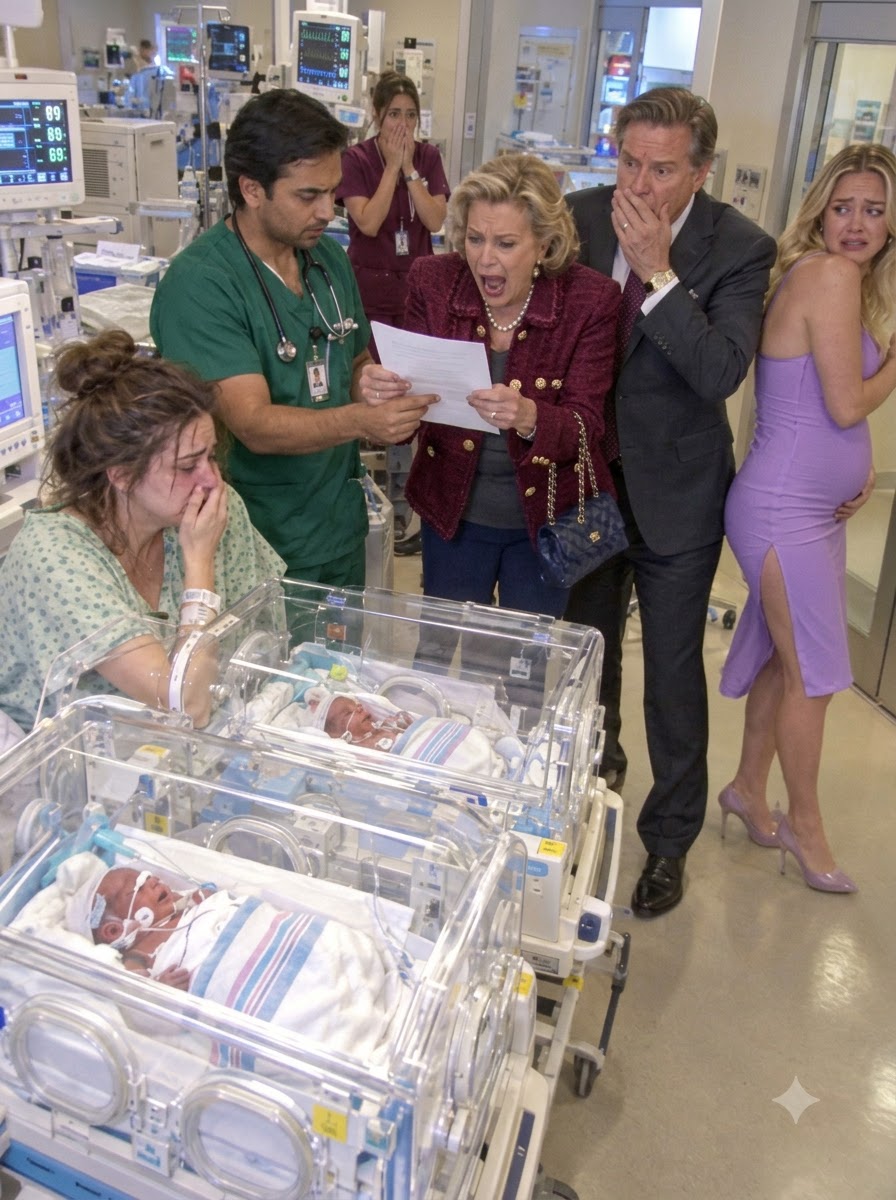
“Sienna left,” he said. “Her lawyer sent a letter. She’s keeping the baby and wants nothing from me. My mother hasn’t spoken to me in a week.”
Megan adjusted the blanket around Owen’s shoulders. “I’m sorry that happened to you.”
“I can still fix the money. If you drop the attorney-fee request and agree to joint custody once they’re home, I’ll sign the house over today.”
“Joint custody,” she repeated. The words felt borrowed from someone else’s life. “You didn’t answer the phone when they were born. You accused me of lying while they were under warmers. You brought her here.” She met his eyes through the glass. “There will be a schedule when the doctors say they’re stable enough for overnight visits. It will be supervised until a court says otherwise. That is the only version of joint that exists.”
He pressed a palm to the window. Owen turned his head toward the sound. “They’re so small.”
“They were smaller,” Megan said. “They’re growing.”
He left before the next care time. Denise later confirmed that the revised settlement—house, full medical, guideline support, and a stepped visitation plan—had been signed. Lorraine’s name appeared nowhere on the documents.
Six weeks after delivery the twins came home on the same afternoon. Megan carried Ruby; the night nurse carried Owen. The studio apartment smelled of the lemon cleaner Megan had used at dawn. Two bassinets stood side by side under the window. She settled each baby, checked the monitors the hospital had sent, and sat on the edge of the narrow bed while the late light moved across the floor.
Her phone buzzed once. A text from Denise: “Order entered. You’re done.”
Megan set the phone face-down. Ruby made a small sound, more sigh than cry. Megan lifted her, settled the baby against her chest, and felt the steady tap of a heart that had once been no larger than a walnut. Outside, traffic moved along the Scottsdale streets Preston used to drive with the top down. Inside, the only voices were the soft clicks of the monitors and the even breath of two children who had never heard their father’s twenty-three unanswered calls.
She did not know yet what the nights would cost or how the support checks would feel when they arrived. She knew the lock on the old study drawer had been changed by the new owner of that house, and that the key was no longer hers to turn. She knew the first person to scream in the NICU had not been her, and that the silence afterward had belonged to her alone. She rested her cheek against Ruby’s cap and closed her eyes, counting the rises until the numbers blurred into ordinary dark.
