

My brother ridiculed my medals, while my father argued that real achievement happened in boardrooms—not in uniform.
I said nothing.
I simply walked to the back of the ballroom and took my seat.
What my family didn’t know was that a Pentagon delegation had arrived for a second ceremony that no one had bothered to tell them about.
Then a four-star general stepped up to the microphone and said, “Today, we are honoring not one hero—but two.”
PART 1
My name is Staff Sergeant Maya Parker.
My grandfather was turning ninety, and our family had organized a large military tribute for him just outside Washington, D.C.
He had served during the Korean War.
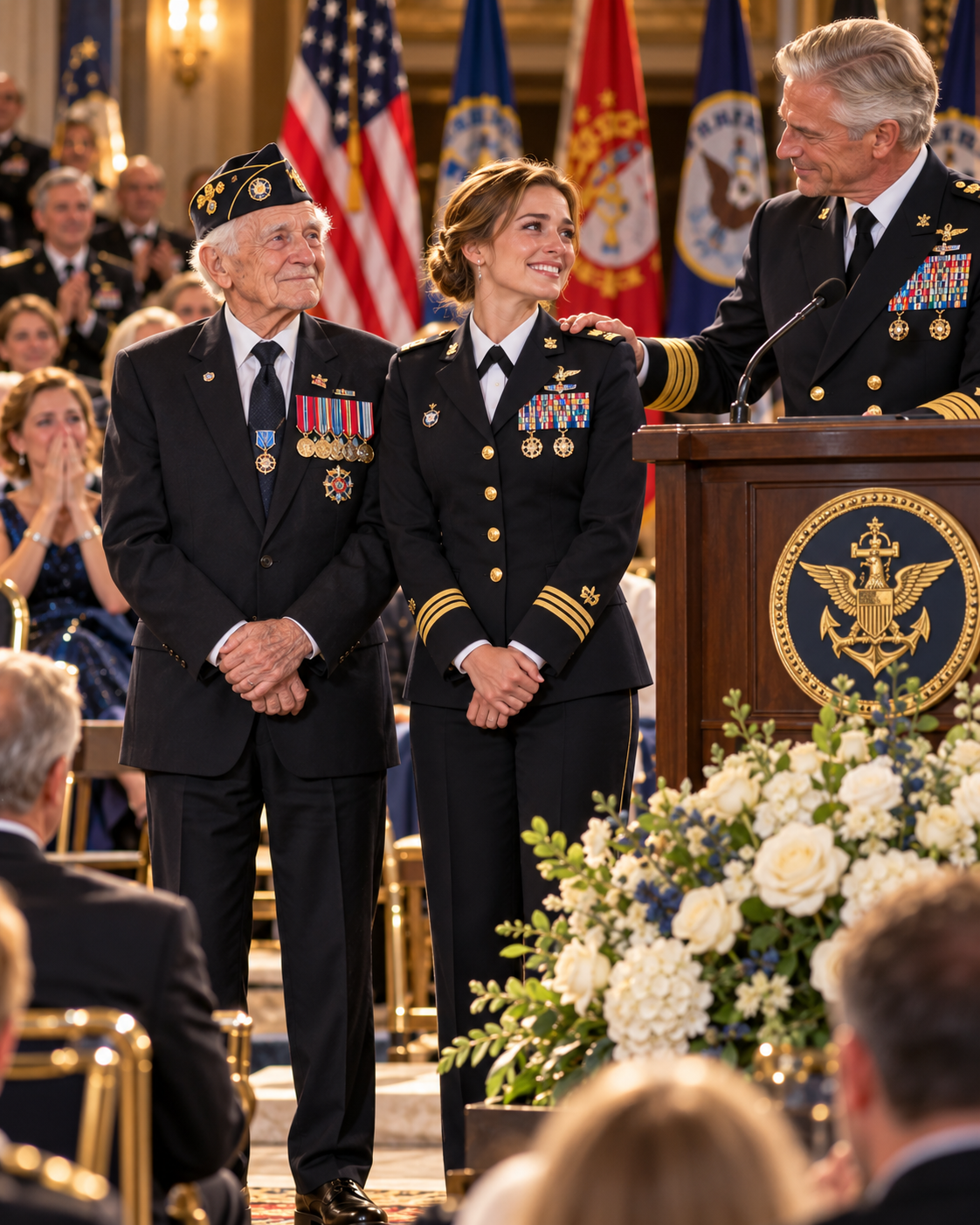
To me, he had always been a hero.
My family had never quite felt the same way about me.
My older brother, Daniel, had built an impressive career as a corporate executive.
My father loved talking about Daniel’s promotions, bonuses, and business connections.
My younger sister had married into a wealthy family and seemed to measure success by the people whose names appeared on her guest list.
And then there was me.
I had chosen the Army.
To my father, that meant I was the daughter who had “settled.”
So when I stepped out of the SUV wearing my dress uniform, I already knew what was coming.
Daniel looked me over from head to toe.
“You actually wore that?”
I glanced down at my uniform.
“Yes.”
His wife, Ashley, looked at the ribbons on my chest.
“Isn’t all that a little dramatic for a family event?”
I gave her a small smile.
“It’s a military ceremony.”
Daniel laughed.
“That doesn’t mean you need to turn it into your ceremony.”
I didn’t respond.
There wasn’t anything worth saying.
Then my father found me inside the ballroom.
His expression immediately changed.
“Maya, we need to talk.”
“About what?”
He lowered his voice and glanced toward the guests.
“There are senators, CEOs, generals, and some very important donors here today.”
“I noticed.”
“We don’t need you drawing attention.”
I looked down at my uniform and then back at him.
“In uniform?”
He sighed as though I had deliberately made his life difficult.
“Compared with what Daniel has accomplished, being a career soldier isn’t exactly impressive anymore.”
My mother was standing nearby.
She heard every word.
She said nothing.
That silence hurt more than my father’s insult.
I walked outside before anger could make me say something I would regret.
The September air was cool against my face.
I stood beside the entrance, staring across the parking lot, trying to remind myself why I had come.
This wasn’t about my father.
It wasn’t about Daniel.
It wasn’t about proving anything.
It was about my grandfather.
Then my phone vibrated.
I answered.
“Staff Sergeant Parker?”
“Yes.”
“The Pentagon delegation has arrived.”
I looked through the glass doors toward the ballroom.
My family had absolutely no idea.
Months earlier, I had been informed that I would receive a major military commendation for leadership during an overseas rescue operation.
The presentation had been deliberately kept quiet.
At my request, it had been incorporated into my grandfather’s ceremony.
I didn’t want to take anything away from him.
His service had come first.
Always.
I had simply hoped the two moments could exist together.
My grandfather had spent his life believing that service wasn’t about recognition.
I had learned that from him.
So I went back inside.
Daniel was still surrounded by executives.
My father was speaking with several influential guests.
My mother was standing beside a table covered with photographs from my grandfather’s military years.
Nobody asked where I had gone.
Nobody asked whether I was okay.
So I sat down in the back.
And waited.
For the next hour, speeches were given.
Old photographs appeared on the screen.
My grandfather’s Korean War medals were displayed beneath a large portrait of him as a young soldier.
When he was wheeled onto the stage, the entire ballroom stood.
I stood too.
I watched him smile.
For one moment, nothing else mattered.
Then the lights dimmed.
A four-star general walked onto the stage.
The room fell silent.
He spoke about my grandfather.
About his courage.
His service.
His generation.
He spoke about young men who had left home without knowing what awaited them.
He spoke about sacrifice.
About duty.
About coming home carrying memories most people would never understand.
My grandfather lowered his head.
I could see tears in his eyes.
Then the general paused.
He looked across the ballroom.
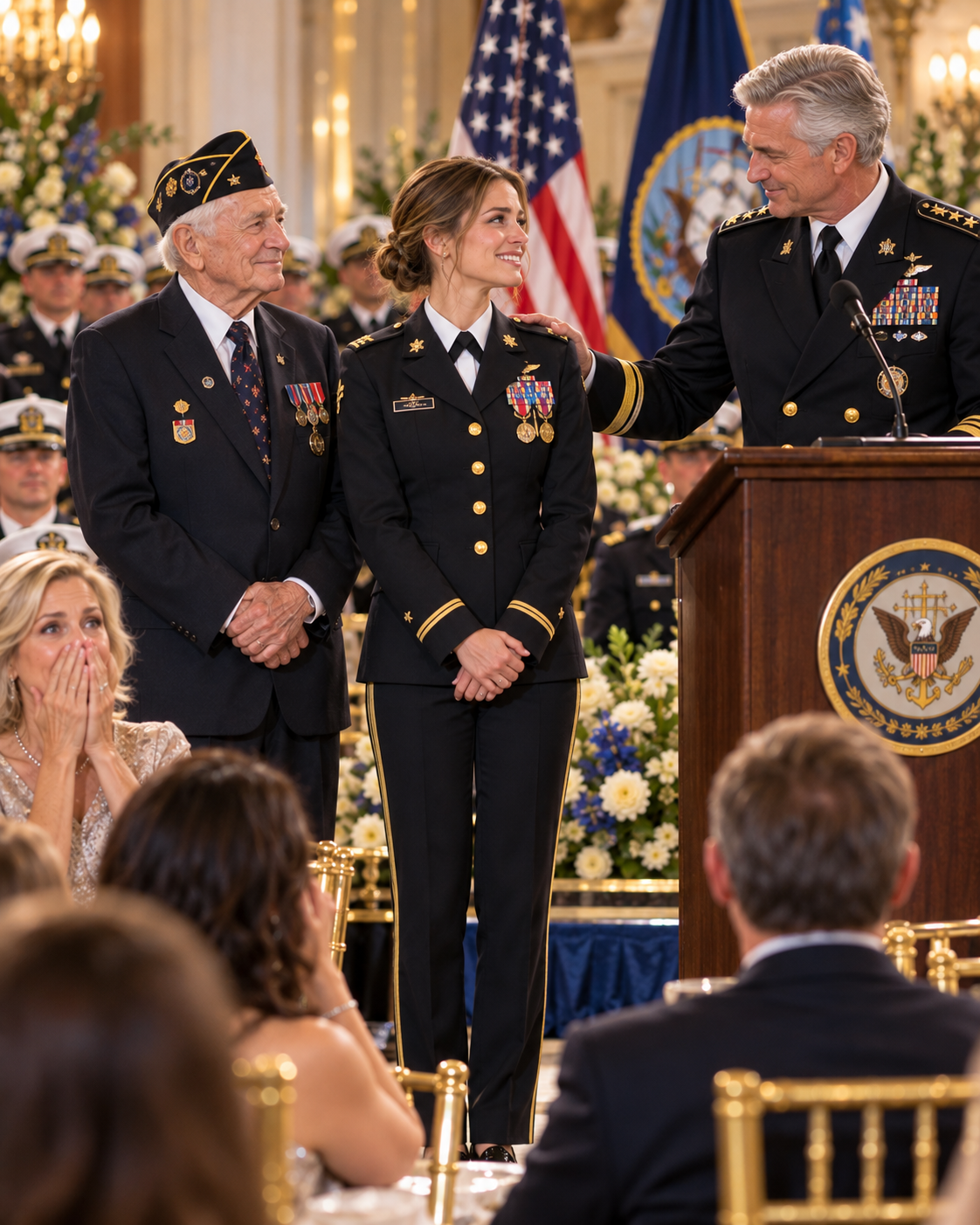
“Ladies and gentlemen, today we honor not one hero—but two.”
My father slowly turned toward me.
Daniel’s smile disappeared.
And the general looked directly toward my section.
“Staff Sergeant Maya Parker, please come forward.”
For a moment, I didn’t move.
I thought perhaps I had misunderstood.
Then the general smiled.
“That’s you, Staff Sergeant.”
The room turned toward me.
I stood.
My legs felt strangely heavy.
I walked toward the stage.
Every step seemed louder than the last.
My father didn’t move.
Daniel stared.
My mother covered her mouth.
And my grandfather smiled.
The general extended his hand.
I saluted.
He returned it.
Then he said something that changed the entire atmosphere in the ballroom.
“Your grandfather served his country with honor. And years later, his granddaughter carried that same commitment forward.”
The screen behind him changed.
Photographs appeared.
Not of me at ceremonies.
Not of me receiving awards.
They were photographs from overseas.
A field hospital.
A damaged transport vehicle.
A group of soldiers standing together in difficult conditions.
Then a photograph of me.
I had almost forgotten it existed.
The general continued.
“During an overseas operation last year, Staff Sergeant Parker assumed leadership when circumstances changed unexpectedly.”
The room was silent.
“She coordinated the evacuation of several personnel under extremely difficult conditions.”
Another image appeared.
“Her actions prevented further loss of life.”
I looked down.
I didn’t want everyone staring at me.
The general continued.
“More importantly, she refused to leave until every member of her team had been accounted for.”
My grandfather was crying openly now.
I glanced at him.
He gave me a small nod.
The general turned toward him.
“Sir, you raised a remarkable granddaughter.”
My grandfather shook his head.
“She raised herself.”
A few people laughed softly.
Even the general smiled.
Then he looked back at me.
“Staff Sergeant Parker, for your leadership, courage, and devotion to those under your command, it is my privilege to present you with the Army’s highest recognition for this particular act of service.”
The ballroom erupted in applause.
I stood there almost frozen.
Not because of the award.
Because of my father.
I looked at him.
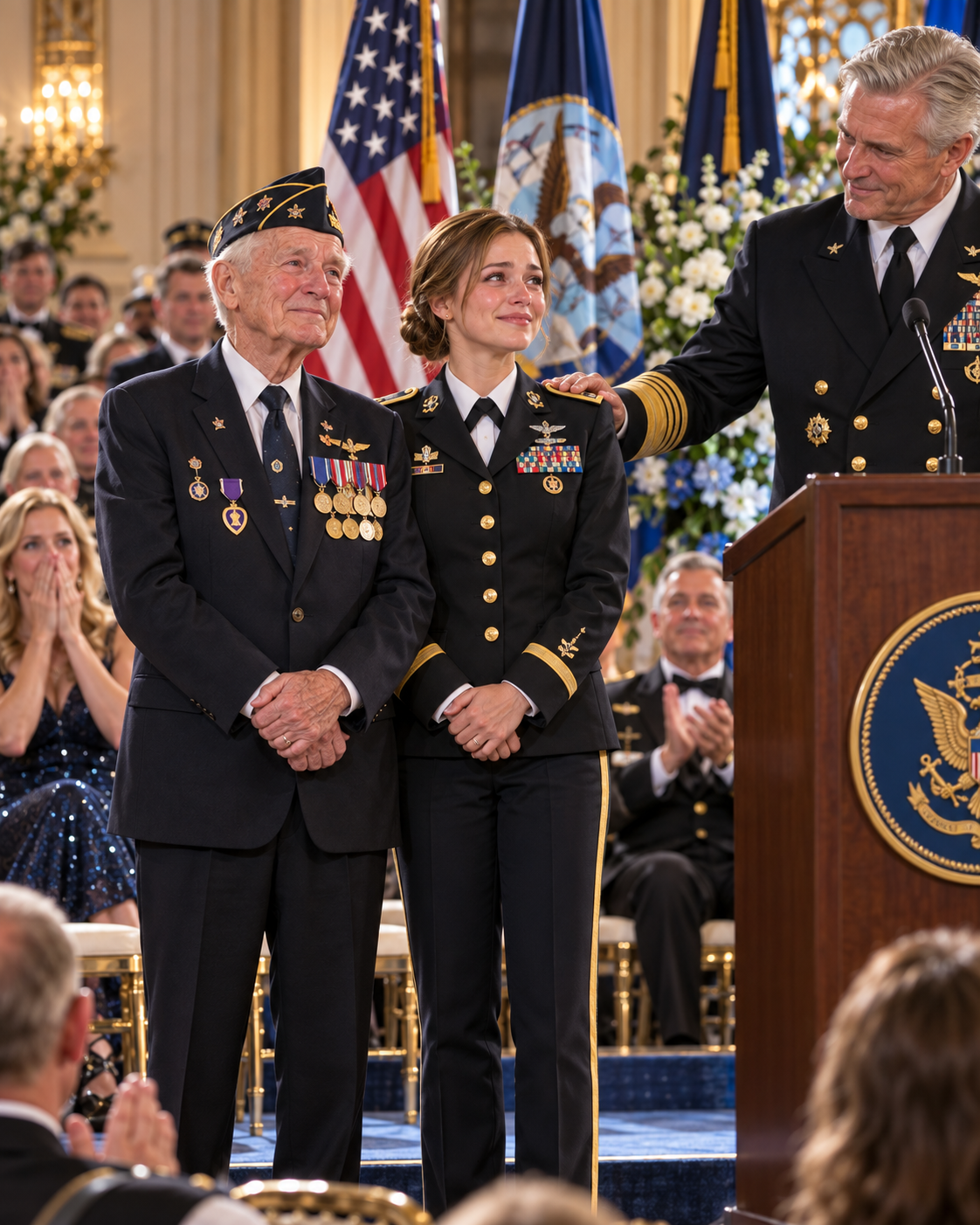
He was staring at my medals.
For the first time in my life, I couldn’t read his expression.
The general pinned the new decoration onto my uniform.
Then he stepped back.
I saluted.
He returned it.
And when I turned toward the audience, my grandfather was the first person I saw.
He was smiling.
That was enough.
After the ceremony, people surrounded me.
Some wanted to shake my hand.
Others asked about the operation.
A few military officers congratulated me.
I answered politely.
But I kept looking toward my family.
Eventually, Daniel approached.
He didn’t have his usual smile.
“Why didn’t you tell us?”
I looked at him.
“I didn’t want attention taken away from Grandpa.”
He glanced at the general.
“You knew they were coming?”
“Yes.”
“And you said nothing?”
“I was asked to keep it quiet.”
Daniel nodded slowly.
Then he looked at the medal.
“I didn’t know.”
“I know.”
He seemed uncomfortable.
For once, he didn’t have anything clever to say.
Then my father approached.
His face was different.
Not angry.
Not dismissive.
Just quiet.
“Maya.”
I waited.
He looked at my uniform.
“I owe you an apology.”
I didn’t answer immediately.
He continued.
“What I said earlier was wrong.”
I nodded.
“Thank you.”
He looked toward the stage.
“I’ve spent years measuring success by money, titles, promotions, and connections.”
He swallowed.
“And I never stopped to consider what you had accomplished.”
I looked at him.
“You didn’t have to understand my career.”
“I should have respected it.”
That sentence surprised me.
My father had never said anything like it before.
He looked at the medal.
“Did you really help bring those people home?”
“Yes.”
“How many?”
I hesitated.
“Enough.”
He nodded.
For the first time, he didn’t ask about money.
He didn’t compare me with Daniel.
He didn’t mention what my brother had accomplished.
He simply stood there.
Then he said:
“I was wrong about you.”
Those words should have felt satisfying.
They didn’t.
They felt sad.
Because I realized how long I had waited to hear them.
My mother came over next.
She was crying.
She hugged me.
“I should have defended you.”
I held her.
“Yes.”
She pulled away.
“I was afraid of upsetting your father.”
“I know.”
She looked at my uniform.
“You look beautiful.”
I smiled.
“Thanks, Mom.”
Then my grandfather called my name.
I walked over.
He reached for my hand.
“You kept it quiet.”
I smiled.
“I didn’t want to steal your day.”
He shook his head.
“You didn’t steal anything.”
He looked at my medal.
“You gave me the best birthday present I could have received.”
I laughed softly.
“I thought your present was the watch.”
“The watch is nice.”
He leaned closer.
“But this is better.”
I smiled.
Then he whispered:
“You finally understand.”
“Understand what?”
He squeezed my hand.
“Why I wore my uniform all those years.”
I looked at him.
He continued.
“Not because I wanted people to see it.”
He tapped the medal on my chest.
“But because every time I put it on, I remembered who I was serving.”
I nodded.
“I understand now.”
My grandfather smiled.
“Good.”
Later that evening, most of the guests had left.
The ballroom was almost empty.
I stood near the windows while staff cleared the tables.
My father approached again.
This time, he didn’t speak immediately.
He simply stood beside me.
After a moment, he said:
“Daniel wants to talk to you.”
I looked at him.
“About what?”
“I don’t know.”
A few seconds later, Daniel appeared.
He had removed his jacket and loosened his tie.
He looked tired.
He stopped in front of me.
“I owe you one too.”
I smiled faintly.
“You don’t have to.”
“Yes, I do.”
He looked down.
“I’ve made jokes about your uniform for years.”
“You have.”
“I thought you were doing something smaller with your life.”
I said nothing.
He looked at my medal.
“I was wrong.”
I nodded.
Daniel took a breath.
“I’ve spent my whole life trying to make Dad proud.”
I looked at him.
“Me too.”
He shook his head.
“No. You stopped trying.”
That hit me harder than I expected.
He continued.
“You just did what you believed was right.”
I thought about that.
Maybe he was right.
Maybe somewhere along the way, I had stopped measuring myself against my family.
Maybe that was why the general’s words hadn’t made me feel triumphant.
I didn’t need my father to admit I had value.
I had already learned that.
Daniel looked toward the stage.
“Grandpa always liked you best.”
I laughed.
“He liked you too.”
“No.”
He smiled.
“He just worried about me.”
We both laughed.
Then Daniel looked at me seriously.
“I think he was proud of you long before anyone else understood why.”
I nodded.
“I think so too.”
The following morning, I visited my grandfather at his house.
His medals were still arranged on the dining room table.
He was sitting in his favorite chair, drinking coffee.
I placed my new commendation beside his old medals.
He studied it.
Then he pointed toward his own decorations.
“See that one?”
I nodded.
“I earned that one when I was twenty-two.”
“I know.”
“I thought it was the greatest thing that ever happened to me.”
“What changed?”
He smiled.
“You did.”
I laughed.
“Grandpa.”
“I’m serious.”
He leaned back.
“The medals don’t matter as much as what you did to earn them.”
I looked at him.
“Then why keep them?”
He smiled.
“So I don’t forget.”
“Forget what?”
“Who I was when I was young.”
I sat beside him.
For a while, neither of us spoke.
Then he asked:
“Are you going to stay in the Army?”
I thought about it.
“Yes.”
He nodded.
“Good.”
“You approve?”
He laughed.
“I approved before you ever asked.”
I smiled.
Then he reached over and touched my new medal.
“Don’t let them make you ashamed of this.”
“I won’t.”
“Good.”
He looked out the window.
“Because one day you’ll take it off.”
I frowned.
“What?”
“Your uniform.”
He smiled.
“One day, you’ll hang it in a closet and move on to something else.”
I listened.
“But the person you became while wearing it will stay with you.”
I didn’t know why those words affected me so deeply.
Maybe because I understood what he meant.
The uniform wasn’t my identity.
It was simply a symbol of the choices I had made.
The discipline.
The responsibility.
The people I had served.
The people who had trusted me.
Those things would remain long after the uniform was gone.
Several months later, my father invited me to speak at a company event.
I almost refused.
Then I asked why.
He said he wanted his employees to hear from someone who understood leadership outside the corporate world.
I agreed.
I stood in front of hundreds of executives and managers.
I didn’t talk about medals.
I didn’t talk about the Pentagon.
I didn’t talk about the general.
I talked about responsibility.
I talked about trust.
I talked about what happened when people depended on you.
And I told them something my grandfather had taught me.
“Leadership isn’t about being the most important person in the room.”
The room became quiet.
“It’s about remembering that everyone in the room matters.”
My father was sitting in the front row.
He nodded.
Afterward, he approached me.
“You sounded like Grandpa.”
I smiled.
“That means a lot.”
He looked at my uniform.
“You know, I used to think success was measured by what you could build.”
“And now?”
He thought for a moment.
“By who you become while building it.”
I smiled.
“That sounds like progress.”
He laughed.
“Don’t get used to it.”
I laughed too.
Things between us didn’t become perfect.
Real families rarely change overnight.
But they changed.
Daniel stopped making jokes about my career.
My mother started asking about my assignments.
My father stopped comparing me with my brother.
And my grandfather kept telling everyone who would listen that his granddaughter was the best soldier in the family.
Even though Daniel reminded him that he had never served.
My grandfather would simply laugh.
“Exactly.”
On his ninety-first birthday, I returned to his house wearing my uniform.
This time, nobody asked me to change.
My father opened the door.
He looked at me.
Then he smiled.
“Ready?”
I nodded.
“For Grandpa?”
“For Grandpa.”
We walked inside together.
My grandfather was sitting in the living room surrounded by photographs.
When he saw me, he smiled.
“Come here, soldier.”
I walked over.
He looked at my uniform.
Then at my medals.
Then he reached up and straightened my collar.
“There.”
I smiled.
“Better?”
“Much.”
He leaned back.
“Now sit down.”
I sat beside him.
He looked around the room at his children, grandchildren, and great-grandchildren.
Then he said:
“You know what I’m proudest of?”
Everyone looked at him.
He pointed toward me.
“She never needed anyone to tell her who she was.”
My eyes filled with tears.
My father looked down.
My mother smiled.
Daniel nodded.
And I finally understood something.
The ceremony had never really been about the general.
Or the medal.
Or the Pentagon delegation.
It had been about my grandfather.
And somehow, without intending to, he had given me something I had spent years trying to earn from my family.
Not approval.
Perspective.
I had once believed that wearing my uniform into that ballroom would embarrass my family.
Instead, it reminded all of us what service actually looked like.
My father had spent years teaching me that success happened in boardrooms.
Daniel had spent years showing me what corporate achievement looked like.
Neither of them was wrong.
But neither was I.
There were different ways to live a meaningful life.
Different ways to serve.
Different ways to succeed.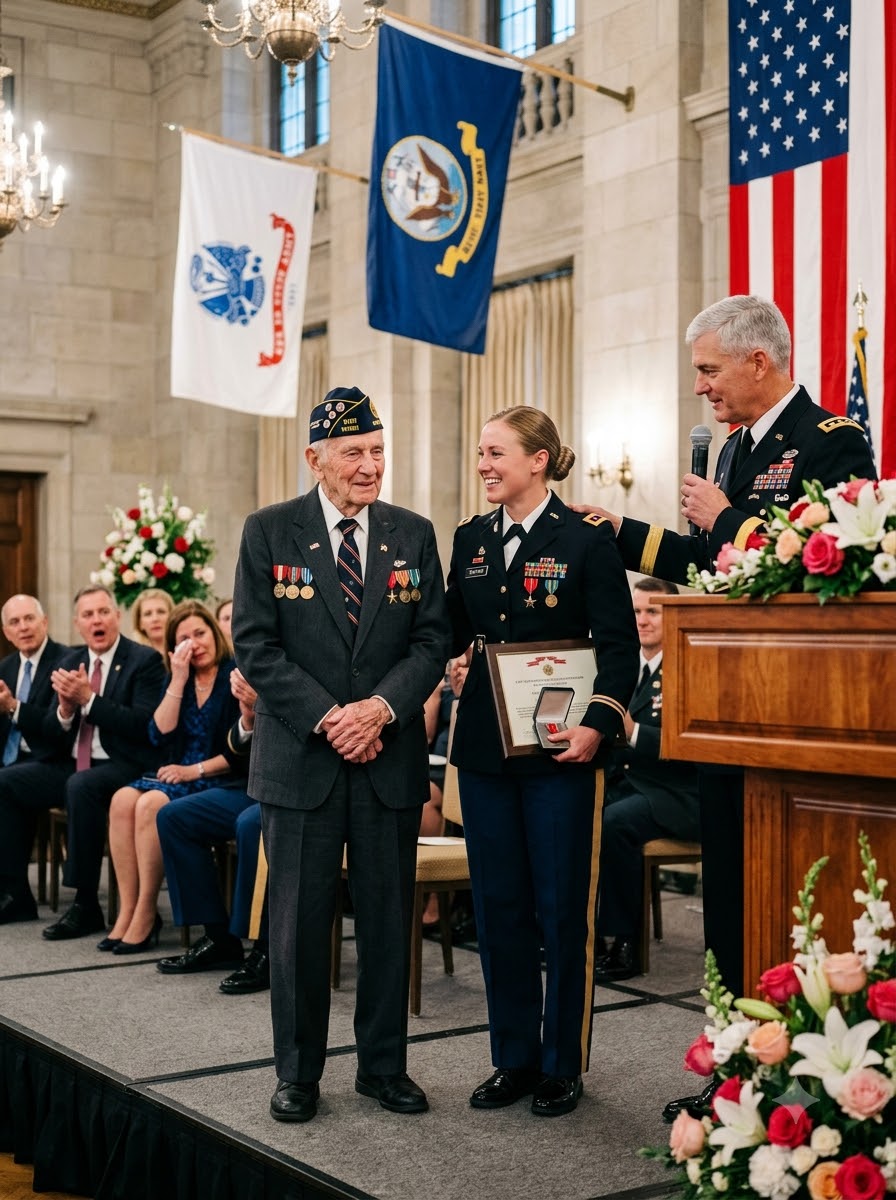
And mine had simply happened to come with boots, medals, early mornings, difficult decisions, and a uniform.
The day my family asked me not to wear it, I thought they were ashamed of me.
By the end of the night, I realized something else.
I wasn’t the one who needed to be ashamed.
I had spent years wondering whether my family considered me successful.
That night, I stopped wondering.
Because when the four-star general stood beneath the lights and said, “Today, we are honoring not one hero—but two,”
I didn’t hear it as a comparison.
I heard it as a reminder.
My grandfather had served before me.
I had served after him.
Different generations.
Different wars.
Different circumstances.
But the same principle.
You don’t wear the uniform to make yourself important.
You wear it because someone, somewhere, is counting on you to show up.
And when I looked at my grandfather that night, I realized I had spent my entire career trying to become worthy of his example.
Maybe I never had to.
Maybe he had simply wanted me to become myself.
And perhaps that was the greatest honor of all.
