

The first time my son-in-law called security on me, he did it at a dinner table paid for with my money.
When my daughter whispered, “Dad, just go,” I realized the humiliation wasn’t spontaneous. They had planned it.
Calloway House towered over Manhattan that night, forty-two stories of glass, marble, and old-money elegance.
Ethan Mercer had rented the penthouse dining salon for his promotion celebration, though he kept referring to it as “our family’s private club.”
Our family.
I almost laughed.
I arrived in my old gray coat with a bottle of wine, wearing the same scratched watch I’d owned for thirty years.

Ethan looked me up and down.
“You came like that?”
My daughter touched his arm. “Ethan, please.”
He dismissed her.
Executives, investors, lawyers, and two of Ethan’s wealthy friends surrounded the table. Most of their suits probably cost more than everything I had on.
Ethan enjoyed that.
For five years, he had convinced everyone I was a retired maintenance worker living on a small pension.
Technically, I had once been a maintenance worker.
He had simply never bothered to ask what came afterward.
Dinner had barely started when Ethan began putting on his show.
“My father-in-law believes hard work is enough,” he announced, swirling his glass of Bordeaux. “Sweet idea. But success requires knowing where you belong.”
Several people laughed politely.
I continued cutting my steak.
Then one of Ethan’s friends asked whether I lived nearby.
Before I could respond, Ethan smirked.
“Frank lives in a tiny place across the river. Very humble. Lily keeps trying to help him, but pride is a disease.”
My daughter kept staring at her plate.
That hurt more than anything Ethan had said.
“Actually,” I said quietly, “I’m comfortable.”
Ethan leaned farther back.
“There. That’s the problem. Some people mistake comfort for achievement.”
Lily closed her eyes.
For months, Ethan had pressured her to stop visiting me, stop answering my calls, and stop “supporting my negativity.”
Tonight, it seemed he wanted to humiliate me in front of everyone.
When dessert arrived, he finally made his move.
He pointed toward my chair.
“Security.”
Two uniformed guards walked in.
The entire room went quiet.
Ethan smiled.
“Get him out. He doesn’t belong at this table.”
Lily turned pale.
“Ethan—”
“No. I’m done pretending.”
Then she looked at me.
For one second, I waited for my little girl—the child who once fell asleep on my chest during thunderstorms—to stand up for me.
Instead, she whispered, “Dad, just go. Please don’t make this worse.”
Something inside me went completely still.
I stood and pulled an old brass key from my pocket, setting it in front of Ethan.
He frowned.
“What’s this?”
“Keep it.”
“For what?”
I buttoned my coat.
“You’ll know soon.”
He laughed while security escorted me toward the elevator.
His friends laughed behind me.
None of them noticed the tiny letters stamped into the key.
C.H. 001.
And none knew there was only one like it in the entire building.
I didn’t leave Calloway House.
I rode twelve floors down and entered a private office behind the east corridor, where property manager Samuel Pierce was waiting.
He immediately stood.
“Mr. Calloway.”
“Sit down, Sam.”
His expression tightened.
“I heard what happened upstairs.”
“I assumed you would.”
He looked furious on my behalf.
I wasn’t.
Not yet.
Calloway House was my life’s work.
At twenty-three, I really had been a maintenance worker.
By thirty, I was purchasing neglected apartment buildings.
By forty-five, I had turned them into hotels, residences, and commercial towers.
I remained private because wealth had already cost me enough.
After my wife died, I wanted Lily to know people before she knew money.
So I kept everything under Calloway Holdings, hired professional management, and never put my face on brochures.
Ethan mistook privacy for poverty.
Worse, he had used Lily’s access to get close to my company.
Three weeks earlier, Samuel discovered suspicious contracts connected to Mercer Development Consulting—Ethan’s business.
Fake renovation invoices.
Inflated vendor payments.
Nearly $2.8 million routed through shell corporations.
“Everything confirmed?” I asked.
Samuel pushed a folder across the desk.
“Forensic accounting finished this morning. His signatures are on twelve authorizations. And there’s more.”
He opened another file.
Ethan had submitted a proposal for Calloway Holdings to sell him the lower commercial floors at a fraction of their market value.
His presentation described ownership as “elderly, passive, and financially unsophisticated.”
I smiled.
Samuel shook his head.
“He thought the ownership group was vulnerable.”
“He thought I was vulnerable.”
Upstairs, Ethan was still celebrating.
Samuel’s phone filled with messages from catering staff.
Apparently, Ethan was joking about me.
“Your daughter married down,” one message read.
Another said Ethan was holding up the brass key and calling it “Frank’s souvenir from his janitor days.”
I looked toward the ceiling.
“Give him twenty minutes.”
Samuel hesitated.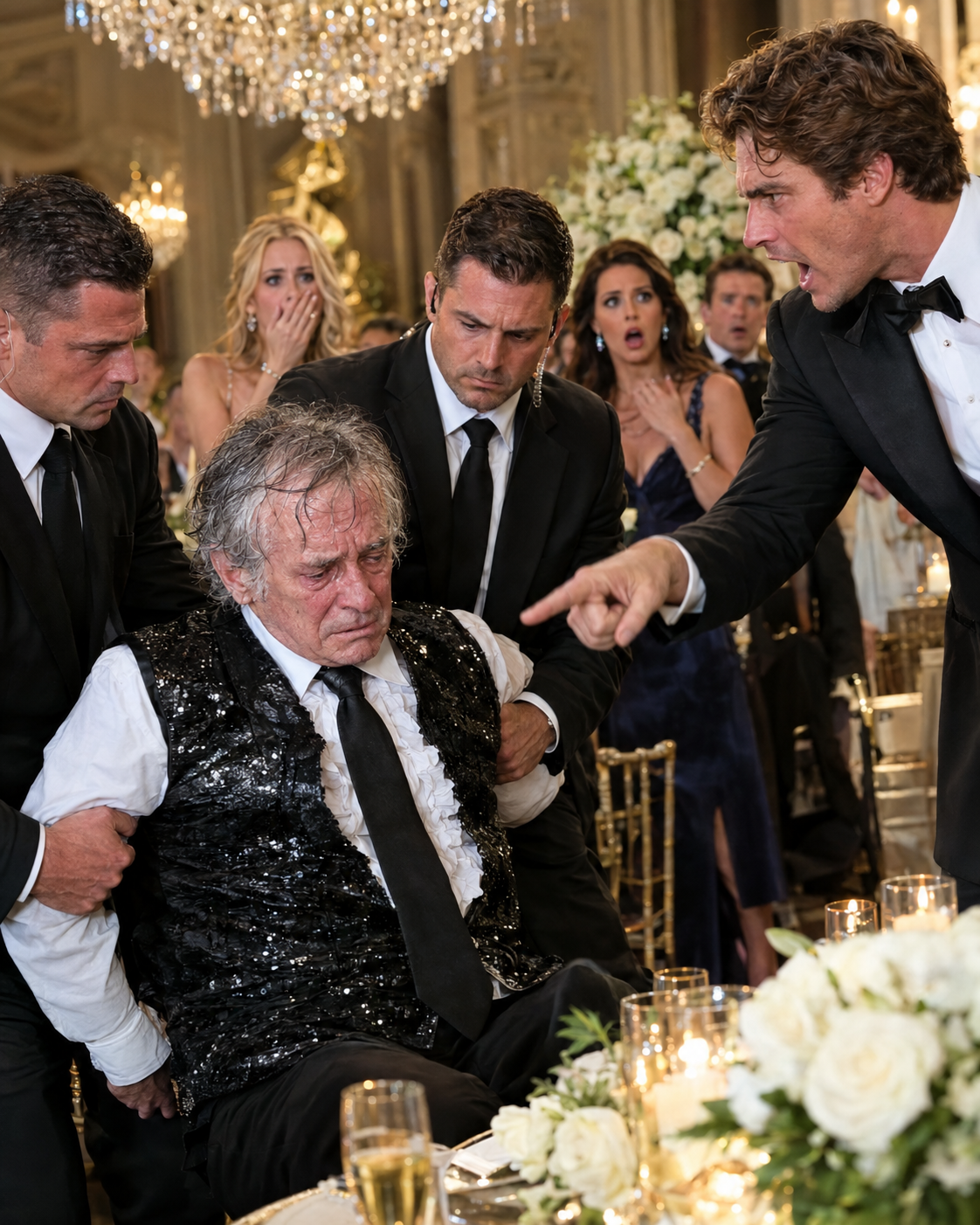
“Sir, we can remove him now.” “No.”
I thought about Lily whispering, “Just go.”
Anger would have been easier to bear than disappointment.
But I hadn’t spent forty years building an empire by reacting emotionally.
“First,” I said, “freeze every contract connected to Mercer Development.”
Samuel began typing.
“Done.”
“Notify outside counsel.”
“Already waiting.”
“Terminate his office lease under the fraud provisions, effective immediately after legal review.”
Samuel nodded.
“And the penthouse salon?”
I glanced at my watch.
“Let him finish dessert.”
Exactly twenty-two minutes after Ethan ordered security to remove me, Samuel entered the dining room upstairs.
I watched through the security feed.
Ethan was holding the brass key above his wineglass.
“Maybe it opens a broom closet.”
His friends laughed.
Then Samuel walked in, breathless.
“Mr. Calloway, we need the owner.”
The laughter died.
Ethan looked around.
“Who?”
Samuel stared straight at him.
“Not you.”
Then he turned toward the private elevator.
The doors opened.
I stepped out.
Lily rose so quickly that her chair toppled backward.
Ethan’s smile disappeared.
I walked over to the table and stopped beside him.
“You wanted to know what the key opens?”
I extended my hand.
Slowly, he gave it back.
“The building,” I said.
Nobody moved.
Ethan stared at me as though I had suddenly become someone else.
“That’s impossible.”
I slipped the brass key into my pocket.
“Calloway House. Calloway Holdings. Frank Calloway. You never made the connection because you never asked me a question unless the answer could benefit you.”
One of his investors quietly lowered his glass.
Ethan forced a laugh.
“Okay. Funny. Lily, tell him to stop.”
Lily remained silent.
Samuel placed the forensic accounting folder on the table.
Ethan’s expression changed.
“What’s that?”
“Your future,” I said.
He reached for it.
I stopped him.
“Don’t.”
My attorney, Grace Nolan, entered with two investigators from our corporate security firm.
Ethan stood.
“This is insane.”
Grace opened the folder.
“Twelve fraudulent vendor contracts, four shell companies, falsified authorization records, and diverted payments totaling approximately $2.8 million.”
Ethan’s face went pale.
“That’s not mine.”
“Your electronic signatures are attached.”
“They were copied.”
“Then perhaps,” Grace said, “you can explain the emails.”
She placed printed messages on the table.
One read: OLD MAN DOESN’T EVEN KNOW WHAT HE OWNS.
Another: ONCE LILY HAS POWER OF ATTORNEY, THE BUILDING IS OURS.
Lily gasped.
She picked up the page with trembling fingers.
“Power of attorney?”
Ethan looked at her.
“Baby, listen—”
She slapped him.
The sound echoed through the room.
Everyone froze.
“You told me Dad needed me to sign those documents because he was getting forgetful.”
Ethan lowered his voice.
“Lily, don’t embarrass us.”
She let out a broken, furious laugh.
“Us?”
Something shifted across my daughter’s face.
Not confidence.
Memory.
She remembered who she had been before Ethan taught her to apologize for existing.
I turned toward her.
“You hurt me tonight.”
Her eyes filled with tears.
“I know.”
“I won’t pretend you didn’t.”
She nodded.
“But,” I continued, “you can decide what happens next.”
Ethan slammed both hands against the table.
“This is my marriage. Stay out of it.”
I looked at him.
“You made my daughter part of a fraud scheme. You brought me into it.”
Security stepped closer.
Ethan pointed at me.
“You think money makes you powerful?”
“No,” I said. “Documentation does.”
Grace almost smiled.
The following morning, emergency legal action froze his company accounts.
Calloway Holdings filed a civil fraud claim, terminated every Mercer contract, and referred the evidence to law enforcement.
Within forty-eight hours, two major investors pulled out of Ethan’s company.
His lenders followed.
Within three months, Mercer Development filed for bankruptcy protection.
Ethan eventually accepted a plea agreement on financial fraud charges after prosecutors confirmed the shell-company records.
He lost his business, his professional licenses in two regulated activities, and the social circle he had built on borrowed prestige.
Lily filed for divorce.
She never asked me to rescue her financially.
That mattered.
She moved into a modest apartment and returned to architecture, the career Ethan had convinced her to abandon.
Six months later, she arrived at my house carrying takeout.
“I’ve rehearsed this apology a thousand times,” she said.
“Don’t rehearse.”
Her eyes filled with tears.
“I chose peace with him over loyalty to you.”
“Yes.”
“I was ashamed of you because he taught me to be.”
“Yes.”
She swallowed.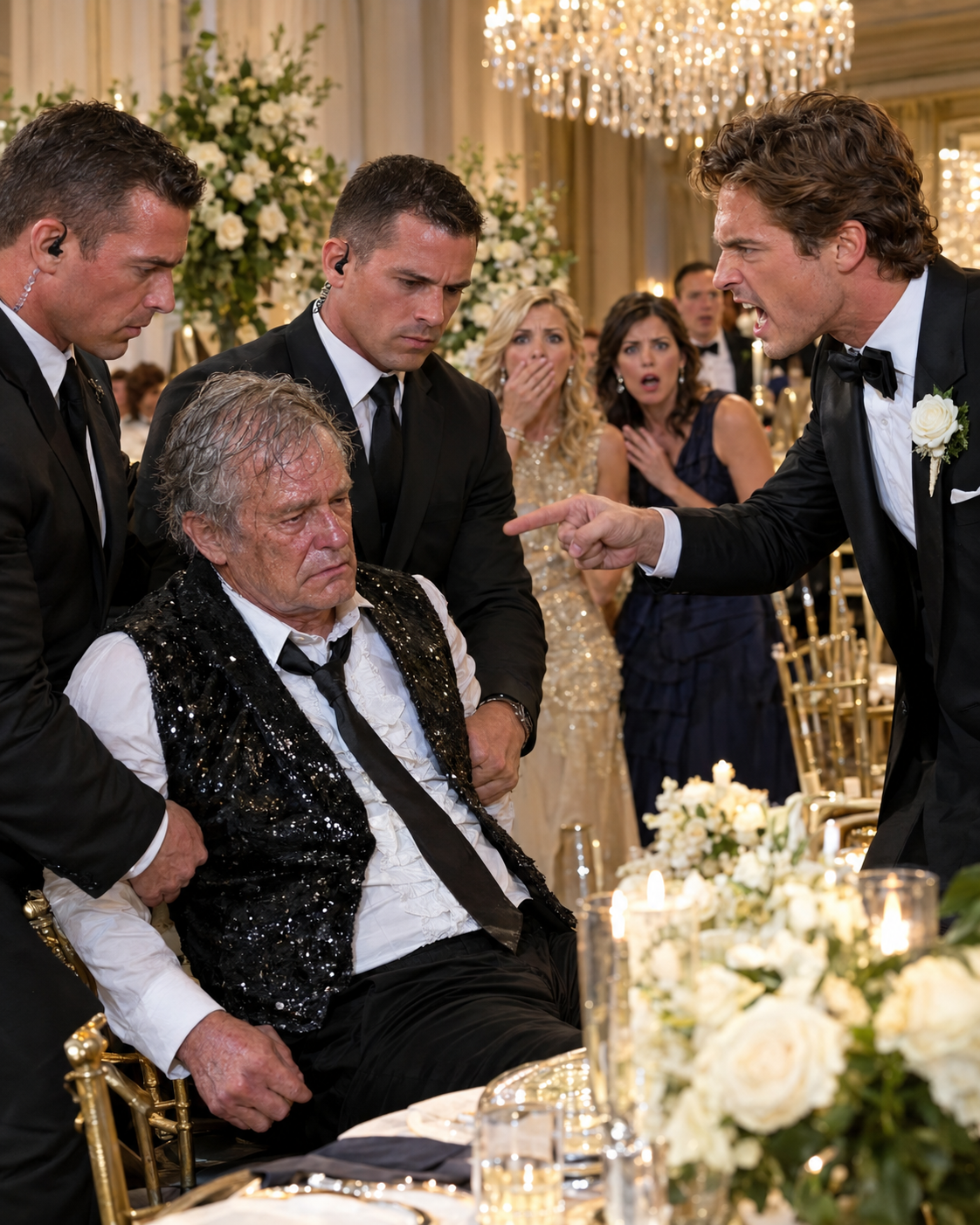
“Can you forgive me?”
I studied my daughter for a long moment.
“Forgiveness isn’t pretending it never happened.”
“I know.”
“It’s deciding what we build afterward.”
She began crying.
So did I.
A year later, we sat together in the rooftop garden of Calloway House.
No executives.
No champagne.
No security guards.
Just coffee, morning sunlight, and the city below.
Lily turned the old brass key between her fingers.
“You still trust me with this?”
I smiled.
“It was never about the building.”
She looked at me.
“What was it about?”
I closed her hand around the key.
“Knowing your worth before someone else decides it for you.”
Far below, people hurried through streets surrounded by towers whose names they rarely noticed.
I had spent my life building those towers.
But as I watched my daughter laugh again, free and unafraid, I finally understood that the greatest thing I ever rebuilt wasn’t steel or stone.
It was us.
