

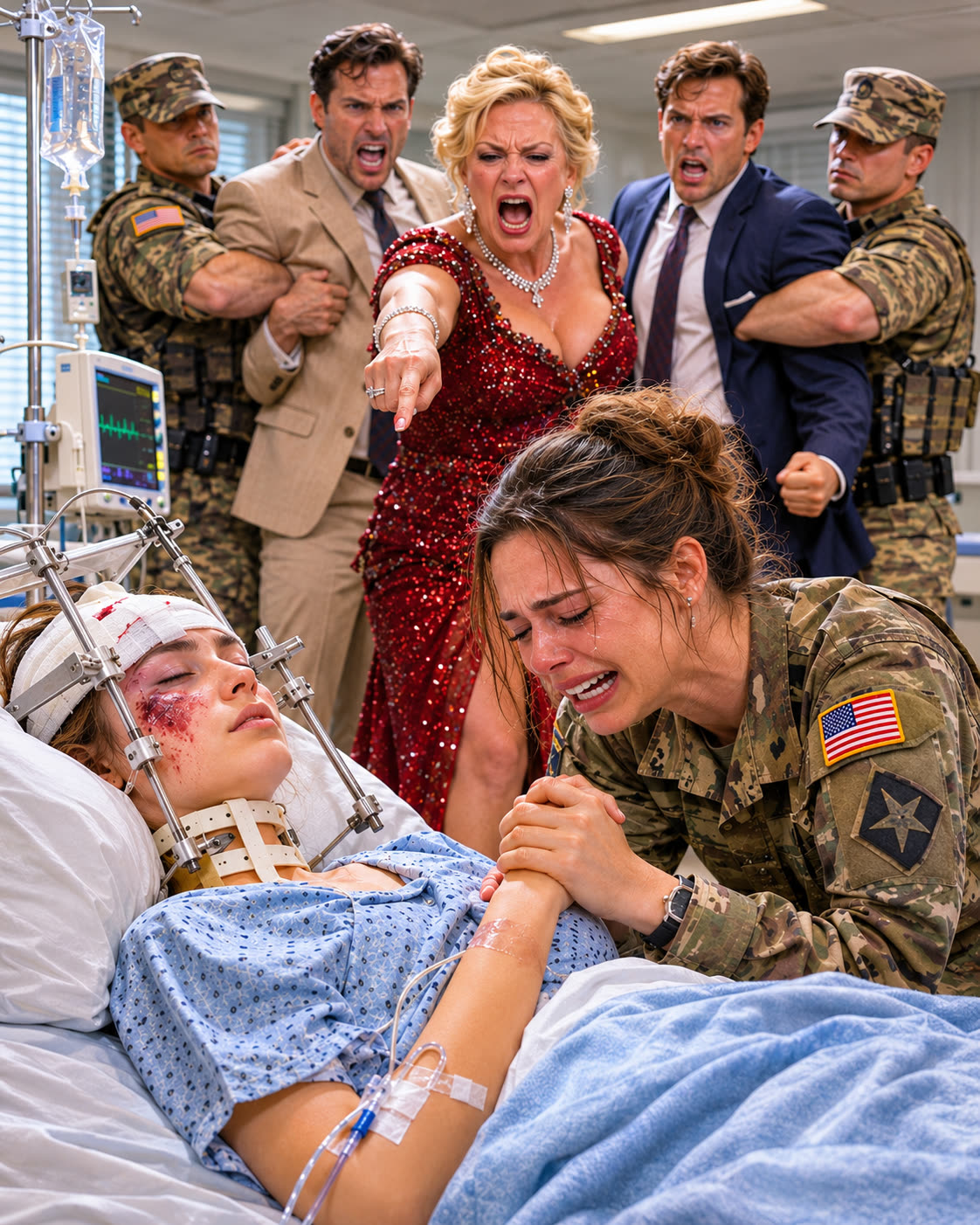
PART 1 — The Voice Beneath the Stairs
“Mom, they took turns. It’s dark down here. I’m so scared.” My twelve-year-old daughter’s trembling whisper crossed an ocean and several time zones, reaching me inside a locked operations room. It was 2:17 a.m. at Camp Arifjan in Kuwait. Tennessee’s evening was only beginning, but I was working through an overdue logistics report beneath a rattling air conditioner. Bitter coffee had gone lukewarm beside my elbow, and a junior officer down the corridor was struggling with a jammed printer. Until Lucy’s name appeared on my screen, nothing about that night had seemed unusual. Her calls normally meant complaints about algebra or another account of Biscuit, our golden retriever, stealing food.
“Hey, sweetheart,” I answered, reclining and rubbing the bridge of my nose. Three terrible seconds passed with nothing but static. Then I heard a shallow, broken breath. “Mom.” Every trace of exhaustion disappeared. I straightened immediately. “Lucy. What’s wrong?” Her familiar energy was missing, leaving a voice so weak I barely recognized it. “They didn’t stop.” I stood so abruptly that my chair struck the steel filing cabinet behind me. “Who? Who didn’t stop? Uncle Brent ? Uncle Kyle ?” My ex-husband’s brothers’ names tasted bitter. I clutched the phone until my fingers hurt. “Where are you right now?” She answered, “Baby grandma’s old place. The one with the faded green porch.”
I recognized Darlene Ror’s rental immediately: a deteriorating house outside Bell Creek, Tennessee, at the end of a gravel lane crowded with cedars. “Are you by yourself?” My mind began assessing possibilities while my heart battered my ribs. “I think so. It’s cold.” I asked, “Can you get to a window? Can you get outside?” Her reply stopped me cold. “No. They deadbolted the heavy door at the top of the stairs.” I shut my eyes briefly, struggling against panic. I had to think like a soldier because my daughter needed one. “Listen to me very carefully, my brave girl. I am getting help right now. Tell me where you are hurt.”
“Everywhere,” she sobbed, then caught her breath with a ragged gasp. “It hurts… to breathe.” Nothing in sixteen years of Army service had prepared me for that sound. I could function amid danger and separate fear from the work required, but my training offered no defense against hearing my child struggle for oxygen on another continent. “Do not attempt to stand,” I told her, forcing my voice into steadiness. “Stay exactly as you are. Don’t move a muscle.” I waved urgently at Sergeant First Class Tessa Monroe, who was sorting files nearby. One glance at my face brought her across the room. Covering the microphone with an unsteady hand, I said, “My daughter is under attack. She’s locked in a basement in Tennessee. I need local emergency dispatch patched through, immediately .”
Tessa reached for a tactical notepad without wasting time on questions. “Give me the coordinates.” I supplied the county road and closest intersection, unable to recall the house number. She took over a secure landline and began arranging a connection to Bell Creek’s emergency communications center. I returned to Lucy. “Sweetheart, talk to me. Keep your eyes open. Why were they so angry?” Her breathing came in frightening, uneven bursts. “I was in the kitchen… I heard them talking.” Then she added, “Uncle Brent said somebody was going to find the papers. Find out what they took.” I asked, “What did they use to hurt you, baby?” She said, “Mom, they had this heavy metal thing… the cross-shaped one Dad uses when the tires go flat.” A tire iron. I braced both hands against the desk as the room seemed to tilt. “They took turns,” she whispered.
For a moment, my throat closed completely. Then heavy footsteps creaked across wood through the receiver. “Lucy, absolutely freeze,” I ordered. “My screen is going dark, Mom. Battery is dying.” I fought to keep my voice controlled. “Conserve it. Just hold on. The cavalry is coming.” Her next words carried a terror that threatened to break me. “Mom, I’m hiding under the stairs… they said you’re trapped overseas. They said when you finally come back… I’m next.” Beyond the reinforced window, compound floodlights threw hard shadows over the sand. Ethan Ror had spent years using that distance against me. Every deployment and training rotation became evidence, in his telling, that I had chosen the Army over my family. The court had granted him physical custody during my overseas assignment. He was supposed to protect her.
“Where is Daddy?” I asked as fury began pushing through the fear. “I don’t know. He dropped me at Grandma Darlene’s this morning.” I pressed on. “Did Grandma see what they did? Was she there?” Lucy answered, “I heard her car running in the driveway…” The possibility settled heavily inside me. Tessa returned with another phone against her ear. “Major, I have Bell Creek dispatch. They have units rolling and paramedics on standby. They need visual identifiers for the property.” I described the sagging green porch, detached garage, and decaying fence leaning toward the road. Tessa passed everything along. Dispatch instructed us to keep Lucy talking and the connection open.
“Lucy, the deputies are minutes away. You don’t have to fight anymore. Just stay awake and listen to my voice.” Her question nearly undid me. “Will they be mad at me?” I swallowed against rising nausea. “Who? Grandma? Your uncles?” Then I answered firmly, “No, my sweet girl. You are the victim here. You did nothing wrong.” Silence pressed against the line before she murmured, “It’s so cold down here.” I urged her to look for a coat, a tarp, anything within reach, but there was nothing. I tried to give her something familiar to hold on to. “Okay, then just focus on me. Remember when Biscuit stole that entire rotisserie chicken? Remember how he tried to bury it behind the washing machine?” That story always made her laugh. This time, all I heard was a wet, rattling breath.
An incoming call flashed across my screen: Darlene Ror. I rejected it. She immediately tried again, then left a voicemail. Tessa pointed toward the notification. “Play it,” she urged. “Put it on speaker.” I opened the message while Lucy’s faint breathing remained on the other connection. I had spent years hearing Darlene’s polished Southern drawl smooth over insults and make cruelty sound respectable. Now that same voice entered the operations room while her granddaughter lay injured beneath the stairs of her property.
“Well, Caroline. I hear you’ve been making a fuss with the local authorities,” Darlene began, giving a dry little chuckle. “You need to understand how things work here. My boys are untouchable. You might play soldier over there in the sand, but my husband runs this town. You’d better remember your place before you come marching back here making accusations.” The message ended. Tessa and I stared at each other in a silence made heavier by what we had just heard. It was more than arrogance. It was a threat delivered while emergency crews were trying to reach a child. I immediately forwarded the recording to my secure military server, preserving the original.
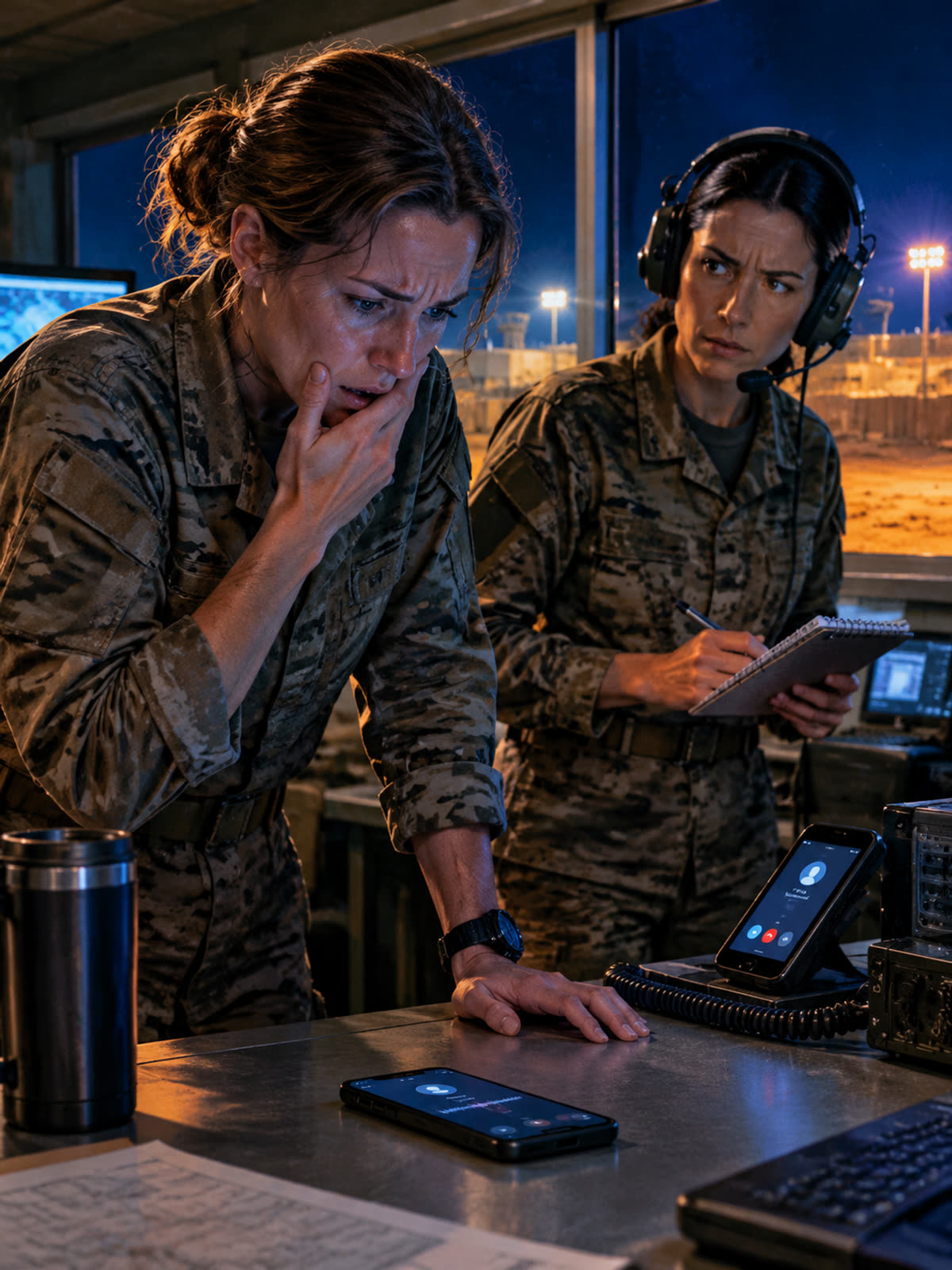
Lucy’s connection crackled again. “Mom,” she gasped, her voice suddenly higher. “Somebody’s upstairs.” My blood seemed to stop moving. “Can you hear them clearly?” Hinges shrieked through the speaker, followed by Lucy’s quick, panicked breaths. “Mom. They’re coming down the steps.” I bent toward the phone until my lips nearly touched the glass. “Lucy, do not make a sound. Help is pulling up right now.” I could do nothing but listen from the other side of the world, every muscle rigid, waiting for the deputies to arrive before whoever had opened that door reached her.
Something metallic struck concrete. A man’s voice followed, rough, angry, and close enough to leave no doubt that he was in the basement. “Who the hell are you talking to?” Lucy made a small, terrified sound. “Mom—” Then the call disconnected.
PART 2 — What the Cameras Couldn’t Hide
I called back repeatedly and reached only voicemail. My hands shook too badly to make fists as I struck the phone against the desk. After sixteen years of directing troops, managing enormous supply chains, and working in hostile territory, I stood helpless before a dark screen. I wanted to tear off my insignia, seize a transport, and burn Bell Creek down. Turning to Tessa, I spoke in a voice emptied of feeling. “Get Lieutenant Colonel Marcus Ellison in here. Right now.” He arrived seven minutes later. I knew because I had watched every second pass on the wall clock. Wearing desert fatigues and carrying black coffee in a crumpled paper cup, he assessed us and carefully put his drink down. “Major Whitaker. Give me the sit-rep,” he said.
I gave him Lucy’s age, the locked basement, the weapon, the conversation about stolen money, Darlene’s threat, and the voice before the connection failed. I managed the facts until I said my daughter’s name. Then my composure broke. Ellison pulled out a chair. “Sit down, Caroline.” I shook my head. “I can’t sit, sir.” He answered, “Then brace yourself on the desk. But tell me exactly what assets you need.” I forced out the words. “I need boots on the ground in Tennessee. Tessa has dispatch on the line, but they haven’t confirmed extraction.” His expression hardened. “Then that is our primary objective.” To Tessa, he said, “Do not let that dispatcher off the hook until we have a visual on the girl.” Then he faced me. “Play the voicemail.”
He listened to Darlene’s message twice, without reacting to her laughter. “By the time the sun comes up,” he said quietly, “that family is going to regret the day they learned your name.” He met my eyes. “We are going to ensure the District Attorney and the FBI have a copy of that recording. And I am getting you on a bird home.” There were no vague reassurances. He understood the emergency and immediately began using his authority to address it. At 2:46 a.m., Tessa straightened sharply, pressing her headset closer. “Caroline. They breached the door. They have her.” I sagged against the filing cabinet. “Is she breathing?” Tessa swallowed. “Yes.” Then, “She’s conscious, but barely. EMTs are initiating trauma protocols right now.”
I covered my mouth to contain a sob. “Can they put the phone to her ear?” Tessa’s expression tightened. “Negative. They are fighting to stabilize her oxygen levels. Her chest…” She left the rest unsaid. Ellison stepped into the Kuwaiti night to contact regional command and obtain emergency Red Cross leave authorization. Tessa stayed with me, opening a water bottle and folding my trembling fingers around it. “Hydrate. You are no good to her in shock.” At 3:18 a.m., dispatch confirmed that Lucy was traveling to a major Nashville medical center in a specialized pediatric trauma ambulance. Deputies had secured the property. But when I asked whether Brent and Kyle were under arrest, the pause before the answer told me enough. Both had escaped.
As dawn spread purple and gray across the desert, Ethan finally answered my twelfth call. “Where are you?” I demanded. “At home, Caroline, for God’s sake, it’s five in the morning.” I answered, “Which home, Ethan?” Then, “Because your daughter is currently strapped to a gurney in a trauma unit.” After a long silence, he asked, “What happened?” His voice lacked the terror I expected. “Your deranged brothers took a tire iron to her in your mother’s basement.” He breathed out defensively. “That is not what Mom said.” My vision narrowed. “And what exactly did your mother say, Ethan?” He hesitated. “She said Lucy was snooping where she shouldn’t be, got hysterical, and there was a… a family argument.”
“A family argument doesn’t result in an emergency medevac to Nashville!” I shouted. “Have you even called the hospital?” His answer was quiet. “Not yet.” Then he continued, “Caroline, you don’t understand the fallout this is going to cause for the family business. If you start making wild accusations…” I could barely comprehend him. “Your family business?” The man I had loved was worried about a company while our daughter lay in intensive care. “Lucy is your family. I will see every last one of you burn.” I ended the call. By noon, military transport had been arranged, although a punishing sequence of commercial connections still lay ahead. As I packed, Dr. Miriam Patel, Lucy’s pediatric trauma surgeon, called.
She explained with careful compassion that Lucy had fourteen fractures. Broken ribs endangered her breathing; her left forearm had fractured while she tried to defend herself, and her right tibia was cracked. I stared at the uniforms in my locker. “Is my little girl going to survive this?” Dr. Patel chose her words cautiously. “Major, her injuries are catastrophic for a child her size.” Then she added, “But she is a fighter. She is stable at this exact moment. We have her heavily sedated to manage the agony.” I held on to that temporary stability as if nothing else existed. An hour later, while I waited on the tarmac, hospital social worker Rachel Bennett called with another threat.
“Major Whitaker, we’ve initiated lockdown protocols on Lucy’s floor,” she reported. “Thirty minutes ago, an unidentified woman attempted to bypass security to access Lucy’s room. She claimed to be a representative of Wade Ror .” My former father-in-law’s influence reached through nearly every corner of Bell Creek. “Did she gain access?” I asked. “No. Our security escorted her off the premises. But you need to know, they are actively looking for her.” I immediately called Detective Andrea Salazar. “Detective, the Ror family just tried to breach my daughter’s hospital room. What is the status of the crime scene?” She sounded frustrated. “Major, my team processed the basement. We secured the weapon. But I have to be honest with you. We attempted to pull the closed-circuit security footage from the property to definitively place Brent and Kyle at the scene during the window of the assault.”
“And?” I asked. Her answer followed me into the roar of the transport engines. “The server was wiped. Someone remotely accessed the security network ten minutes after the deputies breached the door, and they initiated a catastrophic deletion protocol. The footage is gone.” This was no longer only an assault by two violent men. Their family was coordinating a cover-up. I reached Nashville late Thursday afternoon after two days sustained by caffeine, adrenaline, and fewer than four hours of broken sleep. Tessa had arranged an airport pickup through a military family support network. Helen Crawford, a retired Army surgical nurse in her early sixties, waited beside a silver Camry in faded denim and a Vanderbilt hoodie. “You’re Caroline,” she said. “Yes, ma’am.” She wasted no time. “Stow your gear. Let’s move. Your girl is waiting.”
Helen drove through Interstate 40 traffic with brisk confidence, offering neither empty optimism nor explanations about suffering. At the fourth-floor pediatric ICU, the smell of iodine and floor polish met us. Dr. Patel stopped me outside Lucy’s room. “She’s drifting in and out,” she warned, resting a hand on my shoulder. “Her appearance will be a shock. Let her dictate the pace. Do not press her for details.” I nodded and opened the door. Lucy looked impossibly small in the hospital bed. Her left arm was splinted, her elevated right leg heavily wrapped. Purple and yellow bruises covered her swollen face while monitors measured her shallow breaths. Her uninjured eye opened, and her cracked lips formed one word. “Mom.”
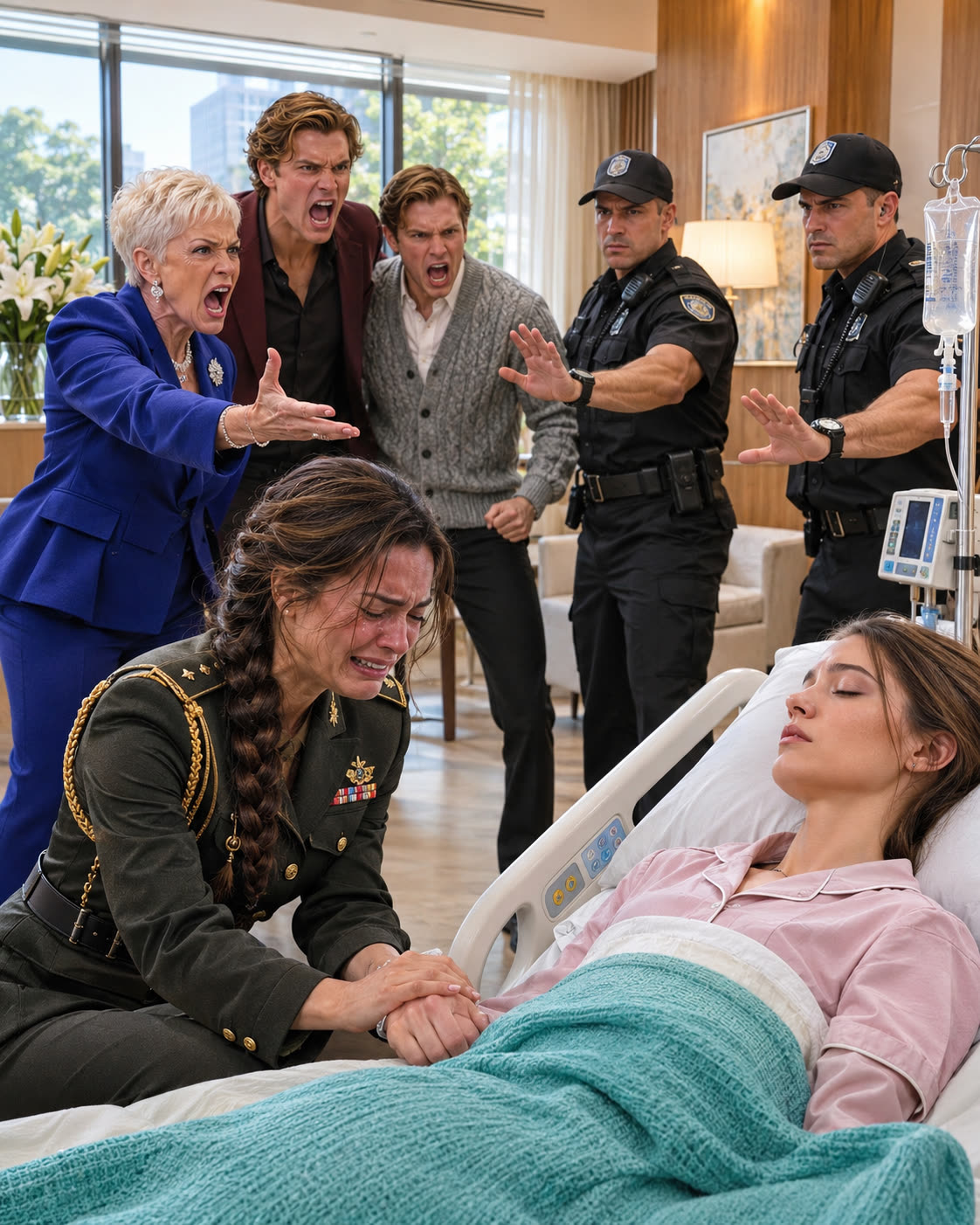
I crossed the room carefully, afraid of hurting her, and kissed an unbruised place on her forehead. “I’m here, my brave girl. I’m right here.” Her cold fingers curled weakly around mine. “You really came.” I leaned close. “I would burn down the world to get to you,” I whispered. She glanced toward the door. “Are the bad men outside?” I answered, “No, baby. This floor is locked down. Nobody gets through those doors without my permission. You are safe.” After a long look at the ceiling, she turned back with heartbreaking sadness. “Mom… did I bring this on myself? Was I bad?” I felt the question like a blade. “Look at me, Lucy. No. Never.”
“But Uncle Brent said I was snooping. He said I was an outsider, just like you. He said I ruined everything.” I held her gaze. “Grown men who use their fists on children are cowards, Lucy. They are entirely responsible for their own evil. You did absolutely nothing wrong.” Tears slipped through the bruises. I held her hand and hummed until medication carried her into uneasy sleep. An hour later, Salazar arrived with a battered leather notebook. The experienced Tennessee Bureau of Investigation detective motioned me into the corridor. “Major,” she greeted quietly. I immediately asked, “Why aren’t Brent and Kyle sitting in a jail cell right now?”
“We are building an ironclad case, Major. Bell Creek is a complicated jurisdiction. Wade Ror has his fingers in the municipal budget, the zoning board, and half the judges’ election campaigns. If we arrest them prematurely without airtight forensics, defense attorneys will shred the timeline and paint your daughter’s trauma as a tragic, accidental fall down a flight of stairs.” I protested, “She was beaten with a tire iron!” Salazar remained steady. “And we have the iron. We are waiting on blood spatter analysis and DNA. But the deleted security footage is a massive blow. We need undeniable proof they were in that house at the exact moment of the attack.” I leaned against the wall, overwhelmed by isolation. Wade’s influence extended well beyond town limits.
The following morning, Lucy managed a little cherry gelatin. Brushing her hair back, I asked gently, “Honey,” then, “Do you remember exactly what they were talking about in the kitchen before they got angry?” She looked into her lap. “Money. Uncle Kyle was shaking some papers. He said the state auditors were going to check the concrete invoices. He said they were going to go to prison.” Municipal construction fraud. I remembered every word. “And then they saw you?” She answered, “Uncle Brent grabbed me. He dragged me down the stairs. But Mom…” Her forehead tightened with concentration. “What is it, baby?”
“When they were in the basement… Uncle Kyle dropped something. His phone started making that stupid banjo sound he uses as a ringtone. It was ringing from underneath the wooden stairs in the dark.” My pulse accelerated. “Did he pick it up?” Lucy shook her head. “He tried, but Uncle Brent yelled at him that they had to get out before the cops came. They just ran up the stairs and locked the door.” I rose slowly. They had erased the cameras and tried to control access to my daughter. But beneath those stairs, one of them might have left the very evidence they needed destroyed.
PART 3 — The Father Who Locked the Door
I hurried out of the ICU and called Salazar. Within an hour, a forensic team was returning to the house with a narrowly targeted search warrant. Every vibration of my phone made my heart jump. By Monday afternoon, Lucy faced her first physical therapy consultation. The careful assessment of her leg was exhausting and full of tears. Watching her struggle to put weight on her foot turned my anger into something almost unbearable. When I stepped into the waiting area for stale coffee, Darlene was beside the vending machines. Her ivory trench coat and genuine pearls looked absurdly pristine against the hospital surroundings. A sharp-featured man in a charcoal suit stood beside her with a leather briefcase.
“Caroline, darling,” she called. I stopped, every muscle tightening. “You have exactly five seconds to turn around and walk out of this hospital before I have you arrested for trespassing.” Her courteous smile never reached her eyes. “Let’s not be theatrical. We are family. We need to handle this discreetly.” I looked at her companion. “And who is the hired gun?” He offered a card I refused. “Robert Hensley,” he replied. “I represent the Ror family trust.” I had no interest in his credentials. “Get out,” I said.
Darlene lowered her voice and moved closer. “Caroline, be reasonable. The boys… they overreacted. It was a terrible misunderstanding. But dragging this through the mud of a public trial will only traumatize Lucy further. We want to help.” Hensley opened his briefcase and produced a thick manila envelope. “The family is prepared to establish a highly generous medical trust for Lucy’s ongoing care. Fully funded. It will cover every surgery, every therapy session, and her college tuition.” I looked at the envelope as understanding brought a wave of disgust. “Blood money.”
“It’s a peace offering,” Darlene corrected. “Attached is a standard non-disclosure agreement. You simply sign it, retract your statements to that ambitious detective, and state that the injuries were sustained in a tragic, accidental fall. The investigation closes. Lucy is taken care of forever. We all move on.” For a moment, I could not answer. They had nearly killed my daughter and now expected money to erase what had happened. Even here, outside the rooms where children fought to recover, Darlene treated the truth as something she could purchase.
I stepped close enough that she had to meet my eyes. “Listen to me very carefully, Darlene. You are going to take that envelope, and you are going to leave. Because if you ever come within a hundred yards of my daughter again, I won’t call the police. I will handle you myself. And no amount of Wade’s dirty money will put you back together.” Color left her face. Her polished manners disappeared. “You arrogant fool,” she spat. “You think you can take on Wade in this county? You are making enemies that will destroy you.”
“I’ve fought insurgents in the desert,” I whispered. “You are just a coward in pearls. Get out.” I watched them head toward the elevators. My hands shook with fury and the brief satisfaction of forcing them away. Neither feeling lasted. Lucy still hurt, the investigation still depended on evidence, and the family that had harmed her remained determined to protect itself.
That evening, I sat beside Lucy’s bed reading a worn paperback when Salazar’s name finally appeared on my phone. I moved into the hall. “Tell me you found it.” The detective’s restrained excitement came through clearly. “We found it.” She continued, “It was buried in the crawlspace dirt under the stairs. The screen is smashed, but the motherboard is intact. Cyber crimes pulled the data.” I braced myself against the waiting that had consumed the past several days. “Does it put them in the basement?”
“It does more than that, Caroline. It’s Kyle’s phone. And the text logs we recovered are… disturbing.” I moved to the window overlooking Nashville traffic. “Read them to me.” Salazar began with the morning of the assault. “At 8:14 AM, the morning of the assault, Kyle texted Brent: ‘The girl was listening. She heard about the municipal invoices. Ethan needs to handle his kid.’ “ My stomach dropped. Until that moment, I had understood Ethan as a father who had abandoned his responsibility and defended his brothers afterward. This was something else.
“Ethan knew?” I asked. Salazar did not soften what came next. “It gets worse,” she warned. I stood motionless by the window, watching traffic move far below while the phone pressed against my ear. All the explanations I had been trying to make sense of—his lack of panic, his defense of Darlene, his concern for the company—waited on the other end of that connection.
“Ten minutes later, Brent receives a text from Ethan’s verified number. It says: ‘She’s going to call Caroline tonight and run her mouth. Deal with it before she gets to a phone. I’ll keep Dad distracted.’ “ The corridor seemed to turn beneath me. Ethan had not merely protected his brothers after their attack. He had sent them to silence our daughter. He knew their tempers and understood what the family stood to lose. To defend his father’s fraudulent business, he had placed Lucy in their hands. The overhead lights seemed to flicker as the full meaning struck me. He had ordered it.
The consequences swept through Bell Creek. With the recovered messages, the tire iron, and metadata showing that Ethan’s credentials had erased the security system, Salazar and the District Attorney finally had the case they needed. At six on a rain-soaked Tuesday morning, TBI agents carried out coordinated no-knock warrants across the county. Brent and Kyle were taken from their homes in handcuffs before local news cameras. A preliminary hearing was set for the next week. What had begun as an assault investigation had become a political scandal involving fraudulent contracts and stolen taxpayer money.
News vehicles crowded the streets around the old Bell Creek Courthouse, with its antebellum architecture, weeping willows, and weathered war memorial. I arrived beside Patricia Voss, the local attorney Helen had recommended. A Bell Creek native, Patricia had no fear of the Rors. As we neared the oak entrance doors, people moved aside. Darlene stood above us on the marble steps, looking worn, with strain deepening the lines around her mouth. Wade waited behind her, staring angrily at the ground while expensive defense attorneys surrounded him.
Darlene saw me and lost control. “You destroyed this family!” she screamed through the camera flashes. “You took a private family disagreement and paraded it for the world!” I approached without raising my voice and stopped two feet away. “No, Darlene. I am just the spotlight. Your sons are the monsters who built the shadows. Now the whole town gets to see what you really are.” I passed her and entered the courtroom. The heavy doors closed behind me, shutting out the commotion.
The prosecutor dismantled their protection piece by piece. Medical records documented Lucy’s fractures. My desperate dispatch call played for the court. Then he introduced the recovered messages and read Ethan’s instruction into the public record. Brent and Kyle sat in orange jail uniforms, avoiding my eyes. Without their influence or Darlene’s shelter, they looked diminished. A stern judge from a neighboring county had been assigned to avoid conflicts of interest. She denied bail, finding them flight risks and dangers to a key witness. They remained in custody. Afterward, I stayed in the back row until the rush of adrenaline began to subside.
As I stood to leave, Ethan stepped away from the rear wall. His suit hung loosely, his eyes were bloodshot, and he seemed hollow. “Caroline,” he said hoarsely, moving into my path. Patricia immediately came alongside me. “Mr. Ror, you are legally prohibited from approaching my client.” He raised his hands. “Just two minutes,” he pleaded. “Please.” I studied the man I had once expected to spend my life with. Anger had given way to cold disgust. “Two minutes, Ethan. Make them count.”
His eyes filled as he struggled to speak. “I never meant for them to go that far. You have to believe me. Dad was losing his mind over the auditors. He said if those invoices leaked, the feds would seize the company, the houses, everything. I just told Brent to scare her. Just take her phone away so she couldn’t call you.” I answered quietly, “You sent two grown men to scare a twelve-year-old girl in a locked basement?” Then I added, “You knew what Brent’s temper was like. You knew what he was capable of.” He began to sob. “I was trying to protect the family!”
“You don’t have a family anymore, Ethan,” I told him, stepping past. “You just have co-conspirators.” Outside, bright Tennessee sunlight met me. For the first time, I felt something like closure. The evidence was public. Brent and Kyle were behind bars. The family’s power had failed to conceal what they had done. But when I returned to Helen’s house that evening, Lucy was unusually quiet. She sat on the floral sofa with her leg supported, stroking Biscuit with restless intensity. Her eyes were red.
“Hey, sweetheart. The judge kept them in jail. It’s over.” She would not look at me. Instead, she reached into her oversized hoodie and offered a crumpled sheet of notebook paper with trembling hands. I unfolded it and read the careful loops of her handwriting: Mom. I lied to the police about one thing. I’m sorry. I sat beside her as dread opened beneath me. “What did you lie about, baby?” At last, she raised her face. Tears ran over the bruises.
“Right before Dad left me at Grandma’s… before the uncles came down the stairs… I begged Dad to take me with him. I told him Brent looked crazy.” A sob interrupted her. “Dad looked right at me, Mom. And he said, ‘If you didn’t run your mouth, you wouldn’t have to learn this lesson. Take your punishment like a Ror.’ And then he locked the basement door from the outside and drove away.” Whatever remained of the man I thought I knew broke apart. Ethan had done more than send his brothers. He had locked the door himself.
Recovery was nothing like the inspiring sequences shown in movies, where months of suffering disappear beneath a hopeful soundtrack. It was exhausting, painful, and relentlessly difficult work, without a trace of glamour.
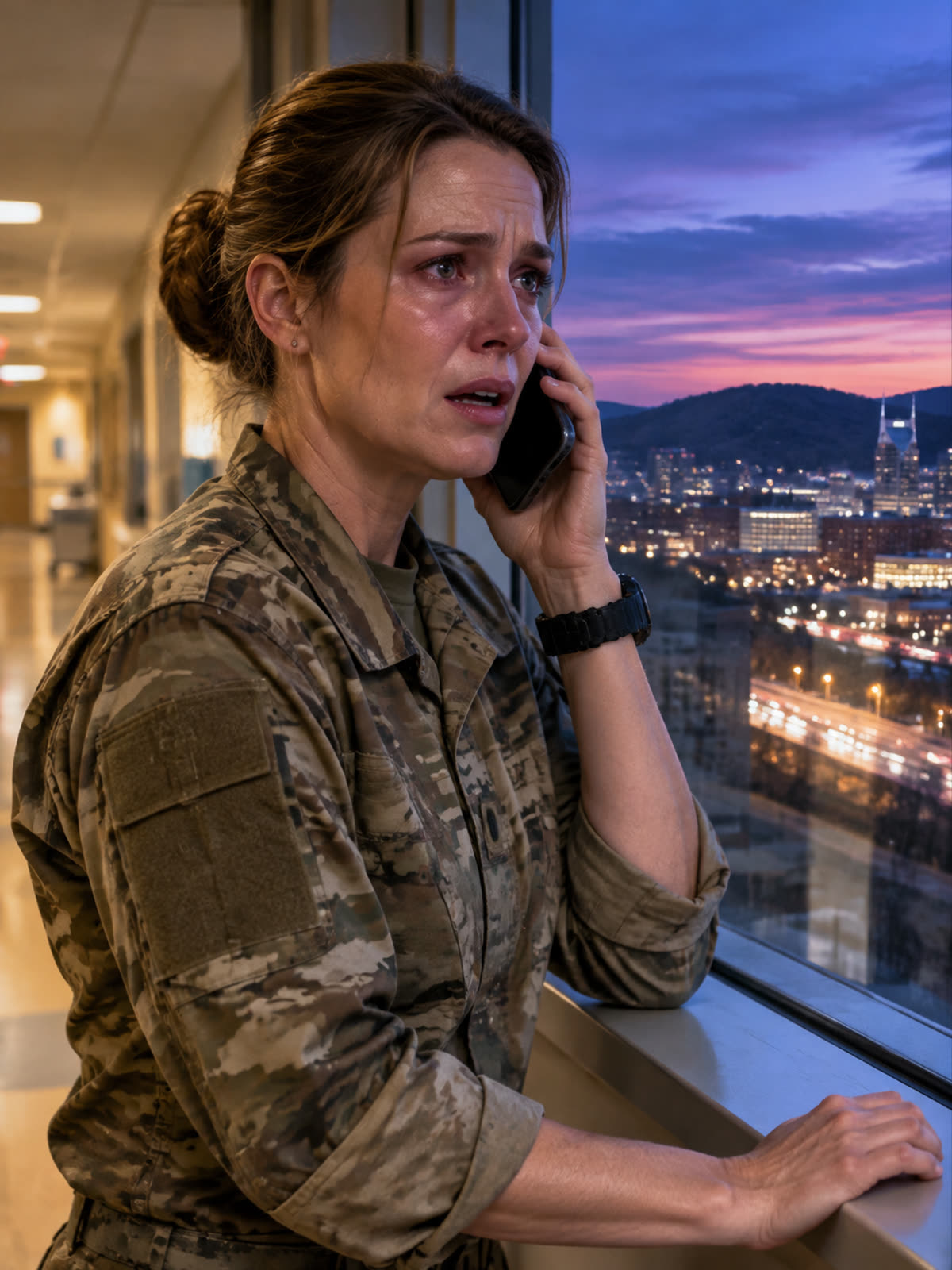
Discovering that Ethan had personally imprisoned Lucy in the basement meant she had to undergo a carefully supervised interview with trained child advocacy specialists. The process forced her to revisit the very horrors she was struggling so desperately to leave behind. Meanwhile, the legal system continued moving at its frustratingly slow pace. But while the courts dealt with the Ror family, our own daily battle unfolded inside a physical rehabilitation clinic in Nashville.
Three times each week, Lucy endured excruciating exercises designed to restore the weakened muscles of her right leg. Some days, frustration overwhelmed her completely. She would scream, throw foam exercise blocks across the therapy room, and insist that spending the remainder of her life in a wheelchair would be preferable to completing another round of painful stretches.
Her physical therapist, Denise, was a remarkably determined woman who refused to be intimidated by those outbursts. Whenever Lucy threw a block, Denise calmly picked it up, returned it to her hand, and said, “I know it’s unfair. I know it hurts. Now give me ten more reps, or we do twenty tomorrow.”
Denise never treated my daughter as though she were a fragile ornament that might shatter at the slightest pressure. She expected determination and perseverance, and little by little, through tremendous pain and effort, Lucy began finding those qualities within herself.
At the same time, I was fighting an entirely different struggle against military bureaucracy. With Lieutenant Colonel Ellison firmly supporting my request, I worked through the complicated military personnel system until I obtained a compassionate reassignment. My temporary posting to Fort Campbell meant I could remain in the United States, continue fulfilling my military responsibilities, and stay consistently involved in Lucy’s rehabilitation.
Every Sunday, Tessa called from Kuwait, insisting on hearing a complete account of Biscuit’s latest destructive adventures. Those brief connections to the life I had known before helped me maintain my balance while adjusting to everything that had changed.
Eight months after the desperate telephone call that had transformed our lives, the courts in Bell Creek finally delivered their judgment.
Confronted with overwhelming digital forensic evidence, detailed medical testimony, and the possibility of federal fraud prosecution, the Ror brothers could no longer sustain their defense. Brent and Kyle agreed to plead guilty to aggravated assault and felony unlawful confinement. I sat in the courtroom’s front row as the judge imposed sentences that would keep them inside a state penitentiary for the next decade, deprived of the social standing and influence they had once relied upon.
Ethan faced consequences that were just as definitive. With Lucy’s testimony and the recovered text messages supporting the case, the family courts acted with extraordinary urgency. His parental rights were effectively eliminated. He received no visitation privileges, no legal custody, and a permanent restraining order was established to keep him away from his daughter.
Meanwhile, the financial examination of Ror Construction had uncovered enough misconduct to produce a succession of federal indictments. Wade’s network of bribery and inflated invoices began collapsing, bringing down nearly half of the municipal administration along with it.
I chose not to attend Ethan’s final court proceedings. By then, I understood that sitting inside another courtroom was no longer necessary to demonstrate my devotion to Lucy. The place where she truly needed me was the rehabilitation center, where I could watch her cross a balance beam without anyone holding her up.
Spring eventually returned to Tennessee, replacing the harsh winter cold with gentle warmth. The bruising that had once covered Lucy’s face had disappeared long before, giving way to the healthy color of a teenager who could finally live without constant fear.
One Saturday afternoon, beneath an enormous stretch of brilliant blue sky, we drove to Liberty Park in Clarksville. The Cumberland River flowed peacefully nearby, its surface catching the afternoon sunlight. We strolled together along the paved walkway while Biscuit pulled eagerly against his leash, determined to investigate every bush that moved in the breeze.
Lucy still walked with a faint limp, so slight that most people would barely notice it. But she carried herself with her head raised and her shoulders straight.
We paused beside a wooden bench overlooking the river. A soft breeze lifted strands of her hair as she rested against the wooden railing, watching a pontoon boat move slowly across the water.
“Mom?” she asked gently, her voice no longer carrying the vulnerable uncertainty that had followed her for so many months.
“Yeah, kiddo?”
“Do you think there will ever be a day where I wake up and I don’t remember the basement at all?”
I moved closer and slipped my arm around her shoulders.
More than anything, I wanted to tell her something comforting, even if it wasn’t true. I wanted to promise that enough time could erase every painful memory and remove every scar. But honesty had helped us survive everything we had endured, and I refused to abandon it now.
“I think the memory will always be there, Lucy,” I admitted softly. “Scars don’t disappear. But they do stop hurting. Right now, that memory takes up a whole room in your mind. But as you get older, as you fill your life with beautiful things—graduation, terrible boyfriends, road trips, adopting your own annoying dogs—that memory is going to get pushed into a tiny box in the attic. It will just be one small part of your story, not the whole book.”
She rested her head against my shoulder and slowly released a long, peaceful breath.
“I like the sound of that book.”
“It’s going to be a bestseller,” I promised, pressing a kiss against the crown of her head.
For most of my life, I had believed strength meant carrying every burden without ever allowing myself to collapse. I had convinced myself that being both a capable soldier and a devoted mother required building defenses so formidable that nothing could ever reach us.
But standing beside that river, watching Lucy smile at a dog passing along the trail, I finally recognized how mistaken that belief had been.
Real strength has nothing to do with being impossible to hurt. It comes from finding the courage to force open locked doors when someone you love has been abandoned in darkness. It means confronting those responsible for suffering, exposing their actions to the world, and refusing to surrender control of your future to them.
Darlene Ror had always believed that authority depended on intimidation, that protecting powerful people required frightening vulnerable ones into silence. Yet the corrupt world she had constructed had been swept away by something she had never understood: the enduring determination of a mother who would never abandon her child.
We had made it through the siege.
And at last, the light belonged to us.
Disclaimer: This story is a work of fiction inspired by real-life themes. Names, characters, places and events are fictionalized, and any resemblance to real persons is purely coincidental. Images are for illustration purposes only.
