

Part 2 — My Money Had Never Been His
Two officers arrived a short time later.
One was a man in his forties who recognized Dad from his years on the force.
The other was a younger woman carrying a notepad.
Dad explained what he’d found without exaggerating.
“My son-in-law has been transferring my daughter’s wages to his mother. My daughter says she didn’t consent. It’s been happening for months.”
He gestured toward the kitchen.
“My grandson is four.”
The male officer looked at me.
Then at Ben.
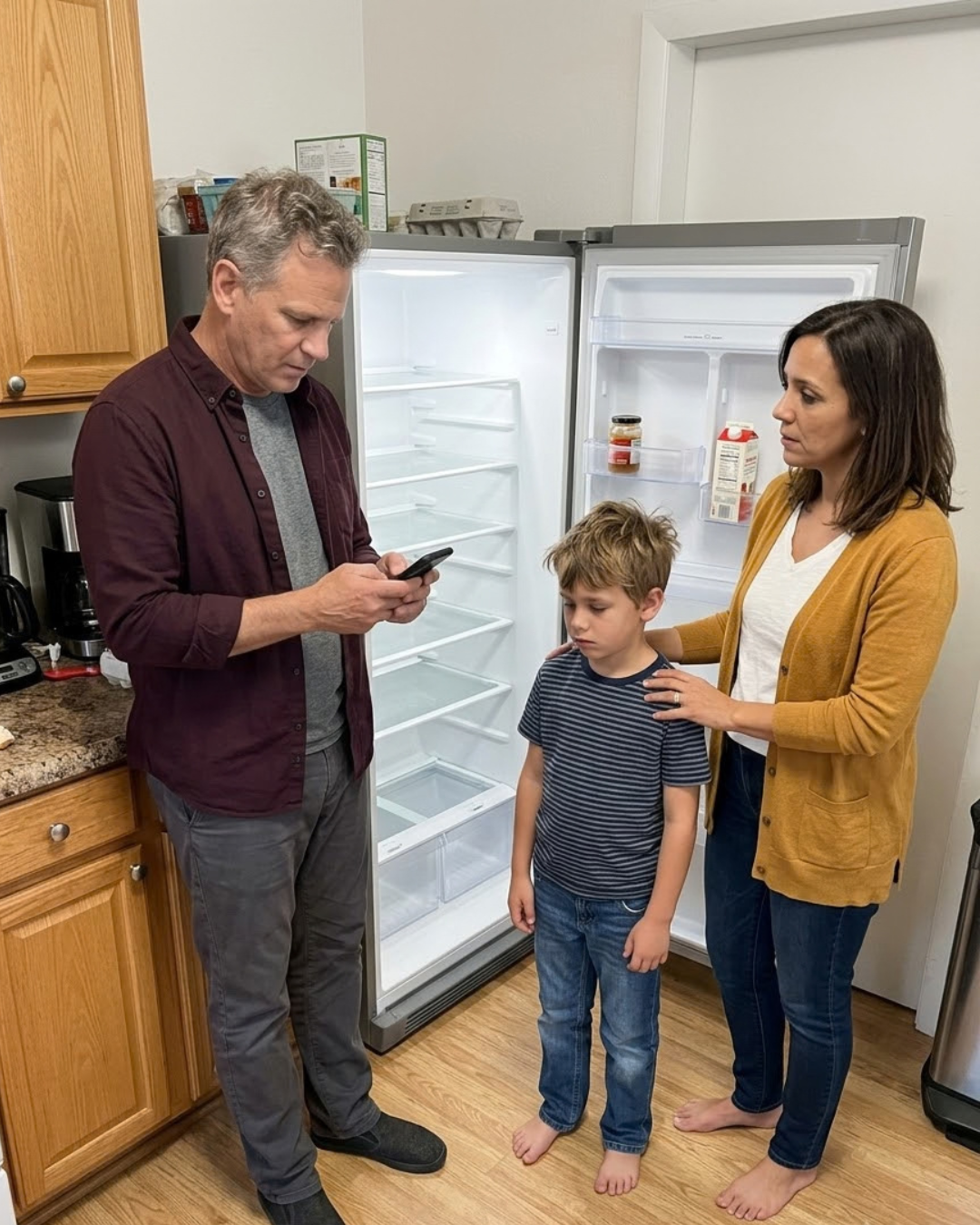
Then toward the refrigerator.
“Sir,” the female officer asked my husband, “have you been transferring your wife’s income to another account?”
“I manage the household finances.”
“That wasn’t the question.”
He folded his arms.
“My mother needed temporary assistance.”
“Whose paycheck was transferred?”
He hesitated.
“Technically hers.”
“And did she authorize those transfers?”
Silence.
“She should understand family obligations.”
The officer lowered her pen.
“Did she authorize them?”
My husband didn’t answer.
The officer opened the refrigerator.
She stood there for several seconds.
Then she closed it.
They didn’t arrest him.
Instead, they documented what they could, took statements, and gave me information about domestic-abuse resources, legal aid, and financial safety planning.
The female officer eventually pulled me aside.
“Ma’am, economic control can be a form of domestic abuse.”
I looked down.
My throat tightened.
She continued gently.
“You need to separate your finances immediately. And you should speak with a family-law attorney about your options.”
When the officers left, my husband stood near the window.
His confidence was gone.
Dad turned toward me.
“Go buy groceries.”
“I don’t have much cash.”
I hated how ashamed I sounded.
“I don’t even know what’s left on the debit card.”
Dad opened his wallet.
He put his card in my hand and closed my fingers around it.
“I didn’t ask what you had.”
“Dad—”
“Go fill your cabinets.”
He looked toward Ben.
“Really fill them.”
Then he added:
“When you get back, we’re opening an account he can’t touch.”
The grocery store felt overwhelming.
Bread.
Eggs.
Milk.
Chicken.
Rice.
Apples.
Bananas.
Peanut butter.
Pasta.
Vegetables.
Then I reached the refrigerated aisle.
I saw them.
Strawberry yogurt cups.
Cartoon cows on the labels.
I put an entire pack into my cart.
Then came the cereal aisle.
Stars.
I bought those too.
Every item felt strangely extravagant.
A voice inside me kept whispering:
Too much.
Wasteful.
Put it back.
But another voice was louder now.
Dad’s.
Why is your child hungry?
So I kept shopping.
When I returned home, Dad had bought groceries too.
Bags covered the kitchen counter.
Fresh fruit.
Milk.
Cheese.
Vegetables.
Chicken.
Ground beef.
Cereal.
Even ice cream.
He began putting everything away.
“Sit down,” he said.
“What?”
“You haven’t eaten either.”
I didn’t answer.
He already knew.
Dad cooked eggs with vegetables and cheese.
He made toast.
He poured orange juice.
Ben watched from the table with enormous eyes.
Dad placed his plate down first.
“Eat up, buddy.”
Then he put another plate in front of me.
I stared at it.
A proper meal.
Something about that nearly broke me.
Dad sat across from us.
“A man who feeds others never lets his own family starve.”
My husband stood near the window.
“You’re making me look bad.”
Dad turned his head.
“You did that yourself.”
