

PART 1 — The Daughter Who Left
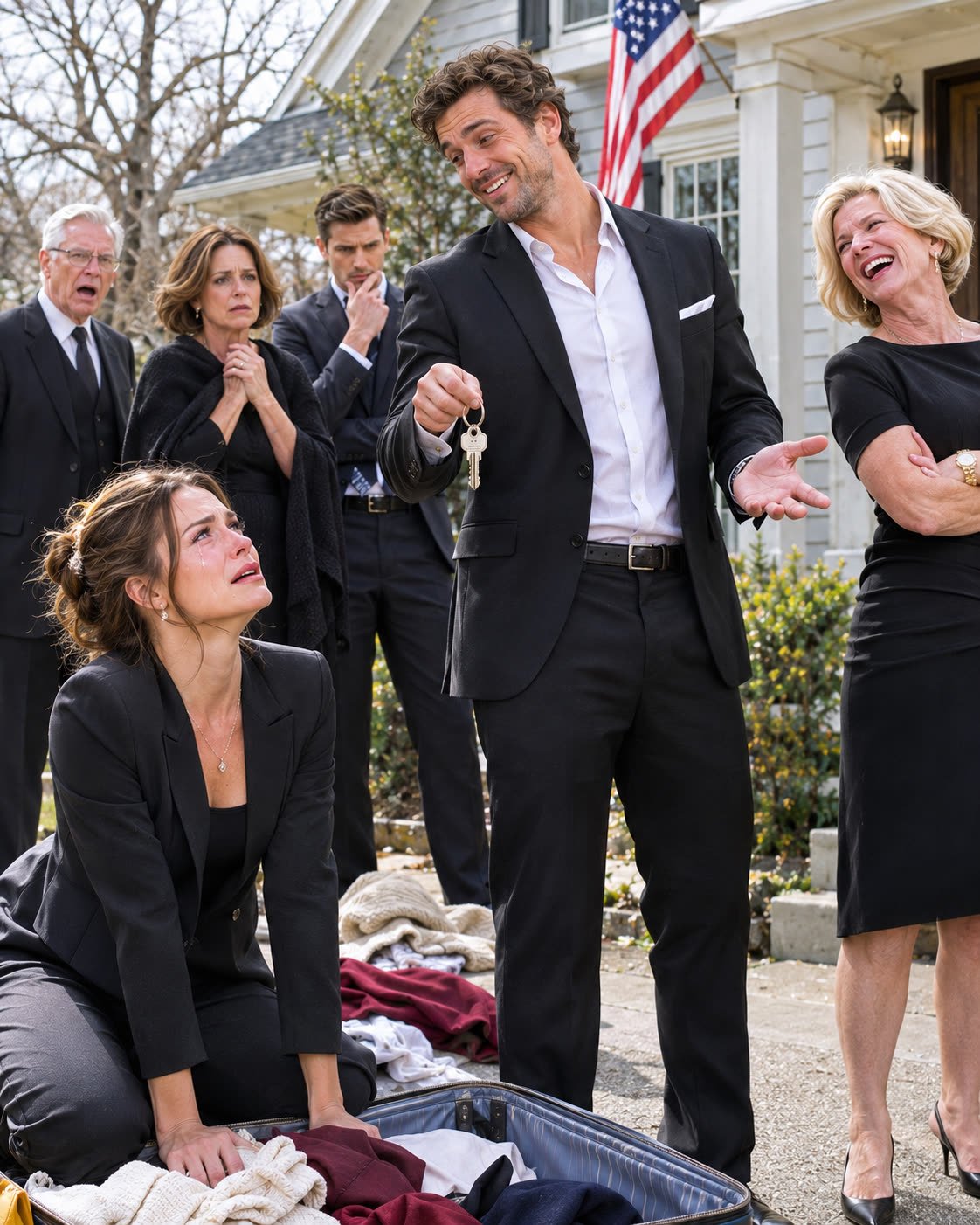
“Dad’s gone. This isn’t your home anymore,” my brother said when I came back from our father’s funeral in my pilot’s uniform. My clothes lay across the front lawn, and Aunt Rhonda stood beside him, convinced I had nowhere to go. I neither argued nor pleaded. I gathered my belongings and packed my suitcase. They thought they were shutting me out of everything Dad had built. What neither understood was that an attorney had already called me that morning about his estate—an estate valued at approximately $9.5 million.
At seven that morning, I had been in a Columbus hotel, fastening the small gold wings above my uniform pocket. I was thirty-two, a cargo pilot based in Indianapolis, accustomed to early starts and unexpected instructions through a headset. Yet when Judith Marsh introduced herself as my father’s estate attorney, I sat down abruptly. “Your father asked me to contact you as soon as possible after his passing,” she said. Behind her measured voice came the soft movement of papers. “Is something wrong?” I asked. Even as I spoke, the question sounded absurd. Dad was dead. Everything was wrong.
“Your father updated his estate plan several months ago,” Judith said. “You’re named as the primary beneficiary. That includes the family home, his controlling interest in Holloway Woodland Retreats, and the Hocking Hills property. The estate is currently estimated at approximately nine and a half million dollars, although debts, taxes, ownership records, and probate still have to be addressed.” Nine years of awkward conversations had taught me to expect distance, not this. “What about Wade?” I asked. “Your father made separate provisions for him,” Judith said. “We’ll discuss those when the documents are reviewed with the family.”
I went to the window, looking down at traffic beneath a gray morning sky. “There must be some mistake.” “There isn’t.” “He wanted Wade to run the company. He always did.” After a pause, Judith’s tone softened. “Reagan, there’s something else you should know. Your father was concerned about how Wade might treat you after the funeral.” My reflection looked composed only because of the uniform. “What does that mean?” “It means I would prefer that you not sign anything, surrender any keys, or agree to leave property your father owned until we’ve spoken in person. If there’s a problem, call me.”
“Did Dad tell you there would be a problem?” “He told me there might be.” I wanted to understand why he had shared his fears with an attorney instead of me. All I managed was, “We’re burying him this morning.” “I know,” Judith replied. “I’m sorry, Reagan. I wish the timing could have been different. Your father was very specific.” Afterward, I remained beside the window, phone in hand. Soon I would hear mourners praise Gordon Holloway as a man who never left important things unsaid. For nine years, I had believed precisely the opposite.
Dad had been sixty-eight when his heart failed. His company managed woodland properties, vacation cabins, and nature-tourism destinations throughout the Hocking Hills. Visitors knew its carved roadside signs and brochures, its autumn views and secluded porches. Before becoming a businessman, however, he had been a flight instructor. As a child, I loved his old sectional charts and photographs beside small airplanes. At his study desk, he explained symbols I later forgot with a patience I never did. “You don’t fight the airplane,” he once told me. “You listen to what it’s telling you.” Eventually, the growing business consumed the time he once gave aviation.
Wade, seven years older, slipped naturally into that business. He understood contracts, contractors, maintenance, and the practical usefulness Dad respected. I entered a business administration program because a position at Holloway Woodland Retreats seemed to have been decided for me. Then I began flying lessons. Handling the controls made the world feel wider and clearer; the discipline exhilarated me instead of diminishing me. At nineteen, I stood in Dad’s study and said, “I’m leaving the program.” He looked up from his invoices. “Leaving for what?” “Aviation. I want to train professionally.” He carefully set down his pen.
“Reagan, you already have a future here. Why would you give all of that up?” “Because I’ve dreamed of flying since I was a little girl, Dad.” “Dreaming about something and building a life around it aren’t the same.” “I know. That’s why I’m taking the training seriously.” “And the degree?” “I can finish a different way later if I need to.” He turned toward the window, watching Wade cross the drive. “Your brother has spent years learning this business,” he said. “There was room here for both of you.” “I know.” “Do you? You have security here. You have a company your family built. Most people would be grateful for that kind of opportunity.” “I am grateful. But gratitude isn’t the same as wanting to spend my life doing it.” His shoulders stiffened. “Well,” he said at last, “I guess you’ve already decided.”
I left Columbus believing achievement would eventually explain my choice. Instead, our calls grew painfully brief. “Are you still flying?” he would ask. “Yes, Dad.” “All right. Keep flying, then.” He missed my graduation, though I searched the seats for him. That evening I called. “I finished,” I said. “That’s good.” “I start the new position next month.” “Then you’ll be busy.” “Yes.” “Be careful up there.” In Indianapolis, I built a life I never regretted, but every accomplishment retained an unfinished edge. Wade supplied his own judgment during visits. “Dad needs someone who’s actually here,” he once said. “I know.” “I’m just saying, the company doesn’t run itself.” “I never said it did.” He shrugged. “You made your choice.” Rhonda was blunter. “Your father built something for his children,” she told me once. “Only one of you stayed to appreciate it.” I pretended their approval no longer mattered.
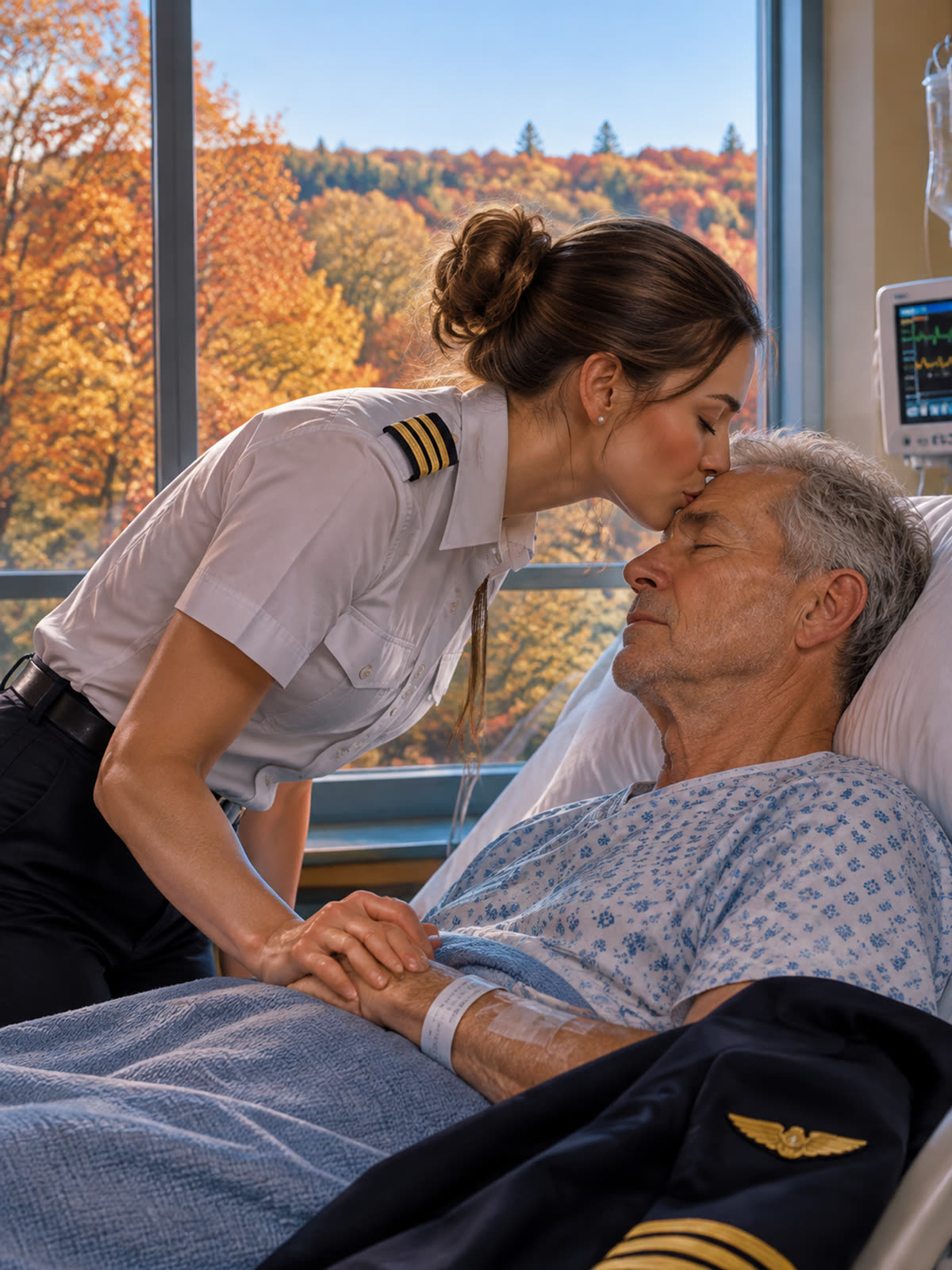
When Dad’s heart problems worsened, Wade called. “How bad is it?” I asked. “Bad enough that you should come if you’re coming.” I rearranged my schedule and drove to Ohio. In the hospital, Dad looked diminished by the effort of breathing. He glanced at the uniform jacket over my arm. “You came,” he said. “Of course I came.” I stayed beside him for two days. “How’s Indianapolis?” he asked. “Cold.” “Ohio’s cold too.” “I noticed.” His mouth almost formed a smile. Later, I tried to bridge the silence. “Dad, I want you to know—” “Reagan, you don’t have to—” A cough interrupted him, leaving him exhausted. When I finally left, I kissed his forehead. “I’ll come back,” I said. His hand rested over mine. “Keep flying.” Three days later, he died.
I returned believing he had died disappointed in me. After Judith’s call, I chose my uniform over the suit I had brought. It was simply the most truthful thing I owned. The church was crowded with employees, contractors, property owners, and people from childhood. Wade stood near the front, accepting condolences as though leadership had already passed to him. His gaze moved to my uniform. “You couldn’t wear black?” he asked. “This is what I chose.” “Of course it is.” Rhonda glanced at my wings. “Today isn’t about making a point, Reagan.” “I’m not making one.” Remembering Judith’s warning, I kept her call to myself.
The service assembled familiar fragments of Dad: generous, demanding, private, stubborn, loyal. An employee recalled his dawn inspection of a storm-damaged road. Someone mentioned his years teaching people to fly, and my throat tightened. Wade spoke last about their work together and carrying it forward. Rhonda breathed her approval behind me. At the cemetery, November wind swept across the open ground while Wade held her arm. After most mourners left, I stayed beside Dad’s grave, still unable to find the conversation we had needed. I touched the wings on my chest. “I did keep flying,” I whispered. The wind carried the words away.
Back at the house, food crowded the dining table. Dad’s coat remained by the back door; his glasses lay beside his chair. I had left belongings in my old room the night before and intended to collect them before returning to the hotel. As the last employees departed, Wade appeared holding keys. “We need to settle something,” he said. “What?” “The house. I’m taking over, and I need space to sort everything out.” “The estate hasn’t been settled.” His expression sharpened. “I’ve been handling Dad’s affairs for years. You wouldn’t know that because you weren’t here.” “I’m not arguing about who was here. I’m saying nothing has been settled.”
Rhonda came in carrying an empty dish. “Wade has enough on him without you making this difficult.” “I’m collecting my suitcase and going back to the hotel. That’s not difficult.” “Good,” Wade said. “Then do it now.” Upstairs, I began folding clothes into my open suitcase. Wade followed, carrying my uniform coat. “Give me that,” I said. He threw it onto the bed. “You have ten minutes.” “Wade, what’s wrong with you?” “What’s wrong with me is that I’ve spent twenty years keeping Dad’s company alive while you came home for two days and walked around in a pilot costume.” “This isn’t a costume.” “Whatever you say. Pack.”
He seized folded clothes and headed downstairs. “Put those down.” Instead, he went outside and flung them across the lawn. A sweater sleeve stirred in the wind while I stared. Rhonda watched from the porch, arms folded, saying nothing. “Are you serious?” I asked. “You chose your life,” Wade said. “Go back to it. This house belongs to the side of the family that stayed.” He had already arranged everything in his imagination: the house, the company, a room for Rhonda, and my disappearance. I finished packing and carried my suitcase outside. More clothing lay on the grass.
Wade leaned against the railing with a smirk. “Need a ride to the bus station?” he asked. Rhonda laughed. I knelt to retrieve what he had thrown, staining my uniform trousers, then zipped the suitcase. “No,” I said. “I’ll call someone.” At the edge of the drive, I phoned Judith. “They put my things on the lawn,” I told her. My voice concealed how shaken I felt. “Where are you standing?” she asked. “In front of the house.” “Stay there. I’m ten minutes away, and I’m bringing the documents.”
She paused. “Reagan, your father said this might happen. He said—and I’m quoting him—’If Wade does it on the day of the funeral, don’t let Reagan fight him. Just let him finish.’” I closed my eyes. Planning around an argument rather than having it was painfully characteristic of Dad. “He knew Wade would throw me out?” “He believed Wade might try. Your father wanted there to be no confusion about what happened or who made the choice.” “I don’t understand any of this.” “I know. I’ll explain what I can when I arrive.”
Eleven minutes later, Judith’s gray sedan entered the drive. She emerged in a black suit with a leather briefcase, taking in my suitcase and the scattered clothes. Wade straightened. “Judith,” he said. “This isn’t a good time.” “Mr. Holloway, I’d like everyone inside, please. The reading of the will will take place today, at your father’s instruction.” His smile faltered. “Today? We just buried him.” “He was very specific.” Rhonda moved forward. “Can’t this wait until the family has had time to grieve?” Judith looked at the lawn. “Mr. Holloway anticipated that waiting might create additional problems.”
“I’m his son. I’ve run the company with him for twenty years. There aren’t any problems Judith needs to solve.” “Then the documents should be simple to review.” Inside the study, Wade occupied Dad’s leather chair while Rhonda sat on the sofa. I remained by the window, my knees damp and stained. Judith arranged folders on the desk and produced a digital recorder. “What’s that?” Wade asked. “Your father recorded a statement three months ago. He asked that it be played before the documents were read.” “He was sick three months ago.” “He was also competent to make his own decisions.”
She pressed the button. A faint hiss sounded, followed by the unmistakable voice I had believed I would never hear again. It was thinner than before, but entirely Dad’s. “If you’re hearing this, I’m gone, and one of my children has already done something I hoped they wouldn’t.” Wade became motionless. For the first time that afternoon, he had no reply.
PART 2 — What Dad Had Kept
On the recording, Dad drew a measured breath. “Wade, you’ve worked beside me for twenty years, and I love you. But last spring, I found the second set of books. Four hundred thousand dollars moved out of the company into an account in your name. I gave you six months to put it back. You didn’t.” Rhonda turned toward my brother. The clock above the fireplace sounded unnaturally loud. “That’s a lie,” Wade said, his voice breaking. “He was confused. He was sick.”
Judith raised a folder. “Your father’s physician documented his full capacity at the time of the update. I also have the forensic accountant’s report.” “You don’t know what that money was for.” “Then you’ll have an opportunity to explain it through the process your father established.” “There was no second set of books.” She kept her hand on the unopened folder. “The report addresses that. I suggest you listen to the rest of your father’s statement.” When she restarted the recording, Dad addressed me. “Reagan, if you’re listening, I owe you more than I can say here. I’ll leave a letter. Judith will give it to you privately.”
The recorder stopped. I stared at it, wanting his voice to return. While I had interpreted every strained call as disappointment, he had discovered the missing money, anticipated Wade’s behavior, and arranged these documents. None of it felt like winning. It felt as though grief had changed direction before I could catch my balance. Wade stood. “Dad and I handled company money all the time,” he said. “He knew that. This is being twisted.” “Sit down, Mr. Holloway,” Judith said. “You don’t get to order me around in my father’s house.” “The ownership of this house is one of the matters we’re here to review.”
Wade turned on me. “You knew about this.” “I got a phone call this morning.” “And you stood outside letting me—” He broke off. “Letting you what?” I asked. His eyes dropped to the grass stains on my trousers. Judith opened a folder. “Your father directed me to read the terms after the funeral and after his recorded statement. We can continue now, or we can continue with additional representatives present. The terms will not change.” Wade sat again, this time in a straight-backed chair instead of Dad’s.
Judith read without ceremony. Dad had left me the family home, the Hocking Hills acreage, and his controlling interest in Holloway Woodland Retreats. The estimated value was approximately nine and a half million dollars before debts and taxes, with ownership records and probate still requiring attention. Wade could retain salaried employment under supervision. He also received a modest trust, distributed over ten years, which would be revoked if he contested the will. Rhonda inherited the lake cabin she loved and a monthly allowance. The plainness of Judith’s delivery made each provision feel heavier.
“The lake cabin?” Rhonda repeated. “Yes.” “Wade said the house would be his. He said I could have the room at the back after he renovated it.” Judith consulted the papers. “The family home was not left to Mr. Holloway.” Rhonda looked at Wade with wounded disbelief. Her certainty on the porch had rested on his promises. He stood so abruptly that his chair scraped the floor. “This is outrageous. She hasn’t worked a day in this company in nine years. She doesn’t know the first thing about running it. She’s a truck driver with wings.” “Cargo pilot,” I said quietly. “Same thing.”
“Mr. Holloway,” Judith said, “sit down.” He remained standing. “You can’t just hand it to her. I’ve given my whole life to that place. Every storm, every broken pipe, every guest who called at two in the morning—I was there. She was in Indianapolis playing pilot.” Once, I would have defended every hour of my career. Now I did not need to. “You also moved four hundred thousand dollars out of it,” Judith said. “Your father chose to give you a second chance instead of calling the authorities. I’d advise you to treat that as the gift it was.”
Beneath Wade’s anger, I finally recognized fear. “I need to go,” he said hoarsely. He left, shutting the front door hard. Rhonda remained, her hands clasped tightly. Beyond the window, part of my suitcase was visible. “I didn’t know about the money,” she said. “Neither did I.” “He told me Gordon had promised him everything.” “He told me the house belonged to the side of the family that stayed.” She glanced at my stained uniform. “I shouldn’t have laughed.” “No,” I said. “You shouldn’t have.” I did not soften the answer. Eventually, she left too.
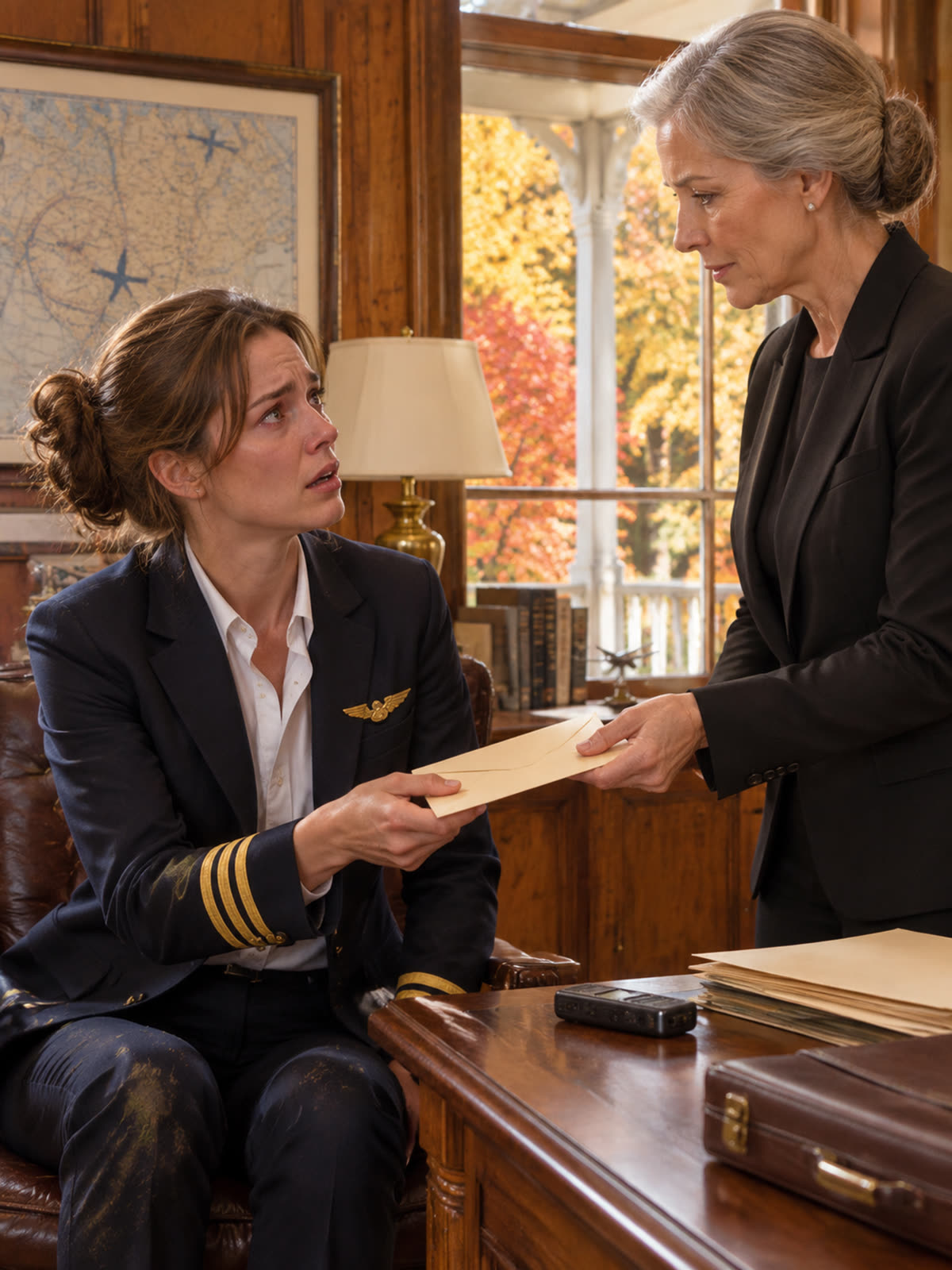
After the door closed, Judith gathered the papers into orderly stacks. She took a cream-colored envelope from her briefcase. My name crossed the front in Dad’s slanting handwriting. For years, I had kept his brief notes and birthday cards because his handwriting was sometimes the only part of him I could hold without encountering an argument. Seeing it now hurt with a startling physical force. This was not an account statement or another provision about property. Whatever he had placed inside had been meant for me alone, and he had arranged matters so I would receive it only when no one else remained to interrupt.
Judith held out the envelope. “Your father asked me to give you this privately.” I accepted it without opening it. “Why didn’t he tell me any of this?” “I can’t answer for him. I can tell you he was clear about what he wanted done. He understood the value of the estate, the allegations involving the company funds, and the effect his decisions would have.” “Did he talk about me?” Her expression softened. “Read the letter.” She left her card beside the documents. “I will give you some privacy. We don’t need to resolve every practical question today. In fact, we shouldn’t. Call me before you make decisions about the company, the house, or Wade’s employment.”
At the doorway, Judith stopped. “Your father did not want you to feel trapped by what he left you. That much I can say.” Then I was alone. I settled into Dad’s chair and rested the envelope on his desk. Part of me resented that he could finally speak without facing my response. Another part feared meeting yet another version of him, one I would have to reconcile with the father whose silences had shaped so much of my adult life. The study still smelled of paper, wood polish, and cedar. Nothing in the room had changed, though everything I understood about it was shifting.
At last, I opened the envelope. His letter began: Reagan, I was a stubborn man. I knew it, and I let it cost me nine years with my daughter. When you told me you wanted to fly, I felt like I was losing you to something I didn’t understand. That was my fear, not your fault. I should have said so. Instead, I said “keep flying” and hung up the phone. You deserved better.
I pressed my hand against my mouth. The framed chart remained on the wall; his books stood in their careful order. I had assumed his experience as an instructor meant he understood my world and rejected it anyway. Now he was admitting that my independence had frightened him. Rather than explain that fear, he had hidden behind disapproval. The distinction did not restore the years, but it changed the shape of them. I had carried his silence as a verdict on my choices. On this page, he was finally taking responsibility for the words he had withheld.
I continued reading. I want you to know something. I kept a log. Every flight you ever posted about, every route, every landing. I downloaded one of those flight-tracking apps and watched your little plane move across the map at night. I knew when you flew to Memphis, when you flew to Louisville, when you flew through that storm over Kentucky last March. I stayed up until you landed.
Through blurred eyes, I pictured him sitting in this room while a small symbol moved across a screen. I remembered the call after Kentucky. The weather had been difficult, and I had nearly let the phone ring. “Are you still flying?” he had asked. “Yes, Dad.” “All right. Keep flying, then.” I had heard resignation, perhaps irritation. He had been checking that I was safely down. That realization was almost harder to bear than the old interpretation. He had been near enough to watch my nights and still too far away to tell me why he was calling.
The next lines gave me what I had wanted for years. I never told you I was proud because I didn’t know how. I’m telling you now. I am proud of you, Reagan. More than I’ve ever been of anything I built. I left you the company not because I think you must run it, but because you’re the one who can be trusted with it. You walked away from the easy road and did the hard thing for the right reasons. That is what this place needs. If you want to sell it, sell it. If you want to keep flying, keep flying. I only ask that you do what you think is right. Your loving father, Dad
For so long, I had imagined his approval as something I might earn through one more accomplishment or explain into existence through one perfect conversation. Instead, it had been here, unspoken and imperfect, alongside the hurt. His apology did not make his absence from graduation harmless. It did not transform our strained calls into the relationship we should have had. Yet neither could I pretend those calls had meant only what I feared. He had loved me badly in ways that hurt us both, and now, too late for an answer, he had found a way to say so.
I read the letter three times. First, I cried for the apology. Then I cried for the man who had secretly followed my flights because he could not say plainly that he cared. Finally, I cried for the years neither of us could recover. I lowered my head onto the desk and wept as I had been unable to do at the funeral. When I could look at the paper again, my attention returned to the words beneath his signature. He had added a postscript, something separate from the company, the money, and every decision waiting outside this room.
The cabin at the back of the Hocking Hills property has a flat field behind it, just long enough for a small plane. I had it cleared two years ago. I always hoped you’d land there.
PART 3 — The Field He Left Open
The next morning, my clothes were inside, and my suitcase stood in my old room. Bringing them back had not settled anything beyond the lawn. The house still had to pass through the estate process; accounts, records, and responsibilities remained. Judith returned before noon, and we sat where Wade and I had once done homework. She explained the difference between estimated value and available money, controlling ownership and unrestricted freedom, Dad’s recording and the accounting evidence. “Your father left you authority,” she said. “He did not leave you a finished situation.”
“What happens to Wade?” I asked. “That depends partly on Wade. The will offers him continued salaried employment under supervision. It also gives him the trust, provided he does not contest. The company still has to address the missing funds properly. Your father chose the structure, but you will have decisions to make within it.” “He wanted Wade to have another chance.” “It appears so.” My anger remained, but so did memories of the brother who had taught me to ride a bicycle and waited outside my bedroom during thunderstorms. Those memories did not excuse him. They made losing trust more painful.
“I don’t know how to run the business,” I said. “Your father knew that.” “Then why leave it to me?” Judith looked toward his study. “He answered that in the letter. Trust is not the same as technical experience. Technical experience can be hired or learned.” I laughed tiredly. “That sounds like something he would say after refusing to say it to my face.” “Possibly.” She almost smiled. I took time before deciding whether to sell. Keeping the company from guilt would have repeated Dad’s old mistake of confusing love with obedience. His letter gave me permission to choose differently.
Over the following weeks, I divided my days between Ohio and Indianapolis, maintaining my cargo schedule while learning what I owned. The office was practical rather than impressive: wall maps, maintenance requests, boots near the back door. Employees watched cautiously, unsure whether I intended to sell their workplace or pretend knowledge I did not have. “I know how to manage risk and make decisions under pressure,” I told them at our first meeting. “I don’t know this business yet. I’m going to learn it from the people who do.” Wade sat at the far end of the table. He had chosen supervised employment.
After the others left, he stayed seated. “You going to fire me?” he asked. “Not today.” “That’s not an answer.” “It’s the answer I have. Dad gave you a way to stay. Judith is handling the legal side of what happened with the money. I’m not going to make decisions in this room just to punish you.” His jaw tightened. “So I’m supposed to thank you?” “No. You’re supposed to do your job under the supervision Dad required.” He rose. “You won’t last six months.” “Maybe not. But while I’m here, the company comes before our argument.”
I spent those first six months learning the work I had refused at nineteen. That did not mean Dad had been right to choose my future. The business itself had never been the enemy; the expectation had been. I walked properties with maintenance crews, studied occupancy reports, and learned which roofs held snow badly and which roads washed out. Summer brought families, long shifts, and full cabins. Autumn filled the reservation calendar. Winter meant ice, frozen pipes, and quiet buildings that still needed protection. The estate’s value became something tangible: land, payroll, aging decks, and people working hard so guests could rest.
Unexpectedly, I began to love it. Flying offered precision and movement; the retreats offered responsibility anchored to one place. Both required attention and punished arrogance. For a year, I kept my cargo route, then reduced my schedule. Eventually, I handed it to a younger pilot I had trained. This was not surrender or proof that Dad had been right all along. It was a new decision, freely made. I hired Marian Ellis as general manager, a quiet, direct woman with twenty years of experience running a state park system. She cared more about employees and the land than the office she might receive.
“What do you want this place to be?” Marian asked during her interview. I looked toward the bare trees beyond the conference-room window. “Well run,” I said. “Honest. Still here when the people working for it are ready to retire.” “And your role?” “I’m still figuring that out.” She accepted the uncertainty without treating it as weakness. Meanwhile, Wade remained under supervision and repaid the missing funds in installments, drawing down his trust. He did not need to be asked twice. The payments could not erase the betrayal, but they showed he had chosen to remain within the structure Dad had established.
For months, Wade spoke to me only when work required it. Sometimes I caught him watching me across the office and wondered whether the expression meant resentment, envy, or shame. I did not ask, and I stopped treating silence as reliable evidence. Our family had already done enough damage that way. Then October arrived, almost a year after the funeral. I was reviewing maintenance plans when he knocked on my office door. Dad’s letter was folded inside my jacket. I carried it less frequently now, though difficult days still made me want it close. “Do you have a minute?” Wade asked.
“Yes.” He came in but remained standing, with the changing hills beyond the window. “I wanted to say something,” he began. I waited. “I threw your stuff on the lawn because I was scared. Dad found out what I did, and I thought if I got you out of the house, I could get ahead of it.” He kept his eyes lowered. “How would forcing me out get you ahead of it?” “I don’t know. I thought the house would be mine. I thought the company would be mine. If you left, maybe I could control when everyone heard what happened. Maybe I could make it look like Dad had been confused near the end.” He swallowed. “It doesn’t make sense now. It made sense to me that day.”
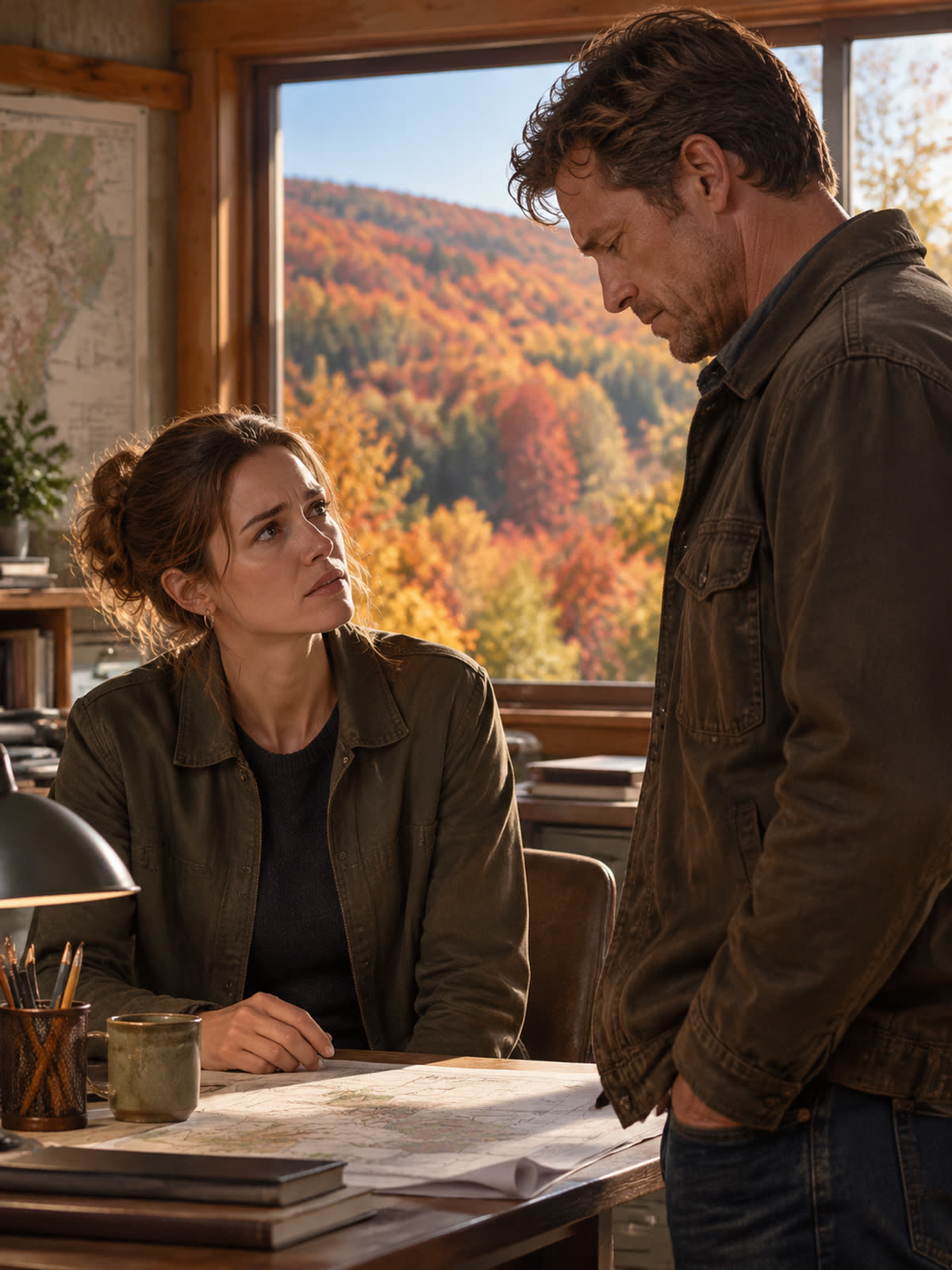
His explanation gave words to the fear I had already seen. “And Aunt Rhonda?” “I told her Dad had promised me the house. I told her she’d have a room. She believed me because I believed it too.” “You let her laugh at me.” “I did.” Finally, he looked up, his eyes wet. “I was wrong, Reagan. About the money. About you. About all of it. I’m sorry.” I had imagined an admission like this for years. In reality, it brought no sudden satisfaction. Dad was still gone. The clothes had still lain on the lawn. Trust remained broken.
“I’m not ready to say it’s fine,” I said. “I know.” “Because it isn’t fine. Repaying the money doesn’t make it fine, and being afraid doesn’t make what you did to me acceptable.” “I know that too.” I looked toward the maps. Dad had offered him another chance without erasing what he had done. I could do the same without pretending forgiveness and trust were identical. “But I’m willing to start over,” I said, “if you’re willing to do it the slow way.” He nodded. “Slow’s fine.” Neither of us tried to turn those words into more than they were.
Slow was exactly what followed. Our conversations stayed close to work before gradually extending beyond it. We learned to disagree without making every difference a test of loyalty. Wade stopped behaving as though his years at the company entitled him to control everyone else’s life. I stopped expecting an apology to repair everything immediately. Two years passed before we could share dinner without tension. Even then, certain subjects required care. We did not recover an untouched childhood bond. We became adults deciding, cautiously and honestly, how much of a damaged relationship could be rebuilt.
Rhonda sent a handwritten apology in the spring. She offered no excuse. She admitted that Wade’s version had matched what she already believed about me and acknowledged the cruelty of laughing. With the note came a jar of blackberry preserves. I accepted both, ate the preserves on toast, and said nothing about them. Forgiveness did not always announce itself in a grand conversation. Sometimes it was simply the choice not to throw something away. That small acceptance did not rewrite the afternoon on the lawn. It allowed something other than that afternoon to exist between us.
Under Marian’s management and my oversight, the company changed without becoming a monument to me. Dad’s name stayed on its signs. Wade continued working within the limits Dad had required. I preserved enough flying in my life that the sky never became another thing I had surrendered. His letter had given me the freedom to choose, and I tried to honor that freedom rather than turn his final trust into another obligation. The business mattered because I had come to know its people and land, not because inheriting it had proved that I was the better child.
One clear June morning, I rented a single-engine Cessna in Indianapolis. I completed the preflight inspection, settled into the familiar seat, and started the engine. As the propeller turned, the old concentration returned. Whatever complicated things waited on the ground, the airplane required my attention in the present. I flew east toward the Hocking Hills. Beneath me, roads curved through green ridges. Cabin roofs appeared between trees, and sunlight caught a creek like a silver thread. I recognized the properties now in ways I never had as the daughter determined to leave them.
I knew which stretches of gravel washed after rain, which cabins filled first in October, and where employees parked during the busiest summer weeks. Yet from above, I could see something beyond maintenance and reservations. I could understand why Dad had chosen the land in the first place: its shape, its possibilities, the way buildings settled among the trees. Near the back of the property stood the old cabin. Behind it stretched the flat field he had mentioned, cleared two years before his death. He had made a place for my airplane without ever telling me it existed.
I circled once, examining the strip and checking the wind. Then I lined up. The grass rose toward the windshield as I made small corrections, paying attention to the airplane just as he had taught me. The wheels touched gently, and I rolled to a stop with the cabin ahead and trees on either side. After I shut down the engine, silence arrived gradually. The propeller slowed. The vibration disappeared. Cooling metal ticked around me. For a while, I remained seated with my hands resting in my lap, finally occupying the place he had hoped I would reach.
For nine years, I had believed reconciliation required one perfect conversation. I would explain; he would understand; the wound would close. We never had that conversation. What remained was less complete and more complicated: a letter, a company, my brother’s slow apology, and this field cleared in hope. None of those things brought Dad back. They did, however, challenge the story I had told myself about being unwanted. He had left room for me here long before I knew he wanted me to come. I had spent those same years believing there was no place for the life I had chosen.
I climbed out and walked toward the cabin, grass brushing my boots. From the top porch step, I looked back at the Cessna where Dad had imagined it. His letter rested in my jacket pocket, softened from handling. I no longer needed to unfold it; I knew the words. Wind passed through the trees. Farther down the property, a door closed, and the hills grew quiet again. I pictured Dad watching a small airplane symbol move across his screen late at night, waiting for the landing I had never known he was waiting to see.
I thought again of his last words in the hospital: Keep flying. They had not been the dismissal I heard. They had been the only blessing he knew how to give. Looking across the field he had made for me, I finally answered. “I landed, Dad,” I said softly. The leaves rustled above the porch, and the afternoon went on. Behind me stood the cabin; before me waited the airplane. His field had brought me home, but his last words still pointed toward the sky.
Disclaimer: This story is a work of fiction inspired by real-life themes. Names, characters, places and events are fictionalized, and any resemblance to real persons is purely coincidental. Images are for illustration purposes only.
