

PART 3
He put the orange into the bag.
Then he looked at her.
“I don’t want you dealing with her anymore.”
Alyssa gave a small, exhausted smile.
“I don’t want to either.”
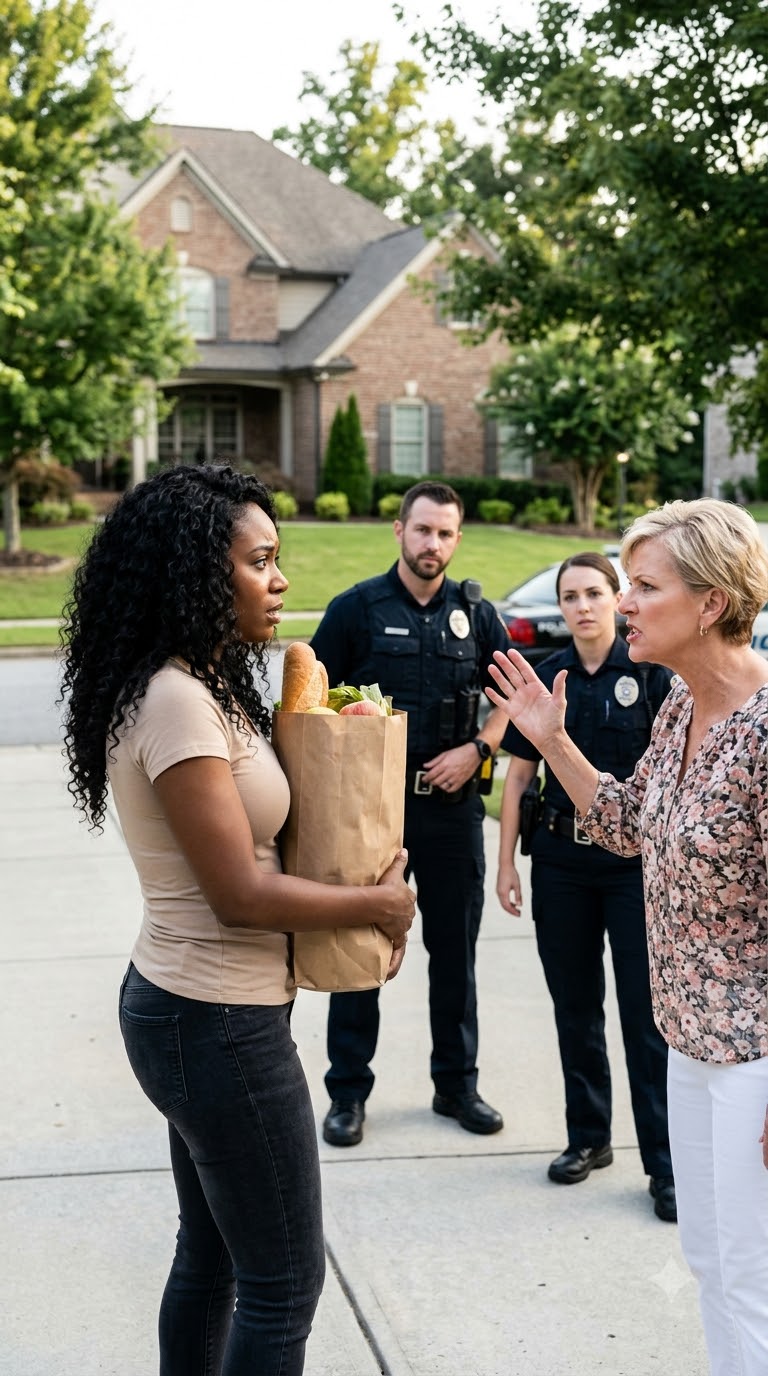
But the incident did not end with the police report.
The next morning, Karen’s behavior changed.
She stopped speaking to Alyssa.
She stopped waving.
She stopped appearing outside whenever Alyssa came home.
But the silence wasn’t peaceful.
It was watchful.
Alyssa noticed Karen’s curtains moving whenever she walked down the street.
Then, three days later, a letter arrived from the homeowners association.
Alyssa opened it at the kitchen counter.
Her face changed as she read.
Marcus looked up from his coffee.
“What is it?”
Alyssa handed him the letter.
It contained several complaints.
Unauthorized occupants.
Excessive visitors.
Suspicious activity.
Violation of neighborhood standards.
Marcus read it twice.
Then he looked at Alyssa.
“This is from Karen.”
“She didn’t sign it.”
“She didn’t have to.”
Marcus picked up his phone.
“I’m calling the HOA.”
Alyssa stopped him.
“Wait.”
“Why?”
“Because I don’t want this to become a war.”
Marcus sat down.
“What do you want to do?”
Alyssa thought about it.
Then she said:
“I want facts.”
Marcus nodded.
“Okay.”
They requested the HOA records.
They asked for the original complaints.
They asked for the dates.
They asked for the evidence supporting them.
And what they discovered surprised even Marcus.
Most of Karen’s complaints contained almost identical wording.
Suspicious woman.
Unknown occupants.
Unusual traffic.
Possible unauthorized residency.
But there was almost never any actual evidence.
One complaint had been filed on the exact day Alyssa had returned from visiting her mother.
Another had been filed after Alyssa hosted a birthday dinner.
A third had been filed because Alyssa had a moving company deliver furniture.
Karen had apparently been documenting Alyssa’s ordinary life and labeling it suspicious.
Then Marcus noticed something else.
One complaint had been filed the day after Alyssa’s promotion announcement.
He looked at his wife.
“Did you tell Karen about your promotion?”
“No.”
Marcus stared at the document.
“Then how did she know?”
Alyssa went quiet.
That question stayed with them.
Until another piece of information surfaced.
The HOA manager had received an email from Karen several months earlier.
In it, Karen had complained that the Carter house had been purchased by “people who don’t fit the established character of the neighborhood.”
Marcus read that sentence several times.
Alyssa sat silently beside him.
For the first time, the entire situation looked different.
This wasn’t about noise.
It wasn’t about parking.
It wasn’t about safety.
It wasn’t even about property.
Karen had decided that Alyssa did not belong.
And then she had spent months searching for reasons to justify that belief.
Marcus forwarded the documents to their attorney.
Alyssa didn’t want revenge.
She wanted boundaries.
The attorney helped them formally notify the HOA and Karen that any further harassment, surveillance, or unwanted contact would be documented.
The police report remained on file.
The neighbors who had witnessed the confrontation gave statements.
And for the first time in nine months, Alyssa stopped trying to make herself smaller to keep someone else comfortable.
Weeks passed.
Karen stayed away.
The neighborhood gradually returned to normal.
One Saturday morning, Alyssa stood outside watering the flowers along the walkway.
The same walkway Karen had once told her she didn’t belong on.
Alyssa looked toward the sidewalk.
The street was quiet.
A car passed.
A dog barked in the distance.
Then she heard footsteps.
She turned.
It was Officer Rachel Monroe.
She had come by to follow up on the report.
Alyssa smiled politely.
“Officer Monroe.”
“Mrs. Carter.”
They exchanged greetings.
Monroe looked toward the house.
“Everything been quiet?”
“Yes.”
“Good.”
There was a pause.
Then Monroe said:
“I wanted to tell you something.”
Alyssa waited.
“When this happened, you handled yourself better than most people would have.”
Alyssa gave a small smile.
“I was scared.”
“I know.”
“I just didn’t want things to get worse.”
Monroe nodded.
“That restraint mattered.”
Alyssa looked toward the front door.
“I kept thinking that if I ignored her, she’d eventually stop.”
“Sometimes people stop when you set boundaries.”
“And sometimes?”
Monroe looked at her.
“Sometimes you have to make it clear that the boundary is real.”
Alyssa nodded.
After the officer left, she stood quietly for a moment.
Then Marcus stepped onto the porch.
He held two cups of coffee.
“One for you.”
Alyssa took it.
“Thank you.”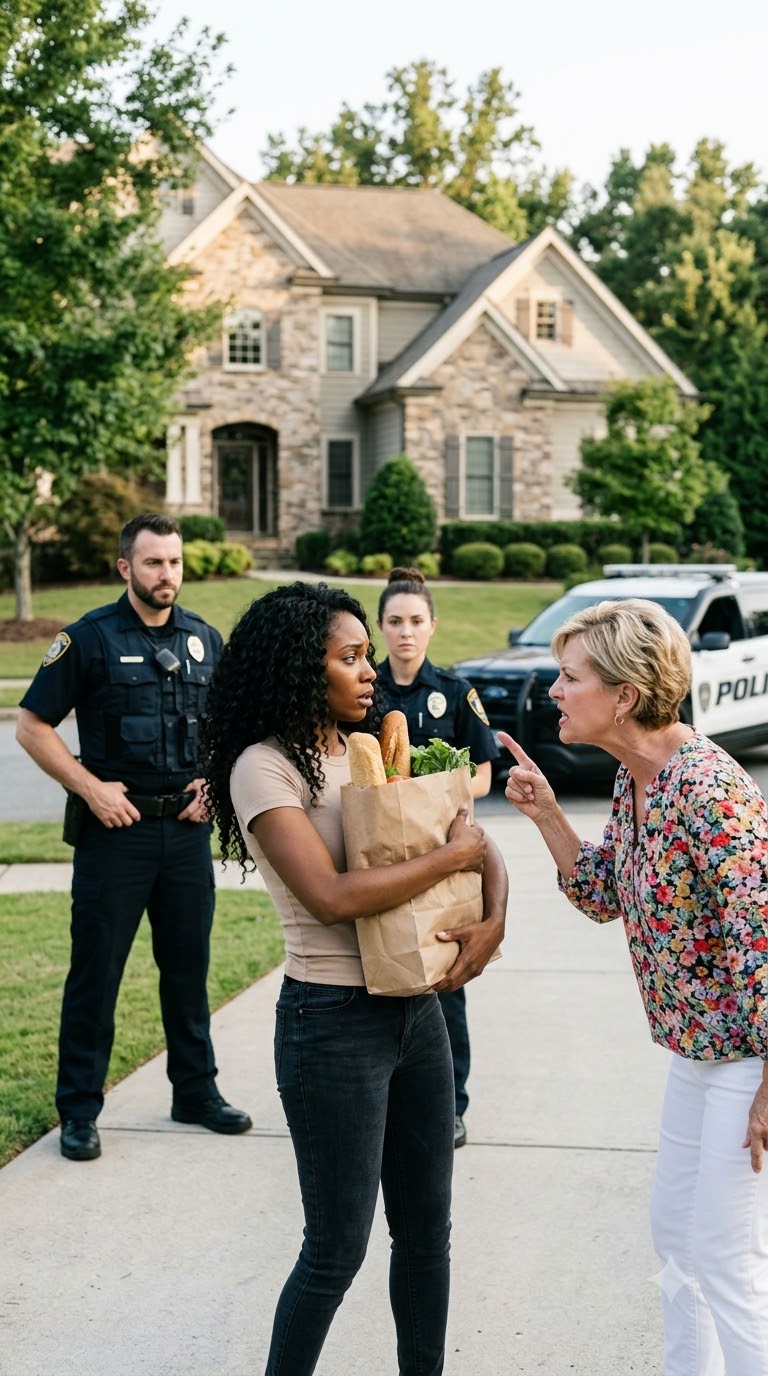
He looked at her.
“You okay?”
She smiled.
“Yeah.”
Marcus glanced toward the sidewalk.
“You know what I keep thinking about?”
“What?”
“The moment the door opened.”
Alyssa laughed softly.
“You mean when you scared Karen half to death?”
“I wasn’t trying to scare her.”
“You absolutely scared her.”
Marcus smiled.
Then his expression became serious.
“I keep thinking that I almost didn’t hear anything.”
Alyssa looked at him.
“I was upstairs. I was on a call. If I hadn’t happened to finish when I did…”
He didn’t finish.
He didn’t need to.
Alyssa reached for his hand.
“But you did.”
Marcus squeezed her fingers.
“Yes.”
She leaned against him.
The house behind them was quiet.
Their home.
Their front door.
Their walkway.
Their lives.
Everything Karen had spent months questioning was still exactly where it had always been.
Alyssa looked down at the flowers.
Then she smiled.
“You know what?”
“What?”
“I think I’m finally going to plant roses here.”
Marcus raised an eyebrow.
“Why roses?”
“Because Karen always said they were too much work.”
Marcus laughed.
“Then we’re definitely planting roses.”
And they did.
A few months later, the roses began to bloom.
Neighbors stopped to compliment them.
Children walked past the fence on their way home from school.
The woman across the street sometimes waved.
Even the man with the lawn mower occasionally stopped to admire the garden.
Karen never spoke to Alyssa again.
Eventually, she moved away.
No dramatic confrontation followed.
No public revenge.
No humiliating speech.
Just distance.
And perhaps that was the strongest ending of all.
Because Alyssa never needed to prove that she belonged.
She had never needed permission.
She was home.
She had been home the entire time.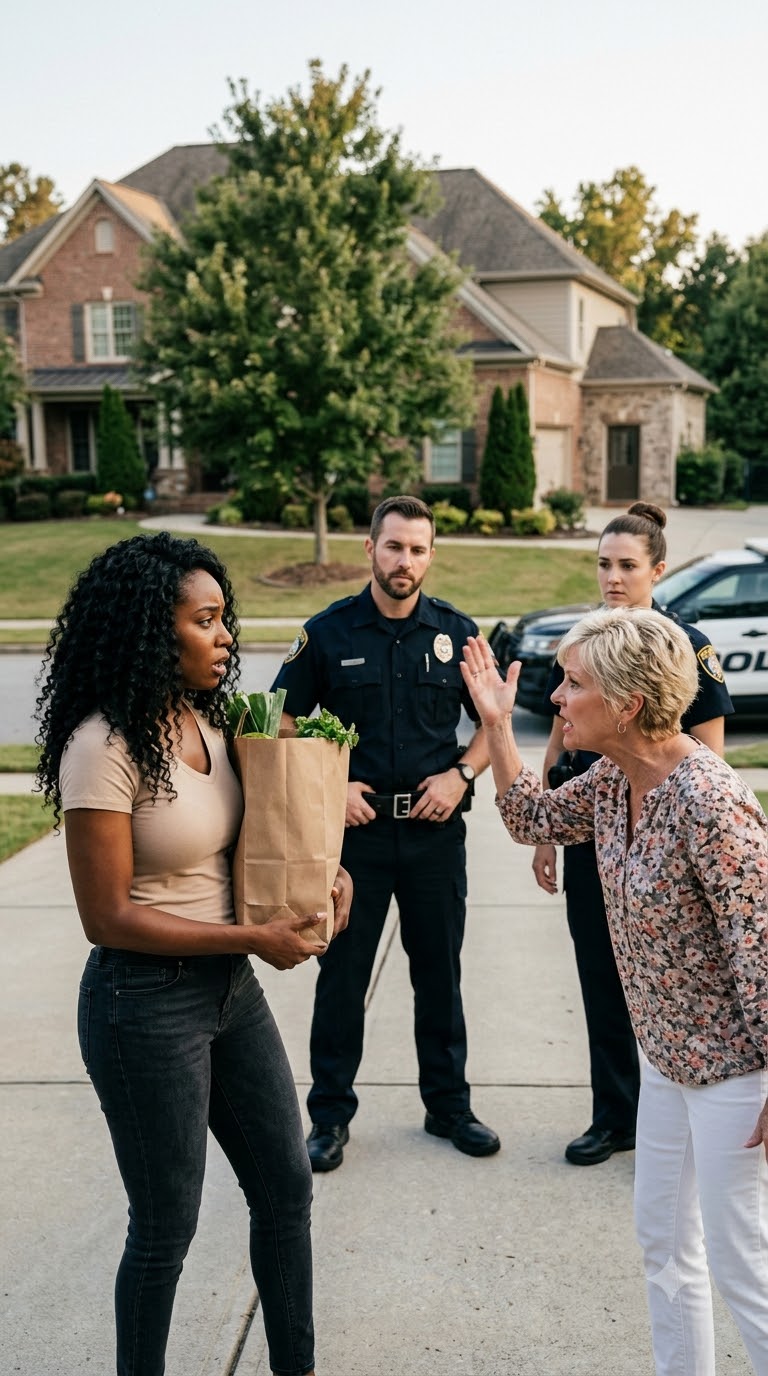
And the day Karen grabbed her hair outside that front door, she thought she was exposing someone who didn’t belong.
Instead, she exposed something else entirely:
how quickly assumptions can become cruelty when nobody challenges them.
And how powerful it can be when the person being targeted finally says:
Enough.
Alyssa never forgot that day.
But she also refused to let it define her.
She kept walking through that front door.
She kept planting flowers.
She kept living her life.
And every time she passed the spot where the orange had rolled across the pavement, she remembered something Marcus had told her that night.
“You never have to earn the right to stand in your own home.”
Alyssa had believed him.
This time, she believed herself too.
