

PART 1
Barely six hours had passed since my twin boys entered the world when my husband’s voice cut through the hospital quiet. He announced, without asking about the surgery, the babies, or my condition, that he had emptied our savings and listed the house. “I already have a daughter. I don’t need your sons.”
I fixed my eyes on the ceiling tiles, trying to process how the man I had married could sound almost satisfied.
Derek Whitmore had spent seven years presenting himself as a steady, devoted husband and father. His daughter Brinley, from his first marriage, was twenty-two and employed at her grandmother’s real estate firm. I had treated her as my own—covering her university costs, helping buy her first car, and always keeping a room ready. None of it appeared to matter now.
“Derek,” I said, my voice thin, “I just had emergency surgery. Your sons are in the nursery.”
“Then enjoy them,” he answered. “I’ve transferred the savings into an account you can’t access. The house is listed. My attorney says we can settle everything quickly.”
A cold weight settled in my chest.
“That house belonged to my grandmother.”
“And you signed paperwork after our wedding,” he replied, the smugness clear. “You should’ve read it more carefully.”
Patricia joined the call.
“Brinley is his heir,” she said. “Those babies are your problem. Stop expecting my son to waste his future on you.”
A soft footstep sounded beside the bed. My father had entered.
Thomas Bennett, seventy-one, gray-haired, wearing his usual brown coat, preferred to listen before he spoke. He had heard every word.
“Is that Patricia Whitmore?” he asked, voice even.
Patricia’s laugh carried through the speaker. “Oh, Thomas. Still pretending your daughter married above her station? Tell her the Whitmores are finished supporting her.”
Dad said nothing. He set his leather briefcase on the chair.
“Patricia,” he said, “did you authorize the sale of the Bennett property?”
“Of course. Derek’s handling it.”
“And the savings transfer?”
“Family business. Stay out of it.”
He looked at me. “Thank you for confirming.”
Patricia scoffed. “What are you going to do, old man?”
My father ended the call.
The monitors hummed. He opened the briefcase and drew out a blue folder I had not seen in years.
“Sweetheart,” he said, “your grandmother made me promise never to interfere in your marriage unless someone tried to steal what she left you.”
He placed the folder in my hands.
“Your husband just gave us permission to act.”
For the first time that evening, I smiled.
The smile felt strange on my face, tight and new, as if the muscles had forgotten the motion. The blue folder rested against the hospital blanket, its edges slightly worn. My father did not rush me. He lowered himself into the chair, the brown coat settling around him, and waited while the nurse adjusted an IV line and checked the monitors. The twins were still in the nursery; the staff had promised to bring them for a short visit once my blood pressure stabilized. I wanted to see their faces more than I wanted explanations, yet the folder pulled at me.
“Open it when you’re ready,” Dad said. “The important parts are tabbed.”
I lifted the cover. Inside were copies of the original deed to my grandmother’s house, a trust instrument dated three years before she died, and a letter in her careful handwriting. The trust language was plain: the property remained in an irrevocable trust for my lifetime benefit and then for my children; no spouse acquired any interest by marriage, and any instrument purporting to convey or encumber the house required the trustee’s written consent. My father was the sole trustee. The letter simply said she trusted him to protect it if anyone ever tried to treat it as ordinary marital property.
“I never signed anything that could override this,” I said.
“You signed a routine post-nuptial acknowledgment that you had disclosed the trust,” Dad answered. “Derek’s lawyer later stapled a different page on top and filed it as if it were a deed transfer. The title company caught the mismatch last week and called me. I told them to hold everything until I heard from you. Tonight they heard from Patricia instead.”
A nurse appeared in the doorway. “Mrs. Whitmore, the boys are ready if you feel up to it.”
I nodded. They wheeled the bassinets in together. The larger twin had a full head of dark hair and a crease between his brows that already looked like concentration. The smaller one yawned, one fist tucked under his chin. Their hospital bracelets read Bennett-Whitmore, the hyphen still intact. I touched each tiny hand. The cold that had filled my chest since the phone call eased a fraction.
“What happens now?” I asked once the nurse left.
“I called the trust attorney from the parking lot,” Dad said. “He is filing an emergency notice with the title company and the bank before midnight. The listing will be pulled. The transfer of the joint savings will be flagged as unauthorized because the account required both signatures for amounts over five thousand; Derek used an old signature card he kept from when you were still working full-time. The bank’s fraud unit already has the recording of Patricia’s admission. I made sure the call was on speaker and the phone was set to record once I realized what they were saying.”
I stared at him. “You recorded it?”
“Your grandmother taught me to keep the promise and the evidence in the same place.”
We sat with the babies until the monitors insisted I rest. Dad stayed in the chair. Sometime after midnight the attorney texted a confirmation: the listing was suspended pending trust review, and the savings transfer had been reversed pending investigation. I slept in short stretches, waking whenever a nurse entered or one of the boys stirred in the nursery across the hall.
Morning light came thin and gray through the blinds. My phone, which had been silent, began to vibrate on the tray table. The screen showed Patricia’s name. I let it ring twice, then answered on speaker so my father could hear.
“You think you can freeze our accounts and yank the listing?” Patricia’s voice was already high. “Derek just got a call from the title company. They said the house is tied up in some old trust and they won’t proceed. The bank reversed the transfer and locked the account. What did that old man do?”
“He kept his promise,” I said.
“This is ridiculous. Brinley needs that money for the firm’s expansion. The house was supposed to cover the down payment on the commercial space. You signed the papers. Everyone saw you sign.”
“I signed a disclosure,” I answered. “Not a deed.”
There was a sharp intake of breath, then the sound of something striking a hard surface. “Derek! Get in here. She’s on the phone. Tell her the attorney says we can still force a partition or claim reimbursement for the years he paid the taxes.”
Derek’s voice came through, tighter than it had been the night before. “Listen, we can work this out. The boys will need support. I’m not saying I won’t help. But the house and the savings were supposed to be shared. You can’t just lock everything because you’re angry.”
“You called six hours after the surgery to tell me you had already taken both,” I said. “You told me you didn’t need your sons. Your mother told me they were my problem. That is the conversation the bank and the title company now have.”
Patricia cut back in. “You recorded us? That is illegal.”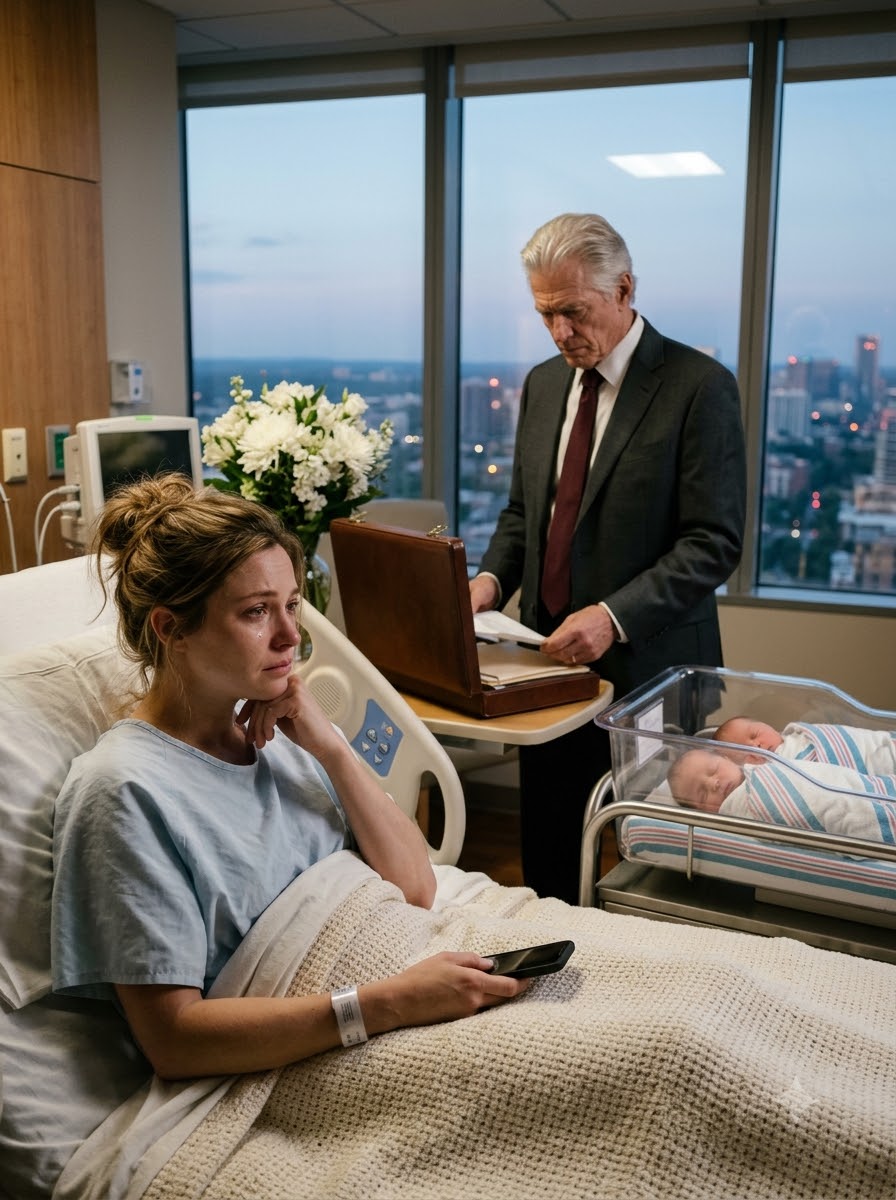
“It is legal in this state when one party consents,” Dad said calmly. “I consented.”
The line went quiet for three full seconds. Then Patricia’s voice rose into a shout that made the speaker crackle. “Thomas Bennett, you have no right. That property should have come into the family years ago. Brinley is the only grandchild who has ever contributed anything. Those babies are infants. They can’t run a company or sign a lease. You are ruining Derek’s chance to secure his daughter’s future because your daughter wants to punish him for telling the truth.”
“The truth,” I said, “is that you planned this while I was in surgery.”
“We planned it because we knew you would use the children as leverage,” she snapped. “Derek has responsibilities that existed before you. Brinley has worked at the firm since she was sixteen. She has earned her place. You married into a family that already had an heir.”
Dad leaned forward. “Patricia, the trust documents were recorded before Derek and my daughter ever met. The taxes on the house have been paid from the trust account, not from Derek’s salary. The joint savings account was funded almost entirely by my daughter’s design work for the first five years of the marriage. The statements are in the folder. If your attorney wants to argue reimbursement, he can review them.”
PART 2
Another crash sounded on their end, followed by Brinley’s voice, younger and sharper. “Grandma, stop yelling. The neighbors can hear. Dad, just tell them we’ll drop the listing if they release half the savings. We can still close on the commercial space if we move fast.”
“Half is not enough,” Patricia said. “And we are not dropping anything. I will call our lawyer again. This old trust can be challenged. People do it all the time when a surviving spouse has contributed.”
“I am not a surviving spouse,” I said. “I am still here. And I am not releasing anything.”
The call ended with Patricia mid-sentence, her voice climbing into a raw, wordless sound of frustration before the line went dead. In the sudden quiet of the hospital room I could still hear the echo of that sound. My father sat back.
“She will call the attorney,” he said. “He will tell her the trust is solid and the recording is admissible. Then she will call again.”
He was right. Twenty minutes later the phone rang from Derek’s number. I answered.
“She’s locked herself in the office at the firm,” he said. His earlier confidence had drained away. “She’s shouting at the receptionist and at Brinley. I told her to calm down. I told her we should come to the hospital and talk like adults. The boys are my sons too.”
“You said you didn’t need them.”
“I was angry. You never told me the house was locked in a trust. You let me believe we were building something together.”
“You never asked to see the documents,” I said. “You had your lawyer prepare papers and told me they were standard. I trusted you.”
“And now you’re going to punish Brinley because I made a mistake?”
“Brinley is twenty-two and employed. She is not being punished. She is simply not receiving property that was never hers.”
He was quiet. In the background I heard Patricia’s voice again, muffled but still raised, telling someone to get the firm’s other attorney on the phone. Derek lowered his voice.
“If I come to the hospital alone, will you talk to me? No lawyers. Just us. I want to see the boys.”
I looked at my father. He gave a small shake of his head.
“Not today,” I said. “The doctors want me resting. You can send a message through your attorney about visitation once the divorce papers are filed.”
“You’re filing already?”
“You transferred the savings and listed the house while I was in recovery. Yes.”
He started to answer, but Patricia’s shout cut across whatever he meant to say. The call dropped. My father stood and walked to the window.
“She is not finished,” he said. “People like Patricia do not stop at the first no. She will try the bank again, then the title company, then perhaps a reporter if she thinks public pressure will help. We should expect the next call to be from her attorney, and we should have our own counsel ready to answer.”
The morning passed in small measured pieces. A lactation consultant came and went. The pediatrician examined the twins and reported both were feeding well and had lost only the expected amount of weight. I held each of them in turn, learning the difference in the way the larger one rooted immediately and the smaller one needed a moment of quiet before he latched. Between feedings I signed the forms my father’s attorney had emailed: a petition for divorce, a request for exclusive use of the marital home pending final orders, and an emergency motion to freeze any remaining joint accounts. The house itself was never marital property, but the motion covered the furnishings and the small joint checking account Derek had not yet touched.
Just before noon a nurse knocked and said there was a visitor who was not on the approved list. Patricia Whitmore stood at the nurses’ station in a cream coat, her silver hair perfectly set, arguing with the charge nurse that she was the babies’ grandmother and therefore had a right to enter. Security had already been called. I watched through the open door as the officer asked her, politely, to leave the floor. Patricia’s voice rose again.
“You cannot keep me from my grandsons. This is a public hospital. I have identification. My son is their father.”
“Ma’am, the patient has restricted visitors to immediate family she designates,” the officer said. “You are not on the list.”
“Then call her. Tell her I am here. Tell her I only want to see the children and apologize for the misunderstanding.”
The nurse glanced toward my room. I shook my head. The officer repeated the request that Patricia leave. She did not move. Her voice climbed until it carried clearly down the corridor.
“Thomas Bennett is manipulating her. He recorded a private family conversation and is using it to steal from my son. Those babies have Whitmore blood. They deserve to know their sister and their grandmother. You are all complicit if you let an old man turn a new mother against her husband’s family.”
Two more security officers arrived. Patricia continued, her words tumbling over one another, accusing the hospital of discrimination, threatening to contact the medical board, insisting that Brinley was waiting in the car with gifts. The sound of her shouting filled the hallway until the officers finally escorted her toward the elevators. Even as the doors closed I could hear her voice, raw and furious, echoing up the shaft.
My father closed the door gently. “That was the screaming the title company warned me about,” he said. “They received three calls from her before nine this morning. Each one louder than the last.”
I looked at the twins sleeping in their bassinets. The smaller one’s mouth moved in a dream suckle. “She still thinks the house can be forced open.”
“She will keep thinking that until a judge tells her otherwise,” Dad said. “Our attorney filed the emergency motions an hour ago. The hearing is set for Thursday. Until then the accounts stay frozen and the listing stays dead. You and the boys stay here or at the house, whichever the doctors clear first.”
That afternoon Derek sent a text through a new number: Brinley is crying. Mom won’t stop calling people. I told her to stop. Please just talk to me. I held the phone until the screen dimmed, then set it aside. The lactation consultant returned and stayed while I practiced positions that did not pull at the incision. When she left, the room felt larger. Dad had stepped out to take a call from the attorney; he returned with a paper cup of coffee and the news that Patricia had tried to file a lis pendens on the house using an outdated form. The clerk had rejected it.
“She is running out of doors,” he said.
Evening brought another call, this one from Brinley. Her voice was smaller than it had been that morning.
“I didn’t know about the trust,” she said. “Dad told me you had agreed to sell so we could expand the firm. He said you wanted the boys to have a mother who stayed home and that the house was too big. I believed him. I’m sorry.”
“Thank you for saying that,” I answered.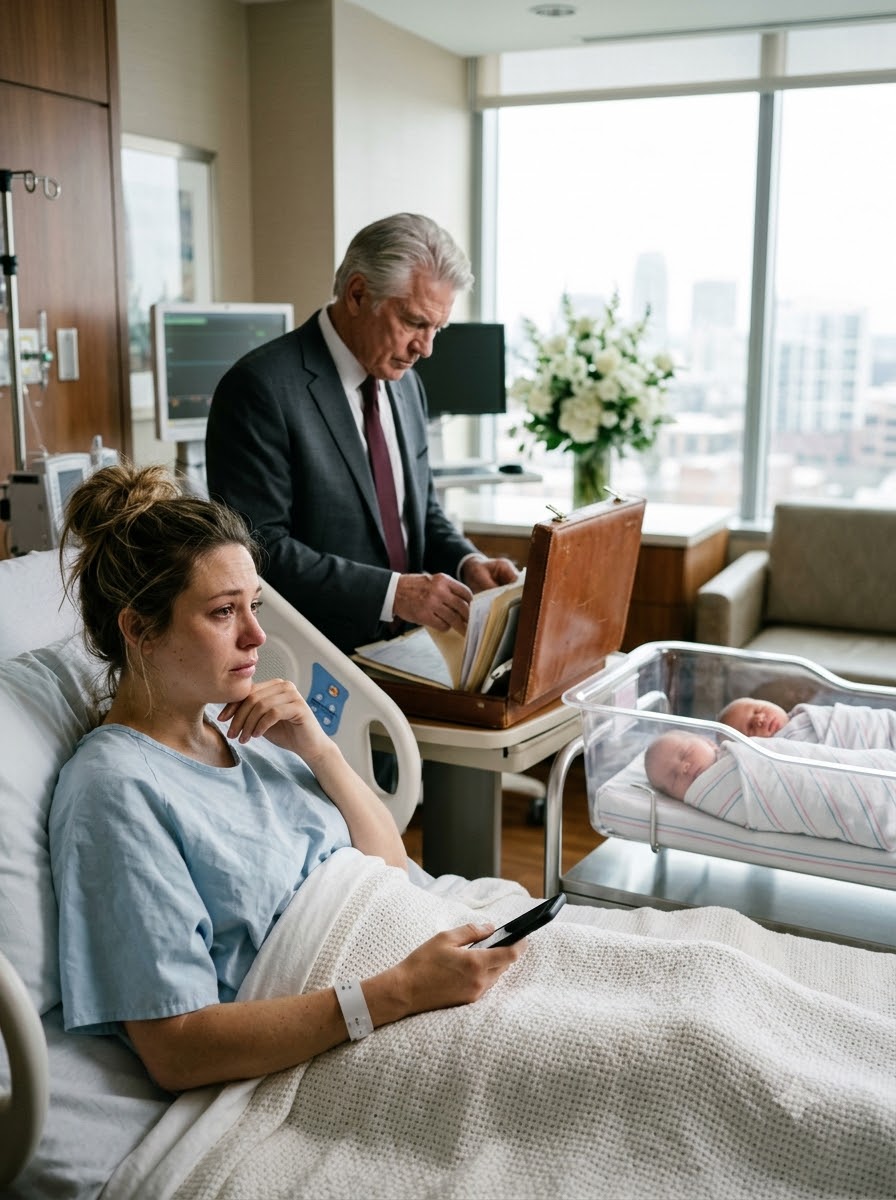
“Grandma is still at the office. She fired the receptionist for telling her to lower her voice. She’s telling clients that your father is trying to bankrupt us. I don’t know what to do.”
“You can tell the truth,” I said. “Or you can stay quiet. Either choice is yours. The house and the savings were never going to fund the expansion. That plan ended the moment your father called me from the parking garage.”
Brinley was silent for a long moment. “He really said he didn’t need the boys?”
“He did.”
“I didn’t hear that part. Grandma had the phone.”
“It’s on the recording if you want to hear it.”
She declined. We ended the call with no promises. Later, when the night nurse brought the babies for their last feeding, I told my father what Brinley had said.
“She may be telling the truth,” he said. “Or she may be protecting her place at the firm. Either way, she is not your responsibility tonight.”
I nodded. The larger twin finished first and settled against my chest, his weight warm and solid. The smaller one needed more time; I switched sides carefully and waited while he figured out the latch. Outside the window the city lights had come on. Somewhere across town Patricia was still making calls, still convinced that volume could change recorded documents and bank protocols. The thought no longer tightened my throat.
By the time the hearing arrived two days later I had been discharged. The incision pulled when I stood too quickly, but I could walk the length of the house and sit in the rocking chair my grandmother had left in the nursery. Dad had moved a cot into the guest room. The attorney met us at the courthouse with a slim folder containing the trust, the bank statements, the recording transcript, and the rejected lis pendens. Patricia and Derek sat on the opposite side of the courtroom with their lawyer. Brinley was not present.
The judge listened to both sides, then ruled from the bench: the house remained trust property, the savings transfer had been unauthorized, and temporary exclusive possession of the marital home was granted to me pending final divorce orders. Visitation for Derek would be supervised and scheduled through counsel once I provided medical clearance. Patricia’s request to be recognized as an interested party was denied. When the judge finished, Patricia stood so abruptly her chair scraped the floor.
“This is not over,” she said, loud enough for the bailiff to step forward. “You cannot erase twenty-two years of my granddaughter’s life because a piece of paper says the house belongs to someone else.”
The bailiff asked her to lower her voice. She did not. Derek put a hand on her arm; she shook it off. Her words continued, sharp and repetitive, until the judge instructed the bailiff to escort her from the courtroom. The sound of her protest carried into the hallway and faded only when the elevator doors closed.
Outside, the November air was cold and clean. Dad walked beside me to the car, carrying the folder. The twins were with a hospital-recommended sitter for the two hours we had needed; we would collect them on the way home. I settled into the passenger seat and rested a hand on the place where the incision still ached.
“She will try something else,” I said.
“Probably,” Dad answered. “But the doors that matter are already closed. The house is yours. The money is back in the account that requires both signatures. The boys have a place to sleep that no one can list while you recover. That is what your grandmother asked me to protect.”
We drove through streets lined with bare trees. At a red light I watched a woman cross with a stroller, her pace unhurried. For the first time since the phone call in the hospital, the future did not feel like something being taken apart in another room. It felt like the short drive home, the sitter’s text that both boys were asleep, and the blue folder resting safely on the back seat between us. Patricia’s voice had finally gone quiet. The rest, I understood, would be handled in ordinary daylight, one document and one feeding at a time.
