


PART 1: The Woman Left to Die
For fifteen years, I had built a criminal empire that dominated warehouses, shipping routes, and much of Chicago’s underground trade.
My name alone was enough to frighten men.
But on that particular night, none of my power mattered.
I was simply standing before something so cruel that I could barely comprehend it.
I had been checking one of my warehouses near the Chicago River when a dark shape beside the loading dock caught my attention.
Initially, I assumed somebody had abandoned a pile of trash.
Then I noticed blood spreading across the snow.
I rushed toward it.
A young woman lay facedown, barely conscious. Her clothes were ripped, and deep, bloody welts covered her back.
Someone had repeatedly whipped her.
Then they had abandoned her in temperatures well below freezing.
I knelt beside her and reached for my phone.
Something suddenly shifted beneath her arm.
I carefully pulled aside the bloodstained clothing.
Two newborn girls.
Their tiny faces were nearly colorless, and their lips had begun turning blue.
Their mother had curled her body protectively around them, allowing the freezing wind to strike her instead.
“Jesus Christ,” I whispered.
I placed two fingers against her neck.
There was a pulse.
Weak, but unmistakable.
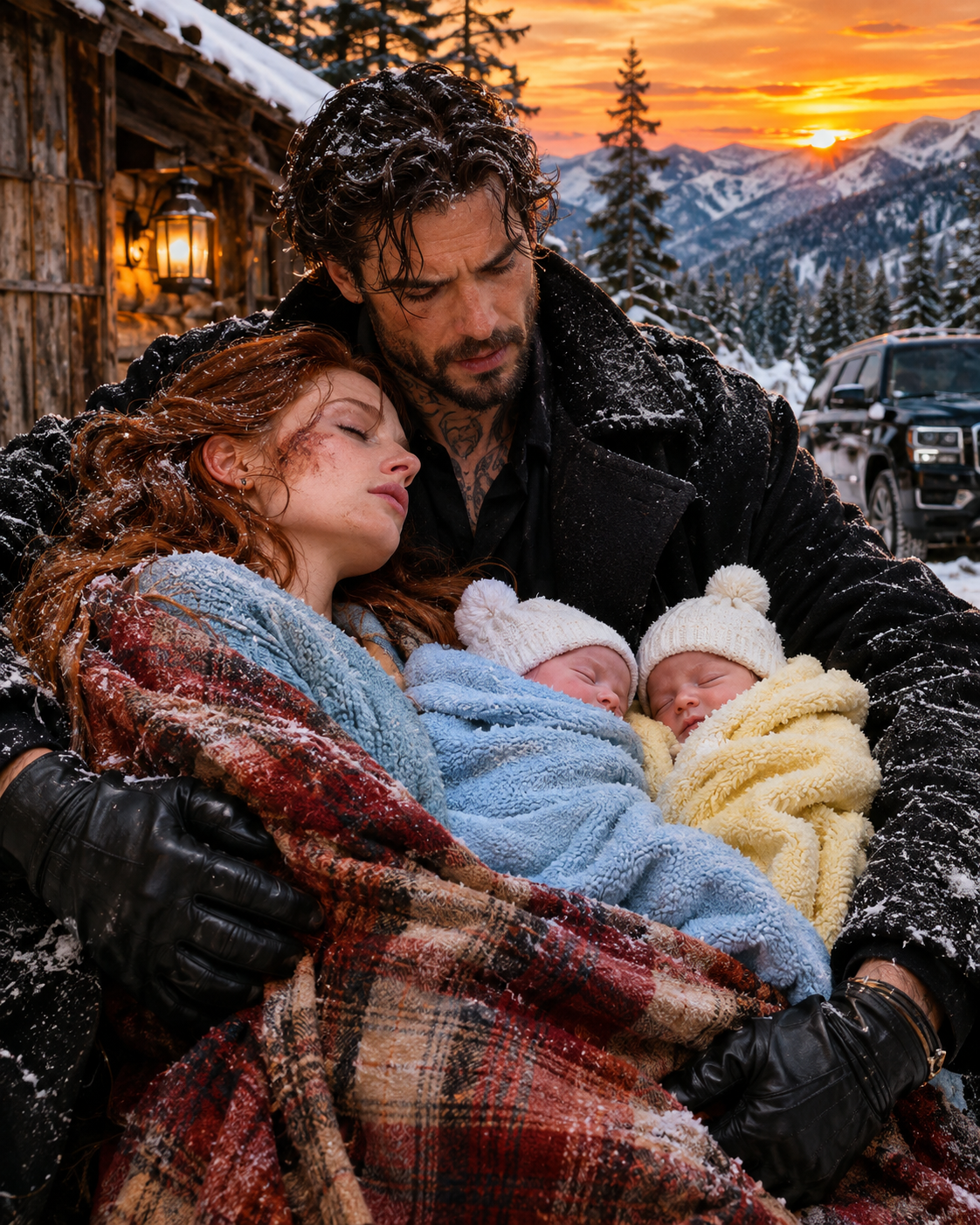
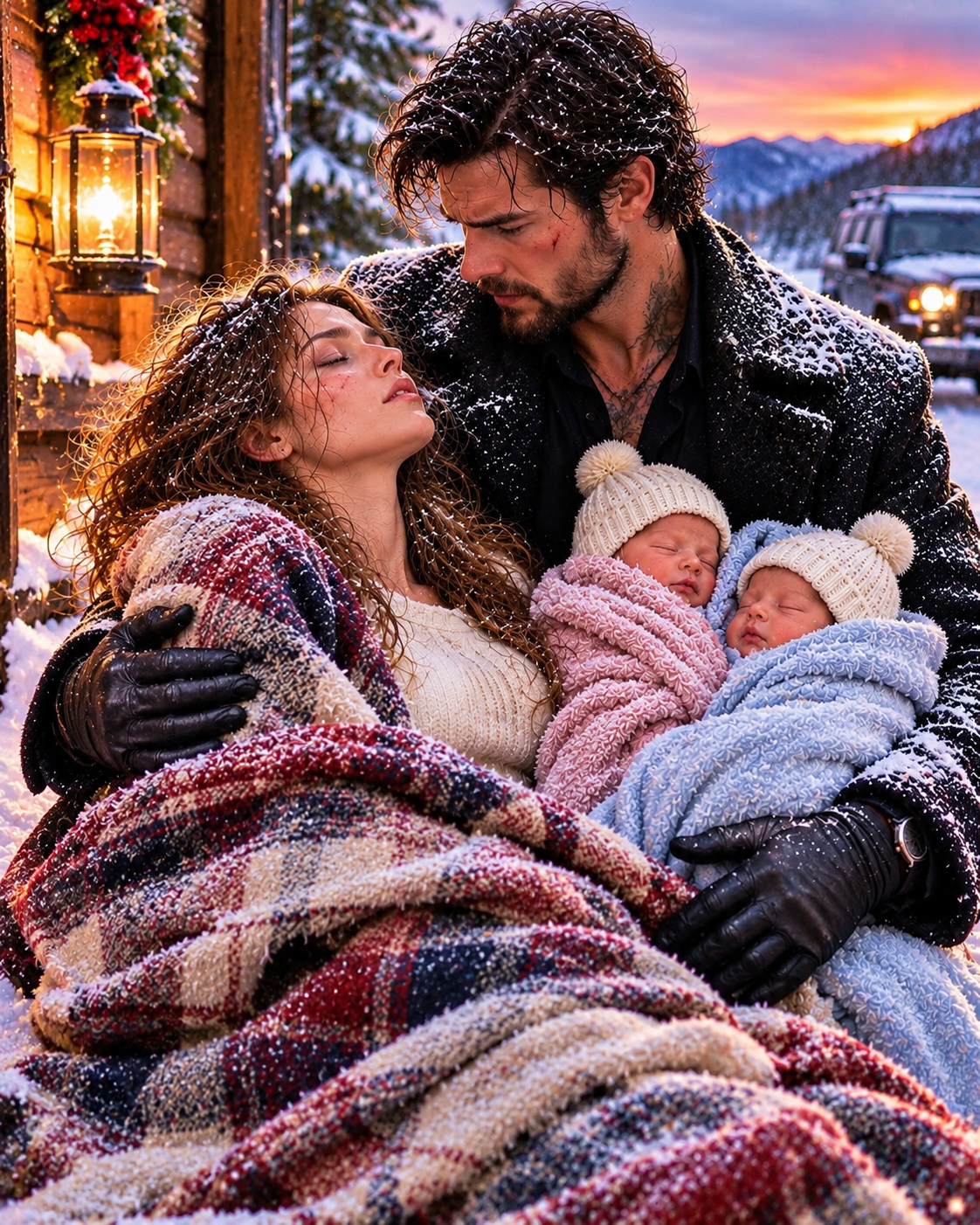
Without hesitating, I took off my heavy coat, gathered the two babies against my chest, and enclosed them inside the warm fabric.
Neither infant made a sound.
That frightened me more than their crying would have.
I gently lifted the woman and hurried toward my armored SUV.
“Get the doctor to my house,” I ordered my driver. “Now.”
He stared at the injured woman.
“Boss, who is she?”
“I don’t know.”
“Should we call the police?”
I looked down at the motionless infants.
“Drive.”
Twenty minutes later, we arrived at my estate outside Chicago.
My private physician, Dr. Rebecca Hayes, was already waiting when I carried the woman through the entrance.

Rebecca immediately examined the newborns.
“Severe cold exposure,” she whispered. “Another hour out there, and they might not have survived.”
Then she carefully uncovered the woman’s injured back.
Her expression darkened.
“Elias, these wounds weren’t caused by an accident.”
“I know.”
“Someone tortured her.”
My jaw tightened.
“Then someone is going to answer for it.”
For the next three days, the woman drifted between feverish sleep and unconsciousness while Rebecca treated her wounds.
I ordered a nursery prepared and instructed my household staff to care for the twins.
For the first time in many years, the sound of crying newborns filled my enormous mansion.
On the fourth morning, I was sitting beside the woman’s bed when she finally opened her eyes.
She looked at me in absolute terror.
“My babies?”
“Both alive,” I answered. “They’re safe.”
Tears rolled down her cheeks.
Then she noticed the armed guard stationed outside her room.
Her breathing accelerated.
“Please,” she whispered. “Don’t send us back.”
“Back where?”
She shook her head desperately.
I leaned toward her.
“Listen to me. Whoever hurt you won’t touch you here.”
Then recognition flashed across her face.
“You’re… Elias Vance?”
“Yes.”
She began shaking uncontrollably.
Her next words made my entire body go rigid.
“They told me if I survived, you’d be the one to finish the job.”
Before I could ask who had threatened her, Marcus Reed, my security chief, appeared in the doorway.
“Boss, we identified the vehicle that dumped her behind your warehouse.”
I stood.
“Whose was it?”
Marcus hesitated, glancing toward the frightened woman.
Then he handed me a photograph.
The moment I recognized the driver, I understood that her arrival on my property had been deliberate.
I stared at the picture until the man’s face seemed to rise from the paper.
Victor Marlowe.
Nobody spoke.
The old warehouse office, with its darkened windows and humming heater, suddenly felt unbearably confined.
Victor had once been among the most reliable men in my organization.
He had driven me through terrible snowstorms, negotiated shipments that seemed impossible to complete, and remained beside me when much of Chicago expected my empire to collapse.
Then, six years earlier, he disappeared.
He hadn’t retired.
He hadn’t accepted another assignment.
He simply vanished.
He took money, schedules, and confidential information with him.
Three days afterward, a shipment belonging to my family was intercepted near the river.
Two men were killed.
One was my younger brother, Daniel.
After that, Victor’s name became forbidden inside my home.
I examined the photograph again.
His hair had grown gray in places, and his face looked older, but there was no possibility of mistaking him.
“Where was this taken?” I asked.
“Traffic camera near Halsted,” my security chief, Marcus Reed, answered.
“Time?”
“Two seventeen in the morning.”
Exactly when I discovered Mara and the newborns.
I lowered the image.
“Who owns the vehicle?”
“A company registered under a name we’re still tracing.”
“Still tracing?”
Marcus tightened his expression.
“The registration was filed through three different shell companies.”
I looked toward the corridor.
Behind the closed bedroom door, the woman abandoned in the snow was finally conscious.
She either knew Victor personally or understood what he had done.
“Get every camera feed from the river district,” I said.
Marcus nodded.
“And find Victor.”
“We have people looking.”
“I don’t want people looking.”
He waited silently.
“I want to know where he went, who paid him, and who he spoke to before he brought that woman to my warehouse.”
Marcus glanced toward the picture.
“And if he refuses to answer?”
I looked directly at him.
“Then we ask better questions.”
He understood the implication.
But he also understood what I had deliberately left unsaid.
For years, I had cultivated a reputation rooted in fear.
That reputation protected my operations, my employees, and occasionally innocent people who wandered too close to dangerous situations.
But the injured woman upstairs had already experienced enough terror.
I would not allow more of it into her room.
After Marcus departed, I remained behind, staring at Victor’s photograph.
Memories returned despite my efforts to suppress them.
Victor studying warehouse accounts while tapping a pencil against the figures.
Victor bringing Daniel coffee before sunrise.
Victor laughing when I joked that he could arrive late to his own wedding and still persuade the guests to apologize.
Then came the betrayal.
His abandoned apartment.
The vanished files.
Daniel’s coffin beneath the bitter November sky.
For six years, I believed Victor had sacrificed loyalty for money.
Now he had returned with two newborn babies, a tortured woman, and a vehicle that had appeared on my property.
The question was no longer whether Victor had betrayed me.
It was why he had come back.
I headed upstairs.
Rebecca met me outside Mara’s bedroom, her arms folded across her white medical coat.
“She’s awake,” she said.
“How is she?”
“Exhausted, frightened, and determined to leave before her body is ready.”
“That sounds promising.”
“It means she is conscious.”
Rebecca gave me a stern look.
“Elias, she has lost blood, suffered severe exposure, and endured injuries that should have put her in intensive care.”
“I know.”
“No, you know the facts.”
She glanced at the bedroom.
“You do not know what it feels like to wake up in a strange house surrounded by armed men and realize the person in charge is someone whose name is attached to half the rumors in Chicago.”
“I’m not going to hurt her.”
“I believe you.”
Her tone became gentler.
“But she has no reason to believe you.”
I looked through the small glass panel.
Mara was sitting against her pillows, loose hair framing her exhausted face.
One hand rested on the blanket as though she wished she could reach her children through the walls.
“She asked for them,” I said.
“They’re sleeping in the nursery.”
“Bring them to her.”
Rebecca hesitated.
“She needs rest.”
“She needs to see that they’re alive.”
After studying me, Rebecca opened the door.
Mara immediately looked toward me.
Fear crossed her expression before she managed to conceal it.
I remained close to the entrance.
“I know who drove the vehicle,” I said.
Her fingers gripped the blanket.
“Who?”
“Victor Marlowe.”
Her face lost its color.
“You know him?”
She turned toward the window.
“I know the name.”
“That isn’t what I asked.”
She looked back.
“I saw him once before.”
“Where?”
“I don’t know.”
The response came too quickly.
Rebecca noticed.
So did I.
I moved a chair away from the bedside and sat far enough from Mara to avoid making her feel trapped.
“I’m not asking you to tell me everything today.”
Mara narrowed her eyes.
“Then why are you here?”
“Because you were left behind my warehouse.”
“That was not my decision.”
“I know.”
“Whoever brought me there wanted you to find me.”
The certainty in her voice made me pause.
She had suggested as much since waking, but this was the first time she stated it so clearly.
“Why?” I asked.
“I don’t know.”
“Did Victor bring you?”
“I don’t know.”
“Did he hurt you?”
Her expression tightened.
“I said I don’t know.”
I recognized the difference between confusion and concealment.
Mara was protecting information so desperately that even her fear could not persuade her to reveal it.
Rebecca returned carrying the twins, each wrapped in a pale yellow blanket.
Mara transformed the moment she saw them.
The guarded tension in her face disappeared beneath a tenderness so fragile it almost hurt to witness.
Rebecca placed one infant in her arms and handed the other to me.
I had held the girls once before, outside in the snow.
But this was entirely different.
That night, they had felt like two tiny lives moments from slipping away.
Now the baby in my arms yawned silently and curled her little fingers around my shirt.
Mara watched carefully.
“You don’t have to hold her,” she whispered.
“She seems to disagree.”
For the first time, the hint of a smile appeared on her lips.
It vanished quickly.
But I had seen it.
The infant continued gripping my shirt.
Mara glanced at the baby resting against her.
“They’re twins.”
“I noticed.”
“People keep saying that as if it explains everything.”
“Does it?”
“No.”
She gently stroked the infant’s cheek.
“They were born minutes apart, but they have never been separate.”
I studied both babies.
“Do they have names?”
Mara hesitated.
“Lily and Nora.”
The names were simple, beautiful, and somehow extraordinarily precious.
“Lily,” I repeated.
The child in my arms stirred.
Mara watched me.
“You can put her down if you want.”
“I don’t want to.”
The words surprised us both.
I had never imagined wanting a child in my arms.
My future had never included a nursery, warm bottles, or an exhausted woman watching over newborns in my home.
Everything I possessed had been built through calculations, secrecy, and locked doors.
Children belonged to a completely different world.
Yet Lily’s small body felt warm against my chest.
For the first time in years, something restless inside me began to quiet.
Mara looked away.
“Why were you behind the warehouse?” I asked gently.
“I was trying to get here.”
“Why?”
“I thought you could help.”
“Because of my reputation?”
“Because of your territory.”
The distinction caught my attention.
She adjusted Lily against her shoulder.
“People were searching the roads,” she continued.
“I didn’t know where else to go.”
“You knew my warehouse was there.”
“I knew the symbol.”
I looked toward the blanket.
“What symbol?”
Mara hesitated.
Then she carefully reached beneath the folded fabric near Nora’s feet.
She removed a small silver pendant.
A raven with outstretched wings had been engraved above a narrow shield.
It was barely larger than a coin.
The bedside light reflected from its surface.
My hand tightened around Lily.
“Where did you get that?”
“It was sewn into the blanket.”
“Who sewed it there?”
“I don’t know.”
“You brought it with you?”
“It was with the babies.”
She offered it to me.
I hesitated before accepting it.
The emblem belonged to the Calder family.
August Calder had used it on ships, warehouses, private financial books, and the heavy seals attached to his letters.
Once, he had been one of Chicago’s most respected shipping magnates.
He had also been my mentor.
That was before Daniel died.
Before Victor vanished.
Before I discovered how easily loyalty could be turned against a man.
“Elias?” Mara said.
I accepted the pendant.
The metal felt cold against my palm.
“Where did you see this symbol?” she asked.
I enclosed it in my hand.
“Who told you to come here?”
“No one told me.”
“You just happened to choose my warehouse?”
Anger finally broke through her fear.
“I said I was trying to get here.”
“Why?”
“Because I was told you would investigate.”
Silence settled over the room.
Rebecca stood near the doorway, observing us.
“Who told you that?” I asked.
Mara’s breathing became uneven.
She looked toward Nora and then Lily.
“I don’t know his name.”
“His?”
“A man came to the place where I was being kept.”
“Where were you being kept?”
“I don’t know.”
“You don’t know the name of the man, the place, or the people who held you?”
Her jaw trembled.
“I know what I need to know to keep my children alive.”
I instantly regretted the harshness of my questioning.
Mara flinched.
Both infants stirred.
I lowered my voice.
“I’m trying to protect you.”
“Everyone says that before they ask for something.”
Her response silenced me.
After waking in a heavily guarded mansion belonging to a notorious Mafia boss, she had every reason to distrust me.
I gently placed Lily in the empty cradle beside the bed.
Then I stepped away.
“What do you need from me?”
Mara stared, clearly surprised.
“Time.”
“For what?”
“To make sure no one finds them.”
“They won’t.”
“You can’t promise that.”
“I can promise I will do everything within my power.”
“That is not the same thing.”
“No,” I said.
“It isn’t.”
My honesty seemed to affect her more than reassurance.
She glanced at the pendant.
“Do you know what it means?”
“Yes.”
“Then you know why they’re in danger.”
I studied her face.
“Who are the twins’ parents?”
She shut her eyes.
For several seconds, I thought she would refuse.
Then she whispered, “Their mother is dead.”
Rebecca moved closer.
Mara continued.
“She died after they were born.”
“I’m sorry.”
“I don’t need your sympathy.”
“I wasn’t offering it as a bargain.”
She opened her eyes.
“They’re father is dead too.”
The deaths clearly were not unrelated.
“What happened?”
“I don’t know.”
“You knew them?”
“I knew their mother.”
“How?”
Mara looked at the babies.
“I cared for her.”
“A nurse?”
“A live-in caregiver.”
“For how long?”
“Almost a year.”
“Where?”
Her lips tightened.
“Somewhere I can’t talk about.”
“Mara.”
“I can’t.”
The last word fractured.
She was not refusing out of stubbornness.
She was terrified.
I had questioned men who lied effortlessly, people capable of standing beside a dead body and denying they recognized the victim.
Mara was different.
She was struggling to survive whatever consequences might follow the truth.
I leaned back.
“All right.”
She looked startled.
“All right?”
“For tonight.”
Her shoulders relaxed slightly.
I stood.
But before I reached the door, she called my name.
“Elias.”
I turned.
She held Nora close while Lily slept nearby.
“If you find the people who did this, don’t bring them here.”
The request surprised me.
“Why would I?”
“Because men like you believe danger can be solved by making someone else afraid.”
I thought about Victor.
Daniel.
All the years I had answered violence with more violence.
“You may be right,” I said.
Her expression changed.
“But not this time.”
Downstairs, Marcus had transformed the security room into an investigation center.
Maps, photographs, and surveillance stills covered the walls.
Victor’s face occupied the center.
I examined a red line showing the vehicle’s movements.
The car entered the industrial district from the south, stopped outside my warehouse for fewer than four minutes, then departed without taking the main road.
“Why stop there?” I asked.
Marcus indicated several loading records.
“Because someone had access to the property.”
“Who?”
“That’s the problem.”
He placed a printed report before me.
“The vehicle did not simply abandon Mara at the nearest entrance.”
“What do you mean?”
“The driver used the service lane.”
I studied the map.
“That lane is locked after midnight.”
“Yes.”
“Then how did he get in?”
Marcus tapped the document.
“Someone opened the gate from inside the warehouse.”
I suddenly felt cold.
“Was anyone there?”
“According to the staff log, no.”
“Check again.”
“I did.”
“Check again.”
Marcus met my eyes.
“Elias, there’s more.”
He produced another photograph.
It showed the snow-covered loading dock.
Tire tracks ended near the wall.
But another set of tracks crossed them toward the rear entrance.
Footprints.
Someone had walked away after Victor departed.
“Why didn’t the cameras catch them?” I asked.
“They did.”
Marcus pushed another image toward me.
Heavy snowfall and poor lighting blurred the figure.
But one detail remained visible.
A gloved hand held a thin, reflective object.
A silver raven pendant.
I compared the photograph with the pendant recovered from the twins’ blanket.
The symbol was not simply associated with the people responsible for Mara’s suffering.
Someone had carried it into my warehouse that night.
And that person knew exactly where I would search.
Marcus spoke quietly.
“Boss, there’s one more thing.”
I looked up.
“The camera system was accessed from inside your private office.”
Unease spread through me.
“Who has access to that room?”
Marcus hesitated.
Then answered.
“Only you, me, and the person who used to manage your records.”
Victor Marlowe had disappeared six years earlier.
Yet somebody had used my office’s security system shortly before he delivered Mara to the warehouse.
And when I returned upstairs, Mara was awake.
She stared at the pendant in my hand with sudden recognition.
“You know who owns it,” I said.
Her face turned pale.
“No,” she whispered.
Then she glanced toward the nursery, where the twins slept.
“I know who the girls belong to.”
PART 2: The Secret Hidden in the Silver Raven
Mara’s confession lingered between us.
I looked toward the nursery, where Lily and Nora slept under Rebecca’s supervision.
“Who?” I asked.
Mara gripped her blanket.
She drew strength from looking toward the babies, although fear remained visible in her expression.
“The Calder family.”
The name reopened memories I had spent years burying.
August Calder had once dominated Chicago’s waterfront.
He taught me how to understand shipping contracts, recognize hidden threats, and pay attention when a quiet man entered a room.
Before Daniel’s death, I considered August almost a second father.
Afterward, my opinion of him changed completely.
“August Calder has no grandchildren,” I said.
“He does.”
“Who told you?”
“Their mother.”
“What was her name?”
Mara lowered her gaze.
“Clara.”
At first, the name meant little.
Then I remembered a young woman at a charity dinner, standing beside August with her dark hair pinned neatly behind one ear.
She had spoken politely, with the distance of someone raised among wealthy people who never needed to ask for anything.
I had met her only twice.
“Clara Calder,” I said.
Mara nodded.
“She was August Calder’s daughter.”
“Was?”
“She died.”
“When?”
“Three weeks ago.”
My chest tightened.
“Where?”
“I don’t know.”
Mara sounded exhausted.
She had been carrying these secrets alone while protecting two newborns from people determined to find them.
“Did Clara give birth to the twins?”
“Yes.”
“Who is their father?”
Mara glanced toward the nursery.
“He’s dead too.”
“That is not an answer.”
“It’s the only one I have.”
Her hesitation told me that she knew more.
Before I could continue questioning her, Rebecca appeared.
“Mara needs to rest.”
“She just told me the babies belong to the Calders.”
Rebecca’s expression shifted.
“You knew?” I asked.
“No.”
“Then why do you look as though you expected it?”
“I look as though I expected you to turn one answer into twenty questions.”
Mara gave a faint laugh.
It disappeared almost immediately.
Still, she clearly trusted Rebecca more than she trusted me.
I had no right to resent that.
But I did.
I stepped aside.
Mara paused before entering her room.
“Do not contact August Calder.”
“Why?”
“Because if he knew where we were, he would already have found us.”
She spoke with absolute conviction.
“What happened between you and Calder?” I asked.
Mara looked toward the pendant.
“Ask your records.”
Then she disappeared inside.
I stood in the hallway, listening to the soft sounds coming from the nursery.
For six years, I believed my conflict with August Calder began and ended with a betrayal between powerful men.
Now his deceased daughter and two hidden granddaughters had become central to a mystery surrounding my brother’s death.
Nothing about their appearance seemed accidental.
I returned downstairs.
Marcus was examining surveillance recordings.
“The girls are Calder’s granddaughters,” I told him.
His gaze moved toward the pendant.
“That explains the insignia.”
“It explains part of it.”
“And the rest?”
“Find everything we have on Clara Calder.”
Marcus hesitated.
“Elias, if we start pulling records on the Calder family, someone may notice.”
“Someone already noticed.”
I studied the footage.
The warehouse’s service gate had opened at 1:58 a.m.
Victor’s vehicle arrived seventeen minutes later.
“What about the system access?” I asked.
“Still tracing it.”
“Show me.”
Marcus opened the access report.
I immediately recognized the code.
It was mine.
Not my current code.
An old one I had used before Daniel’s death.
Only three people had known it.
Me.
Daniel.
And August Calder.
“Could someone have copied it?” Marcus asked.
“Possibly.”
“Do you want the code changed?”
“Yes.”
“Already done.”
I looked at the report.
“Why was the old code still active?”
Marcus frowned.
“It shouldn’t have been.”
The records showed someone had accessed my private office at 11:43 p.m.
The visitor remained for nine minutes.
No drawers appeared forced.
No documents were reported missing.
Whoever entered had known precisely where to search.
“Check the office,” I said.
“We did.”
“Check it again.”
Marcus reached for his radio.
I stopped him.
“Not with the regular team.”
“Why?”
“Because if someone inside is involved, I want them to believe we found nothing.”
He studied me.
“You think the breach came from the house?”
“I think someone had access to a code that should have disappeared six years ago.”
I returned to my office alone.
The familiar scent of leather, cedar oil, and old paper filled the room.
Nothing looked disturbed.
The hidden safe remained secured.
Ledgers stood neatly along the shelves.
A bronze clock continued ticking above my desk.
I searched every drawer.
Contracts filled the first.
Correspondence occupied the second.
The third contained an old picture of Daniel and me standing beside the river on a summer morning.
I had avoided that photograph for years.
For a moment, I could almost hear Daniel laughing at something Victor had said.
Then I noticed the drawer lining.
One corner had lifted slightly.
I removed the contents and felt beneath the wood.
A narrow envelope had been concealed there.
I carefully pulled it free.
There was no name on the outside.
Inside were three objects.
A warehouse key.
A torn shipping document.
And a handwritten note bearing a date.
October 14.
Below it were four words.
The second daughter.
I read them repeatedly.
The date was six years old.
It was the day Daniel died.
I took the evidence to Marcus.
He stared without touching it.
“Where did you find this?”
“Inside the desk.”
“Was the desk searched?”
“Apparently not well enough.”
He examined the shipping paper.
A route number remained visible beside a destination.
Pier Forty-Two.
“That pier was closed after the fire,” he said.
“Not entirely.”
“No.”
Marcus looked toward the window.
“That was the shipment Daniel was supervising.”
I felt the familiar pressure in my chest.
The shipment had supposedly contained industrial equipment.
By morning, the cargo had disappeared, Daniel was dead, and all records linking the shipment to Calder’s company had vanished.
I blamed Victor for selling confidential information.
I blamed August for exploiting the disaster.
But now it appeared someone had been preparing the betrayal before it occurred.
“Find the original warehouse records from Pier Forty-Two,” I said.
“We don’t have them.”
“Then find out who does.”
Marcus placed the document down.
“What does ‘the second daughter’ mean?”
“I don’t know.”
“You think it refers to Nora?”
“Or Lily.”
“They’re both daughters.”
“Which means someone knew there would be two.”
Marcus looked at me.
“That changes things.”
“It changes everything.”
Rebecca entered carrying coffee.
She stopped when she noticed the note.
“You look like you’ve seen a ghost,” she said.
“I found something in the desk.”
She read the message.
Her expression became guarded.
“Where did you get that?”
“Why?”
“Because I’ve seen the handwriting.”
I immediately looked up.
“Where?”
“On the medical chart Mara brought with her.”
I remained silent.
Rebecca set down the coffee.
“When I first examined her, she had a folded sheet of paper tucked inside her coat.”
“You didn’t mention that.”
“She asked me not to.”
“You removed it?”
“No.”
“Where is it?”
Rebecca looked uncomfortable.
“She kept it.”
I headed toward the door.
“Elias.”
I stopped.
“She is not a suspect.”
“I didn’t say she was.”
“You’re thinking like a man who has been betrayed too many times.”
“That may be true.”
“Then think carefully.”
I turned toward her.
“Did the paper contain the same handwriting?”
“Yes.”
“Did it mention the date?”
“No.”
“What did it say?”
Rebecca hesitated.
“I saw only one line before Mara took it away.”
“Which line?”
“If the second daughter survives, take her to the river.”
Silence filled the room.
“Why didn’t you tell me?” I asked.
“Because Mara was terrified.”
“That is not an answer.”
“It is the answer you need.”
I examined the note.
The second daughter.
The river.
My warehouse.
Someone had not simply abandoned Mara and the babies.
Their arrival was connected to a chain of messages written across years.
“Go back upstairs,” I said.
Rebecca remained still.
“You’re going to confront her.”
“I’m going to ask her why she kept this from me.”
“That is what you call confrontation when you want to sound reasonable.”
I almost smiled.
“She needs to understand that I cannot protect her from information she refuses to share.”
“She needs to believe that telling you the truth will not make her life more dangerous.”
I looked at her.
“Would you believe that if you were in her place?”
Rebecca met my eyes.
“No.”
Her honesty stopped me.
“Then what would make you believe it?”
“Consistency.”
I considered every promise I had made Mara.
Words were easy.
Consistency demanded patience, restraint, and the willingness to respect another person’s fear.
I folded the note.
“I’ll speak to her.”
“Speak,” Rebecca said.
“Not interrogate.”
I found Mara sitting near the nursery fireplace.
She wore a loose gray sweater.
Bruises remained visible around her wrists.
Lily slept against her chest.
Nora rested in the nearby cradle.
Mara noticed my expression.
“You found something.”
It was a statement.
“I found a note in my desk.”
Her face went pale.
“What did it say?”
“The second daughter.”
Mara closed her eyes.
She looked suddenly older.
Then she gently placed Lily beside Nora.
“Who else knows?”
“Rebecca saw the paper you carried.”
Mara looked sharply at me.
“She shouldn’t have told you.”
“She told me because the note was connected to my warehouse.”
“No.”
Her response came with startling force.
She stood abruptly and swayed.
I reached toward her, but she stepped away.
“Do not bring that paper here.”
“Why?”
“Because whoever wrote it may still be watching.”
“Who wrote it?”
“I don’t know.”
“But you know what it means.”
She struggled to breathe evenly.
“I know what people said it meant.”
“Who are the people?”
“People who are no longer alive.”
“That is not enough.”
“It has to be.”
I softened my voice.
“Mara, I’m not asking you to trust me with your entire life tonight.”
“You already have it.”
Her words silenced me.
She looked toward the twins.
“My life is whatever happens to those girls.”
I followed her gaze.
“They’re safe here.”
“For how long?”
“As long as necessary.”
“Your house is not invisible.”
“No.”
“Your men are not invisible.”
“No.”
“And neither are you.”
Her voice trembled.
“If the people searching for us learn that the girls are here, they will come.”
“Who?”
She pressed her hands together.
“I told you, I don’t know.”
“You know enough to be afraid of them.”
“That is not the same as knowing who they are.”
“It is when you have seen what they can do.”
Mara looked away.
I lowered my voice.
“Did Clara give you the pendant?”
“Yes.”
“When?”
“After the girls were born.”
“Why?”
“She said it would open a door.”
“What door?”
“She didn’t know.”
The answer appeared to surprise Mara herself.
“She said August had hidden records,” Mara continued.
“Records that could prove someone had lied about what happened at the river.”
My chest tightened.
“Did she tell you who?”
“She said her father had been afraid of the wrong person.”
“August Calder was afraid?”
“Not of you.”
I stared.
“What does that mean?”
“She said you believed he had betrayed you.”
“Did he?”
Mara looked exhausted.
“I don’t know.”
“You lived in his house.”
“I lived in Clara’s house.”
“For how long?”
“Eleven months.”
“And during that time, you never learned what happened between Calder and me?”
“I learned that people in that family avoided certain rooms and stopped speaking whenever Adrian entered.”
“Adrian?”
“August’s son.”
I knew Adrian Calder.
He had been away at university when I first met August.
Years later, he returned with expensive credentials, polished manners, and a remarkable ability to identify vulnerability.
I had never trusted him.
“Where is he now?” I asked.
“Chicago.”
“Does he know about the twins?”
Her hesitation was revealing.
“I don’t know.”
“Did Clara fear him?”
“Yes.”
“Why?”
“She found something.”
“What?”
Mara glanced toward the window.
“A ledger.”
The word brought me back to the hidden note.
“What kind of ledger?”
“Shipping accounts.”
“Where is it?”
“I don’t know.”
“You saw it?”
“No.”
“Then how do you know it exists?”
“Because Clara told me to find it if she didn’t come back.”
“When?”
“The night she died.”
Anger began rising inside me.
I forced it down.
“Why did you not tell me this when you woke?”
“Because I didn’t know whether you were part of it.”
“Part of what?”
“The betrayal.”
The word hung between us.
Mara continued.
“Clara said there had been a warehouse betrayal years ago.”
“Daniel.”
“I don’t know his name.”
“My brother died that night.”
“I’m sorry.”
“Did she say my name?”
“Yes.”
“How?”
“She said your name was used to cover what happened.”
I remained motionless.
“By whom?”
“I don’t know.”
Mara moved toward the window.
“Clara said the truth was hidden in records your people lost.”
“My people?”
“Or someone who wanted to look like your people.”
I remembered Victor.
The old security code.
Pier Forty-Two.
The pendant.
“Did Clara send you to me?”
Mara’s shoulders trembled.
“She told me that if anything happened to her, I should take the girls to the river.”
“Which river?”
“The Chicago River.”
“Why?”
“She said the man who had been wronged would understand.”
I looked at her.
“Clara believed I would understand?”
“She believed you would investigate.”
Those were the same words Mara had used earlier.
Someone knew precisely how I would respond.
Someone had created a trail leading to my warehouse.
“Did Victor bring you through the service lane?”
Mara looked down.
“I didn’t.”
“Then who did?”
“Victor.”
“Did you see him?”
“Not clearly.”
“Did he speak to you?”
“He told me to keep the girls covered.”
“Anything else?”
“He said there was one place in Chicago where no one would ask why I had come.”
“What place?”
“He said the warehouse with the black iron doors.”
Victor had deliberately brought her to me.
But the mystery of the old office code remained.
“What happened after he left?” I asked.
Mara looked toward the floor.
“I found the note.”
“The one Rebecca saw?”
“Yes.”
“Where?”
“Inside my coat.”
“Who gave it to you?”
“I don’t know.”
“You don’t know how it got there?”
“I was moved between two rooms that night.”
Her expression closed.
“I don’t want to describe them.”
“I won’t force you.”
She looked surprised.
“But I need the letter.”
“It isn’t a letter.”
“What is it?”
“A warning.”
“Where is it now?”
Mara opened a lower drawer near the fireplace.
She retrieved a folded sheet.
For a moment, she held it tightly against her chest.
Then she handed it to me.
The paper was creased and damp around the edges.
The handwriting matched the note from my desk.
There was a date.
A shipping route.
And a warning.
The second daughter must never reach the Calder house.
I turned the paper over.
Another message appeared on the back.
This handwriting was different.
But I recognized it immediately.
Victor Marlowe had written:
Trust Elias Vance only after he finds the missing crate.
I looked at Mara.
She stood completely still.
“Where did you get this?” I asked.
“It was inside my coat.”
“When?”
“I don’t know.”
The ink looked relatively fresh.
But the document itself carried a faded Calder Shipping stamp dated six years earlier.
Someone had written a present-day warning on paper connected to the past.
I looked toward the nursery.
One of the twins began crying.
The other quickly followed.
Mara hurried toward them.
I remained focused on Victor’s warning.
The missing crate.
Victor had apparently delivered a sealed crate to my warehouse that night.
Marcus found no record of it.
If somebody removed it before I arrived, they had entered the building for a purpose beyond abandoning Mara and the children.
I called Marcus.
“Boss?”
“Search every warehouse record from the night Mara arrived.”
“We’re already doing that.”
“Not just the records.”
“What else?”
“Look for a sealed crate.”
He paused.
“What kind of crate?”
“I don’t know.”
“Do you have a description?”
“Victor brought it.”
Marcus fell silent.
Then he said, “There is one discrepancy.”
“Tell me.”
“A delivery was logged at 1:41 a.m.”
“By whom?”
“An employee named Thomas Vale.”
“Thomas has worked for us for twelve years.”
“He says he never entered the warehouse that night.”
“Where is he now?”
“At home.”
“Bring him in.”
“Do you want me to question him?”
“No.”
I looked at Victor’s warning.
“Bring him here safely.”
Marcus understood.
Then he spoke again.
“Elias, I checked the old access code.”
“And?”
“It was used once before last night.”
“When?”
I waited.
“The day Daniel died.”
My hand tightened.
“Who used it?”
Marcus lowered his voice.
“The system recorded your office.”
“That isn’t what I asked.”
“There was no name attached.”
“Then find one.”
“I found something else.”
“What?”
“The access was entered from a terminal that no longer exists.”
I glanced at the nursery.
The babies had quieted.
Mara stood between their cradles, resting one hand on each blanket.
Marcus continued.
“The terminal belonged to Pier Forty-Two.”
I studied Victor’s message.
Trust Elias Vance only after he finds the missing crate.
Then I examined the silver raven.
The emblem connected to the Calder family.
The shipping route associated with Daniel’s death.
The hidden envelope.
The mysterious note in Mara’s clothing.
And the sealed crate that had disappeared before I arrived.
For six years, I believed Victor’s betrayal started everything.
Now I suspected he had been carrying out someone else’s plan.
I returned to Mara.
She looked up.
“Did you find it?” she asked.
“Find what?”
“The crate.”
I stopped.
“You knew about it.”
“Clara told me.”
“When?”
“Before she died.”
“What was inside?”
Mara looked toward the sleeping twins.
“I never saw it.”
“Then how did Clara know?”
“She said the crate contained proof that the wrong daughter had been hidden.”
My pulse slowed.
“What does that mean?”
Mara turned toward the cradles.
“The second daughter was not one of the twins.”
She pulled back Lily’s blanket.
A small pale crescent-shaped mark appeared beneath the baby’s collarbone.
Then she uncovered Nora’s shoulder.
The identical mark was visible.
Mara whispered.
“They were both meant to be found.”
I stared at the newborns.
“Then who was the second daughter?”
Mara reached beneath Nora’s blanket.
She withdrew a folded photograph.
Clara Calder stood beside a newborn child.
Another infant rested in a separate bassinet.
There were two babies.
Two hospital bracelets.
And five words written on the back in Victor’s unmistakable handwriting.
One of them is still alive.
PART 3: The Missing Crate and the Truth Behind the Twins
The photograph shook slightly between my fingers.
Two newborns lay in separate bassinets while Clara stood between them, her hands hovering protectively over both.
The picture had been taken in a hospital.
A narrow window behind her showed pale winter daylight.
Clara appeared exhausted but happy.
For one moment, someone had captured her hope.
I turned the photograph over again.
One of them is still alive.
“What does that mean?” I asked.
Mara remained beside the cradles.
“I don’t know.”
“You said both girls were meant to be found.”
“I said they were meant to be found by someone.”
“By me?”
“Perhaps.”
Her answer offered no reassurance.
I looked toward Lily and Nora.
They slept peacefully, their tiny fists tucked near their faces.
There was nothing about them that suggested criminal conspiracies, old family rivalries, or decades of hidden secrets.
They were simply two babies who had somehow survived a terrible night.
Yet somebody had been preparing their arrival at my warehouse long before they existed.
“Where did you get this photograph?” I asked.
“Mara’s coat.”
“Who put it there?”
“I don’t know.”
“You keep saying that.”
“Because it is true.”
Her voice grew tense.
“I woke in a room I had never seen before, and the photograph was sewn into the lining.”
I noticed the pale marks around her wrists.
She had mentioned that mysterious room only briefly.
Whenever she approached the subject, she stopped.
I placed the picture down.
“Clara had two babies.”
“Yes.”
“Were they Lily and Nora?”
“I believe so.”
“Believe?”
Mara glanced at the twins.
“They were born in a private clinic.”
“Which clinic?”
“I was not allowed to know.”
“Why?”
“Because Clara’s family believed every person around them could be bought.”
A bitter smile crossed her face.
“Sometimes they were right.”
I wondered whether she meant August Calder, Adrian, or somebody else.
Instead, I approached Lily’s cradle.
She opened her eyes when I touched the blanket.
Her dark gaze wandered briefly before she closed them again.
Something shifted inside my chest.
For six years, Daniel’s death had remained the defining tragedy of my life.
Now these children had made that painful history feel unfinished.
“Mara,” I said, “what did Clara tell you about the night Daniel died?”
She closed her eyes.
“That you were blamed.”
“By whom?”
“By the Calders.”
“August?”
“I don’t know.”
“You lived inside his family.”
“I lived in a house where people used silence as a language.”
“Then translate it for me.”
My words were too harsh.
I realized it immediately.
Mara folded her arms.
“I am trying.”
“I know.”
“No, you don’t.”
She faced me.
“You think because you found us, you are entitled to every answer.”
“I think because someone brought you into my life, I have a responsibility to understand why.”
“That is not the same thing.”
“No.”
I allowed the silence to remain.
Years earlier, I would have continued questioning until the person surrendered.
Mara was teaching me that silence could also be a boundary deserving respect.
Finally, I spoke.
“Tell me what you can.”
She studied my face.
Then she sat beside the fireplace.
“Clara told me her father had once trusted you.”
“He did.”
“She said you worked with him.”
“I learned the river trade from him.”
“And then something happened.”
“Daniel died.”
Mara nodded.
“She said the official story was that your brother had taken money from a shipment and tried to hide it.”
“That was the accusation.”
“Did he?”
“No.”
“Did you?”
“No.”
“Then why did people believe it?”
“Because the records showed my name.”
Mara looked down.
“Clara said the records were false.”
“They were.”
“She said her father knew.”
I stared.
“August knew the records were false?”
“I thought he had created them.”
“Why?”
“Because he benefited from Daniel’s death.”
Mara considered this.
“Did he?”
“He took control of the routes Daniel managed.”
“Perhaps because he believed you had betrayed him.”
“He never gave me the chance to explain.”
“Did you give him one?”
The question cut deeply.
After Daniel’s death, I had gone to August’s office carrying a gun beneath my coat.
August refused to meet me.
I interpreted his refusal as proof of guilt.
But what if he had been frightened?
What if the man I believed betrayed me had actually been trying to prevent something worse?
“I never asked,” I admitted.
Mara looked at me.
“Why not?”
“Because I was twenty-seven and angry.”
“And now?”
“Now I know anger is good at keeping a person alive.”
She waited.
“But it is terrible at telling the truth.”
Something softened in her expression.
She understood the terrible cost of fear.
A quiet knock interrupted us.
Marcus entered with a folder.
“Thomas Vale is waiting downstairs,” he said.
“Did he come willingly?”
“He asked to speak with you.”
“Bring him to the library.”
Marcus glanced at Mara.
“She should hear this.”
Mara stood immediately.
“I want to come.”
I looked at her injuries.
“You should rest.”
“I have rested.”
“You nearly collapsed earlier.”
“And you nearly lost your brother because no one told you the truth.”
Marcus looked between us.
I had no answer.
Mara placed the photograph inside her sweater pocket.
“I am coming.”
Thomas Vale waited in the library near the fireplace.
He had worked for me since Daniel was alive.
He was quiet, methodical, and known for removing his glasses whenever something difficult needed to be said.
He removed them now.
“I did not open the warehouse,” he said.
“I know.”
Marcus closed the door.
Thomas noticed Mara holding the photograph.
His expression changed.
“You have that.”
“Have you seen it before?” I asked.
He hesitated.
Then he approached a bookshelf and removed an old leather-bound ledger.
“This was kept at Pier Forty-Two,” he said.
“Why do you have it?”
“Because Daniel told me to take it before the fire.”
My chest tightened.
“You told everyone you never saw him that night.”
“I said I never saw him after the shipment arrived.”
“That is not what you said.”
Thomas opened the old book.
Several pages were warped and darkened.
“Daniel knew someone had altered the cargo records.”
“Who?”
“He did not know.”
“Then why didn’t he tell me?”
“Because you were already angry with Calder.”
I felt the air grow heavy.
Thomas turned to a page marked with faded blue cloth.
“Daniel asked me to copy the original manifest.”
“Why?”
“Because the manifest listed two sealed medical crates.”
“The crate Victor brought?”
“I believe so.”
“What was inside?”
“I never opened them.”
“Who received them?”
Thomas ran his finger along the entry.
“Calder Shipping.”
I looked toward Mara.
She was pale.
“Why would a shipping company receive medical crates?” I asked.
Thomas turned the page.
The delivery instructions appeared in unfamiliar handwriting.
“Private transfer to Calder residence.”
A signature stood beneath them.
Adrian Calder.
I stared.
“Adrian ordered the crates?”
“His signature is there.”
“Why did Daniel care?”
“Because the shipment was entered under a false route.”
“Where was it supposed to go?”
“Pier Forty-Two.”
“And where did it actually go?”
“To a private clinic.”
Mara stepped forward.
“Which clinic?”
Thomas looked at her sadly.
“St. Agnes.”
Mara raised a hand toward her face.
“That is where Clara gave birth.”
I turned sharply.
“You knew?”
“I knew the clinic’s name.”
“You said you were not allowed to know where the twins were born.”
“I was not told until later.”
“When?”
“After Clara died.”
“By whom?”
She looked toward the ledger.
“Victor.”
Thomas closed the book.
“Then the shipment and the babies were connected.”
Mara shook her head.
“No.”
“Why not?”
“Because Clara did not trust Adrian.”
“Maybe that is why he was there.”
“She would never have allowed him near the girls.”
“Unless she had no choice.”
Mara gripped the chair.
“She told me Adrian had arranged the clinic.”
“Why would he arrange a private birth for his sister?”
“I do not know.”
“Because he wanted control,” Thomas said.
We turned toward him.
He swallowed.
“Daniel told me Adrian had been changing Calder records for months.”
“Changing them how?”
“Redirecting payments, shifting ownership, hiding names.”
“Did August know?”
“Daniel thought he did not.”
“Why?”
“Because the old man signed documents without reading them.”
That did not resemble the August Calder I remembered.
The man who taught me to inspect every page had apparently allowed his own son to manipulate his company.
“Daniel was going to expose Adrian,” Thomas continued.
“Then the shipment was intercepted.”
“Was Victor involved?”
Thomas nodded.
“I saw him at the pier.”
My hands tightened.
“Doing what?”
“Arguing with Daniel.”
“About the crates?”
“About leaving.”
“Leaving where?”
“I could not hear everything.”
“Try.”
Thomas removed his glasses.
“Victor said, ‘If you stay, they will use your name too.'”
I remembered Daniel’s final phone call.
I had missed it while meeting a supplier.
Later, I listened to his voicemail.
There was static.
Then three words.
Elias, trust no one.
For six years, I thought Daniel meant Victor.
Perhaps he meant me.
“Who arrived after Victor?” I asked.
Thomas looked toward the window.
“Adrian.”
“Was Daniel alive?”
“Yes.”
“Did they speak?”
“I left before I heard.”
“Why?”
“Because Victor saw me.”
His voice weakened.
“He told me to take the ledger and go through the back entrance.”
“You obeyed him.”
“I was afraid.”
“I thought you were loyal to Daniel.”
“I was.”
“Then why did you leave him?”
Thomas closed his eyes.
“Because Adrian was not alone.”
“Who was with him?”
He opened the ledger.
“I saw only a coat.”
“What kind of coat?”
“Dark wool.”
“That tells me nothing.”
“There was a silver raven clasp at the collar.”
Mara looked at me.
“August Calder’s insignia.”
“Or Adrian’s,” I said.
Thomas shook his head.
“The clasp belonged to August.”
“You are certain?”
“I had seen it for years.”
I examined the pendant again.
Every clue seemed to lead to the Calder family.
Yet the truth remained hidden.
“Why did you say the system recorded my office?” I asked Marcus.
“Because the access code was used from Pier Forty-Two.”
“Could Adrian have used it?”
“Possibly.”
“Could Victor?”
“Also possible.”
I turned toward Thomas.
“Who else knew the old code?”
“Daniel.”
“And August.”
Thomas hesitated.
“There was one more person.”
I waited.
“Clara.”
Mara stiffened.
“She knew the code?”
“Daniel gave it to her.”
“Why?”
“Because he believed she was trying to help.”
I thought of Clara at the charity dinner.
A young woman trapped inside a powerful family.
Someone who had witnessed her brother manipulate company records while her father lost control.
Someone who later gave birth to two daughters and concealed clues inside photographs, blankets, and documents.
“Clara did not betray me,” I said.
“No,” Thomas replied.
“She was trying to warn me.”
“I believe so.”
Mara examined the photograph.
“Then why did she say one of them was still alive?”
No one answered.
A sharp knock interrupted us.
Marcus opened the library door.
A guard stood outside.
“Sir, we found the crate.”
My pulse accelerated.
“Where?”
“In the old maintenance building near the river.”
“Was it opened?”
“No.”
“Who found it?”
The guard glanced at Mara.
“A woman left an envelope beside it.”
He handed me an envelope sealed with a silver raven.
I broke it open.
Inside was a handwritten letter.
The handwriting belonged to Clara.
Elias,
If this reaches you, Adrian has already begun rewriting the past.
Do not trust the records bearing my father’s seal.
Do not trust the man who says he saved me.
And above all, do not assume the child beside me in the photograph is the child you think she is.
I reread the final sentence.
Mara stepped closer.
“What does it say?”
I handed her the paper.
Her expression changed as she reached the end.
“What does she mean?” I asked.
Mara remained silent.
I examined the photograph again.
Clara stood beside two bassinets.
One baby wore a white hospital bracelet.
The other wore a blue bracelet.
I held the picture closer to the light.
A name appeared on the blue bracelet.
Not Lily.
Not Nora.
Adrian.
Mara gasped.
“Clara’s son,” she whispered.
I stared.
“Adrian had a child?”
“No.”
Her voice trembled.
“Adrian was the child.”
I looked again.
The hospital bracelet read Adrian Calder.
The baby in the photograph was not Clara’s daughter.
It was her brother.
The original photograph had been taken years before the twins were born.
Someone had altered it, placing the newborn girls into an old family picture to create a false history.
Mara shook her head.
“The girls were not born at St. Agnes,” she whispered.
“Then where?”
She looked toward the missing crate.
“Clara told me the second daughter had been hidden before she ever reached the clinic.”
My chest tightened.
“Which second daughter?”
Mara looked frightened.
“I don’t know.”
Marcus’s radio suddenly crackled.
A voice came through.
“Marcus, we have a problem.”
“What kind?”
“The crate is empty.”
I stared at Clara’s letter.
Another transmission followed.
“There’s something else.”
Marcus raised the radio.
“What?”
“We found a third hospital bracelet inside.”
The guard handed me a transparent evidence bag.
Inside was an old paper hospital bracelet.
The name written across it was not Lily or Nora.
It was Mara Bell.
Mara stared at her own name.
Her face went completely still.
I gently caught her wrist when she reached toward the bag.
“Wait.”
She looked at me.
“Why?”
“Because we do not know whether it is evidence or bait.”
Her expression tightened.
“You think someone would use my name?”
“I think someone has been arranging pieces of this story for years.”
The bracelet rested inside its plastic covering.
Mara examined the faded ink.
“I was not born at St. Agnes.”
“How do you know?”
“Because my mother told me.”
The certainty in her response silenced us.
I released her wrist.
“I was born at Mercy Hospital,” she continued.
“My mother kept the discharge papers in a tin box.”
“Where is the box now?”
“Gone.”
“Who took it?”
“I don’t know.”
She closed her eyes.
“I was twelve when my mother died.”
I realized there was far more to her life than the terrible events that brought her to my warehouse.
“What was your mother’s name?” I asked.
“Annie Bell.”
“Did she ever work for the Calders?”
“No.”
“Did she know August?”
“Not that I knew.”
Mara looked at the bracelet.
“But Clara did.”
I waited.
“After my mother died, I went to live with my aunt,” Mara said.
“She was employed by the Calder family.”
“That is how you met Clara.”
“Yes.”
“Were you hired as her caregiver?”
“At first, I helped my aunt.”
“Then?”
“Then my aunt became ill, and Clara asked me to stay.”
Mara touched the evidence bag.
“I was nineteen.”
“You stayed eleven months.”
“She was pregnant when I arrived.”
“Did you know she was having twins?”
“Not immediately.”
“Why did she hide it?”
“Because Adrian was watching her.”
The name seemed to haunt every piece of evidence.
“Did Adrian know Clara was pregnant?” I asked.
“He knew she was pregnant.”
“Did he know there were two babies?”
“Clara believed he did.”
“What did he want?”
Mara glanced toward the nursery.
“The second daughter.”
“Why?”
“She never explained it fully.”
“Try.”
Mara breathed slowly.
“Clara said Adrian had discovered something about their father’s inheritance.”
“August’s company?”
“More than that.”
“What could be more?”
“The ownership records.”
I understood.
August had established his shipping business through complicated private arrangements.
Agreements involving other families could determine enormous amounts of wealth and control.
“Adrian found the original agreements,” I said.
“Yes.”
“And the twins were connected to them?”
“Clara said the second daughter was named in one of the records.”
“Why would a newborn be named in a business agreement?”
“She was not named as an owner.”
Mara lowered her voice.
“She was named as a witness.”
I stared.
“That is impossible.”
“Clara said the record had been prepared before the twins were born.”
“By whom?”
“August.”
I remembered his meticulous attention to contracts.
“Why would he make a child a witness?”
“I don’t know.”
“Did Clara?”
“She said the document was connected to your brother.”
Daniel.
Again, his name emerged from the past.
“What did Clara know about him?” I asked.
“She knew he had hidden something for August.”
“What?”
“The original ownership records.”
“Where?”
“She never told me.”
“Because she was afraid?”
“Because she wanted to protect me.”
Mara’s eyes filled.
“She told me that if Adrian learned the truth, he would destroy everyone connected to it.”
“Did he know about you?”
“He knew Clara trusted me.”
“That is not the same thing.”
“He knew I had been present when the girls were born.”
“Then why did he leave you alive?”
“I don’t know.”
The answer was no longer weak.
It was simply honest.
“Maybe because he did not know you were connected to the records.”
“Or maybe he wanted me to lead him to them.”
Marcus approached.
“Boss, there’s movement outside.”
I looked toward the snowy windows.
“Where?”
“On the north road.”
“How many?”
“Two vehicles.”
Mara froze.
“Are they coming here?”
“We don’t know yet.”
I faced Marcus.
“Keep the gates closed.”
“They already are.”
“No one approaches the house without confirmation.”
He nodded and departed.
Mara looked toward the nursery.
“I should take the girls and go.”
“No.”
“If someone followed us—”
“They may have followed the evidence.”
“Which includes me.”
“Which is why you are safer here.”
She shook her head.
“You said this house was not invisible.”
“It isn’t.”
“Then do not pretend it is a fortress.”
“I am not pretending.”
“Elias, everyone around me gets pulled into this.”
“You think I don’t understand that?”
“I think you believe you can carry it alone.”
Her words struck deeply.
That was exactly what I had done after Daniel died.
I carried my grief alone.
My anger alone.
My responsibilities alone.
And I confused that isolation with strength.
“I cannot promise that no one will be hurt,” I said.
Mara’s expression changed.
“But I can promise that I will not make decisions about your life without you.”
She stared.
“Then tell me what you are planning.”
I looked at the documents.
“We need to know what Adrian wants.”
“He wants the records.”
“Yes.”
“And if he believes we have them?”
“Then he will reveal how much he knows.”
Mara shook her head.
“You are thinking of using the evidence as bait.”
“I am thinking of giving him something he expects while preserving what he does not know exists.”
“What does that mean?”
“The crate is empty.”
“Adrian may already know.”
“Then we let him believe the records were moved.”
“To where?”
I looked at the warehouse maps.
“To the place where this began.”
Mara looked frightened.
“Your warehouse.”
“No.”
I pointed toward the original route.
“Pier Forty-Two.”
She stared.
“That place is abandoned.”
“Which makes it useful.”
“It also makes it dangerous.”
“Not if we control the entrances.”
“Elias, this is not a game of ledgers and locked doors.”
“I know.”
“People have died because of this.”
“I know.”
“Clara died.”
Mara’s voice broke.
She turned away.
“She trusted me to keep the girls safe.”
“You have.”
“No.”
Tears appeared.
“I brought them into the middle of a war that began before they were born.”
“You brought them to the only person who could help.”
“How do you know that?”
“Because Clara sent you here.”
“She sent me to the river.”
“The river led to me.”
Mara looked at me.
“Maybe it led to you because someone wanted you blamed again.”
The possibility was real.
But I had already considered it.
I stepped closer.
“If I wanted revenge, I would not be standing here discussing how to protect you.”
“I know.”
“Do you?”
She lowered her eyes.
“I am trying to.”
It was the most sincere answer she had given me.
“Then make the choice with me.”
She looked up.
“What choice?”
“Whether we hide from the people who have controlled this story, or whether we take back the truth.”
Mara glanced toward the babies.
“If we do this,” she said, “the girls stay away from the warehouse.”
“Yes.”
“And Rebecca chooses who guards them.”
“Yes.”
“And I see every document before you use it.”
“Yes.”
“You do not threaten Adrian.”
“I will not.”
“You do not turn this into a private war.”
I met her eyes.
“I will not.”
She studied me.
Then offered her hand.
It was not romance.
It was an agreement.
I accepted it carefully.
Her fingers were cold.
“Together,” she said.
“Together.”
Marcus returned.
“The vehicles stopped at the outer road.”
“Who is in them?”
“We have not confirmed.”
“Any communication?”
“One message.”
He handed me a phone.
The screen displayed a distant photograph of my mansion beneath the snow.
A message appeared underneath.
Bring the Calder records to Pier Forty-Two before dawn.
Mara read it.
“They know where we are.”
“Yes.”
“Then they know about the girls.”
“Perhaps.”
“Elias.”
“I know.”
Her fingers tightened.
“Do not underestimate what they will do.”
“I won’t.”
Marcus looked toward me.
“What do you want to send back?”
I considered the message.
Adrian was somewhere beyond the gates.
Victor’s loyalties remained uncertain.
The records that had shaped my life were still incomplete.
“Tell them the exchange will happen.”
Mara turned sharply.
“Elias.”
“They expect fear.”
“They expect you to come.”
“Then I will come.”
“Alone?”
“No.”
Marcus understood.
“Send the location and the time,” I said.
“Nothing else.”
“What if they ask who is bringing the records?”
I looked toward Mara.
“Tell them Elias Vance.”
After Marcus departed, Mara released my hand.
“You promised not to make this a private war.”
“I am not.”
“Then what is it?”
“A chance to expose the truth before Adrian realizes we have something better than the records.”
“What do we have?”
I looked at the bracelet bearing her name.
“You.”
Mara stared.
“Me?”
“You were there.”
“I saw nothing.”
“You survived what they thought would erase you.”
She turned toward the windows.
“I am not evidence.”
“No.”
I stepped closer.
“You are a witness.”
Her eyes filled.
“For what?”
“For the night Clara died.”
Mara turned away.
After several seconds, she spoke.
“I did not see her die.”
“What did you see?”
“I saw her leave.”
“Where was she going?”
“To find the records.”
“Did she return?”
“No.”
“Who was with her?”
“Victor.”
I froze.
“Victor took her?”
“He came to the house after midnight.”
“Why?”
“He said there had been a change in the plan.”
“What plan?”
“Clara had arranged for someone to move the girls.”
“Who?”
“I don’t know.”
“Did Victor take the twins?”
“No.”
“Why not?”
Mara became pale.
“Because one of the babies was missing.”
I stared.
“What do you mean?”
“After Clara left, I went to check the nursery.”
“Which baby was gone?”
“I do not know.”
“You just said one was missing.”
“The bassinets were empty.”
“Both?”
“Yes.”
My pulse quickened.
“But the girls were later found with you.”
“Not immediately.”
“What happened?”
Mara trembled.
“I found them in a crate.”
“The missing crate?”
“I did not know it was a shipping crate.”
“Where?”
“Under the floor.”
“Whose floor?”
“The Calder house.”
She looked toward the nursery.
“They were wrapped in blankets.”
“Both girls?”
“I thought so.”
“You thought so?”
Mara closed her eyes.
“There was a third blanket.”
The words seemed to freeze the room.
“What was in it?”
“Nothing.”
“Then why was it there?”
“I do not know.”
“Was the third blanket marked?”
Mara faced me.
“With the raven insignia.”
The pendant.
The crate.
The third blanket.
The second daughter.
Everything pointed toward another missing child.
“Why did you take the girls?” I asked.
“Because Clara told me to.”
“Before she left?”
“She said if she did not return, I was to follow the river route.”
“Which led to my warehouse.”
“Yes.”
“Who gave you the directions?”
“Clara.”
“And the third blanket?”
“She told me never to speak of it.”
“Why?”
Mara tried to answer.
Then recognition suddenly crossed her face.
She looked at the evidence bag.
“The bracelet,” she whispered.
“What about it?”
“It belonged to the third blanket.”
I reached toward it.
Mara shook her head.
“No.”
“What?”
“The name on it.”
“Your name.”
Mara stared.
“When I was nineteen, before I came to the Calder house, I was told I had been adopted.”
I remained silent.
“My aunt refused to discuss it.”
“What did she tell you?”
“That my mother had died giving birth.”
“But you said your mother died when you were twelve.”
“She did.”
Mara’s hands tightened.
“Or at least that is what I was told.”
I struggled to process the revelation.
“Your aunt lied?”
“She may not have known.”
“Then who placed the bracelet in the crate?”
Mara looked at the faded letters.
“I was not Clara’s caregiver by accident.”
She spoke slowly.
“She chose me because she recognized my name.”
“What name?”
“Bell.”
I looked at the hospital bracelet.
Mara Bell.
A third identity connected to Clara’s children.
“You think you are connected to the girls,” I said.
“I think I was connected to Clara before I ever met her.”
“How?”
“I do not know.”
Marcus’s radio crackled.
“Elias, one of the vehicles is moving.”
I turned.
“Where?”
“South entrance.”
Mara approached.
“Do they know we found the bracelet?”
“I doubt it.”
“Then what changed?”
Marcus entered holding the radio.
“We have another message.”
“What does it say?”
He looked toward Mara.
“It is addressed to her.”
I accepted the phone.
One sentence appeared.
Mara Bell was never the witness.
She was the first daughter.
Mara stopped breathing.
Then another message arrived.
Bring her to Pier Forty-Two, or the child you thought was Nora will disappear before dawn.
For several seconds, neither of us moved.
The threatening message remained on the screen.
Mara looked unnaturally calm.
But I could see the panic beneath it.
I reached for her hand.
She accepted it.
“We are not going to Pier Forty-Two because someone ordered us there,” I said.
Her fingers tightened.
“But Nora may be there.”
“She may.”
“Elias, if there is even a chance—”
“We will find her.”
I spoke with a certainty I hadn’t felt in years.
It was no longer the certainty of a man who believed he controlled every outcome.
It was the courage of someone finally willing to face danger without pretending it did not exist.
Marcus entered.
“The south vehicle has stopped.”
“Who is inside?”
“We have eyes on it, but the windows are tinted.”
“Did they leave the car?”
“No.”
I turned toward Mara.
“Do you know who might have sent that message?”
She stared at the screen.
“Adrian.”
“Why?”
“Because he knew about the third blanket.”
“Or because someone told him.”
She shook her head.
“He would not risk mentioning Nora unless he had her.”
Her reasoning frightened me.
But the wording felt wrong.
Adrian preferred calculated control over dramatic threats.
Unless he had exhausted his other options, he would never reveal his leverage so directly.
Perhaps someone else had sent it.
“Marcus,” I said, “send the photograph of the message to Rebecca.”
He nodded.
“Ask her to compare the wording with every note recovered from the Calder house.”
Mara looked at me.
“You think it could be someone else.”
“I think we should know before we act.”
She inhaled shakily.
“What do we do now?”
I looked toward the nursery.
Lily slept peacefully.
The second cradle was empty.
That absence was almost unbearable.
“We use the message,” I said.
Mara frowned.
“As bait?”
“As a question.”
She waited.
“If someone wants you at Pier Forty-Two, they must believe you are the only person who can lead them to something.”
“The records.”
“Or the truth about your identity.”
Mara looked down at our joined hands.
“I do not even know what that truth is.”
“Then we find it.”
Over the next hour, we prepared carefully.
Mara remained at the mansion with Rebecca and trusted guards.
I traveled to the warehouse with Marcus, carrying duplicate Calder records.
The originals remained secured inside my private vault.
For once, I did not trust a plan merely because it was mine.
I trusted it because everyone involved understood it.
Rebecca knew where Mara would be.
Marcus knew our movements.
Thomas Vale understood the history of Pier Forty-Two and had agreed to testify.
Mara insisted on examining every page inside the decoy case.
Her courage was not the absence of fear.
It was remaining present while fear threatened to overwhelm her.
Just before midnight, she joined us in the warehouse office.
She wore a dark coat over a simple dress.
Her hair was secured at the back of her neck.
Her wounds had healed enough for careful walking, although every movement still required effort.
She looked around the room.
“This is where you found us,” she said.
“Yes.”
Her gaze shifted toward the loading dock.
Snow had covered the blood and footprints from that terrible night.
But I remembered everything.
The frozen woman.
The two silent newborns.
The blood darkening the ground.
“I thought I was going to die here,” she said.
“I know.”
“I thought the girls were going to die with me.”
“I know.”
Mara faced me.
“And now you are asking me to return.”
“I am asking you to decide whether you want to.”
She studied me.
“If I say no?”
“Then we find another way.”
“Even if it means losing the evidence?”
“Yes.”
Her expression softened.
“You would give it up?”
“If the choice were between records and your life, yes.”
“What about the people those records could help?”
“I would find another way to protect them.”
“You sound different from the man everyone describes.”
“I am still that man in many ways.”
“No.”
She stepped closer.
“You are the man who found me.”
I looked away.
Her words held a tenderness I did not know how to accept.
Mara touched the case.
“Let me go.”
“No.”
“You said it was my decision.”
“It is.”
“Then let me go.”
I met her eyes.
“You will not go alone.”
“I did not ask to.”
The plan was straightforward.
Mara and I would enter through the main gate with the duplicate records.
Marcus and two trusted officers would remain concealed nearby.
Rebecca would protect Lily at the mansion.
Thomas would wait near the river station with an attorney and a detective.
If Adrian appeared, we would keep him talking.
If Victor appeared, we would listen.
If either revealed information about Nora, Marcus would alert the authorities.
It was unlike the plans I once favored.
There were no private punishments or armed confrontations.
Only witnesses, evidence, and a commitment to let the law handle what my anger had carried for years.
At 1:40 a.m., we entered the warehouse.
The river moved beneath a fragile layer of ice.
Yellow lights reflected across the dark water.
Mara carried the case.
I walked beside her.
At 1:58 a.m., the service gate opened.
The sound echoed through the building.
A dark vehicle entered and stopped near the loading dock.
The driver stepped out.
Victor Marlowe.
He looked older.
His shoulders were slightly bent, and his face showed the fatigue of someone who had spent years escaping a moment he could no longer avoid.
Mara inhaled sharply.
Victor noticed her.
Then he looked toward me.
“I knew you would come,” he said.
“You left her here six years after betraying me.”
“I did not betray you.”
“You disappeared.”
“I was trying to keep Daniel’s evidence from Adrian.”
“Daniel died.”
Victor lowered his gaze.
“I know.”
His words contained no defense.
Only regret.
Mara approached.
“Where is Nora?”
Victor’s expression changed.
“She is safe.”
“That is not an answer.”
“She is with someone who has protected her since the night she was born.”
“Who?”
“Thomas.”
I stared.
“Thomas Vale?”
Victor nodded.
“The third blanket was not empty,” he said.
“There was a child inside it.”
Mara swayed.
I supported her.
“Why did Thomas hide her?”
“Because Adrian had already taken Lily.”
The words struck like a blow.
“What are you saying?” I asked.
Victor looked at Mara.
“When Clara realized Adrian intended to separate the girls, she made a second plan.”
Mara trembled.
“Clara told me both babies were in the crate.”
“She believed they were.”
Victor looked down.
“Adrian’s man removed one before the crate left the house.”
“And the other?” Mara asked.
“Clara recovered her.”
“Which one?”
“Lily.”
Mara covered her mouth.
Victor continued.
“Nora was moved through the rear passage by Thomas.”
“But I found two babies,” Mara said.
“You found Lily and the child Adrian believed was Nora.”
My thoughts raced.
The infants.
The strange hospital bracelet.
The manipulated photograph.
Every message meant to confuse us.
“Then who is the baby at the mansion?” I asked.
Victor’s expression softened.
“Lily.”
Mara stared.
“You are certain?”
“I was there when Clara marked her blanket.”
“What about the other child?”
“Nora has been with Thomas.”
“Why did he not tell us?”
“Because he did not know whom to trust.”
I remembered Thomas hiding the ledger for six years.
Fear had made him cautious.
But it had not destroyed his loyalty.
Mara stepped toward Victor.
“Why did you leave me in the snow?”
“I did not.”
“Your vehicle was there.”
“I brought you to the warehouse.”
“Then you left.”
“I had to draw Adrian’s men away.”
“Were they following you?”
“Yes.”
“Why did you not tell me?”
“Because there was a listening device in the vehicle.”
Tears filled Mara’s eyes.
“I thought you had abandoned us.”
“I know.”
Victor’s voice broke.
“I have regretted that every day.”
I looked at the case.
“Who sent the messages?”
“Adrian,” Victor said.
“Did he take Nora?”
“No.”
“Then why did he claim she would disappear?”
“Because he knew Thomas had her and believed the message would make you move.”
“Where is Adrian now?”
Victor glanced toward the river.
“He will come.”
A light appeared near the far entrance.
Then another.
Marcus flashed his signal from above.
Two vehicles.
Mara reached for my hand.
Victor watched us.
“You trust her,” he said.
“I do.”
“Then you are not the man I left.”
“No.”
The warehouse doors opened.
Adrian Calder entered with two attorneys and a woman carrying a leather portfolio.
He wore a charcoal coat.
His expression suggested mild disappointment, as though he had come to resolve an inconvenience.
He looked from me to Mara and then Victor.
“You always did prefer dramatic entrances,” he said.
I lifted the case.
“You asked for the records.”
“I asked for Calder’s original agreements.”
“These are copies.”
“Then you brought me nothing.”
“I brought you enough to expose you.”
His expression remained composed.
“On what basis?”
“Daniel’s testimony, shipping records, altered manifests, and witness statements.”
“From whom?”
“Thomas Vale.”
For the first time, Adrian reacted.
Mara stepped forward.
“And Clara’s letters.”
He looked toward her.
His composure weakened.
“You should have stayed hidden.”
“I was hidden for three weeks.”
“That was not long enough.”
“No,” Mara said.
“It was long enough to remember who I am.”
Her voice carried extraordinary strength.
Adrian looked at the case.
“Give me the records.”
“No.”
“You do not understand what they contain.”
“I understand that you redirected Calder shipments, altered ownership documents, and used your father’s name to conceal it.”
“My father was incapable of managing the company.”
“So you stole it.”
“I preserved it.”
“You destroyed people to preserve a business.”
His mouth tightened.
“I made difficult decisions.”
“Those decisions killed my brother.”
“And your brother made his own choices.”
My old anger surged.
Mara tightened her hand around mine.
I remembered my promise.
Do not make this a private war.
I breathed slowly.
“Daniel kept a copy of the original manifest,” I said.
Adrian looked up.
“Where?”
“With the state investigators.”
He turned toward the entrance.
Detectives were entering behind Marcus.
Adrian noticed too late.
His attorneys began protesting.
Thomas entered with the investigators.
The old brown ledger was tucked against his chest.
Adrian stared.
“You.”
Thomas stopped.
“I should have spoken six years ago.”
“Yes,” Adrian said coldly.
“I was afraid.”
“You were wise.”
“No.”
Thomas opened the ledger.
“I was wrong.”
The investigators collected the documents.
Nobody shouted.
Nobody attacked anyone.
Adrian was arrested while his attorneys objected.
Before leaving, he faced Mara.
“You have no idea what Clara was protecting.”
Mara stood beside me.
“She was protecting her daughters.”
Adrian looked at me.
“And you think this ends with me?”
“No,” I said.
“I think it begins with the truth.”
He offered no further response.
By sunrise, the warehouse had become a place of evidence rather than secrets.
Victor provided a complete statement.
He admitted helping conceal the original shipping documents, allowing Daniel’s name to be used, and remaining silent while the betrayal unfolded.
He did not ask anyone to forgive him.
He simply told the truth.
Thomas brought Nora to the warehouse shortly after dawn.
Mara spotted the baby immediately.
She ran toward her.
I had never witnessed happiness and sorrow occupy a face so completely.
Thomas placed Nora in Mara’s arms.
“She has been safe,” he said.
Mara pressed her cheek against the infant’s hair.
“I thought I had lost you.”
Nora opened her eyes.
For a brief moment, she looked at Mara.
Then she cried.
Lily answered from Rebecca’s arms.
Their tiny voices echoed across the warehouse.
Mara laughed through her tears.
I stood nearby, speechless.
Rebecca handed Lily to me.
The baby’s fingers curled into my shirt.
Just as they had the first time I held her.
Mara looked toward me.
“Do you know which one you are holding?”
I glanced down.
“Lily.”
“How?”
“I know her.”
The answer was simple.
And completely true.
The investigation continued for months.
Adrian was convicted of fraud, obstruction, and destroying records.
The corrupt official responsible for helping falsify shipping documents was exposed through testimony from Victor, Thomas, and former Calder employees.
Investigators eventually recovered the original false manifest from the night Daniel died.
It proved that August Calder had attempted to correct the documents before Adrian intercepted them.
August died believing I hated him.
I had spent six years believing he betrayed me.
Neither of us understood how thoroughly we had been manipulated.
One winter morning, I visited his grave alone.
A light layer of snow covered the headstone.
“I was wrong,” I said.
The confession could not bring Daniel back.
It could not erase the years of anger.
But it finally allowed me to carry the past without being ruled by it.
Victor completed the legal process and began helping former Calder workers recover missing wages and documents.
He never returned to my organization.
In truth, the organization no longer existed as it once had.
I sold the operations dependent on intimidation.
I retained only legitimate warehouse businesses.
The first property I renovated was the building where I discovered Mara.
Its black iron doors were repainted.
The damaged loading dock was restored.
The office where the hidden note was uncovered became a meeting room for a shipping company that operated through lawful contracts, inspections, and regulations I no longer treated as obstacles.
I also established shelters for women and children who had nowhere safe to turn.
Mara helped design them.
She understood what frightened survivors truly needed.
Not grand promises.
Secure doors.
People who listened.
And time.
Rebecca became medical director of the first shelter.
Marcus continued as head of security.
He regularly complained that legitimate operations required far more paperwork than the criminal business ever had.
Thomas visited every Sunday.
He brought Nora small fabric books and shared stories about the Chicago River before the modern city grew around it.
The twins became stronger together.
Just as Mara had always believed they would.
Lily was thoughtful and observant.
Nora was curious and determined.
Both girls reached for me whenever I entered a room.
The first time Nora called me Dad, she was two years old.
She pointed at the warehouse sign and asked whether we were going home.
I told her we were.
She raised both arms.
“Dad carry.”
So I picked her up.
Lily reached for Mara.
Together, we walked through the same doors that had once opened onto blood, snow, and terror.
Mara and I eventually married in a quiet garden ceremony behind our home.
There were no reporters.
No elaborate announcements.
No powerful guests we needed to impress.
Rebecca stood beside Mara.
Marcus stood beside me.
Thomas held the twins’ hands.
Victor watched from the back row, carrying the regret of a man who finally understood that love could not undo the past, but honesty could prevent its mistakes from being repeated.
When Mara approached, she smiled.
Not because she needed rescuing.
Not because she was frightened of being alone.
She smiled because she had freely chosen to stand beside me.
And I understood the difference.
Years later, the silver raven pendant rested inside a glass display at the renovated warehouse.
Beside it were two hospital bracelets, an old photograph, and a copy of the first lawful shipping agreement signed by Vance River Logistics.
The display did not celebrate the Calder family.
It did not commemorate my former criminal empire.
It represented a choice.
One moment of compassion during the worst snowstorm of the year.
Sometimes, I stood beside the display with Lily on one side and Nora on the other.
They asked why I kept the pendant.
I explained that families sometimes begin in the most unexpected places.
Mara would enter from her office carrying documents.
The girls immediately ran toward her.
She kissed their foreheads before looking at me.
“You are thinking too loudly,” she would say.
“I am thinking about how lucky I am.”
“You should say it out loud.”
And I did.
“I am lucky.”
Mara took my hand.
The twins pulled us toward the river.
Together, we walked beneath the same winter sky that once seemed determined to destroy us.
The river no longer resembled a dividing line.
It looked like a road.
A shining, moving path carrying us away from the secrets that had governed our past and toward a future we had chosen together.
At the warehouse entrance, beneath the restored black iron doors, Lily and Nora turned around to wave.
Mara leaned against my shoulder.
I watched the girls disappear into the welcoming warmth of home.
And I remembered the night I discovered three lives abandoned in the snow.
Not as the night my former world collapsed.
But as the night my real life finally began.
