

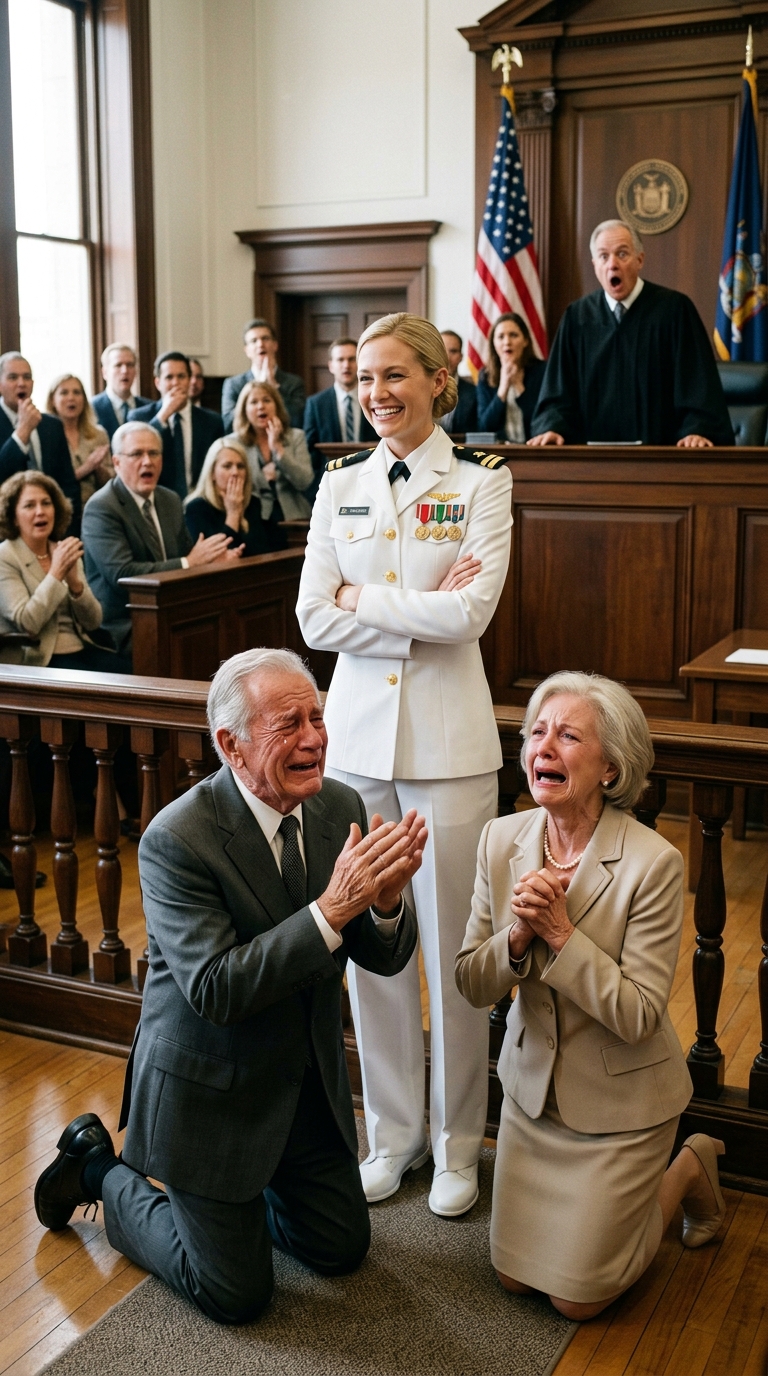
Grandma Evelyn’s funeral felt less like a respectful goodbye and more like a performance shaped by my mother’s obsession with image and status.
A steady drizzle fell over the cemetery, turning the soil into slick mud. I stood quietly at the back beneath a simple black umbrella, wearing an old wool coat. At the front, my mother Patricia wore an expensive black fur coat, pressing dry tissues under her eyes while subtly scanning the crowd for anyone important. My father Michael stood beside her, repeatedly checking his watch as though counting down to the reception. To them, Grandma Evelyn had been an inconvenience in life and a potential gain in death. Neither of them had visited her nursing home for years.
I loved her deeply. I missed our chess games, her stories, her humor, and the way she always defended me whenever my parents criticized my decisions.
“She’s in a better place now,” my mother said loudly as the coffin was lowered.
I stayed silent. Anywhere away from them would have been better.
Two days later, we met in the office of Mr. Parker, the estate lawyer.
My parents sat together with confidence while I remained slightly apart in my chair. In their eyes, I was still the disappointment—the daughter who chose a different life and never met their expectations.
Mr. Parker began reading the will.
“To my son Michael and his wife Patricia, I leave the contents of my storage unit, including family photo albums and my porcelain cat collection.”
My father frowned.
“That’s all?”
“That is your inheritance,” Mr. Parker replied.
My mother looked stunned.
“What about the investments? The property? The trust?”
Mr. Parker continued reading.
“To my granddaughter Claire Carter, I leave the remainder of my estate, including all property, investments, and liquid assets, totaling approximately four point seven million dollars.”
Silence filled the room.
Then everything erupted.
“That’s impossible!” my father shouted. “She manipulated her!”
“I visited Grandma every weekend,” I said calmly. “I just didn’t advertise it online.”
My mother pointed at me.
“You took advantage of a vulnerable old woman!”
Mr. Parker immediately corrected her.
“Mrs. Carter was fully competent when she signed her will. The entire process was recorded.”
My father struck the desk.
“We’re her children! Claire deserves nothing!”
I remained composed. Years had taught me that arguing with them changed nothing.
Before leaving, my mother pointed at me.
“We’ll take every penny back.”
Three days later, legal documents arrived at my apartment.
My parents were suing me for fraud, undue influence, and mental incapacity.
I wasn’t concerned.
I brewed coffee, opened my laptop, and created a folder named Operation Inheritance.
On the court date, I arrived early wearing a plain gray suit and carrying only a thin file.
My parents entered dressed as if attending a formal gala. Their lawyer, Mr. Bennett, carried himself with complete certainty.
“You can still settle,” my father said smugly. “Give us eighty percent and keep the rest.”
“I’ll pass,” I replied.
Mr. Bennett smirked.
“You’re representing yourself? That’s a mistake.”
“We’ll see.”
Inside the courtroom, Judge Whitmore presided.
Mr. Bennett delivered a dramatic opening statement, painting me as a manipulative, unemployed drifter who had taken advantage of an elderly woman suffering from dementia.
When my turn came, I simply stated that the will was valid and the burden of proof rested on the plaintiffs.
The trial moved forward. My mother testified first, inventing close emotional ties with Grandma Evelyn. My father followed, falsely claiming I had isolated her and changed locks to keep them away.
A medical expert hired by the opposition suggested she could have been easily influenced due to her age.
Each time I was invited to cross-examine, I declined.
Confusion spread through the courtroom.
My parents believed I was unprepared.
In reality, I was letting every false statement become part of the official record.
Hours later, Mr. Bennett concluded his case.
Judge Whitmore turned to me.
“Do you have anything at all?”
I stood and lifted my folder.
“One document, Your Honor.”
I handed it to the bailiff.
The judge opened it and began reading.
Her expression shifted immediately.
“This is a certified Department of Defense service record?”
“Yes, Your Honor.”
She turned another page.
“You’re stationed at Fort Liberty?”
“Yes.”
“And your rank is Major?”
“Yes, Your Honor.”
My father let out a nervous laugh.
“Major of what?”
The judge ignored him.
Then she looked up again.
“You’re with the Judge Advocate General’s Corps?”
“I am.”
The courtroom fell completely silent.
I straightened.
“I am Major Claire Carter, Senior Trial Counsel for the United States Army JAG Corps. I’ve practiced law for seven years and prosecute serious criminal and fraud cases.”
Mr. Bennett dropped his pen.
My father sat frozen.
I continued.
“I’ve never been unemployed. The periods my parents claim I disappeared were overseas deployments. The reason they know so little about my career is because they never cared enough to ask.”
Judge Whitmore shifted her focus to the plaintiffs.
I then addressed my father’s claim about changing locks. My evidence included an affidavit from the nursing home director confirming the facility changed locks after my father acted aggressively.
I also presented financial records proving I had no dependency on the inheritance.
Then I requested permission to cross-examine my father.
Permission was granted.
My father returned to the stand with far less confidence.
“Mr. Carter,” I began, “you testified that this lawsuit is about preserving family legacy.”
“Yes.”
“Is it also true that you owe approximately two point one million dollars to casinos in Reno?”
The courtroom went still.
Objections were raised and overruled. My father admitted the debts. I continued.
“Do you also have a second mortgage in default?”
He confirmed reluctantly.
Then I revealed the final point.
Grandma Evelyn had known about his gambling debts because collectors had contacted her directly.
“She left the estate to me because she wanted to protect it from you,” I said. “She knew it would disappear at gambling tables if you inherited it.”
My father finally broke.
“We needed the money,” he said quietly.
The truth was exposed.
The case had never been about justice. It was about desperation.
Judge Whitmore ruled without delay.
“The plaintiff’s case is entirely without merit. The will remains valid.”
She dismissed the lawsuit permanently and ordered my parents to pay legal costs. She also referred the matter for perjury and attempted fraud investigation. My mother moved toward me in tears.
“We’re your parents!”
I gently removed her hand from my arm.
“You chose money over your daughter.”
My father called me cold.
I paused at the courtroom doors.
“No, Dad. That’s discipline.”
Six months later, I stood in a newly renovated section of the city Veterans’ Legal Aid Clinic.
A bronze plaque read:
The Grandma Evelyn Center for Justice.
I kept enough of the inheritance to clear my student debt and purchase a modest home near base. Nearly four million dollars was donated to support elderly veterans and spouses facing fraud and family exploitation.
It felt right.
My parents had tried to exploit an elderly woman.
Now her legacy protected others from people like them.
My phone rang.
Blocked number.
I already knew who it was.
They had lost their home. My father avoided prison through a plea deal, while my mother stayed with relatives in Michigan. They called often asking for money.
I watched a law student assist an elderly veteran with paperwork while tears of gratitude filled his eyes.
Then I looked at the phone and pressed Block Caller.
Grandma Evelyn didn’t leave me her fortune because I manipulated her.
She left it because she trusted me.
She believed I would use it properly. She believed I would turn it into something meaningful.
As I stepped out of the clinic into the afternoon light, a black sedan waited outside.
“Airport, Major?” the driver asked.
“Yes.”
A new fraud case awaited me in Wiesbaden, where I was lead prosecutor.
I opened my laptop as the car merged onto the highway.
The family dispute was over.
Real work was ahead.
I logged in and began.
