

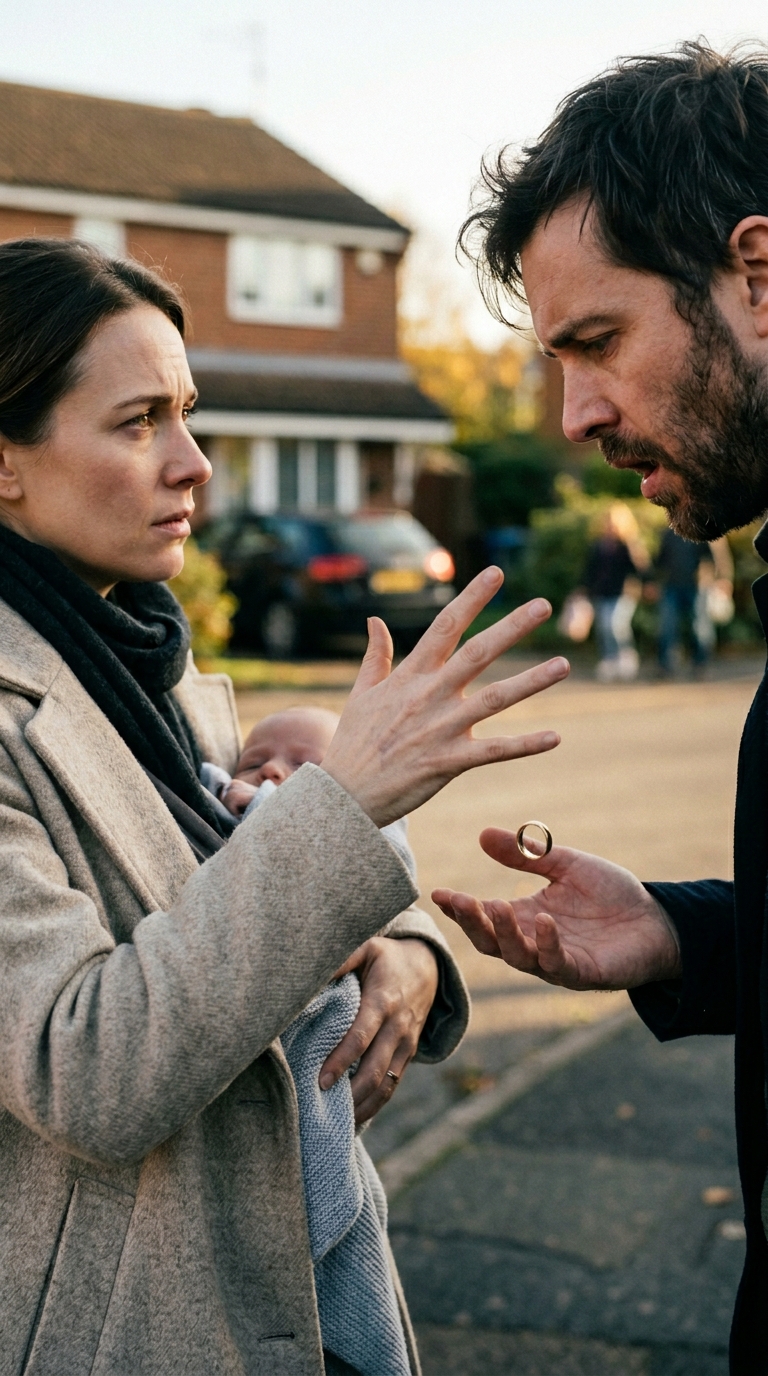
THE NIGHT I WALKED OUT OF THE HOSPITAL WITHOUT HIM
When my sister picked up the phone, her voice was thick with sleep—that hazy confusion of being pulled too quickly from a dream—but I didn’t soften my words, because there are moments in a woman’s life when softness becomes a luxury she can no longer afford.
“Adrian has another family in Portland.”
Silence stretched for two full seconds, then came the rustle of sheets, the sharp click of a lamp switching on, and the unmistakable sound of keys being snatched from a nightstand.
“I’m leaving now,” she said.
I ended the call and glanced around the hospital room as if seeing it for the first time—not as a place meant for healing, but as a space where I had been left to recover under harsh fluorescent lights while the man who should have been beside me had split himself into two lives and expected me to believe the version that was easiest for him to maintain.
My name is Simone Blake. I was thirty-four years old, a principal architect, recovering from emergency surgery, and holding together the first fragile days of my son’s life with a kind of resolve that only appears after illusions have finally collapsed. My baby, Elias, slept in the plastic bassinet near the window, his tiny chest rising and falling beneath the striped hospital blanket, unaware that by sunrise, the structure of his mother’s life would be gone—and something harder, cleaner, and truer would begin in its place.
I started removing the machines.
The blood-pressure cuff came off first. Then the heart monitor leads, one by one, the adhesive tugging sharply at my skin. I peeled back the tape holding the IV in place, slid the needle out, pressed gauze over the puncture, and held it until the bleeding slowed. Every movement hurt. My abdomen felt fragile and unstable, my back throbbed, and my limbs were heavy enough to make standing feel like negotiating with gravity. Still, pain had stopped mattering.
I changed into the clothes I had arrived in, wrapped Elias in two receiving blankets, and secured him into the infant car seat with hands steadier than I felt. Then I removed my engagement ring and wedding band, placed them side by side on the rolling tray next to the empty water pitcher, and left them there without a note.
He would understand enough.
Or at least enough to panic.
When my sister texted I’m here, I lifted the car seat, steadied myself against the wall, and stepped into the hallway. A night nurse intercepted me almost immediately, her tired expression snapping into alarm the moment she saw the discharge bracelet still on my wrist.
“Ma’am,” she said, “you cannot leave like this. Have you been discharged?”
I met her eyes and spoke in the calm, controlled tone I usually saved for contractors who lied and expected charm to shield them.
“My name is Simone Blake,” I said. “I am leaving this hospital against medical advice. I understand the risks, and I will sign whatever paperwork administration requires in the morning. But if you put your hands on me or on my son right now, I will make this the most expensive professional choice of your year.”
She stepped back.
I kept walking.
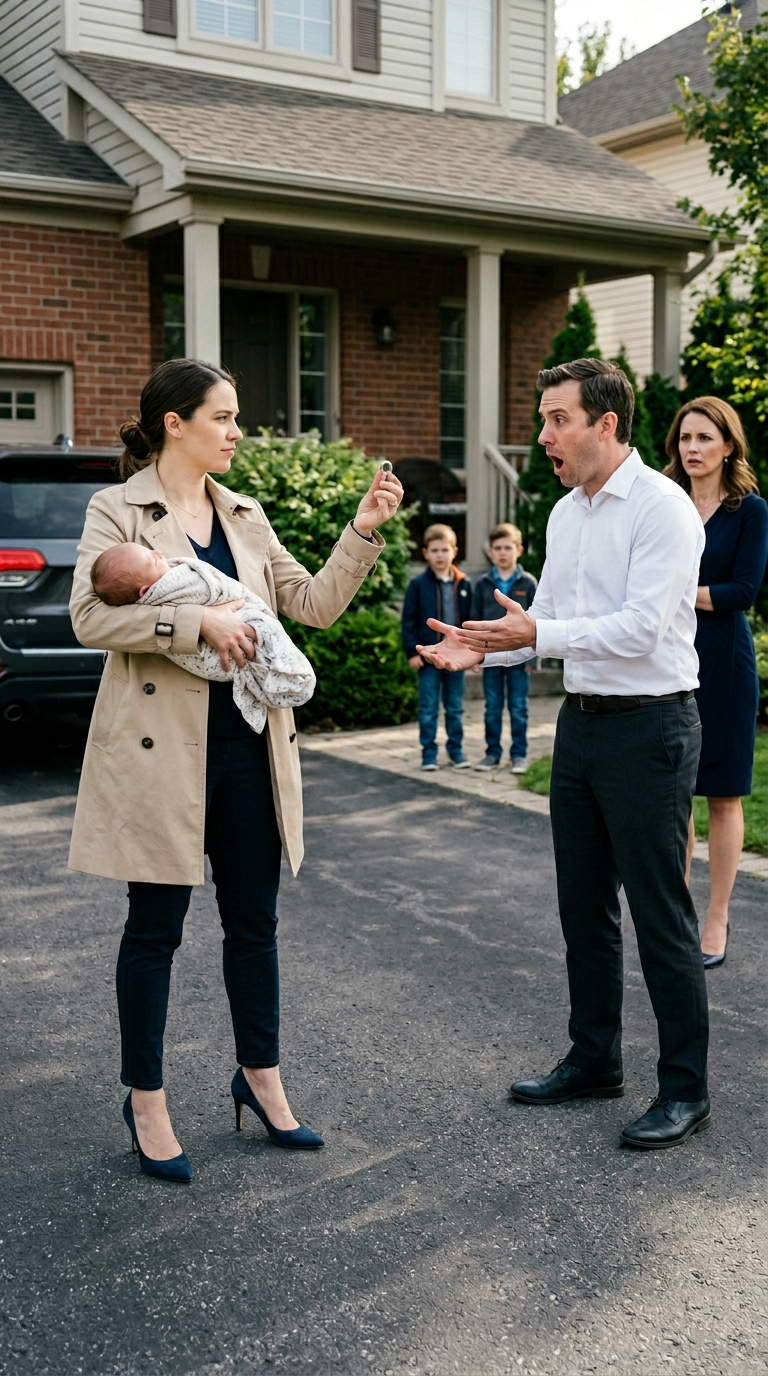
THE FORTRESS IN BELLEVUE
My sister, Taryn, drove me across the bridge in near silence, broken only by soft questions about whether I was bleeding too much or needed her to pull over. The city behind us glowed through the winter mist—Seattle washed in silver and amber—and I sat in the passenger seat with Elias beside me, realizing that shock has its own structure. It clears space. Strips away decoration. Reduces life to what can actually hold weight.
By dawn, we were inside the penthouse Taryn kept in Bellevue for the weeks she spent in town managing private clients—a place of glass, pale oak, and carefully controlled quiet. I didn’t want comfort as much as I wanted security. Height. Locked doors. Clear sightlines. Somewhere my husband couldn’t walk into by smiling at the concierge and pretending concern.
By noon, Taryn had brought in Owen Mercer, a former FBI forensic accountant who now handled private investigative audits for people wealthy enough to require precise damage control—and scared enough to pay for it. He arrived with two laptops, a secure drive, and the look of a man who had seen every version of betrayal money could fund.
He listened without interrupting as I told him about Adrian—about the increasingly vague travel schedules, the way he locked his phone whenever a message came through, the hollow tenderness that had replaced real intimacy over the past year—and finally, about the legal packet I had found in our shared cloud folder while I was still pregnant, tied to financing I didn’t recognize and backed partly by collateral I had never approved.
When I finished, Owen opened the first file.
“Rachel Sloan,” he said. “Thirty-two. Former legal assistant at Adrian’s old firm. Currently listed as the owner of a boutique flower shop in Portland financed through a holding company that traces, after two layers, back to him.”
He turned the screen toward me.
There were photos.
Not distant, grainy shots—but ordinary, intimate images pulled from social media fragments, archived pages, vendor galleries, and deleted posts recovered through cached data. Rachel standing in front of a restored craftsman house with a wreath on the door. Adrian kneeling in a backyard beside two small children in rain boots. Rachel holding twins at a pumpkin patch. Christmas lights. Birthday cake. Matching pajamas.
A coldness spread through me that no blanket could warm.
The twins were three.
Three years old.
Which meant Rachel had been pregnant at the same time I was losing my first pregnancy—the one Adrian had called an unfortunate tragedy, the one he said had brought us closer. I had bled into hospital sheets while he held my hand, telling me we would try again when the time was right. Somewhere else, in another city, he had already been preparing to be a father.
Owen slid another file toward me.
This one was worse.
A loan package.
Adrian had used my architecture firm—my firm, built over twelve relentless years—as part of the collateral structure on a $2.5 million residential purchase in Portland. My signature was on the authorization page.
Not mine, of course.
A precise imitation.
Careful enough to satisfy a banker who wanted the deal to go through, but not careful enough to fool someone who had signed hundreds of contracts, permits, insurance forms, and partnership agreements with that exact hand.
I studied it for a long moment, then said the only thing that mattered.
“That signature is forged.”
Taryn muttered a curse and turned sharply to Owen.
“That’s enough. We call the U.S. Attorney’s Office now and have him in cuffs before dinner.”
I shook my head.
“No.”
They both stared at me.
“If we move now, he becomes the wounded husband trapped in a misunderstanding,” I said. “He’ll paint me as unstable, exhausted, irrational—overwhelmed after giving birth—and just sympathetic enough that people will want to believe him. I want him under oath first. I want him lying in a room where the lie becomes evidence.”
Owen’s expression shifted—not to sympathy, but to something sharper. Professional respect.
He recognized strategy when he heard it.
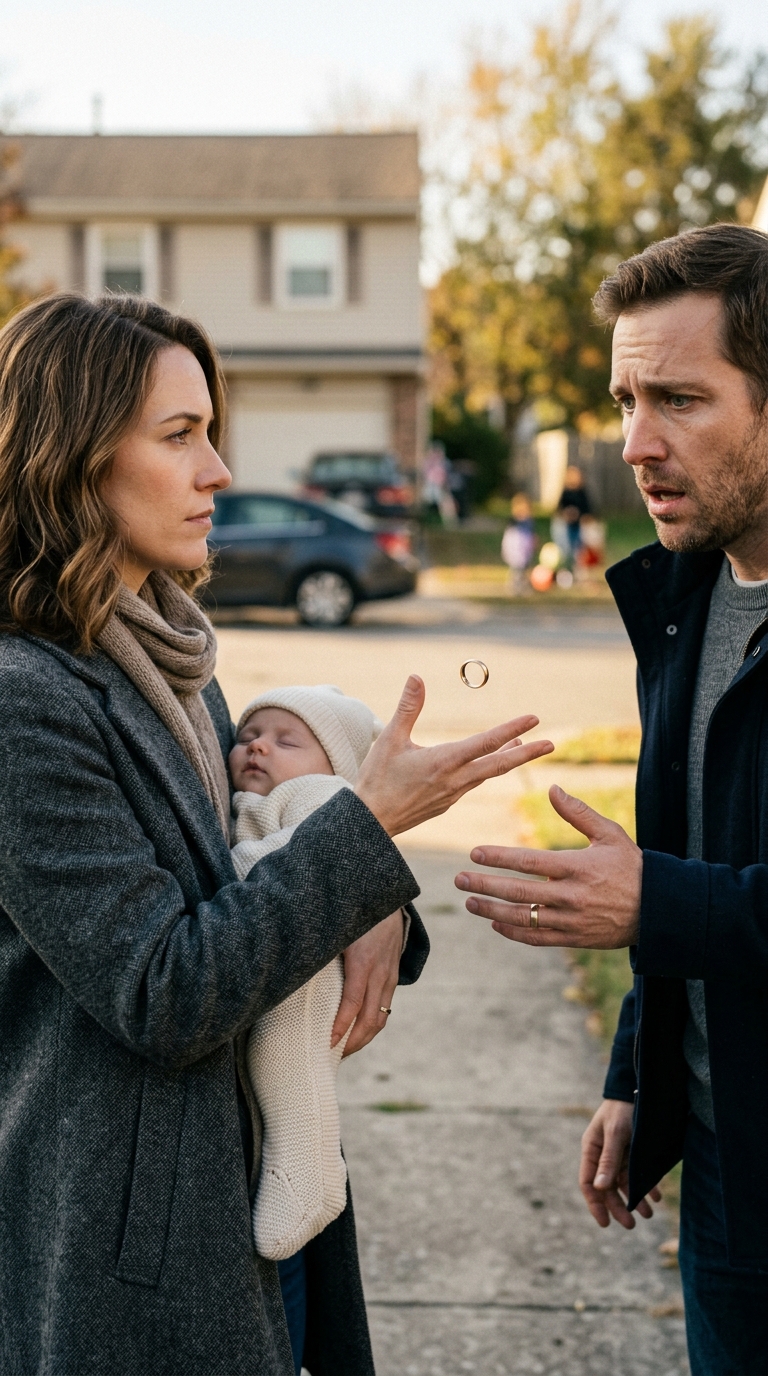
THE HEARING HE BELIEVED HE CONTROLLED
Adrian acted faster than I expected—which, in hindsight, made perfect sense. Men who maintain double lives don’t survive on improvisation alone. He filed for an emergency temporary custody review within days of my disappearance from the hospital, presenting himself as a devastated husband worried about the emotional stability of a postpartum wife who had fled medical care with a newborn. He requested supervised visitation, a psychological evaluation, and immediate access to the child—all while wearing the polished concern of a man who had rehearsed calm in front of a mirror.
My attorney, Elena Brooks, urged patience.
So I gave it to her.
At the first hearing, Adrian arrived in a charcoal suit, his wedding ring still in place, his expression carefully arranged into controlled grief for the judge and anyone watching. He spoke about my exhaustion, my stress, my difficulty trusting others, my “recent impulsivity,” and my supposed fear of family support. What he didn’t realize was that every word he spoke was being added to a structure already collapsing beneath him.
Elena didn’t strike right away. She asked for something smaller.
She accepted, for now, limited supervised access conditions—and in exchange requested that Adrian submit a full sworn declaration of assets, liabilities, real estate, business interests, and any financial channels tied to marital resources or jointly leveraged entities.
He agreed too quickly.
“Of course,” he said. “I have nothing to hide.”
That wasn’t just arrogance.
It was the key to everything.
Because once the oath existed, concealment stopped being marital betrayal—and became something far more prosecutable.
That night, after the hearing, I sat in Taryn’s penthouse with Elias asleep against my shoulder, listening to rain drag across the glass while Owen and Elena mapped timelines across the dining table. Portland properties. Shell companies. Vendor invoices. School records. Insurance claims. Business filings. Archived mortgage documents. Photo metadata. It wasn’t chaos anymore. It was structure.
He had built a secret life the way careless developers build on floodplains—fast, greedy, and convinced no one would ever inspect the foundation.
PORTLAND
I didn’t go to Portland to confront Rachel.
That would have been too easy—and too foolish.
By then, Owen had already shown me enough to understand that Rachel knew parts of the truth, but not all of it. She believed—like many do when they choose fantasy over verification—that Adrian’s marriage had been over in everything but paperwork, that we were bound more by documents than by anything real, and that time would eventually legitimize what secrecy had already made emotional. She didn’t know the financial structure. She didn’t know about the forged authorization. She didn’t know that the shop, the house, and part of her comfort were built on fraud tied directly to my firm.
When I arrived at the Portland house, she opened the door in leggings and a cream sweater, looking like someone expecting a delivery—not the legal wife of the man who had been splitting his life between us.
She recognized me immediately.
I handed her a folder before she could say a word.
Inside were my marriage certificate, our joint tax returns, the custody filing from Seattle, copies of the forged documents, and enough financial tracing to make the rest impossible to dismiss as jealousy or revenge.
She read it standing.
Then she sat down without realizing it.
When she looked up, her face had drained of color.
“He said you two had been separated for years,” she whispered.
“He also told me he was working late while he was buying your kitchen appliances with collateral tied to my company,” I said.
She pressed a hand over her mouth.
I didn’t take satisfaction in that moment. Contrary to what bitterness suggests, most women don’t take pleasure in watching another woman realize her hope was built on unstable ground. What I felt was urgency.
“Listen to me carefully,” I said. “That house and your business were funded through fraudulent documents. If federal investigators step in before you separate yourself, you could be treated as complicit. Take your children and leave tonight. Do not warn Adrian. Do not call him. Do not try to negotiate. Just go.”
Rachel looked back at the papers, then toward the hallway where faint children’s voices carried from another room.
“What happens to him?” she asked.
I could have answered as his wife.
Instead, I answered as an architect.
“Weak structures collapse when weight finally reaches the part that was always cracked.”
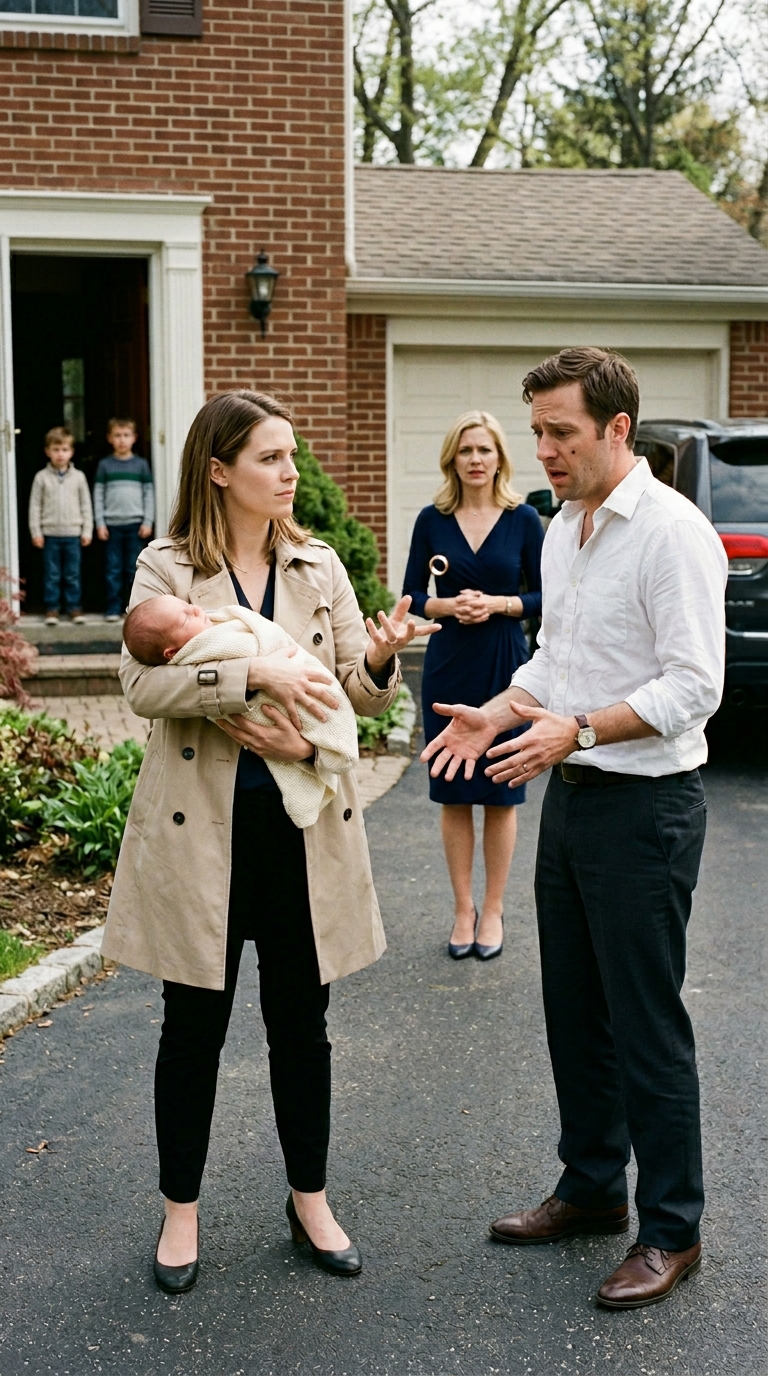
THE HOUSE HE BUILT ON MY NAME
At 8:30 that night, Adrian came back to Portland carrying a bottle of wine and a shopping bag with tissue paper peeking out the top—the posture of a man stepping into a life he believed was still his. He was whistling as he unlocked the front door.
Then he saw the darkened living room, the abandoned toy basket near the stairs, and me sitting in one of the leather chairs by the window.
The bottle slipped from his hand and shattered across the wood floor.
“Simone,” he said, and my name had never sounded so hollow. “What are you doing here?”
I folded my hands in my lap.
“I’m an architect,” I said. “Did you really think shell companies and forwarding addresses would keep me from finding a structure financed under my name?”
He reached for anger next—men like Adrian often do when charm fails.
“This is private property,” he snapped. “I can have you removed.”
I let my gaze move slowly across the room—the expensive sofa, the curated books, the framed family photos already taken down by the woman who had finally learned what her life was built on.
“It isn’t your property,” I said. “It belongs to the bank you defrauded using my firm as leverage.”
Something shifted in his expression then—not morally, but strategically. He dropped onto the opposite couch and began pleading almost immediately, words spilling too fast, blaming pressure, insisting he had meant to manage everything, to keep everyone safe, to fix it before anyone got hurt.
“Manage it?” I repeated. “You forged my name. You told another woman she and her children were your real family while I was building a business you used as collateral—and recovering from losses you pretended to grieve with me.”
He started crying—something that might have moved me once.
Now, it meant nothing.
I stood.
“I want you to understand something clearly,” I said. “Elias will grow up knowing exactly why I left. He will know his mother bled, built, protected—and never begged to be chosen. Family is not where a man performs love while quietly shifting assets beneath the floorboards.”
Red and blue lights began flashing across the walls.
He dropped to his knees.
He promised to sign everything back. He promised to disappear. He promised treatment, confession, cooperation, repentance—every word he thought could serve as an emergency repair.
I stepped back.
Character isn’t what appears when comfort is present.
It’s what remains when comfort is gone.
Federal agents entered a moment later.
One of them spoke first.
“Adrian Blake, you are under arrest for bank fraud, wire fraud, and forgery.”
He kept shouting my name as they led him out.
I walked past him, through the doorway, and into the cold Oregon rain without looking back.
WHAT HOLDS
Three months later, his law license was suspended, the case had expanded, and most assets tied to the fraudulent network were frozen. Rachel relocated with the twins and cooperated. My firm survived because we moved quickly enough to contain the damage before lenders could pretend they hadn’t seen the irregularities. Elias grew stronger. I returned to work slowly, carefully—with an intensity my team understood without needing explanation.
On my first day back at a major site meeting, one of my younger associates asked how I always knew when a structure was too compromised to save.
I looked out through unfinished glass toward Elliott Bay and answered more honestly than she expected.
“When a structure fails,” I said, “you don’t paint over the crack and call it restoration. You clear the debris, reinforce what still matters, and rebuild with better materials.”
For years, I believed marriage was the structure holding my life together.
Now I know better.
Truth holds.
Character holds.
And the future my son and I will never have to beg to belong to—that is the strongest thing I have ever built.
THE END
