

Part 3 — This Time, I Chose to Say “Let’s Go”
“Get in.”
Daniela froze when she saw Teresa step out of the truck.
The old white vehicle still had roses painted along the sides and the words “Flores Teresa.”
“What are you doing here?” Daniela asked.
“The bus station is far away. If you wait for a taxi, you could miss the bus. Get in.”
Daniela instinctively pulled her children close.
“Mrs. Teresa…”
“We don’t have time.”
Sofía was the first to react.
She ran toward her grandmother and wrapped her arms around her waist.
“Are you coming with us?”
Teresa closed her eyes for just a moment.
“I’m taking you farther than the bus station.”
Daniela understood.
“To Guadalajara?”
“Yes.”
“But…”
“Get in before my son comes down.”
Mateo climbed in, still half asleep. Sofía placed the suitcase behind the seats.
Daniela was loading the bags when the building door suddenly flew open.
Mauricio came out wearing sweatpants, a T-shirt, and sandals.
“Daniela!”
The children jumped.
“Get out of there!”
Mateo began to cry.
Sofía hugged him.
Teresa shut the side door of the truck and stepped in front of her son.
“Don’t come any closer.”
It took Mauricio a few seconds to understand.
“You’re helping her?”
“Yes.”
“Mom, you don’t know what you’re doing. She’s sick. I’ve already told you how she gets.”
Teresa looked at him.
For thirty-eight years, she had known every expression on that face. When he scraped his knees learning to ride a bicycle. When he finished middle school. When he came home with his first paycheck.
She had never imagined that one day she would be afraid of him.
“I heard you yesterday,” Teresa said.
For a moment, Mauricio lost his confidence.
“What?”
“I heard the way you talk to her.”
“We were arguing.”
“I heard every word.”
Mauricio glanced toward the building. Some of the windows were beginning to light up.
“Mom, come inside. We’ll talk upstairs.”
“No.”
“Don’t make a scene.”
Teresa almost smiled.
Her entire life, she had obeyed phrases like that.
“Don’t make a scene.”
“Don’t tell anyone about problems at home.”
“What will people say?”
“You’ve been putting on this show for years,” she replied. “I’ve only just opened my eyes.”
Mauricio tried to move toward the truck.
Teresa blocked his path again.
“If she takes the children, I’m going to report her.”
“Do it.”
“I have proof that she was in psychological treatment.”
“And I have your messages.”
Mauricio frowned.
“What messages?”
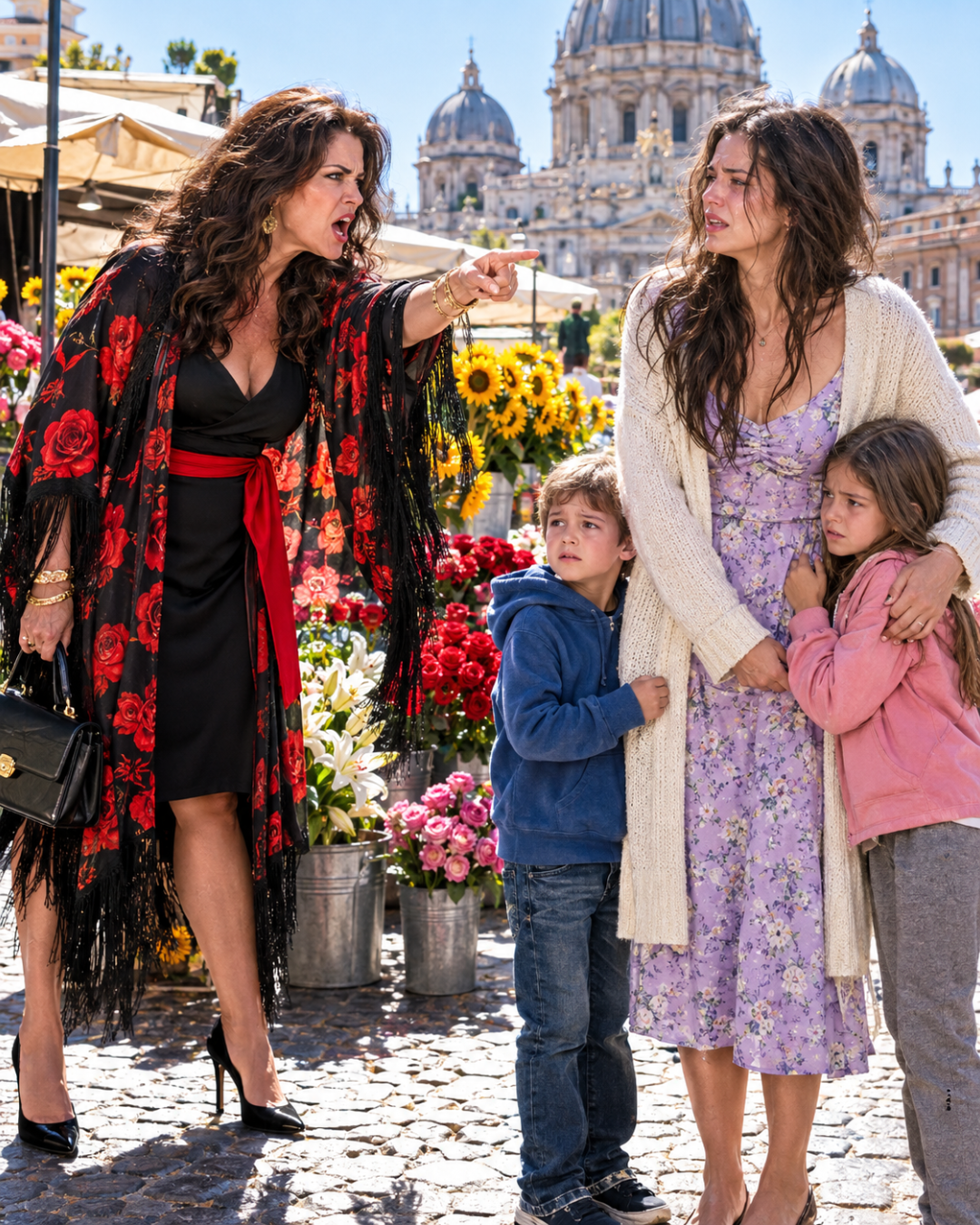
“Every Sunday, you bragged to me about how much you earned. One hundred and twenty thousand. One hundred and forty. One hundred and sixty. Photos of the money, the projects, the clients. If you want to walk into a courtroom claiming you have no income, I can walk in too.”
Mauricio’s expression changed.
“Mom…”
“I can also tell them how you control every peso your wife spends.”
“It’s my money!”
The words echoed across the courtyard.
Teresa stared directly at him.
“Thank you for saying it that loudly.”
A woman had appeared on one of the balconies.
Mauricio saw her too.
He lowered his voice.
“She’s manipulating you.”
“That’s exactly what your father used to say whenever I talked to someone.”
“Don’t compare me to him.”
“I heard you yesterday. You even inherited his phrases.”
That hurt him.
“My dad never left you with nothing.”
Teresa felt a blow in her chest.
For a few seconds, she was thirty years old again.
She saw herself picking up a broken plate from the floor while Pablo told her she couldn’t even make beans properly.
She heard her mother telling her to be patient.
“Exactly,” she replied. “He never left me with nothing because I never managed to leave.”
She climbed into the truck.
Mauricio slammed his hand against the hood.
“Mom!”
Teresa drove away.
In the rearview mirror, she watched him standing beneath the yellowish parking-lot light.
For the first time in many years, she didn’t rush back to comfort her son.
For the first hour, no one spoke.
Mateo fell asleep leaning against Sofía.
Daniela stared straight at the road.
Once they had left Toluca behind, she murmured:
“He can come after us.”
“No.”
“Mrs. Teresa, you don’t know what he’s like when he feels he’s losing control.”
“Now I do.”
They stopped near Morelia for breakfast.
Teresa bought coffee, juice, and sandwiches. The children ate at a table while Daniela remained near the window.
“I’m going to pay you back for the jacket and the sneakers,” she suddenly said.
Teresa set her cup down on the table.
“No.”
“I returned them because I was short on money for the apartment deposit. I had been using part of what I earned working for Doña Mercedes to cover food. Mauricio gave me six hundred pesos for the entire week. Some days, it wasn’t enough.”
“You don’t have to explain yourself to me.”
“Yes, I do. You thought I was stealing.”
Teresa lowered her gaze.
“And I said it in front of the entire market.”
Daniela remained silent.
“I also laughed when Mauricio humiliated you over the food,” Teresa continued. “I called you lazy. I called you ungrateful. I thought that if you didn’t defend yourself, it was because you had nothing to say.”
Daniela tightened her hands around the cup.
“At first, I did defend myself.”
Teresa looked up.
“Then I discovered that every time I argued with him, the next day he treated the children worse because of me. He told them Mommy was angry because she didn’t love them. So I stopped answering back.”
For the first time, Teresa understood that Daniela’s silence had not been weakness.
It had been a way to survive.
She reached out and adjusted the collar of Daniela’s coat, just as she had done hundreds of times for Mauricio when he was a child.
“You don’t owe me anything, Daniela.”
The young woman looked away.
“I owe you many apologies.”
They arrived in Guadalajara that afternoon.
The apartment Daniela had rented was in an old building. It had only one bedroom, a tiny kitchen, and an almost empty living room.
There were two air mattresses, a folding table, and four plates.
Nothing else.
Sofía walked inside, turned in a full circle, and asked:
“Is this really our house?”
Daniela smiled.
“For now, yes.”
The girl dropped her backpack on the floor and ran toward a window.
“Mom, you can see a tree from here!”
Mateo discovered an old ball in a corner and began nudging it around with his feet.
Teresa looked around the bare room.
Mauricio’s apartment had an enormous television, marble in the kitchen, and three bathrooms.
But she had never seen her grandchildren run around with such freedom.
While Daniela went out to buy milk with the children, Teresa slipped an envelope beneath one of the mattresses.
It contained all the profits from her flower stall for the previous two weeks.
She didn’t tell Daniela.
She knew Daniela would try to give it back.
Before returning to Toluca, she handed her a piece of paper.
“This is the number of a lawyer. She handles family law cases. One of my customers at the market recommended her to me this morning.”
Daniela looked at her in surprise.
“You were already planning to help me?”
“Ever since I heard Mauricio behind that door.”
Teresa fell silent for a moment.
“I don’t want you to spend your whole life running away. I want you to be able to stay wherever you choose.”
The following weeks were the hardest.
Mauricio filed for divorce first.
Then he claimed Daniela had taken the children without telling him and insisted that she was emotionally unstable.
He called Teresa dozens of times.
She didn’t answer.
Eventually, he showed up at the market.
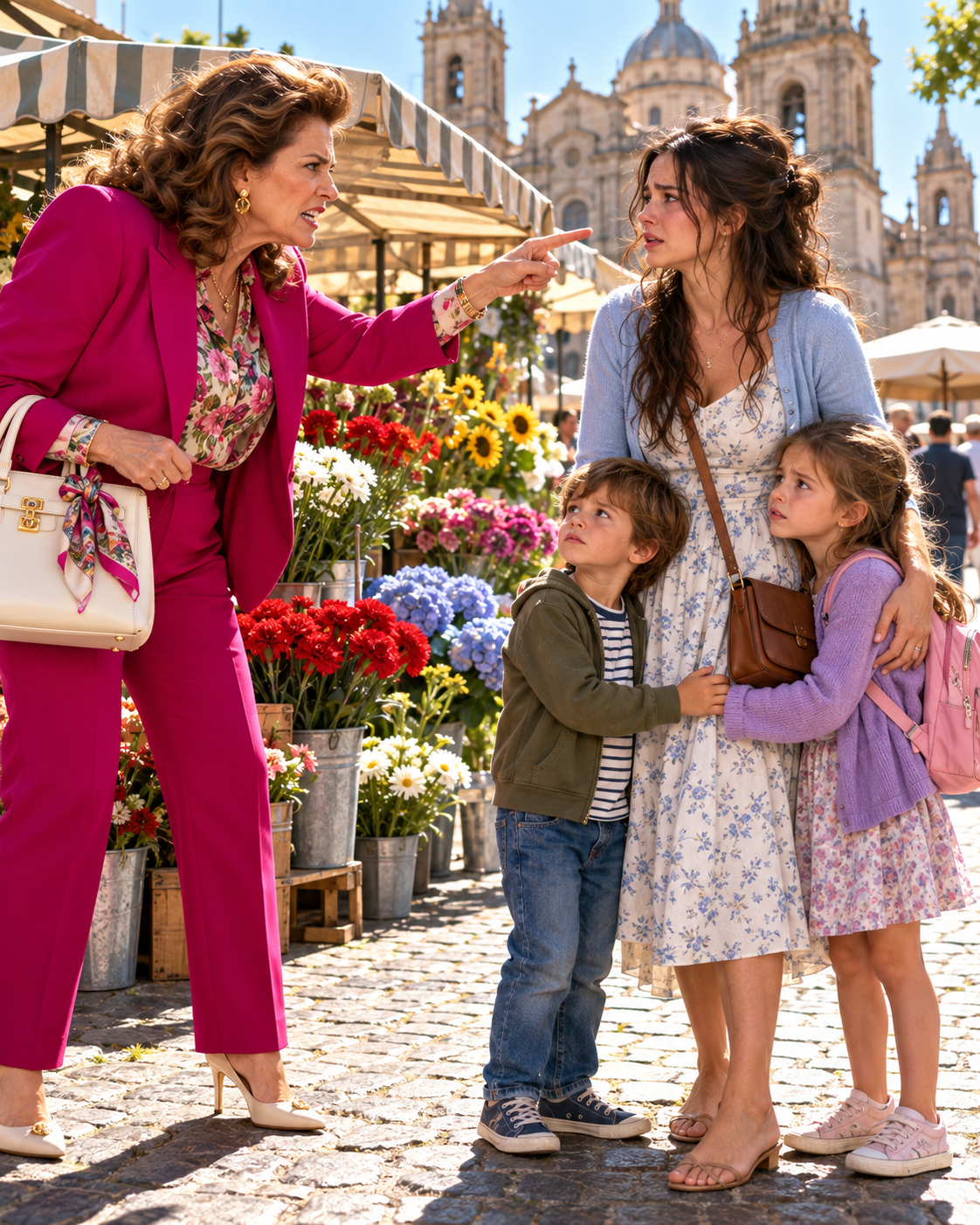
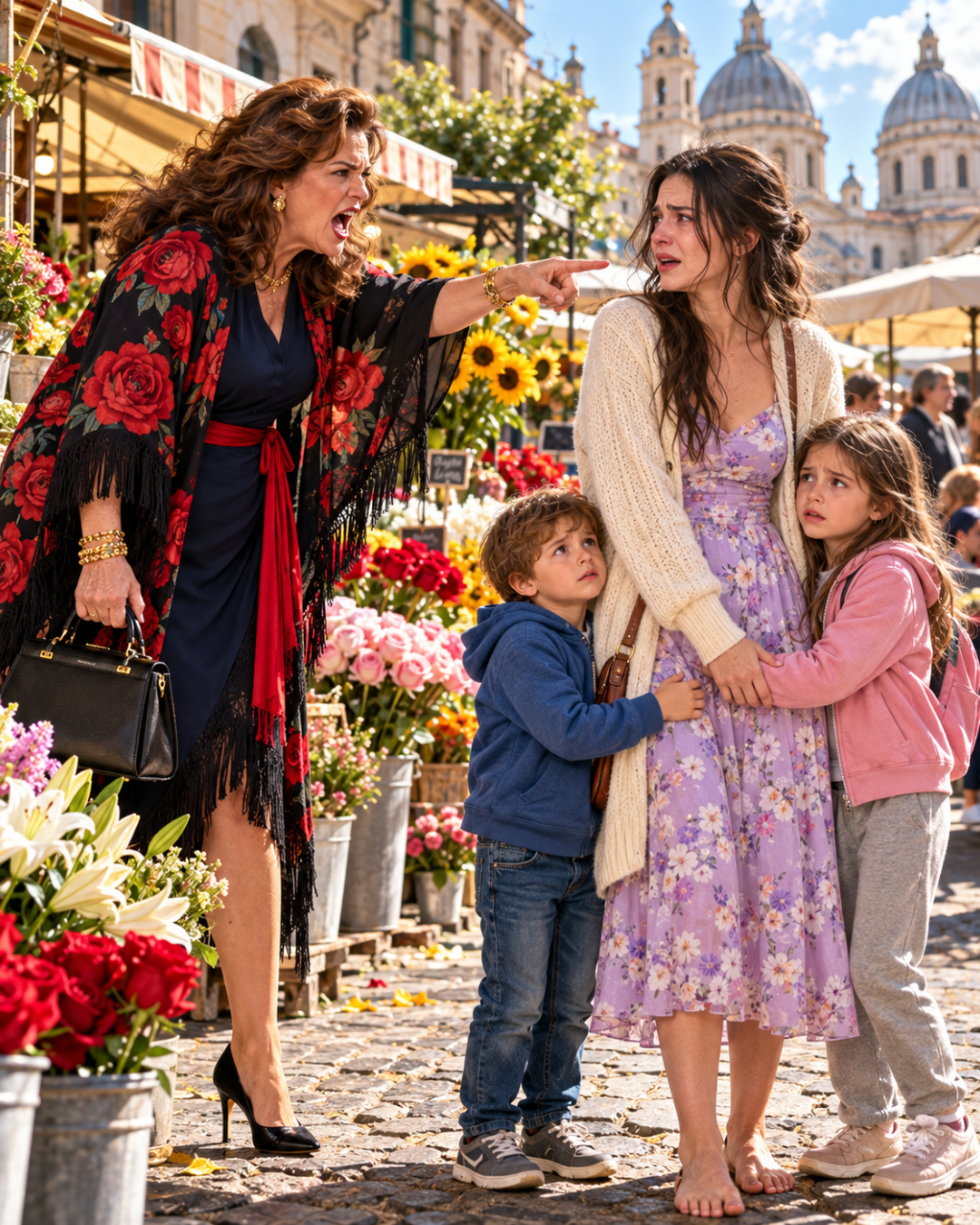
“You’re going to testify against your own son?”
Teresa was arranging a bouquet of white roses.
“I’m going to tell the truth.”
“I’m your son.”
“That’s exactly why I should have stopped you sooner.”
“That woman destroyed our family.”
Teresa put down the scissors.
“No, Mauricio. What destroyed your family was believing that paying for an apartment gave you the right to decide even how much your wife could spend on bread.”
Mauricio slammed his hand against the counter.
Several people turned to look.
“She did nothing!”
“She took care of your children.”
“I worked to support everyone!”
“And she worked in secret so she could escape from you.”
Mauricio froze.
“Who told you?”
Teresa realized then that her son still didn’t know about Mercedes.
She smiled without amusement.
“What matters isn’t who told me. What matters is why your wife had to work in secret.”
Mauricio walked away.
Things at the market weren’t easy either.
Lupita told her own version of the story, and for weeks several vendors said Teresa had betrayed “her own blood.”
One morning, Chayo, the seed vendor, commented in front of two customers:
“I would never choose a daughter-in-law over my own son.”
Teresa continued trimming stems.
“I didn’t choose Daniela over Mauricio either.”
“That’s exactly what you did.”
Teresa looked up.
“I chose not to help my son hurt someone.”
Chayo said nothing.
A few days later, Lupita criticized her again.
“Marriage problems should be settled inside the home.”
Teresa set the flowers down on the counter.
“Do you remember what your husband used to call you when he drank?”
Lupita stiffened.
“That has nothing to do with this.”
“He called you useless in front of everyone. And we laughed because you laughed too.”
Lupita lowered her eyes.
“I laughed too when Mauricio humiliated Daniela,” Teresa continued. “I thought that if she wasn’t shouting, it meant it didn’t hurt. Now I know that many women laugh only so no one notices that they want to cry.”
From that day on, no one confronted her directly about it again.
In Guadalajara, Daniela began working as a caregiver for an elderly woman recommended by Claudia, Mercedes’s daughter. She also managed to enroll Sofía and Mateo in a school near the apartment.
With legal help, she gathered documents, proof of employment, her rental agreement, and current evaluations.
The postpartum depression she had experienced years earlier did not mean she was incapable of caring for her children.
The recording Mauricio had so often used to frighten her showed an old breakdown, not her present life.
During the proceedings, Teresa voluntarily provided screenshots of Mauricio’s messages in which he himself bragged about his income.
“Look, Mom, 148 thousand this month.”
“This client paid in cash.”
“Another 90-thousand-peso job just came through.”
Mauricio stopped speaking to her.
It hurt Teresa more than she had imagined.
Some nights, she opened her son’s chat and looked at the last time he had been online.
She would type:
“Are you okay?”
Then delete the message.
Other nights, she took out an old photograph of Mauricio at seven years old, holding a crooked bouquet he had made for Mother’s Day.
She still loved him.
That was the worst part.
She discovered that setting a boundary didn’t extinguish love.
It simply prevented that love from being used as an excuse.
Months later, the family authorities ruled that the children would live primarily with Daniela while final arrangements were being determined. Mauricio was granted visitation under established conditions and was required to pay child support based on the financial information gathered during the proceedings.
As they left one hearing, Mauricio walked past Teresa.
He didn’t look at her.
She looked at him.
For a second, she wanted to call out to him.
She wanted to say, “Son.”
But she remembered Mateo crying inside the truck.
She remembered Daniela’s trembling hands.
She remembered her own life with Pablo.
And she let Mauricio keep walking.
Almost a year later, Teresa drove through the night to Guadalajara.
It was the first day of school.
She carried two enormous bouquets of flowers in the truck.
In the school courtyard, Sofía wore a white blouse, a navy-blue skirt, and shoes that were exactly her size.
Mateo, who was starting elementary school, couldn’t stop adjusting his backpack.
Daniela stood among the other parents.
She was wearing a simple cream-colored dress.
It took Teresa a few seconds to notice something.
Her hands.
Daniela’s nails were painted light pink.
Nothing extravagant.
But Teresa remembered that afternoon at the market, when she had accused her of spending the money on manicures while Daniela hid bus tickets in her pocket.
She walked over.
“They look beautiful.”
Daniela looked at her nails and smiled.
“I painted them myself last night.”
“Well, you did a good job.”
They both laughed.
Sofía saw them and ran toward them.
“Grandma!”
Teresa opened her arms.
The girl hugged her and then excitedly pointed to her new backpack.
“Look.”
One of the pockets had a name embroidered in red thread.
SOFÍA.
“Now it has my name on it,” she said proudly.
Teresa slowly traced the letters with her fingers.
A lump formed in her throat.
For decades, she had believed that a good mother was someone who endured anything to keep the family together.
Her mother had taught her that.
She had lived that way.
Without realizing it, she had also taught Mauricio that a woman who loves must endure.
Until another woman, almost entirely in silence, showed her the cost of that lie.
Teresa kissed her granddaughter on the forehead.
“Never let anyone make you believe you have to live with the name someone else decided to give you.”
Sofía didn’t fully understand.
Daniela did.
And as the children ran toward their classrooms, Teresa understood that she couldn’t go back thirty years and save the woman she had once been.
Nor could she erase everything she had allowed while Daniela suffered.
But she had managed to do something no woman in her family had ever done before:
When the moment came to tell another woman, “Put up with it,” she chose to say, “Let’s go.”
And sometimes, breaking an inherited cycle doesn’t mean you stop loving your family.
It means loving them enough to refuse to let the pain keep being passed down.
