

Part 1 — The Three Bus Tickets
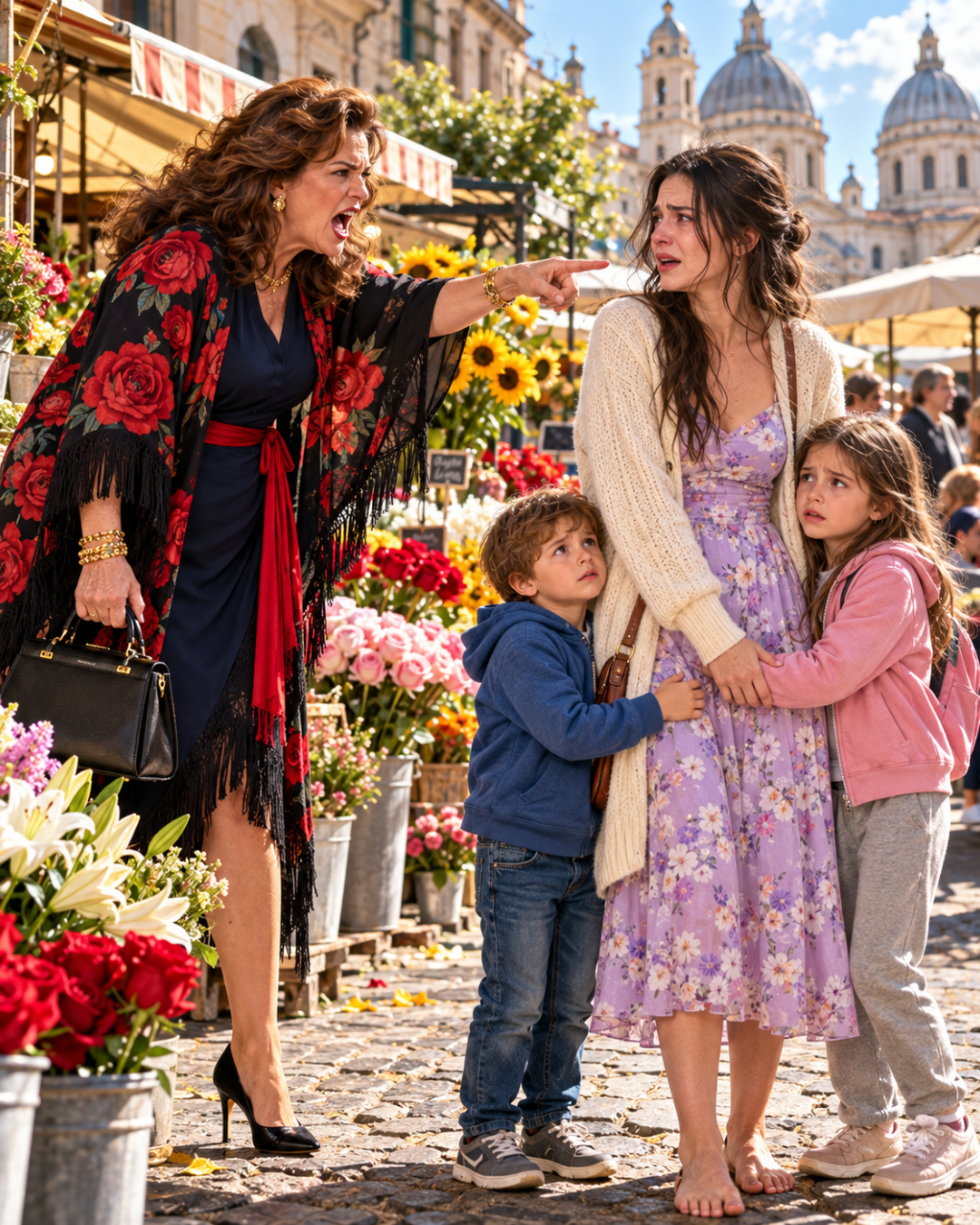
“My son earns more than one hundred thousand pesos a month, and you dress my grandchildren in clothes from the flea market. They’re already being made fun of at school!”
Teresa slammed her palm against the counter of her flower stall in the Toluca market. The carnations trembled inside their buckets, and two vendors from the neighboring stalls immediately turned to look.
Standing in front of her, Daniela remained silent beside her children. Sofía, nine years old, wore a secondhand pink jacket that still had another girl’s name embroidered on the pocket: “Emma.” Mateo, five, was wearing sneakers almost two sizes too big.
“Mauricio told me he gives you twelve thousand pesos every month,” Teresa continued. “Where is it? What are you spending it on?”
Daniela looked down at her hands. Her nails weren’t manicured, and she wore no rings. Her fingers were dry and cracked from the cold and cleaning products.
She didn’t answer.
She only pushed her right hand deeper into the pocket of her coat.
Inside, she was clutching three bus tickets.
Toluca–Guadalajara.
Friday, 5:40 in the morning.
One adult. Two children. One way.
“Grandma…” Sofía discreetly tugged at Teresa’s sleeve. “Some girls call me ‘the flea market girl.’”
Teresa felt the blood rush to her face.
Daniela took Mateo by the hand, wrapped an arm around Sofía’s shoulders, and walked away without defending herself.
Teresa watched her disappear among the market stalls, convinced that her daughter-in-law was irresponsible.
For twenty-seven years, she had sold flowers. She had started with two buckets of roses beside one of the market entrances, and now she had a refrigerator, a glass display counter, and customers who sought her out for weddings, quinceañeras, and funerals.
Mauricio had given her the refrigerator.
Her only son.
Her pride and joy.
Mauricio owned a small remodeling company. Every Sunday, he called Teresa and showed her newly finished apartments in Santa Fe, Metepec, or Interlomas.
“Look, Mom, one hundred and thirty thousand this month.”
Or:
“This client paid me almost eighty thousand for a kitchen.”
He had bought a new truck, an expensive watch, and a three-bedroom apartment.
When Daniela quit her administrative job after Mateo was born, Mauricio had said:
“My wife isn’t going to work herself to death for eight thousand pesos. I can support her.”
Teresa had almost cried with pride.
The day after the argument at the market, she bought new clothes for her grandchildren: pants, blouses, a jacket for Sofía, and sneakers for Mateo.

She went to have dinner with them and left the bags by the entrance.
“So the children can have some decent things.”
Mauricio laughed and hugged his mother.
“Oh, Mom, you didn’t have to spend your money. I give her more than enough.”
Daniela put the bags away without saying anything.
During dinner, Mauricio tasted the soup and twisted his mouth in displeasure.
“Salty again. Daniela, how many times do I have to teach you something so simple?”
Teresa laughed along with him.
Daniela didn’t.
She didn’t even sit down at the table.
Two days later, the store manager called Teresa.
“Mrs. Teresa, I’m sorry to bother you. Your daughter-in-law came in yesterday and returned everything. She asked for the money in cash.”
Teresa felt something break inside her.
That same afternoon, she went to the apartment.
“You’re even taking clothes away from your own children!”
Daniela turned pale.
“I’m going to give the money back to you.”
“I don’t want your money! Mauricio supports you, I buy things for the children, and you exchange them for cash. What are you doing?”
Daniela hid her trembling hands behind her back.
That night, Teresa called her son.
“Do you really give her twelve thousand?”
“Every month, Mom. I don’t know what she does with it.”
Mauricio fell silent for a few seconds.
“And lately, cash has been disappearing from my wallet.”
A chill ran through Teresa.
The next morning, Lupita, a market vendor who lived near Mauricio, approached Teresa’s stall.
“Tere… I have to tell you something. Daniela goes into the building across the street every morning after dropping off the children. She stays there for hours.”
“With whom?”
Lupita lowered her voice.
“A man lives on the third floor. He’s not that old. Around fifty.”
By eleven thirty, Teresa was already standing outside that apartment.
She heard water running.
She heard Daniela’s voice.
She pressed the doorbell and didn’t let go.
The door opened.
Daniela appeared wearing rubber gloves and an old apron.
Behind her, there was no lover.
There was an eighty-six-year-old woman sitting in a wheelchair, her hair wet and a towel draped over her shoulders.
The elderly woman looked at Teresa and smiled with a strange calmness.
“So you’re the mother-in-law,” she said. “Come in. It’s about time you found out where the money is really going.”
Teresa still had no idea that before she left that apartment, everything she thought she knew about her son was going to come crashing down.
