

PART 1
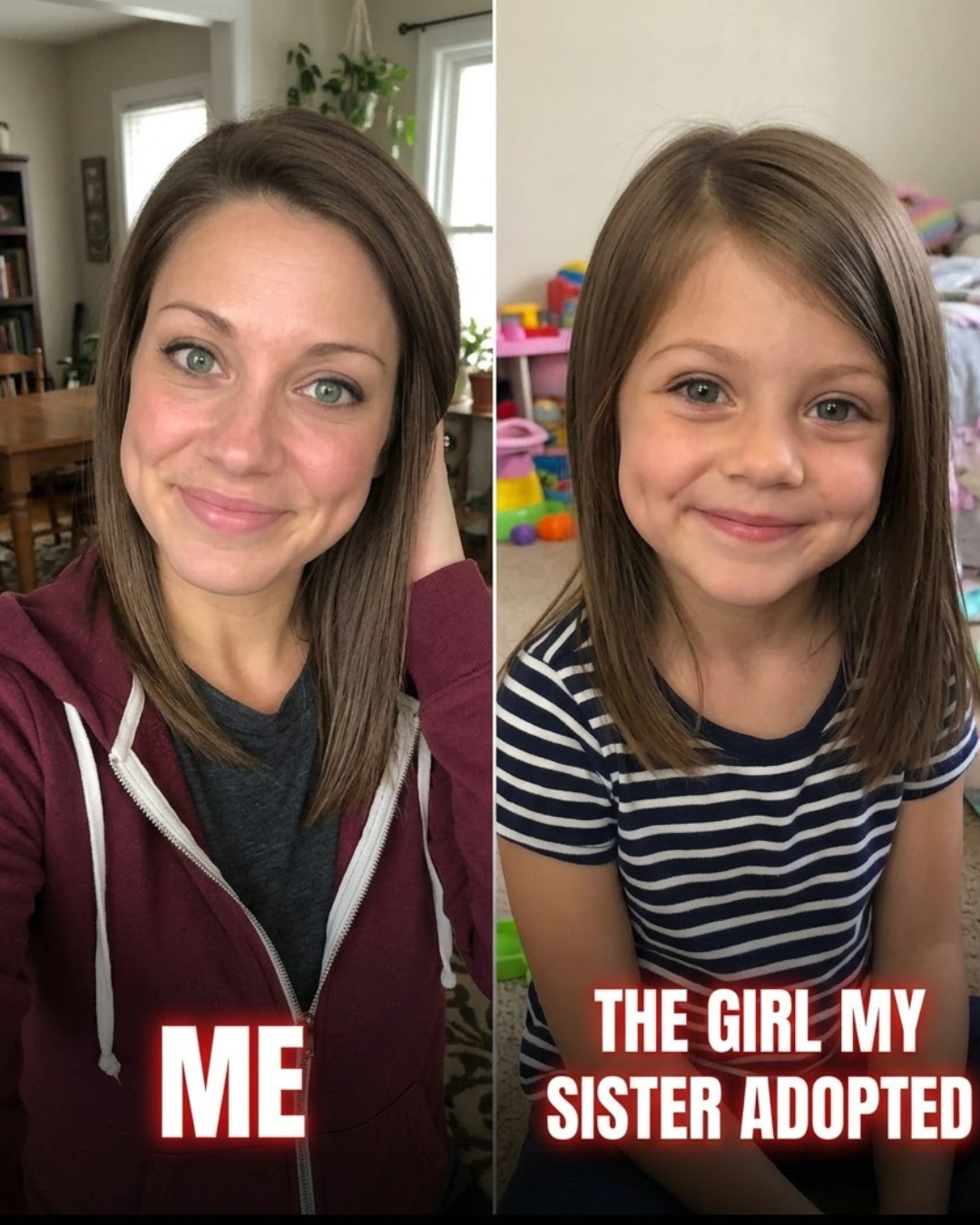
My younger sister arrived at my house with tears running down her cheeks and a badly wrinkled envelope clutched against her chest.
The moment I opened the door, I knew something was wrong.
“Claire, there’s something you need to know about Ellie,” she whispered.
My heart seemed to drop into my stomach.
Ellie was the five-year-old girl my sister Nora and her husband, Tom, had adopted just two weeks earlier. After eight painful years of trying to have a child, they had finally become parents.
“Is she hurt?” I demanded.
“No. She’s safe.”
“Then what’s happened?”
Nora pressed the envelope into my hands.
“The adoption agency uncovered something about her past. Everything they told us about where she came from might be wrong.”
I opened it.
The first pages contained information about Ellie’s early childhood and medical history.
Then I saw the name of a hospital.
I recognized it immediately.
Five years earlier, I had delivered my own daughter in that very hospital.
A daughter the doctors told me had died.
My fingers began trembling.
Beneath the hospital documents was a preliminary genetic report.
My name appeared alongside Ellie’s.
And underneath those names was a conclusion I couldn’t make sense of.
The results indicated a biological mother-daughter relationship.
I looked at Nora.
She was crying harder now.
“Claire… I think the little girl I adopted might actually be Lucy.”
Lucy.
My daughter.
The baby I’d buried in my heart five years earlier.
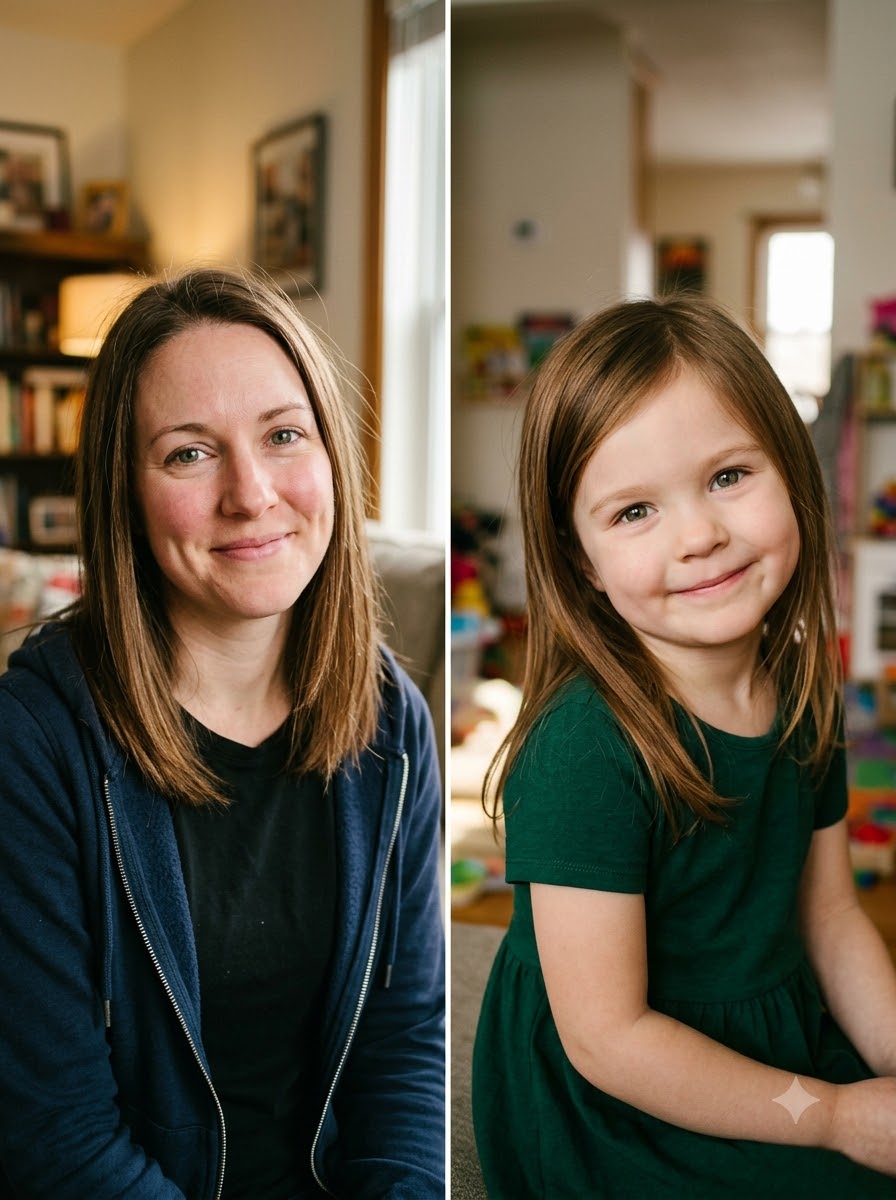
The child whose birthdays I’d spent alone with a keepsake box and memories of a face I’d barely seen.
And now, according to the papers in my hands, she might have been alive all along.
Living only a few miles away.
My name is Claire.
For five years, I had lived with a grief that never truly left me.
It began the day Lucy was born.
My pregnancy had been difficult from the beginning, and she arrived far earlier than anyone expected.
I still remember the delivery room.
The sharp urgency in the doctors’ voices.
The nurses moving around me.
The medical equipment.
The frightened realization that something was terribly wrong.
After months of imagining my first moments with my baby, I barely got to see her.
I heard a faint sound.
Then someone lifted her just high enough for me to glimpse her tiny face.
She was unbelievably small.
One little hand moved beside her cheek.
I reached toward her.
“Can I hold my baby?”
A nurse answered softly.
“We need to help her first, sweetheart.”
They took Lucy to the neonatal intensive care unit.
I was terrified, but I trusted the medical team.
I believed they would do everything possible to save her.
Throughout the night, I kept asking for news.
Was she breathing?
Had she opened her eyes?
Was she improving?
When could I finally hold her?
I asked those questions over and over.
The next morning, a doctor entered my hospital room.
Before he said anything, I saw the expression on his face.
“I’m very sorry,” he said.
He told me Lucy hadn’t survived.
For several seconds, the words didn’t seem real.
I waited for him to explain that he’d made a mistake.
That he’d confused my daughter with another infant.
That Lucy was still in intensive care and needed more treatment.
But no correction came.
He repeated his condolences.
And just like that, the future I’d imagined disappeared.
I left the hospital with a small bag of belongings.
Inside were the clothes I’d planned to put on Lucy.
A tiny hat.
And her hospital identification bracelet.
The bracelet bore the name I’d chosen long before she was born.
Lucy.
I placed it in a keepsake box beside my bed.
I couldn’t bring myself to store the box anywhere else.
Sometimes, late at night, I opened it and touched the fading plastic.
I tried to imagine the little girl she would have become.
Her first birthday.
Her first steps.
The day she started school.
Would she have inherited my dark curls?
Would she have smiled like her father?
I pictured myself brushing her hair before school and hearing her call me Mommy.
But those moments existed only in my imagination.
Eventually, I returned to my job.
I went to family gatherings.
I congratulated friends when they announced pregnancies.
I learned to smile when people talked about their children.
From the outside, I appeared to be recovering.
Inside, a part of me remained trapped in that hospital room.
I never found the courage to try for another baby.
The thought of experiencing that loss again frightened me too much.
Throughout those years, my younger sister Nora stayed close.
She understood my grief better than most people.
And I understood hers.
For eight years, Nora and Tom had been trying to become parents.
They attended medical appointments.
Went through treatments.
Waited for results.
And endured disappointment after disappointment.
They watched friends and relatives welcome babies while their own home remained painfully quiet.
Sometimes Nora called after another unsuccessful treatment.
“I don’t understand why this keeps happening,” she’d whisper.
I listened.
There was nothing I could say that would make her situation fair.
Eventually, I brought up adoption.
At first, she was uncertain.
“What if I can’t love a child who isn’t biologically mine?”
I held her hand.
“Nora, you’ve wanted to be a mother for years. Love isn’t something a blood test can measure.”
She didn’t answer immediately.
But I could tell she was considering what I’d said.
Some time later, she and Tom began looking into adoption.
The process was long.
There were applications.
Interviews.
Home inspections.
Documents.
And months of waiting.
Then they learned about Ellie.
She was five years old.
According to the agency, she’d entered protective care when she was an infant.
Her biological parents had never been conclusively identified.
Much of the information about her earliest days was missing or incomplete.
Nora and Tom arranged to meet her.
Afterward, Nora called me in tears.
But this time, they were happy tears.
“Claire, she’s wonderful.”
Her excitement came through the phone.
“She loves drawing. She asks a million questions. And she has the cutest little smile.”
I was thrilled for her.
After everything my sister had endured, she was finally getting the opportunity to raise a child.
Two weeks before she appeared at my door with the envelope, Ellie’s adoption became final.
Nora and Tom brought her home.
They had prepared a beautiful little bedroom.
Pink curtains hung at the windows.
Soft blankets covered the bed.
There were stuffed animals, coloring books, and baskets filled with toys.
I helped Nora arrange everything.
She smiled the entire time.
For the first time in years, I saw genuine happiness replace the sadness she’d carried.
On Ellie’s first day at home, Nora called me six times.
“Claire, do five-year-olds still need naps?”
“Is it normal for her to ask the same question over and over?”
“How do I get paint out of a cotton dress?”
I laughed.
“You’re doing fine, Nora.”
I could hear how relieved she was.
But when I met Ellie for the first time, something happened that I wasn’t prepared for.
She had thick, dark curls.
Large brown eyes.
And a tiny dimple in her left cheek.
The very same place where I’d had a dimple as a little girl.
Nora noticed the resemblance.
“Look at her, Claire!” she said excitedly. “She almost looks like she belongs in our family.”
I smiled.
But my chest tightened.
Ellie was five.
Lucy would have been five.
For years, I’d imagined what my daughter might look like at that age.
And now, in Nora’s living room, stood a little girl who looked remarkably similar to the child in my dreams.
I stayed cheerful during the visit.
I smiled at Ellie.
Talked with Nora.
Admired the bedroom.
But once I was alone in my car, I began crying.
I wasn’t jealous of Nora.
I was genuinely grateful she’d found Ellie.
I simply missed Lucy.
The daughter I’d never been allowed to raise.
Over the following days, Ellie grew increasingly comfortable around me.
She began calling me Auntie Claire.
Whenever I visited, she brought me two colorful hair ribbons.
“Can you do my hair?”
“Of course, sweetheart.”
“Two pigtails,” she’d insist. “Not one braid.”
I laughed.
“Yes, ma’am.”
“And don’t pull too hard!”
“I’ll be careful.”
She climbed onto a kitchen chair, swinging her legs while I carefully separated her curls.
Ellie was affectionate.
Talkative.
Curious about everything.
And very particular about her hair.
One afternoon, while I was tying her ribbons, she asked me something unexpected.
“Auntie Claire, do you have any kids?”
My hands stopped.
For a moment, I couldn’t answer.
Then I spoke gently.
“I had a little girl, sweetheart. But she died when she was a baby.”
Ellie turned around.
Her brown eyes became serious.
“That’s sad.”
“Yes,” I whispered. “It is.”
She considered that for a moment.
Then she handed me another ribbon.
“This one goes on the left.”
I smiled despite the pain in my chest.
Children have an extraordinary ability to pull you back into the present.
I didn’t realize then how much those simple afternoons would eventually mean to me.
Two weeks after Ellie came home, Nora appeared at my front door.
She looked devastated.
When I opened the door, she stood on the porch holding a large envelope.
Her eyes were red and swollen.
“Nora?”
She tried to speak.
Her voice broke.
“Claire, I don’t know how to tell you this.”
Panic rushed through me.
“What happened? Is Ellie okay?”
“She’s fine. She’s with Tom.”
“Then what’s wrong?”
I brought her into the kitchen.
She remained standing beside the table, running her fingers nervously over the envelope.
I pulled out a chair.
“Nora, please. You’re scaring me.”
She sat down.
Then looked directly at me.
“Remember what the adoption agency told us about Ellie’s background?”
I nodded.
“That she’d entered care as a baby and nobody knew who her parents were?”
“Yes.”
“What about it?”
Nora swallowed.
“They’ve discovered that information might not be true.”
I stared at her.
“What do you mean?”
She placed the envelope on the table.
“Some of Ellie’s early medical records were incomplete. Tom and I asked the agency to review them because we wanted to understand her medical history.”
I waited for her to continue.
“They found discrepancies.”
“What kind of discrepancies?”
She opened the envelope.
Inside were several documents.
The first was an official notice explaining that some details in Ellie’s original placement records were incorrect.
The second contained information recovered during the review.
Halfway down the page, I saw the name of a hospital.
My breath caught.
It was the hospital where Lucy had been born.
“Nora…”
She watched me carefully.
“Keep reading.”
The document described a baby girl who had entered emergency protective care five years earlier.
There were discrepancies between the hospital identification details and the records used when the infant entered the care system.
Then I saw the date.
The same week Lucy was born.
I pushed the paper away.
“No.”
Nora reached toward me.
“Claire—”
“No. That doesn’t mean anything.”
My voice sounded unfamiliar.
“Babies are born at that hospital every day. There could be hundreds of children with similar records.”
“I know.”
“Then why are you showing me this?”
Tears filled her eyes.
“Because there’s something else.”
She removed another document.
I stared at it.
Nora explained that the agency had noticed the similarities between the dates and hospital information.
A caseworker suggested checking whether Ellie might have a biological connection to someone in our family.
I felt cold.
“What are you saying?”
“Remember last week, when you agreed to provide a cheek swab?”
I nodded.
Nora had told me the agency needed additional family medical information.
There was a possibility of a biological connection, but nobody had explained how close or distant that relationship might be.
I’d agreed because I wanted Ellie to have accurate medical records.
Nothing more.
“They completed a preliminary comparison,” Nora whispered.
She slid the report across the table.
I looked down.
My name appeared near the top.
Ellie’s was printed below it.
Then I read the conclusion.
The genetic findings suggested a biological parent-child relationship.
I read it again.
And again.
“That can’t be right.”
Nora covered her mouth.
“Claire…”
“My daughter died.”
“I know what they told you.”
“I have her death certificate.”
Nora began crying.
“I know.”
I stood so abruptly that my chair scraped against the floor.
“No. There has to be a mistake.”
I walked toward the kitchen sink and gripped the counter.
Outside, the world continued as though nothing had happened.
Someone walked past with a dog.
A delivery truck stopped nearby.
The houses across the street looked exactly the same.
But my entire world had shifted.
I turned toward my sister.
“Are you saying Ellie might be Lucy?”
Nora nodded through her tears.
“I think it’s possible.”
My knees nearly gave way.
For five years, I’d believed my daughter was dead.
I’d mourned her.
Kept her hospital bracelet.
Remembered every birthday.
And now my sister was telling me that the child whose hair I’d been brushing might be the daughter I’d lost.
I stared at the report.
Then I asked the question that frightened me almost as much as the answer.
“Are these results certain?”
Nora shook her head.
“They’re preliminary. They want another independent test and a complete review of the hospital records.”
I sat down slowly.
We didn’t know for sure.
Not yet.
But for the first time in five years, I was facing a possibility I had never allowed myself to imagine.
Lucy might still be alive.
And she might have been sitting on my lap only days earlier, asking me to tie two pink ribbons into her hair.
PART 2
I sat at my kitchen table with the genetic report in front of me.
My sister was crying.
I could barely breathe.
“Then we don’t know for sure.”
“No,” she admitted. “Not yet.”
I looked at Nora.
“How could this happen?”
“We don’t know.”
“Who told the adoption agency that her parents couldn’t be identified?”
“That’s being investigated.”
“And who told me Lucy had died?”
Nora couldn’t answer.
I felt as though the floor beneath me had become unstable.
For five years, I had lived with a death certificate.
With a hospital bracelet.
With the memory of a doctor telling me my baby hadn’t survived.
Those things had formed the foundation of my grief.
Now, a few pages of paperwork threatened to overturn everything I believed.
I wanted the report to be true.
More than anything.
But I was terrified of believing it.
Because if the results were wrong, I would have to lose Lucy all over again.
“Does Ellie know?” I asked.
“No.”
“Does Tom?”
“Yes. We agreed not to tell Ellie anything until we have confirmation.”
I looked down at the report.
There was my name.
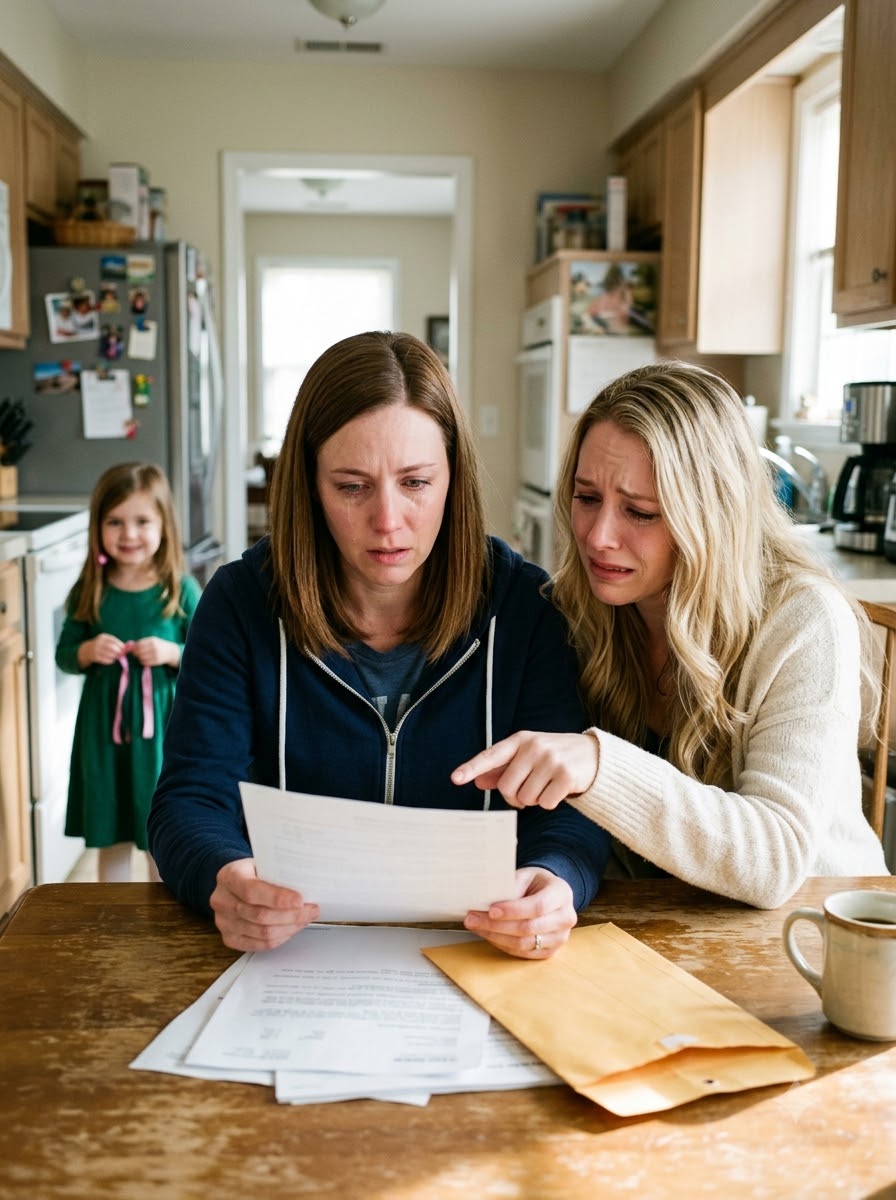
And Ellie’s.
Two names that should never have appeared together in that way.
At least, not according to everything I’d been told.
Then Nora asked a question I wasn’t expecting.
“Claire… do you hate me?”
I looked up.
“What?”
Her hands trembled.
“If Ellie really is Lucy…”
She couldn’t finish.
“I brought her home. I adopted her.”
I moved back toward the table and sat beside her.
“Nora, you didn’t know.”
“But she’s your daughter.”
“You gave a little girl a loving home when she needed one.”
My sister began sobbing.
“I love her so much.”
“I know.”
“And I’m terrified of losing her.”
I looked at the documents.
I couldn’t promise her that everything would remain unchanged.
The possibility alone had already changed us.
But Nora had done nothing wrong.
She and Tom had opened their home to a child who needed a family.
Neither of them had known that the little girl might be Lucy.
“Leave the documents with me,” I said quietly.
Nora nodded.
Before she left, she wrapped her arms around me.
“Whatever happens, Claire, I love Ellie.”
I hugged her.
“I know you do.”
After she went home, I sat alone for a long time.
Eventually, I walked into my bedroom.
I opened the drawer beside my bed and took out the little keepsake box I’d guarded for five years.
Inside lay Lucy’s hospital bracelet.
The plastic had faded and yellowed slightly.
But her name was still visible.
Lucy.
I carried the bracelet to the kitchen.
Placed it beside the genetic report.
And stared at them.
Two pieces of evidence.
Two completely different versions of my daughter’s life.
One said Lucy had died shortly after being born.
The other suggested that she had survived.
I sat there for hours.
Memories returned one after another.
The delivery room.
The doctors.
The nurses.
Lucy’s tiny hand moving beside her cheek.
The moment she was carried away.
The doctor’s expression the following morning.
His words.
“I’m very sorry.”
Had there been a mistake?
Had someone confused Lucy with another newborn?
Had she spent five years growing up without knowing who I was?
Had I spent five years grieving a child who was alive?
I couldn’t stop asking questions.
But the answers weren’t there.
During the days that followed, Nora, Tom, and I began working with adoption professionals and an attorney.
We wanted to understand how the discrepancy had happened.
We requested a complete examination of the hospital records.
We arranged an independent genetic test with the necessary consent.
We also requested information about Ellie’s earliest placement in protective care.
Our attorney warned us that confirming a biological relationship would not automatically resolve the legal issues surrounding the adoption.
Those questions would require a careful review.
For now, Ellie would remain with Nora and Tom.
They were the parents she knew.
They were the people she’d begun calling Mommy and Daddy.
Whatever the truth turned out to be, none of us wanted Ellie to believe that loving one person meant she had to stop loving another.
I tried to return to my normal routine.
I went to work.
Answered emails.
Bought groceries.
Paid bills.
But nothing felt normal.
Every phone call made my heart jump.
Every unfamiliar number made me wonder whether the test results had arrived.
One afternoon, Nora sent me a photograph.
Ellie was sitting on the living room rug surrounded by colorful building blocks.
Her dark curls were tied into two uneven pigtails.
Underneath the picture, Nora had written:
Ellie insisted on doing her own hair today.
I enlarged the photograph.
I studied her face.
The dark eyes.
The curls.
The little dimple.
I felt tears rising again.
I wanted to drive straight to Nora’s house.
I wanted to hold Ellie and never let go.
Instead, I called my sister.
“How is she?”
“Good. She’s asking when Auntie Claire is coming over again.”
I closed my eyes.
“Tell her soon.”
A week later, the independent genetic test results arrived.
This time, there was no uncertainty about the biological relationship.
Ellie was my daughter.
I stared at the report.
I read the conclusion repeatedly.
Five years.
For five years, I had believed Lucy was dead.
And now I was holding proof that she was alive.
I picked up my phone and called Nora.
She answered immediately.
“Claire?”
My voice shook.
“It’s confirmed.”
There was silence.
Then I heard her draw a sharp breath.
“Oh, Claire…”
Neither of us spoke for several moments.
Finally, Nora whispered, “Come over.”
I drove to her house.
Tom opened the door.
He looked exhausted.
As though he hadn’t slept properly in days.
“She’s in the kitchen drawing,” he said softly.
I looked toward the hallway.
“Does she know?”
He shook his head.
“We’re waiting until we can explain everything in a way she can understand.”
I nodded.
Then I heard footsteps.
“Auntie Claire!”
Ellie appeared in the hallway.
Her face lit up when she saw me.
She ran straight toward me.
I knelt.
She threw her arms around my neck.
And I held her.
For five years, I’d believed I would never hold my daughter.
Now she was right there.
Warm.
Alive.
Laughing.
Her small arms wrapped around me.
She had no idea how much that moment meant.
No idea that the woman she called Auntie Claire was the mother who had mourned her for five years.
I closed my eyes.
I wanted to tell her everything.
That I’d named her Lucy.
That I’d imagined her first steps and birthdays.
That I’d spent years wondering what she would look like.
That I’d kept her hospital bracelet beside my bed.
But she was five years old.
And she wasn’t ready to carry the weight of those truths.
So I simply held her.
After a moment, Ellie leaned back.
She looked at my hair.
“Auntie Claire, can you make mine look like yours?”
I laughed through my tears.
“Of course, sweetheart.”
“Two pigtails!”
“Wouldn’t dream of anything else.”
She ran to get her ribbons.
I sat behind her at the kitchen table.
My fingers trembled as I separated her curls.
“Ouch!” she complained.
“Sorry, darling.”
“You’re pulling too hard.”
I loosened my grip.
“Better?”
“Yep!”
Nora stood nearby.
She was watching us with tears in her eyes.
I finished tying the ribbons.
Ellie jumped down and hurried to the hallway mirror.
“Perfect!”
Then she ran to show Tom.
For a moment, Nora and I sat silently.
Finally, she asked the question that had been hanging between us.
“Are you going to take her away from us?”
I looked toward the hallway.
Ellie was laughing with Tom.
“I don’t know what happens legally,” I answered.
Nora’s eyes filled again.
“But I’m not going to frighten her or make her feel like she’s losing the people she loves.”
My sister began crying.
“I’m so scared, Claire.”
“So am I.”
She looked at me.
“I waited eight years to become a mother.”
“I know.”
“And now the little girl I love is your daughter.”
I looked down at the hairbrush.
“I’ve waited five years to learn that my daughter is alive.”
Neither of us said anything.
There was no easy solution.
No way to recover the missing years.
No way to pretend that nothing had changed.
But we both loved Ellie.
And we understood that protecting her had to come first.
Two days later, our attorney called.
Investigators had uncovered another troubling inconsistency in the hospital’s neonatal records.
Apparently, two infants had been assigned identification numbers that became mixed up during a transfer.
One baby had been recorded as deceased.
Another had entered emergency protective care with incomplete identifying details.
Ellie’s earliest welfare record contained the identification number originally assigned to Lucy.
My hand tightened around the phone.
“So someone confused the babies?”
“That appears to be one part of what happened,” the attorney explained. “But it doesn’t account for every failure in the records.”
I swallowed.
“Then how did they declare my daughter dead?”
“That question is still being investigated.”
“Who verified her identity?”
“We’re requesting those details.”
I sat down.
The possibility of an administrative error was horrifying.
But what frightened me even more was that the mistake had remained undiscovered for five years.
Five years during which I had mourned my daughter.
Five years during which Lucy had grown up without me.
The hospital had opened a formal investigation.
I requested every available document connected to Lucy’s birth and reported death.
I wanted to know who had made the decisions.
Who had verified the records.
And how a living child could have been recorded as deceased.
For the first time since leaving that hospital, I refused to accept an explanation simply because someone in authority had provided it.
I needed answers.
While the investigation continued, Nora, Tom, and I met with a counselor who specialized in adoption and complicated family situations.
We discussed how to explain the truth to Ellie when the time was right.
How to answer her questions honestly.
How to protect her from feeling responsible for the adults’ sadness.
And how to make certain she understood that loving one person did not mean betraying another.
We agreed she would remain in her familiar home while the legal questions were reviewed.
I continued visiting.
Sometimes, I brought coloring books.
Sometimes, we baked cookies.
Sometimes, Ellie simply wanted me to sit beside her while she talked about her day.
Those moments became precious to me.
I had found my daughter.
But I’d also lost five years.
I hadn’t been there when she learned to walk.
I hadn’t heard her first word.
I hadn’t celebrated her earliest birthdays.
I hadn’t held her when she was frightened or sick.
And I still didn’t know exactly how we’d been separated.
Some days, the happiness and grief were so tangled together that I couldn’t tell which one I was feeling.
But whenever Ellie reached for my hand, I reminded myself of one thing.
She was here now.
She was alive.
And whatever happened next, I had a chance to know her.
Then, several weeks later, I arrived at Nora and Tom’s house for a family outing.
Ellie ran into the kitchen carrying two pink ribbons.
“Auntie Claire! Hair time!”
I laughed.
“Good morning to you too.”
She climbed onto a chair.
“Two pigtails, please.”
Nora entered carrying a hairbrush.
“Be careful. Her hair was terribly tangled this morning.”
Ellie rolled her eyes.
“Mommy, you brushed it wrong!”
Nora laughed.
“Did I?”
“Yes!”
I began dividing Ellie’s curls.
The first ribbon went in without trouble.
The second refused to sit properly.
“Too tight!” Ellie complained.
I loosened it.
“How’s that?”
She reached up to inspect both sides.
“One’s higher.”
Nora leaned closer.
“She’s right.”
I looked at my sister.
“Whose side are you on?”
She grinned.
“Ellie’s, obviously.”
We laughed.
For a moment, it felt like any ordinary family morning.
Then Tom called from the hallway.
“Are we leaving today or next Tuesday?”
“Tuesday!” Ellie shouted mischievously.
Tom laughed.
“Then I’ll go back to bed.”
“No!” Ellie squealed.
She jumped down and ran toward him, asking whether they could stop for ice cream.
Nora picked up her sweater.
I put the hairbrush away.
And I watched my sister getting ready to take her daughter out for the day.
My daughter.
The same little girl.
Loved by both of us.
I had spent years believing motherhood had been taken from me forever.
Now I was learning that finding Lucy didn’t mean erasing the life Ellie had already lived.
It meant making room for the people who had loved her along the way.
But there were still questions we couldn’t answer.
And the most important one was waiting for us.
How could we tell a five-year-old girl that the woman she’d been calling Auntie Claire was actually her biological mother?
PART 3
I stood in Nora’s kitchen, watching Ellie run down the hallway toward Tom.
Her two pink pigtails bounced as she went.
She was laughing about ice cream.
Completely unaware of the enormous questions surrounding her life.
For weeks, the adults around her had been struggling to understand a truth none of us could have imagined.
Nora and Tom had adopted a little girl whose biological parents were supposedly unknown.
I had spent five years grieving a daughter doctors said had died.
Now independent genetic testing had confirmed that those two children were the same person.
Ellie was Lucy.
Lucy was Ellie.
And somehow, the little girl I thought I’d lost forever had found her way back into my family.
But she hadn’t returned to an empty place.
She had a home.
A bedroom with pink curtains.
A mother who knew how she liked her breakfast.
A father who made her laugh.
And a family that had welcomed her with open arms.
That family was Nora and Tom.
I couldn’t ignore what they meant to her.
Nor could I pretend that the truth about her birth didn’t matter.
The situation was more complicated than anything I’d ever faced.
When the independent test confirmed our relationship, I had imagined that finding my daughter would feel like the end of a terrible nightmare.
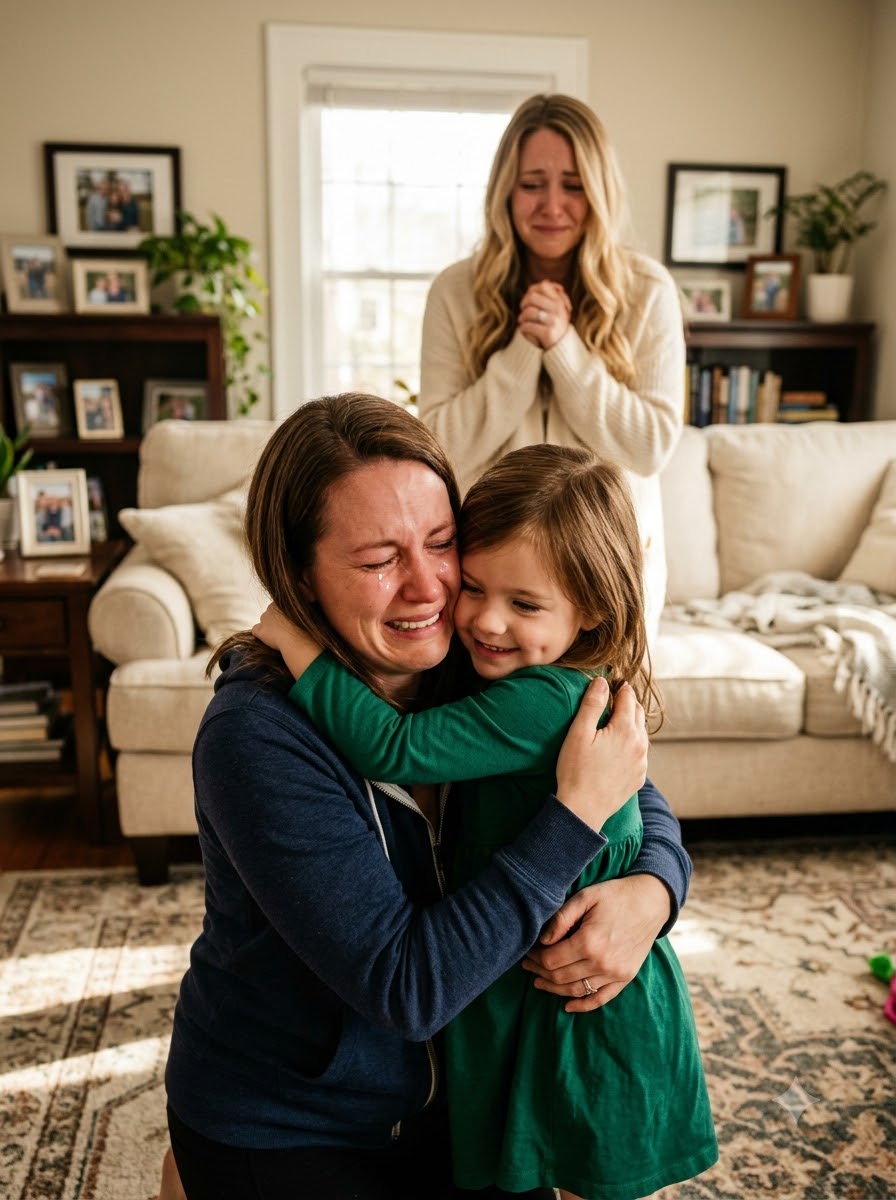
In some ways, it did.
For the first time in five years, I knew she was alive.
I could see her smile.
Hear her laugh.
Hold her hand.
But the discovery had also opened questions I didn’t know how to answer.
What had happened in the hospital?
How had Lucy’s identification number become mixed up with another infant’s?
Why had I been told my daughter was dead?
And how had she entered protective care without anyone recognizing who she was?
Those questions were still under investigation.
Our attorney continued requesting documents.
The hospital continued reviewing its records.
The adoption professionals continued examining the earliest information about Ellie’s placement.
We didn’t have every answer.
And I refused to invent explanations simply because the uncertainty was painful.
There were things we knew.
The genetic relationship had been confirmed.
The hospital identification records contained serious discrepancies.
Ellie’s earliest welfare documentation included the number originally assigned to Lucy.
And the information I’d been given five years earlier was inconsistent with the evidence now available.
Beyond that, the investigation had more work to do.
I wanted the truth.
But I also knew that no investigation could return the years I’d missed.
No document could give me back her first steps.
No apology could recreate the birthdays we’d spent apart.
I couldn’t go backward.
I could only decide what kind of place I wanted to have in her life now.
That was why the counseling sessions mattered.
Nora, Tom, and I talked about how to explain the situation to Ellie without overwhelming her.
We wanted her to understand that the adults were responsible for sorting out the confusion.
Not her.
She hadn’t done anything wrong.
She didn’t have to choose whom to love.
She didn’t have to stop calling Nora Mommy.
She didn’t have to feel guilty for being happy in the home she knew.
The counselor helped us understand that Ellie’s sense of safety mattered more than our desire to settle everything immediately.
And although waiting was difficult, I knew that was right.
I remembered how frightened I’d been when Nora first handed me the envelope.
How desperately I’d wanted the report to be true.
How afraid I’d been of another mistake.
But Ellie hadn’t asked for any of this.
She was five years old.
She wanted to draw pictures.
Ask questions.
Wear two pigtails instead of one braid.
And stop for ice cream on family outings.
I wanted her to keep having those ordinary things.
So I continued visiting as Auntie Claire.
I helped with her hair.
Listened to her stories.
Brought coloring books.
Baked cookies.
And treasured every chance to be near her.
Sometimes, I watched her so closely that I worried she’d notice.
The way she smiled.
The way her curls fell across her forehead.
The tiny dimple in her left cheek.
I kept finding pieces of myself in her.
But I also began noticing the things that belonged entirely to Ellie.
Her stubborn insistence that the ribbons had to be even.
Her love of drawing.
Her endless questions.
The way she could turn a simple afternoon into an adventure.
She wasn’t just the baby I’d lost.
She was a little girl with five years of experiences I hadn’t shared.
And if I wanted to know her, I had to make room for all of them.
That realization hurt.
But it also helped.
I stopped trying to imagine how Lucy might have grown up if she’d come home with me from the hospital.
Instead, I began paying attention to who Ellie was standing in front of me.
One afternoon, she spent nearly an hour showing me her drawings.
She explained every picture.
Some were filled with bright colors.
Others contained houses, animals, and people.
She talked so quickly that I could barely follow.
But I listened.
Because for five years, I’d dreamed about hearing my daughter tell me ordinary things.
And now she was doing exactly that.
I didn’t need to interrupt the moment with questions about the past.
I didn’t need to explain what I was feeling.
I could simply sit beside her.
And listen.
There were still nights when the grief returned.
Sometimes I opened the keepsake box beside my bed.
I looked at Lucy’s hospital bracelet.
I remembered the tiny baby I’d glimpsed in the delivery room.
The little hand moving beside her cheek.
The nurse’s gentle voice.
“We need to help her first, sweetheart.”
For years, those memories had ended with the doctor’s announcement.
“I’m very sorry.”
Now they led somewhere else.
To a little girl with dark curls.
To pink ribbons.
To Nora’s kitchen.
To Ellie calling my name from the hallway.
The memories were still painful.
But they no longer ended only in loss.
They also contained the possibility of a future.
I thought often about Nora.
My sister had spent eight years longing to become a mother.
I knew how much that longing had cost her.
I’d heard her crying after failed treatments.
I’d listened when she questioned why becoming a parent seemed so easy for other people and so impossible for her.
I’d been the one who suggested adoption.
And I’d told her something I still believed.
“Nora, you’ve wanted to be a mother for years. Love isn’t something a blood test can measure.”
Those words mattered more now than they had when I first said them.
Because the blood test had revealed that Ellie was biologically mine.
But it hadn’t erased Nora’s love.
It hadn’t erased the bedroom she’d prepared.
The meals she’d cooked.
The nights she’d worried.
The joy she’d felt when Ellie first came home.
Nora was a mother.
And I was Ellie’s biological mother.
Those truths were not simple to reconcile.
But neither canceled the other.
Sometimes Nora looked at me with fear in her eyes.
I knew what she was thinking.
She was afraid of losing the daughter she’d waited so long to welcome.
And sometimes, when I watched Ellie run into Nora’s arms, I felt a sharp ache.
I wondered what it would have been like if Ellie had spent those five years with me.
I wondered whether she’d have called me Mommy.
Whether she’d have reached for me when she was tired.
Whether I would have known exactly how to comfort her.
But I didn’t blame Nora for having those moments with her.
She hadn’t taken them from me.
She’d welcomed a child who needed a home.
The failure had happened long before Nora met Ellie.
And the responsibility for understanding it belonged to the people investigating the records.
Not to my sister.
Not to Tom.
And certainly not to Ellie.
I held on to that whenever my emotions became difficult.
I also remembered the afternoon Nora asked whether I planned to take Ellie away.
“Are you going to take her away from us?”
I’d answered as truthfully as I could.
“I don’t know what happens legally.”
And I still didn’t.
But I’d also promised not to frighten Ellie or make her feel as though loving one person meant losing another.
That promise remained important to me.
I couldn’t control every legal outcome.
I couldn’t make the investigation move faster.
I couldn’t recover the years we’d lost.
But I could control how I treated my daughter.
And how I treated the people who loved her.
That was where I chose to begin.
Several weeks after the independent test, we were preparing for another family outing.
When I arrived at Nora and Tom’s house, Ellie came racing into the kitchen with two pink ribbons.
“Auntie Claire! Hair time!”
I smiled.
“Good morning to you too.”
She climbed onto a chair.
“Two pigtails, please.”
Nora brought me the hairbrush.
“Be careful. Her hair was terribly tangled this morning.”
Ellie immediately protested.
“Mommy, you brushed it wrong!”
Nora laughed.
“Did I?”
“Yes!”
I started separating the curls.
One ribbon went in perfectly.
The other sat too high.
“Too tight!” Ellie complained.
I adjusted it.
“How’s that?”
She reached up to inspect my work.
“One’s higher.”
Nora leaned closer.
“She’s right.”
I gave my sister a look.
“Whose side are you on?”
She grinned.
“Ellie’s, obviously.”
We laughed together.
Then Tom called from the hallway.
“Are we leaving today or next Tuesday?”
“Tuesday!” Ellie shouted mischievously.
He laughed.
“Then I’ll go back to bed.”
“No!” she squealed.
She jumped down and ran toward him.
Within seconds, she was asking whether we could stop for ice cream.
Nora picked up Ellie’s sweater.
I put the hairbrush away.
For a moment, I stood watching them.
Tom pretending he might return to bed.
Ellie bargaining for ice cream.
Nora reminding her to put on her sweater.
It was an ordinary family scene.
The kind of scene I’d imagined countless times after Lucy was born.
For years, I believed I’d never experience anything like it.
Now I was standing in the middle of one.
Not in the way I’d expected.
Not with every question answered.
Not with the past repaired.
But with my daughter alive and laughing only a few feet away.
I looked at Nora.
She looked back at me.
Neither of us needed to say anything.
We were both frightened of the future.
Both uncertain about the legal questions.
Both still trying to understand what the hospital investigation might uncover.
But we loved the same little girl.
And for that moment, we were together.
Nora paused near the doorway.
“Claire? Are you coming?”
I picked up my purse.
“Right behind you.”
Then I followed them outside.
Ellie was already talking about what flavor of ice cream she wanted.
Her two pigtails bounced as she walked.
I watched her and felt the familiar ache of the years I’d missed.
But this time, there was something else alongside it.
Hope.
For five years, I had believed my daughter was gone forever.
Now I had a chance to know her.
To learn who she was.
To listen to her stories.
To help brush her hair.
To be present for the birthdays and school days still ahead.
The investigation wasn’t finished.
The legal questions weren’t settled.
And the difficult conversation about her birth still waited for us.
I couldn’t pretend otherwise.
But I also couldn’t ignore the gift of that ordinary afternoon.
Ellie was safe.
She was loved.
And she was here.
I had spent so long grieving the child I thought I’d lost that I’d almost forgotten how to imagine a future.
Now I understood that finding her didn’t mean returning to the past.
It meant learning to love the little girl she’d become.
Without erasing the people who had cared for her along the way.
I looked at my sister walking beside her husband.
At Ellie skipping between them.
And I followed.
Not because everything had been resolved.
But because we were finally moving forward together.
Sometimes finding someone you thought you’d lost doesn’t mean returning to the past. It means learning how to love them in the present, while making room for everyone who helped bring them there.
