

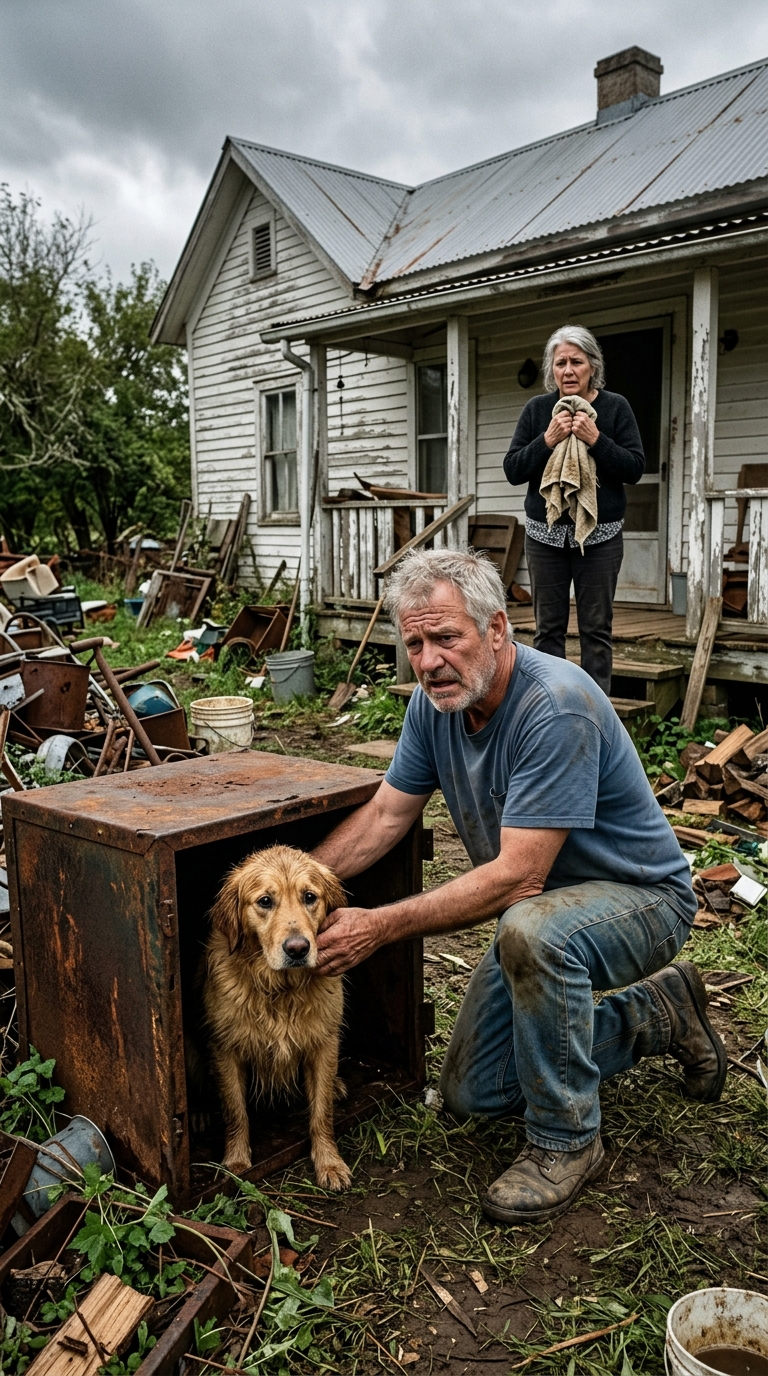
My name is Walter, and I spent most of my life working as a gardener.
After my wife passed away, the silence that followed was far deeper than I ever expected. For a while, I relied on simple daily routines to get through each day, but eventually I started purchasing and renovating foreclosed properties. The work gave purpose to my time and kept my hands busy whenever grief felt especially difficult.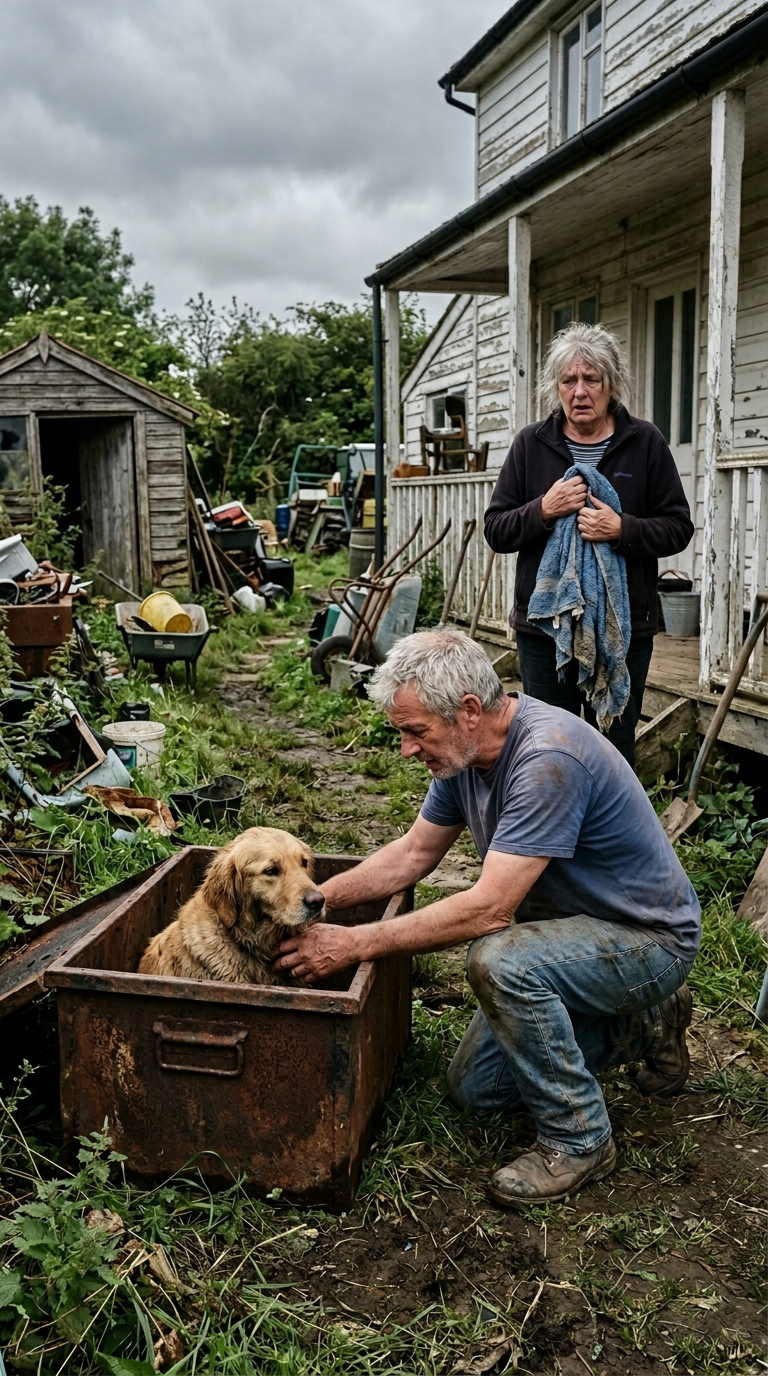
One of those properties sat on the outskirts of town. It had been vacant for quite some time. The house required major repairs, and the backyard had nearly disappeared beneath weeds and thick brush.
While clearing away the overgrowth, I spotted an old white refrigerator lying on its back.
Years of experience had taught me that abandoned appliances can pose serious risks, particularly when the doors are still attached. I intended to remove it before continuing the cleanup.
Then I heard a sound.
At first, it was so faint that I questioned whether I had imagined it. A moment later, I heard it again—a weak scratching noise followed by a quiet whimper.
I walked closer.
A padlock secured the refrigerator door. Alarmed, I immediately began working to open it.
When the door finally swung free, I discovered a Golden Retriever inside.
The dog was badly dehydrated, exhausted, and terrified.
Yet even in that condition, he raised his head and gave a slight wag of his tail.
It was a small gesture, but one I will never forget.
My first concern was getting help.
I carefully offered small amounts of water while contacting local animal professionals. A clinic worker named Marcy arrived shortly afterward and quickly recognized that the situation required both urgent medical care and proper documentation.
Together, we focused on the most important goal: helping the dog survive.
THE IMPORTANCE OF RESPONSIBILITY
The dog was transported to a veterinary clinic, where treatment began immediately.
At the same time, local authorities began gathering information about how the animal had ended up abandoned.
I provided photographs and a statement describing exactly what I had found.
The investigation eventually resulted in animal cruelty charges.
The legal matter was handled through the appropriate channels, and accountability followed according to the law.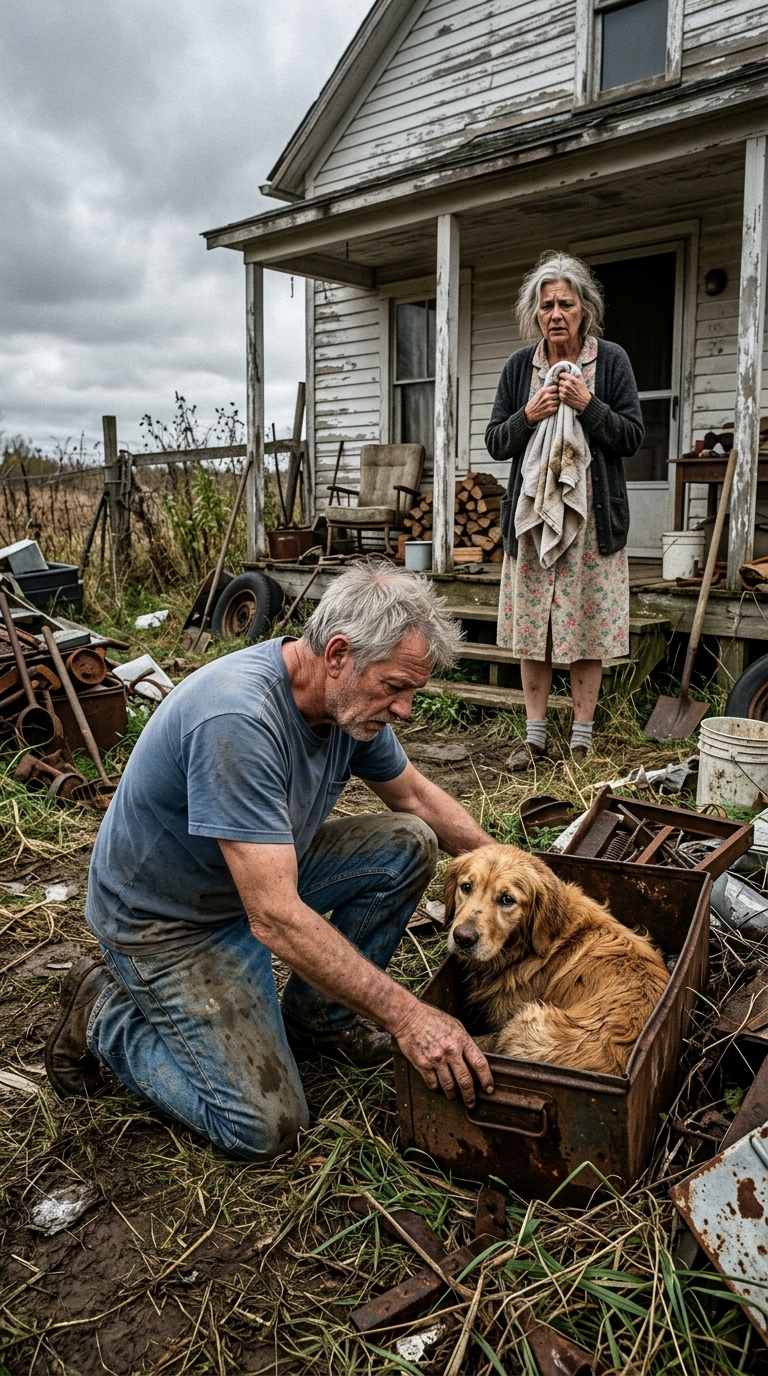
Although those facts were important, I found myself thinking less about punishment and more about the dog himself.
What stayed with me was not the cruelty, but the quiet strength of a living creature that had endured far more than it ever should have.
A NEW CHAPTER
Over the following weeks, I visited the clinic regularly.
His recovery was gradual.
Trust returned little by little.
Strength returned little by little.
Everything meaningful seemed to happen through small steps.
I started calling him Cold, a name inspired by where he had been found, not by who he would become.
When the clinic finally decided he was healthy enough to leave, I brought him home.
Neither of us was quite the same as before.
He carried the effects of what he had gone through.
I carried the loneliness that had followed me since losing my wife.
Yet somehow, in an unexpected way, we helped each other heal.
WHAT GROWS AFTER THE HARDEST SEASONS
With time, Cold regained both his health and his confidence.
He learned that doors could open without bringing fear.
He learned that a hand reaching toward him could offer comfort instead of harm.
And I learned something too.
Grief often convinces us that the most meaningful parts of our lives are already behind us. But life has a way of presenting unexpected responsibilities, sometimes through the needs of another living creature.
In my backyard, I eventually planted a small circle of young trees.
I named it Cold’s Garden.
Not because it erased what had happened, but because it reminded me of something important:
Damage is real.
Recovery is real too.
Some wounds leave permanent marks, yet patience, care, and time can still create growth where almost none seemed possible.
Today, Cold spends his afternoons resting beneath those trees.
And whenever I see him lying there, I remember that kindness cannot rewrite the past, but it can help shape everything that comes after it.
