

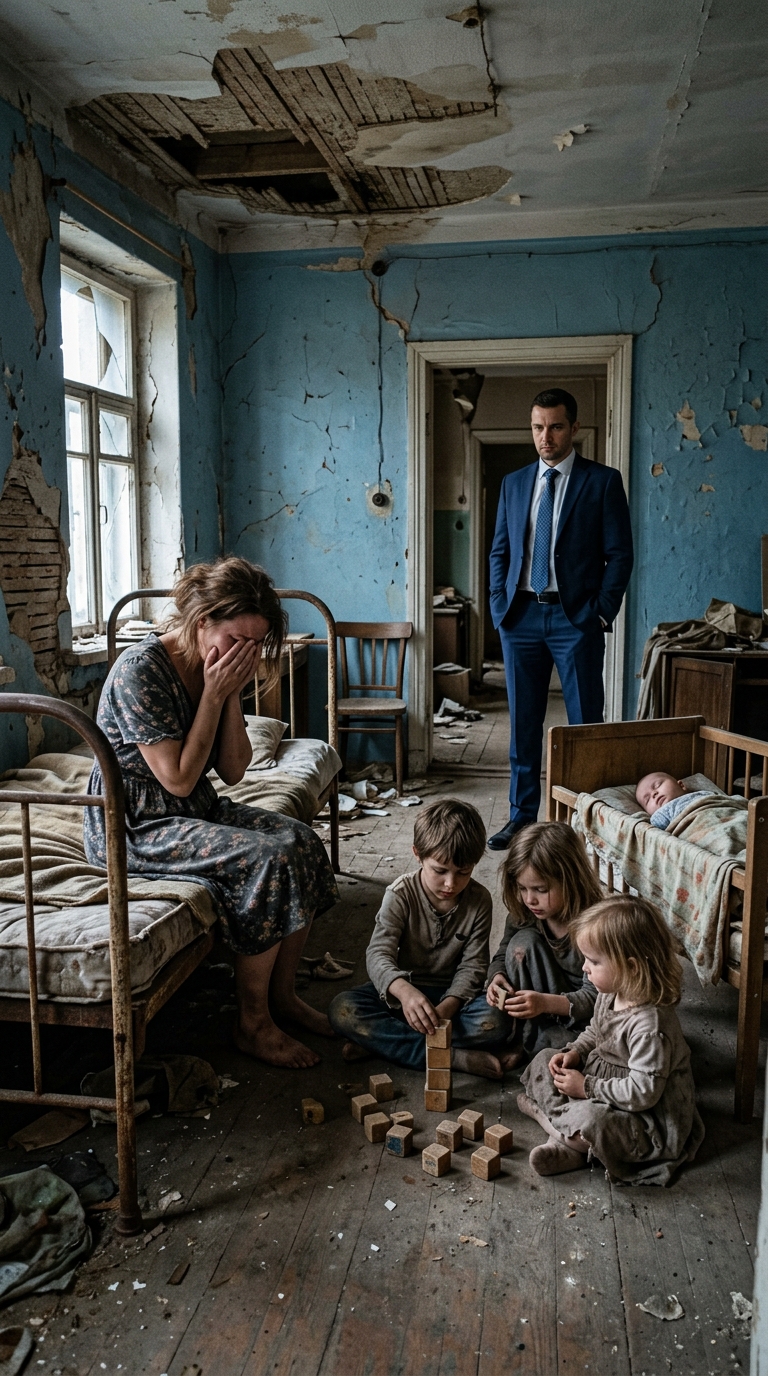
Lucas Alvarez had constructed his life like a perfect tower of glass—exact, controlled, untouchable. At forty-two, he was the CEO of one of the nation’s largest coastal development firms, a man whose mornings began with ocean views, precisely timed espresso, and a tie worth more than most people’s rent. His name carried weight. Doors opened before he even reached them. Problems tended to disappear the moment he acknowledged them.

So when one of his cleaners stopped showing up, it felt like a personal affront. Isabel Cruz had worked on the executive floor for three years. Quiet. Efficient. Invisible in the way powerful people preferred their staff to be. She had never missed a shift—until now. One absence became two, then three. Each time, HR gave the same answer.
“Family emergency.”
Lucas rejected it instantly. In his world, emergencies were handled with money or lawyers, not excuses. Absence meant disrespect. Discipline was absolute.
When his assistant cautiously reminded him of Isabel’s flawless record, Lucas barely paid attention. His face hardened into the expression he wore when people failed him.
“Give me her address,” he said.
The location appeared on his phone: 847 Los Naranjos Street, Barrio San Miguel.
Lucas believed he already knew what he would find. A cramped home. Excuses. Chaos. He told himself this visit was about maintaining standards, not curiosity. He ignored the tightness forming in his chest, the feeling he refused to acknowledge.
His black Mercedes glided from glass towers to cracked pavement. The city shifted quickly. Streets narrowed. Paint peeled away from buildings. Children ran barefoot along broken sidewalks. People stared at his car like it didn’t belong—and it didn’t.
When he stopped in front of a faded blue house, irritation flared. This was the place that thought it could waste his time.
He knocked sharply.
After a moment, the door opened.
Isabel Cruz stood there, wearing a worn apron, exhaustion carved into her face. She looked nothing like the quiet woman who cleaned his office at night. Her eyes widened in shock when she saw him.
“Mr. Alvarez?” she whispered.
“I came to find out why my office has been neglected,” Lucas said coolly.
Before she could respond, a sharp cry came from inside—not a tantrum, but pain. Without thinking, Lucas stepped forward. Isabel tried to stop him, panic flashing across her face, but he was already inside.
The house smelled of damp walls, cheap food, and sickness.
On a thin mattress in the corner lay a young boy, trembling beneath a worn blanket. His skin burned with fever. His breathing was strained. Somewhere behind a curtain, an infant whimpered softly.
Lucas felt his chest tighten.
Then his eyes landed on the kitchen table.
A framed photograph rested there—old, carefully preserved. It showed a woman smiling gently, her arm around a teenage girl.
Lucas went still.
The woman was his sister.
Ana Alvarez.
Beside the photo lay a gold pendant—an heirloom that had disappeared the day Ana was buried.
His knees nearly gave way.
“Where did you get this?” he demanded.
Isabel dropped to the floor.
“I didn’t steal it,” she cried. “She gave it to me.”
The room seemed to close in.
Isabel told him everything.
Years earlier, she had worked as a private nurse—hired quietly, paid in secret. Ana had been ill. Critically ill. Lucas’s father had hidden the truth, refusing to let weakness stain the family name. Ana had been isolated, erased, kept even from her own brother.
Isabel had stayed when no one else was allowed to.
On her final night, Ana had placed the pendant into Isabel’s hand and begged her to protect the child she would leave behind.
Isabel pointed to the boy on the mattress.
“He is her blood.”
Lucas looked again—and this time, he truly saw it. The eyes. The jaw. The same stubborn expression.
The proof lay in a small tin box: hospital documents, a letter written in Ana’s hand, a truth that shattered fifteen years of lies.
The boy—Mateo—was Ana’s grandson.
And he was dying.
Lucas didn’t hesitate.
“We’re going to the hospital,” he said.
His name moved mountains as it always had. Doctors rushed in. A private room was arranged. Specialists were called. But this time, Lucas felt no pride—only anger. All of this could have saved Ana, if he had known.
When his father denied everything, Lucas finally understood the price of obedience.
The confrontation came in the boardroom, beneath glass walls that now felt like places of confession. Lucas placed the letter, the pendant, and the truth on the table. His father spoke of image. Of protection. Of necessity.
Lucas replied with a single sentence.
“If secrecy was what she wanted, why did she write my name?”
Silence shattered what control could not.
Lucas severed ties. Launched investigations. Brought buried crimes into the light. His empire didn’t fall—but it fractured, reshaped by truth.
Isabel expected to lose Mateo.
Instead, Lucas protected them both.
He paid for treatment. Secured guardianship. Created a foundation in Ana’s name for children with chronic illnesses—one that served places like San Miguel, not just donors and headlines.
Mateo lived.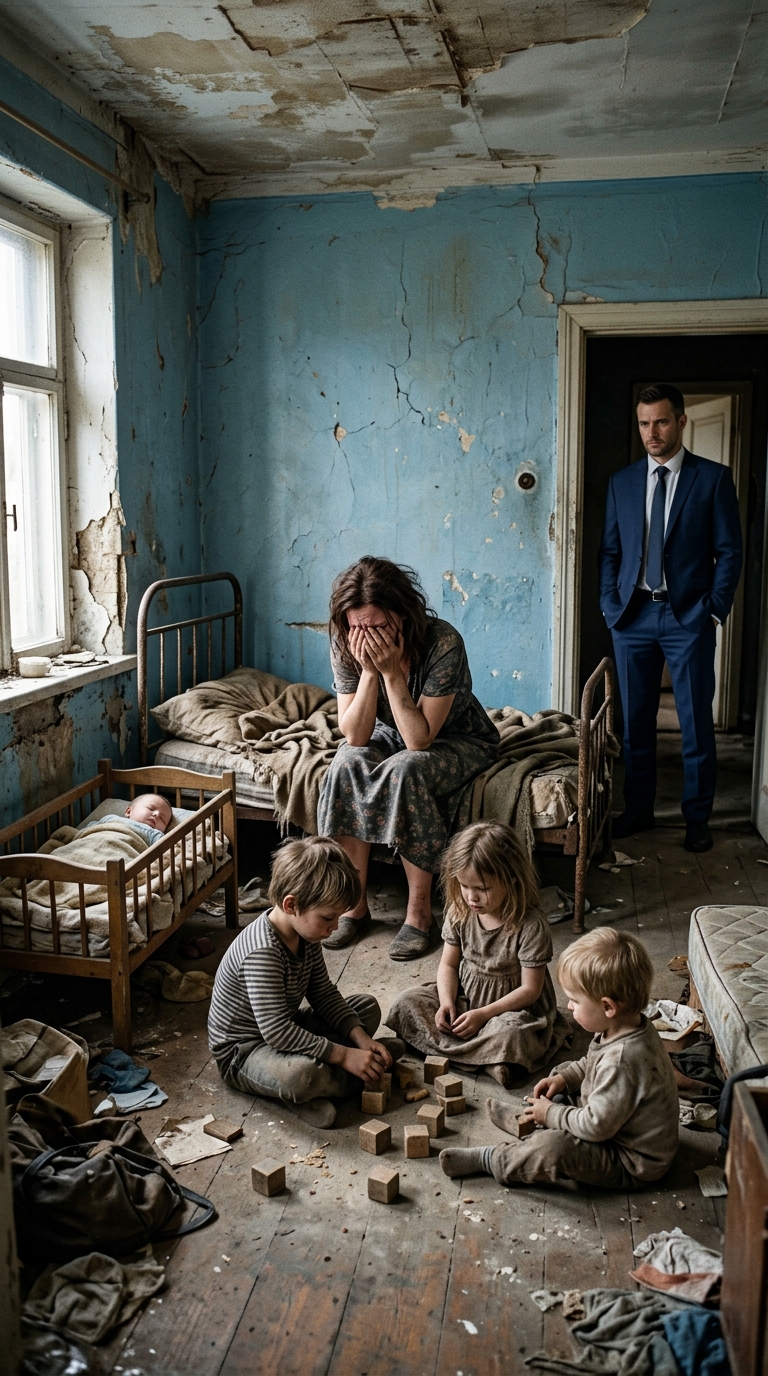
And Lucas changed.
The penthouse filled with toys instead of silence. Laughter replaced emptiness. Isabel became family, not staff. Mateo’s drawings covered the refrigerator.
Years later, standing at Ana’s grave, Lucas felt Mateo slip his small hand into his.
For the first time, success didn’t feel like height.
It felt like healing.
