

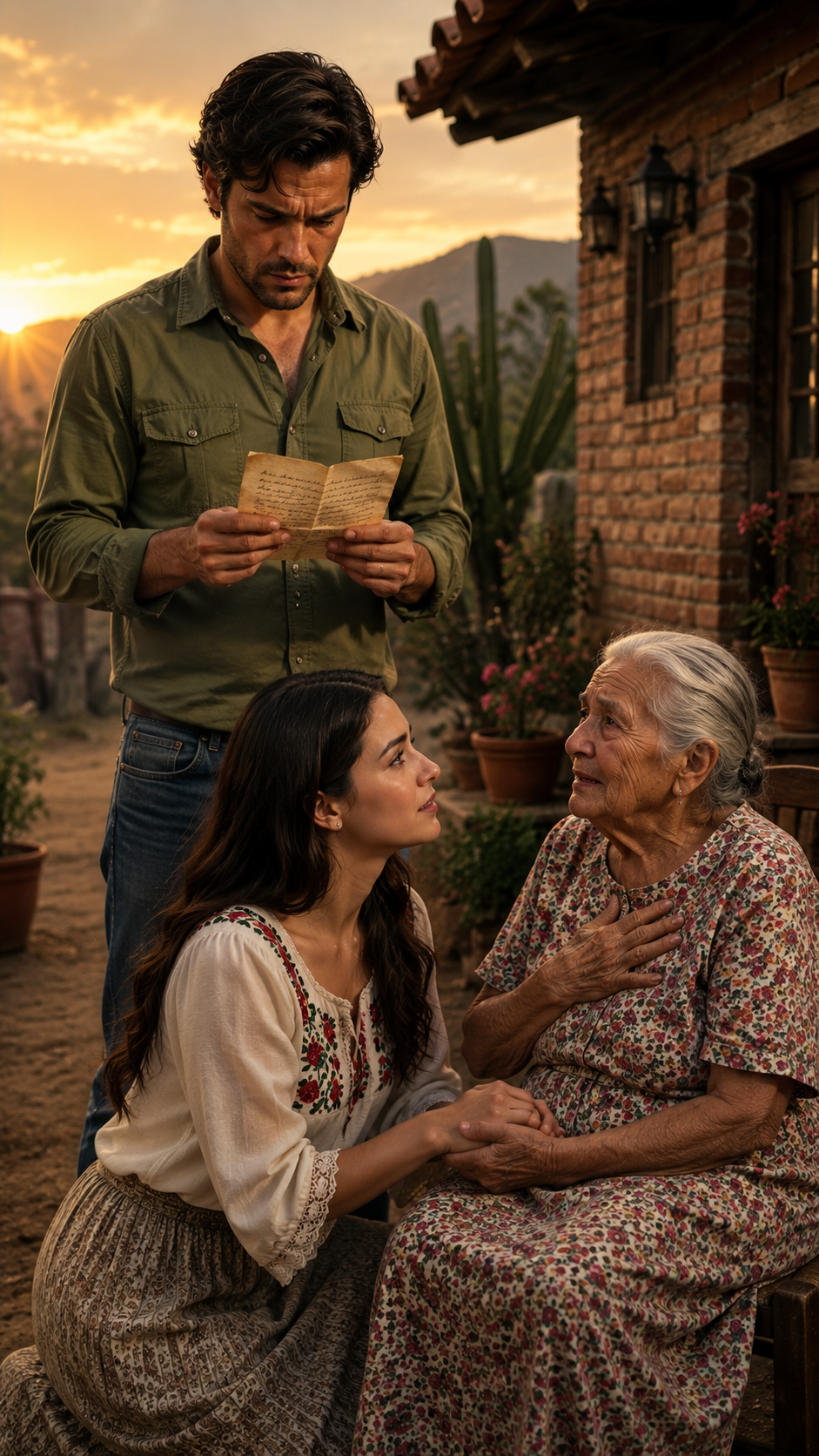
Diego Martinez was thirty-two years old and served as a technical department manager for a major construction company in Houston, Texas. He earned a comfortable income—nearly $95,000 annually—which allowed him to drive a new truck, rent a pleasant apartment near the Galleria, dine at upscale restaurants, and enjoy the reputation of being a successful man. Deep down, he valued that image more than he cared to admit.
His fiancée, Lucia Hernandez, worked as a preschool teacher at a small school in Katy. Her salary was modest, but she was kind, patient, gentle with children, and had loved Diego faithfully for three years without ever considering what she might gain from him. Everyone who knew them often said Diego was fortunate to be marrying someone like Lucia.
The wedding plans were nearly complete. Their courthouse appointment was set, the church date had been reserved, Lucia’s dress had already been fitted, and invitations had gone out to both families. Yet as the wedding day drew closer, Diego found himself becoming increasingly uneasy.
At work, he listened to too many stories from men who claimed their wives seemed sweet before marriage, only to change once they discovered the realities of family obligations, finances, or responsibilities. During lunch breaks, his coworkers teased him.
“Diego, women love you when you’re paying for dinner downtown. Wait until she sees your mama’s old house and realizes your family isn’t rich.”
Diego laughed along with them.
But inside, the doubt began to take root.
He had grown up in a small town outside San Antonio, where his mother, Carmen Martinez, still lived alone in an aging brick house with a rusted tin roof, peeling paint, a dirt yard, vegetable rows, cactus pots, and an old wood stove she stubbornly refused to replace. Diego had repeatedly asked her to move to Houston, but she always declined.
“I’m used to the smell of soil, the roosters, and fresh tortillas on the comal,” Carmen would say. “In the city, I wouldn’t know how to breathe.”
Diego loved his mother.
But he felt embarrassed by that house.
A week before the wedding, he made a decision.
He would test Lucia.
“This weekend, I’ll take you to my hometown so you can meet my mom,” he told her.
Lucia’s face lit up immediately.
“Really? I’ve wanted to meet her for so long. I also want to learn how she makes tamales.”
Deliberately, Diego left his truck behind. He claimed it was being repaired and took Lucia to the bus station instead. Together they rode an aging bus from Houston to San Antonio, then transferred to a smaller shuttle that traveled dusty country roads lined with fields, mesquite trees, scattered houses, and long stretches of dry land beneath the afternoon sun.
Throughout the journey, Diego secretly observed her.
Lucia never complained. The bus was crowded, the air-conditioning barely functioned, and dust drifted inside whenever the doors opened. Yet she simply took a tissue from her purse, wiped the sweat from his forehead, and smiled.
“The place you came from is beautiful,” she said. “It feels peaceful.”
Diego remained silent.
Inside, he thought, Wait until you see my mother’s house. Let’s see if you still say that.
Before the trip, he had called his mother.
“Mama, wear your oldest dress. If Lucia asks, tell her your back hurts, your knees hurt, and the house has been falling apart. Complain a little.”
His mother had stayed silent for a long moment.
Then she asked, “You want to test that girl?”
Although guilt tugged at him, Diego answered, “I just want to be sure.”
Carmen sighed.
“Some people don’t need to be tested for you to know they’re good. But if this is what you want, I’ll play along.”
That afternoon, when the shuttle stopped in front of the crooked wooden gate, Diego felt his heartbeat quicken.
The house looked exactly as he remembered: the sloping tin roof, rain-stained walls, dirt yard, dry straw near the fence, strings of red peppers hanging beneath the porch, and faded embroidered cloths beside the kitchen window. Carmen sat outside in a low chair, dressed in an old flowered dress, her back slightly hunched and her hands resting on her knees as though she were aching.
Diego glanced toward Lucia.
He expected hesitation.
He expected discomfort.
He expected disappointment.
None of it appeared.
The moment Lucia saw Carmen, warmth spread across her face. She hurried over, knelt beside her, took the older woman’s hand, and spoke as naturally as though they had known each other forever.
“Mama Carmen, I’m finally here. Have you eaten? Are your knees hurting today? Let me look at you.”
Diego froze.
His mother looked stunned as well, her eyes suddenly filling with tears.
Lucia paid no attention to the dirt yard, the worn walls, or the scent of wood smoke drifting through the air. She set down her bag, rolled up her sleeves, helped Carmen inside, asked where the kitchen was, found water, and checked whether any tortillas remained to be warmed.
Before Diego could say anything, Lucia reached into her jacket pocket and handed him a folded sheet of paper.
“Read this, Diego.”
Confused, he took it.
The page contained a neat handwritten list.
At the top were the words:
Things Mama Carmen May Need After the Wedding
Diego stared at the heading.
Below it were several carefully written notes in Lucia’s tidy handwriting.
A monthly grocery budget for Carmen.
A plan for medication expenses.
A reminder to ask the church whether someone could drive Carmen to medical appointments.
A note about repairing the roof before the rainy season arrived.
A list of knee specialists near San Antonio.
And a reminder that read:
“Ask Diego gently if he wants his mom to live with us someday. Don’t pressure him. He may feel guilty.”
Diego’s throat tightened.
He kept reading.
At the bottom of the page, Lucia had written a sentence that made heat rush into his face.
If his mother is poor, that is not something to be ashamed of. That means she sacrificed enough for him to stand where he stands today. A man who forgets that will lose more than money.
Diego could not bring himself to raise his head.
Lucia was not angry.
That somehow hurt even more.
She stood beside his mother with calm, patient eyes, waiting for him to understand the kind of woman he had tried to judge through a petty test.
Carmen looked from Lucia to her son.
Then she said quietly,
“I told you, son. Some people do not need to be tested.”
Diego tightened his grip on the paper.
He wanted to defend himself. He wanted to blame his friends for planting doubts in his mind. He wanted to insist he was simply being cautious, that marriage was serious and men had to protect themselves.
But every excuse felt small compared to the woman kneeling beside his mother and caring for her swollen knees with genuine tenderness.
Lucia had not arrived to judge poverty.
She had arrived prepared to love the part of his life he had tried to hide.
“Lucia,” he said softly.
She turned toward him.
Her eyes were not angry.
Only saddened.
“When did you write this?” he asked.
“Two weeks ago.”
He blinked.
“Before I told you we were coming?”
She nodded.
“How?”
Lucia smiled gently at Carmen.
“Your mother and I have been talking.”
Diego stared at her.
Carmen lowered her gaze like a child caught sneaking candy.
“You talked to my mother?”
Lucia nodded once more.
“I found her number in your phone months ago. I wanted to ask what food she liked, what flowers she liked, what kind of shawl she might wear at the wedding. At first, I only wanted to surprise her.”
Diego looked at his mother.
Carmen gave a small shrug. “She called me every Sunday after that.”
Every Sunday.
Something sank heavily inside Diego.
For years, his own calls to his mother had been rushed—made between meetings, during drives, while scrolling through emails, while only half paying attention. He sent money when necessary, fixed things when they became urgent enough, and convinced himself that was what love looked like. Yet Lucia, who was not even part of the family yet, had called every Sunday.
“What did you talk about?” he asked, though part of him dreaded hearing the answer.
Lucia glanced around the modest home. “Everything. Her garden. Her blood pressure. The stories about you chasing chickens when you were five. The day you cried because you accidentally stepped on a frog. How proud she is of you.”
Carmen smiled softly. “And how stubborn you are.”
Diego felt his eyes sting.
Lucia’s tone remained gentle. “She never complained about having little, Diego. The only thing she worried about was whether you felt embarrassed to bring me here.”
The shame became overwhelming.
He lowered his gaze to the dirt floor by his shoes.
“I wasn’t embarrassed of her,” he said, though even he could hear the dishonesty hidden inside the words.
Lucia did not criticize him. Instead, she asked, “Then why did you ask her to act more helpless than she really is?”
Carmen drew in a sharp breath.
Diego looked up.
Lucia knew already.
Of course she did.
His mother had likely told her—not to expose him, but because women like Carmen were not good at telling convenient lies.
Diego opened his mouth, then shut it again. His career, his paycheck, his apartment, his polished appearance, the restaurant photos he posted—all of it suddenly felt insignificant compared to that old kitchen and the woman holding his mother’s hand.
“I wanted to know if you would still respect me,” he finally admitted.
Lucia’s eyes filled, but no tears fell. “No, Diego. You wanted to know if I would still respect your mother. And somehow you never realized that testing me this way made me wonder whether I could respect you.”
The words hit harder than any slap.
Carmen slowly stood from her chair. “Lucia, mija, come help me with the beans.”
“Mama, sit down,” Diego said quickly.
Carmen looked directly at him. “Don’t call me Mama like you suddenly remembered.”
He fell silent.
Lucia followed Carmen into the kitchen, leaving Diego alone at the doorway with the paper still in his hand. Through the open window he could hear chickens clucking, wind rustling through dry grass, and the gentle sound of two women talking as though they had known each other forever.
Diego lowered himself onto the porch steps.
For the first time in years, he truly saw the house.
Not as something embarrassing.
But as proof.
The crack beside the front door came from the year his mother sold her gold bracelet to buy his school uniform instead of repairing the foundation. The patched roof remained from a storm she weathered alone while he was busy preparing college applications. The old stove he once hated was where she cooked hundreds of tortillas to sell after his father became sick and medical bills consumed everything.
This house was not poverty.
It was a receipt.
Every damaged piece of it had paid for some successful piece of him.
Inside, Lucia laughed at something Carmen said. Diego could not remember the last time he had heard his mother laugh that freely. Months ago. Maybe years. In that moment, he realized he had brought Lucia there expecting her flaws to appear.
Instead, the house had exposed his own.
After dinner, Carmen acted as if she had not noticed Diego’s silence. She served beans, rice, fresh tortillas, roasted peppers, and a bowl of salsa so spicy that Lucia’s eyes watered. Yet Lucia ate every bite happily, asking about each recipe as though Carmen were a famous chef.
“This is better than any restaurant in Houston,” Lucia said.
Carmen blushed. “Ay, don’t exaggerate.”
“I’m not.”
From across the table, Diego watched them. The old bulb cast a warm glow across the room. Flour dusted Lucia’s sleeve, and her hair was tied back. She looked more comfortable in his mother’s kitchen than he had allowed himself to feel in years.
When Carmen stepped outside to collect laundry, Diego finally spoke.
“Lucia, I’m sorry.”
She dried her hands with a towel and looked at him.
“I was stupid,” he continued. “And cruel. I let other people’s ugly stories poison my thinking.”
Lucia remained quiet.
“I thought I was protecting myself,” he said. “But now I understand I was insulting you.”
“Yes,” she said softly. “You were.”
He lowered his eyes.
The honesty hurt, but he had earned it.
“I insulted my mother too,” he admitted.
Lucia’s expression softened slightly. “Yes.”
Diego swallowed hard. “Can you forgive me?”
Lucia glanced toward the doorway where Carmen had gone. “Forgiveness isn’t the first question.”
“What is?”
“Whether I can trust the kind of man who sets a trap for the woman he claims to love.”
Diego had no answer.
Lucia folded the towel carefully. “If I had frowned when I saw the house, what would you have done?”
He hesitated.
“That hesitation is the answer,” she said.
“I would have been disappointed.”
“No,” Lucia replied. “You would have judged me without ever telling me I was being tested. You would have made yourself the judge and me the defendant in a trial I never knew existed.”
Diego looked at her, ashamed.
Lucia continued, “Marriage can’t be built that way. I’m not afraid of a poor house, Diego. I’m afraid of a husband who hides his doubts and turns love into an exam.”
Those words stayed with him throughout the night.
Carmen gave them separate rooms even though the wedding was only days away. Lucia slept in the room where Diego had grown up. Diego slept on a cot near the storage room. For hours he stared at the ceiling, listening to the sounds of the old house—the wind against the tin roof, a dog barking somewhere far away, Carmen coughing softly, Lucia shifting once in the next room.
He remembered being nine years old and waking up to find his mother sewing beneath a lamp at midnight. He remembered asking why she was awake.
She had smiled and replied, “Because your future is expensive, mijo.”
Back then, he had not understood.
Now he did.
At four in the morning, Diego walked into the kitchen. Carmen was already awake, kneading dough.
“Couldn’t sleep?” she asked.
“No.”
She nodded as though she expected that answer.
He stood awkwardly in the kitchen where he had once begged for sugar sprinkled on tortillas.
“Mama,” he said. “I’m sorry.”
Without looking up, Carmen continued kneading.
“For what?”
“For being ashamed.”
Her hands stopped.
His voice cracked. “For treating this house like it was something dirty. For asking you to make yourself look helpless. For bringing Lucia here like she was someone I needed to trick.”
Carmen took a slow breath.
“I wanted to slap you when you called,” she said.
A laugh almost escaped him, but the tears in his eyes stopped it.
“Why didn’t you?”
“Because I knew life would do it better.”
He lowered his head.
Carmen wiped her hands and turned toward him. “Do you know what hurt me most?”
“That I was ashamed of the house?”
“No,” she said. “That you were ashamed of where love had lived.”
Diego closed his eyes.
Carmen’s voice softened. “This house sheltered you. These walls heard your first words. That old stove fed you when we barely had enough. The yard you look at with embarrassment is where your father taught you to ride a bicycle before he got sick. Poverty is difficult, Diego, but it isn’t dirty. Forgetting is dirty.”
He quickly wiped his face.
“I know.”
“No,” she said gently. “You’re only beginning to know.”
Then she handed him a piece of dough.
“Make tortillas.”
“Mama, I don’t know how.”
“Exactly. Time you learned something useful.”
For the next hour, Diego stood beside his mother making lopsided, uneven tortillas while she corrected every mistake without mercy. Some were too thick. Some ripped apart. One looked so strange that Carmen said it resembled Texas more than a tortilla. Despite himself, Diego laughed, surprising even himself.
From the doorway, Lucia stood quietly watching.
Diego had no idea how long she had been standing there.
Their eyes locked.
For the first time since the letter, she offered a faint smile.
Not forgiveness.
Not yet.
But perhaps a door that had not completely shut.
Later that morning, Diego made a choice.
He called his best man, Aaron, and told him the wedding might have to be delayed.
Aaron laughed. “Cold feet?”
“No,” Diego replied. “A hot face. From shame.”
“What?”
Diego stepped outside and stared across the old yard. “I tested Lucia.”
“Good,” Aaron said. “Better to find out now.”
Something inside Diego turned firm.
“No,” he said. “It wasn’t good. It was disrespectful.”
Aaron scoffed. “Man, don’t get soft. Women test men all the time.”
“Then men should know how ugly it feels.”
Silence followed.
Aaron finally muttered, “You’re being dramatic.”
Through the window, Diego watched Lucia helping Carmen wash dishes while the two women talked like family. “No. I’m being honest.”
Then he ended the call.
That afternoon, Diego sat beside Lucia beneath the shade of a mesquite tree near the yard. Carmen was inside resting, though Diego suspected she was listening from the kitchen window. Lucia held a cup of cinnamon coffee and gazed toward the field beyond the fence.
“I called the church,” Diego said. “I asked what we’d need to do if we postponed.”
Lucia turned toward him.
“I’m not canceling because I don’t love you,” he said quickly. “I’m saying I don’t want you to marry me in seven days just because invitations were sent. After what I did, you deserve time.”
Lucia studied him for a long moment.
“That is the first thing you’ve said since yesterday that makes me feel safe,” she said.
Relief and pain hit Diego at the same time.
“I love you,” he said.
“I know.”
“But you’re hurt.”
“Yes.”
“Are you leaving me?”
Lucia lowered her gaze to her cup. “I don’t know.”
His chest tightened.
She continued, “I don’t want to leave. But I also don’t want to marry a version of you that cares more about what coworkers think than what kind of husband he is becoming.”
Diego nodded slowly.
“I don’t want to be that version either.”
“Then don’t promise me,” Lucia said. “Show me.”
Those two words became the start of Diego’s real test.
Not for Lucia.
For himself.
Over the following weeks, Diego changed plans that once felt unchangeable. The wedding was pushed back by three months. Some relatives whispered. Some friends joked. Aaron told people Diego had let Lucia “get in his head.” Diego paid them no attention.
For the first time in his adult life, he stopped performing success and started questioning it.
He returned to Houston and stood inside his expensive apartment, looking at the leather couch, the glass dining table, the television mounted on the wall, and the neatly arranged shoes in his closet. None of it was wrong. He had earned it all through hard work. But for years, he had used those things to prove how far he had come from the old house.
Now he understood that running from shame can look a lot like ambition.
The next weekend, he drove his truck back to his mother’s town. This time, he did not claim it was in the shop. The truck bed was loaded with lumber, roofing supplies, paint, tools, and groceries. He also brought along a contractor friend who owed him a favor.
Carmen stood in the yard with her hands on her hips.
“What is all this?”
Diego removed his sunglasses. “Repairs.”
“I didn’t ask for repairs.”
“I know.”
“I don’t want you throwing money around because you feel guilty.”
“I know that too.”
She narrowed her eyes. “Then why?”
He looked at the house. “Because I should have done it before guilt had to teach me.”
Carmen’s expression softened, though only a little. “Don’t make my house look like one of those cold city homes.”
He smiled. “I wouldn’t dare.”
They started with the roof.
Then the front steps.
Then the kitchen window.
Diego repainted the exterior in a warm cream color Carmen selected herself. He replaced the broken faucet, repaired the porch light, strengthened the gate, and bought his mother a new mattress after discovering the old one sagged in the middle.
Lucia visited every other weekend.
Not because Diego asked her to prove anything.
Because she wanted to.
She brought seeds for Carmen’s garden, a blood pressure monitor, soft slippers, and a notebook where she wrote down recipes Carmen taught her. Sometimes she and Diego worked side by side without saying much. Sometimes she laughed with Carmen while Diego fixed something poorly and had to do it again.
Slowly, the old house changed.
Not into a mansion.
Into a home that was cared for.
Diego changed too.
He started calling his mother every night, not to check off a responsibility, but to listen. He asked about her knees, her neighbors, her garden, and her memories of his father. At first, Carmen teased him for sounding like a guilty politician. But after a month, warmth had returned to her voice whenever she answered.
Lucia noticed.
One evening, after they painted the kitchen shelves, Diego found her sitting on the porch.
“Are you still angry?” he asked.
Lucia looked toward the sunset.
“Sometimes.”
He sat beside her.
“I don’t blame you,” he said.
She glanced at him. “That helps.”
“I used to think being a good husband meant earning enough money.”
“That matters,” Lucia said. “But it’s not enough.”
“I know.”
She smiled faintly. “You say that a lot now.”
“Because I didn’t know much before.”
Lucia looked toward the house, where Carmen was humming while making coffee. “Your mother loves you so much.”
“I know.”
Lucia raised an eyebrow.
He laughed softly. “I mean, I’m learning.”
She nodded.
For a while, they sat in comfortable silence.
Then Lucia said, “When I first called your mother, she told me she was afraid I would be disappointed by her house.”
Diego lowered his eyes.
“I told her I was not marrying a house,” Lucia continued. “I was marrying the son she raised.”
The words should have comforted him.
Instead, they humbled him.
Because he had come dangerously close to failing to be that son.
Two months after postponing the wedding, Diego invited his coworkers to lunch. Not to an expensive steakhouse, but to a small family restaurant near his job. Aaron came, along with three other men who had spent weeks making jokes at his expense.
“So,” Aaron said with a grin, “did the village test backfire?”
Diego set down his fork.
“Yes.”
The table fell silent.
Aaron laughed uneasily. “Man, I was joking.”
“I know,” Diego said. “But I’m not.”
One coworker shifted in his seat.
Diego looked around the table. “I took a good woman to my mother’s poor house hoping she would reveal something ugly. Instead, she revealed that I was the one acting ugly.”
Aaron rolled his eyes. “Come on.”
“No,” Diego said firmly. “You all helped put that idea in my head. I let you. That’s on me. But I’m not laughing about my mother’s poverty anymore. And I’m not sitting around while grown men talk like every woman is waiting to rob them.”
Aaron’s face flushed red. “You think you’re better than us now?”
“No,” Diego said. “I think I was worse than I wanted to admit.”
No one had much to add after that.
Diego did not lose every friend that day.
But he did lose the approval of men whose approval had only made him less of himself.
It was a price worth paying.
The wedding was moved to late spring.
This time, it would be smaller.
Lucia no longer wanted the grand hall they had reserved in Houston. Diego agreed before she even finished explaining why. They canceled the expensive venue and chose a simple church ceremony, followed by a reception in the backyard of Carmen’s newly repaired home.
At first, Carmen objected.
“My yard? Are you crazy? Where will people sit?”
Diego smiled. “In chairs, Mama.”
“What if it rains?”
“We’ll rent tents.”
“What if people think it’s too simple?”
Lucia gently took Carmen’s hand. “Then they can eat cake simply.”
Carmen laughed so hard she had to sit down.
A week before the wedding, Diego found Lucia in the kitchen holding the original paper.
The one titled Things Mama Carmen May Need After the Wedding.
The edges were worn from being folded so many times.
“You kept it?” he asked.
Lucia nodded. “I almost threw it away.”
“Why didn’t you?”
“Because it reminds me of two things.”
“What?”
She met his eyes. “Who I wanted to be. And who I almost married before he woke up.”
Diego accepted that.
He deserved the truth.
“Can I add something?” he asked.
Lucia handed him the paper.
At the bottom, beneath her sentence about shame and sacrifice, Diego wrote:
A man does not honor his mother by hiding where he came from. He honors her by making sure no one, including himself, looks down on it again.
Lucia read the words.
Then she looked up at him, tears shining in her eyes.
This time, when he asked, “Can you forgive me?” she rested her forehead against his chest and whispered, “I already started.”
The wedding day arrived bright and warm.
Carmen’s yard had never looked more beautiful. White chairs were arranged neatly across the dirt ground. Strings of lights stretched from the porch to the mesquite tree. Flowers filled old clay pots, and the repaired house stood quietly in the background—still humble, still true to itself, but no longer neglected.
Guests arrived expecting a small country wedding.
What they found was something even better.
They found truth.
Diego stood at the front wearing a navy suit, his hands trembling. His mother sat in the first row in a lavender dress Lucia had helped her choose. Carmen’s eyes were already wet before the music even began.
When Lucia appeared, every speech Diego had practiced vanished from his mind.
She wore a simple white dress, her hair falling loosely over her shoulders, and a smile that seemed to warm the entire yard. She walked slowly, carrying a small bouquet made from wildflowers grown in Carmen’s garden. When she reached Diego, she looked directly into his eyes.
No test.
No trap.
No performance.
Just choice.
During the vows, Diego unfolded a sheet of paper.
Not the original list.
A new one.
His voice trembled as he began to read.
“Lucia, I once believed I had to test your heart before trusting it. I was wrong. Love is not proven by traps. It is revealed in how we treat what is fragile, humble, and sacred.”
Lucia’s eyes filled.
Diego continued, “You saw my mother and did not see poverty. You saw sacrifice. You saw the house I was ashamed of and treated it like a home. You showed me that success without gratitude is just decorated emptiness.”
Carmen covered her mouth.
“I promise to never again let pride make me cruel,” Diego said. “I promise to honor where I came from, to care for my mother with you instead of hiding her from the world, and to build a marriage where neither of us has to pass secret tests to be loved.”
By the time he finished, half the guests were wiping away tears.
Lucia took his hands.
Her vows were shorter.
“Diego, I do not need you to be perfect. I need you to be honest. I do not need a life without mistakes. I need a husband brave enough to face them. I choose you today not because you never hurt me, but because you listened when truth hurt you back.”
Diego lowered his head as tears fell freely.
When the pastor pronounced them husband and wife, Carmen was the first person to rise to her feet.
The celebration continued until sunset. Children raced through the yard. Relatives danced badly. Carmen’s tamales disappeared faster than the catered food. Lucia moved from table to table, laughing, hugging people, and glowing with happiness.
At one point, Aaron arrived late.
Diego had not expected to see him.
Aaron stood awkwardly near the gate, holding a gift bag.
“I owe you an apology,” he said.
Diego studied him quietly.
Aaron glanced toward Carmen’s house. “My mom lives in a place like this in Oklahoma. I haven’t visited in eight months. I think maybe I laughed because I’m ashamed too.”
Diego’s anger softened.
“Call her,” he said.
Aaron nodded. “I will.”
“Today.”
Aaron gave a small, embarrassed laugh. “Yeah. Today.”
Later that night, after the guests had gone and the lights glowed softly across the quiet yard, Diego found Carmen sitting alone on the porch.
“Tired?” he asked.
“Very.”
“Happy?”
She looked at him. “More than I expected.”
He sat beside her.
For a while, they listened to the crickets.
Then Carmen said, “Your father would have liked today.”
Diego swallowed hard. “I wish he could have seen it.”
“He did,” she said simply.
Diego looked across the repaired yard, the flower pots, the warm lights, and the house he had once wanted to hide.
“I’m sorry I didn’t see it sooner,” he said.
Carmen touched his cheek. “You saw it before it was too late. That matters.”
Inside the house, Lucia was wrapping leftover cake for neighbors. She glanced through the window and smiled at them. Diego smiled back, feeling a kind of peace that no salary, truck, apartment, or title had ever provided.
A year later, Diego and Lucia purchased a modest home in Houston with a small guest room painted yellow because Carmen insisted yellow made mornings friendlier. Carmen still refused to move permanently, but she visited often and stayed for weeks at a time. Diego no longer introduced her with nervous jokes or explanations about “the old place.” He introduced her as the woman who built him.
Every month, he and Lucia returned to the old house.
Not because of guilt anymore.
Because of love.
Lucia’s handwritten list remained framed in their hallway. Guests frequently asked about it. Diego never hid the truth. He would tell them, “That paper saved me from becoming a proud fool.”
When their first child arrived, a baby girl with Lucia’s eyes and Carmen’s stubborn chin, they named her Elena.
The day they brought her home, Carmen held the baby in the yellow guest room and cried softly.
Diego watched from the doorway.
Lucia stood beside him and took his hand.
“Do you ever think about that day?” she asked.
“The day I tested you?”
“Yes.”
Diego looked at his wife, then his mother, then his daughter.
“Every day,” he said. “Not because I’m proud of it. Because it reminds me what I almost lost.”
Lucia rested her head against his shoulder.
“What did you almost lose?”
He did not hesitate.
“The kind of love that poor men pray for and proud men fail to recognize.”
Lucia smiled.
Outside, Houston traffic hummed in the distance. Inside, Carmen rocked her granddaughter and sang an old song from the town Diego had once been ashamed to claim. The melody was soft, weathered by age, and more beautiful than anything money could buy.
Years later, Diego would still tell his daughter the story of the old house.
He would not make himself the hero.
He would tell her how her mother walked into a poor kitchen and saw dignity. He would tell her how her grandmother wore an old dress yet carried the strength of a queen. He would tell her how he once mistook success for distance and nearly allowed pride to cost him the best woman he had ever known.
And when Elena was old enough to understand, he would show her the framed paper hanging in the hallway.
He would point first to Lucia’s sentence.
If his mother is poor, that is not something to be ashamed of. That means she sacrificed enough for him to stand where he stands today.
Then he would point to his own.
A man does not honor his mother by hiding where he came from. He honors her by making sure no one, including himself, looks down on it again.
And every time he read those words, Diego would lower his head slightly.
Not from shame anymore.
From gratitude.
Because on the day he brought Lucia to that poor, worn-down house to test her, he thought he was about to discover whether she deserved him.
Instead, he discovered that he needed to become worthy of her.
