

PART 1 — The Letter I Never Wrote
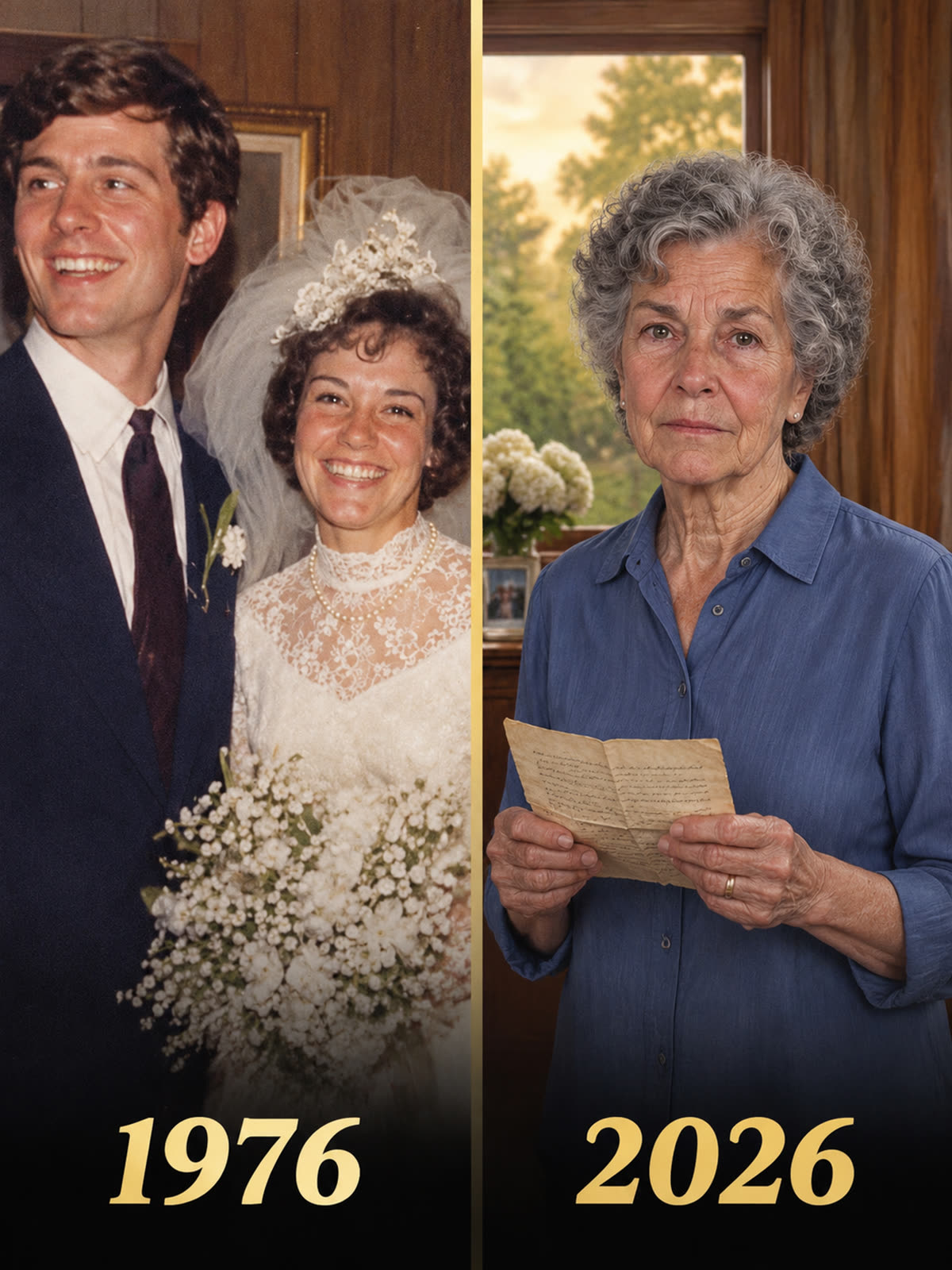
The first time Henry broke my heart, he was standing just a few feet from me in a church. The second time, he wasn’t there at all. At twenty-two, I watched him shout “I don’t!” in front of eighty wedding guests before running from our ceremony. Half a century later, a young attorney came to my door carrying a box and the explanation I had spent so many years trying to understand. By then, I had married a wonderful man and raised three children. I had built a life beyond that abandoned wedding, yet the sight of a stranger holding something from Henry still made me hesitate.
At first, I wouldn’t let him come inside. “My name is Daniel,” he said. “I represent Henry. He’s very ill, and he asked me to deliver this personally.” I kept my place in the doorway. “Then tell him I have nothing to say.” Daniel didn’t argue. “I understand. But there’s something in this box you deserve to see.” A dish towel was still in my hand. I had been making cookies for my grandchildren, and behind me, the kitchen timer kept ticking.
“Why now?” I asked. Daniel looked down at the package before answering. “Because he’s afraid he’ll die before you know what happened.” My immediate impulse was to close the door and leave him outside with everything Henry had sent. Instead, I moved aside. In the kitchen, we took seats across from one another, and Daniel set the box between us. He made no effort to lift its lid. “Henry told me you might ask me to leave. If you do, I will.”
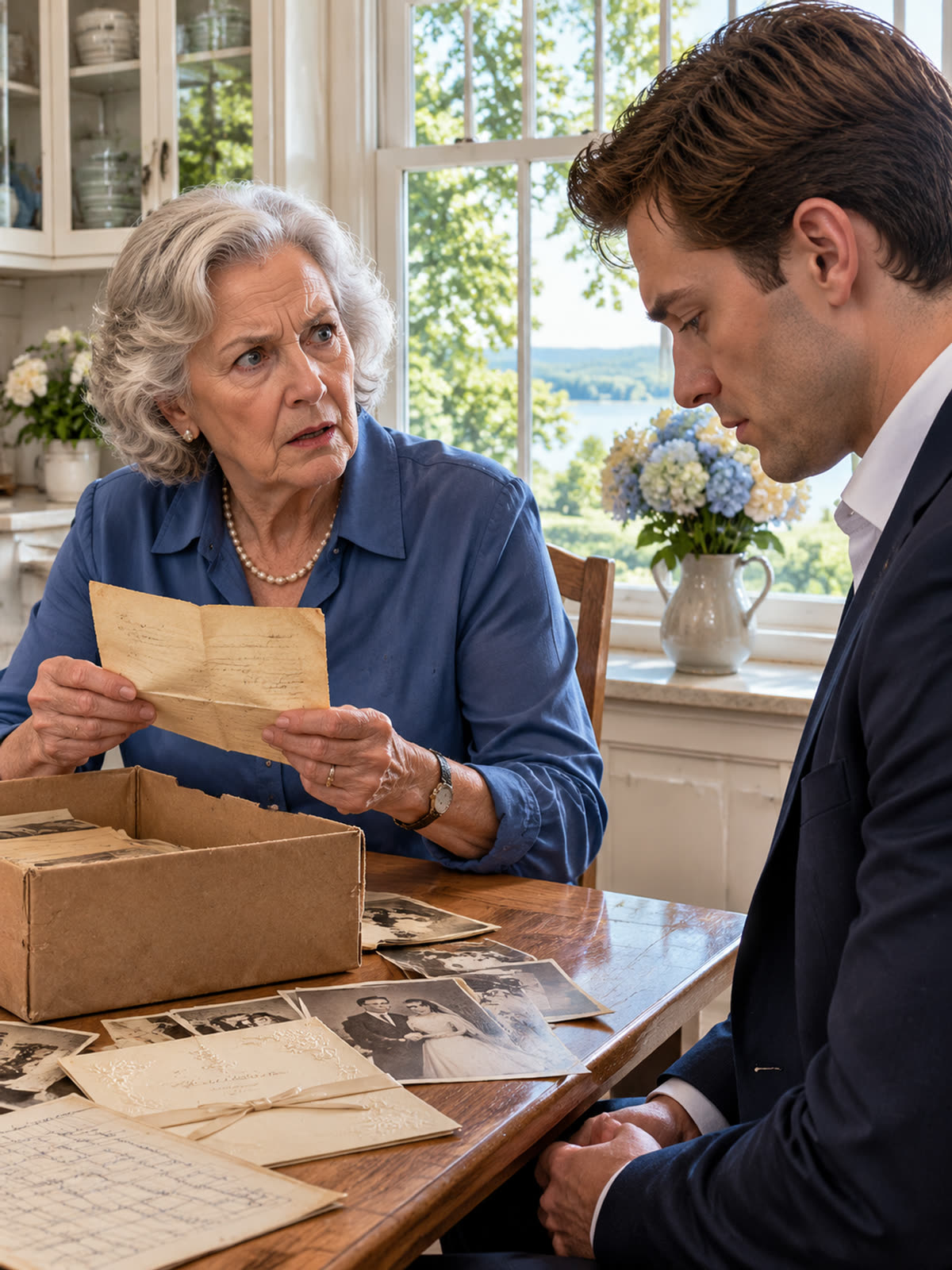
“Are you related to him?” I asked. “I’m his nephew. I’m also the attorney helping him settle his affairs.” That explained the feeling beneath his careful professional tone. It did not explain why something that had humiliated me fifty years earlier was suddenly sitting on my kitchen table. I raised the lid slowly. There was an old wedding invitation inside, along with photographs and a slim envelope addressed to me. The handwriting was unsettlingly familiar, resembling the neat script I had used as a young woman, back when people wrote long letters instead of calling.
I opened the envelope and unfolded the paper. “Henry, I need to be honest before we make a mistake.” The next lines made my throat tighten. “I don’t love you the way you love me.” Then: “I’m marrying you because I need security, and because your family can give me the kind of life mine never could.” I continued reading. “Please don’t expect me to become some devoted wife after the ceremony.” Beneath that was another sentence: “I’m grateful for what you can provide, but this marriage is about necessity, not love.” The letter ended, “I hope you’ll be sensible enough to accept that.” At the bottom was my name. “Margaret.”
I looked up at Daniel. “Where did you get this?” “Henry kept it.” The words on the page were cruel, but they were not mine. “I never wrote it.” Daniel nodded. “He knows.” I studied the handwriting again, looking at the rounded letters and the carefully crossed t’s. Whoever had written it had come remarkably close to my own hand. But I had never felt those things. I had loved Henry since we were teenagers—when his battered truck had no working heater, when he spent long shifts in his father’s store, and when he saved for months to buy my engagement ring.
Henry’s family had money. Mine was always struggling to get by. Other people noticed the distance between our circumstances, but Henry had never made me feel smaller because of it. At least, that was what I had believed. My fingers shook as I folded the letter. I had met him at sixteen. He used to wait outside the school library because he knew I would stay until it closed. In winter, he walked me home even though doing so added another two miles to his own journey.
His mother, Evelyn, disapproved of us from the start. She invited me to dinner only twice, and both times she questioned me about my father’s work and whether my mother planned to return to cleaning other people’s homes. Once, while I helped remove the dishes, she said, “Henry has always had expensive tastes. I wonder when he lost it.” I gave an uncomfortable smile because I didn’t know what else to do. Later, Henry apologized. “She thinks she gets a vote in everything. She doesn’t.” When he proposed, she argued that we were too young and wanted us to wait until he took over his father’s business. Henry wouldn’t agree.
We chose a date in the spring. My mother helped make my wedding dress, staying up late to fix the hem while I practiced walking in it across our little living room. On the morning of the ceremony, I was too excited to eat much. Outside the church, Dad adjusted my veil. “Ready?” he asked. “I’ve been ready for years.” Henry stood near the altar in a dark suit. When he saw me coming toward him, his eyes filled with tears. That was one of the memories that troubled me most afterward: he had looked genuinely happy to see the woman he was about to marry.
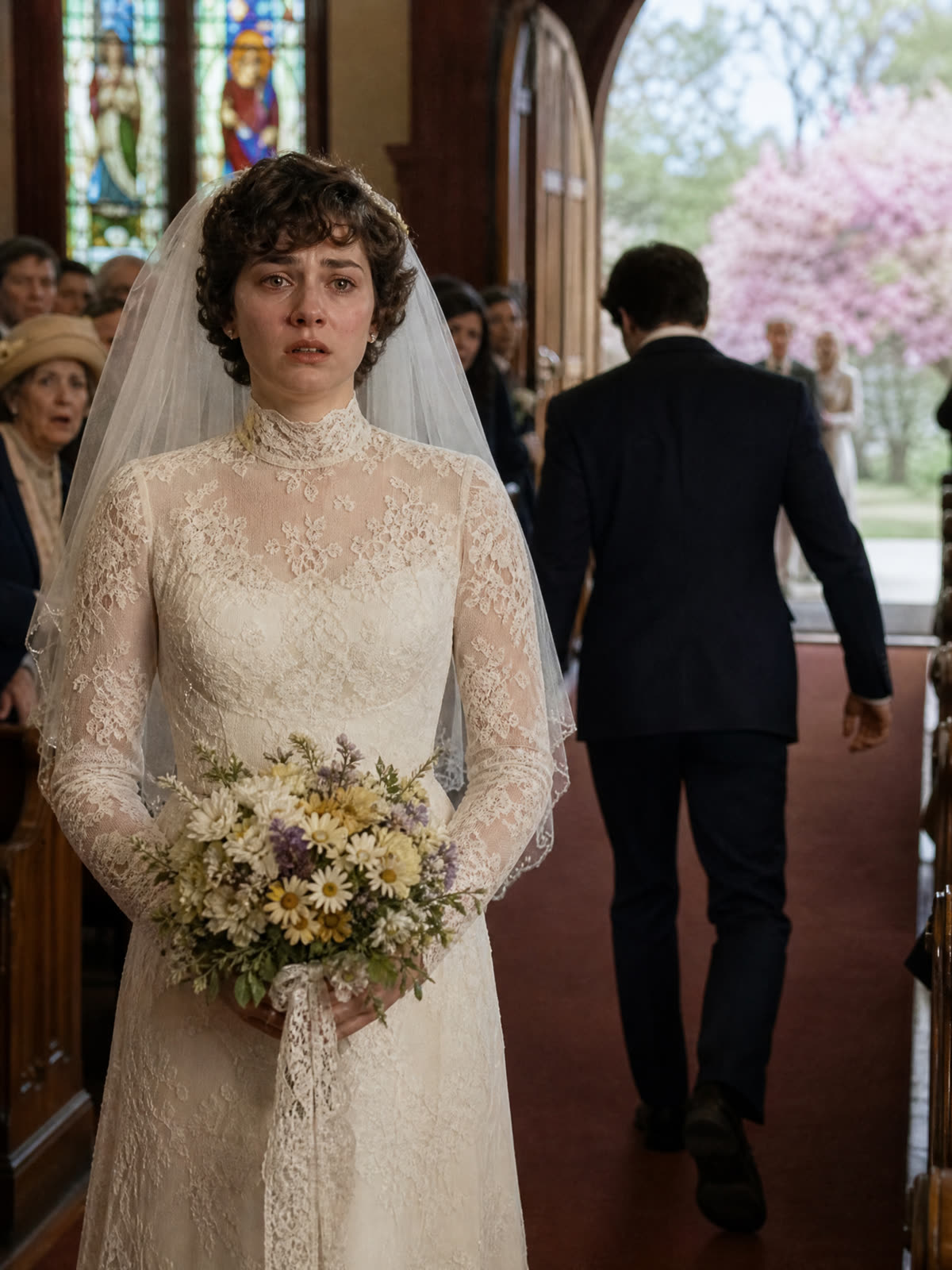
Then the minister asked whether he would take me as his wife. Henry looked straight at me, and his face hardened. “I don’t!” he said. The words rang through the church. “Henry?” He backed away, turned, and hurried down the aisle. Guests gasped. My mother called after him, and somewhere behind me, a chair scraped across the floor. I stood motionless with my bouquet in my hands while eighty people watched. At first, I thought he would come back. Perhaps he was frightened. Perhaps he had suddenly become ill. There had to be some explanation. I stayed until the guests were gone, then sat on the church steps with my wedding dress spread over the cold stone. By sunset, Dad had to carry me to his car because I couldn’t stop crying.
For weeks, people wanted to know what I had done to make Henry leave. One woman suggested he must have discovered I was carrying another man’s baby. My aunt Ruth had an explanation of her own. “Men don’t run from a happy wedding for no reason, Margaret.” I wanted desperately to make them understand that I knew no more than they did. I had no answer to offer, no private quarrel to explain, no warning I could point to. Neither Henry nor Evelyn contacted me afterward.
Six months later, I went to Chicago with two suitcases and twenty-seven dollars saved from part-time work. I found a job waiting tables at a diner and rented a small room over a grocery store. Some nights, I pressed my face into my pillow so my landlady wouldn’t hear me crying. Leaving had taken me away from the questions, but it had not supplied any answers. I was still the woman who had stood in her wedding dress waiting for a man who never returned.
Eventually, I met Robert. He came into the diner every Thursday for coffee and pie. When I finally agreed to have dinner with him, he wanted to talk about books rather than pry into my history. Several months passed before I told him about the wedding. He let me finish without interrupting. Then he asked, “Do you still love him?” I answered as honestly as I could. “I don’t know. I don’t think I even know who he was.” Robert nodded. “Then we can take our time.”
That was exactly what we did. Robert never insisted that I trust him immediately or pushed me toward anything before I was ready. We married in a small ceremony with twenty guests and raised three children together. Our life included arguments about money, graduation celebrations, caring for elderly parents, and all the ordinary mistakes that give married people reasons to forgive each other. Robert died four years ago. Sometimes I still set two cups on the kitchen counter before remembering that he was no longer there.
Daniel waited quietly while I looked again at the letter. Then he explained where it had come from. “Henry’s mother gave it to him on the morning of the wedding,” he said. I tried to connect those words to the woman I remembered. “She said I’d written it?” “Yes. She claimed you’d left it at their house the night before.” I could picture Evelyn so clearly: the immaculate appearance, the pearl earrings, the certainty with which she spoke.
“Why would he believe her?” I asked. “She showed him the envelope. She said she’d found it tucked inside a book you’d borrowed.” It was absurd. “That’s ridiculous. I was at home all evening, finishing my dress.” Daniel’s answer came without hesitation. “Henry knows that now.” I looked from him to the letter, still trying to understand how those words could have carried more weight than everything Henry had known about me.
Daniel reached into the box again and brought out a folder. Until then, I had been holding a letter I knew I hadn’t written and listening to an explanation that seemed almost impossible. Now there was something else. “Evelyn died 12 years ago. While Henry was sorting her belongings, he found these in the bottom of a locked desk.” Inside the folder lay three sheets of lined paper.
PART 2 — The Truth He Kept
The pages were covered with attempts to imitate my handwriting. I looked from one sheet to another, recognizing the shapes of letters without recognizing the hand behind them. On one page, the same words appeared over and over: “I love you, Henry,” Each attempt had been made to look like something I might have written. What I had first seen as a disturbing resemblance in the letter was laid out before me as deliberate practice.
Another page contained observations about the way I formed my words. “Margaret rounds her capital M. She uses a long tail on the y. She leaves little space after commas.” Someone had examined even the smallest habits of my writing. There they were, reduced to instructions, as though my own handwriting were something to be studied and reproduced.
The last sheet held an earlier draft of the letter. It opened with, “Henry, I have been deceiving you.” Several lines had been crossed through. Their replacements were colder and more calculating. The finished letter hadn’t been a sudden outburst or a few thoughtless sentences. I could see the changes on the page, each one bringing it closer to the message Henry had received on our wedding morning.
Nausea washed over me. “She practiced?” Daniel answered carefully. “For some time, apparently.” I could hardly bear the picture those pages created. “She sat at a desk and practiced writing like me so she could destroy our relationship?” He said nothing. There was nothing he could say that would make what I was holding any less deliberate.
As I absorbed it, other memories returned. Aunt Ruth had always admired Henry’s wealthy family. She often visited Evelyn’s sister, who was a close friend of hers. After the wedding, Ruth had been quick to imply that I must have done something shameful. I remembered the judgment in her voice and how readily she had accepted that I was somehow responsible.
“Did my aunt Ruth know?” I asked. Daniel shook his head. “I haven’t seen evidence of that.” I couldn’t claim otherwise. “I don’t have proof either. But she kept telling me Henry’s family was too good for ours. And she was always visiting his aunt.” Ruth had been dead for years. There was no way to ask her what she had known, or whether she had known anything at all.
I thought about her constant interest in my plans, her warnings not to reach too high, and the way she had seemed so unsurprised when Henry left me. Those memories felt different now, but feeling different did not make them proof. Whatever suspicions had stirred in me, the papers on the table established something about Evelyn, not Ruth. I turned back to the certainty in front of me. “Did his mother confess?”
“No. Henry found the drafts after she died.” I gave the only answer I could manage. “How convenient.” Daniel told me Henry had hired a handwriting specialist. The expert had determined that the forged letter and the practice pages were the work of the same person. Henry also recognized his mother’s handwriting in the notes. The stationery had been kept in her desk. Everything Daniel described led back to Evelyn.
Then I asked the question that had begun to trouble me more than any other. “When did he find all this?” Daniel answered, “Twelve years ago.” My stomach dropped. Robert had still been alive then. Our youngest child had recently bought a home, and our grandchildren were still very small. While all of that was happening, Henry had known that the letter was a lie.
“He found out 12 years ago and didn’t tell me?” Daniel started to explain. “He wanted to.” I stopped him. “That’s not what I asked.” He lowered his eyes. “No. He didn’t tell you.” Anger rose in me. It was not the same helpless fury I had felt at twenty-two, when I had known only that I had been publicly abandoned. This time, I understood. Evelyn had written the lie, and Henry had made another decision to leave me without the truth.
Daniel said Henry had employed an investigator after discovering what his mother had done. The investigator located a publicly available photograph from my thirtieth wedding anniversary with Robert. In it, Henry had seen us surrounded by our children. According to Daniel, he could not bring himself to interfere with our happiness. He had looked at that picture and chosen not to contact me.
“Interfere?” I repeated. “By telling me I hadn’t done something terrible?” Daniel replied, “He thought contacting you might cause pain.” I didn’t deny that it would have hurt. “It would have. But keeping quiet was still his choice.” Daniel nodded. “He asked me not to defend that decision.” I was grateful that he did not keep trying. There was a difference between explaining Henry’s silence and asking me to accept it.
My eyes moved to the mantelpiece. Robert’s photograph stood beside a little clay bowl our granddaughter had made. This was my home, the place where our children had taken their first steps. The life I had lived was all around me. I would not let a forged letter turn those years into something smaller, or make my marriage seem like a life that mattered only because another one had failed.
Still, I needed to understand the timing. “This is the 50th anniversary of when he left me at the altar. Why now?” I asked. Daniel said Henry had remembered the anniversary. He was being treated for advanced heart failure, and his doctors believed he was getting worse. “He wanted you to have the truth while he could still answer your questions.”
I considered what Daniel had said. Then I asked, “Does he expect me to visit?” “He hopes you will. But he told me to respect whatever you decide.” I did not give him an answer. For a long time, I sat with the letter and the practice pages between us. Eventually, I asked him to leave the box with me.
That evening, Laura brought her children over. My kitchen filled with their excited voices while they decorated the cookies I had baked. I helped my youngest grandson put far more icing than necessary on a star-shaped cookie. I said nothing about Henry. The letter, the drafts, and everything Daniel had told me remained unmentioned while my grandchildren worked on their cookies.
After they went home, I opened the drawer where I had kept my wedding invitation for fifty years. “Margaret and Henry request the pleasure of your company.” I placed it beside the forged letter. The handwriting was nearly the same as mine. The feelings expressed in it belonged to no version of the young woman I remembered being. I had loved Henry. Whatever else had happened, those papers could not change that.
The invitation and the letter lay side by side. For decades, one had been a reminder of a question I couldn’t answer. Now the other had given me an explanation, but not everything I needed to hear. Daniel could tell me what Henry had discovered and what he said he regretted. Only Henry could answer for what he had chosen to do.
Two days later, I called Daniel. “I’d like to speak to Henry.” He arranged for me to visit the care facility where Henry had moved after a recent hospital stay. After fifty years of wondering why he had walked away, I was finally going to sit across from him and ask.
PART 3 — What I Needed Him to Say
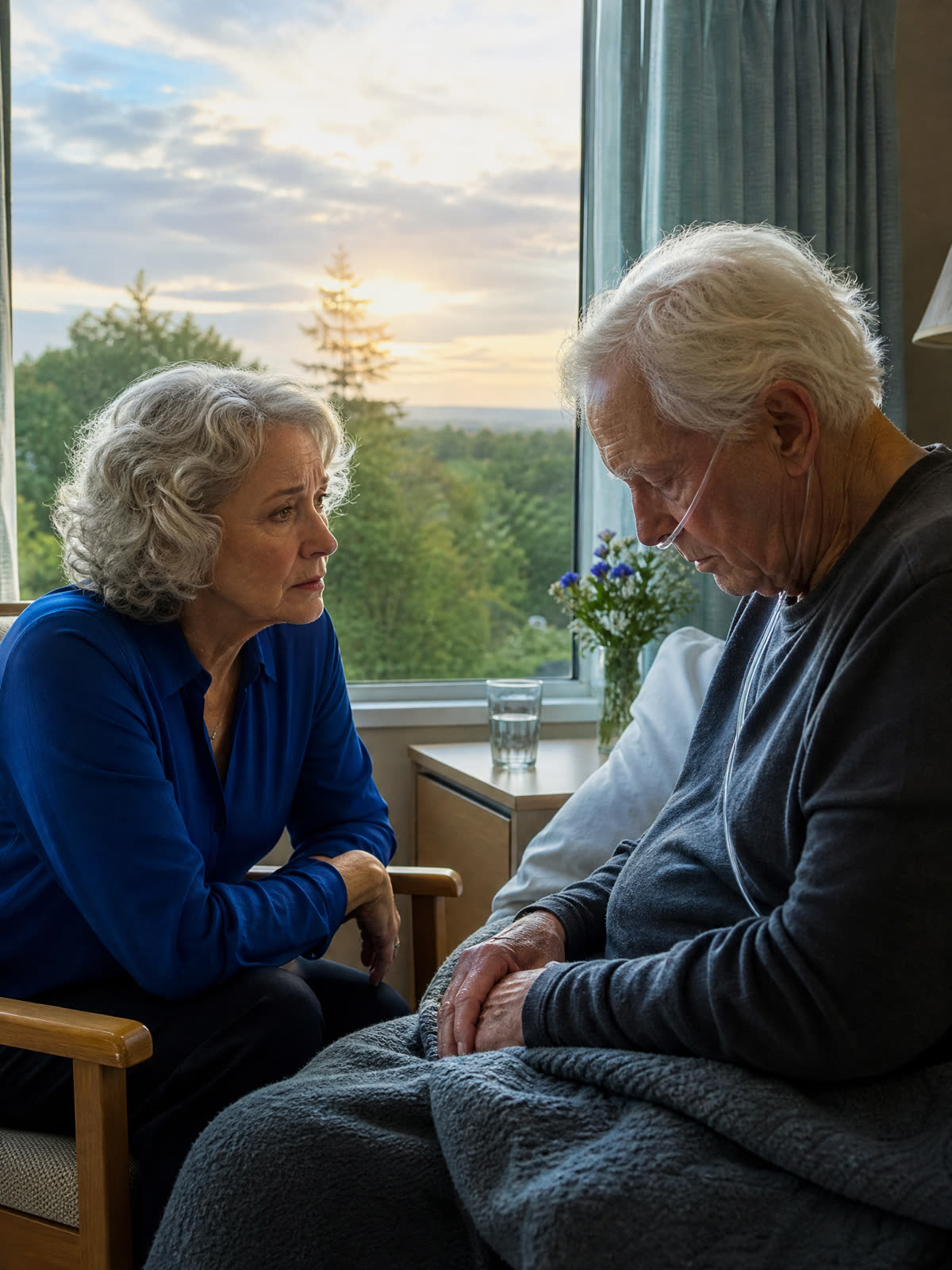
I drove to the care facility alone. When I entered Henry’s room, I almost didn’t recognize him. His hair was white, his shoulders looked fragile, and a tube supplied oxygen beneath his nose. So much of the young man I remembered had changed. His eyes, though, were unmistakably his. “Margaret.” I answered, “Hello, Henry.” He indicated a chair. “Please sit.” I sat facing him, and for several moments neither of us spoke.
At last, Henry broke the silence. “I know you got the box.” “I did.” He said, “I’m sorry.” I had waited too long for an explanation to let those words stand for everything. “For which part?” He looked surprised by the question. “All of it.” I held his gaze. “That covers quite a lot.” His eyes dropped.
I asked why he had believed the letter. “My mother told me you were ashamed to marry me,” he said. “She claimed you’d been laughing with your friends about how foolish I was to believe you loved me.” I listened to him describe accusations I had never known existed, accusations he had accepted without ever giving me a chance to answer.
“Did you ask any of those friends?” “No.” “Did you ask me?” Again, he said, “No.” I asked the simplest question left. “Why?” His fingers tightened around the blanket over him. “I was angry. I felt foolish. I thought you’d been pretending to love me.”
I looked at him, remembering the church, my bouquet, and all the people who had watched him leave. “So you decided to humiliate me in front of everyone.” He nodded. “I wanted you to feel what I thought you’d done to me.” The admission hurt more than I had expected. For years, I had searched for a reason that might make his behavior understandable. Instead, he was telling me that he had chosen to punish me in public rather than speak to me in private.
“Your mother lied to you,” I said. “I understand that. But she wasn’t the person standing at the altar with me.” “I know.” It mattered that he said it, but it did not erase the other question. “Then why didn’t you tell me the truth years ago?” Henry turned his face toward the window before answering.
“After the investigator found a picture of you and Robert, I couldn’t. You looked happy. I thought you’d finally put me behind you.” I answered honestly. “I had. Most days.” He said, “I couldn’t bear the thought of hurting you again.” It was the explanation Daniel had given me, but sitting across from Henry, I could finally ask what lay beneath it.
“You were afraid I’d be angry.” “Yes.” I continued, “And you were afraid I’d refuse to forgive you.” Tears gathered in his eyes. “Yes.” There it was, without the gentler explanation about leaving my happiness undisturbed. He had been afraid of what I might say to him once I knew.
I leaned toward him. “Henry, you didn’t protect me by staying away. You protected yourself from hearing what I had to say.” He nodded slowly. “You’re right.” I had expected him to argue, or offer another reason, or ask me to see his silence differently. He did none of those things. He simply accepted what I had said.
We sat with that admission between us. Evelyn had deceived him, but she had not made every choice that followed. Henry had acknowledged both the cruelty at the altar and the fear that had kept him silent after discovering the truth. For the first time, I was hearing him take responsibility without asking me to look elsewhere for it.
Eventually, he asked about Robert. I told him my husband had been loving and kind, and sometimes stubborn. I spoke about our three children and our six grandchildren. Henry listened, then managed a small smile. “I’m glad someone loved you well.” “He did.” I did not need to explain that answer further.
Henry lowered his eyes to his hands. “I never got married.” For a moment, I felt sorrow for the young man I had once loved. I could feel that sorrow without mistaking it for a reason to undo the life I had lived. His loneliness did not change what had brought me to his room, or what I needed from this conversation.
“Henry, I didn’t come here to find out whether we could have had another life.” He answered, “I know.” I wanted there to be no misunderstanding between us now. “I came because I wanted to hear directly from you what happened.” He drew a careful breath before he spoke.
“My mother forged that letter. I believed her. I chose to embarrass you in church. When I learned the truth, I was too afraid to face you. I’m sorry, Margaret.” I stayed quiet and let the words settle. There were no missing choices in that explanation, no suggestion that his mother’s deception had somehow excused everything he had done afterward.
Then I stood. “I forgive you for believing someone you trusted. But I can’t excuse what you did afterward, or the years you let me blame myself.” Henry nodded. “I understand.” I had wanted the truth, and now I had heard it from him. That did not mean there was a place for him in the life I had built.
“I don’t have the energy to reopen the past. I have a family and a life I love. I won’t be coming back.” A tear slipped down his cheek. “Thank you for coming once.” At the door, I turned to look at him. “I hope you’re comfortable, Henry. And I hope you’re at peace.” He replied, “You too.”
I reached home before sunset. In the kitchen, I took the forged letter from my purse and set it beside the wedding invitation. For fifty years, that invitation had held a question I could not answer. I knew the answer now. I understood what Evelyn had done, what Henry had believed, and what he had chosen.
I put both papers into the old cardboard box and closed the lid. The invitation no longer had to stand apart from its explanation. The letter no longer had to pretend it carried my words. They belonged together now, with the truth of what had happened finally known.
Then I called Laura. “Are you still bringing the children over Sunday?” I asked. “Of course. Why?” I thought of the kitchen filling with their voices again. “I thought I’d make Robert’s favorite cookies.”
She laughed. “Mom, you make those every Sunday.” “I know. Tell the kids to come hungry.”
Disclaimer: This story is a work of fiction inspired by real-life themes. Names, characters, places and events are fictionalized, and any resemblance to real persons is purely coincidental. It does not represent any person or organization and does not encourage inappropriate behavior. Images are for illustration purposes only.
