

PART 3
A woman had been threatened with arrest after refusing to allow Sentinel guards inside her home.
And Reuben had never been the first.
He had simply been the one whose story finally reached me.
Months later, I attended a federal press conference.
I didn’t want to speak.
Camille asked me to stand beside her.
I agreed.
A reporter asked:
“Mr. Talmadge, why didn’t you use your former FBI connections earlier?”
I looked at the cameras.
“Because I didn’t want special treatment.”
Another reporter asked:
“Were you afraid?”
“Yes.”
The room went quiet.
I continued:
“Anyone who tells you they weren’t afraid after being struck by a weapon is either lying or hasn’t been in that position.”
Another question.
“What do you want people to learn from this?”
I thought about Reuben.
Estelle.
May.
Annalee.
The people who had stayed silent.
Then I answered:
“Never confuse appearance with authority.”
I paused.
“And never assume a uniform gives someone the right to violate another person’s rights.”
That statement traveled farther than anything else.
Bayou Pines changed after that.
Sentinel’s contract was terminated.
The HOA board was replaced.
New rules were adopted.
Residents received copies of their rights and the actual authority of private security personnel.
The fake badges disappeared.
The golf carts disappeared.
And, for the first time in years, the gate guards wore uniforms that clearly identified them as private security.
No confusing insignia.
No fake titles.
No pretend arrests.
No batons used as symbols of power.
One Saturday morning, I was sitting on the porch when Reuben walked up.
He carried two cups of coffee.
“Thought you could use one.”
I smiled.
“Thank you.”
He sat beside me.
For a while, we watched the palm trees move in the breeze.
Then he said:
“You know what the strangest part is?”
“What?”
“I spent forty years working hard, paid my taxes, served my country, raised my kids, and thought that meant I had earned the right to sit quietly in my own neighborhood.”
“You did.”
He nodded.
“I know that now.”
We sat in silence.
Then Reuben smiled.
“Your lawn looks good.”
I laughed.
“Don’t tell the HOA.”
He laughed too.
A few weeks later, May had a tennis tournament.
She walked onto the court wearing the same white visor her mother had bought her years earlier.
Estelle sat beside me in the bleachers.
“She’s nervous,” she whispered.
“She’ll be fine.”
“You sound very certain.”
“I’ve investigated enough liars to know when someone is pretending not to be nervous.”
Estelle smiled.
May looked toward us.
I raised my fist.
She smiled.
Then she served.
The ball crossed the net cleanly.
For the first time in months, I wasn’t thinking about Sentinel.
I wasn’t thinking about Spencer.
I wasn’t thinking about Carleen.
I wasn’t thinking about the cameras or federal agents or evidence.
I was thinking about my granddaughter.
About the life Annalee had wanted for her.
About the ordinary things I had nearly forgotten to appreciate.
A quiet porch.
A family dinner.
A tennis match.
A chipped ceramic mug.
A lawn.
My own lawn.
And I realized something.
For twenty-eight years, I had investigated people who believed power meant they could hurt others without consequences.
I had spent my career proving otherwise.
But retirement taught me something my badge never could.
You don’t always need authority to stand up to abuse.
Sometimes you need courage.
Sometimes you need witnesses.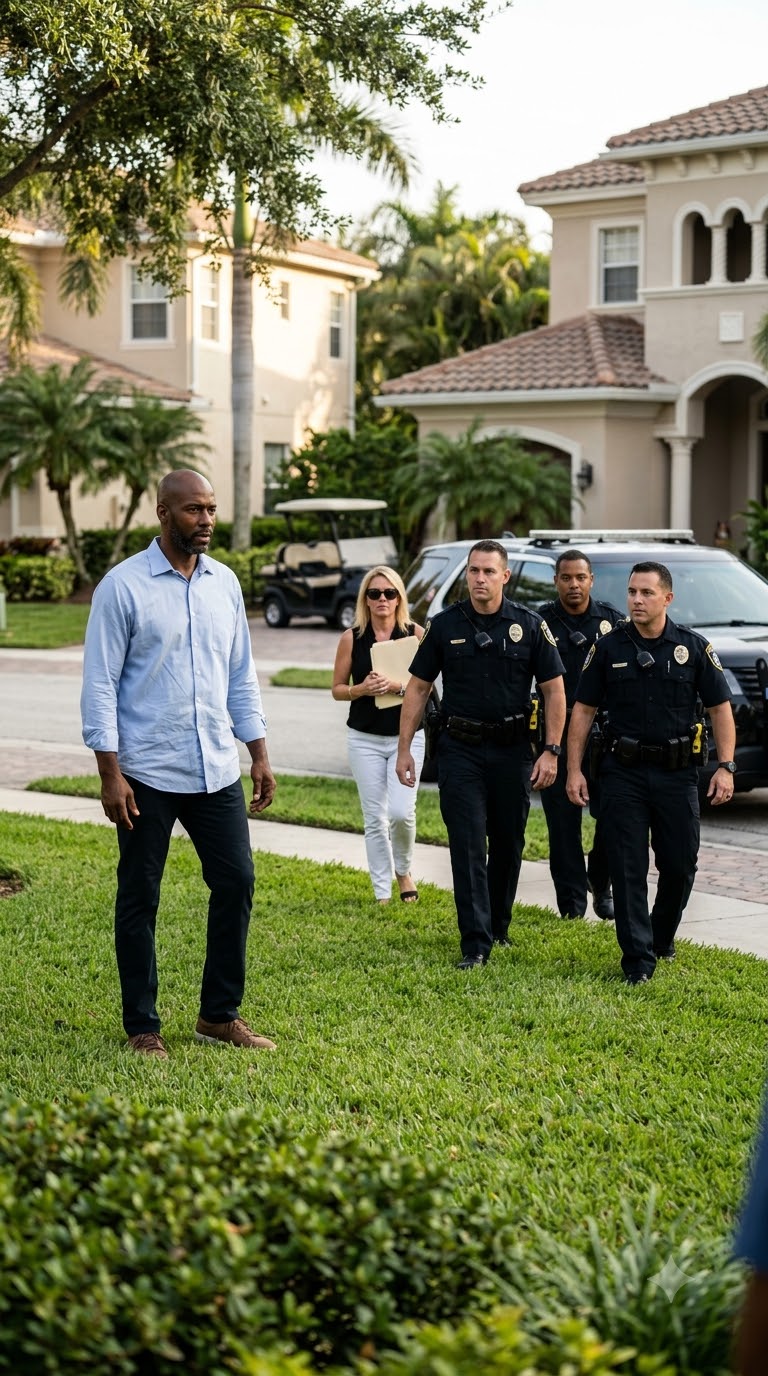
Sometimes you need a camera.
And sometimes you simply need to refuse to kneel when someone has no legal right to make you.
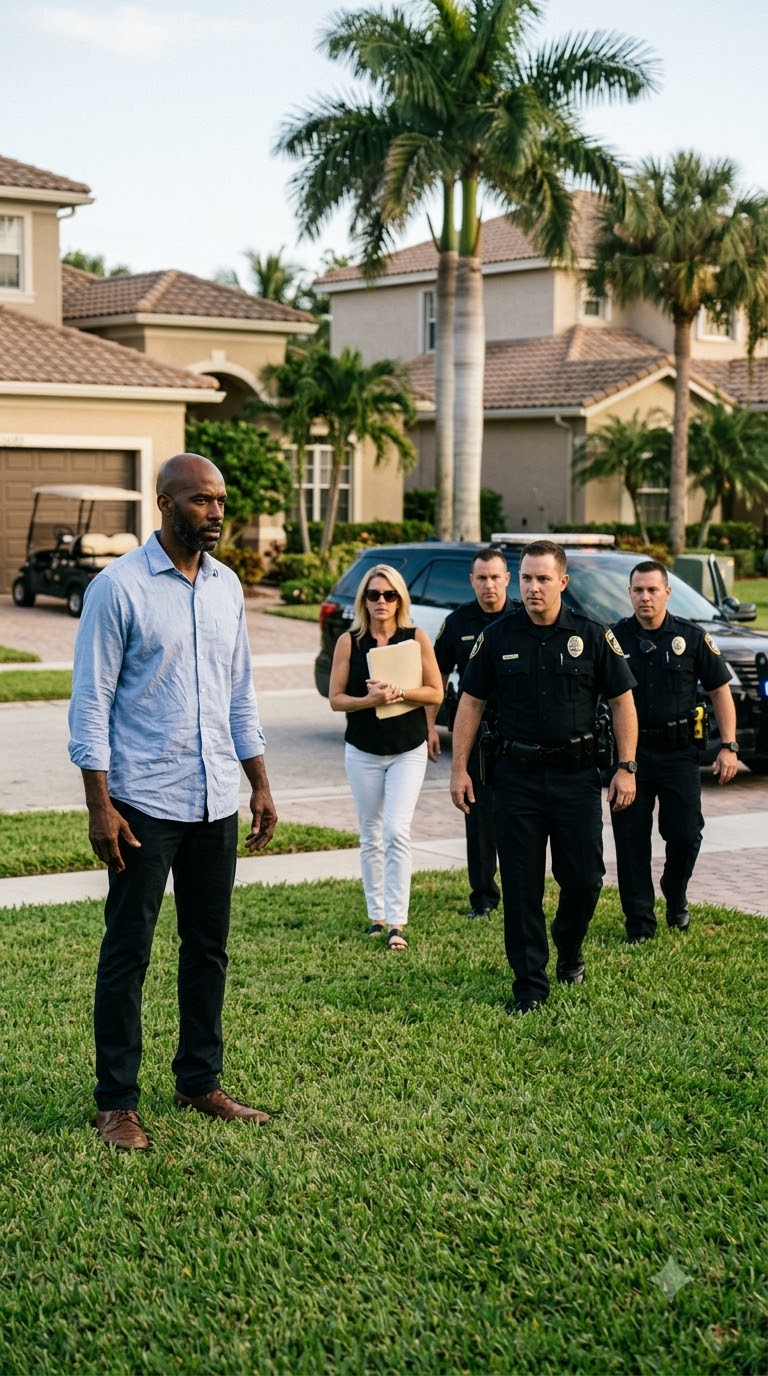
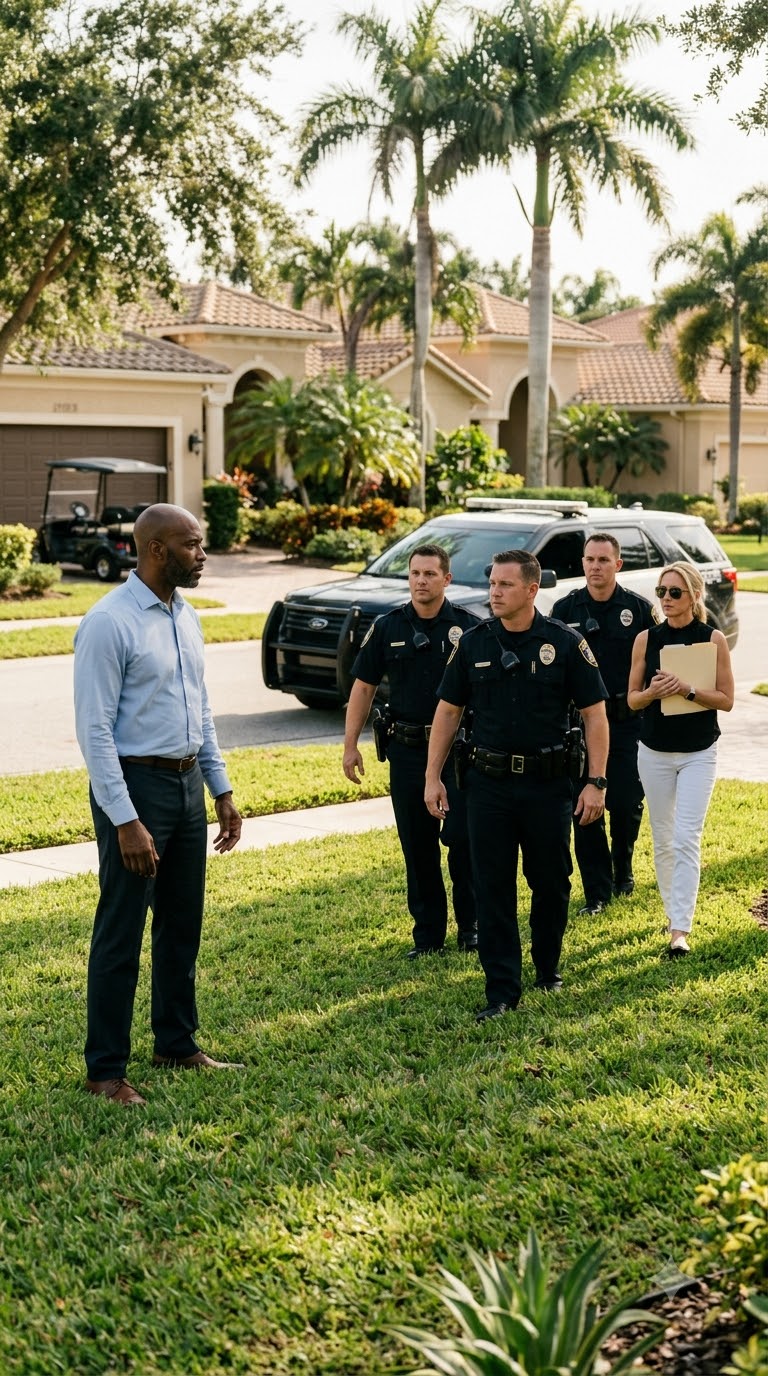
That morning on my lawn, four men had believed they were in control.
They believed their uniforms were enough.
They believed the HOA president’s instructions were enough.
They believed nobody was watching.
They were wrong.
Someone was watching.
My cameras were watching.
My neighbors were watching.
Federal investigators were watching.
And most importantly, the law was watching.
I never wanted revenge.
I wanted accountability.
Because if a uniform can become a weapon without consequences, then everyone is vulnerable.
And if a private organization can invent authority simply because nobody challenges it, then the quiet neighborhoods people believe are safest can become the places where abuse hides most easily.
So I kept my lawn.
I kept my old Jeep.
I kept Annalee’s mugs.
And I kept the cameras.
Not because I was afraid.
Because I had learned that sometimes the most powerful thing you can do is make sure the truth cannot be erased.
And whenever I looked at the patch of St. Augustine grass where that baton had struck me, I remembered the words Travis Morrow had spoken.
“You are under HOA arrest.”
I had laughed then.
Now I understood why.
Because there had never been an arrest.
There had only been a lie.
And that lie finally met the one thing it had been designed to avoid.
Evidence.
