

PART 1 — The Boy Beside Her Coffin
After seven years apart, I went to my former wife’s funeral expecting to say a quiet goodbye. Instead, a child who could have been my younger self stood between me and her coffin. “Stay Away From My Mom!” he cried. Then her mother placed a letter in my hands, and a name inside it began unraveling a secret my own mother had concealed for seven years. Before that morning ended, the life I thought I understood would become almost unrecognizable.
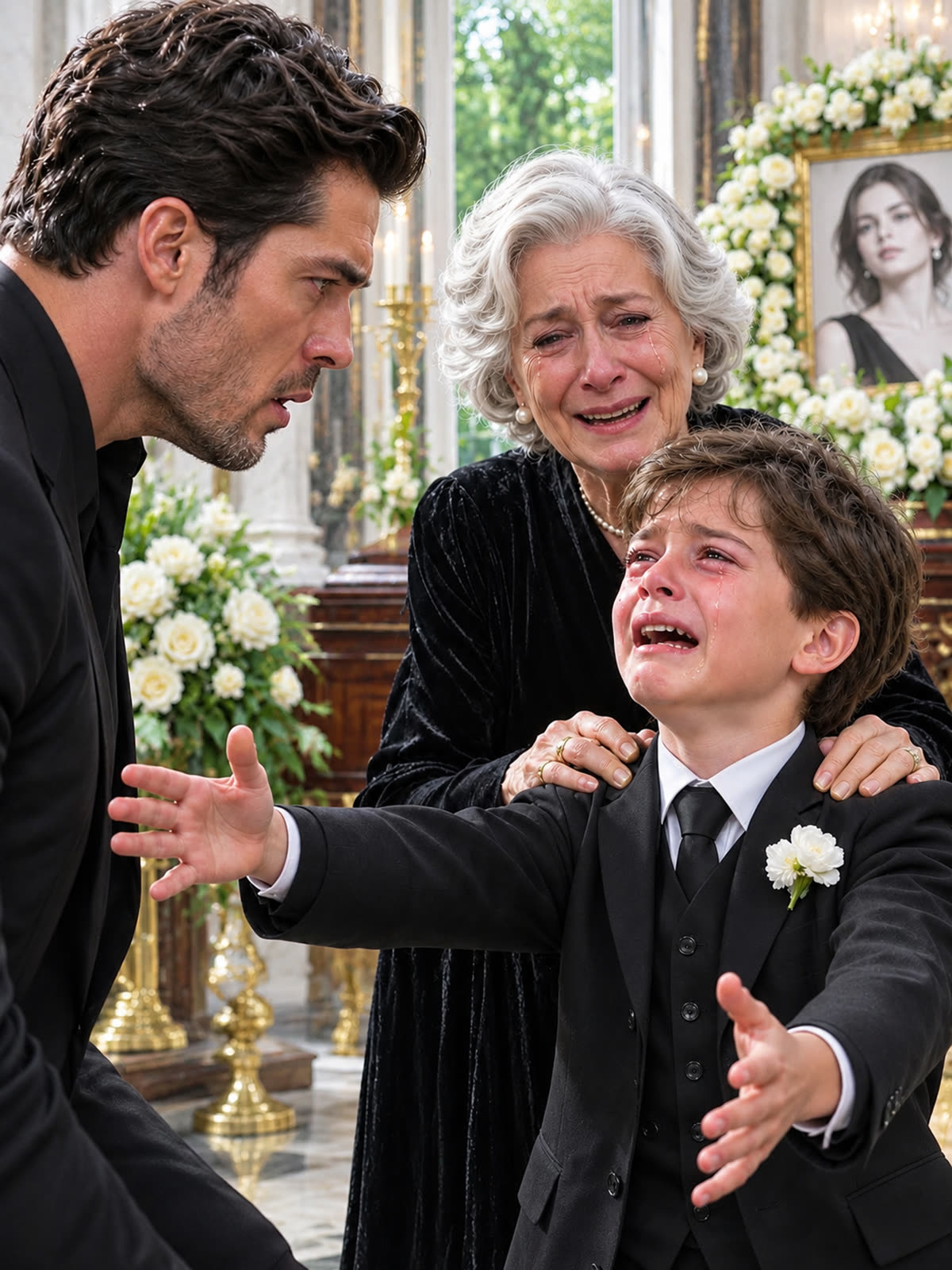
“Stay away from my mother! You have no right to be here!” The boy planted himself directly before Valentina’s coffin, stretching his little arms outward as though he could still shield her from me. He looked no older than seven. His black suit hung a little loosely, and crying had left his eyes swollen. Yet neither his anger nor the sight of his grief was what stopped me. It was his thick eyebrows, his straight nose, and the tiny mole below his left eye. I seemed to be staring at myself as a child.
My name is Adrián Serrano. I am thirty-eight, and I run a successful real estate business in Madrid. Earlier that morning, an old friend had called with the news that my ex-wife, Valentina, had died after a serious illness. We had not seen each other in seven years. Even so, I drove to Valencia with a wreath of white flowers, imagining I would pay my respects without disturbing anyone and then leave. Nothing in that simple intention had prepared me for the boy refusing to let me pass.
“What’s your name?” I asked gently. “You don’t deserve to know!” His answer made me swallow before I tried again. “Where’s your father?” His face tightened. “Mom said my father died a long time ago.” A painful pressure gathered in my chest. The child’s age, his resemblance to me, and the seven years since I had last seen Valentina crowded together in my mind. I had arrived expecting the sorrow of a final farewell. Instead, I could barely make sense of what was standing directly in front of me.
Seven years before, I had ended our marriage after three years together because I believed Valentina had been unfaithful. Someone had shown me a photograph of her coming out of a hotel beside another man. My mother, Rosa, had insisted that the picture left nothing to explain. I believed her. I accepted her certainty instead of allowing my wife the chance to tell me what had actually happened. At the time, I thought I was responding to a betrayal. Now, beside that coffin, the memory no longer felt so certain.
“You’ve betrayed me,” I had told Valentina. “Take whatever money you want, sign the papers, and disappear from my life.” Her eyes filled with tears. “Adrián, do you really believe I would do that?” I had answered without giving her the hearing she deserved. “You don’t deserve my trust anymore.” She signed the divorce papers, declined financial support, and went away. Afterward, I made no effort to locate her. Not once. Now there could be no conversation with her, no opportunity to ask why this child looked so much like me.
An elderly woman approached, and I recognized Doña Carmen, Valentina’s mother. Recognition turned her expression furious. “How dare you come here?” I struggled to answer. “Carmen, please. Is that boy—” She stopped me immediately. “Don’t you dare pretend you’re part of this family!” Drawing the child closer, she demanded, “Do you have any idea what my daughter endured after you abandoned her?” I could only ask the question consuming me. “If he’s my son, why didn’t Valentina tell me?” Carmen stared at me. “You think she never tried? Ask your own mother.”
My phone rang at that very moment. It was Rosa. “Mom,” I said, “I’m at Valentina’s funeral.” Silence followed before her voice sharpened. “Did you speak to anyone?” I looked at the boy. “Was Valentina pregnant when we divorced?” Her denial came immediately. “Absolutely not!” I pressed her. “Then why is there a seven-year-old child here who looks exactly like me?” Something crashed at her end. “Adrián, leave immediately! Don’t believe anything those people tell you!” Carmen took my phone. “Rosa, are you still going to deny what you did?” The connection ended.
Carmen reached inside her handbag and brought out an aged envelope. Across it, in handwriting I recognized at once, were the words: For Adrián Serrano. To be opened only after my death. “She asked me to give you this if you ever came to say goodbye,” Carmen explained. The child started crying again. “Grandma, Mom said that if he learned the truth, someone might take me away!” Before Carmen could respond, a black vehicle pulled up outside. My mother hurried into the funeral home, and the sight of the envelope drained the color from her face.
“Adrián, don’t open that!” she said. “Why?” Instead of answering, she looked desperately at Carmen. “Tell me what you want. Money? Property? I’ll give you whatever you ask. Just destroy that letter.” Carmen did not move. “Not everything can be bought, Rosa.” I looked from my mother to Valentina’s photograph beside the coffin. Then I opened the envelope. Inside lay a handwritten letter, an old hospital record, and a photograph. The photograph was painfully familiar: it was the very image I had accepted as proof that my marriage was over.
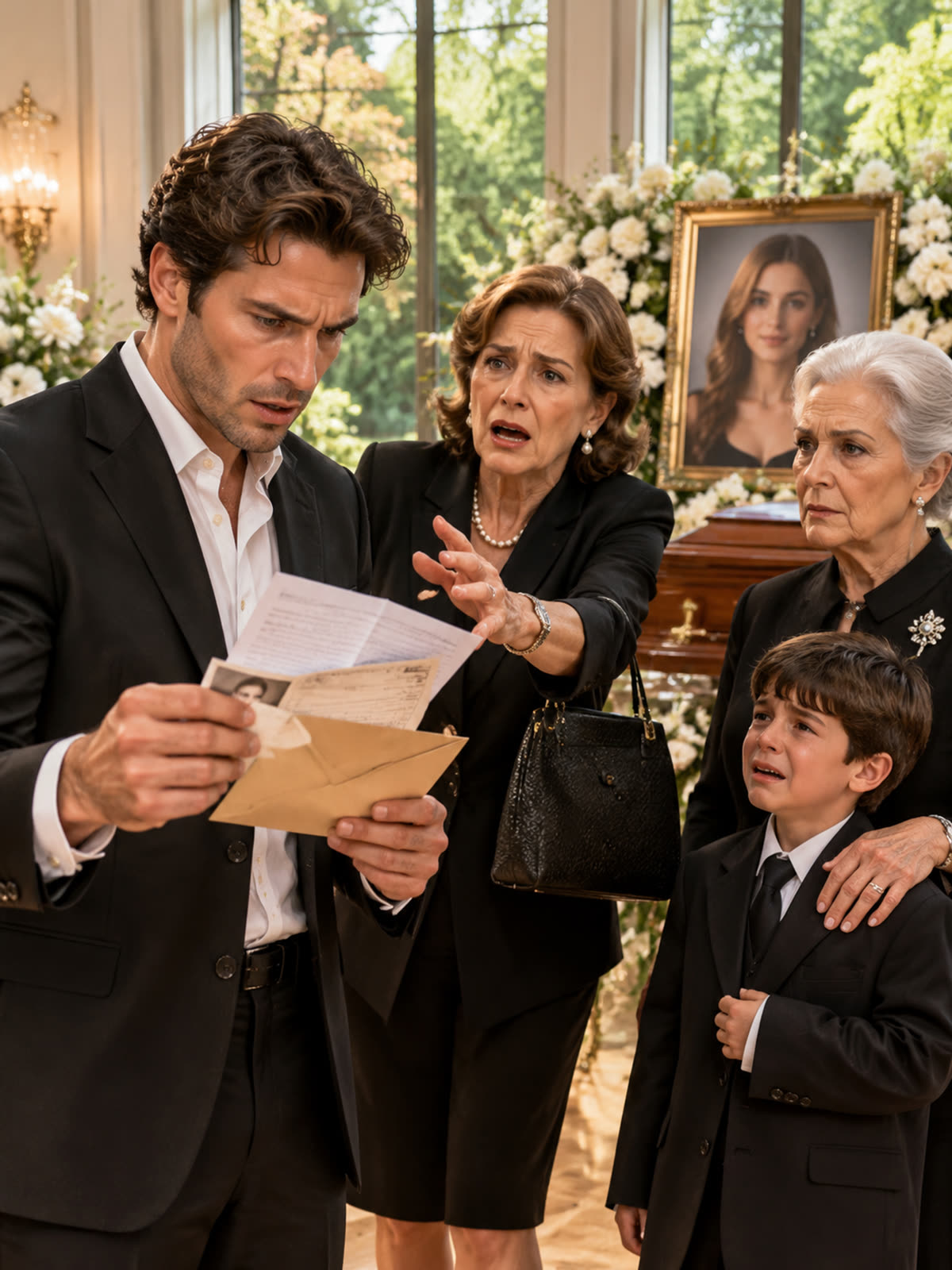
Turning it over, I found a name in Valentina’s handwriting: Marco Delgado. My closest friend. My business partner. The man who had stood with me at my wedding. For years, I had believed the figure beside her was some unknown lover. Now I discovered that he was someone I had trusted more than almost anyone. The certainty on which I had built seven years of resentment began to collapse. I kept looking at that name, unable to reconcile the story I had believed with the evidence lying in my hands.
My mother stepped closer. “Adrián, please. That family is trying to manipulate you!” Carmen moved into her path. “If that’s true, Rosa, why are you so frightened?” Rosa offered no answer. I examined the picture once more, this time looking beyond the accusation attached to it. Valentina was not simply walking beside Marco. She was leaning heavily against him. Her face appeared pale and strained, and one hand rested over her stomach. What I had once taken for an ordinary departure from a hotel now looked like a woman struggling because she was unwell.
The hospital document carried the same date as the photograph. It recorded emergency treatment after Marco had brought Valentina in with complications during an early pregnancy. Breathing became difficult. She had not been meeting a lover; she had needed medical attention. The man I had accused her of betraying me with had apparently helped her reach a hospital. I turned toward my mother. “Did you know about this?” She lowered her eyes. That response told me enough. Carmen pointed to the door. “Leave, Rosa. You’ve already caused enough suffering.” My mother took her handbag and left.
My hands shook as I unfolded Valentina’s last letter. Adrián, If you’re reading this, it means I’m no longer alive, and you’ve finally come to say goodbye. I don’t know whether you came because you missed me or because you felt guilty. But there’s something you deserve to know. Shortly after our divorce, I discovered I was pregnant. My first instinct was to tell you. Despite everything that had happened, I believed you had the right to know about our child. So I went to your house. Your mother answered the door.
She refused to let me see you. Then she warned me that if you discovered I was expecting your baby, your family’s lawyers would make sure you received custody and I would lose everything. I was frightened. You had money, influence, and people willing to protect you. I had almost nothing. So I left Valencia and began again. I worked while pregnant and continued after our son was born. Life wasn’t easy, but he grew up surrounded by love. I gave him my surname because I wanted him to have a future free from fear.
When he was little, I told him his father was gone. I didn’t know how to explain the truth to a child. I know you may be angry. But I made the decisions I believed would protect him. Now I have one final request. Please don’t force yourself into his life. If you want to know him, earn his trust. Don’t use money, gifts, or lawyers to demand affection. Let him decide when he’s ready. He owes you nothing, Adrián. We are the adults who owe him a childhood filled with love.
I read her letter three times, each sentence weighing more heavily than it had before. By the time I finally raised my head, almost everyone had left the funeral home. Only Carmen, the sleeping boy, and I remained. “His name is Mateo,” she told me quietly. “Mateo Ríos.” Mateo. That was my son’s name. I was learning it on the day his mother was being buried. Everything I had missed seemed contained in those two words, while her instructions lay before me in the handwriting I would never see on another new letter.
“Can I speak to him?” I whispered. “Not today,” Carmen answered. I nodded rather than arguing, and surprise crossed her face. “Today is about saying goodbye to his mother. You’ll have other opportunities if you respect what Valentina asked.” There was nothing unfair in that boundary. Mateo had lost his mother, and my sudden discovery did not make my needs more important than his grief. Knowing he was my son did not mean I could insist that he wake up, face me, or help me bear what I had just learned.
I approached Valentina’s coffin once more. “I’m sorry,” I whispered. The words were all I had, but I knew how late they were. An apology could not return the seven years in which I had refused to look for her. It could not give her the chance to explain that I had denied her then. I had come with white flowers and the intention of leaving quietly. Instead, I was leaving with her final wishes, the knowledge of a son, and a photograph I could no longer understand.
The next morning, I asked Marco to come to my office. He entered smiling, still the familiar friend and business partner I had trusted throughout those years. Then his eyes fell on the photograph lying on my desk. His expression changed immediately. “Adrián…” The way he said my name made clear that the picture meant something to him, too. I had spent the night with Valentina’s account of what my mother had done. Now the other man in that photograph stood before me, and I was finally ready to hear what I should have asked seven years earlier.
PART 2 — The Lie We Had Allowed to Live
“Sit down.” I put the hospital record in front of Marco. “Tell me what happened that night.” He stared at the document before covering his face with his hands. “I’ve been afraid of this conversation for seven years.” His admission left no room for pretending that the photograph was some forgotten misunderstanding. There was a truth he had carried while I went on believing my marriage had ended because of Valentina. “Then tell me the truth.” This time, I would not accept another person’s certainty in place of the explanation I had refused to hear.
Marco explained that Valentina had received a message that appeared to have come from my phone. It asked her to meet me at a hotel because an urgent family matter needed discussing. A similar message had directed Marco to that same place. What I had accepted as a secret meeting between two people was, according to him, an appointment neither had arranged. They had both been brought there by messages that gave them a reason to come. I listened as the apparently simple story behind the photograph became something calculated and entirely different.
When Marco arrived, he found Valentina in the lobby, pale, frightened, and suffering severe discomfort. He helped her to his car immediately and drove her to the nearest hospital. After she received medical attention, she insisted on going back to collect her belongings. Someone photographed them as they left the building together. That was the moment I had seen, isolated from everything that had happened around it. A woman who had needed help became, in the version presented to me, an unfaithful wife. I had never asked what came before or after that single image.
“Why didn’t you explain any of this?” I demanded. Marco bowed his head. “Your mother came to see me.” I stared at him while he continued. “She warned me that if I interfered, Valentina would suffer. She threatened to make her life unbearable.” I asked, “And you believed her?” His answer was quiet and ashamed. “Yes.” Then he added, “I thought staying silent would protect Valentina. I was wrong.” He had helped her when she needed medical care, yet fear had kept him from telling me what might have changed everything afterward.
Marco opened his briefcase and took out an old mobile phone. “I kept the messages. I couldn’t bring myself to delete them.” After seven years, the messages still existed. They were not another interpretation of the photograph; they were evidence of how both people had been brought to that hotel. With assistance from Isabel Ferrer, Valentina’s former attorney, we began examining what could be established. I had once allowed one picture and my mother’s insistence to settle the matter. Now we looked at records, messages, and the circumstances I should have cared about from the beginning.
The hotel records showed that neither Valentina nor Marco had reserved a room. The saved messages confirmed that both had been summoned there. Then we found the photographer’s original receipt. The signature was unmistakable: Rosa Serrano. My mother had arranged the misunderstanding herself. There was no longer any need to wonder whether she had merely accepted the same false impression I had. Her name connected her directly to the image she had urged me to believe. The woman who had told me the photograph proved everything had helped create the very appearance of guilt.
Marco signed a formal statement setting out his involvement and the threats my mother had made. When he finished, he faced me. “Adrián, I’m sorry. I should’ve told you.” I looked at the man I had regarded as a brother. “You helped Valentina when she needed medical care. I’ll always be grateful for that.” I paused before saying what also needed to be said. “But your silence also allowed a terrible lie to continue.” He nodded. Gratitude for what he had done that night could not erase the consequences of everything he had left unsaid afterward.
Our friendship could not simply return to what it had been. Yet acknowledging Marco’s failure did not lessen my own responsibility. I had been Valentina’s husband. I had chosen to believe a photograph rather than her words, and I had refused to listen when she tried to explain. For seven years, I had thought of myself as the person betrayed. The evidence now made it impossible to hide behind that account. My mother had arranged the lie, and Marco had failed to expose it, but I had helped make it powerful by accepting it without hearing my wife.
A week after the funeral, Isabel asked me to her office and laid another folder on the table. “Valentina prepared instructions concerning Mateo’s future,” she explained. Carmen had been named his guardian. The papers also described Valentina’s wishes for any involvement I might have: contact was to begin gradually, visits would happen at Carmen’s home, and Mateo was never to be pressured through presents or money. No one would try to take him from the only home he knew. One sentence was underlined: The child sets the pace. Nobody else.
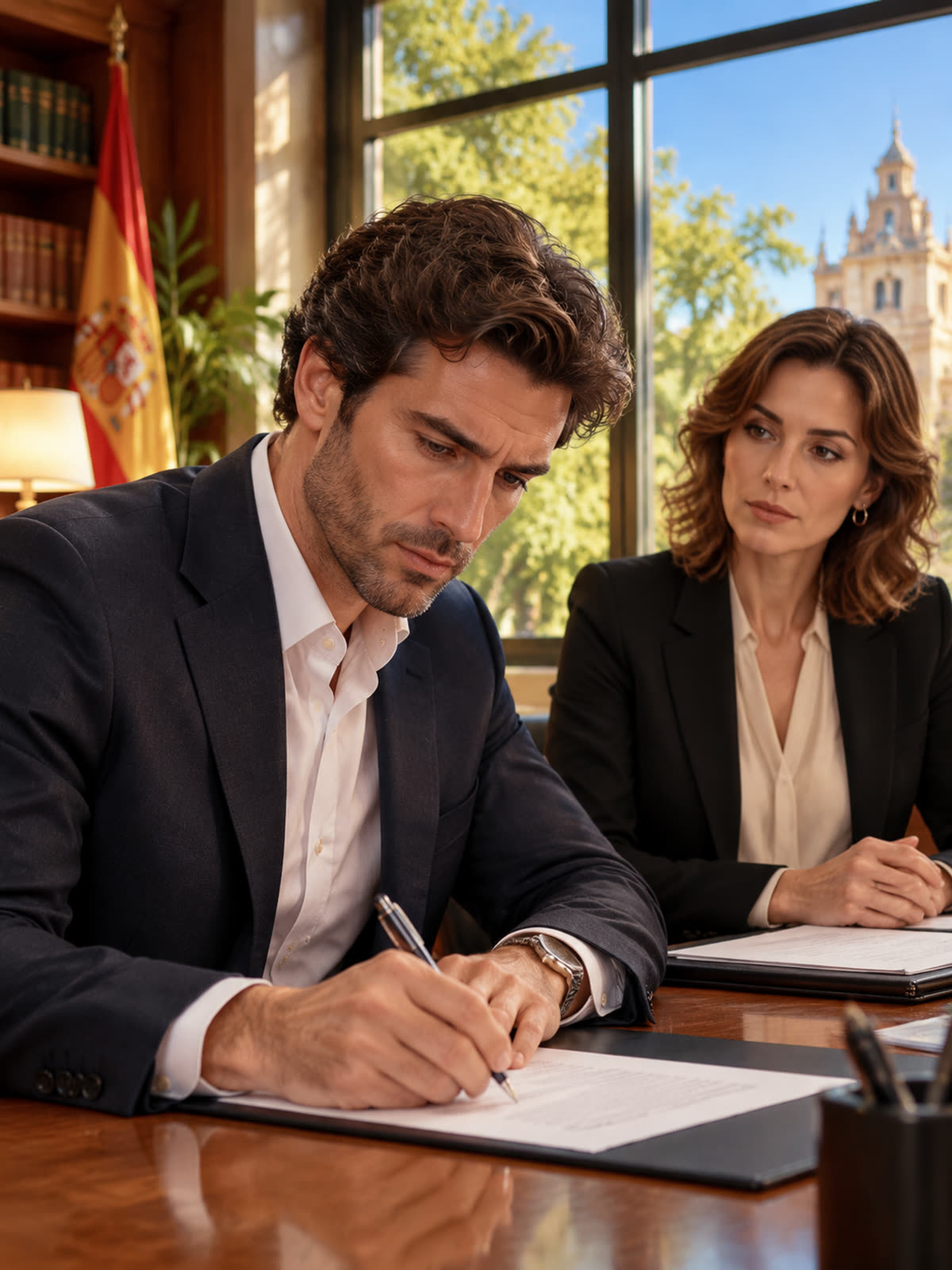
I read the entire folder before signing a written commitment to honor those arrangements, while Isabel dealt with the proper legal procedures for Mateo’s welfare. She studied me. “You understand that rebuilding trust could take years?” “Yes.” She continued, “And Mateo may not want a close relationship immediately.” “I understand.” I drew a breath before adding, “I’ve already lost seven years. I’m not going to make things worse by demanding something he isn’t ready to give.” Signing the commitment meant accepting that discovering the truth did not give me the right to decide how quickly my son should welcome me.
That evening, I asked my mother to come to my house. I arranged the evidence on the table: the hospital record, the preserved messages, Marco’s statement, and the photographer’s receipt. She went through them without speaking. By the time she reached the receipt, her hands had started trembling. The signature she saw was her own, and nothing she said about other people could change it. “Adrián, I only wanted what was best for you.” It was the explanation she offered after the records and statements had left her with so little room to deny what she had done.
“You destroyed my marriage because you didn’t approve of Valentina’s family.” My mother answered, “She wasn’t suitable for you!” I looked at her. “She was my wife,” I replied. “And she was carrying my child.” She turned her eyes away. I continued, “You knew the photograph was misleading. You knew she’d tried to tell me about the pregnancy. And you kept us apart.” At last, she whispered, “Yes.” One small word acknowledged seven years of deception. It did not lessen what had happened, but she could no longer ask me to mistake it for a misunderstanding.
I told her she would no longer occupy any position on my company’s board. I also made it clear that she would have no involvement with Mateo unless his guardian and the appropriate authorities agreed that it served his best interests. “Adrián, I’m your mother!” “And Mateo is my son.” I held her gaze. “He grew up without knowing his father because of decisions we made. I won’t allow anyone to interfere with his future again.” I included myself in that responsibility. Her actions did not excuse the decisions I had made when I was Valentina’s husband.
My mother picked up her handbag. “One day you’ll understand that a mother will do anything for her child.” I shook my head. “I understand something now, Mom. Valentina did everything she could to protect Mateo. You did everything you could to control me.” She left without another answer. For the first time, I stopped treating loyalty to family as a requirement to obey without question. I had trusted my mother because she was my mother. The evidence on the table showed how much harm had followed when I allowed that trust to replace listening and judgment.
My first visit with Mateo was arranged for eleven on a Saturday. I reached Carmen’s apartment in Valencia without bringing presents. When she opened the door, she gave me the boundary plainly. “One hour,” she said. “He’s in the living room.” There was no gift I could offer that would make this simple, and no entitlement I could claim that would make him comfortable. I had agreed to begin on his terms. That meant entering a home where I was not yet trusted and accepting that the hour did not belong to me alone.
Mateo was sitting on the floor with colored pencils, drawing. He hardly raised his head. “Hello, Mateo.” He did not answer. “May I sit here?” He shrugged, and I settled on the sofa with plenty of distance between us. For several minutes, neither of us spoke. Then I noticed the picture in front of him: a small house, a garden, and a woman in the doorway. “That’s Mom,” he said, still not looking at me. I swallowed. “She was beautiful.” He nodded once and went back to coloring.
When the hour was over, I thanked Carmen and went home. I did not ask for extra time, reach for a hug, or insist that Mateo call me Dad. He had spent that hour drawing, and I had been permitted to sit nearby. That was all, and it had to be enough. Valentina had asked me not to force a place in his life. Respecting her request meant accepting an uneventful visit without trying to turn it into a scene that would reassure me at his expense.
I returned the next Saturday, and the Saturday after that. Some visits passed mostly in silence. During others, we drew, played games, or talked while Mateo explained his favorite trading cards. I listened instead of trying to make every meeting feel important. There was no single gesture that could replace the years I had missed. There were only these repeated visits and whatever he felt ready to share during them. Sometimes that meant an activity together; sometimes it meant being allowed to remain nearby while he occupied himself, without asking him for anything more.
One afternoon, Mateo challenged me to football in a nearby park. I took my place in goal, and he scored again and again. When I fell dramatically while attempting to stop a shot, he burst out laughing. It was the first time I had ever heard him laugh. The sound stayed with me after the game ended and accompanied me home. So much of my first encounter with him had been filled with tears and anger that hearing his laughter felt extraordinary, even though it came from something as ordinary as a missed save.
Still, that laughter did not mean the past had been repaired. It did not make the years disappear or answer the questions he had not yet asked me. I could be grateful for a game in the park without pretending it was forgiveness. I had promised to let him decide the pace, and that promise mattered on the easier afternoons as much as on the silent ones. For now, he was allowing me to return. The harder part would be facing whatever he needed to know about why I had ever been absent.
PART 3 — The Place He Chose to Give Me
Little by little, Carmen became less distant. At first, she offered water. Later, she offered coffee. Eventually, she asked me to stay for lunch. “Don’t misunderstand,” she warned as she served soup. “This doesn’t mean everything is forgiven.” “I know.” She made the boundary clear once more. “It’s just lunch.” I smiled. “And I’m grateful for it.” I did not try to turn her invitation into a declaration she had not made. Being allowed to remain at the table was something I could appreciate without asking her to overlook what her daughter had suffered.
Over the months that followed, I learned the small things that made up Mateo’s world. He liked football and loved drawing houses. He hated carrots. He also wanted stories about his mother. Whenever he asked about Valentina, I answered gently, telling him about her courage, her hard work, and her ability to make people laugh even when life was difficult. I never spoke badly of her. Just as importantly, I did not rearrange her story to place myself at its center or make myself look like the hero I had never been.
One Saturday, we were building a tower out of wooden blocks when he asked the question I could not escape. “Why didn’t you come when Mom was alive?” My hands went still. There was no honest way to answer by hiding behind my mother, the photograph, or everything I had learned after the funeral. Those things were part of what had happened, but he was asking about me. “Because I made a terrible mistake,” I answered. I could not expect him to trust me while offering excuses in place of the truth.
He looked up at me. “I believed something about your mother that wasn’t true. And I didn’t listen when she tried to explain.” Mateo said nothing. I added the part I needed him to understand without any doubt. “But none of that was your fault. And it wasn’t hers.” He lowered his gaze to the blocks. “Grandma says big mistakes take a long time to fix.” I nodded. “She’s right.” His question had not been an invitation to defend myself. It was a chance to tell him plainly that the failure had belonged to the adults, not to him.
Mateo studied my face. “Are you fixing yours?” “I’m trying.” He considered that answer, then passed me another block. “Help me finish the tower.” I nearly cried. It was not forgiveness, and I would not call it that simply because I wanted it. He had heard my answer and invited me to continue sitting beside him. After everything I had demanded and misunderstood years earlier, he was asking for something small and immediate: help with the tower we had already begun. I accepted the block and the chance to remain there with him.
As time passed, I began taking practical responsibility for his future. Through the appropriate legal process, I established paternity and arranged financial protection for his education and long-term care. I also worked with Isabel to address the outstanding medical expenses from Valentina’s illness. Carmen had never asked me for money. My intention was to contribute without making her or Mateo feel that support created a debt to me. Those responsibilities existed because he was my child, not because I hoped that meeting them would persuade him to feel differently about me.
The arrangements were documented and handled through the proper channels. I made one point clear: Mateo’s future would not depend on whether he chose to love me. He would have the support he deserved either way. Affection could not be a condition attached to his education, his security, or his care. Valentina had specifically asked me not to use money to demand a place in his life. Providing for him and earning his trust were different responsibilities, and I needed to honor both without pretending that one could purchase the other.
I respected the name she had given him, too. Mateo Ríos. It belonged to him and was part of the life she had built around him. I had no intention of forcing a change simply because I had finally learned I was his father. Discovering our connection did not erase the identity he already had. There were things I could now contribute and duties I could begin fulfilling, but none of that required removing the name his mother had chosen or treating the years before my arrival as though they should be replaced.
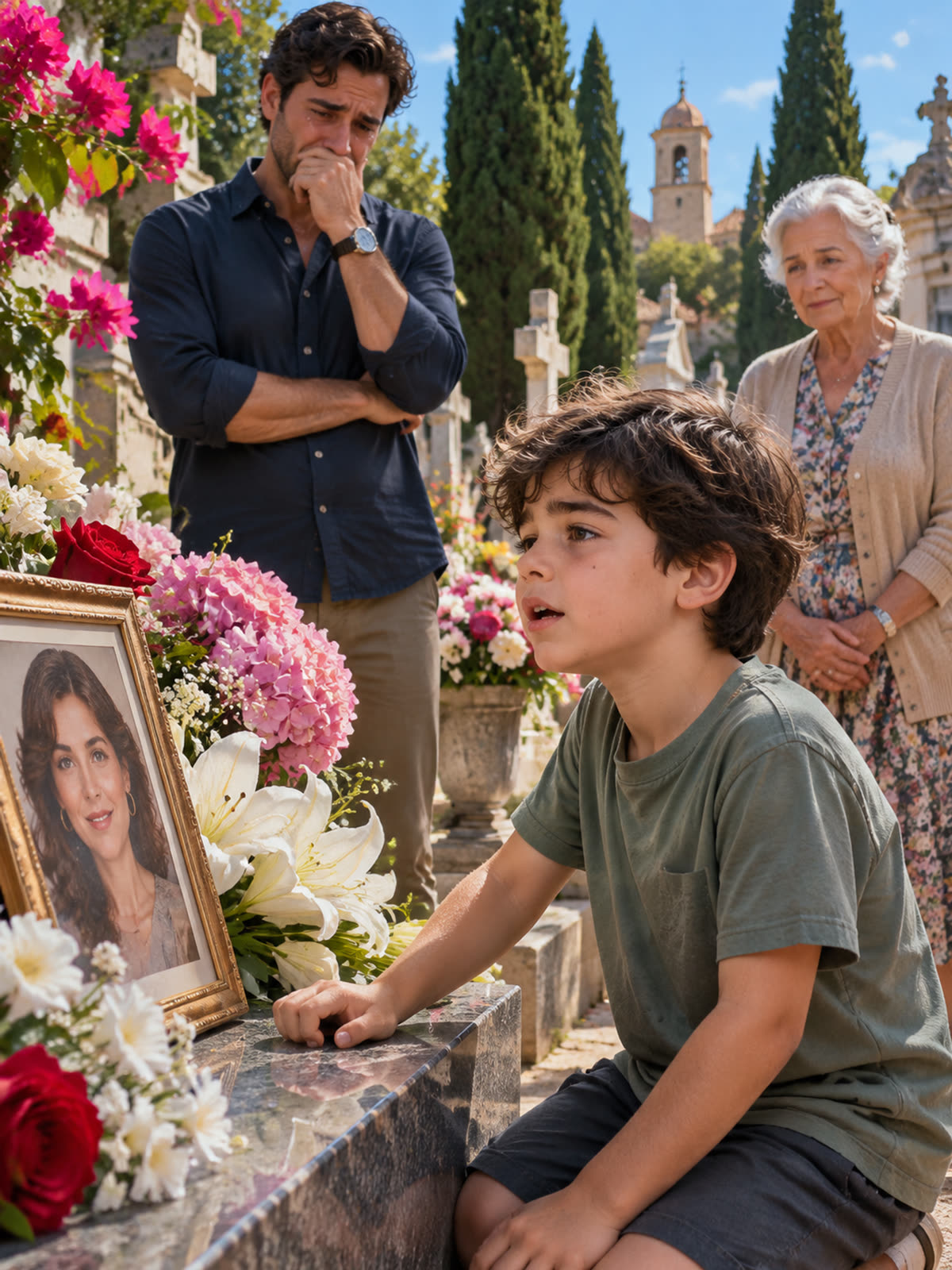
That summer, Carmen invited me to go with them to the cemetery on Valentina’s birthday. Mateo carried flowers, and I followed a few steps behind him. The visit was for his mother, just as the funeral had been, and I did not move ahead as though my presence should alter that. At the grave, he carefully set the bouquet beside her photograph. I watched him make that small offering to the woman who had raised him, the woman whose final letter had taught me that being allowed near him was something to earn.
Then Mateo spoke to her. “Mom, the Saturday man came too.” I froze. The Saturday man. That was the name he had found for me. I was no longer simply a stranger or an enemy, though I was not yet his father in the way I had once imagined I might become. I was the person who arrived on Saturdays. Somehow, that modest description mattered more than anything I had accomplished in business. It came from what he had actually experienced of me, not from a title I had told him he should use.
Later, Carmen shared something Valentina had not written in her letter. “She never spoke badly about you to Mateo,” she explained. “She wanted him to decide what he thought when he was older.” I lowered my eyes. “She deserved better than what I gave her.” Carmen nodded. “Yes.” I did not argue or soften the statement with another explanation. Then she added, “And Mateo deserves honesty.” “I know.” There was no comfort in pretending I had been better to Valentina than I was. Honesty meant allowing that truth to stand without asking Carmen to make it easier.
Our visits gradually grew longer. Some afternoons were spent playing football; others passed with books or with Mateo drawing while I sat nearby. I stopped treating the words he used for me as a measure of how well things were going. Instead, I noticed whether he seemed comfortable when I arrived, whether he laughed, whether he wanted me in a game, and whether he trusted me enough to talk about his mother. Those things told me more than a title could. They came from his own willingness rather than from anything I could request.
I could not change the first seven years of his life. Nothing I arranged afterward could place me inside the childhood moments I had already missed. But the years ahead still required choices from me. I could listen where I had once refused to listen. I could accept a boundary without treating it as rejection. And I could keep arriving without making every visit a demand for proof that I had been forgiven. What I had learned about being his father was beginning with ordinary behavior, repeated often enough that he could judge it for himself.
A year after Valentina’s funeral, Mateo turned eight. Carmen arranged a small celebration in her garden, with paper decorations, lemonade, a homemade cake, and several children from his school. I came at the time we had agreed upon. As always, I knocked and waited until Carmen welcomed me inside. Mateo was already occupied with his friends. I stood near the garden fence, unsure where to sit. It was his birthday, and I did not want to make my uncertainty something he had to manage or intrude on the celebration Carmen had prepared.
Then he did something I will remember for the rest of my life. He walked over to the table and picked up an empty chair. He dragged it across the patio and positioned it beside his own. Then he looked directly at me. “Sit here, Adrián.” For a moment, I stopped breathing. Adrián. He had never called me by my name before. For months, I had been the visitor who appeared on Saturdays. Now, without being prompted by anyone, he had chosen where he wanted me and made a place for me himself.
Carmen watched from the kitchen doorway. She said nothing, only smiled faintly before returning inside to fetch more plates. I went toward the chair. “Thank you, Mateo.” He shrugged. “It’s my birthday. You can sit here.” I sat beside him. He had offered the invitation in his own uncomplicated way, and I did not ask him to make it mean anything more out loud. The chair was next to his because he had put it there. For once, there was no uncertainty about whether I was taking a place that had not been offered.
We ate cake and drank lemonade. Later, we played football in the garden, and I lost again. Mateo laughed so hard that he nearly dropped the ball. For the first time in years, I felt something I had stopped believing I deserved: a place in a family. It was not a return to the family I had broken, and it did not undo what had happened to Valentina. It was the place this child had chosen to give me, on his birthday, after a year of being allowed to decide for himself.
I thought of Valentina, the letter she had left, and the photograph that had separated us. I thought of the years I had wasted believing a lie instead of listening to the woman I loved. I would never receive her forgiveness. I could not undo the pain I had caused or restore the childhood moments Mateo and I had missed. But I could keep honoring her request through patience, respect, and the willingness to earn my place rather than insist upon it. That responsibility remained even in the happiness of sitting beside him.
The first time Mateo saw me, he stood before his mother’s coffin and ordered me to leave. One year later, he placed a chair next to his own and invited me to stay. I had once believed money and success could provide everything important. Yet nothing I had gained through business compared with that simple wooden chair beside my son. Its meaning was not in the chair itself, but in the choice he had made. I had not purchased it, demanded it, or persuaded anyone to give it to me.
At last, I understood that fatherhood was not a title I could claim and expect him to honor. It was the act of showing up again and again until the child who had once feared me could trust that I would remain. The chair was an invitation, not an ending to that work. I had been given a place beside him, but what mattered was what I would do with it. And the next Saturday would ask me to prove, all over again, that he had been right to let me stay.
Disclaimer: This story is a work of fiction inspired by real-life themes. Names, characters, places and events are fictionalized, and any resemblance to real persons is purely coincidental. Images are for illustration purposes only.
