

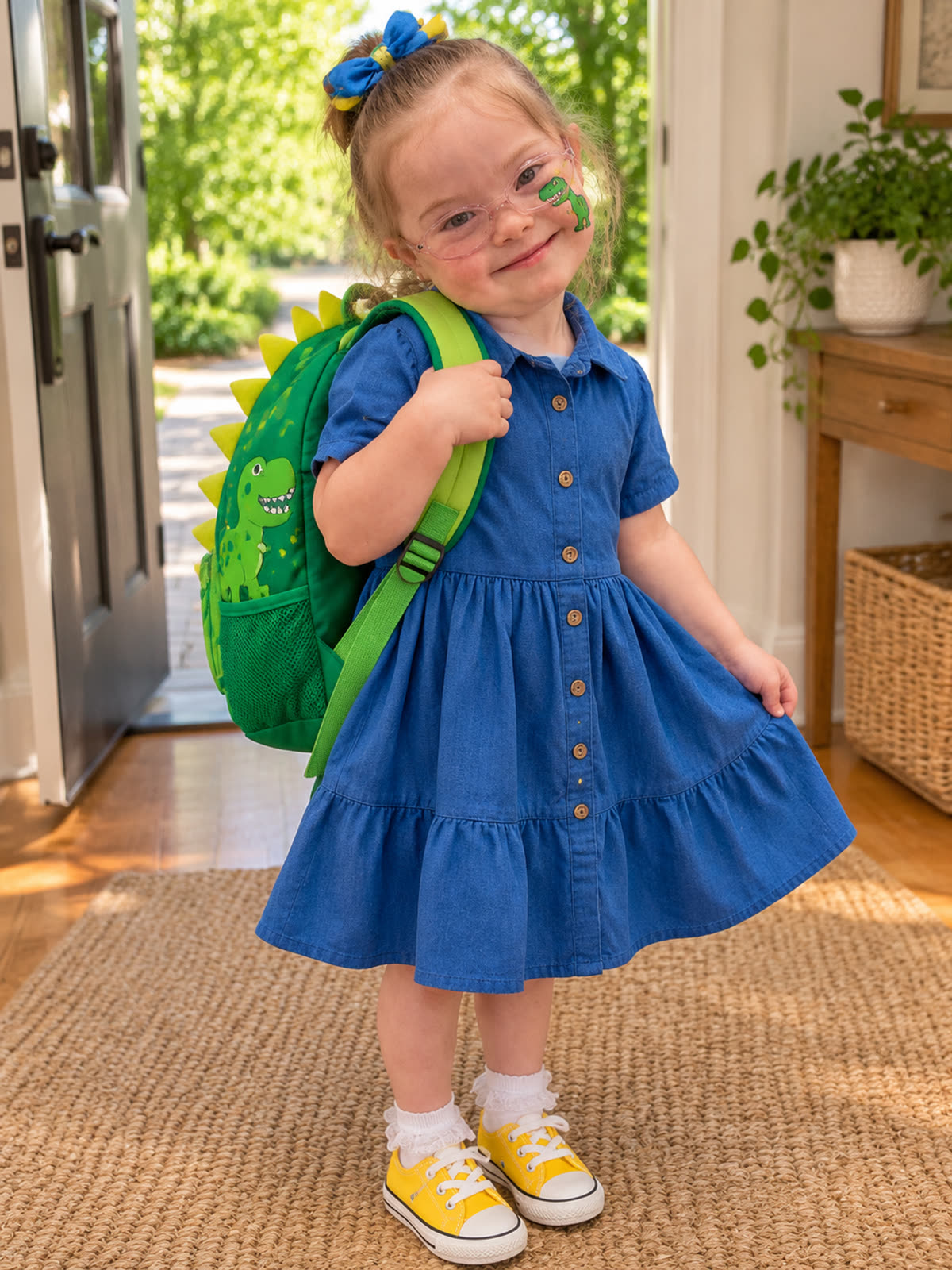
PART 1 — The Butterfly She Was Refused
I arrived at my daughter’s school prepared to hold her teacher accountable for what she had said. I imagined hearing excuses, perhaps followed by an apology. What I never anticipated was the conversation my daughter and I would have afterward. Victoria was six years old and had Down syndrome. Letting her begin first grade had been among the most difficult decisions I had ever faced. I wanted her to experience everything school could offer, yet sending her through those doors meant accepting that I could not be beside her every moment.
Each afternoon, I returned to the same questions. "Did anyone tease you today?" "No, Mommy." "Was everyone nice?" "Yes!" "Promise you’d tell me if someone was mean?" "I promise!" Her answers reassured me, and I held on to them. At the time, I had no idea how quickly that last promise would matter. During those first two lovely weeks, she arrived home with a smile, eager to share her drawings and tell me about her friends. I began allowing myself to believe that the beginning I had worried about so much was going well.
Then, one afternoon, she was quieter than usual. "How was school, sweetheart?" "Good." "Did you play with Lily?" She nodded. "What about Emma?" "She said my shoes were funny." I looked at the bright yellow sneakers Victoria loved. "Funny how?" "Because nobody else has yellow ones." The shoes had not changed, but the way she spoke about them had. "Did that upset you?" "A little."
"Would you rather wear your white shoes tomorrow?" She lowered her gaze. "Maybe." "But you love your yellow shoes," I said. "I know." "Then why not wear them?" Her fingers worried at a shoelace. "Emma said princesses don’t wear yellow shoes." "Well, princesses can wear whatever they want." "Even dinosaurs?" I laughed. "Especially dinosaurs." For a moment she smiled, but then her eyes dropped again.
"Will Emma still play with me?" I paused before answering. "Of course she will, sweetheart." "Promise?" What I wanted was to promise that nobody would ever make her feel small again. Instead, I indicated her white sneakers. "Maybe try these tomorrow. Just until everyone gets to know you better." Victoria nodded. I believed I was offering protection, a simple way to spare her another uncomfortable afternoon. I did not stop to consider what I was encouraging her to set aside.
The following morning, she put on the white shoes. I took that as a small problem successfully avoided. What escaped me was that her favorites were no longer the shoes she reached for. I had been so focused on helping her get through school without being hurt that I failed to question the solution I had suggested.
Then the school held its first festival. I had been home for less than an hour when Principal Harris telephoned. "Mrs. Parker? Victoria’s been crying for twenty minutes. She’s asking for you." "Is she hurt?" "Physically, she’s fine. Could you come?" I took my keys and left. The reassurance that she was physically unharmed did nothing to make those words about her crying easier to hear.
When I reached the school, children with butterflies and flowers painted on their faces were hurrying through the hallway. The festival was continuing around them, but my attention went straight to Victoria. She was standing outside the principal’s office in tears. "Mommy!" I gathered her into my arms. "Sweetheart, what happened?"
She indicated a young teacher who was painting another little girl’s cheeks. "She wouldn’t give me a butterfly." "Why not?" Victoria’s answer made my stomach sink. "She said makeup won’t make girls like me pretty." A moment earlier, I had been trying to understand why my daughter had spent twenty minutes crying. Now I knew, and knowing was worse.
"Mommy, am I not pretty? Please don’t lie." "You’re beautiful, sweetheart." "But she’s a teacher. Teachers don’t lie." I looked over at the woman. She was laughing with another child, apparently unaware of what she had left behind. Victoria was in my arms asking whether she was beautiful, while the person who had hurt her continued painting as though nothing had happened.
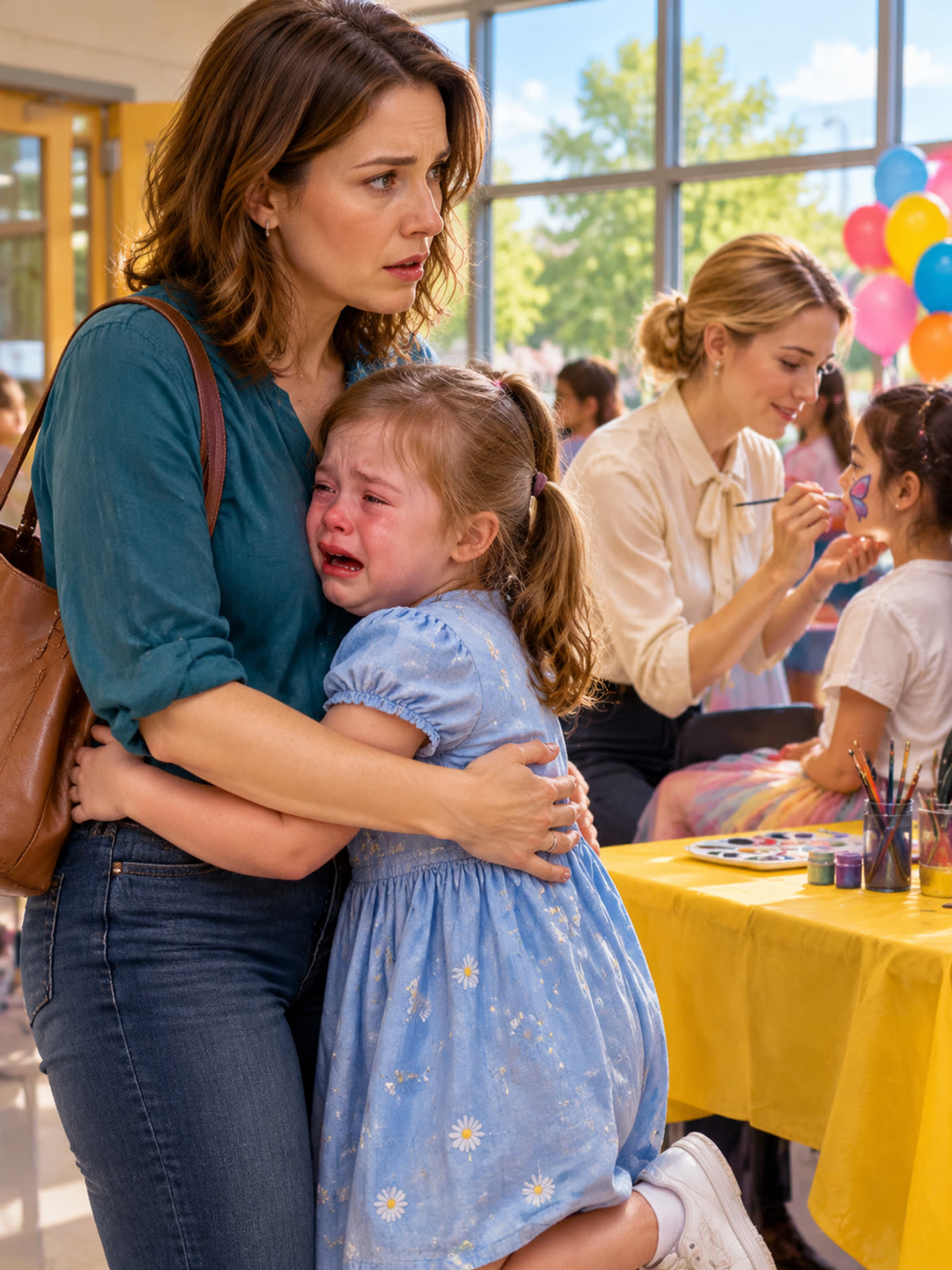
"Baby, wait in Principal Harris’s office. I’ll be right there." "Are we going home?" "We’re going to the movies. Then ice cream. I promise." "With sprinkles?" "Extra sprinkles." She hugged me before hurrying into the office. I watched the teacher complete another butterfly. She had never met me and had no reason to recognize me as Victoria’s mother. For a few minutes, I meant to leave things that way.
Before she knew who I was, I wanted to hear her explain the rules she believed she was following. But looking at that painting station brought back something I had almost allowed myself to forget. Nine years earlier, painting children’s faces at birthday parties had been how I earned my living. Back then, parents frequently arrived with instructions about what their children should become.
"Make her a princess. It matches her dress." "And what does she want?" "Does it matter?" "To me, it does." No matter what the adults requested, I had always begun with the same question for the child in my chair. "Who do you want to be today?" It had seemed obvious then that the answer belonged to the person whose face I was painting.
At one expensive birthday party, a little girl had climbed into my chair with her choice already made. "Dragon," she announced. "Green or red?" "Green. With scary teeth!" Her mother appeared behind her. "Absolutely not. She’s supposed to be a princess." "But Mommy…" "We paid for professional photographs." I looked at the girl. "How about we try the dragon first?" Her mother sighed. "Fine. But make it cute."
When I finished, the little girl roared. "Mommy, look! I’m a dragon!" Another child rushed over. "I want one too!" "Me too!" someone shouted. Before long, three children were wearing dragons. I remembered that girl’s delighted grin for years afterward. There had been nothing complicated about what had made her happy. Someone had simply listened to what she wanted.
After Victoria was born, I slowly stopped taking party jobs and eventually became a graphic designer working from home. I loved my daughter fiercely—perhaps so fiercely that my determination to protect her sometimes crowded out something else. Before first grade, I took her shopping. "Mommy! A dinosaur backpack!" "Look at this one, sweetheart. All the girls have something similar." "But this one has spikes!" "Wouldn’t you rather have the pretty pink one?" She hesitated. "Okay, Mommy." I bought matching hair bows as well.
Later, when the festival announcement came home, Victoria brought it to me. "Lily and Emma want butterflies!" "Would you like one too?" Again, she hesitated. "Maybe." "Butterflies are lovely, sweetheart." "Okay, Mommy." I had smiled, convinced that we had settled on exactly the right thing. Standing in the school hallway, I remembered my old notebook and the work I used to do. But the teacher’s words required my attention before I could linger over those memories.
I went back to Principal Harris’s office. "Mrs. Parker, is Victoria ready to leave?" "Almost. First, I’d like you to hear something." "What happened?" "Ms. Collins refused to paint Victoria’s face." "Did she explain why?" "She told my daughter makeup wouldn’t make girls like her pretty." The principal frowned. "That’s a serious allegation." "I understand. I’m not asking you to punish someone without hearing her."
"What are you asking?" "Could you come to the painting table in about three minutes? Don’t introduce me." "Why?" "I want to ask her a question before she knows whose mother I am." Principal Harris thought it over. "All right. But I’ll intervene if necessary." "That’s fair." I was not asking her to take my word in place of a conversation. I wanted her to hear what happened when Ms. Collins was asked to explain herself.
Victoria sat with the school secretary, looking at a picture book. "Mommy?" "Just a few minutes, sweetheart." "Then movies?" "Absolutely." Leaving her there, I headed back toward the festival. I had promised her a better afternoon, but before we could leave, I needed an answer. The woman at the painting table still did not know whose mother was approaching—and I was about to discover what she would say before she found out.
PART 2 — The Rules She Couldn’t Explain
Ms. Collins was cleaning her brushes when I reached the table. I kept my voice pleasant. "Excuse me," I said. "Could you paint a little golden crown on my cheek?" "On you?" "Unless you see another thirty-five-year-old princess waiting behind me." She laughed. "Sorry. This station is for children." Nothing in her manner suggested that she connected me with the little girl who had been crying outside the principal’s office.
"That’s disappointing. I’ve been practicing my royal wave." "Maybe next year." "Who makes the rules?" "The school." "And the children choose their own designs?" "Of course. That’s the whole point." I had asked a straightforward question, and she had given me an equally straightforward answer. According to her, choosing was exactly what the station was meant to allow.
"Even if you don’t like their choice?" She frowned. "Why wouldn’t I?" "Just making sure. So you wouldn’t refuse a little girl simply because she looks different?" "Absolutely not. Every child is welcome here." She seemed unaware that the assurance she had just offered was the opposite of what my daughter had experienced.
I smiled. "That’s interesting. Because a six-year-old girl asked you for a butterfly today. And you told her makeup wouldn’t make girls like her pretty." Her smile disappeared. "Who told you that?" "Does it matter?" "Children misunderstand things." "Then help me understand." The explanation I had come for was finally within reach, but already she was turning the question away from what she had said and toward the child who had heard it.
"I was explaining that appearance isn’t everything." "By telling her she wasn’t pretty?" "I never said those exact words." "What did you say?" She crossed her arms. "I told her that face paint doesn’t change how someone looks underneath." "Why would a six-year-old need that lesson?" I wanted an answer to that, not a different version of the same insult.
"She was getting upset." "Before or after you refused her?" Ms. Collins hesitated. "Look, some children need realistic expectations." My fingers tightened around my purse. "Expectations about what?" The conversation had moved from a claim that Victoria misunderstood to a suggestion that the refusal had somehow been necessary. I kept asking because every explanation seemed to reveal more.
"Victoria kept saying she wanted to look like the other girls. I was trying to explain that a painted butterfly wouldn’t change what makes her different." "And you thought telling her she wasn’t pretty would help?" "I thought it was better than giving her false hope." There it was: the reason she had chosen to give a crying six-year-old nothing instead of the butterfly she had requested.
"False hope?" I repeated. "She’s six. She wanted a butterfly." "You’re twisting my words." "Then explain them to the principal." Ms. Collins turned. "Principal Harris!" "I heard enough." The principal had arrived as agreed, and there was no longer any need for me to keep my connection to Victoria to myself.
"Nothing inappropriate." I turned toward Ms. Collins. "I’m Victoria’s mother." Her expression changed. "Oh." "Yes. Oh." "I think there’s been a misunderstanding." But I had not finished asking for an explanation. "Then explain it to both of us." Knowing who I was did not change what Victoria had heard, and it did not answer the question of why she had been refused.
Ms. Collins looked toward the principal. "I was trying to help Victoria understand that face paint isn’t important." "Then why was she the only girl you refused?" "She was having trouble following directions." "Did you tell her makeup wouldn’t make girls like her pretty?" No answer came. "Ms. Collins?" Principal Harris asked. The teacher swallowed. "I may have phrased something poorly." "Did you say it?" "Yes, but I didn’t mean…"
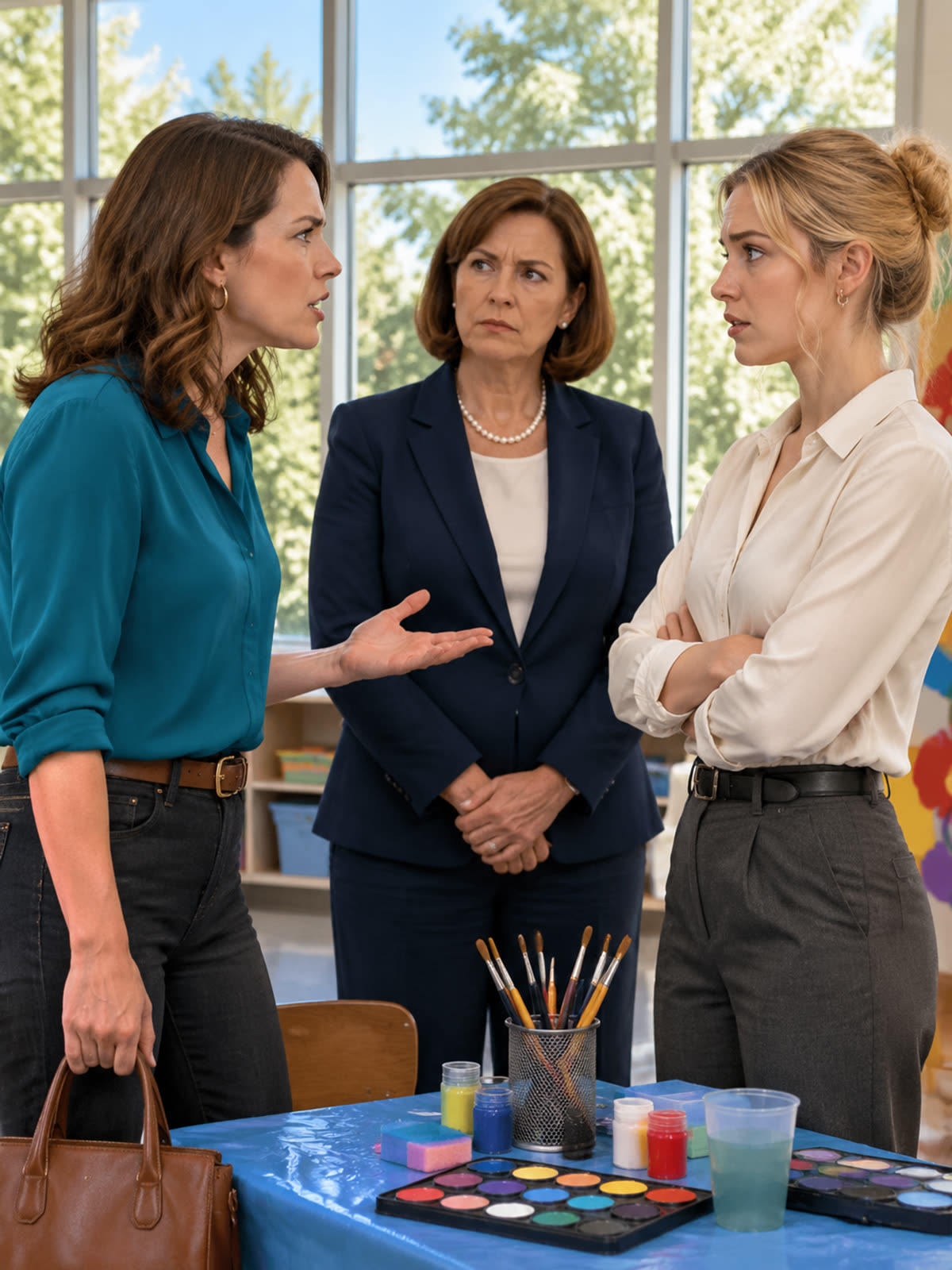
"That’s enough for now," the principal said. "Please come to my office." "But the painting station…" "I’ll arrange coverage." Ms. Collins looked at me. "I didn’t intend to hurt your daughter." "Then I hope you’ll think carefully about why you did." Her intention, whatever she claimed it had been, had not kept Victoria from crying or from asking me whether she was beautiful.
Principal Harris turned to me. "We’ll investigate this properly and follow up with you." "That’s all I’m asking. And please don’t make Victoria responsible for comforting her teacher." "Understood." For one brief, wonderful minute, I thought the worst was behind us. My daughter had told me what happened, I had listened, and the adults responsible were taking action. I let myself believe that meant the problem had been handled.
Then another little girl began to cry. "Where’s the painting lady?" "She had to leave," a staff member told her. "But I want my butterfly!" "We’re looking for someone else." "Can’t you paint it?" "I’m afraid not, sweetheart." The empty place behind the table had become a different problem, and the children waiting nearby knew only that the person painting butterflies was gone.
Victoria appeared beside me just as another girl approached. "Victoria, is the painting lady gone because you cried?" My daughter went still. "No, sweetheart," I said. "The adults needed to make some changes. Victoria didn’t do anything wrong." The girl wandered away, but the question remained with Victoria. I could see that removing the teacher had not removed everything my daughter was carrying.
She tugged at my sleeve. "Mommy, I didn’t want everyone to lose their butterflies." "Oh, honey. None of this is your fault." "But they were happy before." I looked at the abandoned brushes. After everything that had happened, there they were: the tools of a job I had once known well. I had already remembered the work, but now I realized there was something practical I could do with that memory.
I found Principal Harris. "I used to paint children’s faces professionally. Would you let me take over?" Her eyes widened. "Seriously?" "I even have a new kit in my car." "Then you’ve just saved our festival." I could not take back what Victoria had heard, but I could keep the other children from losing their turn. More importantly, I could make sure my daughter was no longer standing beside an empty table, believing she had caused it.
Ten minutes later, I was behind the table with fresh paint and clean brushes. Victoria watched from her place beside the secretary. "Come here, sweetheart," I called. "You’re first." She came over slowly. I knew how to paint the thing she had been denied, and I wanted to give it to her. "I can make you the biggest, prettiest butterfly at this entire festival."
She shook her head. "What’s wrong?" "I don’t want one." "Are you worried about Ms. Collins? She’s not coming back to this table." Victoria stared down at her shoes. I had thought the teacher’s departure and the return of the painting station would make this part simple. My daughter could finally have her butterfly, and the other children could have theirs. But she was not reaching for the chance I was offering.
"I don’t want to be pretty anymore, Mommy." I set down my brush. "What do you mean?" "Pretty makes everyone fight." "Sweetheart…" "Teacher said I’m not pretty. You got mad. Now the other kids are sad." I pulled a chair beside mine. I had come to the school certain that I understood what needed to be put right. Now my daughter was sitting beside me, and what she said next would force me to look beyond her teacher.
PART 3 — What She Had Wanted All Along
"Listen carefully. You didn’t make anyone fight. An adult said something hurtful, and another adult had to deal with it." "But…" "And you never have to earn kindness by looking a certain way." Victoria thought about that. "Can we still go to the movies?" "Of course." "Okay." She started back toward the secretary. I wanted to go after her, but another child had reached the table.
A little boy stood waiting. "Can you do tigers?" I smiled. "I can do a tiger fierce enough to scare your principal." He giggled. "Really?" "Don’t tell her I said that." Standing behind him, Principal Harris cleared her throat. "Too late." The boy laughed, and I picked up a brush. The table was open again, and this time every child who sat down would be asked what they wanted.
"Who do you want to be today?" "A tiger!" "Excellent. Stripes or spots?" "Tigers have stripes!" "Good. Just checking your qualifications." Soon another child came over. "Can I have a pink butterfly?" "Absolutely. Sparkly or plain?" "Sparkly!" "And you?" "A robot." "Excellent choice. Silver or blue?" The familiar questions returned easily. I had once understood so clearly that choosing was part of the joy.
For twenty minutes, I painted while Victoria watched without saying much. Then a little girl climbed into my chair. "I want a butterfly. Just like Emma’s." "Pink or blue?" She paused. "Emma’s is pink." "That wasn’t my question." She studied the paints. "Can I have orange?" "Absolutely." "But Emma might think it’s weird." "Then she’ll have something interesting to look at." She giggled.
When her butterfly was finished, she hurried back to her friends. "Look! I picked orange!" Victoria followed her with her eyes. "Mommy, she didn’t pick pink." "No, sweetheart." "And her butterfly is still pretty." "Very pretty." My daughter looked at the paints in front of me. The orange butterfly had caught her attention in a way my offer of a bigger, prettier one had not.
"Can I ask you something?" "Yes, baby?" "Can I choose something different?" I smiled. "Of course." "Even if nobody else has it?" "Especially then." She leaned close to my ear. "I want a green dinosaur." I blinked. "A dinosaur?" "With really big teeth." It was not another version of the butterfly I had been preparing to give her. It was something entirely different.
"What happened to your butterfly?" She twisted her fingers together. "I didn’t want a butterfly." I stared at her. "But you said…" "Because Lily and Emma wanted butterflies. And you said I’d look pretty." Suddenly, I remembered the little girl at the birthday party nine years earlier, the one who had wanted a dragon while her mother insisted on a princess.
Back then, I had wondered why that mother could not simply let her daughter choose. Now my own child was explaining that she had been afraid to tell me what she wanted. I had defended Victoria’s right to a butterfly without realizing that a butterfly had never been her choice. The teacher had been cruel, and confronting that cruelty had been necessary. But there was another conversation I had failed to have.
"I’m sorry, sweetheart." "For what?" "For forgetting to ask what would make you happy." Victoria looked down. "I thought you wanted me to like butterflies." "Sweetheart, why didn’t you tell me?" "I didn’t want you to be sad." I had been listening for stories about unkind children and unfair teachers. Somehow, I had missed my own daughter’s worry that being honest with me might make me unhappy.
"You thought I’d be sad because you wanted a dinosaur?" She nodded. "Oh, sweetheart. I want you to tell me what you really like." "Even scary things?" "Especially scary things." "And you won’t be sad?" "Not one bit." She tilted her head. "Can I still have my dinosaur?" I laughed softly. "Absolutely. How scary?" "VERY scary." "Then we’d better give him enormous teeth."
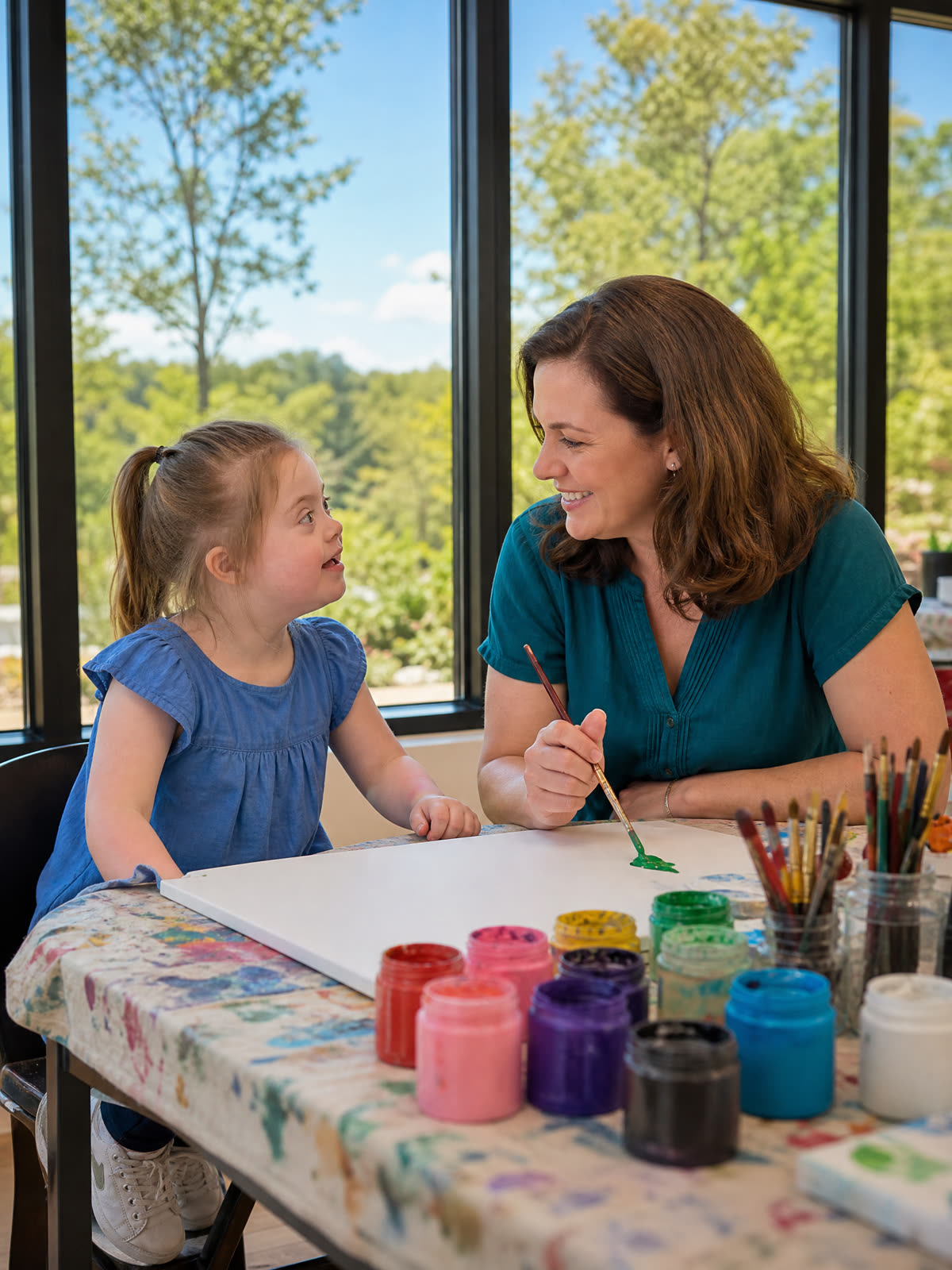
I painted a vivid green dinosaur across her cheek, complete with crooked eyebrows and a ridiculous little tail. This time, I was not choosing something I thought would help her fit beside the other girls. I was painting what she had asked for. When I passed her the mirror, she gasped. "Mommy! HE’S AWESOME!" "Does he have a name?" "Mr. Chompy!" "Of course he does." Then she roared.
A girl nearby turned around. "Victoria, what’s that?" "My dinosaur! His name’s Mr. Chompy!" The girl moved closer to look. "He’s funny. Can I have one too?" "Really?" Victoria asked. "Yeah! But mine needs purple teeth." I smiled. "Coming right up." The choice Victoria had worried might make her different was now the very thing another child wanted to try.
As I began painting, another child approached. "Can I get a dinosaur too?" Soon, three children were waiting for versions of their own. Victoria watched in wide-eyed surprise. "Mommy? They liked my idea?" "They certainly did, sweetheart." Her smile stretched so wide that Mr. Chompy wrinkled. Once again, I was remembering that birthday party and the grin of a child who had finally been allowed to choose.
Victoria examined my face. "Mommy, what do you want to be?" I smiled. "How about a queen?" She picked up a clean brush. "Then you need a crown!" A minute later, a crooked golden crown sat on my cheek. "There!" she announced. "Now we’re both pretty!" "We always were, sweetheart." I believed that would be the afternoon’s most wonderful moment. I was mistaken.
While I packed my brushes, Victoria came over carrying her jacket. "Mommy, can I ask something?" "Anything." "Tomorrow, can I bring my dinosaur backpack?" I stopped. The backpack—the one she had wanted before the school year began, the one I had persuaded her to leave at home because the other children carried different ones. The question brought me back to that shopping trip and the hesitation I had accepted instead of listening beyond it.
"Of course you can." "Even if nobody else has one?" "Even then." She searched my face. "Are you sure?" I knelt beside her. "I was wrong to make you hide the things you love, sweetheart. I won’t do that again." She touched my cheek. "You’re different too, Mommy." "Am I?" "You have paint on your nose." I laughed.
On the way to the parking lot, she slipped her hand into mine. "Mommy, can I wear my yellow shoes tomorrow?" "Of course." "Even if Emma laughs?" "Do you like them?" "They’re my favorites!" "Then that’s all that matters." She grinned. "And they match my dinosaur backpack!" For once, the thought of her standing out was something I welcomed rather than something I was trying to prevent.
After the movies, we went for ice cream. Principal Harris called. "Ms. Collins won’t return to class until we’ve reviewed what happened." "Thank you." "How’s Victoria?" I watched my daughter admiring the dinosaur reflected in the window. "Better than ever." The investigation was still in the principal’s hands. Beside me, though, Victoria was looking at a face painted with something she had chosen for herself.
"Mommy?" She tugged my sleeve. "Yes?" "Am I pretty now?" "You were always beautiful, sweetheart." She smiled. "Good. Because tomorrow I want to be a purple monster." I laughed. "Then we’ll need purple paint." This time, I did not suggest a butterfly. Tomorrow, she would step out in the things she loved—and I could hardly wait to see what she chose next.
Disclaimer: This story is a work of fiction inspired by real-life themes. Names, characters, places and events are fictionalized, and any resemblance to real persons is purely coincidental. Images are for illustration purposes only.
