

PART 1 — The Wedding That Never Happened
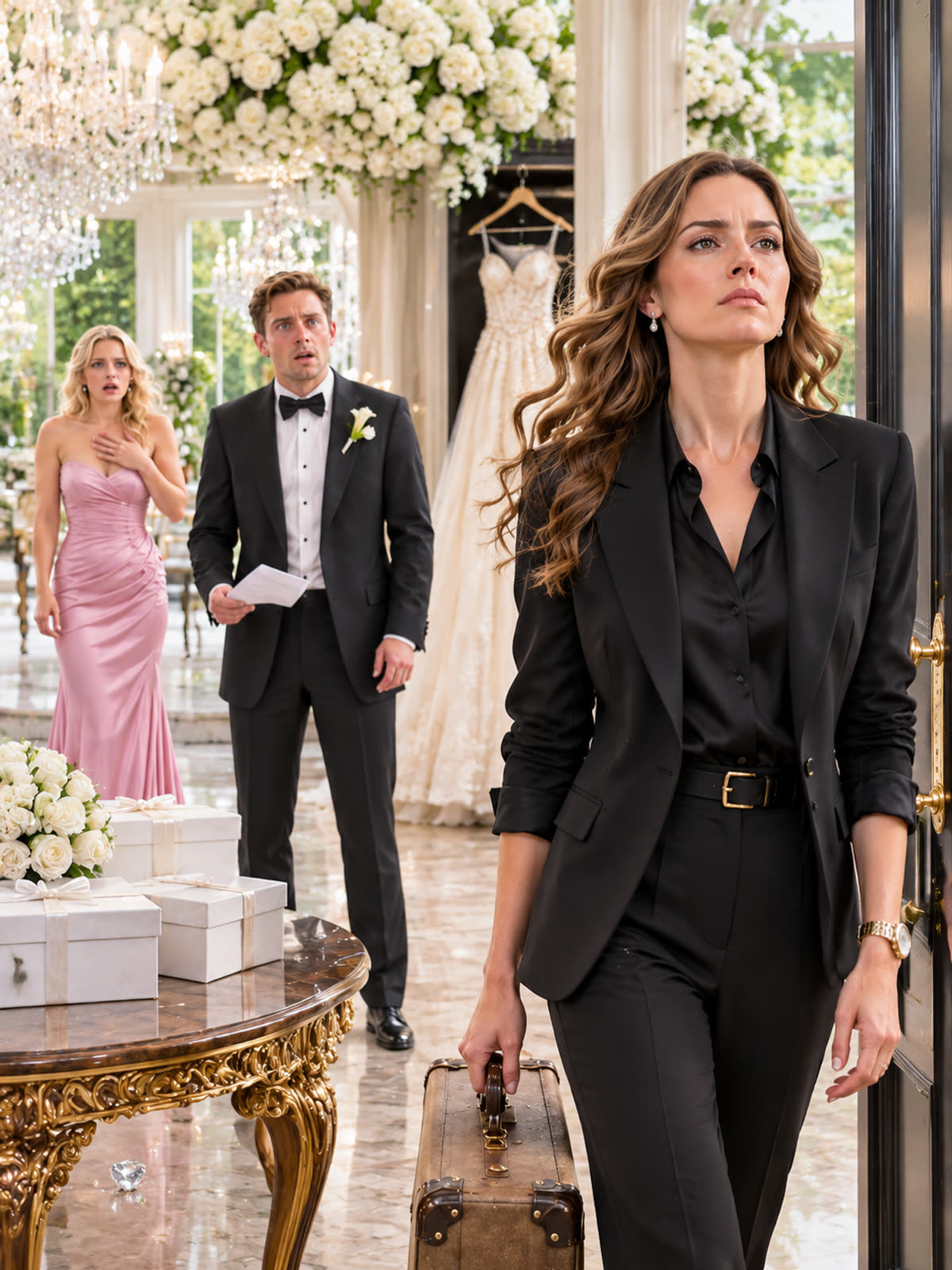
At 4:05 a.m., I was sitting by myself in a hotel room near JFK Airport, looking at the open laptop in front of me. In fewer than seven hours, I was supposed to become Ethan Drake’s wife. Five hundred people had been invited to our two-million-dollar wedding. Thousands of white flowers filled a magnificent ballroom, and my gown remained in the bridal suite two miles away, waiting for a bride who would never return to put it on. Until the night before, I had believed that dress belonged to the happiest day of my life. Now I could hardly separate the future I had imagined from the deception beneath it.
My name is Ava Montgomery. For years, I had loved Ethan, the handsome heir to one of New York’s most powerful investment families. I had stood beside him at charitable functions, business dinners, and negotiations where a careless sentence could damage a valuable relationship. I organized meetings, stayed in contact with donors, and smoothed over the trouble he left behind when he offended someone whose goodwill mattered. Ethan assumed the Drake name explained every welcome we received. It never occurred to him that I had often made the call before we arrived. I had helped build his reputation so quietly that he mistook my work for something his family had always possessed.
The previous evening, I had stopped outside a room where Ethan was talking with several people from his closest circle. The subject was our marriage, but there was nothing tender in the discussion. He was explaining how an additional five percent of Drake Capital’s voting shares could become available under his grandfather’s trust. A marriage meeting the trust’s requirements was part of the arrangement. Then I heard him put my place in that arrangement into words. “Ava is temporary,” I’d heard him say. “I just need to stay married long enough for the shares to transfer. After that, we’ll arrange a clean separation.” I remained outside, unable to move.
Every promise he had made seemed to empty itself of meaning. The wedding I had understood as the beginning of a shared life was, to Ethan, a step toward greater control of his family’s company. I was not the woman he intended to grow old beside. I was someone he expected to marry, keep for the required interval, and leave when the transaction was complete. So I packed a single suitcase, took my grandmother’s watch, and left his enormous diamond behind. I checked into a business hotel near the airport. My wedding dress stayed where it was. There was nothing left for me to do in that bridal suite.
My mother arrived at six that morning. She sat beside me and listened while I told her what I had overheard and why I had left. When I finished, she removed the corsage the Drake family had sent her and dropped it into the trash. “You’re not marrying him, Ava.” That was when I finally cried. It was not simply the betrayal that broke through me. It was the relief of being believed immediately, without a demand that I reconsider for the guests, the money, or the family’s standing. My mother did not ask me to make Ethan’s behavior easier for anyone else to accept.
At 10:03 a.m., my attorney, Daniel Wells, delivered a sealed envelope to Ethan’s suite at the Grand Monroe. It contained formal notice that I was ending our engagement, confirmation that his valuable gifts had been returned, and a statement that I claimed no interest in his family’s property. Then my phone began ringing. Ethan tried his own number, his assistant’s, and the wedding planner’s before calls started coming from numbers I did not recognize. I answered none of them. At 10:42, he left a message. “Ava, stop being dramatic. Whatever you heard, we can discuss it after the wedding. Everyone important is already here.”
I played the voicemail once, then deleted it. Even now, his concern was how the day would look to the people waiting downstairs, not what his words had done to me. At eleven, the wedding music started. Five hundred guests waited for a ceremony that would not take place. By then, I had turned back to my laptop and found a business card I had kept for six months. It belonged to Alexander Vale, the billionaire founder of Vale Meridian. I had not kept it because I expected to need an escape from Ethan. At the time, I had barely allowed myself to consider what Alexander’s offer might mean.
We had met at a museum fundraising event. Ethan had argued with a major donor over naming rights, then gone to the bar with two bankers, leaving an offended supporter behind. I spent the next forty minutes listening, changing the seating arrangement, and repairing enough of the relationship to preserve a pledge worth more than a million dollars. Alexander had watched the exchange. Before he left, he handed me a plain black card. “If you ever get tired of building someone else’s reputation, call me.” I had nearly discarded it. Instead, I put it away. Now I sent him a message: Is your offer still available? His answer came almost at once. For you? Absolutely.
That afternoon, Alexander met me in a private conference room near the airport. He came alone, without assistants, an entourage, or lawyers whose presence might make the meeting feel like pressure. He set a coffee on the table. “I heard about the wedding.” I managed a tired smile. “I imagine everyone has.” He nodded. “Probably.” I looked straight at him and made the one thing that mattered immediately clear. “If you’re offering me a position simply to embarrass Ethan, I’m leaving.” He did not bristle or try to soften my concern with flattery. “Ava, I made you this offer six months ago.”
Alexander paused before continuing. “I don’t need Ethan humiliated. I need someone who understands people, institutions, and business relationships.” Then he gave me a folder containing a formal employment proposal. Vale Meridian wanted me to establish and lead its cultural and family-office partnerships division as a managing director. I would not be someone’s assistant or an influential man’s fiancée placed beside him for appearances. The position came with a substantial budget, the authority to choose my own team, and equity participation. I studied every page. The work he described was work I understood, but the authority and recognition attached to it would finally be mine.

I called Daniel before agreeing to anything. For almost two hours, we worked through the proposal and negotiated its terms. Alexander accepted provisions safeguarding my professional independence and protecting ownership of the work I created. Those assurances mattered more to me than the salary. I had spent years watching effort disappear into someone else’s reputation; I was not prepared to repeat that arrangement under a more generous name. Shortly before four, I signed. My wedding day had become the day I accepted a different future—not one defined by whom I married, but by what I could build through my own experience and judgment.
For the following three months, I stayed away from New York. My work took me to London, Geneva, and Boston, where I renewed professional relationships under my own name. Whenever someone brought up the canceled wedding, I gave the same answer. “My engagement ended. I’ve accepted a new professional opportunity. I prefer to keep the personal details private.” I did not owe every acquaintance an account of what I had heard outside that room. There was work to do, and for the first time I could give that work a name that was not tied to Ethan’s position or his expectations.
Ethan showed no such restraint. First, he told mutual friends I had lost my nerve about getting married. Then he suggested the pressure of the wedding had left me emotionally unstable. When that version failed to settle the questions, he said I had abandoned him deliberately so I could work for his rival. Daniel kept a record of every accusation. I did not answer in public. My attention belonged to the professional identity I was establishing and the independent future taking shape around it. Ethan could keep changing his explanation. I had no intention of spending my days correcting a man who had already shown me what he believed.
The most significant opportunity at Vale Meridian involved the Halston Museum. The institution was reorganizing its investment partnerships and considering a transaction connected to a valuable commercial archive. Drake Capital had been pursuing the opportunity for months. Ethan regarded his family’s history with the museum as a guarantee that the business would come to him. The trustees, however, remembered more than his surname. They remembered late arrivals, interrupted curators, dismissed concerns, and charity events he treated as a stage for his own importance. They also remembered who had stayed behind when a dinner ended badly and someone still needed to make things right.
They remembered me: the woman who followed through on promises, resolved disagreements, and treated employees with the same consideration she gave donors. When Vale Meridian entered the competition, I established a firm boundary. We would use no confidential material belonging to Drake Capital. Daniel examined every file I had retained, and anything belonging to Ethan’s company remained behind. I was not taking documents that were not mine. But my experience, my judgment, and the relationships I had built were not possessions Ethan could keep simply because I had once intended to marry him. Those belonged to me, and I was finally using them openly.
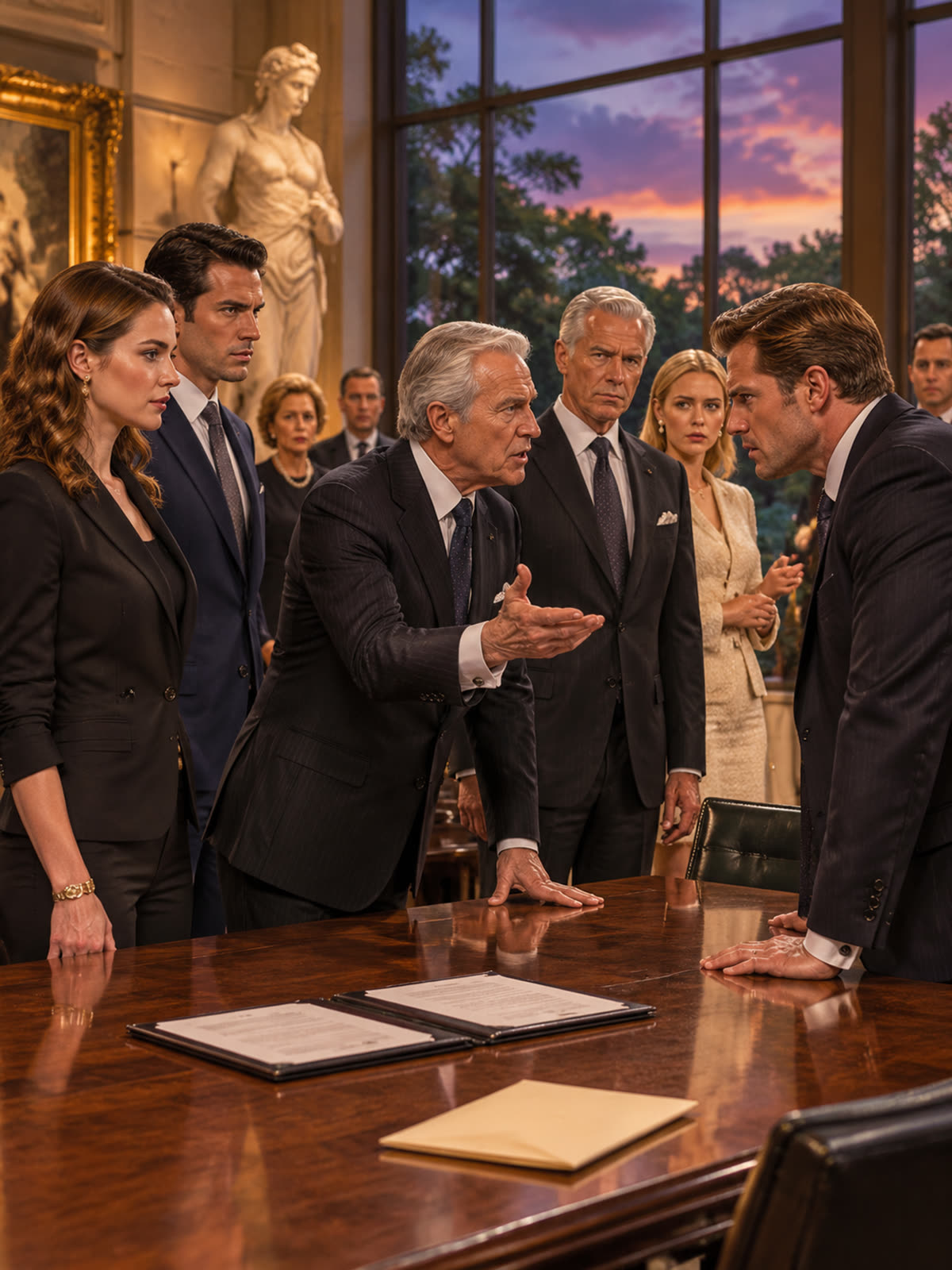
Three months after the wedding that never happened, Alexander and I attended a private dinner at the Halston Museum. Executives, trustees, and investors filled the room. Ethan stood near the fireplace, with Brooke beside him. She had belonged to his inner circle throughout our engagement. Now neither of them made any effort to conceal their relationship. When Ethan saw me, his expression shifted. I wore a tailored black suit and my grandmother’s watch. There were no Drake diamonds, no borrowed family jewels, and nothing chosen to announce my connection to him. I had entered that room in my own professional capacity.
Alexander set a folder on the long walnut table. The museum chairman looked toward Ethan. “Mr. Drake, I suggest you read page seven.” Ethan opened the document and began moving his eyes down the page. Then he stopped. I had spent years anticipating the moments when he would need me to step in, explain an omission, or make an uncomfortable exchange easier. This time, I remained where I was. Whatever he had expected to find in that folder, his expression made clear that he had found something else. He was still staring at page seven when the consequences of my new life finally reached him.
PART 2 — The Documents on the Table
The museum’s selection committee had chosen Vale Meridian as its preferred partner. With final execution still to come, the transaction was proceeding without Drake Capital. Ethan looked stunned as he read the decision he had believed his family’s influence would make impossible. “This can’t be right.” The chairman answered without agitation. “The decision was finalized this afternoon.” There was no uncertainty in his response and no suggestion that Ethan’s disbelief could reopen the process. The opportunity he had treated as an entitlement had been considered, evaluated, and awarded elsewhere. Standing across from him, I watched him struggle to accept that his expectation had never been a promise.
He turned toward me. “Ava, what exactly are you trying to do?” “I’m doing my job.” He slammed the folder onto the table. “You had access to Drake Capital’s confidential information. If Vale Meridian used our material, this entire process is compromised.” Before I could respond, Daniel stepped forward. “No proprietary Drake information was used.” Ethan stared at him. Daniel continued, explaining the review we had completed before I joined the firm. “Before Ms. Montgomery joined Vale Meridian, my office reviewed and documented every file she retained. Her materials were either personal property or work she independently created.”
Ethan’s jaw tightened. “You expect me to believe this was all coincidence?” I held his gaze. “No, Ethan. I expect you to understand that other people are allowed to compete with you.” He offered no answer. The distinction seemed to be one he had never expected to confront: I had not taken something from him simply by succeeding without him. He had lost a competitive process, not ownership of a person who had once helped him win. Yet the museum decision was not the final matter waiting on the table. Daniel was carrying a second envelope, and its contents concerned something quite separate from the transaction.
Daniel put the envelope down. I recognized the seal of the Drake family trustees. Charles Drake, Ethan’s father, had just entered the room, and the sight of it altered his expression. “Where did you get that?” “Directly from the trustee’s office,” Daniel replied. Ethan looked from the envelope to Daniel. “What is this?” The business disappointment had already unsettled him, but this document reached into a different part of his plans. It concerned the trust established by his grandfather—the arrangement that had given our marriage a value Ethan had been willing to discuss with everyone except the woman he intended to marry.
Daniel explained the provision involving additional voting shares in Drake Capital. Ethan had spent years working toward those shares. A qualifying marriage could eventually make him eligible to receive another five percent, but eligibility was not unconditional. The trustees retained authority to withhold a transfer if the marriage existed primarily to manipulate corporate control or involved a material misrepresentation. Ethan had apparently failed to account for that restriction. As Daniel described it, he went completely still. The marriage he had treated as a convenient route to influence was subject to scrutiny by people who were not obliged to accept his explanation of his intentions.
After the canceled wedding, information had reached the trustees that raised concerns. One of the groomsmen had contacted their legal representatives. He had been present for the conversation I overheard and was worried that remaining silent might draw him into a future legal dispute. There was also a recording. Earlier that evening, the bridal lounge had served as a meeting space for an event-planning session. A ceiling microphone connected to the conference system had remained active afterward. When Daniel requested that relevant evidence be preserved, the hotel retained the recording. I had not known it existed when I packed my suitcase and left.
The trustees had listened to Ethan himself. They had heard, “Ava is temporary.” They had heard, “The trust requires me to stay married long enough for the voting shares to transfer.” And they had heard, “After that, we’ll figure out a clean exit.” There was no need for them to rely solely on my account of what had happened outside that room. His own words explained the arrangement he had imagined. The envelope contained formal notification that the trustees had opened a review. Any prospective transfer connected to the marriage provision was suspended while that process continued. The five percent he had pursued was no longer assured.
Ethan stared down at the notice. His father turned toward him. “You discussed the family trust in a hotel lounge?” Ethan pointed at me. “She planned this!” I shook my head. “I didn’t even know that microphone existed.” He gave a bitter laugh. “Of course you didn’t.” I met his eyes directly. “Ethan, I didn’t need a recording to leave you. Hearing you say those words once was enough.” The recording mattered to the trustees and their review. It had never been what gave me permission to end the engagement. I had already heard the truth before anyone placed it in a legal file.
Brooke took a quiet step backward. Ethan noticed immediately. “Don’t,” he muttered. She did not answer. For the first time, she appeared to be considering what his promises might mean if the additional shares never arrived. Charles opened the envelope and read the documents, his expression hardening as he went. The museum chairman asked Ethan to leave the dinner. Ethan refused. Instead, he accused the trustees of favoring others, accused Alexander of conspiring against him, and insisted that I had stolen relationships belonging to Drake Capital. Even then, with his own intentions laid out before him, he spoke of people as possessions someone else had taken.
The chairman finally cut across the accusations. “Mr. Drake, relationships are built on trust. People are not assets your company owns.” Silence followed. Ethan looked around the room for someone willing to defend him, but no one spoke. There was no argument I needed to finish and no insult I needed to answer. The people present had heard enough to form their own judgments. Eventually, Ethan left with his father. Brooke followed several moments afterward. I watched them go, then turned back toward the conference table. For years, his mistakes had become my responsibility to repair. This time, I would not follow him out to begin the work.
Six weeks later, the Halston Museum transaction closed. Vale Meridian secured the partnership. Drake Capital did not collapse, and Ethan did not lose everything in a single evening. What happened was less theatrical and more lasting than that. He lost a deal he had believed was guaranteed. The additional voting-share transfer remained under review. Several important charitable organizations began dealing with senior Drake executives directly instead of working through him. His father removed him from two prominent client-facing responsibilities. The consequences did not erase his wealth or his surname, but they did challenge the assumption that either one placed him beyond accountability.
Before spring, Brooke stopped accompanying him to public events. I never asked what had happened between them. By then, my own days had become too full for me to organize them around news of his life. Vale Meridian’s new partnerships division surpassed its first-year targets. I hired talented people, developed strong relationships, and negotiated transactions I could look at with genuine pride. There was satisfaction in results that could be measured, but the achievement that mattered most was simpler. My name was attached to the work. Not a family name I had nearly married into, and not a title someone else’s relationship had given me.
Ava Montgomery. Not Ethan Drake’s fiancée. Not Mrs. Drake. Not the woman quietly standing behind another person’s accomplishments. I had done work of value before leaving him, but now I could claim it without allowing the credit to disappear into his reputation. I no longer had to explain my contribution through proximity to a powerful man. The role belonged to me, and so did the responsibility that came with it. That professional independence was not a consolation prize for a marriage that had failed to happen. It was a future I had been capable of building before I understood how much I needed it.
Throughout that first year, Alexander remained a supportive colleague. He respected my decisions and never pressed me to revisit the canceled wedding when I did not want to discuss it. He did not describe himself as the man who had rescued me. That mattered. I had accepted an opportunity, negotiated its terms, and done the work required to make it succeed. Alexander recognized those things without turning them into a debt I owed him. His support did not come with an expectation that I would surrender the independence the position had allowed me to establish. The distinction became clearer the longer we worked together.
We did not agree about everything. Sometimes we argued over professional decisions. Sometimes I changed his mind; sometimes he changed mine. But disagreement never meant that my judgment counted for less because I was not the wealthiest person at the table. He listened to what I was saying rather than waiting for me to accept his authority. I learned to trust that difference through repeated experience, not through a reassuring speech delivered when he wanted something. Our working relationship developed through the ordinary demands of business, including the moments when cooperation required more than being pleasant to each other.
Nearly a year after I joined Vale Meridian, Alexander invited me to dinner. It was not a meeting disguised as an evening out or a conversation about a client that happened to take place over a meal. He was asking for a real date. I declined. He accepted my answer without debate, persuasion, or an attempt to make me responsible for his disappointment. He did not ask me to justify the decision until it became one he approved of. After everything I had experienced with Ethan, the absence of pressure was not something I overlooked. It was another action that matched the respect Alexander had consistently shown me.
For so long, a relationship had meant accommodating someone else’s expectations before I had fully considered my own. Now, even the right to say no without an argument felt important. Alexander had offered me work because he valued my ability. He had respected the boundaries Daniel and I negotiated. In the office, he had accepted disagreement without treating it as disloyalty. When I declined dinner, he accepted that answer too. None of those moments required a grand declaration. Taken together, they showed me a kind of regard I had not experienced with Ethan: respect that did not depend on my giving the response a man wanted.
Three months passed before Alexander asked again. By then, he had already demonstrated that my refusal would not cost me his professional respect or alter the value he placed on my work. The choice was mine in a way I had come to understand far more clearly since leaving Ethan. This was not an offer of rescue, and it was not a transaction I needed to accept to preserve the future I had built. It was an invitation from someone whose actions I had been able to observe over time. This time, when he asked me to dinner, my answer would be different.
PART 3 — The Future That Belonged to Me
That time, I said yes. Our relationship moved slowly, without the rush to turn affection into an announcement or a promise into a public event. We traveled together when work allowed it, spent quiet weekends visiting my mother, and learned to enjoy ordinary time in each other’s company. There was no need to make every shared moment evidence of a successful arrangement. What developed between us was not built around the advantages of being seen together. It grew through the way we treated each other when there was nothing to negotiate and no audience to impress.
Alexander did not try to win my confidence by describing everything he could provide. He let his actions establish who he was. He respected my work, my friendships, my independence, and my right to hold an opinion different from his. That respect did not vanish when it became inconvenient. I had heard promises before, and I no longer confused their beauty with proof that they would be kept. With him, I could see consistency between what he said and how he behaved. For the first time, I understood partnership as something other than making myself useful enough to remain beside someone powerful.
Two years after I left Ethan’s engagement ring on the floor of a hotel closet, Alexander asked me to visit my mother’s garden. The afternoon was quiet. Flowers were in bloom, and my mother had prepared tea. Nothing about the setting resembled the grand wedding preparations I had once mistaken for certainty. Alexander, however, seemed unusually nervous. I noticed at once. “What’s wrong?” He smiled. “Nothing. I just have something to ask you.” Then he brought out a small velvet case. Before opening it, he held out something else: my grandmother’s watch.
Months earlier, I had mentioned that the clasp was damaged. I seldom wore the watch anymore because I worried I might lose it. Alexander had remembered and quietly arranged for a specialist to repair it. I stared at the familiar watch in his hand. “You remembered?” “Of course.” The answer was simple, but so was the thing I had told him. It had not been a request for a grand gesture or an object chosen to demonstrate what he could afford. It was something important to me that he had listened to, remembered, and taken care of.
The watch had been one of the few possessions I carried away when I left Ethan. It belonged to my life before that engagement, and it had remained mine afterward. Seeing it repaired meant more than receiving something expensive ever could. Alexander had paid attention to the reason I was afraid to wear it. He had not replaced it with a newer possession or treated its value as something that could be measured by size or price. He understood that I wanted to keep this watch, with its meaning intact, and that was what he had made possible.
Then he opened the velvet case. Inside lay a simple, beautiful ring, nothing like the enormous diamond Ethan had given me. Alexander took my hand. “Ava, I want to build a marriage with you. Not a business arrangement.” Tears filled my eyes. The difference between those two things was no longer an idea I had to struggle to explain. I had lived inside one disguised as the other. Now I was standing with a man whose conduct had already shown me what he meant by building a life together.
He continued before I answered. “And if your answer is no, nothing about how much I respect you will change.” I laughed through my tears and nodded. “Yes.” He looked almost surprised. “Yes?” “Yes, Alexander.” He smiled. For the first time in years, I felt entirely certain about a future I was choosing. Not because uncertainty had somehow vanished from life, and not because a ring could guarantee happiness, but because the choice was mine. I was not being asked to surrender the person I had become in order to be loved.
We married quietly, with the people who genuinely cared about us around us. There was no elaborate announcement meant to reassure investors or impress acquaintances. No extravagant performance was needed to make the marriage appear valuable. We had love, respect, and a promise we both intended to keep. After everything that had happened, the simplicity did not feel like an absence. It allowed the meaning of the day to remain where it belonged. Our marriage was not evidence of a business strategy, an inheritance plan, or a successful public image. It was a commitment between the two of us.
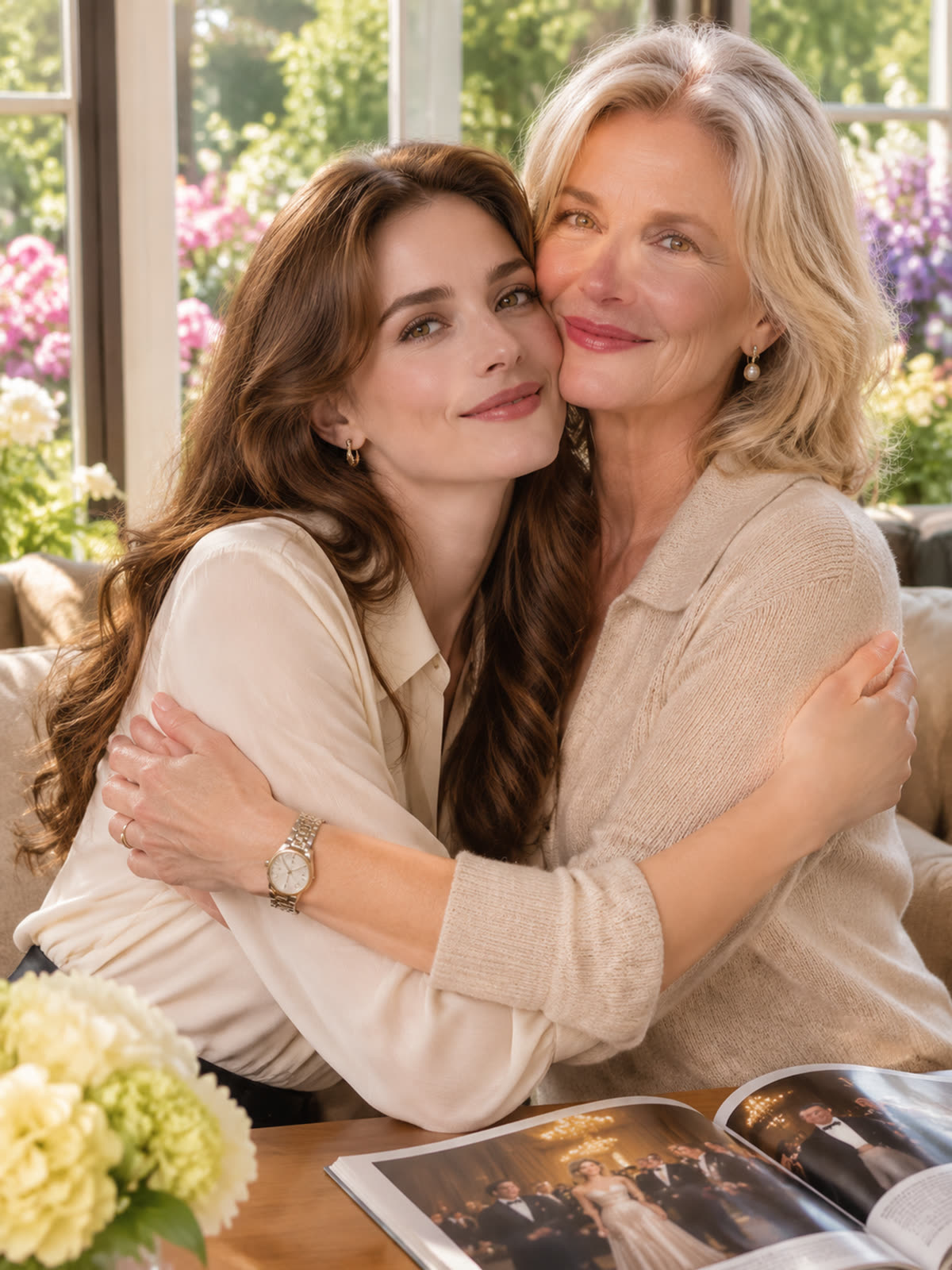
Months later, a photograph taken at the Halston Museum anniversary gala appeared in a society magazine. The headline called me “Vale’s Queen.” At first, I disliked it. The phrase made it sound as though my life could still be explained by attaching my name to a wealthy man’s. It seemed to reduce everything I had worked for to a change in husbands, as if I had merely traded one powerful connection for another. The title on the page could not show the negotiations, decisions, and work through which I had established a professional identity of my own.
My mother laughed when she saw the article. “They’ve misunderstood everything,” she said. I raised an eyebrow. “How?” She smiled. “You built your own kingdom, sweetheart. Alexander was simply wise enough to stand beside you.” I hugged her and realized she was right. Being loved by Alexander had not created my ability, any more than being betrayed by Ethan had taken it away. I had brought my judgment, experience, and determination into both chapters of my life. The difference was that I now stood beside someone who recognized those things without needing to make them his.
Several months afterward, I returned to the Halston Museum for another meeting. As I crossed the lobby, Ethan approached from the other direction. We stopped. Neither of us spoke at first. He looked older and less assured, although he was still unmistakably the man I had once expected to marry. His eyes moved toward my left hand, and he noticed my wedding ring. It was smaller than the diamond he had given me. Of course, that was something he noticed. Even before he said anything, I recognized the measure by which he was looking at it.
“I heard you married Alexander Vale,” he said. “I did.” He gave a faint smile. “You always knew how to land on your feet.” Two years earlier, the remark would have hurt. I would have heard the familiar suggestion that my security and success were gifts bestowed by the powerful man beside me. I might have felt compelled to explain my work, defend my decisions, or persuade Ethan that he had misunderstood me. Standing in the museum lobby, I realized I no longer needed him to understand. His opinion had ceased to determine anything important about my life.
So I smiled. “I was standing perfectly well when I left you, Ethan.” Then I walked past him without turning around. I did not wait to see whether the words had changed his expression or whether he would offer an answer. There was nothing left in that exchange that I needed to carry with me. I had left him before I knew what Alexander’s offer would become. I had left before a new career, a new relationship, or a different marriage could promise that everything would work out. I had been standing on my own then, even while I was frightened and hurt.
Outside, Alexander waited near the museum steps, talking with my mother about dinner reservations. When he saw me, he smiled. He did not ask why I had taken so long or demand to know whom I had been speaking with. He simply held out his hand, and I took it. As we walked toward the car, I glanced at my grandmother’s watch. Once, I had thought leaving before the ceremony meant that I had lost the future I had planned. Now I understood that the future had never needed to remain inside the life Ethan intended to permit me.
I had not disappeared. I had stopped living within a story someone else had written for me. The ring I abandoned had been enormous, beautiful, and expensive. None of those qualities could make the promise attached to it genuine. The things I took away were far less impressive to look at: clothes, my grandmother’s watch, a few personal belongings, and the belief that I deserved something better. Everything fit inside one suitcase. Compared with the wealth, connections, and carefully arranged future I was leaving behind, those possessions had seemed painfully small. But every one of them belonged to me.
From those few things, I built a life with purpose, love, and independence. Not all at once, and not because a wealthier man appeared and made the difficult choices unnecessary. I ended the engagement. I made the call. I negotiated the contract, did the work, and learned to put my name beside what I had accomplished. Alexander’s place in my life mattered deeply, but it was not the source of my worth. The respect between us allowed me to remain myself. That was what made the relationship different, and what made the future we shared one I could choose without disappearing inside it.
Ethan had believed his surname made him powerful, that relationships were assets, and that marriage was another transaction he could arrange to his advantage. He had believed I would not succeed without him. He was wrong about every one of those things. Yet proving him wrong was not the greatest part of the life I built. Neither was winning the museum opportunity, seeing his inheritance placed under review, or marrying someone kinder and wealthier. If those things had been the measure of my victory, I would still have been allowing Ethan’s expectations to define what success meant.
The real victory was understanding that my value had never depended on the man standing beside me. My ability had existed while I quietly repaired Ethan’s mistakes. My worth had remained intact when I left his ring behind. The future had been mine even before I could see how to rebuild it. I had always been capable, always been worthy, and always deserved a life I could call my own. Leaving had not finished my story. It had finally given me the courage to claim whatever came next.
Disclaimer: This story is a work of fiction inspired by real-life themes. Names, characters, places and events are fictionalized, and any resemblance to real persons is purely coincidental. Images are for illustration purposes only.
