


PART 1 — THE MAN ACROSS THE TABLE
“OH, MY GOD. AUDREY, IS THAT YOUR NEW SUGAR DADDY? YOU REALLY HAD TO FIND A SIXTY-YEAR-OLD MAN TO PAY FOR YOUR DINNER?” The piercing voice cut across the elegant dining room. My fork stopped halfway to my mouth. Tessa Marlowe stood beside our table, holding the arm of Nolan Fitch, my former husband. She was the woman he had been seeing before our divorce. Nolan was smiling until my dinner companion raised his head. Then every trace of color drained from his face.
“What did you just say?” I asked. Tessa laughed loudly enough to attract the surrounding tables. “Oh, honey, don’t be embarrassed. Everybody needs a little financial assistance sometimes. But this?” Her manicured hand swept toward the man opposite me. “Honestly, Audrey. He’s old enough to be your father.” He lowered his wineglass. At sixty-four, with silver hair, a navy cashmere sweater, and a gaze capable of quieting a boardroom, Elliott Delaney hardly needed to raise his voice.
He was also my father. Dad had founded Delaney Capital & Development and remained chairman of the multibillion-dollar investment and real-estate company. Neither Tessa nor Nolan knew we were related. For nearly five years, I had kept my family’s wealth separate from my romantic life. I wanted my relationships, like my career, to exist without the Delaney name determining how people treated me. Nolan had known me as Audrey Wren, a magazine editor earning $52,000 a year.
Eleven months earlier, he had divorced me because he was tired of supporting someone who would never amount to anything. He believed my father was an unremarkable retired businessman. Tessa, with her expensive beauty clinic, represented the prosperous future he thought I could never offer. Now, in an exclusive Philadelphia restaurant, the assumptions beneath his confidence were starting to give way. Tessa, oblivious to his expression, continued addressing Dad. “Sir, I hope you know she’s recently divorced. You might want to be careful before handing over your credit card.”
“Are you finished?” Dad asked. The restrained authority in his voice interrupted her amusement. “Excuse me?” “I asked whether you were finished insulting this young woman.” “I’m just being honest. Audrey couldn’t afford a place like this on her own.” “And you are?” Before she could answer, Nolan spoke. “Mr. Delaney?” Tessa turned toward him. “Nolan, what are you doing?” He barely seemed to hear her. His attention remained fixed on my father.
“Mr. Elliott Delaney?” he repeated, his voice shaking. “Yes.” “I’m Nolan Fitch. Fitch Brandworks. We met at your company’s regional supplier conference last spring.” Recognition crossed Dad’s face. “Ah. The marketing contractor.” “Yes, sir.” Tessa looked between them, irritated by the sudden change. “Why are you acting like he’s the president?” “Please stop talking.” “Excuse me?” “Just stop.” For three years, Nolan had made me feel like someone he was embarrassed to acknowledge. Now he could not meet my eyes.
Tessa refused to let his alarm silence her. “So he’s some businessman. Big deal. That doesn’t change the fact that Audrey’s dating an older man for money.” Dad reached over and rested a protective hand on my shoulder. “Madam, my daughter doesn’t need a wealthy older boyfriend. And she certainly doesn’t need a sugar daddy.” Her expression faltered. “Your… daughter?” “My only daughter.” The room seemed to grow still around us.
Dad looked directly at Nolan. “Audrey Wren is my daughter. Her late mother’s surname is Wren. Perhaps if you’d shown some interest in your wife’s family, you would have known that.” Nolan stared at him. “Your daughter?” he whispered. “And whatever she chooses to do for a living, she’s never needed anyone to purchase her dignity.” Nolan shook his head. “No. That’s impossible.” His disbelief hurt differently from his old contempt. Even now, he struggled to reconcile the woman he had dismissed with the money he suddenly understood surrounded her.
“You lived in that tiny apartment. You wore ordinary clothes. You worked at a magazine!” “Yes,” I said. “Because I wanted to.” Tessa interrupted. “But you told Nolan you weren’t rich!” “I told him I earned my own salary. That was true.” Nolan finally addressed me directly. “Audrey, why didn’t you tell me?” “Would it have changed the way you treated me?” He had no answer that could undo our marriage. Dad withdrew his phone.
“Nolan, your company is currently under consideration for another Delaney contract, correct?” Nolan nodded urgently. “A three-year extension, sir. It’s critical to our business.” “Then I suggest you make sure your paperwork is in order.” Dad called Marianne, his chief compliance officer. “Marianne, preserve the Fitch Brandworks procurement records. I want an independent review of the pending renewal. Don’t approve anything until compliance completes its work. And keep me out of the final decision.” Nolan’s terror deepened while Tessa’s indignation replaced her smile.
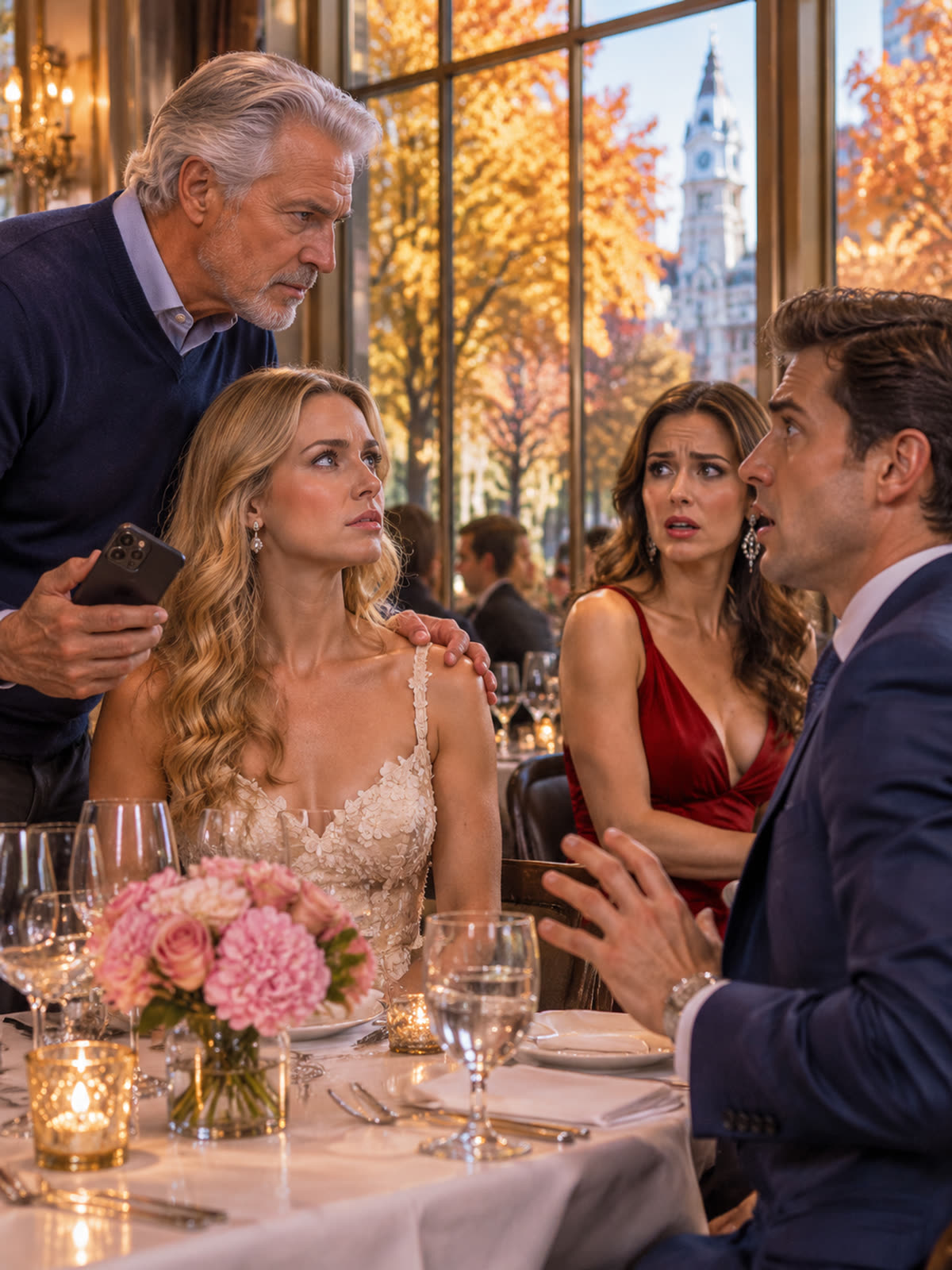
“Mr. Delaney, please. We have employees. We have financial commitments.” “Then I’m sure you understand why accurate records matter.” Tessa clutched Nolan’s arm. “Tell him this is ridiculous! He’s ruining your company because Audrey got her feelings hurt!” Dad remained composed. “No. If the records are accurate, Mr. Fitch has nothing to fear.” I picked up my handbag. For the first time since our divorce, Nolan was the one standing helplessly before me.
“Audrey,” he pleaded, “can we talk privately?” “No.” “Please. Five minutes.” “You had three years.” I took Dad’s arm. Tessa called after us. “You think having a billionaire father makes you better than everybody?” I turned back. “No, Tessa. But apparently discovering I have one makes you treat me differently.” Outside, October air cooled my face. Then Dad’s phone rang. When he finished listening, his expression had changed.
“Audrey,” he said quietly, “there’s something you need to see.” “What?” “Our compliance team has already flagged some unusual documents from Nolan’s company.” My stomach tightened. “Documents?” “Your name appears on twelve invoices approving work for my company.” “I’ve never worked for your company.” “I know.” “Dad, I never signed anything for Nolan’s business.” “Then someone has been signing your name.” Nolan’s desperation suddenly seemed more disturbing than embarrassment over insulting the wrong dinner companion.
“Tell me exactly what Nolan signed in my name.” We were beneath the restaurant in the parking garage, and Dad had not yet started his SUV. My hands shook around my purse. He opened the passenger door. “Get in, sweetheart.” “Dad.” “There’s an investigation underway. I don’t want to give you incomplete information.” “Then tell me what you do know.” He explained that the records identified me as an independent editorial reviewer who had approved marketing materials supplied by Fitch Brandworks.
“That’s insane.” “Have you ever freelanced for Nolan’s company?” “Never.” “Did you allow him to use your professional name?” “No!” “Then we’re going to establish exactly how those approvals got there.” We drove through the wet Philadelphia streets in silence until Dad turned into a twenty-four-hour diner. “Burgers?” he asked. “We’ve just discovered my ex-husband may have forged my signature, and you’re thinking about burgers?” “You’ve barely eaten.” “Dad!” “Audrey, I can hire attorneys and accountants. I cannot make you feel better about your marriage by shouting at your ex-husband.”
Over cheeseburgers and fries, I finally talked about what I had avoided for almost a year. “My marriage ended last November,” I admitted. “I know.” “You knew?” “You showed up at my house with two suitcases and cried through an entire Sunday dinner. I wasn’t going to insult your intelligence by pretending I couldn’t guess.” “Why didn’t you ask?” “Because I wanted you to tell me when you were ready.” At thirty-four, I had mistaken facing pain alone for being independent.
For six years, I had built my publishing career under Mom’s surname. I edited features, negotiated freelance agreements, argued over commas, and lived with unreliable heat because I loved the work. After the divorce, working too much felt easier than being lonely. Nolan had initially seemed funny, ambitious, and attentive. He brought flowers after my late shifts and said he admired my work ethic. After two years together, we married privately at the courthouse. Dad was abroad negotiating an acquisition, and Nolan saw no reason to delay for a parent he had never met.
Dad had wanted an introduction, but I had insisted my marriage should stand apart from his name. Eventually, he respected that boundary. Nolan never pursued a meeting. Gradually, he began criticizing my salary, my clothes, and my friends. He complained that I did not resemble his wealthy clients’ wives. When I helped edit a nationally recognized investigative series, he shrugged. “That’s cute, Audrey, but recognition doesn’t pay for a Mercedes.” By our third anniversary, he was seldom home before midnight.
Then I discovered a hotel receipt in his jacket: two guests, one room, three nights. Tessa Marlowe. When confronted, Nolan seemed relieved rather than sorry. “Tessa understands ambition,” he said. “You don’t.” I asked whether he loved her. “She’s the kind of woman who can help me become somebody.” Three weeks later, we divorced. I took my belongings and savings; neither of us requested spousal support. Nolan considered me foolish for not fighting harder about money. Across the diner table, Dad listened until I finished.
“You should have told me,” he said. “I didn’t want you to think I failed.” “Audrey, a marriage ending isn’t proof that you failed.” “Sometimes it feels that way.” “Then let me say this clearly. Your mother and I didn’t raise you to measure your worth through somebody else’s approval.” He squeezed my hand. “Not Nolan’s. Not mine. Nobody’s.” After pushing napkins toward me, he asked whether I would spend a few days at the office, using my publishing and contract experience on a development project.
“Wouldn’t that create a conflict of interest?” I asked. “It would if you reviewed anything involving Nolan. You won’t. Outside counsel will handle that matter, and I’ll remain recused from the contract decision.” I would not turn family wealth into a weapon, but neither would I allow Nolan to misuse my identity. “Okay,” I said. “I’ll visit.” “Good. Now eat your fries.” Later, outside my apartment, Dad gave me an old photograph of Mom holding me beside him at their kitchen table. Her handwriting covered the back: Let her become whoever she wants to be.
I was still holding it when Nolan called. “Please listen. You have no idea what could happen if your father looks into those files.” “What files, Nolan?” “I’m begging you. Tell him to stop.” “Did you forge my signature?” “Audrey, I did it for us.” “For us?” “You were my wife. We were building a future.” “You were sleeping with another woman!” “That wasn’t supposed to matter anymore!” I sank onto the floor. “Did you steal money using my name?” “If investigators start pulling those documents, they’ll think you were involved, too.” He disconnected, leaving me with the fear that his betrayal had reached far beyond our marriage.
PART 2 — THE NAME THEY TRIED TO TURN AGAINST ME
At 8:15 the next morning, I entered Delaney Capital’s twenty-three-story headquarters in a $79 blazer, carrying a drugstore notebook. “Good morning. How can I help you?” the receptionist asked. “I’m here to see Elliott Delaney.” “Do you have an appointment?” Before I could reply, Dad appeared from the elevators. “There she is!” The receptionist straightened. “Good morning, Mr. Delaney.” “Meet my daughter, Audrey.” “It’s a pleasure, Ms. Wren.” I appreciated hearing the name I had built my own life around.
Upstairs, Dad introduced Marianne Chase and chief operating officer Celia Hartwell. Both had earned reputations for resisting intimidation. Celia, fifty-eight, had short silver hair and sharp blue eyes. “Your father says you’re an editor.” “That’s right.” “Good. Our project documents desperately need someone who understands ordinary English.” “I hope you aren’t expecting me to run a billion-dollar business.” “Not unless you’ve secretly learned to do that overnight.” She handed me the preliminary development plan for the Keystone Riverfront Innovation District.
The projected investment was $1.28 billion. An abandoned industrial corridor along the Delaware River would become a technology and advanced manufacturing district, with laboratories, manufacturing facilities, green space, transportation improvements, and a workforce training center. Delaney Capital would lead development, partnering with publicly traded infrastructure technology company Cedarline Systems. The terminology initially overwhelmed me, but editing had taught me to ask what complicated language actually meant. By lunch, I had nineteen questions and one concern about a transportation grant.
The budget treated the grant as funding for road improvements, while supporting documents called its application pending. I showed Celia. She read both passages. “That’s a good catch.” “Is it a mistake?” “It may simply be a presentation issue. But investors should understand the distinction.” She made a note. “Come to the afternoon meeting.” I did not understand development finance, but I understood the difference between a promise and evidence supporting it. Remembering Nolan’s dismissal made the invitation matter more than I wanted to admit.
At two, I joined executives, engineers, attorneys, and analysts in a conference room. Beside the screen stood a tall man in a charcoal suit and thin-framed glasses, his dark hair slightly disordered. “This is Ethan Holloway,” Celia whispered. “CEO of Cedarline Systems.” Forty minutes later, she invited me to explain my concern. “I’m not a financial analyst,” I began. “That’s fine. What did you notice?” “The presentation says the transportation grant is included in committed financing. But the application hasn’t been approved. Wouldn’t that mean the funding is conditional?”
Ethan looked toward his chief financial officer. “She’s right.” “We’ve modeled it as an anticipated source.” “Then label it anticipated,” Ethan replied. “Otherwise, we’re overstating certainty.” Then he looked back at me. “Good question, Audrey.” After years of having my intelligence minimized, those words stayed with me. Later, near the elevators, he caught up. “I hear you’re Elliott’s daughter.” “Unfortunately, my father has probably told everyone.” “He’s proud of you.” “He’s biased.” “Maybe. But your question was still good.”
He extended his hand. “Ethan Holloway.” “Audrey Wren.” “I hope we’ll work together again.” For the first time in months, something excited me without involving the need to prove Nolan wrong. Then my phone buzzed with a message from Renee Fields, my divorce attorney: Audrey, call me immediately. “What’s happening?” I asked when she answered. “Your father referred the procurement investigation to outside counsel. They contacted me to arrange an interview with you.” “Did they find something?” “Yes. And you need to hear it from an attorney before anyone tries to contact you again.”
The preliminary examination had uncovered twelve approval forms in my name attached to approximately $410,000 in invoices. According to those records, Fitch Brandworks had hired me to independently review advertising and public consultation materials, and I had certified their completion. I had never seen them. “Where did he get them?” I whispered. “We can’t establish that yet,” Renee said. “But Nolan had access to your signed tax documents and other personal records during your marriage.” “So he copied them.” “That’s a possibility investigators will examine.”
“Can they accuse me of participating?” “They can ask questions. That’s why we’re preserving evidence of your actual work history, your communications, and your financial records.” I spent the afternoon sending every relevant record I could locate. That night, a thick white envelope waited outside my apartment. It had no return address. Inside were photographs of me leaving Dad’s office, speaking with Ethan near the entrance, and smiling with him across the conference table. Red circles surrounded our faces.
A handwritten note accompanied them: First the old billionaire. Now the younger CEO. You really know how to climb. Then a message arrived on my phone: Tell your father to approve Nolan’s contract extension, or everyone will find out what kind of woman you really are. Tessa Marlowe had moved beyond public insults. She was threatening my reputation to protect the man who had used my name. I stood in my kitchen holding the envelope, my fingers trembling, while Renee told me, “You’re not meeting her alone.”

“Tessa says she has more pictures.” “Then she can provide them to investigators.” “She threatened to send them to Ethan’s board.” “Save the messages. Don’t respond.” The photographs showed ordinary encounters: a daughter visiting her father, colleagues talking. Tessa depended on strangers inventing something ugly from incomplete information. By midday, Renee had consulted fraud investigators and recommended a separate police report. I provided screenshots, the envelope, and an account of the restaurant confrontation. Two days later, Tessa called from another number and left a voicemail.
“You think your daddy can protect you forever? Nolan is about to lose everything because of you. You have until Friday.” I sent the recording to Renee. On Thursday afternoon, Ethan appeared at my office. “Can we talk?” “Of course.” He closed the door but remained standing. “My communications director received an anonymous email.” “What did it say?” “That I was having an affair with a billionaire’s daughter who was using personal relationships to influence our partnership.” My stomach dropped. “Ethan, I’m so sorry.”
“Why are you apologizing?” “Because this is happening because of me.” “No. Someone is making false allegations because they want leverage. That’s their decision.” Then he asked, “Are you safe?” He was not asking whether the photographs would hurt his company or whether I could keep my problems away from work. He wanted to know whether I was safe. “I’ve spoken to my attorney. The police have the messages.” “Good.” He assured me his legal team was reviewing the claims independently and that an anonymous email would not become grounds to punish me.
“Thank you.” “You know, I liked talking to you before I knew any of this.” “Really?” “You asked a question everyone else was too embarrassed to ask.” “That’s a low standard for admiration.” “Maybe. But I also noticed you stayed after the meeting to correct the presentation instead of taking credit for finding the mistake.” Dad appeared at the door. “Am I interrupting?” “Just discussing the documentation review.” “Wonderful. Audrey, I need you downstairs.” After Ethan left, Dad raised an eyebrow. “He seems like a decent man.” “Dad.” “What?” “Don’t start.” “I didn’t say anything.”
That evening, I moved temporarily into Dad’s house outside Bryn Mawr. To me, it was not a mansion. It was where Mom baked apple pies, where Dad taught me to ride a bicycle, where thunderstorms once drove me beneath the dining table. Her piano remained in the living room, with fresh flowers beside her photograph. Dad was making his Sunday pot roast, although it was Thursday. “Dad, you don’t have to cook all this.” “Then help me.” I peeled potatoes while he worked on the gravy.
“I’m sorry about the restaurant,” he said. “Why?” “Because I let my temper show when I called Marianne. I don’t want you thinking our company exists to settle family disputes.” “I don’t.” “Good. The review will follow the evidence. If Nolan did nothing wrong, he deserves to be treated fairly.” “And if he forged my signature?” “Then he deserves the same legal process as anyone else.” That was the man who had raised me. To Dad, authority meant accountability, not the ability to buy someone’s obedience.
Friday brought Delaney Capital’s annual partners’ reception in a downtown ballroom. I wore an emerald evening dress and Mom’s pearl earrings; Dad wore a black tuxedo. Near the entrance, Ethan greeted us. “You look beautiful,” he said quietly. “Thank you.” Then someone shouted my name. “Audrey!” Nolan pushed through the crowd, pale and bloodshot, followed by Tessa in a sparkling red dress. Security moved toward them. Nolan lifted his hands. “Please! I just need one minute!”
Dad stepped forward. “This is a private event, Mr. Fitch.” Nolan ignored him. “Audrey, tell them you worked for me. Tell them those signatures were authorized.” “What?” “Just say you reviewed the materials. Please. That’s all I need.” “You want me to lie?” “Don’t make this worse!” Tessa seized his arm. “She owes you! You were married!” For years, I had tried to become the wife Nolan wanted. Now he wanted me to become the criminal he needed. “No,” I said.
“Audrey, if I go down, I’m taking you with me.” Ethan stepped beside me. “That’s enough.” Dad signaled security. Nolan began shouting. “Her father is manipulating the investigation! This is personal revenge!” “Then let the investigators examine everything. Every invoice. Every signature. Every payment.” Tessa pointed at me. “You think you’re untouchable because you’re rich!” “No,” I replied. “I think the truth matters, regardless of who has money.” Security began leading them away from us.
Passing me, Tessa leaned close. “You should have helped us.” “You should have left me alone.” “You haven’t seen the last of me.” By morning, I understood her warning. A celebrity gossip account had published the photographs of me with Dad and Ethan, suggesting I exploited wealthy men and that Dad’s partnership was being used to enrich me. Thousands had already seen them. Attached to the anonymous submission was a more dangerous accusation: that I had personally approved hundreds of thousands of dollars in fraudulent invoices.
PART 3 — THE FUTURE THEY COULDN’T CLAIM
By seven the following morning, thirty-eight notifications crowded my phone. One post called me a spoiled billionaire’s daughter. Another claimed I was secretly dating Dad’s business partner. A third accused me of helping steal from Delaney Capital. That accusation frightened me most because it contained enough truth to sound plausible: my signature did appear on suspicious documents. I found Dad in the kitchen. “Dad?” “I’ve seen it.” “People are saying I’m involved in the fraud.” “I know.” “What if the investors believe it?” “Then we’ll give them verifiable facts. Not rumors.”
Within two hours, the attorneys prepared a response confirming an independent investigation of irregular supplier bills. It identified me as a cooperating potential victim of signature forgery and explained the safeguards preventing family relationships from directing the inquiry. There were no threats or theatrical accusations, only supportable facts. Through Renee, I confirmed Dad’s identity, explained my maternal surname, and denied authorizing the bills. Money could secure lawyers and professional advice; it could not compel strangers to believe me. That required evidence.
Gradually, the evidence emerged. Several supposed approvals were dated when records showed me working elsewhere. One claimed I had reviewed marketing materials on a Thursday afternoon when I was attending a publishing conference in Baltimore. Travel records, registration documents, and timestamped emails established my whereabouts. Another approval bore a signature digitally identical to one on an old tax document. A forensic examiner found indications that it had been copied rather than handwritten. The documents were beginning to answer the questions Nolan wanted buried.
The invoice review revealed that Fitch Brandworks had charged Delaney Capital for promotional materials that were never delivered or remained substantially incomplete. Some payments had moved to consulting companies connected to Tessa’s beauty business. Across twelve invoices, approximately $260,000 in charges lacked support. Outside counsel referred the findings to the appropriate authorities. Through its formal procurement process, Delaney Capital suspended the pending renewal. Nolan’s already struggling company lost the expected contract, and lenders began asking questions of their own.
Twenty-seven people worked at Fitch Brandworks, many supporting families. They had not chosen Nolan’s conduct. As the business wound down, employees sought positions through Delaney Capital’s contractor network, and Celia connected qualified applicants with legitimate openings. “People shouldn’t have to lose everything because their boss made terrible choices,” she told me. Over the next four months, I joined the riverfront project temporarily in communications and public engagement. I reported to a senior director, studied development proposals, and trained rather than being handed authority.
Some days overwhelmed me. On others, I recognized how useful publishing experience could be. I questioned vague claims and translated technical language into explanations people could understand. After a three-month evaluation, I received a permanent offer. The position reflected supervised work and skills I had developed long before entering Dad’s company. He celebrated by cooking for fifteen, although dinner included only him, Celia, and me. Looking at the mashed potatoes, Celia said, “You know, I understand why you never worry about food costs.” Dad replied, “Good food is never wasted.”
Laughter was becoming easy again. Ethan remained part of my life without promising to destroy Nolan or shelter me behind his fortune. He brought coffee when I worked late and listened when days were difficult. When I explained that our professional and personal relationships needed clear boundaries, he respected them. After disclosures and reporting adjustments, we began dating. Our first real date was at a neighborhood Italian restaurant with red-checkered tablecloths. He ordered spaghetti; I chose lasagna. We shared chocolate cake.
Near the end of dinner, he asked, “Do you ever regret not telling Nolan who your father was?” “I regret hiding so much of myself. But I don’t regret learning who Nolan was when he thought I had nothing to offer him.” “That’s an important distinction.” “Can I ask you something?” “Anything.” “If my father weren’t Elliott Delaney, would you still have asked me out?” I needed the answer, even though asking made me feel exposed.
“Audrey, the first thing I noticed about you was that you challenged a billion-dollar financial presentation with a drugstore notebook.” “That’s terribly romantic.” “I’m an engineer at heart. That’s about as romantic as I get.” Then he reached across the table and took my hand. “And yes. I would.” When he drove me home, I leaned over the center console and kissed him. Loving someone again finally seemed possible. What frightened me was how much I wanted it.
The riverfront project eventually received the transportation grant whose uncertainty I had questioned, and preparations for construction began. I organized community meetings, prepared public materials, and worked alongside a dedicated team. One evening, Dad said, “Your mother would have loved seeing you like this.” “Do you think so?” “She always said you had a way of making complicated things understandable.” The skills Nolan had treated as worthless were becoming the foundation of work I was proud to do.

One November afternoon, Renee called. “The prosecutors have made progress,” she said. “On Nolan?” “Yes. His attorney is discussing a plea agreement.” “Good.” “But there’s something else.” “Investigators recovered communications suggesting Nolan wasn’t the only person involved in creating the false approvals.” “Who else?” “Tessa.” The woman who had mocked me, threatened me, and demanded that I save Nolan’s business had helped prepare paperwork supporting some of the questionable payments. The false documents predated the finalization of my divorce.
I remembered Nolan’s late nights, the dinners I ate alone, and the way I blamed myself for not being successful enough. While I tried to rescue our marriage, they had been collaborating on something uglier than an affair. “Audrey, there’s one more thing you should know.” “What?” “Nolan’s attorney says he’s prepared to testify about Tessa’s involvement.” For nearly a year, they had presented themselves as an ideal couple. Now consequences were turning them against each other. They protected themselves by using others. I was learning to protect myself without doing the same.
Eleven months after the restaurant confrontation, I saw Nolan again in a courthouse. His gray suit was wrinkled, and his old confidence had disappeared. Tessa sat several seats away, staring forward. They did not hold hands. Dad had offered to come, but I wanted to manage this myself. Nolan agreed to plead guilty to fraud-related charges involving falsified supplier documentation. Tessa faced separate charges concerning her participation in the paperwork and her efforts to pressure me. Their attorneys negotiated separate agreements.
There were hearings, financial examinations, and statements from employees who had unknowingly processed false records. I cooperated whenever investigators needed me. The essential facts were established: I had not approved the invoices, received the disputed payments, or supplied genuine signatures. The proceedings resulted in criminal penalties, restitution obligations, and substantial financial consequences under their respective agreements. Contract-related civil disputes proceeded separately. Neither Nolan nor Tessa could transfer responsibility for their decisions onto me.
Outside the courtroom, Nolan approached. “Audrey.” “I know you probably hate me.” Once, I might have agreed. Instead, I realized I wanted distance, not revenge. “Nolan, I don’t hate you.” “Really?” “That doesn’t mean I forgive what you did.” “I understand.” “No,” I said quietly. “I don’t think you do.” I looked at the man whose approval I had spent years trying to earn.
“You made me believe I wasn’t good enough. You cheated on me. You used my identity without permission. And when you got caught, you tried to make me responsible for saving you.” “I know.” “I hope you build a better life after this. But you will have to do it without me.” “I’m sorry, Audrey.” Tessa did not approach. Through counsel, she accepted no-contact conditions resolving the harassment dispute. The threatening messages and calls ended. Eventually, I stopped thinking about either of them. Their lives were no longer mine to manage.
During the following year, the Keystone Riverfront Innovation District began taking shape. Warehouses were renovated or cleared, infrastructure improvements advanced, and the first workforce training partnership was announced. I helped develop a public communications program explaining opportunities for residents and small businesses. Another formal evaluation brought promotion to community communications director, along with a raise, greater responsibility, and endless paperwork. “Director Wren. Has a nice ring to it.” “Don’t get too excited. I still report to Celia.” “That’s why I know the promotion was earned.” Dad smiled. “I’m proud of you, sweetheart.”
Ethan and I kept building our relationship. We learned to discuss difficult truths without turning them into fights. He treated me as a partner, not an heiress requiring constant rescue. At Sunday dinner, he and Dad spent forty-five minutes debating how to grill steak. I had once feared that including my father in my romantic life would diminish my independence. Now I understood that independence did not require isolation. It meant choosing whom to trust without surrendering myself.
One December evening, Ethan took me back to our little Italian restaurant. He wore a navy sweater; I wore jeans and Mom’s pearl earrings. We ordered the same meals. At dessert, he reached into his coat pocket. “Audrey,” he said, “I know what happened before we met changed the way you think about marriage.” Then he continued. “I don’t want to promise we’ll never have difficult days. I can’t promise I’ll always say the right thing. But I can promise I’ll never deliberately make you feel small so I can feel important.”
He opened a velvet box containing a beautiful diamond ring. “I love you for who you are, not for your father’s name or your family’s money. Will you marry me?” I remembered Nolan’s contempt, the apartment floor beneath me during his threatening call, and the dinner where Tessa mistook Dad for a wealthy stranger. “Yes,” I whispered. “Really?” “Yes!” He placed the ring on my finger. For once, being the center of attention did not make me uncomfortable.
We married the next autumn at Dad’s home in a small ceremony without celebrity guests or extravagant publicity. Family, friends, flowers, and the people who had supported us were enough. Dad walked me down the aisle, his silver hair nearly white, wearing a black tuxedo and the nervous expression I remembered from school performances. Halfway along, he squeezed my hand. “Your mother would be so proud.” “I wish she were here.” He smiled sadly. “In a way, sweetheart, she is.” Beneath an arch of white roses, Ethan waited.
Dad kissed my forehead and placed my hand in Ethan’s. “Take care of each other,” he said. “We will.” We did, although marriage did not remove life’s difficulties. There were late nights, demanding meetings, setbacks, and arguments over groceries. There were also quiet mornings, laughter, Sunday dinners with Dad, unexpected coffee from Ethan, and my attempts to understand engineering problems beyond my expertise. Above everything else, there was respect. Love no longer required me to become smaller so someone else could feel important.
Two years after that disastrous dinner, Dad and I returned to the same restaurant and sat near the window. He ordered steak; I ordered salmon. Eventually, he glanced at me. “Remember the last time we ate here?” “How could I forget?” “That woman really thought I was your sugar daddy.” “Dad!” “What? She did!” I laughed until tears ran down my cheeks. Then he asked, “You know what I remember most about that evening?” “What?” “Not the insults. Not Nolan turning white when he recognized me.” “Then what?” “The moment you walked out with your head held high.”
“Dad, I was terrified.” “I know.” He took my hand. “Courage isn’t the absence of fear, Audrey. Sometimes it’s deciding you’re worth defending even while you’re afraid.” Nolan’s greatest mistake had never been divorcing a billionaire’s daughter. It was believing a woman’s worth depended on the money, status, or connections she brought into marriage. He had seen a paycheck; Tessa had seen competition. Dad had always seen his daughter. Ethan had seen the woman I was becoming.
I raised my glass. “To you, Dad.” He lifted his. “To you, sweetheart.” Beyond the window, golden light settled over Philadelphia. I had work I valued, a husband I loved, and a father who believed in me. Difficult days had not vanished, nor had the past become painless. But other people’s judgments no longer decided whether my choices deserved respect. Love must never cost my dignity. Their downfall was not my victory; freedom from their opinions was. And beyond that freedom waited the future that belonged to me—the woman I was still becoming.
Disclaimer: This story is a work of fiction inspired by real-life themes. Names, characters, places and events are fictionalized, and any resemblance to real persons is purely coincidental. Images are for illustration purposes only.
