

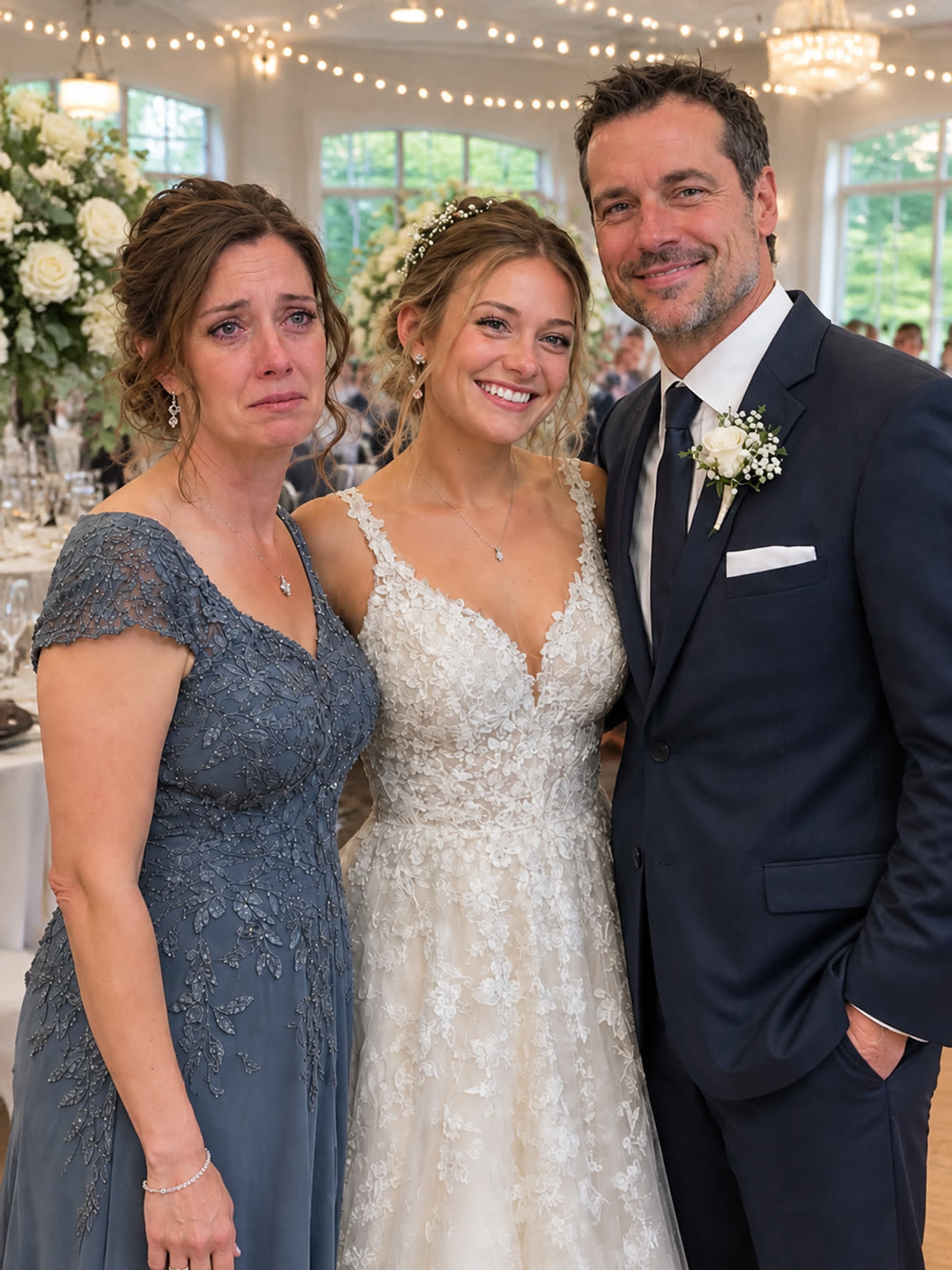
PART 1 — The Man I Thought I Knew
People say a wedding brings a family closer. Ours came dangerously close to pulling everything apart. I had already convinced myself that nothing could hurt more than seeing my daughter marry my former husband. Then my son drew me away from the reception and revealed something that changed the meaning of everything I had endured. Until that moment, I had thought I understood the worst of it. I had no idea how much had been concealed from me, or how publicly the truth would finally emerge.
I never pictured myself living long enough to watch my ex-husband exchange vows with my daughter. Even less imaginable was the possibility that my son would become the person who exposed him on their wedding day, leaving me so shaken that my knees nearly gave way. But the ending cannot be understood without the beginning. Long before Arthur entered our lives, I had learned how to make an unhappy family look perfectly content. That lesson had followed me through one marriage, into another, and eventually to my daughter’s wedding.
I married Mark, my first husband, at twenty. Ours was not a reckless romance between two young people who could not wait to begin their lives together. It was an arrangement everyone around us had always seemed to expect. Both our families belonged to the same comfortable, established world of country clubs, charitable events, and carefully maintained reputations. Our parents traveled together, sat on the same boards, and exchanged professionally photographed holiday cards. They even celebrated our engagement before we had actually become engaged. The future had been prepared before either of us had much chance to consider it.
Looking back, I see two beautifully dressed puppets caught in the same tangle of obligations. My mother selected the designer gown I wore down the aisle, and my opinion carried little weight. People told us we were perfectly suited: two polished young adults, raised with every advantage, stepping gracefully into the lives our families had planned. For a while, we accepted that description. Rowan was born the year we married. Caleb arrived two years after her. We became parents while we were still learning what it meant to be adults ourselves.
For years, Mark and I maintained the picture everyone expected to see. We arranged professional family photographs, hosted charitable gatherings, and welcomed people to dinner. Our lawn stayed carefully trimmed, and our home looked as though every object belonged exactly where it stood. We smiled through obligations because smiling was something we understood. What we did not understand was how to acknowledge the distance growing between us. Behind those immaculate Christmas photographs, we were drifting farther apart, quietly struggling for air inside a life that looked enviable from the outside.
The advantages we had grown up with had done nothing to prepare us for the emotional reality of a loveless marriage. We rarely argued, but that absence of conflict was not peace. Silence cannot be repaired while everyone insists on calling it harmony. Neither of us knew how to express resentment without feeling disloyal, or how to disagree without imagining the scandal our families might see in it. We had been taught to protect appearances, not to examine pain. Even becoming separate people felt almost improper when everyone assumed we should develop together.
After growing up beside each other, raising babies, and making our way through the confusion of family life, we finally buckled beneath everything we had never learned to say. Seventeen years into our marriage, we divorced with less commotion than a Parent-Teacher Association election. There was no spectacular confrontation, only a numb recognition that we could not keep going. Our parents were appalled, naturally. Yet when the papers were signed and we were alone with the truth of it, Mark and I could finally breathe. The ending was sad, but it was also a release.
Five years later, Arthur appeared in my life, and being with him felt wonderfully different. He was thirty-eight, divorced, and bringing up three children. He taught high school, enjoyed poetry, and loved classic cars. His charm was quieter than the polished performance I had spent so many years around. He seemed warm and grounded rather than concerned with impressing the room. After living for so long as though I were part of an advertisement for a perfect family, I found his apparent sincerity almost irresistible. He seemed like a person rather than a presentation.
Arthur’s imperfections reassured me. I did not feel required to hide my own around him. We could discuss the things that had shaped us rather than exchange the kind of pleasant conversation that revealed nothing. We talked about parenting, regrets, the lessons experience had forced upon us, and how absurd dating could feel in middle age. Our values appeared to match. So did our weary adult sense of humor. For the first time in my grown-up life, I felt that someone understood me without requiring me to become a more acceptable version of myself.
Our conversations could last for hours, and I found comfort in how little I seemed to have to perform. With Arthur, I was not trying to preserve a family reputation or live up to a picture chosen by other people. I believed I could simply be present. That feeling mattered more than I understood at the time. I fell in love before I had fully recognized that I was taking a leap, and we married quickly. Perhaps too quickly. What seemed like a fresh beginning carried me forward before I had stopped to question how well I really knew him.

The marriage lasted only six months. There were no explosive arguments and no discovery of an affair. Instead, the relationship came apart in small, quiet ways. Arthur withdrew from the practical business of building a life together. He stopped arranging evenings for us and stopped speaking about what our future might look like. He was not openly cold in a way I could easily name. He simply stopped moving toward the life we had supposedly agreed to share, leaving me to wonder what had changed and whether I had mistaken relief for something more lasting.
I considered the explanations that seemed most reasonable. Perhaps combining our families had proved more difficult than he expected. Perhaps there was grief from his earlier life that he had not worked through. Whatever the reason, we separated without a battle. I described the decision as mutual, and for a while I honestly believed that was the whole story. We wished each other well. I expected Arthur to become another finished chapter, a brief marriage I would eventually be able to look back on without searching for an answer. I could not have been more mistaken.
Two years later, Rowan sat me down in my living room. She had always been determined, ambitious, and almost impossible to persuade once she had made up her mind. At twenty-four, she already had an MBA and was advancing at a competitive marketing firm. She did not wait for someone else’s permission to pursue what she wanted. That day, her cheeks were flushed and her eyes had a brightness that unsettled me even before she explained why she had come. There was an excitement in her expression that made my stomach tighten.
Then she said, "Mom, I’m in love." I smiled automatically, responding as a mother does before she knows there is any reason not to. Then she gave me the name. "It’s Arthur." For a moment, I could do nothing but look at her. "Arthur… who?" I asked. "You know who," she said. My throat constricted as I tried to make those words mean something other than what they plainly meant. "My Arthur?" She nodded, blushing, with a smile so broad that it seemed almost fixed in place.
"It just happened. He reached out, and we talked. He always understood me — and now that you’re not together…" After that, her explanation seemed to lose its shape. I could hear her speaking, but the words no longer reached me properly. My daughter was telling me that she was dating the man I had married. He was forty now, sixteen years older than she was. I could not make myself regard that difference, or their connection through me, as something harmless. Every instinct I had was telling me that she had no business being with him.
I tried to gather my thoughts well enough to answer. Before I could, Rowan made it clear what she believed the choice would be. Her ultimatum was direct and cold, delivered with the certainty of someone who believed she was defending love. I recognized that particular confidence, even through my shock: the conviction that opposition could only mean a failure to understand. She did not see a family pattern repeating itself. She saw a relationship she was prepared to protect, even if protecting it meant removing me from her life.
"You either accept this, or I cut you out of my life." There it was, stated without room for misunderstanding. I could object to Arthur and risk losing my daughter, or I could remain beside her while she moved toward something that filled me with dread. I should perhaps have shouted. I might have pleaded with her to reconsider. Instead, I sat with the knowledge that she meant what she had said. After everything our family had already survived, I could not bear the possibility of losing her altogether.
So I pushed down the memories, the objections, and every warning my body seemed to be giving me. I told her I supported the relationship. It was a lie, but I could not see another way to keep the door between us open. My acceptance did not mean that the history had disappeared or that I had suddenly become comfortable with it. It meant only that my fear of being shut out was stronger than my ability to tell her how deeply this hurt. I chose proximity, even at that price.
A year later, I was standing in a wedding venue dressed with eucalyptus garlands while soft jazz filled the air. My daughter was walking down the aisle toward the man to whom I had once promised the rest of my life. What had once seemed unthinkable was happening in front of me, surrounded by all the familiar rituals of celebration. I smiled when I needed to smile. I posed for photographs. I lifted champagne in a toast. From the outside, I was doing what a supportive mother was supposed to do.
Inside, my stomach remained painfully knotted. I had told myself that watching the ceremony would be the hardest part, that if I could get through those vows and keep my daughter close, I could somehow endure the rest. I had swallowed my objections for a year, and now I was smiling through the result. I thought I knew exactly why the evening hurt. Before the reception ended, my son would show me how little I actually understood—and why Arthur’s marriage to me had ended after only six months.
PART 2 — What My Son Found
Caleb found me during the reception. Of my two children, he had always been the quieter one, though quiet did not mean timid. He was steady, the sort of person who thought things through rather than making a spectacle of himself. At twenty-two, he had already started a small technology business without losing the thoughtfulness that had always made him himself. He still checked on his grandparents every Sunday. He was the kind of young man who would research health insurance in his spare time because understanding something important mattered more to him than appearing carefree.
That was why I paid attention when he took hold of my arm and said, "Mom, we need to talk." There was nothing casual about the way he approached me. I was confused, but I knew my son well enough to understand that he had a reason. His eyes went toward the table where Rowan and Arthur were sitting. "Come with me, I’ll show you," he said. I followed without arguing or asking him to wait. Whatever he needed to tell me, he clearly did not want to say it beside the celebration.
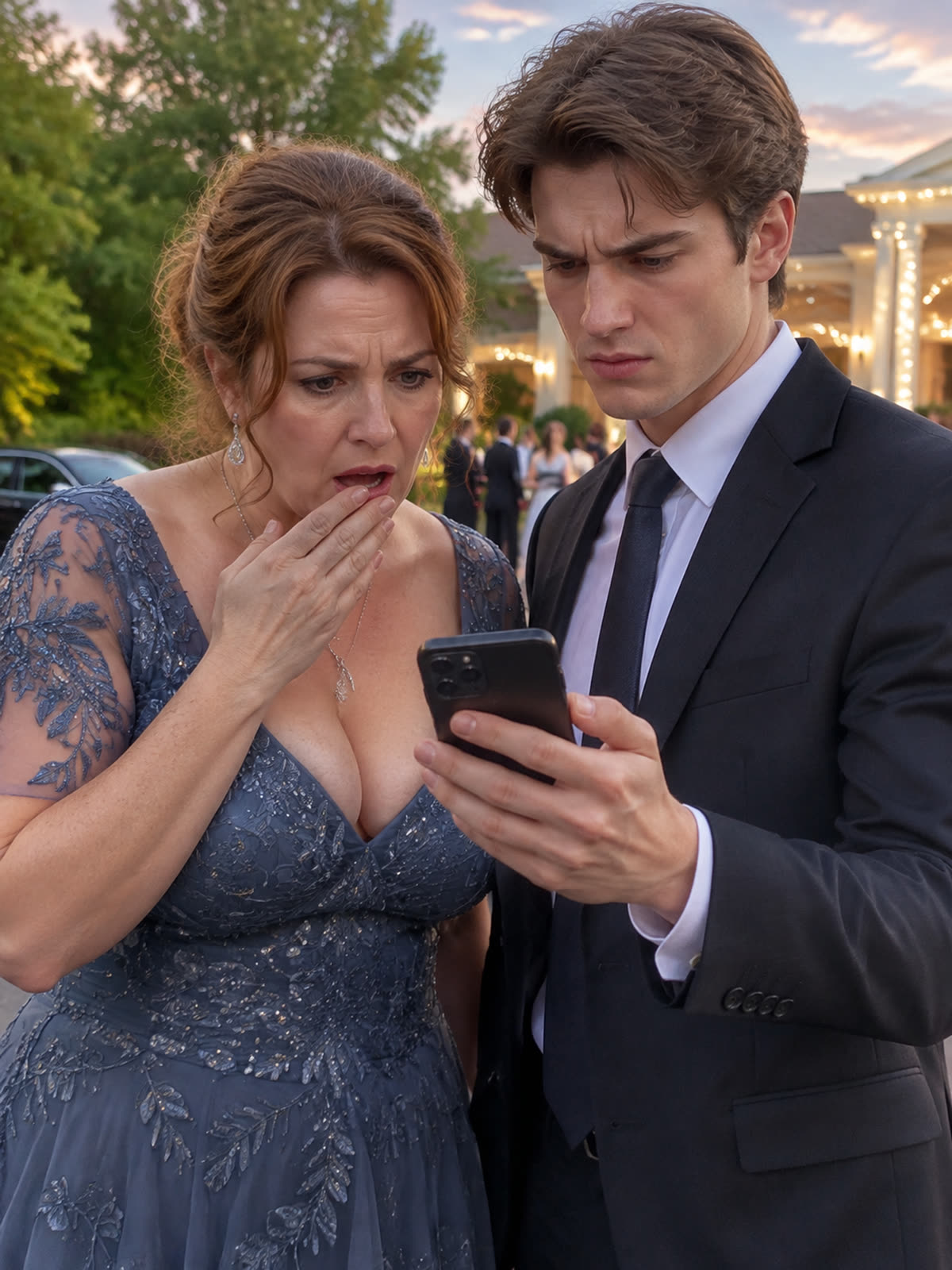
He led me outside to the parking lot, far enough from the reception for the sound of it to recede. There was no dramatic rush, only the strange contrast between the party behind us and the crisp air outside. My heels clicked against the pavement as I followed him. "What is it?" I asked. Caleb did not immediately answer. He took out his phone and began moving through folders while I waited, trying to understand what could have brought that expression to his face on his sister’s wedding day.
"I waited until today because I needed all the information," he finally said. "I hired a private investigator, and he was only able to give me everything a few minutes ago." I went still. Until then, I had been prepared for something troubling, perhaps another complication in an evening already difficult to endure. I had not been prepared for an investigation. "You did what?!" The question I had asked when we stepped outside seemed suddenly much larger than before: "What is it?" Whatever was on that phone had taken time, effort, and secrecy to uncover.
"I didn’t trust Arthur," Caleb said. "There was just something about the way he talked, Mom. He’s always evasive. And the way Rowan started isolating — it reminded me of how things ended with you two." I had understood my own short marriage as a private failure. Hearing my son connect it to what was happening to his sister made that explanation feel suddenly inadequate. "What do you mean?" I asked, still struggling to follow where he was leading me. He had been looking at something I had not allowed myself to examine closely enough.
"There’s something you have to know about him. I found out he isn’t who he says he is." His words forced the scattered pieces into a shape I did not want to recognize. Arthur’s withdrawal, Rowan’s determination, the unease I had carried without being able to prove anything—none of it felt separate anymore. "You think he’s conning her?" I asked. Caleb did not hesitate. "I know he is." The distinction was devastating. He was not bringing me a suspicion and asking whether I shared it. He was bringing me evidence.
"You think he’s conning her?" That was the question I had finally managed to put into words, but Caleb’s answer had already moved us beyond it. He began showing me documents on his phone. These were not scraps of online gossip or accusations passed from one person to another. They were legal records and investigative summaries, the kind of material that could be checked. For months, the discomfort I felt about Arthur had been tangled up with my own history. Here was something that did not depend on whether anyone thought I was simply an unhappy former wife.
Arthur had filed for private bankruptcy two years before he met me. He had never told me about it. The records also showed business loans in default, credit card accounts sent to collections, and unpaid back taxes. Each document added to the same picture: serious financial trouble that had existed outside the account of his life he had given me. I had known the teacher who discussed poetry and parenting. I had known the man who appeared comfortable sharing regrets. Yet he had kept these concrete, consequential facts entirely outside our marriage.
There was more. A lawsuit from his former wife described years of concealed financial matters and alimony that had not been paid. "He’s a serial manipulator," Caleb said, his disgust unmistakable. "He targets women with money. Rowan has your name and your connections. He’s using her, Mom." I could not answer. The thought of my daughter sitting inside beside him, believing this was the happiest day of her life, was almost impossible to hold alongside what my son was showing me. The celebration and the evidence seemed to belong to different worlds.
Standing beside Caleb in that parking lot, I stared at the records and thought back over my own brief marriage. The debts, the bankruptcy, and the lawsuit were not vague warnings anymore. They offered an explanation for the part of my life with Arthur that had never made sense. I had spent so long wondering why he stopped investing in our future. Now I remembered something that had happened before we married, something I had treated as a sensible precaution rather than a turning point. I had insisted that we sign a prenuptial agreement.
I had not asked for it because I believed he intended to exploit me. After going through a divorce in which money was part of the process, I simply knew it was wise to be careful. Arthur had hesitated. He said the agreement felt unromantic, as though taking precautions somehow diminished what we had. I had answered plainly: "If this is about love, then a piece of paper won’t scare you." At the time, it seemed a reasonable thing to say. I was not refusing the marriage. I was refusing to enter it without protecting what needed protection.
He signed. Yet afterward, something about his smile never seemed quite as genuine, and the change in our marriage followed. I had remembered his retreat as a disappointment I could not explain, not as the response of a man whose expectations had been blocked. There in the parking lot, those memories rearranged themselves around the facts on Caleb’s phone. The agreement had not merely been paperwork. It had kept Arthur from controlling my finances. What I had called a quiet unraveling now looked like something much more deliberate.
Caleb touched my hand. "He’s still in litigation, and he didn’t disclose any of this to Rowan. We have to tell her." Of course we did. But I knew how fiercely she had defended the relationship before there was even a wedding to defend. She had already made me choose between accepting Arthur and losing her. Now they had exchanged vows, and every person inside was celebrating that choice. Evidence mattered, but I was frightened by how easily he might explain it away if he had the chance to speak first.
"But she won’t believe it if it comes from us," I said, my voice breaking. "Not in private — not when he’s in control." That was the danger I could not ignore. A conversation behind a closed door would leave him room to turn our concern into resentment, interference, or another reason for Rowan to pull farther away. Caleb looked at me. "Then let’s make it public." The idea was painful immediately. It meant tearing the evening open in front of everyone. It also meant that what we knew could no longer be contained by his version of events.
"Then let’s make it public." Those words became the point around which the plan took shape. Neither of us could make the truth gentle, and we could not give Rowan back a wedding day untouched by it. But keeping silent would allow the celebration to continue around a lie we now understood. My daughter deserved to know what Arthur had concealed before she went any farther into a life with him. Caleb had waited for proof because he knew suspicion would not be enough. Now the proof was here, and waiting had become a different kind of choice.
When we returned inside, the reception was still moving along as though nothing had changed. Candlelight warmed the room. Guests laughed, touched glasses together, and stood for pictures at the flower wall. The ordinary happiness of it all felt almost unreal after the parking lot. I could see how easily the evening might have continued if Caleb had not trusted his instincts. The same music would have played, the same photographs would have been taken, and I would still have been trying to mistake my endurance for support.
Rowan sat beside Arthur in her ivory dress, radiant with the happiness I had been so afraid to disturb. He looked exactly like a proud new husband. There was nothing in that picture that revealed the records we had just seen, no outward sign of the debts and litigation hidden behind his place at the table. That contrast made my heart pound harder. Everyone else was celebrating the beginning of a marriage. I was looking at my daughter and realizing that the explanation for my own had been sitting beside her all evening.
Caleb turned to me one last time. "Are you sure?" he asked. I understood what he was asking. Once he spoke, there would be no taking it back, no restoring the evening to the carefully arranged celebration it had been. My daughter would be hurt in front of other people, and Arthur would know exactly where the exposure had come from. But certainty did not require that I feel calm. It required that I stop allowing my fear of her reaction to outweigh what she needed to know.
"Yes," I said. "If he thrives in the shadows, then we bring him into the light." I had spent too much of my life helping difficult truths disappear beneath acceptable appearances. I had done it with Mark, then done it again when I told Rowan I supported this marriage. I could not keep doing it now. Caleb had brought me facts, not an excuse to interfere. The discomfort of exposing them did not make concealing them any kinder. For once, preserving the picture could not be more important than protecting the person inside it.
Moments later, Caleb stepped onto the small stage with a microphone. The emcee introduced him as the groom’s stepson, an awkward description given everything that had happened, but nobody seemed to question it. My son stood straight and composed, though I could see the tension in his shoulders. To the guests, he was simply a young man about to offer a wedding toast. Rowan looked toward him, unaware of what he was carrying into that moment. Arthur was still seated beside her. Then Caleb lifted the microphone and began.
PART 3 — The Toast That Ended the Wedding
"I’d like to say a few words," Caleb began, wearing a polite smile. "Not just as Rowan’s brother, but as someone who’s known Arthur in… a few different roles." A little laughter moved through the room. The remark could still pass for an awkward family joke, one more unusual detail in a wedding full of them. Rowan beamed at her brother. Arthur shifted in his chair. Watching them, I felt the terrible distance between what my daughter thought was happening and what was about to happen. Caleb kept his voice calm.
"I want to congratulate my sister and her… husband. Marriage is built on love, trust, and honesty. So tonight, I want to toast to that — honesty. And to make it personal, I have a question for the groom." The room grew quieter. Whatever the guests had expected from a brother’s toast, they could hear that he was going somewhere else. My son had spent months gathering facts because he understood that a vague objection would never reach Rowan. Now he was putting those facts into the center of the celebration.
"Arthur," Caleb said clearly, "how’s your ex-wife doing these days? Is she still waiting for the alimony checks?" Gasps traveled across the room. A few guests gave uneasy laughs, still trying to understand whether this was some badly judged joke. Arthur’s face drained of color. The question had stripped away the easy appearance he had maintained all evening. He was no longer simply the smiling groom at the table. He was a man being asked, in front of everyone, about something he had chosen not to disclose.
Caleb went on. "Or are you still tied up in litigation? I imagine it’s hard to keep track, with all the lawsuits and unpaid debts. Oh, and the bankruptcy — should we toast to that too?" Rowan stopped smiling. The silence that followed felt complete. There was no music or laughter strong enough to make those questions sound harmless. Every part of the life Arthur had hidden was now being named where he could not quietly separate one listener from another. My daughter was hearing it at the same time as everyone else.
Then Caleb held up his phone and turned its screen toward the guests. "These aren’t accusations — they’re legal records. Public ones, actually. They were filed years before you ever met Rowan or our mother. You just failed to mention them." That distinction mattered. He was not asking the room to take his dislike of Arthur as proof, and he was not asking Rowan to choose between two competing opinions. He was identifying records that existed independently of any of us. Arthur opened his mouth, but nothing came out.
Caleb delivered the next question with every word clear. "Tell me, Arthur, when were you planning to tell Rowan? After the wedding? After the honeymoon? Or never?" There was nowhere in it for Arthur to hide behind the claim that the timing simply had not been right. The wedding had happened. The vows had been exchanged. Rowan had made a commitment without being told what he knew about his own financial and legal circumstances. My son had made the silence around that omission impossible to mistake for an accident.
Then Caleb looked directly at his sister. "You didn’t know. I get it. He’s good at hiding things. He tried it with Mom too, but when he couldn’t manipulate her finances, he lost interest." That was the part I had only just begun to understand myself. Until the parking lot, I had treated my marriage as something that failed because we rushed or because Arthur could not sustain the life we had started. Now Caleb was giving Rowan the explanation I had never possessed. Neither of us had been shown the man we thought we knew.
Rowan stood slowly. Her eyes were wide, and her hands shook as she looked from Arthur to the documents on the screen. I started toward her, but she did not turn to me. Her attention stayed on him. "Is it true?" she asked. After everything Caleb had said, it was a simple question. Arthur finally found his voice. "I… It’s complicated, my love." There was no denial in it, no clear answer to the facts laid before her. That was enough for Rowan. The explanation he offered could not restore what had just disappeared.
"No," she said, quietly but distinctly. "It’s not." Then she turned toward me. Betrayal and horror filled her face, along with the stunned recognition of what this meant. "Mom… oh my God." There was nothing triumphant about that moment. I had wanted to stop her from being deceived, not to watch the truth hurt her. The objection I had been too afraid to voice a year earlier no longer mattered as an argument between us. She was my daughter, and she was standing in the wreckage of something she had believed was love.
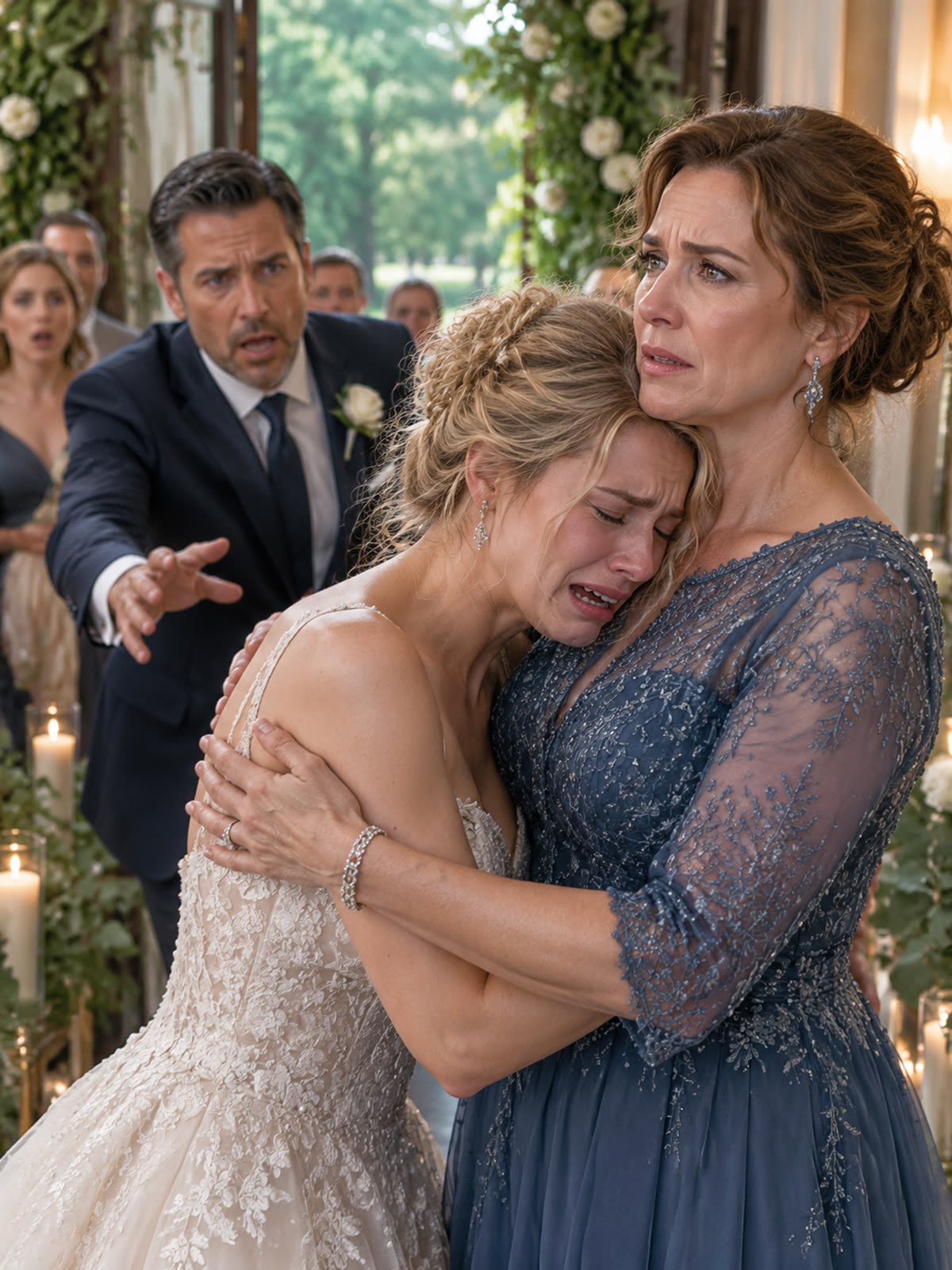
She fell into my waiting arms, and we left her wedding together. Behind us, the room broke into murmurs. Caleb told the guests that the wedding was over, and people began getting up to leave. As we moved away, I saw Arthur pushing through the crowd, looking like a man trying desperately to rescue a lie that was coming apart faster than he could manage it. For so long, his evasions had left the rest of us searching for explanations. Now the explanations were public, and the carefully maintained picture could no longer hold.
Within an hour, the celebration had ended. By the next morning, Rowan had filed for an annulment, citing fraud connected to Arthur’s intention to marry her for financial gain, along with other discrepancies. The paperwork had barely had time to make her a wife on record before she was trying to undo what had happened. She packed her belongings and came to stay with me for a while. The wedding that had threatened to place him permanently between us instead left us facing each other without his story controlling the conversation.
We began talking again, and this time the conversations were real. We spoke about my marriage to her father, about the divorce, and about Arthur. We also talked about the strange ways family patterns repeat themselves. Trying fiercely not to live your parents’ mistakes does not always keep you from reaching the same pain by another route. Both of us had grown up around expectations and carefully maintained images. Both of us had mistaken something for freedom without fully understanding what we were stepping into. There was more to untangle than one disastrous wedding.
A few days later, Rowan asked a question I had not expected. "Did you love him?" she said. I took time to think before answering. "I thought I did," I said finally. "I loved who I thought he was — the man who asked me questions about my dreams, who made me tea when I was sick. But I think now… I loved the quiet. Not him." It was the clearest way I could explain what had once felt so certain. I had loved the relief of not performing, and I had believed the person offering that relief.
She nodded slowly. "Same." We laughed a little, though it was not the easy laughter of people who had escaped being hurt. It was fragile and soft, the kind that appears after grief has exhausted the need to pretend. For a moment, we understood each other without having to defend what we had believed. Neither of us had fallen for the truth of Arthur. We had fallen for what he seemed to offer, and admitting that did not erase the pain, but it allowed us to stop protecting the illusion.
Over the following weeks, I watched Rowan begin to recover. She was healing from Arthur, but also from the pressure and expectations that had shaped us both. The image of perfection we had been taught to pursue had demanded too much silence from us. One day she said, "Thank you… for not letting him ruin my life." For the first time since she had told me his name a year earlier, the tightness in my chest eased. Something inside me began to settle as well. We had been hurt, but the hurt was no longer hidden behind a celebration.
I also understood my own marriage more clearly. Before Caleb showed me those records, I had believed that Arthur and I simply had not worked. Perhaps we had moved too quickly; perhaps a blended family had been harder than he expected. Now I knew why his interest had faded. The prenuptial agreement had protected more than my money. It had protected my peace by keeping my finances beyond his control. Once he realized I would not provide the comfort he wanted on his terms, he moved on—to my daughter. The thought sickened me, but it also ended my uncertainty.
He had not broken me, and he would not break her. Caleb was the person who made that possible. He had trusted the discomfort he felt rather than dismissing it, then spent months working with an investigator to locate records, verify them, and assemble something Rowan could not reject as mere suspicion. He waited because he wanted proof. The speech he gave was bold, deeply uncomfortable, and painful to hear, but it saved his sister from continuing in ignorance. It saved me, too, from carrying an explanation for my marriage that had never been true.
We never saw Arthur again. He did not call with another explanation or attempt to persuade us that we had misunderstood. Perhaps he knew there was nothing left to say. In time, Rowan moved into a place of her own, began therapy, and took a solo trip to Colorado. Her life did not stop at the wedding that ended so abruptly. One evening, over coffee in my kitchen, she said, "I don’t know what’s next, but at least I know who I am again." After everything, that mattered more than having a perfect answer about the future.
I smiled at her. "You always did," I said. "You just forgot for a little while." She reached across the table and squeezed my hand. For the first time in what felt like a very long while, I believed we were going to be all right. We did not have a polished picture to show anyone, only a more honest understanding of each other and of what had happened. If this happened to you, what would you do? We would love to hear your thoughts in the Facebook comments.
And if this story stayed with you, there is another: after years of marriage, Daniel’s wife arranged a huge celebration for his fortieth birthday. The party was well underway when his former wife arrived and gave a speech that shattered everything Daniel’s wife thought she knew. She had planned an evening to celebrate the man she loved—but what had his ex-wife come to reveal?
Disclaimer: This story is a work of fiction inspired by real-life themes. Names, characters, places and events are fictionalized, and any resemblance to real persons is purely coincidental. Images are for illustration purposes only.
