

The elevator doors opened onto the private garage. Marco was already holding the rear door of the black SUV. I slid in, phone still pressed to my ear, and the vehicle surged forward before the door had fully closed.
“Lily,” I said, forcing my voice steady, “I need you to listen carefully. Can you do that for me?”
“Yes,” she whispered. Her breath hitched.
“Is the man still knocking?”
“He’s saying Mommy’s name. He sounds mad.”
I closed my eyes. “Is the door locked?”
“Mommy locked it. She always locks it when he comes.”
Marco caught my eye in the rearview. I gave him the Queens address again. He nodded once and accelerated through the midtown traffic, siren-silent but ruthless.
“Lily, stay on the phone with me. Don’t open the door. Don’t let anyone in until I get there. Do you understand?”
“Okay.” A small pause. “Daddy… are you coming right now?”
“I’m coming right now.”
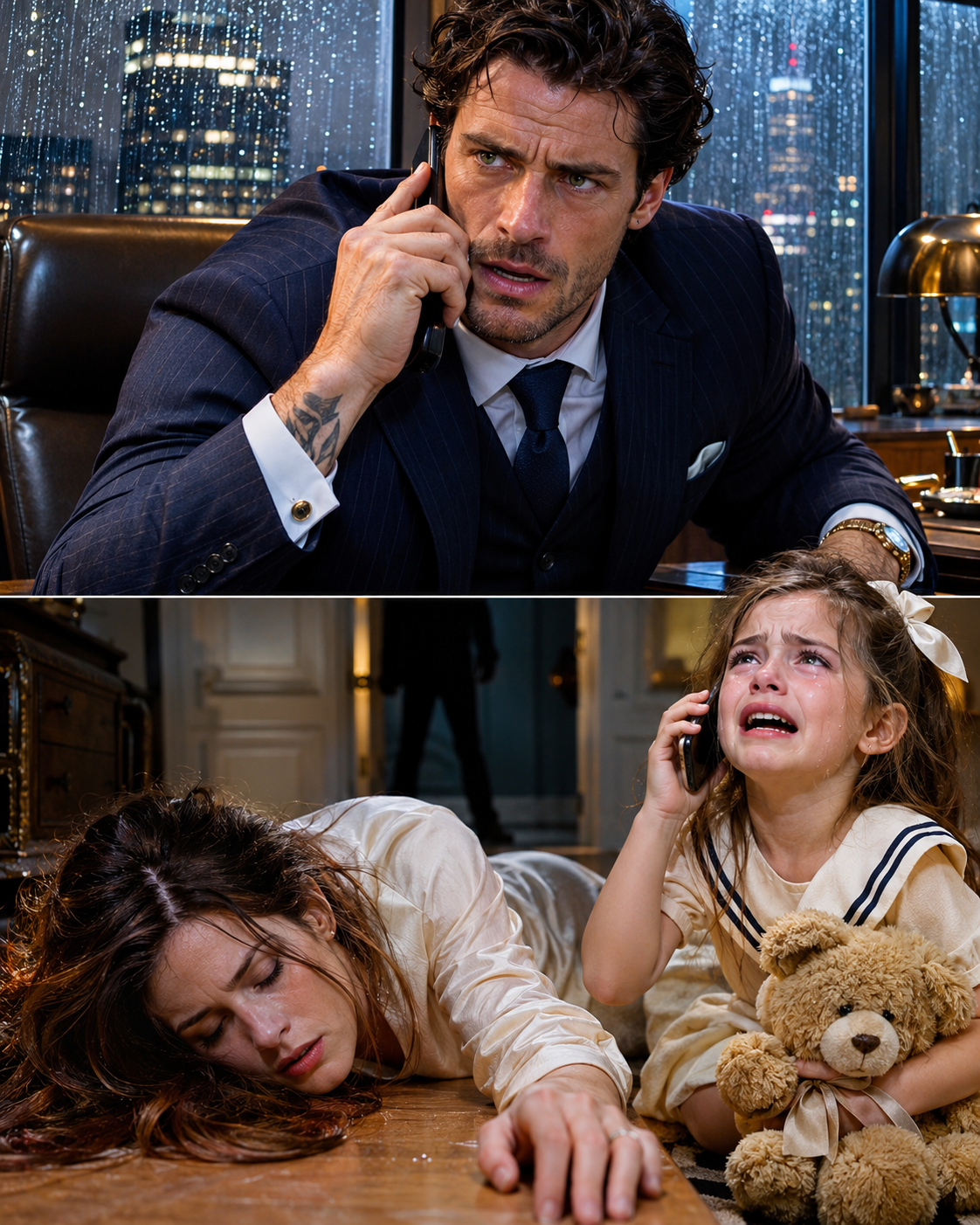
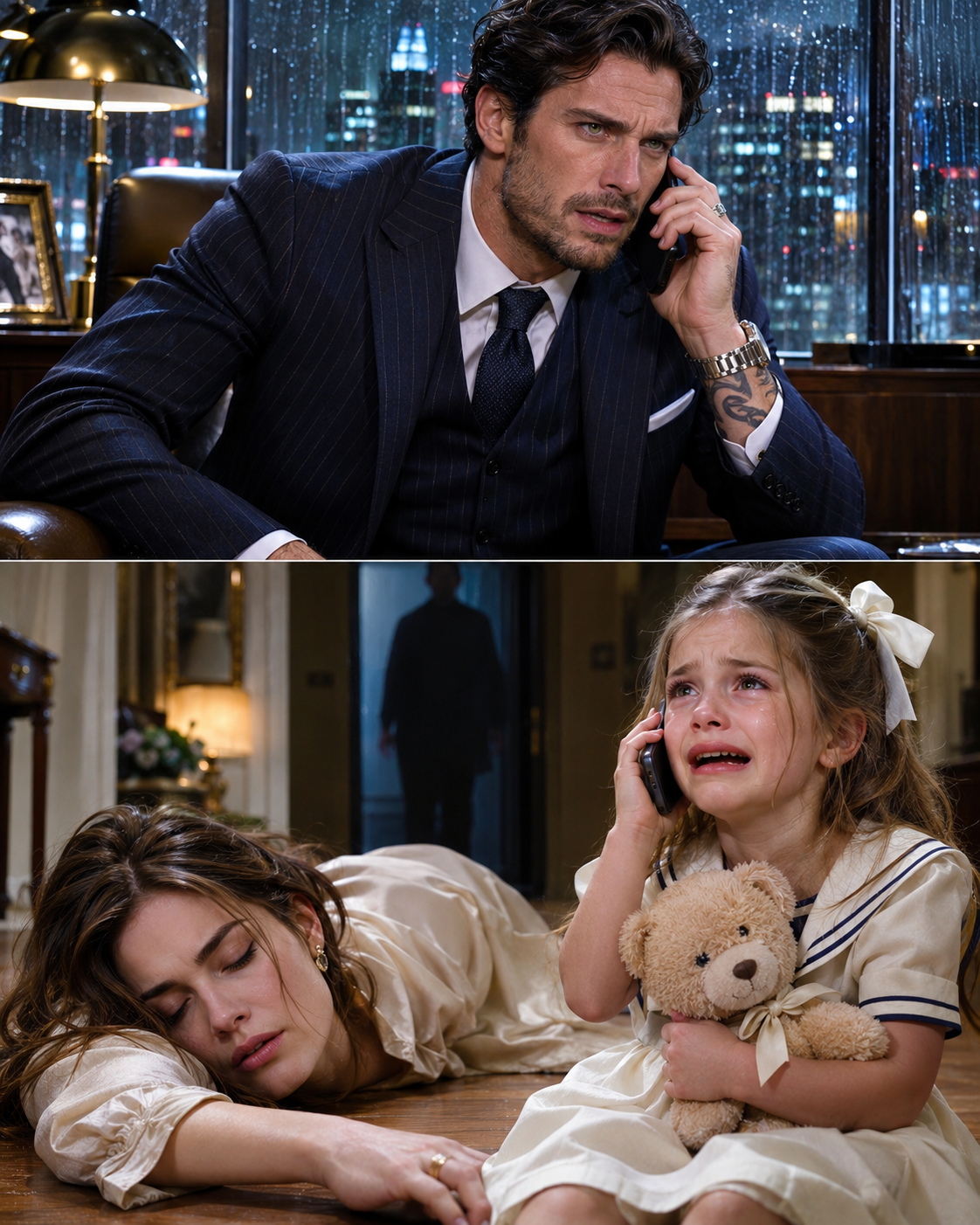
In the background I heard Isabella’s voice, thin and strained. “Lily, give me the phone. Please.”
The line crackled as the phone changed hands. Isabella’s breathing was shallow.
“Alessandro,” she said, “turn around. I’m serious.”
“Tell me who is at the door.”
“Someone I used to work with. It doesn’t concern you.”
“You’re on the floor and our daughter is terrified. It concerns me.”
She was quiet for a long moment. “Our daughter,” she repeated, the words barely audible. “You didn’t even know she existed until ten minutes ago.”
“I know now.”
Another knock, harder. A man’s voice, muffled but angry, carried through the apartment walls. I couldn’t make out the words, but the tone was clear.
Isabella’s breath caught. “If you come here, you make this worse.”
“I’m already on my way.”
“Then at least come alone. If he sees your men—”
The call dropped.
I stared at the dead screen. “Marco. Faster.”
“We’re twelve minutes out if I take the expressway.”
“Make it eight.”
He did. We arrived in a neighborhood of low brick buildings and cracked sidewalks. The address Lily had read from the envelope was a second-floor walk-up above a closed laundromat. An ambulance was already parked at the curb; someone from emergency services must have beaten us. Two paramedics were climbing the exterior stairs with a stretcher.
I was out of the SUV before it stopped. Marco and two of my men followed. I took the stairs three at a time.
The apartment door stood open. Inside, the paramedics were kneeling beside Isabella on the kitchen floor. She looked smaller than I remembered. Her skin was pale, almost gray under the harsh overhead light. Lily stood against the refrigerator, clutching a worn brown teddy bear with both arms. Her dark hair was messy, her eyes huge and wet.
When she saw me, she didn’t run. She just stared, like she was trying to decide if I was real.
One of the paramedics glanced up. “Family?”
“Yes,” I said. The word felt foreign and absolute. “What happened?”
“Possible seizure or syncope. She’s responsive but weak. We’re taking her in for evaluation. Any history we should know about?”
Isabella’s eyes found mine. She shook her head once, a tiny, exhausted motion.
“I don’t know,” I told the paramedic. “We’ve been… separated.”
They lifted her onto the stretcher. As they wheeled her toward the door, she reached out and caught my wrist. Her fingers were cold.
“Don’t let him near Lily,” she whispered. “Promise me.”
“Who?”
“Vincent.” Her eyes closed. “He was never supposed to find us.”
The paramedics moved her out. I stayed in the kitchen with Lily. The apartment was small, clean, and almost empty of furniture. A child’s drawings covered the refrigerator. One of them showed three stick figures holding hands under a yellow sun. The middle figure had long hair and a smile. The tall one on the left had no face.
Lily looked up at me. “Is Mommy going to be okay?”
“The doctors are going to take care of her,” I said. I crouched so we were eye level. “You did the right thing calling me.”
She studied my face for a long time. Then she held out the teddy bear. “This is Mr. Buttons. He helps when people are scared.”
I took the bear carefully. “Thank you.”
Marco appeared in the doorway. “Boss. There’s a man downstairs arguing with the building super. Says he lives here. Name’s Vincent Russo.”
Lily went very still. “That’s the man.”
I stood. “Stay with Marco,” I told her. “I’ll be right back.”
Vincent Russo was in his early forties, broad-shouldered, with the kind of face that had seen too many fights and not enough rest. He was trying to push past the super when he saw me coming down the stairs. Recognition hit him a second later. He went pale.
“Moretti,” he said. “I didn’t know she was still—”
“Still what?”
He swallowed. “Nothing. I just came to talk to Bella. She owes me money.”
“She doesn’t owe you anything. Walk away.”
“You don’t understand. Four years ago she took something that belonged to me. Documents. Names. I need them back.”
Marco stepped closer. Vincent’s eyes flicked between us. He was smart enough to lower his voice.
“I never wanted trouble with you. I just want what she stole when she ran.”
“She didn’t steal anything,” I said. “She left because someone made her believe she had no other choice. If you come near her or the child again, you won’t have a choice either.”
Vincent’s jaw tightened, but he stepped back. “This isn’t over.”
“It is.”
He left. I watched until his car disappeared around the corner, then went back upstairs.
The next several hours blurred. I rode with Lily to the hospital. Isabella was admitted for observation; the doctors suspected a combination of severe anemia, exhaustion, and an undiagnosed heart condition that had been ignored for years. She was stable by evening. Lily fell asleep in a plastic chair beside the bed, still holding Mr. Buttons.
I sat on the opposite side and watched Isabella’s face in the dim light. She looked older. Softer. The sharp edges I remembered had been worn down by something heavier than time.
When she woke, the first thing she did was look for Lily. Relief washed over her when she saw the child sleeping. Then her eyes found me.
“You shouldn’t be here,” she said quietly.
“I’m not leaving.”
She was silent for a long moment. “I didn’t betray you.”
“I know that now.”
“You didn’t know it then.” Her voice cracked. “You believed the photos. The bank transfers. You never asked me.”
“I was wrong.”
“I was pregnant,” she whispered. “I found out the week before the divorce was finalized. I was going to tell you. Then Vincent showed me what he had—records that made it look like I’d been feeding information to the Russians. He said if I didn’t disappear, he’d make sure you believed it. He said he’d make sure the baby never had a father who came home.”
I closed my eyes. The rage that moved through me was cold and complete.
“I took nothing from you,” she continued. “I used the money my grandmother left me. I changed my name on the lease. I worked nights at a diner until I couldn’t stand anymore. I never wanted Lily to grow up afraid of the man who was supposed to protect her.”
“You should have called me.”
“Would you have listened?”
I didn’t answer. We both knew the truth.
Lily stirred. She opened her eyes, saw both of us, and climbed carefully onto the bed beside her mother. Isabella’s arm went around her automatically.
“Daddy stayed,” Lily said, as if confirming something important to herself.
“Yes,” Isabella answered. Her voice was thick. “He stayed.”
I reached across the bed and rested my hand on Lily’s back. She didn’t pull away.
In the days that followed, I learned the shape of the life they had built without me. The small apartment. The secondhand clothes. The way Lily counted the steps from the bus stop because Isabella sometimes got too tired to carry her. I also learned that Vincent had been watching them for months, waiting for a moment when Isabella was too weak to fight.
My men found him three nights later in a warehouse in Red Hook. He talked. He gave names. He admitted he had fabricated the evidence against Isabella to protect himself from a larger betrayal inside his own crew. By morning he was gone. I didn’t ask where.
Isabella was discharged a week later with medication and strict orders to rest. I took them both to the penthouse. Lily walked through the rooms with wide eyes, touching nothing, until she found the floor-to-ceiling windows overlooking the city. She pressed her hands to the glass.
“It’s so big,” she said.
“You can stay as long as you want,” I told her. “Both of you.”
Isabella stood in the doorway, arms crossed. She looked exhausted and wary and, for the first time in four years, something like hopeful.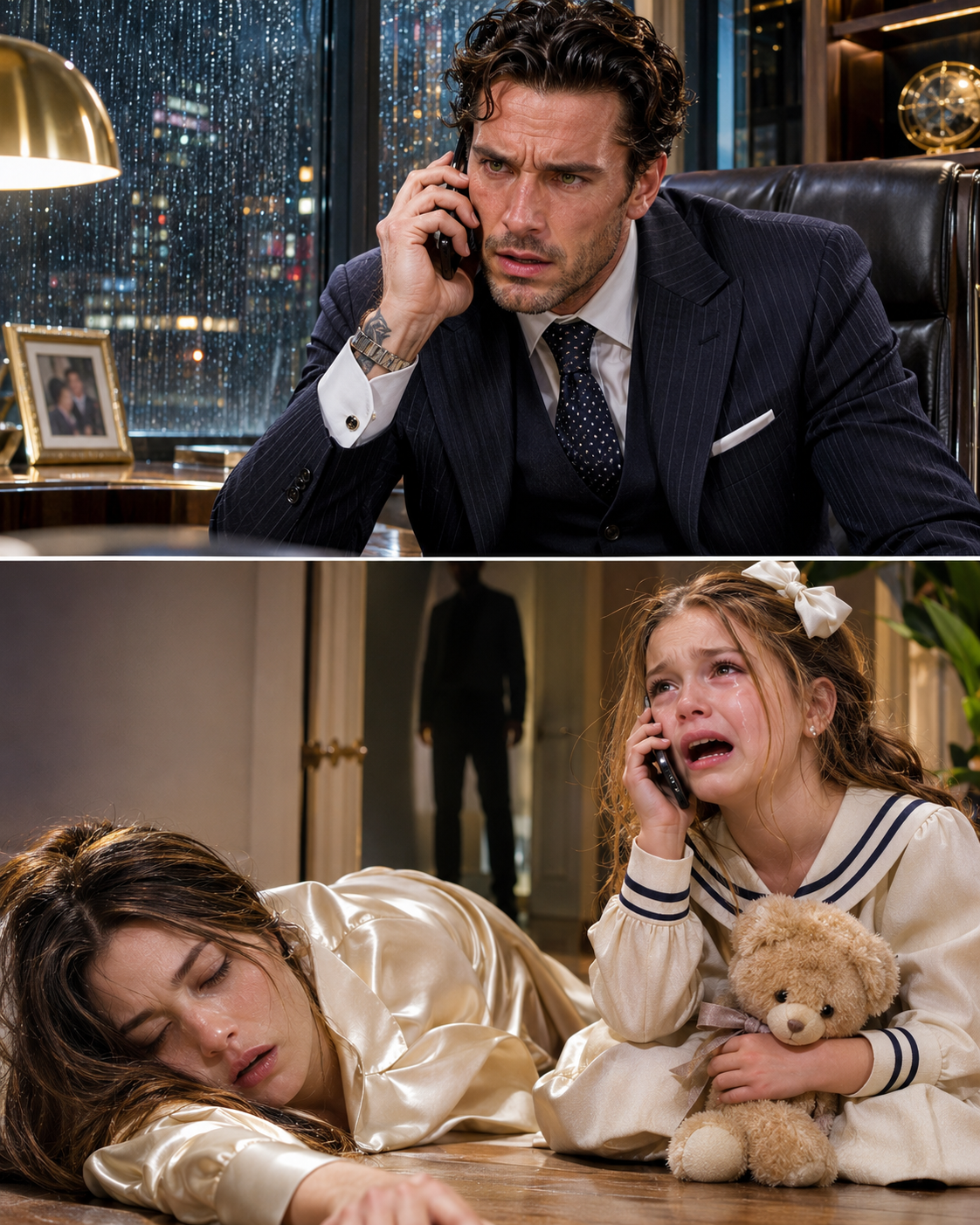
“We can try,” she said. “Slowly. For Lily.”
“For all of us.”
That night, after Lily was asleep in a room that had been empty for years, Isabella and I sat on opposite ends of the same couch. The city lights moved across the ceiling.
“I’m still angry,” she said.
“I know.”
“I’m also tired of being angry.”
I nodded. We didn’t touch. We didn’t need to. Outside, the city kept moving. Inside, for the first time since the day she walked out of the courthouse, the silence between us felt like the beginning of something instead of the end.
Lily’s birthday was six weeks away. I had already started making lists. A cake. A park. A father who would be there when she blew out the candles. It wouldn’t erase the years we had lost. It wouldn’t undo the fear she had carried in that small apartment. But it was a place to start.
And for the first time in a long time, I was not afraid of what came next.
