

PART 1
My ex-husband strode into the courtroom wearing a $12,000 designer suit, his face displaying the smug confidence of a man who believed he was beyond anyone’s reach.
He had built his reputation by winning seemingly impossible cases, and practically everyone in New York recognized his name.
But his confidence disappeared the moment the court officer made the announcement:
“All rise for the Honorable Judge Emily Carter!”
Daniel Carter turned toward the judge’s bench.
His mouth dropped open.
“Emily?”
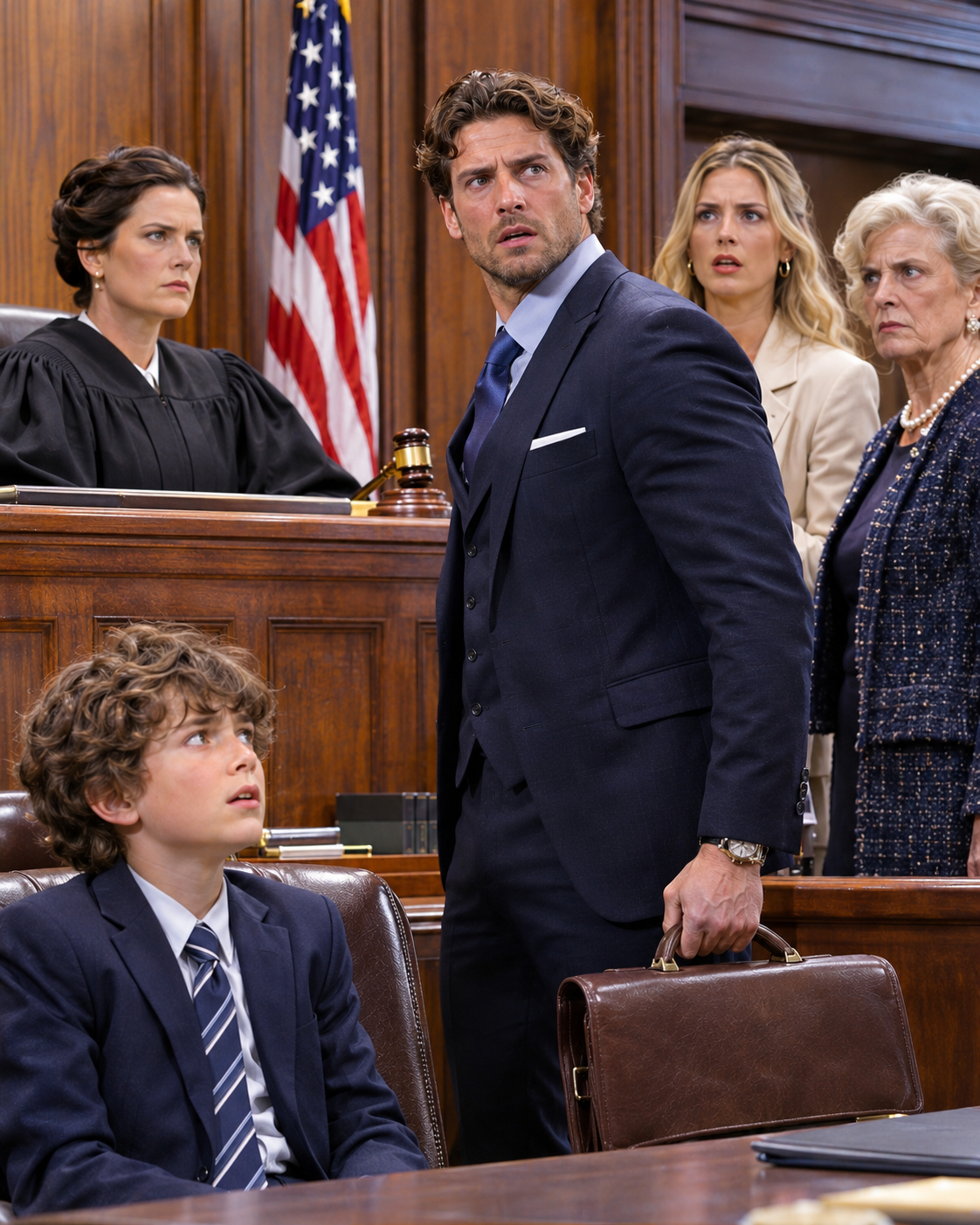
I could see the disbelief in his eyes.
Ten years earlier, he had forced me out of our marriage, convinced that I was too insignificant to achieve anything without him.
Now he was standing inside my courtroom.
And he had absolutely no idea that the woman he had once humiliated knew far more about his past than he could ever imagine.
A decade earlier, I was thirty-one years old, newly pregnant, and desperately trying to save a marriage that was already crumbling.
One evening, I returned to our modest apartment and found Daniel packing my clothes into a cardboard box.
“You’re ruining my future, Emily,” he declared. “I need someone who matches my ambitions, not a woman who spends her life reading textbooks.”
I stood there, staring at him, struggling to process his words.
What Daniel didn’t realize was that I had recently earned my Master of Laws degree.
I had already qualified as an attorney, passed the bar examination, and spent years specializing in financial crime.
I had intended to celebrate my latest accomplishment with him.
Instead, I had stumbled upon photographs of him embracing another woman.
Her name was Vanessa Blake.
She was the daughter of a wealthy and influential attorney whose connections could provide Daniel with opportunities he had spent years chasing.
“Daniel, please. Can’t we discuss this?”
He barely spared me a glance.
“There’s nothing left to discuss. Vanessa’s father has offered me a place on the partnership track. I’m finally getting the career I deserve.”
His eyes dropped toward my worn-out shoes.
“Unlike you, I’m actually going somewhere.”
His mother, Margaret, was standing nearby, watching everything with unmistakable satisfaction.
“My son deserves a sophisticated woman,” she remarked. “You were never good enough for him.”
Daniel dropped a stack of divorce papers onto the table.
“Sign these, and we can both move on.”
I looked through the documents carefully.
He was claiming our savings, our household possessions, and even the jewelry my grandmother had left me.
“You expect me to agree to this?”
He laughed dismissively.
“Then hire a lawyer. Oh, that’s right. You don’t have the money.”
What he failed to understand was that I knew my legal rights far better than he imagined.
I refused to sign.
Instead, I hired an independent attorney, contested his demands, and made certain our property was divided according to the law.
Our divorce was finalized without another personal conversation between us.
Three months later, I moved to another city.
Six months afterward, I gave birth to my son, Noah.
Daniel never discovered that I had been pregnant when our marriage ended.
I was afraid that a man who had relied on financial pressure and intimidation to control me might eventually use our child as another way to hurt me.
Concealing Noah’s existence was a difficult decision, one I would eventually have to face.
But at the time, my only concern was giving my baby a secure beginning.
I began rebuilding my life, one exhausting day after another.
I joined a prosecutor’s office and started handling complicated financial fraud investigations.
The cases were challenging, the working hours were demanding, and raising a child alone consumed almost every bit of energy I had.
Nevertheless, I refused to give up.
Gradually, my work earned the respect of experienced attorneys and judges.
I successfully prosecuted complex cases, received recommendations from respected professionals, and eventually secured an appointment to the state trial court.
Meanwhile, Daniel’s career followed an entirely different trajectory.
He became a nationally celebrated defense attorney.
His face appeared on billboards, television broadcasts, and the covers of prestigious magazines.
Journalists described him as brilliant.
He described himself as unbeatable.
For years, our lives continued along separate paths.
Then, one Monday morning, an attorney unexpectedly appeared in my courtroom as substitute counsel for a major development company.
That attorney was Daniel.
For the first time in ten years, he was required to address the woman he had once considered worthless.
BUT NEITHER OF US REALIZED THAT THE CASE BEFORE THE COURT WAS CONNECTED TO SECRETS FROM OUR FAILED MARRIAGE.
Daniel stood frozen, staring at me.
“Emily? Is that really you?”
Whispers traveled through the courtroom.
I kept my expression composed.
“Counsel, please state your name and whom you represent.”
He swallowed.
“Daniel Carter, appearing for Morland Development, Your Honor.”
The final two words seemed particularly difficult for him to pronounce.
I hadn’t known Daniel would be appearing that morning. He had replaced the attorney originally assigned to the case.
Given our previous marriage, I immediately recognized the potential conflict of interest.
“For the record, I previously had a personal relationship with counsel,” I announced. “I will recuse myself from this matter, and the case will be reassigned. No substantive issues will be addressed today.”
Daniel visibly relaxed.
Perhaps he thought the uncomfortable encounter was finally behind him.
But the case itself was merely the beginning of a much larger problem.
Outside the courtroom, he approached me with the same arrogant attitude I remembered.
“Well, congratulations,” he said. “A judge. That’s impressive. Did you marry somebody influential?”
“No, Daniel. I worked for everything I’ve achieved.”
He chuckled.
“Don’t get carried away. My firm has a reputation for winning. You know that, right?”
“Then I suppose you have nothing to be concerned about.”
His smile became strained.
“You always did think you were smarter than everyone else.”
I turned and walked away.
What Daniel didn’t understand was that Morland Development had already attracted the attention of investigators.
The company was suspected of taking advantage of elderly property owners through deceptive settlements and questionable financial dealings.
Some homeowners had reportedly been pressured into accepting unfavorable agreements.
Others discovered that compensation payments intended for them had been transferred through accounts associated with Daniel’s law firm.
The civil dispute that had brought Daniel into my courtroom involved one of those property owners.
Separately, authorities were examining evidence of potential financial fraud.
And I had something that could prove significant to their investigation.
During our marriage, I had once discovered an unusual financial settlement authorization on our shared computer.
It contained my electronic signature.
There was just one problem.
I had never approved that transaction.
When I confronted Daniel, he brushed it aside as an administrative mistake.
I hadn’t believed him.
Fortunately, I had retained the original email, its supporting attachments, and correspondence demonstrating that I had immediately challenged the authorization.
For ten years, those records had remained securely archived.
PART 2
After receiving guidance regarding my ethical responsibilities and making the appropriate disclosures, I turned the materials over to independent investigators.
I had no involvement in the proceedings against Morland.
Two weeks later, an investigator contacted me.
“Judge Carter, we’ve compared your historical documents with records recovered during the Morland investigation.”
“What did you find?”
“The same authorization structure appears in both sets of documents. The processing accounts and employee credentials match.”
A chill ran through me.
“Are you suggesting these transactions began a decade ago?”
“We believe your former husband may have helped create the system.”
The investigator paused briefly.
“And someone who worked closely with him is now cooperating.”
Her name was Rachel Monroe.
For seven years, Rachel had worked as one of Daniel’s senior paralegals.
She had retained records she was legally permitted to possess, including accounting information and communications concerning client settlements.
Investigators had also obtained additional documentation through lawful subpoenas.
Rachel alleged that Daniel had manipulated payment instructions, interfered with client authorizations, and redirected settlement funds into accounts concealed from the firm’s other partners.
His celebrated victories had made him wealthy and famous.
Yet some clients who were supposedly receiving the benefits of those victories had never collected the compensation they were entitled to.
Meanwhile, Daniel became increasingly defensive.
He publicly dismissed the accusations as an invented campaign orchestrated by disgruntled former employees.
He even suggested that his ex-wife was attempting to destroy his reputation.
Then, one afternoon, a letter arrived at my house.
It contained only a few sentences, but they made my stomach tighten.
“I know you have a child. If you interfere with my career, I’ll make sure everyone learns what you’ve been hiding.”
I stared at the handwriting.
Daniel knew about Noah.
My greatest concern wasn’t my reputation.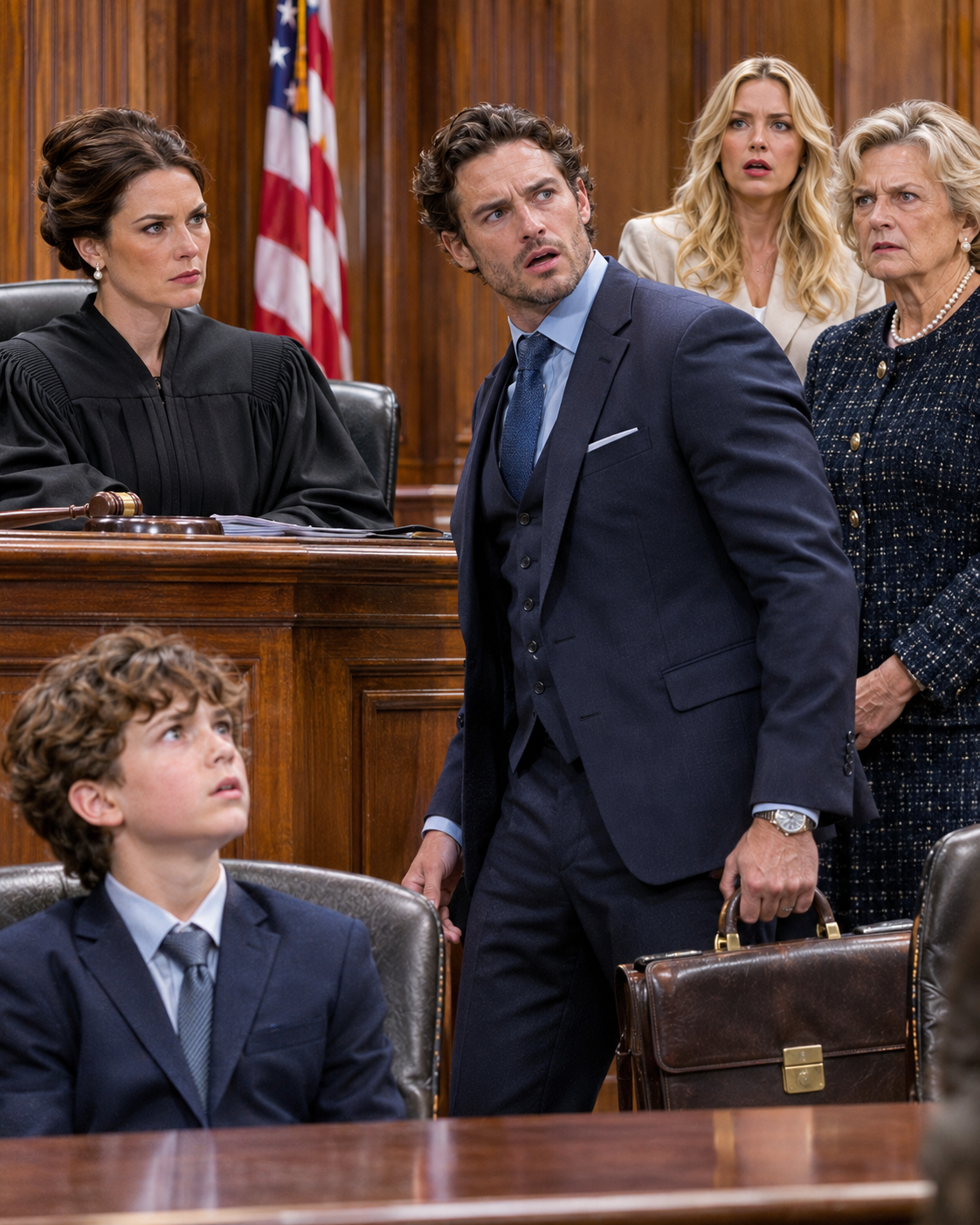
It was the possibility that my innocent son might become another weapon Daniel could use to maintain control.
I preserved the letter, notified the appropriate authorities, and sought guidance from an independent family attorney.
Three days later, investigators obtained judicial authorization to search Daniel’s law offices.
What they discovered was considerably worse than anyone had anticipated.
And the man who had spent his entire career persuading juries that his clients were innocent was about to learn that confidence could not erase a financial paper trail.
Six weeks later, Daniel Carter returned to court.
But this time, he wasn’t standing beside the defense table as a celebrated attorney.
He was seated there as the defendant.
Prosecutors had filed charges involving wire fraud, conspiracy, and the falsification of financial records.
They alleged that millions of dollars belonging to vulnerable clients had been diverted through an elaborate network of financial transactions.
Everything proceeded independently of my judicial position.
I had neither supervised the investigation nor participated in any decisions concerning his prosecution.
However, when I received a subpoena requesting testimony about the documents I had preserved, I appeared as a witness.
Daniel watched silently as I approached the witness stand.
His expensive suit was still perfectly pressed.
His expression, however, suggested that he was no longer confident about the outcome.
His defense attorney approached me.
“Judge Carter, is it true that you concealed significant personal information from my client during your marriage?”
“I chose not to disclose some of my academic accomplishments near the end of our relationship.”
“Specifically, you hid the fact that you’d completed an advanced law degree?”
“Yes.”
“And why would you do that?”
“Because our marriage was ending, and I no longer trusted my husband.”
The attorney turned toward the jury.
“So you admit you’re someone who keeps secrets?”
“Objection,” the prosecutor interrupted.
“Sustained,” the presiding judge replied. “Counsel, please focus on the relevant financial evidence.”
The prosecutor proceeded to display the settlement authorization I had discovered ten years earlier.
“Judge Carter, is that your signature?”
“It appears to be an electronic representation of my signature.”
“Did you personally sign or approve the document?”
“No.”
“Did you give anyone permission to sign it on your behalf?”
“Absolutely not.”
“Did you inform Daniel Carter that the authorization was improper?”
“Yes. I sent a written objection dated March eighteenth.”
The prosecutor presented the original correspondence.
Daniel looked toward the screen.
His expression tightened.
A decade earlier, he had assumed I was too powerless to challenge anything he did.
Apparently, he had never considered that I might have preserved the evidence.
Then Rachel Monroe took the witness stand.
She explained the procedures used to manipulate settlement instructions and redirect payments belonging to clients.
She identified internal communications in which Daniel had personally authorized suspicious transfers.
However, the most convincing evidence came from bank records independently obtained by investigators.
Thousands of transactions matched entries in the firm’s accounting system.
Daniel’s own messages directly connected him to several unauthorized payments.
One particular communication instructed an employee to remove a client’s complaint and replace it with a different payment confirmation.
The evidence continued to mount.
As prosecutors presented their case, the carefully cultivated public image Daniel had spent years constructing began to crumble.
Eventually, rather than proceed through the final stages of the trial, he accepted a plea agreement acknowledging his involvement in the fraudulent transfers.
At sentencing, the court imposed a prison sentence and ordered restitution, subject to the recovery of available assets.
Subsequent professional disciplinary proceedings resulted in Daniel losing his license to practice law.
The prestigious firm that had once proudly displayed his name removed it from its offices.
Television networks terminated their agreements with him.
The influential relationships he had spent years building could no longer shield his reputation.
Vanessa, the wealthy woman he had married after our divorce, filed to end their marriage after investigators uncovered financial accounts he had also concealed from her.
His mother, Margaret, quietly vanished from the charity events where she had once loved showing off her son’s achievements.
The same people who had ridiculed my modest clothing and ordinary ambitions were now facing public questions about the fortune they had once celebrated.
But I never considered Daniel’s downfall my greatest accomplishment.
Something much more important was waiting for me at home.
My son.
Daniel had discovered that Noah existed.
Through his attorney, he requested an opportunity to establish contact with him.
I understood that my personal feelings toward Daniel could not be allowed to determine what was best for our child.
With the assistance of a family attorney and a child counselor, I began explaining the situation to Noah in terms he could understand.
Any future relationship with his father would have to follow the proper legal procedures, with Noah’s well-being remaining the highest priority.
I refused to turn my son into a means of punishing Daniel.
Eighteen months later, I attended a ceremony honoring my years of service on the bench.
As I walked outside the courthouse, I spotted Noah running toward me with a small bouquet of flowers.
He was eleven now, smiling brightly, his eyes full of excitement.
“Mom!” he called happily. “Did you win another case?”
I laughed gently and crouched down to his level.
“Sweetheart, judges aren’t supposed to win cases. Our job is to make sure everyone receives a fair hearing.”
Noah thought about my explanation for a moment.
Then he wrapped his arms around me.
“Well, I’m proud of you anyway.”
I held him tightly.
Across the street, the afternoon sunlight reflected off the courthouse windows.
Ten years earlier, Daniel had stood inside our apartment and told me I would never achieve anything without him.
Now his legal career was finished, his reputation had been ruined by his own actions, and the life he had built through deception had fallen apart.
I hadn’t needed to misuse my authority to bring him down.
I hadn’t needed revenge.
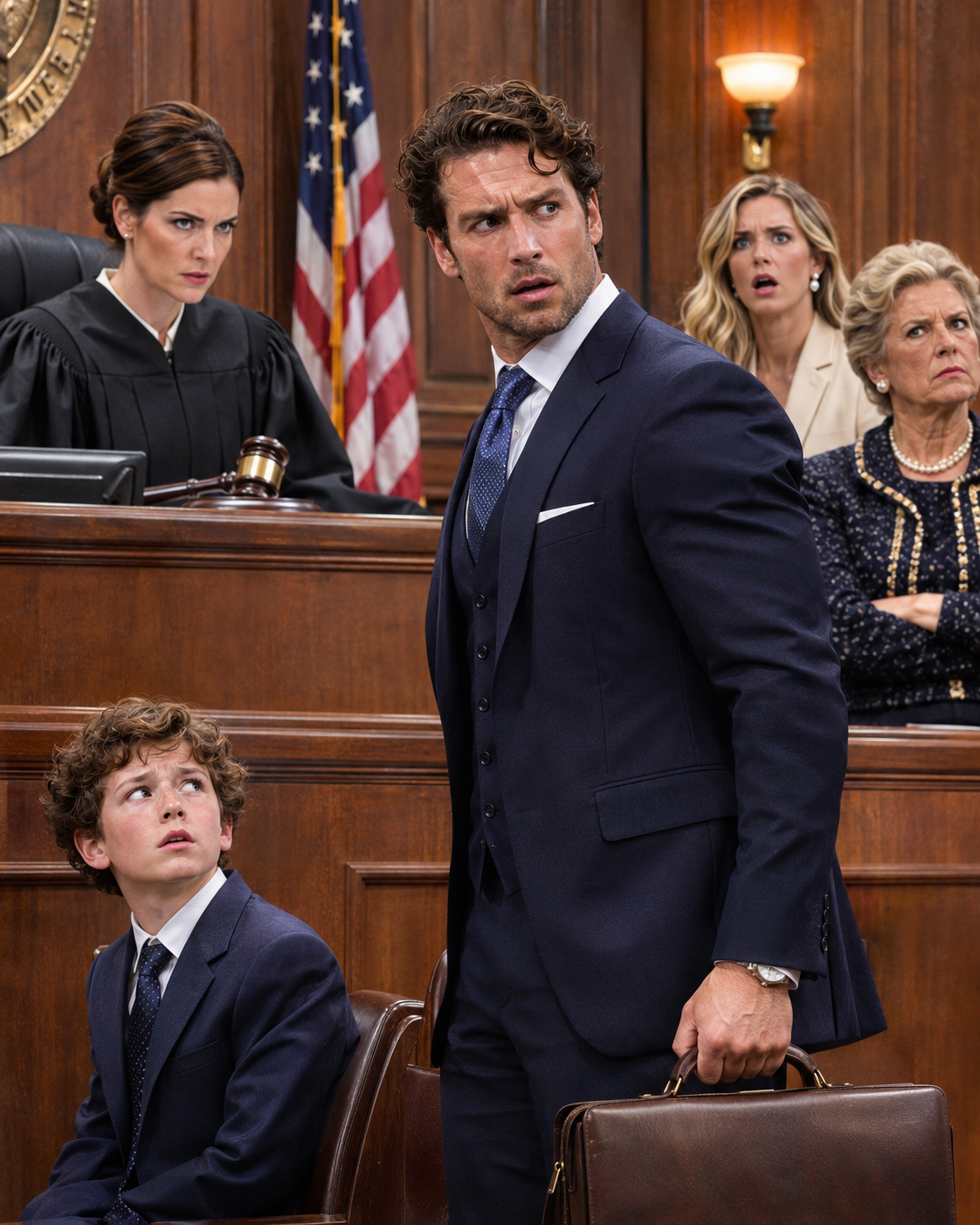
The evidence had spoken for itself.
And as Noah slipped his little hand into mine, I understood something far more important than Daniel’s punishment.
For years, I had believed my greatest victory would be proving him wrong.
But standing there beside my son, I finally understood the truth.
My greatest accomplishment was becoming a woman who no longer needed Daniel’s approval, feared his judgment, or allowed his decisions to determine the direction of her future.
The man who had once tried to convince me that I was worthless had finally lost his influence over my life.
And I had created something he could never take away.
A future of my own.
