

PART 1 — What the Families Left Behind
Five families had considered adopting three-year-old Lily, and each one had eventually withdrawn. I couldn’t understand what had made them walk away. At 68, I chose to give her a home myself. For a while, everything seemed wonderful. Then my attorney called with a warning: "There’s something about those five families you need to know."
I volunteered at a small church that arranged events for children in foster care. We collected books, clothing, toys, and whatever else the group homes said they needed. I had begun helping after my husband, Peter, and our daughter, Rebecca, died in a car accident 11 years earlier. Those were difficult years. On some mornings, simply getting dressed took almost everything I had. The silence in the house became so unbearable that I left the television on for the sound of somebody else’s voice.
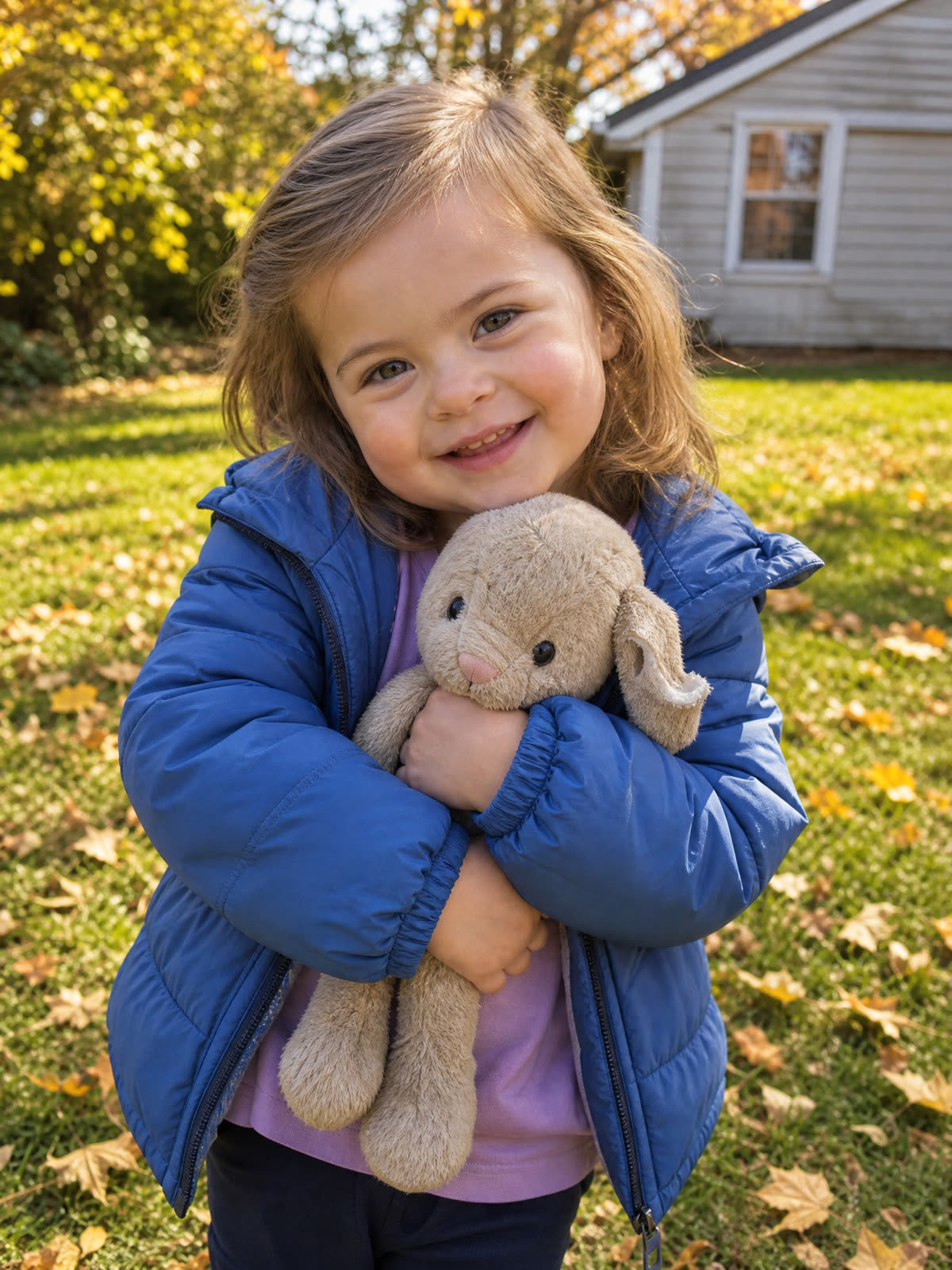
One Saturday, my pastor, Helen, asked whether I would help sort donated coats. I accepted because another afternoon by myself felt impossible. After that first visit, I continued going back. Last spring, the church arranged a visit to a children’s group home. While the other children played, I noticed a little girl sitting beside a window, clutching a stuffed rabbit that was missing an ear. "Her name’s Lily," a caseworker told me. "She’s three."
I crouched down beside her. "Does your rabbit have a name?" She studied me with a serious expression. "Bunny." "That’s a very good name." She lifted the damaged ear for me to see. "He’s broken." "I think he’s still handsome." That was when she gave me her first smile.
Later, I learned about the five families who had considered adopting her before changing their minds. The caseworker couldn’t explain their reasons. All I knew was that Lily had become quieter after each family appeared and then disappeared from her life. Before I left that day, she placed Bunny in my hands. "Can you fix him?" I told her I would try.
I was 68 years old. I lived by myself, and decades had passed since I had looked after a young child. Even so, I couldn’t put Lily out of my mind. I called the agency to ask about adoption and started the assessment process. There were interviews, health checks, visits to my home, financial reviews, and difficult questions about my age. I also arranged for my niece, Claire, to become Lily’s backup caregiver if I fell ill. Claire was 32, lived ten minutes away, and had understood my intentions from the start. "I don’t want a child losing another home," I told the social worker. "Neither do we," she replied.
After months of preparation and visits with Lily, the adoption became final. During our first evening at home, she wandered through the rooms, asking, "Mine?" "Your room," I said. "Your books. Your bed." Then she touched my sleeve. "And I’ll never leave?" "If you don’t want to." I stayed beside her until she drifted off to sleep.
Soon, scattered blocks and early morning cartoons became part of the house. Every so often, Lily reminded me of Rebecca, particularly when she tipped her head to one side while thinking. But she was entirely herself, with a fierce little personality that belonged to nobody else. She hated cereals, adored yellow socks, and insisted on deciding which stories I read aloud.
Four months later, my attorney, Martin, telephoned. "There’s been a serious omission in the records we received," he said. "Could you come to my office?" Claire remained with Lily while I drove over. An open folder lay on Martin’s desk. Before he said anything more, the look on his face had already frightened me. "These concern the five families who withdrew."
I read the first page, followed by the second. On the third, I found a name: Victor. Beneath it were copies of five written reports. Every prospective family had been threatened. One had discovered photographs of their own house inside an envelope. Another had been warned that their children would suffer if they adopted Lily. The fifth report described a man following a family after a meeting with a caseworker. "Oh, my God," I whispered. "How could they hide this from me?"

Martin waited while I finished reading. Victor, he explained, was Lily’s biological uncle. After her parents died, he had applied to take care of her, but the child welfare agency had refused the placement. Its assessment had identified violent incidents and unsafe conditions in his home. The paperwork provided to me before the adoption had said there were no suitable or interested relatives available. It had left out years of attempted contact and interference.
"He wasn’t approved," Martin said. "But he didn’t accept the decision." I kept staring at the documents. "Those families didn’t reject Lily." "From these reports, it appears they feared for their safety." I thought about the times Lily cried when an unfamiliar person raised his voice. I remembered her retreating behind my chair when a delivery driver knocked. "Does Victor know where she lives?" Martin’s expression grew troubled. "We don’t know yet."
Then I thought of the gray sedan. Over the previous month, I had seen it parked across from my house several times. On one occasion, it pulled away just as I stepped onto the porch. I had assumed its driver was visiting someone nearby. When I mentioned it, Martin immediately reached for his telephone. We contacted the agency’s safeguarding supervisor and filed a police report. Martin emphasized that the documents didn’t establish who owned the sedan or prove that a crime had taken place. They did, however, offer investigators important leads.
The journey home seemed to take twice as long as usual. While waiting at a red light, I found myself checking every vehicle behind mine. I hated the way fear had slipped into my life. When I opened the front door, Claire and Lily were sitting on the floor, building a tower. "Mama!" Lily shouted. She had begun using that name during our adoption visits before eventually choosing "Mama Rose." My name is Rosemary, and I cherished both.
I pulled her into such a tight embrace that she wriggled against me. "Too much, Mama!" "Sorry, sweetheart." That night, I checked the windows three separate times. Afterward, I sat in the doorway of her bedroom and watched her sleeping, Bunny tucked beneath her chin. I wanted to confront Victor. I wanted to ask how he could frighten families whose only intention had been to offer a child a loving home. Instead, I reached for the phone and called Claire. "We need a plan," I said.
PART 2 — The Man Outside the School
Claire arrived early the following morning. We went through Lily’s preschool pickup arrangements together, added an emergency contact password, and made certain the staff understood that only approved adults could collect her. We arranged to have a video doorbell and outdoor lights installed. I also warned Lily’s teacher about the possibility of an unauthorized visitor. I didn’t share frightening details, only what she needed to help keep Lily safe.
The agency appointed a worker named Denise to examine what had happened. During our first meeting, she appeared uncomfortable. "Those reports should have been considered and disclosed during your assessment," she said. "Why weren’t they?" "An internal review has begun. I don’t want to give you an answer that hasn’t been established." It wasn’t the response I had hoped for. Still, she wasn’t trying to pretend the omission was unimportant.
Denise explained that Victor had repeatedly requested information about Lily’s placement, even after the adoption was finalized. The agency was investigating whether employees had disclosed anything they should have kept private. "Could he take Lily away?" I asked. "His failed application does not give him authority to collect her," Denise said. "Your adoption is final. If he wants to raise a legal issue, he must use the courts." Her explanation didn’t rid me of the fear that he might try to approach Lily.
Two days afterward, an officer named James came to see me with photographs from a neighbor’s security camera. The footage showed a gray sedan stopping near my house on two afternoons, with a man remaining in the driver’s seat. The images were too grainy for James to identify him. The license plate, however, had given the police something to investigate. "We don’t want you to confront anyone," he told me. "Call us if the car returns. Keep your doors locked, and follow the preschool’s safety procedures." I agreed, although every part of me wanted to do more.
That Saturday, Helen came over from church with soup. She stayed while Lily colored at the kitchen table. "I’m afraid I’ve made a terrible mistake," I admitted. Helen lowered her cup. "By adopting her?" "I’m old enough to be her grandmother. What if I can’t protect her?" She glanced at Lily, who was busy drawing an enormous purple cat.
"You asked those questions before adopting her. You built a support system. You called for help when something changed. That’s protecting her." I wanted to believe that she was right. Then Lily carried her picture over. "That’s you," she said, pointing to the cat. "Why am I purple?" "Because you’re pretty." Helen laughed until tears filled her eyes. For one peaceful hour, the folder almost slipped from my thoughts.
The next Wednesday, I reached the preschool ten minutes before dismissal. Lily’s class had been making paper snowflakes, and I had promised to hang hers in our kitchen window. As I walked across the parking lot, a man emerged from behind a parked pickup truck. "Are you the woman who adopted Lily?" I stopped walking. He appeared to be about 40, with tired eyes and a dark jacket. "Who are you?" "Victor. Lily’s uncle."
My grip tightened around my keys. His eyes moved toward the school entrance. "I just want to see my niece." "You need to contact the agency." "I’ve been contacting them for months. Nobody listens to me." He stepped closer. I backed toward the entrance, where other parents were arriving. "Please keep your distance." His expression hardened. "She’s my brother’s daughter. She’s all I’ve got left of him."
I could hear the pain behind his words. But I also remembered those photographs sent to frightened families. "If you cared about Lily’s safety," I said, "you wouldn’t have threatened the people trying to care for her." His eyes flashed. "They were going to take her away from her family." "They were trying to give her a home." "You don’t understand. I promised my brother that I’d look after her." "Then you should have worked through the proper process instead of terrifying people."
"You’re almost 70. What happens when you die?" His question hurt because I had already asked it of myself. "I’ve made plans for Lily," I replied. "And you will not pick her up from this school." He started toward the entrance. I made no attempt to block him with my body. Instead, I went through the open door, told the receptionist an unauthorized man was outside, and asked her to follow our safety plan.

The receptionist contacted the director. While I called the police, staff moved the children away from the entrance. Victor stayed outside, shouting that he was entitled to see Lily. His voice carried through the glass. "Tell her I didn’t forget her!" My hands shook so violently that I nearly dropped the phone.
The officers arrived before the children were dismissed. They spoke to Victor in the parking lot, then asked me to give a statement. James was there among them. "We’ve documented what happened," he said. "We’ll review this alongside the previous reports and the surveillance evidence." I asked if they would arrest Victor. "That depends on the evidence and what offenses can be established," he answered. "For now, don’t engage with him. Your attorney can advise you about a protective order."
When Lily came outside, she spotted the police car. "Are we in trouble, Mama?" "No, sweetheart." She reached up for my hand. "Can we go home?" "Yes." That evening, she wouldn’t allow me to leave her bedroom. I sat beside her bed on the floor and read the same book three times.
During the fourth reading, she interrupted me. "People go?" I lowered the book. "What do you mean?" "People go away." My throat tightened. "Sometimes people go away," I said carefully. "But you’re safe with me tonight. Also, Claire and Helen are here for you, too. You can always tell us when you’re scared."
She searched my face. "You’ll always be here?"
PART 3 — The Home She Could Finally Trust
"I’ll do my best to always be here." Lily fell asleep with two of my fingers clasped in her hand. The following day, I asked Denise to recommend a therapist who worked with young children in foster care and adoption. I didn’t want Lily carrying fears she couldn’t put into words.
We started play therapy the next week. The therapist worked with dolls, toy houses, and drawing games. I began learning how to respond to Lily’s questions without offering promises that nobody could truly guarantee. Some appointments were hard. Others resembled ordinary play. Gradually, instead of hiding, Lily began telling us when something frightened her.
At the same time, Martin helped me submit a formal complaint about the reports missing from my adoption records. The agency began reviewing its files and offered corrected disclosures, including the earlier families’ accounts and relevant safety information. I wanted to know whether somebody had intentionally kept the documents from me. "We don’t know," Martin said. "An omission this serious needs an investigation, not a guess."
The police later informed us that the gray sedan belonged to someone connected to Victor. They were still working to establish who had been driving on the days it appeared near my home. Victor had also been interviewed about the threats the five families had reported. I wasn’t told every detail, and I didn’t need to be. What mattered was that his conduct was finally receiving scrutiny and that the preschool had clear instructions about contact.
One evening, a letter arrived through Martin. Victor had written it. He described his brother as his closest friend and said that losing him had left him angry with everyone. He claimed the system had condemned him for mistakes he had made years before. Then came the sentence, "I only wanted Lily to remember where she came from."
I read those words several times. Part of me understood the wish to preserve a connection to family. What I couldn’t understand was trying to preserve it through threats. I chose not to answer. After seeking advice about what was appropriate to retain, I placed the letter among the records Lily might someday want to read. She deserved an honest account of her beginnings, rather than one shaped by my fear or Victor’s anger.
Several months went by. The police investigation remained ongoing, and Martin helped me pursue restrictions on unwanted contact through the legal avenues available. Victor stopped appearing near our house and the preschool. The agency’s review eventually established that the threatening reports had remained in a separate internal file instead of being transferred into the adoption disclosure packet.
The agency sent a written apology and began revising its procedures for handling records. I appreciated the apology, but I told them it wasn’t enough. Five families had been frightened. Lily had spent additional months waiting for a home. I had been denied information necessary to protect her. I asked them to keep the complaint open until the new procedures had been checked.
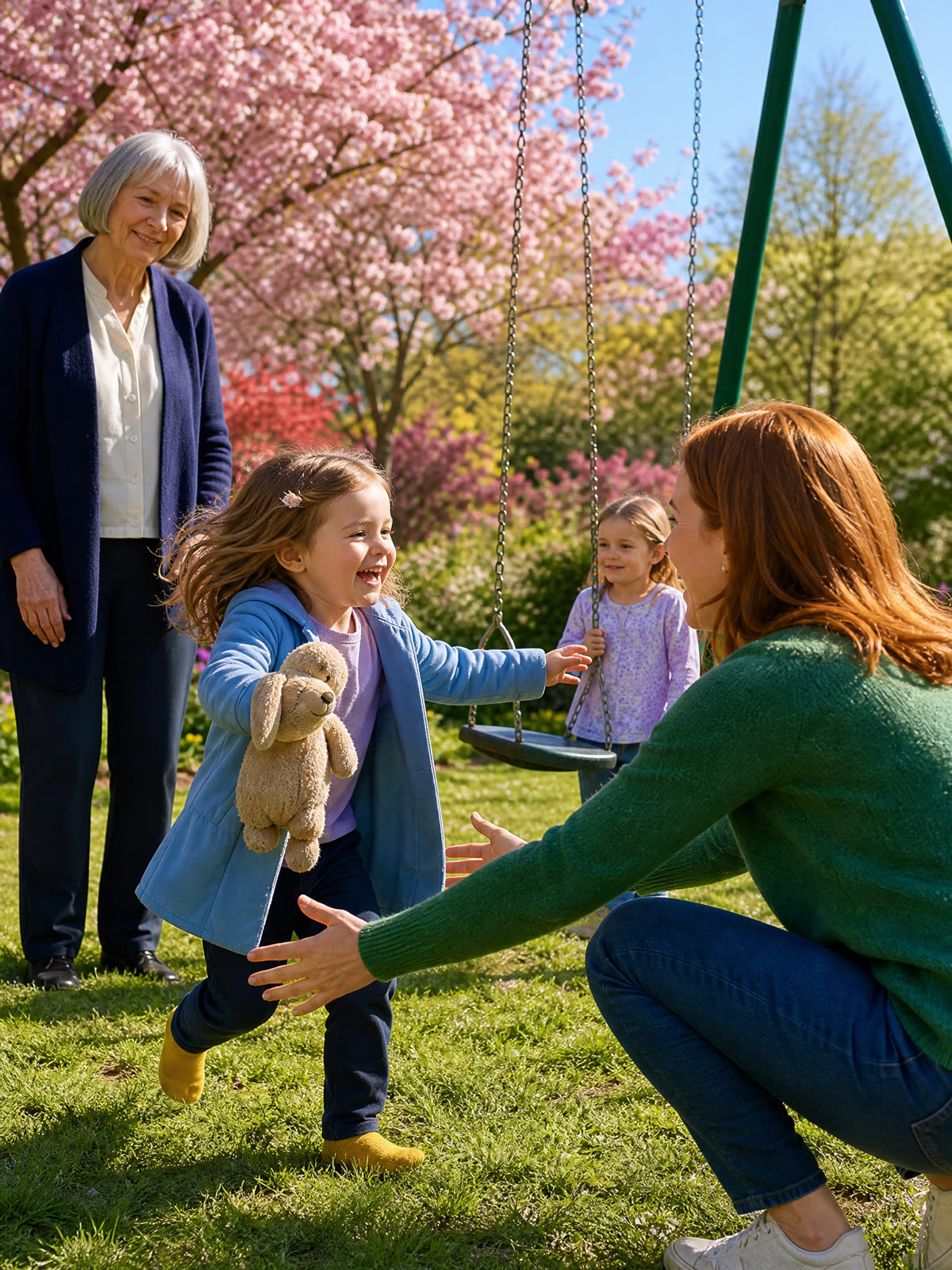
In early spring, Claire and I brought Lily to a park. With Bunny tucked under one arm, she ran toward the swings. "Push me, Mama!" I gave her a gentle push. "Higher!" "Not too high." She giggled.
Then she noticed another little girl waiting beside the swings. "She can have a turn," Lily announced. She climbed down and offered the other child the seat. I watched her run back to Claire, who gathered her into her arms.
For years after Peter and Rebecca died, I had believed that loving somebody again meant making myself vulnerable to another terrible loss. Perhaps it did. But love had also returned laughter to my kitchen and given a frightened little girl somewhere she could leave her toys.
That night, I removed the folder from the drawer where I had been keeping it. Five families. Five reports. Five opportunities Lily had nearly had for a permanent home. I had once believed those families looked at her and decided she wasn’t worth the trouble. Now I understood that they had been intimidated by a man who claimed to love her but couldn’t accept that her safety mattered more than what he wanted.
I didn’t blame those families for being frightened. I wished somebody had protected them as well. As I put the papers away, Lily climbed onto my lap. "Story?" she asked. "Which one?" "The bunny one." I reached for her favorite book, and she settled against me, warm and sleepy.
Halfway through the story, she interrupted. "Mama Rose?" "Yes?" "I love our home." I kissed the top of her head. "That’s sweet. I love our home, too." Watching her turn the page with her small, careful fingers, I finally understood something I hadn’t known when we first met. I hadn’t rescued Lily after five families decided they didn’t want her. I had welcomed a child caught in a fight she had never chosen. My responsibility wasn’t to win that fight. It was to let her grow up without having to fight it herself.
Was Victor’s grief over his brother’s death enough to explain his determination to get Lily back—or had his threats made his intentions impossible to defend?
Disclaimer: This story is a work of fiction inspired by real-life themes. Names, characters, places and events are fictionalized, and any resemblance to real persons is purely coincidental. Images are for illustration purposes only.
