

PART 1
“Get out of here. You don’t belong here.”
“I’m Judge Ellison.”
“Hold still.”
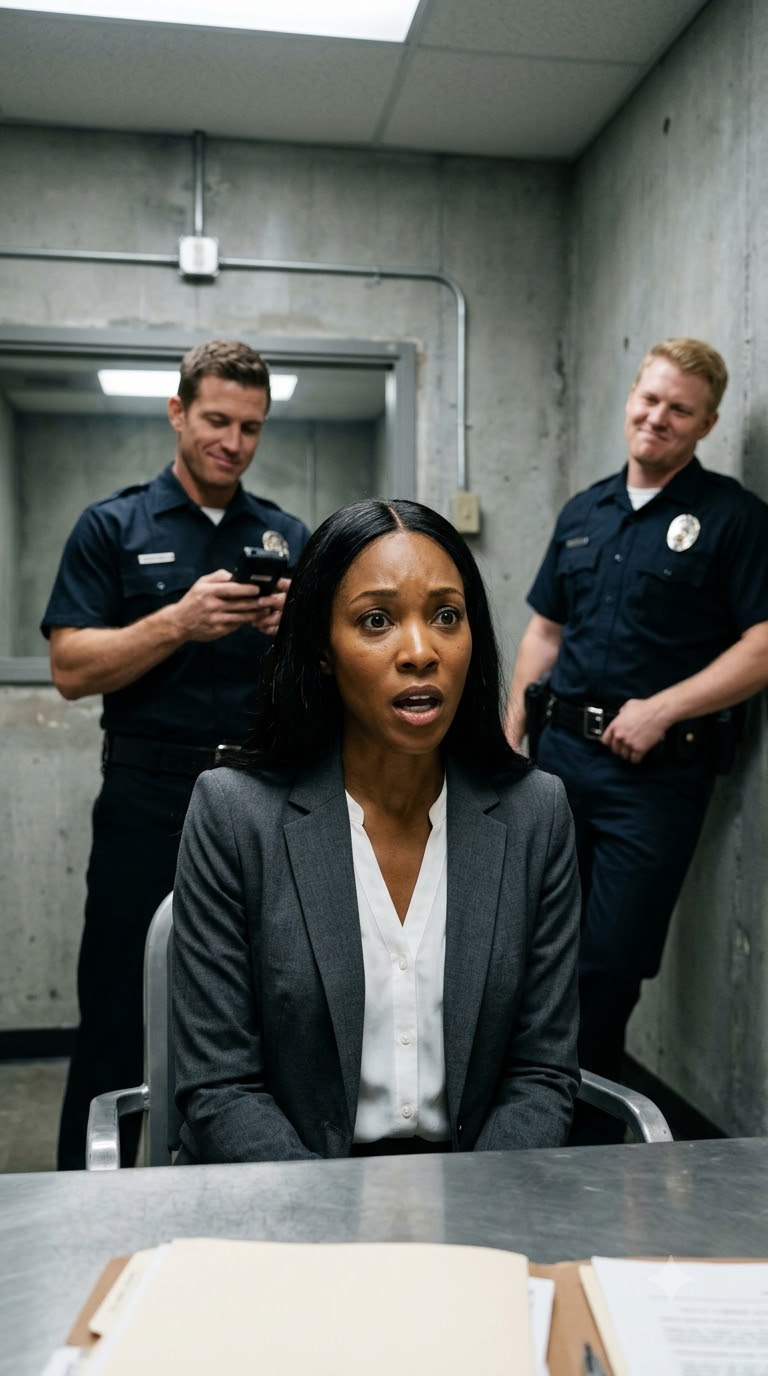
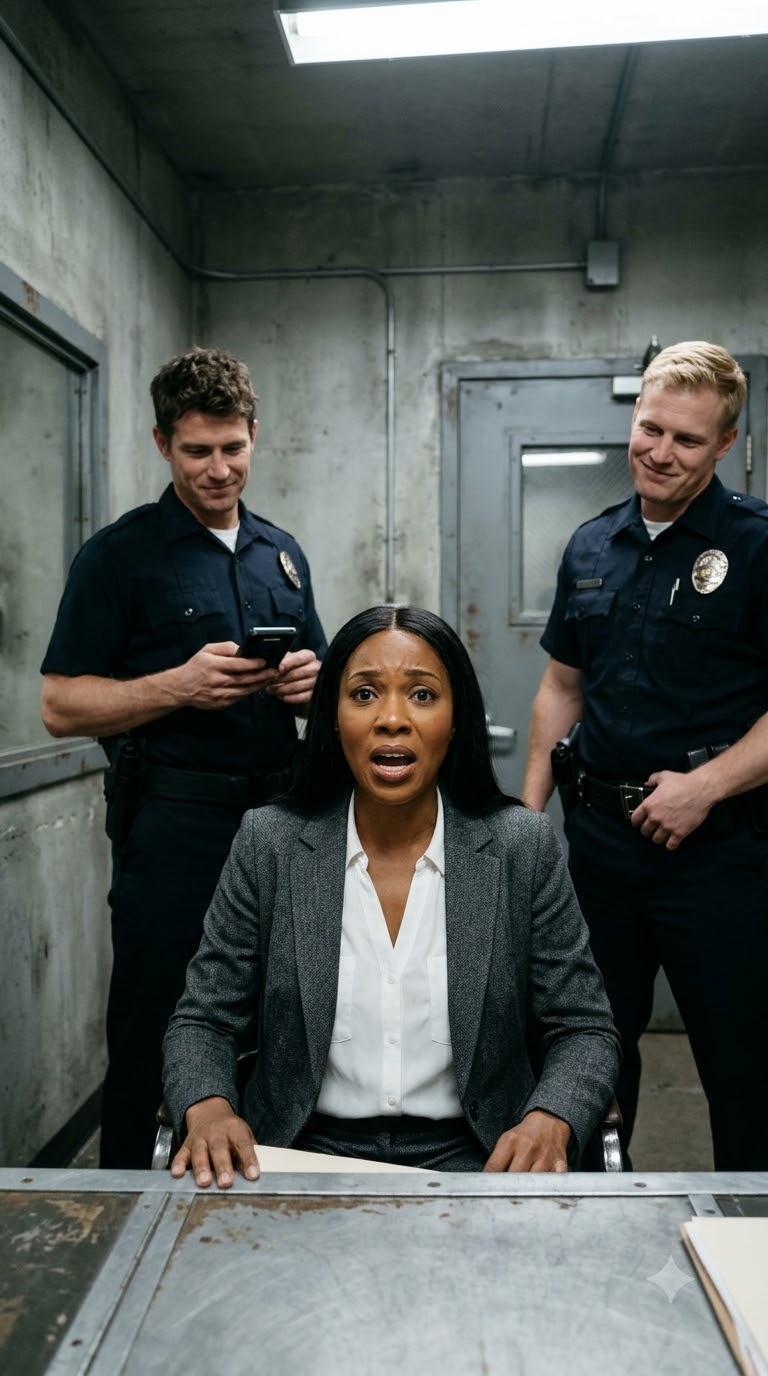
Derek Voss grabbed a fistful of Naomi Ellison’s natural hair and jerked her head backward against the cold metal chair.
In his other hand, a pair of electric clippers buzzed relentlessly, their sharp blades hovering dangerously close to her face.
“You black women always walk in here like you own the place,” he announced, making certain Pruitt could hear every word.
“Let’s fix that.”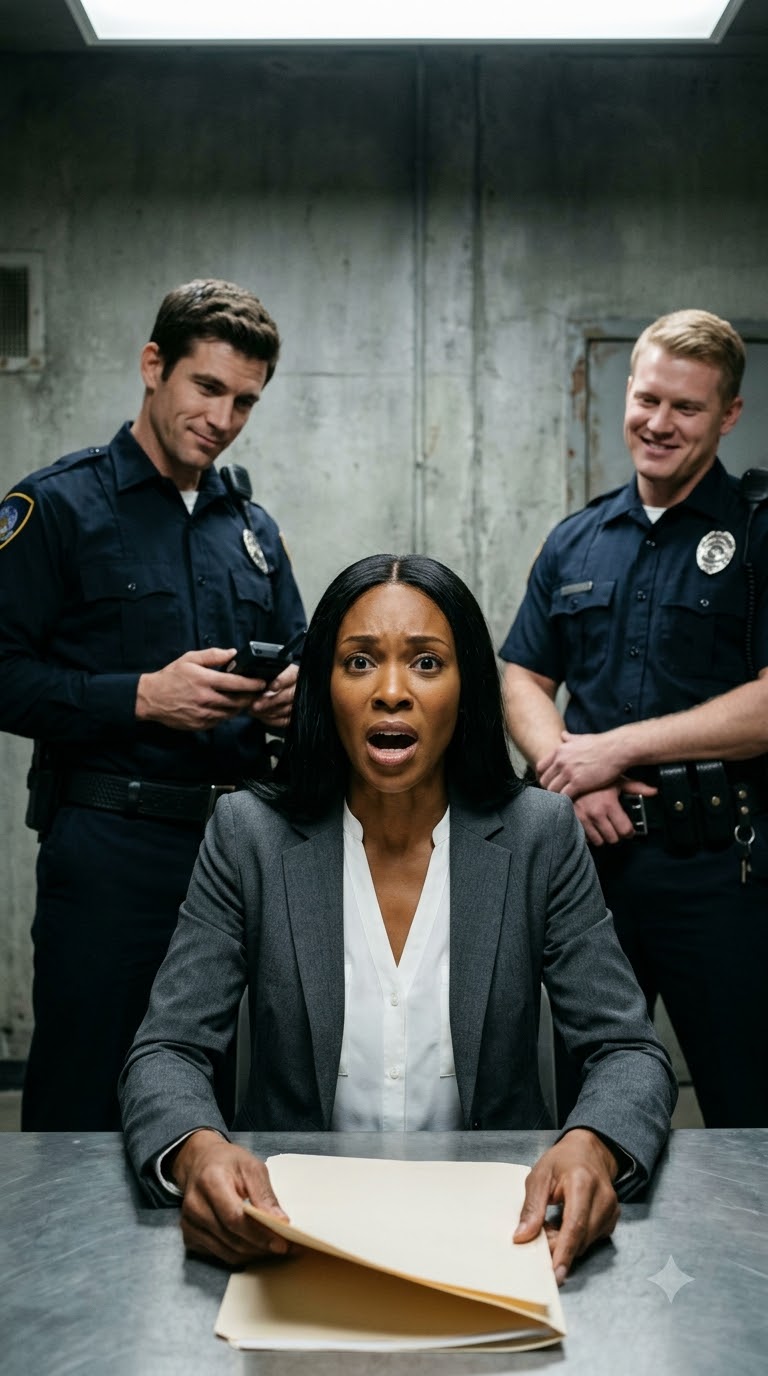
The first pass of the clippers sliced a naked path through twenty years of carefully nurtured pride.
Shane Pruitt lounged against the wall, his arms crossed over his chest, laughing at the humiliation unfolding before him.
“Look at her still making that face.”
“Like she’s better than us. You still feel special, sweetheart?”
Thick, dark curls scattered across the concrete.
One after another.
Lieutenant Crane stood silently in the doorway.
He offered no objection.
He made no effort to stop what was happening.
He merely observed.
Voss stepped away to examine what he had done, cocking his head with obvious satisfaction.
His expression resembled that of a man appreciating something he had intentionally ruined.
“There.”
“Now you look like you belong on the street where we found you.”
Naomi refused to flinch.
She refused to cry.
She refused to beg.
Instead, she committed every face in that room to memory.
Because before another eighteen hours had passed, those same men would find themselves standing in her courtroom.
And this time, they would not control what happened next.
Naomi Ellison’s alarm rang precisely at 5:47 a.m.
For eight consecutive months, it had awakened her at that exact minute every weekday.
She had never once reached for the snooze button.
That habit had been passed down by her mother, Gloria, who had risen before dawn for thirty years to make certain she arrived at work on time.
Not because anyone would necessarily have noticed a few minutes of lateness, but because Gloria had always refused to provide anyone with a reason to question her commitment.
Naomi sat upright in her quiet apartment and remained motionless for exactly sixty seconds.
One minute.
It was a ritual she observed every morning.
Sixty seconds of silence before the weight of the coming day settled onto her shoulders.
For a woman serving on the federal bench, Naomi lived with extraordinary simplicity.
Her home was a one-bedroom apartment inside a mid-rise residential building on the eastern side of Columbus, Georgia.
There was no housekeeper.
No chauffeur.
No personal chef preparing breakfast.
She ironed her own clothing.
She made her own coffee.
To the other residents, she was merely the quiet fourth-floor neighbor who smiled politely in the elevator and kept an unusually disciplined schedule.
Nobody in the building knew what she did for a living.
Naomi preferred it that way.
She entered her bathroom and stood before the mirror, carefully running her fingers through her thick natural hair, which formed the beautiful, full crown she had worn since law school.
Her mother had always called it her armor.
“God gave you that hair, baby. Don’t ever let anybody make you feel like it’s too much.”
Gloria Ellison had spent thirty-one years cleaning the Muscogee County Federal Courthouse.
She had begun as a teenager, guiding her cleaning cart across polished marble corridors before the lawyers arrived each morning and long after they had gone home.
She had washed the very floors on which attorneys argued over fortunes worth millions.
She had cleaned the hallways where judges delivered decisions that changed lives forever.
She had worked inside the building where justice was supposed to mean something.
And throughout those decades, Gloria had carried out her responsibilities without protest.
Without recognition.
Without most of the people who passed her ever learning her name.
Naomi had done her homework inside that courthouse.
Literally.
Whenever Gloria worked an evening shift and had nobody available to watch her daughter, she brought Naomi to work.
The little girl would sit in the basement break room, spreading her schoolbooks across a folding table.
Fluorescent lights hummed overhead while her mother continued cleaning the floors upstairs.
It was there, in that basement, that Naomi first discovered a book about the law.
And it was there that she made herself a promise.
Someday, she would walk into that courthouse through the front doors.
And she would never again be expected to leave through the service entrance.
Eight months earlier, that childhood promise had finally come true.
At forty-six, Naomi had become the district’s first Black woman appointed to the federal bench.
But her appointment had not been welcomed by everyone.
Chief Judge Harold Sutton had controlled the district’s administration for nineteen years and had publicly favored another candidate.
That candidate was a former prosecutor with deep connections to the police union and a judicial history strongly sympathetic to law enforcement.
When Washington appointed Naomi instead, Sutton sent a professionally worded congratulatory email.
Then, over the next three months, he repeatedly assigned her the district’s most politically sensitive and difficult proceedings.
One of those cases now rested on her kitchen table.
Case 2024-CR-0318.
United States versus Officers Derek Voss and Shane Pruitt.
The case had been transferred to Naomi’s district after two judges in its original jurisdiction recused themselves because of personal relationships with the accused officers.
On paper, Naomi was an entirely appropriate choice.
She had never personally known either defendant.
She had no professional relationship with the Columbus Police Department.
Under the applicable standards of judicial impartiality, there was no apparent reason she could not preside.
But Sutton had selected her for another purpose.
He believed she could be intimidated.
She had been a judge for only eight months.
She lacked influential political connections.
She had not yet developed the institutional alliances that protected more established judges.
Sutton expected the police department’s resistance to wear her down.
He believed she would eventually surrender to that pressure and quietly withdraw from the proceedings.
He could hardly have misunderstood Naomi more completely.
That morning, she sat at her kitchen table, drinking coffee while examining the documents in front of her.
Voss and Pruitt were accused of violating civil rights under color of law.
Three incidents.
Three victims.
Every victim was a Black man.
And all three encounters had been recorded on video, although the police department had originally maintained that no footage existed.
The youngest victim was seventeen.
His injuries were so extensive that surgeons had been forced to reconstruct his jaw.
Naomi studied the photographs for several moments before turning the page.
The teenager’s name was Isaiah Brooks.
He had been walking home from his part-time job at a grocery store when Voss and Pruitt stopped him near a convenience store.
Their report claimed he had resisted arrest and attempted to strike an officer.
The surveillance recording showed something entirely different.
Isaiah had been standing with his hands raised.
Pruitt had struck him first.
Voss had joined seconds later.
And the teenager had collapsed onto the sidewalk before either officer placed him in handcuffs.
Naomi closed the folder.
She had read the evidence many times, but the photographs still disturbed her.
The other victims were older.
One was a thirty-four-year-old delivery driver named Anthony Mercer.
The third was Raymond Cole, a fifty-nine-year-old mechanic who had been detained outside his own garage.
Each incident followed a disturbingly similar pattern.
An ordinary encounter.
An unnecessary confrontation.
Violence.
Then an official report contradicting the available evidence.
The trial was scheduled to begin the following morning.
Naomi had planned to spend the day reviewing final motions and meeting with the courtroom clerk.
She had no reason to believe that, before sunset, she would become another victim of the very men whose case she was preparing to hear.
At 7:15 a.m., her phone rang.
The caller was Margaret Ellis, her longtime friend and former law school classmate.
Margaret now worked as a federal prosecutor in another district.
“Are you ready for tomorrow?”
Naomi glanced toward the files.
“As ready as anyone can be.”
“I heard the police union is planning a demonstration outside the courthouse.”
“People have a right to demonstrate.”
“That’s not what worries me.”
Naomi waited.
Margaret lowered her voice.
“I’ve also heard Sutton has been talking to people about your assignment.”
“He’s been talking since the day I arrived.”
“This feels different.”
Naomi looked toward the photograph of her mother resting beside the kitchen window.
Gloria had died three years earlier, shortly before Naomi received the nomination that would change her life.
She had never seen her daughter wearing judicial robes.
But Naomi carried her memory into every courtroom.
“I’ll follow the law,” Naomi answered. “Whatever anyone else decides to do.”
After ending the call, she finished her coffee and gathered her documents.
She selected a charcoal-gray suit, a cream blouse, and simple pearl earrings.
Her judicial robe remained inside her chambers.
She placed her identification and courthouse credentials into a black leather handbag.
Then she left her apartment.
Outside, Columbus was beginning to wake.
Delivery trucks moved through the streets.
Storefront lights flickered on.
People hurried toward jobs that would consume most of their day.
Naomi drove herself downtown in an aging silver sedan.
She had never felt the need to purchase a luxury vehicle simply because her professional title had changed.
By 8:05 a.m., she was approaching the courthouse.
Several police vehicles were parked near the entrance.
A group of demonstrators stood across the street, holding signs supporting the accused officers.
Others carried signs demanding accountability for the three victims.
Naomi slowed her vehicle.
The tension surrounding the trial had clearly intensified.
Rather than enter through the crowded front lobby, she drove toward the secured employee parking area behind the building.
That decision would become the first link in a chain of events that none of the officers involved would ever forget.
The employee entrance had been temporarily closed because of maintenance.
A handwritten notice directed authorized personnel toward a secondary security checkpoint near the basement.
Naomi followed the signs.
She had walked those basement corridors hundreds of times as a child.
The familiar smell of cleaning solution brought back memories of Gloria pushing her cart past the storage rooms.
For a brief moment, Naomi almost smiled.
Then a voice interrupted her.
“Hey. You.”
She turned.
Officer Derek Voss stood near the checkpoint beside Shane Pruitt.
Both men were wearing uniforms.
They had been permitted to remain on administrative duty while their criminal case proceeded, although their patrol assignments had been suspended.
Naomi recognized them immediately from their photographs.
She kept her expression neutral.
“Can I help you?”
Voss looked her up and down.
“Where do you think you’re going?”
“To my chambers.”
Pruitt laughed.
“Your chambers?”
Naomi reached into her handbag.
“I have identification.”
Voss stepped forward.
“Get out of here. You don’t belong here.”
“I’m Judge Ellison.”
“Hold still.”
Before she could remove her credentials, Voss seized her wrist.
Her handbag fell onto the concrete.
Papers spilled across the floor.
Naomi pulled her arm back.
“You need to release me.”
Instead, Voss pushed her toward a metal chair inside the nearby security office.
Pruitt shut the door.
Lieutenant Crane, who had been supervising the checkpoint, appeared in the doorway.
He looked at Naomi.
Then at Voss.
He said nothing.
Naomi demanded that they contact the chief clerk or courthouse security director.
Voss ignored her.
He accused her of impersonating a judge.
Pruitt searched her handbag and removed her credentials, but rather than examine them properly, he tossed them onto a desk.
Voss noticed her hair.
Something in his expression changed.
It was no longer enough for him to prevent her from entering the building.
He wanted to humiliate her.
He opened a cabinet containing personal grooming equipment that had been left among confiscated property awaiting inventory.
He removed a pair of electric clippers.
Naomi understood his intention when he switched them on.
She looked directly at Lieutenant Crane.
“Stop him.”
Crane remained motionless.
Voss stepped behind her.
The clippers began to buzz.
And within seconds, dark curls were falling around her feet.
Naomi felt the cold metal pass across her scalp.
She could hear Pruitt laughing.
She could see Crane watching.
But she forced herself to concentrate on details.
The clock above the doorway.
The position of the security camera.
The names on the officers’ badges.
The exact words they spoke.
The credentials lying untouched on the desk.
She knew that the moment would eventually become evidence.
And she intended to remember it accurately.
When Voss finally stepped away, the room fell strangely quiet.
Naomi reached toward her head.
The hair she had worn proudly for two decades was gone in uneven patches.
Her scalp felt exposed.
For one terrible second, she remembered her mother’s voice.
“God gave you that hair, baby. Don’t ever let anybody make you feel like it’s too much.”
Her throat tightened.
But she did not allow the officers to see her grief.
She stood.
Straightened her jacket.
Picked up her handbag.
And retrieved her identification from the desk.
Voss smirked.
“Where do you think you’re going now?”
Naomi looked at him.
“To report what happened.”
Pruitt moved toward the door.
“You aren’t going anywhere until we say so.”
At that moment, a courthouse maintenance supervisor appeared in the corridor.
His name was Samuel Price.
He was sixty-two years old and had worked in the building for nearly twenty-five years.
Samuel had known Gloria Ellison.
He had watched Naomi grow from a little girl doing homework in the basement into an attorney who eventually became a judge.
When he saw her standing in the security office, he stopped.
His eyes moved to her damaged hair.
Then to the clippers in Voss’s hand.
“Judge Ellison?”
Voss turned sharply.
Samuel stepped forward.
“Your Honor, are you all right?”
The silence that followed was immediate.
Pruitt looked toward Voss.
Crane finally straightened.
Naomi answered without raising her voice.
“No, Mr. Price. I’m not.”
Samuel looked at the three officers.
“What happened here?”
Nobody responded.
Naomi picked up her documents.
“Please contact the United States Marshals Service. Tell them I need immediate assistance.”
Samuel reached for his radio.
Crane suddenly moved.
“Hold on. There’s been a misunderstanding.”
Naomi looked directly at him.
“No, Lieutenant. There has not.”
Within minutes, two deputy marshals arrived.
PART 2
They recognized Naomi immediately.
Their expressions changed when they saw her scalp.
Deputy Marshal Elena Brooks stepped forward.
“Your Honor, who did this?”
Naomi pointed toward Voss.
“He did. Officer Pruitt assisted him, and Lieutenant Crane witnessed it without intervening.”
Voss began speaking over her.
“She was trespassing. We didn’t know who she was.”
Naomi raised her identification.
“I told you who I was.”
Pruitt gestured toward the scattered papers.
“She was acting suspicious.”
Samuel interrupted.
“I heard her identify herself when I came down the hallway. And I saw the clippers.”
Deputy Brooks directed the officers to remain where they were while she contacted her supervisor.
Then she turned toward Naomi.
“Would you like medical attention?”
Naomi hesitated.
Her scalp was sore.
A small cut near her left temple had begun to bleed.
But the physical injury was not what frightened her most.
She knew how quickly evidence could disappear inside institutions determined to protect themselves.
“I want the security recordings preserved,” she answered.
Brooks nodded.
“We’ll secure them.”
“And the clippers. My hair. Everything in this room.”
“Understood.”
Naomi looked toward the hallway leading upstairs.
“I also need to speak with the chief clerk.”
The deputy marshal gently lowered her voice.
“Your Honor, you don’t have to go upstairs right now.”
Naomi glanced at the concrete floor where strands of her hair remained scattered.
Then she looked at the staircase.
“My mother cleaned this building for thirty-one years,” she said quietly. “I am not leaving it because three men decided I don’t belong here.”
And she walked toward the courtroom.
The courthouse was already crowded when Naomi entered the main corridor.
Attorneys moved between conference rooms.
Clerks carried stacks of files.
Reporters gathered near the elevators.
Several people stopped walking when they saw her.
A woman in a gray suit covered her mouth.
A court employee whispered something to a colleague.
Naomi kept moving.
She could feel the uneven patches of hair against the air.
Every glance reminded her of what had happened.
But she continued forward.
At the entrance to Courtroom Four, her clerk, Rebecca Miles, stood waiting.
Rebecca had worked for three federal judges over eighteen years.
She was not easily shocked.
Yet when she saw Naomi, the files slipped from her hands.
“Your Honor?”
Naomi stopped.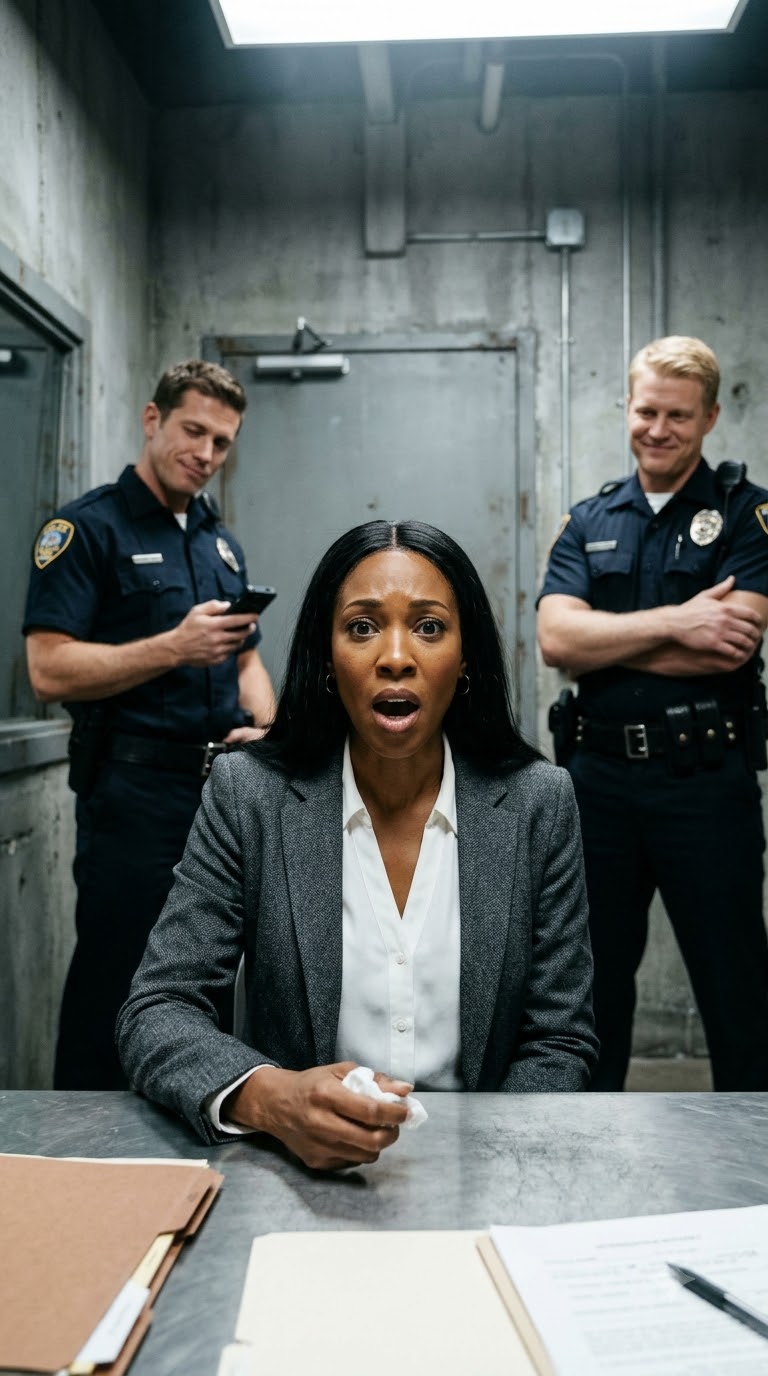
Rebecca stared at her head.
“Oh my God.”
For the first time that morning, Naomi’s composure nearly broke.
Rebecca stepped closer.
“Who did this to you?”
Naomi swallowed.
“The defendants in tomorrow’s trial.”
Rebecca went pale.
She immediately understood the consequences.
Naomi was now a potential witness and victim in a separate criminal investigation involving the very defendants scheduled to appear before her.
She could no longer simply proceed as though nothing had happened.
The situation demanded immediate disclosure and reassignment.
But first, Naomi needed the institution to acknowledge what had occurred.
“Call Chief Judge Sutton,” she said. “Tell him I need an emergency meeting.”
Rebecca nodded.
“And Rebecca?”
“Yes, Your Honor?”
“Please ask the court reporter to preserve a complete record of anything said in the courtroom this morning.”
Twenty minutes later, Naomi stood inside Courtroom Four.
She had changed into her black judicial robe.
Her damaged hair remained uncovered.
She had considered wearing a scarf.
Then she remembered her mother’s words.
She would not hide what those men had done.
The courtroom doors opened.
Chief Judge Sutton entered with two administrators.
His expression shifted when he saw Naomi.
“What on earth happened to you?”
Naomi remained standing beside the bench.
“I was assaulted inside this courthouse by Officers Derek Voss and Shane Pruitt.”
Sutton froze.
For several seconds, he said nothing.
Then he looked toward the administrators.
“We should discuss this privately.”
“We will,” Naomi replied. “But the incident must first be formally documented.”
Sutton’s jaw tightened.
“Naomi, you understand how sensitive tomorrow’s proceedings are.”
“I understand exactly how sensitive they are.”
“An accusation like this could create serious complications.”
Naomi stared at him.
“An accusation?”
Sutton cleared his throat.
“I mean, we need to establish the facts.”
“The security recordings will help establish them.”
Sutton looked toward the clerk’s desk.
“Perhaps it would be better if we avoided making statements until everyone has had an opportunity to explain.”
Naomi stepped forward.
“Three officers were present. One physically restrained me and shaved my head. Another participated and mocked me. Their supervisor watched. My credentials were available to them. I repeatedly identified myself.”
The courtroom was silent.
Naomi continued.
“I will not preside over the criminal trial now that I am personally involved. That case must be reassigned through the proper process. But I will not allow what happened to be dismissed as a misunderstanding.”
Sutton lowered his eyes.
For the first time since Naomi’s appointment, he appeared uncertain of what to say.
Outside the courtroom, news of the assault was already spreading.
Samuel Price had reported what he witnessed.
Deputy Marshal Brooks had contacted federal investigators.
And Rebecca had notified the appropriate judicial authorities.
By noon, the Department of Justice had received a formal referral.
The original criminal case was placed before another judge for reassignment.
The investigation into the courthouse assault began separately.
Naomi gave her statement that afternoon. She described every detail.
The insults.
The chair.
The clippers.
The laughter.
Crane’s silence.
She did not exaggerate.
She did not speculate.
When the investigator asked how she had felt, Naomi paused.
“I was frightened,” she admitted. “I knew they could do whatever they wanted to me in that room, and nobody was stopping them.”
The investigator waited.
Naomi looked down at her hands.
“But what frightened me more was knowing that those men had treated other people the same way. People without a judicial title. People who might never have been believed.”
That evening, she returned home.
Her apartment was dark.
She set her handbag on the kitchen table and walked directly into the bathroom.
For several minutes, she stared at her reflection.
The woman looking back at her seemed unfamiliar.
Her once-full crown had been reduced to uneven patches.
A small bandage covered the cut near her temple.
Her face looked exhausted.
She touched the remaining strands.
And finally, alone in the quiet apartment, Naomi began to cry.
Not because she believed she was weak.
Not because the officers had succeeded in making her feel inferior.
She cried because something deeply personal had been taken from her without permission.
She cried because she could still hear their laughter.
And she cried because her mother was no longer alive to hold her.
Eventually, Naomi sat on the bathroom floor.
She remembered being nine years old, watching Gloria comb her hair before school.
Her mother had always worked patiently through every curl.
Never pulling harder than necessary.
Never treating Naomi’s hair as a problem.
“God gave you that hair, baby. Don’t ever let anybody make you feel like it’s too much.”
Naomi pressed her hand over her mouth.
“I wish you were here, Mama.”
The apartment offered no answer.
But after a while, she stood.
She washed her face.
She cleaned the small cut near her temple.
Then she called Margaret.
When her friend answered, Naomi said only three words.
“They shaved me.”
Margaret was silent.
Then her voice changed.
“Naomi, where are you?”
“Home.”
“I’m coming.”
“You don’t have to.”
“I’m coming.”
Margaret arrived two hours later.
She brought food, clean bandages, and a soft blanket.
She did not immediately ask questions.
She simply sat beside Naomi on the sofa.
For a long time, neither woman spoke.
Then Naomi whispered, “They laughed.”
Margaret reached for her hand.
“I know.”
“They knew I was telling them who I was. They just didn’t care.”
Margaret squeezed her fingers.
“They’re going to have to answer for what they did.”
Naomi looked toward the window.
“I don’t want them punished because I’m a judge.”
Margaret waited.
“I want them held accountable because nobody should be treated that way.”
The following morning, the courthouse was surrounded by news crews.
The original trial had been scheduled to begin at nine.
Instead, the building was preparing for emergency proceedings involving the officers themselves.
Federal investigators had secured the security office and collected physical evidence.
The clippers had been photographed and placed into evidence.
The recovered hair had been documented.
The security footage had been preserved.
Most importantly, investigators had obtained video from two separate cameras.
One recorded the hallway outside the security office.
The other captured the interior.
Voss had apparently forgotten the second camera existed.
Or perhaps he had simply assumed that nobody would ever review the recording.
By sunrise, both officers had been taken into federal custody on new allegations arising from the courthouse assault.
Lieutenant Crane had been placed on leave while investigators examined his conduct.
Naomi arrived shortly before eight.
She wore a navy-blue suit.
Her head was uncovered.
Deputy Marshal Brooks met her at the entrance.
“Good morning, Your Honor.”
“Good morning.”
Brooks hesitated.
“Are you sure you want to be here?”
Naomi looked through the glass doors.
Inside, attorneys and court employees were gathering.
“I need to be here for my statement. After that, I’ll leave the proceedings to the judge assigned to hear them.”
Brooks nodded.
Together, they entered.
When Naomi reached the courtroom, Voss and Pruitt were already seated beside their attorneys.
Their wrists were restrained.
Neither man was smiling.
Lieutenant Crane sat several rows behind them.
Naomi noticed him immediately.
For a brief moment, their eyes met.
He looked away.
The hearing was presided over by Judge Caroline Whitmore, who had been assigned independently to handle the new matter.
Naomi entered as a witness, not as the judge.
That distinction mattered to her.
She had spent her career defending the principle that no person should control proceedings in which they had a personal stake.
She would not abandon that principle simply because she had been wronged.
The prosecutor presented the preliminary allegations.
Unlawful detention.
Assault.
Civil rights violations.
Obstruction-related concerns arising from the officers’ handling of identification and evidence.
Additional charges remained under review.
The defense attorneys argued that the incident had resulted from confusion about Naomi’s identity.
Then the prosecutor introduced the security recording.
The courtroom lights dimmed.
On the screen, Naomi appeared entering the checkpoint.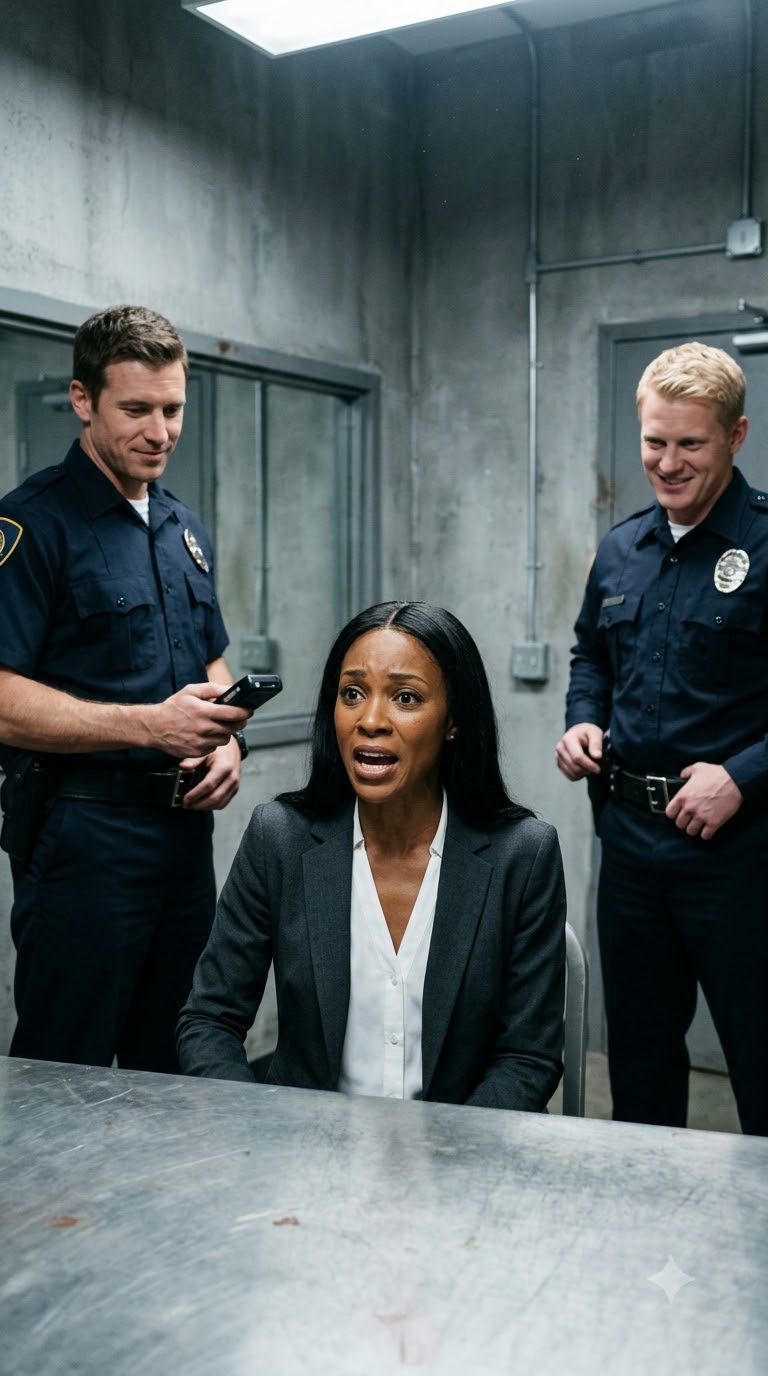
Her handbag hung from one shoulder.
She reached for her credentials.
Voss stepped toward her.
The audio was clear.
“Get out of here. You don’t belong here.”
“I’m Judge Ellison.”
“Hold still.”
The recording continued.
Every movement was visible.
Every insult was audible.
When the clippers appeared, someone in the public gallery gasped.
Voss lowered his head.
Pruitt stared at the table.
Crane remained motionless.
Then the screen showed Naomi sitting in the chair while her hair fell to the floor.
No one in the courtroom laughed.
Not one person.
The prosecutor stopped the recording.
“Your Honor, the evidence establishes that the officers were informed of Judge Ellison’s identity before the assault occurred.”
Judge Whitmore studied the defendants.
Their attorneys offered no immediate response.
The prosecutor continued.
“But even if she had not been a judge, the conduct shown in this recording would remain a serious violation of her rights.”
Naomi closed her eyes briefly.
Those were the words she had needed to hear.
Her title was not the reason she deserved protection.
Her humanity was.
When she was called to testify, Naomi approached the witness stand.
She raised her right hand and took the oath.
Then she sat.
The prosecutor asked her to describe the encounter.
She did so carefully.
Without dramatics.
PART 3
Without embellishment.
She explained how Voss had grabbed her.
How Pruitt had blocked the door.
How Crane had failed to intervene.
How she had tried to identify herself.
How the clippers had moved across her scalp.
At one point, the prosecutor asked, “Why didn’t you physically resist?”
Naomi looked toward the defendants.
“Because there were three armed officers in that room, and I was alone.”
The courtroom remained silent.
“And why did you remember their exact words?”
“Because I knew that if I survived the encounter, I would need to explain what happened.”
The prosecutor paused.
“Did you believe your position as a federal judge would protect you?”
Naomi took a slow breath.
“I believed the law should protect me. But in that room, the men responsible for respecting it were the ones violating it.”
Voss shifted in his chair.
Naomi continued.
“I had spent my entire career believing that evidence and truth could overcome intimidation. That morning, I was forced to rely on that belief while being treated as though I had no rights at all.”
When the defense attorney began questioning her, he attempted to suggest that she had provoked the officers by refusing instructions.
Naomi remained calm.
She answered every question directly.
Then he asked whether she believed the officers had targeted her because of her race.
Naomi paused.
“I cannot testify about thoughts I cannot see. I can testify about the words they used, the actions they took, and what the recording shows.”
The attorney glanced toward his notes.
He had no useful follow-up.
By the end of the hearing, Judge Whitmore had found sufficient grounds for the case to proceed and ordered continued detention pending further proceedings, subject to the applicable legal standards.
The matter was far from finished.
There would be additional motions.
Further investigation.
A trial.
Possibly appeals.
But something had changed.
For the first time, Voss and Pruitt were facing a courtroom in which their uniforms offered no protection from scrutiny.
And Naomi had walked out of that room without lowering her head.
The next several weeks brought revelations that extended far beyond the assault.
Federal investigators began examining earlier complaints involving Voss and Pruitt.
Some had been dismissed.
Others had disappeared into administrative files.
Several victims described encounters resembling those documented in the original criminal case.
One man said he had been threatened after filing a complaint.
Another reported that officers had pressured him to change his statement.
Investigators also discovered that Lieutenant Crane had repeatedly signed off on reports involving both defendants.
In several instances, his approvals had been issued despite contradictions between written accounts and available recordings.
Crane eventually retained an attorney.
His cooperation became a central part of the expanding investigation.
Meanwhile, Chief Judge Sutton faced uncomfortable questions about courthouse security and the decision to allow criminal defendants assigned to administrative police duty to work near a federal judicial facility.
There was no evidence that Sutton had ordered the assault.
Naomi refused to suggest otherwise.
But investigators examined whether warnings about the officers had been ignored and whether appropriate safeguards had been neglected.
Sutton was forced to acknowledge that the courthouse’s security arrangements had been inadequate.
He also admitted that Naomi’s judicial assignment had become a source of unusual institutional pressure.
The administrative review did not produce a dramatic public confession.
It produced something more practical.
New security procedures.
Clearer restrictions on access.
Independent reporting channels.
And a requirement that complaints involving courthouse personnel be preserved and reviewed outside the immediate supervisory chain.
Naomi understood that policies alone could not prevent every abuse.
But she also understood the importance of creating records that could not easily disappear.
Three months after the assault, the original civil rights case against Voss and Pruitt went to trial before a newly assigned judge.
Isaiah Brooks testified.
His reconstructed jaw still caused him pain when he spoke for long periods.
He described the night he had been stopped.
The fear.
The blows.
The months of recovery.
His mother sat behind him, holding a folded tissue.
Anthony Mercer testified next.
Then Raymond Cole.
The prosecution introduced the recordings from all three incidents.
The defense challenged the interpretation of the footage and disputed the officers’ intent.
The jury heard the testimony.
Reviewed the evidence.
And returned guilty verdicts on the principal civil rights counts.
Naomi was not present for the verdict.
She was in her chambers, reviewing an unrelated case, when Rebecca knocked on the door.
“They’ve reached a verdict.”
Naomi set down her pen.
Rebecca told her.
For several seconds, Naomi said nothing.
Then she asked, “Have the families been notified?”
“Yes.”
Naomi nodded.
“Good.”
She returned to her work.
But later that evening, she allowed herself a quiet moment.
She thought of Isaiah.
Anthony.
Raymond.
And all the people whose complaints had never reached a courtroom.
The separate case involving the courthouse assault continued.
Voss and Pruitt eventually faced trial on the new charges.
The security recordings were presented again.
Samuel Price testified about discovering Naomi in the security office.
Deputy Marshal Brooks described the condition in which she had found her.
Medical records documented Naomi’s injuries.
And Naomi once again took the witness stand.
This time, the proceedings lasted several days.
The defense argued that the officers had acted recklessly but without the specific intent required for certain federal charges.
The prosecution emphasized their statements, their deliberate actions, and their disregard of Naomi’s identification.
The jury convicted both men on the central charges arising from the assault.
Lieutenant Crane, whose separate case had involved his failure to intervene and subsequent conduct, entered a plea agreement after admitting that he had knowingly allowed the abuse to continue and had failed to report it accurately.
His cooperation helped investigators reconstruct the events and examine earlier misconduct.
At sentencing, Naomi was permitted to address the court as a victim.
She had prepared several pages of remarks.
But when she approached the podium, she folded them.
She looked toward the judge.
Then toward the defendants.
“I have spent most of my adult life believing that the law is strongest when it protects people who have the least power.”
She paused.
“What happened to me did not become wrong when these men discovered I was a federal judge.”
Voss stared at the floor.
“It was wrong from the moment they decided they could use their authority to humiliate another human being.”
Naomi’s voice remained steady.
“They took my hair. They took my sense of safety for a time. They made me afraid inside a building where I had spent my childhood learning to believe in justice.”
She looked toward the public gallery.
“But they did not take my dignity. And they did not take away my responsibility to uphold the law.”
Her eyes returned to the judge.
“I am not asking for punishment because of my title. I am asking this court to recognize the seriousness of what happened and to apply the law fairly.”
When she finished, the courtroom remained silent.
The judge imposed substantial prison sentences on Voss and Pruitt, taking into account their convictions, the abuse of official authority, and the applicable sentencing factors.
Crane received a lesser sentence under his separate agreement.
The exact punishments mattered.
But for Naomi, the most important moment came when the proceedings ended.
The officers were escorted away.
And nobody in the courtroom pretended that what they had done was acceptable.
Six months later, Naomi stood inside a small salon on the eastern side of Columbus.
Her hair had begun growing back.
Short curls now covered her scalp.
The stylist, a woman named Denise, gently shaped them while Naomi watched in the mirror.
“You want me to even everything out?”
Naomi smiled.
“Just a little.”
Denise worked carefully.
When she finished, she turned the chair toward the mirror.
Naomi studied her reflection.
The woman looking back at her no longer resembled the person who had entered the security office that morning.
But she did not look defeated.
She looked changed.
And alive.
Naomi touched her curls.
“They’re coming back.”
Denise smiled.
“They always had a chance to.”
That afternoon, Naomi returned to the courthouse.
She had arranged to meet Samuel Price in the basement break room.
The same room where she had once completed her homework while Gloria cleaned the floors upstairs.
Samuel was waiting beside the old folding table.
He had brought a small cardboard box.
“I found something when they were clearing out storage,” he said.
Naomi looked inside.
There was an old employee photograph.
Gloria Ellison stood beside her cleaning cart, wearing a blue uniform and smiling at the camera.
Naomi lifted the photograph with trembling hands.
For several seconds, she could not speak.
Samuel watched quietly.
“Your mother was proud of you,” he said.
Naomi looked up.
“She never got to see me become a judge.”
Samuel shook his head.
“She didn’t need to. She knew you were going to make something of yourself long before anybody else did.”
Naomi laughed softly through her tears.
Samuel pointed toward the photograph.
“She used to tell everyone about the little girl reading law books downstairs.”
Naomi pressed the picture against her chest.
“I miss her.”
“I know.”
They sat together for a while.
Then Samuel reached into the box again.
He removed a small, worn notebook.
“She left this behind years ago. I kept meaning to give it to you.”
Naomi opened it.
Most of the pages contained cleaning schedules, grocery reminders, and household expenses.
Near the back, she found a handwritten note.
It was addressed to her.
Naomi,
If you ever get tired, remember why you started. Don’t let anybody convince you that you don’t belong in rooms you worked hard to enter. You don’t have to be louder than them. You just have to know who you are.
Love, Mama.
Naomi read the words twice.
Then she closed the notebook.
For the first time since the assault, she felt something inside her settle.
The officers had tried to make her feel that she did not belong.
Her mother had spent a lifetime teaching her otherwise.
And that lesson had survived everything.
One year after the incident, the courthouse established a program recognizing longtime employees whose work had gone largely unnoticed.
The first honoree was Gloria Ellison.
A photograph of her was placed in the main hallway.
Below it was a small inscription acknowledging her thirty-one years of service.
Naomi attended the dedication.
She did not wear her judicial robe.
She wore a simple navy dress.
Samuel stood beside her.
Rebecca and Margaret were there.
So were several courthouse employees who remembered Gloria.
When the photograph was unveiled, Naomi looked at her mother’s smiling face.
She remembered the basement.
The folding table.
The humming fluorescent lights.
The little girl who had promised herself she would one day enter through the front doors.
Then she turned toward the main entrance.
Sunlight streamed through the glass.
People were coming and going.
Attorneys.
Court employees.
Families.
Visitors.
Some carried briefcases.
Others carried cleaning supplies.
Naomi watched them for a moment.
Then she walked toward her courtroom.
Her short natural curls caught the morning light.
She had stopped trying to recreate the hairstyle she had worn before the assault.
Not because she had surrendered something.
But because she no longer needed her reflection to look exactly as it once had.
She had survived.
She had testified.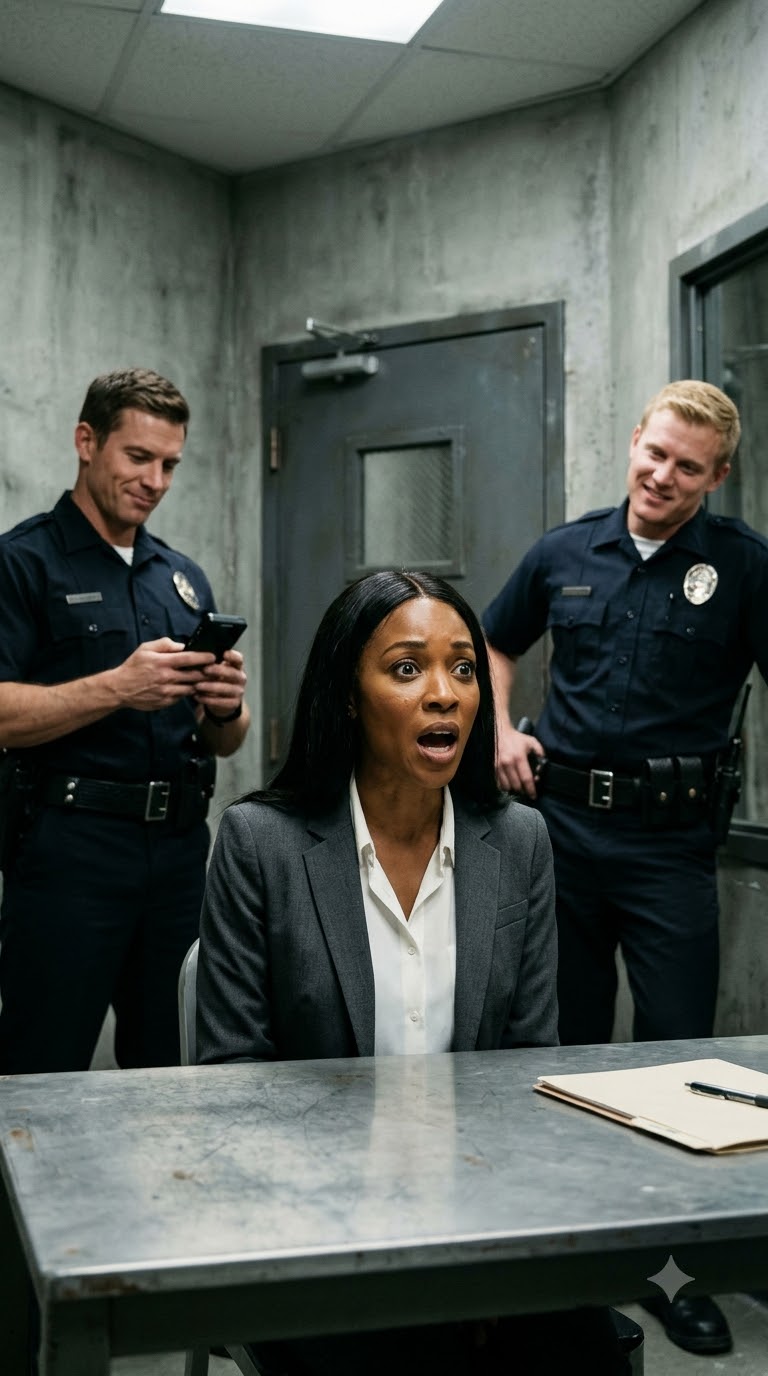
She had watched the law confront men who believed themselves untouchable.
And she had returned to the work she loved.
At the courtroom doors, Rebecca approached with the day’s docket.
“Ready, Your Honor?”
Naomi took the papers.
“Yes.”
Inside, the courtroom rose as she entered.
She walked toward the bench.
For a brief moment, she looked at the people gathered before her.
Some were frightened.
Some were angry.
Some were simply hoping to be heard.
Naomi understood that feeling more deeply than she ever had before.
She sat.
Opened the first file.
And looked toward the attorneys.
“Good morning. Please be seated.”
Her voice was calm.
Her posture was straight.
And as the proceedings began, Naomi thought of her mother one final time.
Gloria had spent thirty-one years cleaning the floors of that courthouse.
She had entered before sunrise and left after dark.
Most people had never known her name.
But she had raised a daughter who understood something the men who attacked her never had.
Authority was not the same as honor.
A uniform did not guarantee integrity.
A title did not determine human worth.
And justice meant nothing unless it applied to everyone.
Naomi adjusted the papers before her.
Then she began hearing the case.
The courtroom was quiet.
Not because anyone had been intimidated into silence.
But because, at last, everyone inside understood that the woman sitting on the bench had earned the right to be heard.
And no one would ever again convince her that she did not belong there.
