


I didn’t cry or cause a scene; I removed my wedding ring and requested to be discharged. When he finally returned home from the hospital, what he discovered there left him speechless.
Part 1
image
“I swear to you, as soon as I get out of here, that house is going to be yours. Sarah doesn’t count; after twenty-two years, she’s still like a piece of furniture—wherever you leave her, there she stays.”
Sarah Miller heard the words from behind the green curtain of the private hospital room in Boston and felt something inside her shatter far more violently than the freshly stitched wound along her left side.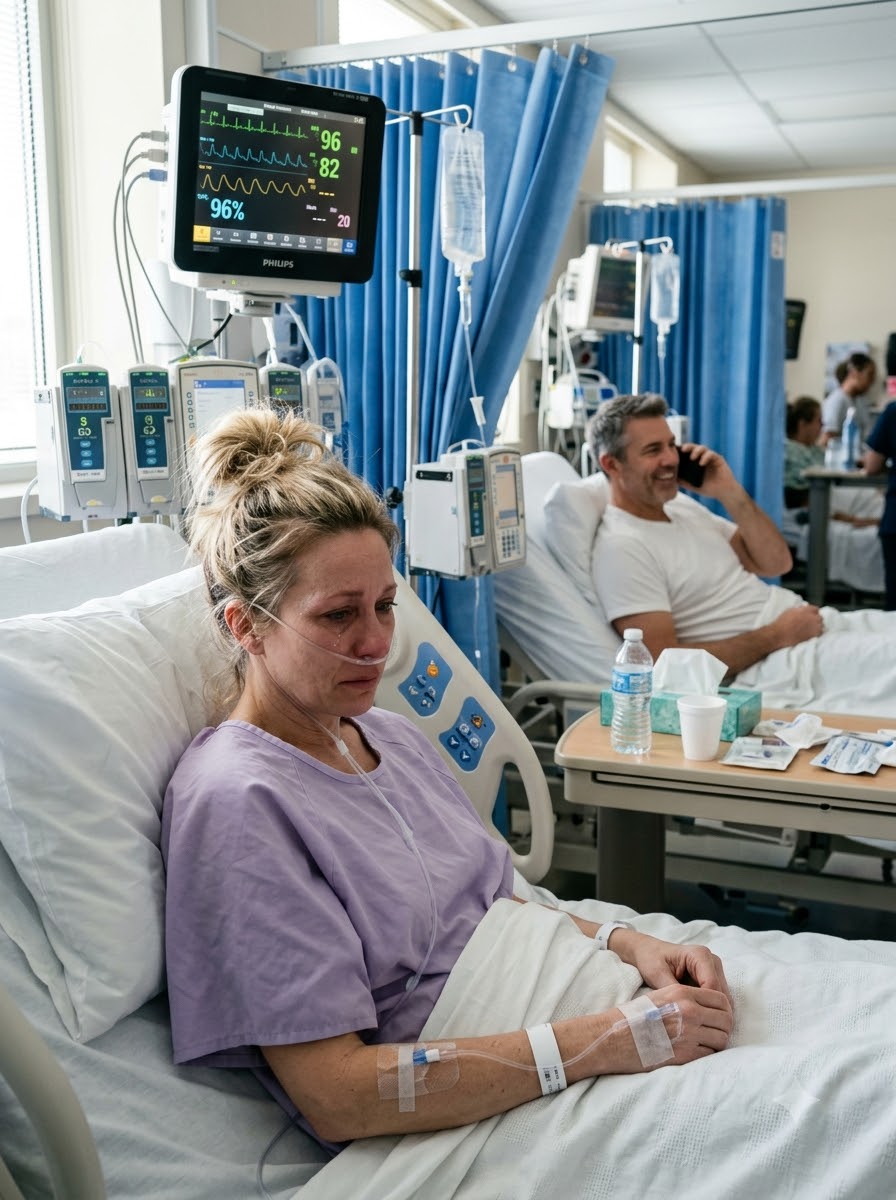
Three days earlier, she had walked into the operating room to donate a kidney to her husband, Victor Vance, a sixty-year-old real estate developer who had spent almost a year going in and out of dialysis. Sarah was fifty-eight, a retired elementary school teacher with more than thirty years of experience, and from the moment doctors confirmed they were a match, she hadn’t hesitated for even a second.
Victor, however, had hesitated—just not because of her.
“Rita, listen to me,” Victor continued on the phone, believing Sarah was asleep beneath the pain medication. “The house in Brookline is under Sarah’s name, but I’ll take care of that. My notary will prepare a gift deed, and it’s done. Three floors, a landscaped garden, a two-car garage. It’s the absolute minimum you deserve after putting up with me for these past two years.”
Sarah lowered her eyes to her left hand. Her wedding ring, loosened by her recent weight loss, slipped off without resistance. She silently placed it on the bedside tray.
From behind the curtain, Victor gave a quiet chuckle that ended with a sharp grunt of pain from his surgery.
“Guilty? Of what? She gave me the kidney because she lives for that—to take care of me. She doesn’t know how to do anything else.”
Sarah didn’t cry.
At 10:00 AM, the floor nurse entered to check her blood pressure. Sarah calmly asked for her street clothes, a pen, and a blank sheet of paper. Then she requested to speak with her surgeon, Dr. Salcedo.
“I want to sign my voluntary discharge papers.”
The doctor assumed she was reacting to post-operative pain. He spent twenty minutes attempting to reason with her, explaining that barely three days had passed since the nephrectomy and that they needed to monitor her creatinine levels, blood pressure, and surgical site while protecting her from infection.
Sarah listened to everything without arguing.
“Is Victor’s new kidney working?” she asked quietly.
“From the very first hour,” Dr. Salcedo confirmed.
“Then I’ve already done what I came here to do.”
Before leaving the floor, she slowly walked over to her husband’s bedside. He was asleep, with his smartphone resting on his chest. Sarah picked up her wedding ring and carefully placed it on top of Victor’s wristwatch.
She left no note.
That afternoon, she returned by herself to the quiet, three-story house in Brookline. She packed old photographs of her parents, her personal identification, a box of handwritten keepsakes, and a sealed manila envelope from a private oncology clinic that she had kept hidden since December into a single suitcase.
She left Victor’s clothes untouched. She left the furniture untouched.
At 8:30 PM, Sarah locked the front door for the final time and walked across the street to the regional bus stop. Sitting on the bench, she stared at the illuminated windows of the home where she had spent twenty-two years of her life.
At 9:17 PM, a brilliant orange flare erupted behind the living room curtains.
Neighbors began rushing into the street, yelling for help.
Sarah remained still. When the first fire sirens sounded in the distance, she stepped onto the approaching bus, gently resting one hand over her surgical incision.
The next morning, she briefly returned, standing on the sidewalk only long enough to take clear photographs of the burned remains.
When her neighbor, Teresa, asked her in complete horror whether she had lost everything in the fire, Sarah replied with a quiet, frightening calm that left the woman frozen:
“No, Teresa. I lost everything three days ago in a hospital room.”
Part 2
Victor was discharged from the hospital nineteen days later, carrying a bag filled with immunosuppressive medications, a schedule of mandatory lab tests, and the absolute certainty that Sarah would eventually return.
“She always comes back,” he told Rita, the thirty-two-year-old woman he had secretly been seeing for two years.
Rita was waiting for him in a private car, dressed impeccably as though they were on their way to a celebration.
“First, take me home,” Victor instructed the driver.
Two blocks before they reached the property, the odor of damp, burned timber and lingering smoke filled the vehicle.
Victor ordered the driver to stop.
The only remains of his Brookline home were blackened brick chimneys, a collapsed staircase, and a scorched garage. Wet ash and charred debris covered the front lawn. Rita’s mouth dropped open in shock.
“You told me it was a three-story luxury home!”
“It was.”
“What about the insurance?” Rita demanded.
Victor needed several seconds before answering. “The property insurance policy is held exclusively under Sarah’s name.”
Rita looked him over from head to toe: his badly buttoned coat, trembling hands, and bag of post-transplant prescriptions.
“How much do those daily medications cost?” she asked coldly.
“Between co-pays, lab work, and specialized care… thousands a month. And I have to take them for the rest of my life.”
Rita stepped backward toward the car. “Victor, I’m not a full-time nurse.”
“I never asked you to be.”
“No, but you promised me a lifestyle. A home. Travel. You said Sarah was going to sign the deed over!”
“She will sign!” Victor insisted, his voice breaking.
Rita motioned toward the smoldering ruins. “Sign what?”
She flagged down another cab and left without looking back.
During the following weeks, Victor desperately searched for Sarah. He checked her sister’s apartment, contacted former teaching colleagues, and went to the community center where she had once volunteered. Nobody gave him a single answer.
When he called the insurance company, he received another devastating blow.
The house had been insured for $4.1 million, and the entire claim payout had already been transferred directly to the sole policyholder.
Sarah.
“I am her husband!” Victor yelled into the phone.
“Sir, you are not listed as a beneficiary on this policy,” the claims manager answered.
“Where is that money right now?!”
“That information can only be disclosed to the primary account holder.”
Driven by growing financial panic, Victor went to see Lucinda, Sarah’s older sister.
Lucinda met him in the hallway of her apartment building and refused to let him inside.
“Where is she, Lucinda?”
Lucinda stared at him for several long seconds. “Do you honestly not know?”
“I’ve been searching for her for weeks!”
“Sarah canceled her phone contract,” Lucinda said coldly. “She donated her personal belongings.”
“Donated them to whom?”
“To a transitional shelter for young women aging out of foster care in South Boston.”
Victor felt a cold pit settle in his stomach. “And the insurance payout?”
Lucinda pressed her lips together. “That too.”
“All four million dollars?!”
“Virtually all of it. The shelter director wept when Sarah signed the endowment papers.”
Victor leaned heavily against the hallway wall. “Where is my wife, Lucinda?”
Lucinda lowered her voice into a bitter whisper. “She’s at a palliative hospice facility in Tlalpan.”
“What are you talking about?”
“Your wife didn’t walk away to punish you, Victor. She walked away because she is dying.”
At the hospice facility, Dr. Herrera handed Victor a thick medical file.
Diagnosis: Advanced, terminal cholangiocarcinoma—cancer of the bile ducts.
Date of the first conclusive diagnostic scan: December 9th.
Victor turned deathly pale. “That’s impossible… her donor surgery was three weeks ago!”
The physician closed the file. “Sarah was fully aware eleven weeks prior to the transplant that she had a terminal malignancy. She deliberately concealed her new symptoms from the surgical team after her initial donor evaluation was completed. She refused pre-operative cancer interventions because they would have disqualified her from donating her kidney to you.”
Victor dropped his prescription bag onto the floor. “Why would she do something like that?!”
The doctor pointed down the quiet corridor toward Room 214. “You’ll have to ask her that yourself, Mr. Vance. While she still has the strength to answer.”
Victor walked toward Room 214, completely unaware that her answers were about to destroy the foundation of his entire life.
Part 3
Sarah was awake. The room had only one window, a vinyl armchair, three fresh flower sprigs arranged in a glass vase, and a wall clock quietly ticking. An oxygen concentrator hummed steadily in the background.
Victor remained motionless in the doorway.
The woman lying in the bed appeared much smaller than the wife he remembered. Her skin had a faint yellow tint, her cheeks were sunken, and her dark hair was pulled into a tidy, short braid. When she looked at him, there was no sign of surprise.
“Your coat is buttoned wrong,” she said softly.
Victor glanced down at his chest, his hands shaking. “Sarah…”
“Sit down,” she instructed gently. “You’ll get lightheaded standing there.”
He ignored the chair and moved closer to the bed. “How long did you know?”
“Since December 9th.”
“And you didn’t tell me? You didn’t say a single word?!”
“No.”
“Why, Sarah?! Why?!”
Sarah closed her eyes briefly, waiting for a sharp burst of pain to subside. “Did you take your 8:00 AM anti-rejection meds?”
“I took them at 8:10!”
“That’s not 8:00 AM.”
“Sarah, please!” Victor broke down, tears running down his face. “You were dying, and you walked into an operating room to cut out a vital organ for me!”
“Yes.”
“You could have died on that operating table!”
“So could you.”
Victor spoke more quietly, his chest rising and falling heavily. “The transplant board approved you. How did you hide a terminal cancer diagnosis from a team of top surgeons?”
“My primary donor clearance was completed in October,” Sarah explained, her voice weak but exact. “When I began experiencing severe fatigue and abdominal pain in December, I went privately to an out-of-network clinic. By the time the biopsy came back, your transplant date was already scheduled.”
She drew a slow, difficult breath before going on. “I didn’t forge any transplant labs. My routine donor bloodwork remained within acceptable ranges, and I simply didn’t disclose my new symptoms. On the morning I signed the final surgical consent forms, the transplant coordinator asked if I had experienced any new health changes. I said no.”
A wave of nausea swept over Victor. “You lied to an entire surgical team just to get onto that operating table.”
“Yes.”
“What if something had gone wrong during surgery?!”
“I left detailed legal directives with Lucinda,” Sarah replied. “I didn’t want you to know before the surgery, because I knew you would cancel the procedure.”
“It was my right to know! You had no right to make that choice for me!” Sarah gave a faint nod. “In that regard, you are entirely correct.”
“You refused cancer treatment just to give me a kidney?!”
“The oncologist made it clear that chemotherapy would only offer a few uncertain months, not a cure,” Sarah said plainly. “If I had started treatment, the transplant would have been canceled immediately.”
Victor sank into the vinyl armchair and covered his face with his hands.
For eleven months, Sarah had taken him to dialysis three times every week. She had learned to prepare strict renal-diet meals without salt, checked his blood pressure every day, and helped dress him on the mornings when he was too weak to button his own shirts.
He had mistaken that constant devotion for passive servitude.
“Why didn’t you let me make the choice?” he sobbed.
“Because you would have said no,” she whispered.
“Of course I would have said no!”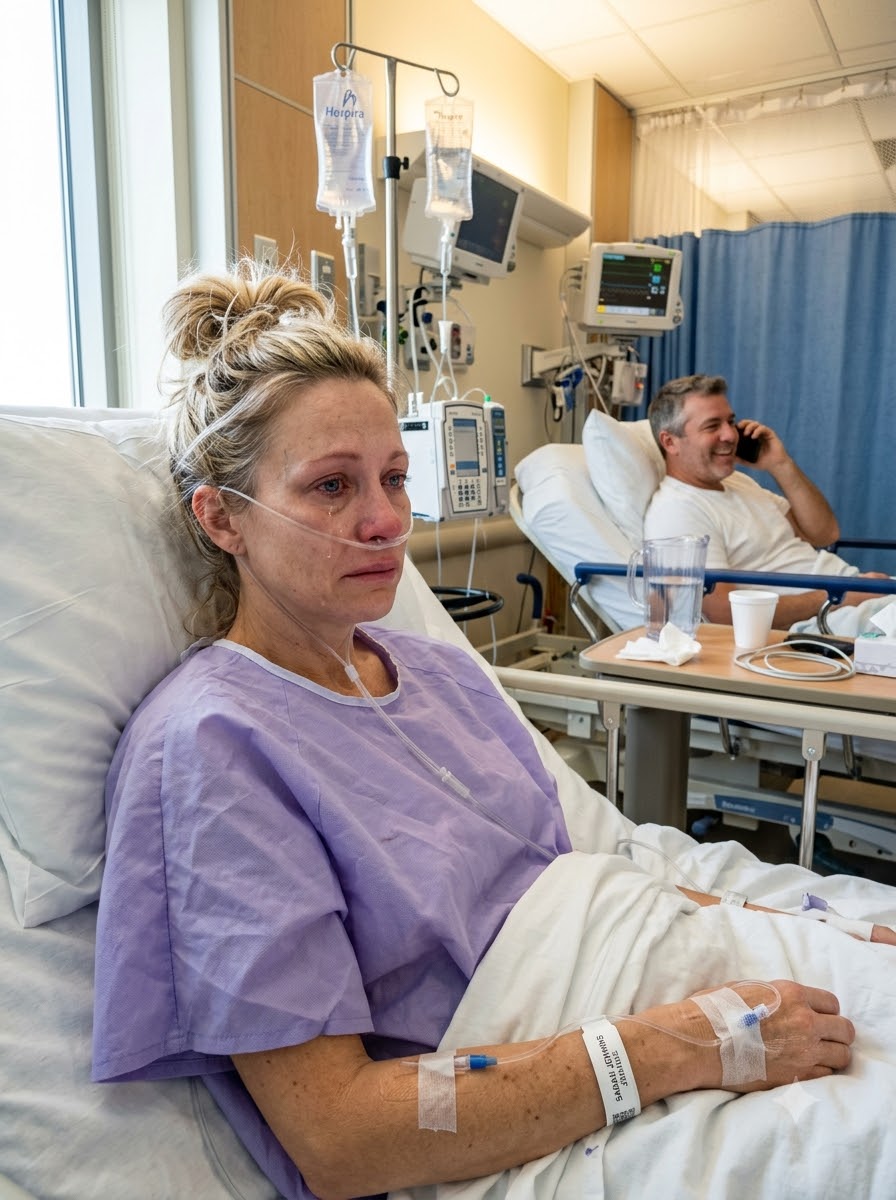
“Exactly.”
“So you stripped away my chance to try and save you!”
Sarah gave him a faint, sorrowful smile. “There was no saving me, Victor.”
Victor covered his eyes and cried bitterly. “I am alive right now because a piece of your body is inside me, while you are lying here dying!”
“My illness wasn’t caused by you, Victor.”
“But you could have bought yourself more time!”
“I made my choice regarding how I wanted to spend the time I had left.”
Victor lifted his head, his face red and wet with tears. “And did you also choose to burn our house to the ground?!”
“Yes.”
The answer left him completely speechless.
“That was our home for twenty-two years, Sarah!”
“It was a house deeded solely in my name.”
“It was our life!”
“Our life ended the moment I listened to you tell your mistress that I was nothing more than a piece of furniture.”
Victor watched the color drain from his face. The room fell completely silent.
“You… you heard that phone call?”
“Every word,” Sarah said softly. “The address, the garden, the two-car garage, and your grand promise to gift my home to Rita.”
“I was on heavy pain medication! I was disoriented—”
“You were conscious enough to state that I lived only to take care of you because I was incapable of doing anything else.”
Victor had nothing left to defend himself with.
Sarah turned her gaze toward the window. “I taught elementary school for thirty-four years. I helped hundreds of children learn to read. I cared for my dying parents, managed our household, paid our bills, and nursed you through end-stage renal failure. And you reduced my entire existence to a servant who hands you a glass of water.”
“Forgive me,” he choked out. “Sarah, please forgive me.”
“That apology comes far too late, Victor.”
“Is that why you destroyed everything? Out of revenge?”
Sarah turned her dark eyes back toward him, clear and steady. “I didn’t want another woman sleeping in my bed, using my mother’s china, and believing that my death was the ultimate convenience for your new life. I made a dangerous, drastic choice, and I am not proud of the destruction. But I was not going to allow my life’s work to become a trophy for your mistress.”
“You could have hurt someone!”
“I ensured the house was completely empty before I set the fire,” she said. “It was a terrible decision, but it was mine.”
“And the insurance money?”
“The policy paid out according to the arson investigator’s final ruling—they found no evidence of fraud or accelerants, only a tragic electrical fault.”
“And you gave four million dollars away?!”
“To the shelter,” Sarah said. “For years, I volunteered there. Young people turn eighteen and are forced out of foster care with no family, no savings, no laptop, and no security deposit for an apartment. Now, that endowment will fund their housing and education for years to come.”
Victor ran his trembling hand through his hair. “Did you leave anything for me?”
The question escaped before he could stop himself.
Sarah looked at him. There was no anger in her eyes—only a deep, empty pity. And somehow, that was much worse.
“Yes,” she whispered. “I left you a kidney.”
Victor shut his eyes, released a strangled gasp, and lowered his head.
“The car in the garage is registered in your name,” Sarah added quietly. “You still have your personal bank accounts and your business.”
“Rita left me,” Victor confessed to the floor.
“I imagined she would.”
“She said she wasn’t a nurse.”
Sarah gave a small, exhausted chuckle. “At least she was honest with you from the start.”
“Don’t mock me, Sarah.”
“I’m not mocking you. I’m simply amazed she gave you the truth sooner than you ever gave it to me.”
Victor dropped his gaze. “I was planning on leaving you.”
“I know.”
“How?”
“Bank transfers, hotel reservations, a retainer deposit to a divorce attorney,” Sarah said flatly. “You were never very subtle with financial trails.”
“How long did you know about her?” “Since June.”
Victor jerked his head upward. “You knew for six months?! And you stayed with me? You took me to dialysis three times a week?!”
“You were dying of kidney failure, Victor.”
“That makes no sense!”
“To you, perhaps it doesn’t.”
“Were you planning some elaborate revenge all along?!”
“No,” Sarah said softly. “I was planning to leave quietly after your transplant was successful. I had looked at a small one-bedroom apartment near the botanical gardens. I wanted to spend whatever time I had left walking in the park, reading, and visiting my sister without checking the clock.”
“Then why did you change your mind?!”
“Because hearing you speak about me as an object broke something inside me that couldn’t be repaired.”
“Did burning the house make you feel better?”
Sarah paused. “For a few hours. Afterward… no.”
“Do you regret it?”
“I regret letting my pain drive me to destruction,” she admitted. “I do not regret ensuring that my home was never handed over to your mistress.”
Victor leaned forward, resting his elbows against his knees as he stared at the floor. “I don’t even know who you are anymore.”
“That is the tragic truth, Victor. You never bothered to find out.”
He started crying—not quietly, but through deep, uneven sobs that shook his whole body. “Sarah… I am so sorry. For Rita, for the house, for speaking about you like that. For all those years I took you for granted.”
Sarah extended her frail, yellowed hand.
Victor immediately took it, gripping it tightly between both of his.
“I forgive you, Victor,” she said quietly.
“I don’t deserve it.”
“Forgiveness isn’t always about what the other person deserves,” Sarah whispered. “Sometimes, it’s simply about refusing to carry the hatred with you when you leave.”
“Let me fix this,” he pleaded. “Tell me what I can do!”
Sarah looked at him with profound tenderness. “You cannot fix a twenty-two-year marriage in a single afternoon, Victor.”
“Then tell me how I can make it right!”
“Take your anti-rejection medications on time.” Victor gave a broken laugh. “Sarah…”
“I am completely serious,” she said, her tone firm. “Eight o’clock in the morning. Eight o’clock at night. Not 8:10. Your life now depends on small, boring, repetitive routines.”
“Like me,” he whispered, tears pouring down his face. “According to me.”
“Like me,” she agreed softly. “According to you.”
Victor lowered his eyes to Sarah’s hand—the same hand that had graded thousands of school papers, prepared his meals, cared for their home, and signed the consent form to donate an organ.
“Where is your wedding ring, Sarah?”
“I left it on your watch at the hospital.”
Victor reached inside his coat, took out the gold band he had recovered from his bedside table weeks earlier, and carefully placed it on her blanket.
“Keep it,” Sarah said.
“Why?”
“To remind you that something small and seemingly light can carry immense weight.”
Dr. Herrera entered the room to check Sarah’s oxygen levels. Seeing how exhausted she was, the doctor gently indicated that Victor needed to leave.
Victor leaned toward Sarah’s face. “Are you afraid?”
Sarah gazed up at the ceiling tiles. “Yes.”
It was the first time in twenty-two years he had ever heard her acknowledge fear.
“What do you do when you’re afraid?” he asked, his voice trembling.
“I think about my former students,” Sarah whispered, her expression softening. “The ones who struggled for months unable to read, and the sudden, beautiful day when everything clicked. That moment always felt like a miracle.”
“Do you think about me?”
Sarah slowly turned her head toward him. “Yes.”
“After everything?”
“After everything.”
Victor lowered his forehead onto her fragile knuckles. “I don’t know how to live with this guilt, Sarah.”
“Learn,” she whispered.
“I don’t know if I can.”
“You can,” Sarah said, her voice fading to barely a whisper. “It’s just that now, no one is going to do it for you.”
At 3:48 PM, Sarah’s breathing suddenly became much slower.
“Sarah?” Victor panicked, rising from his chair.
She opened her eyes for the final time. “Eight o’clock sharp,” she whispered faintly.
“Yes. I promise.”
Sarah lifted her hand slightly, touched her fingertips to his tear-streaked cheek, and closed her eyes.
Dr. Herrera returned to the room at 3:52 PM.
Victor knew what had happened before the doctor said a word.
He remained beside her, holding her warm hand in his, until the room became completely silent.
The memorial service took place a week later.
Lucinda, Teresa, several retired elementary school teachers, and the director of the South Boston shelter were there. Four young adults Victor had never seen before also arrived together.
One of them, an eighteen-year-old man with a backpack, quietly approached Victor. “Mrs. Vance paid for my first semester of community college tuition,” he said softly.
A young woman standing beside him explained that Sarah’s endowment had created a permanent housing stipend for former foster youth transitioning into independent adult life.
Victor listened without speaking, unable to find the right words.
After the service, Lucinda gave him a small, plain envelope. Inside was not a heartfelt farewell letter or an explanation about the fire. There was only one sheet of paper written in Sarah’s neat, disciplined handwriting: the regional transplant center’s contact number, her nephrologist’s name, and one sentence underlined twice: Do not skip your medical checkups out of pride.
Victor stared at the page for a long time. Even during her final days, she had carefully arranged everything necessary for his survival.
That evening, he programmed two daily alarms on his phone and placed the sheet of paper inside his pill organizer.
Months later, Victor sold the car that had survived the fire in the garage and used the money to pay his medical expenses and personal debts. His real estate company remained intact, but he significantly reduced his workload. He worked fewer hours and learned to request administrative assistance without treating his employees like household servants.
Every Sunday evening, he sorted his immunosuppressive capsules into a weekly pillbox.
At 7:58 AM every morning, his phone alarm chimed.
Victor would pour himself a glass of water and take the exact dosage at 8:00 AM sharp.
Inside the noon compartment of his pillbox, he kept Sarah’s wedding ring.
At times, he would hold the cold metal band for a moment before snapping the plastic compartment shut. Not because he thought it could return her to him, but because he had finally understood the truth he had ignored for twenty-two years:
Sarah had never been a piece of furniture.
She had been the foundation supporting his home, his health, his sanity, and his very existence.
And it was only after she was gone that Victor finally understood the devastating price of mistaking love for servitude.
Whenever colleagues asked why he followed such a strict, uncompromising health routine, Victor would give them a quiet, somber answer:
“Because the life I’m living didn’t begin on the day of my transplant. It began on the day I realized, far too late, what someone was willing to give me.”
And every morning at exactly 8:00 AM, he drank the glass of water until not a single drop remained.
Deep within his body, Sarah’s kidney continued its quiet, vital work.
Uncomplaining.
Asking for nothing in return.
Just as she had done for far too many years.
