

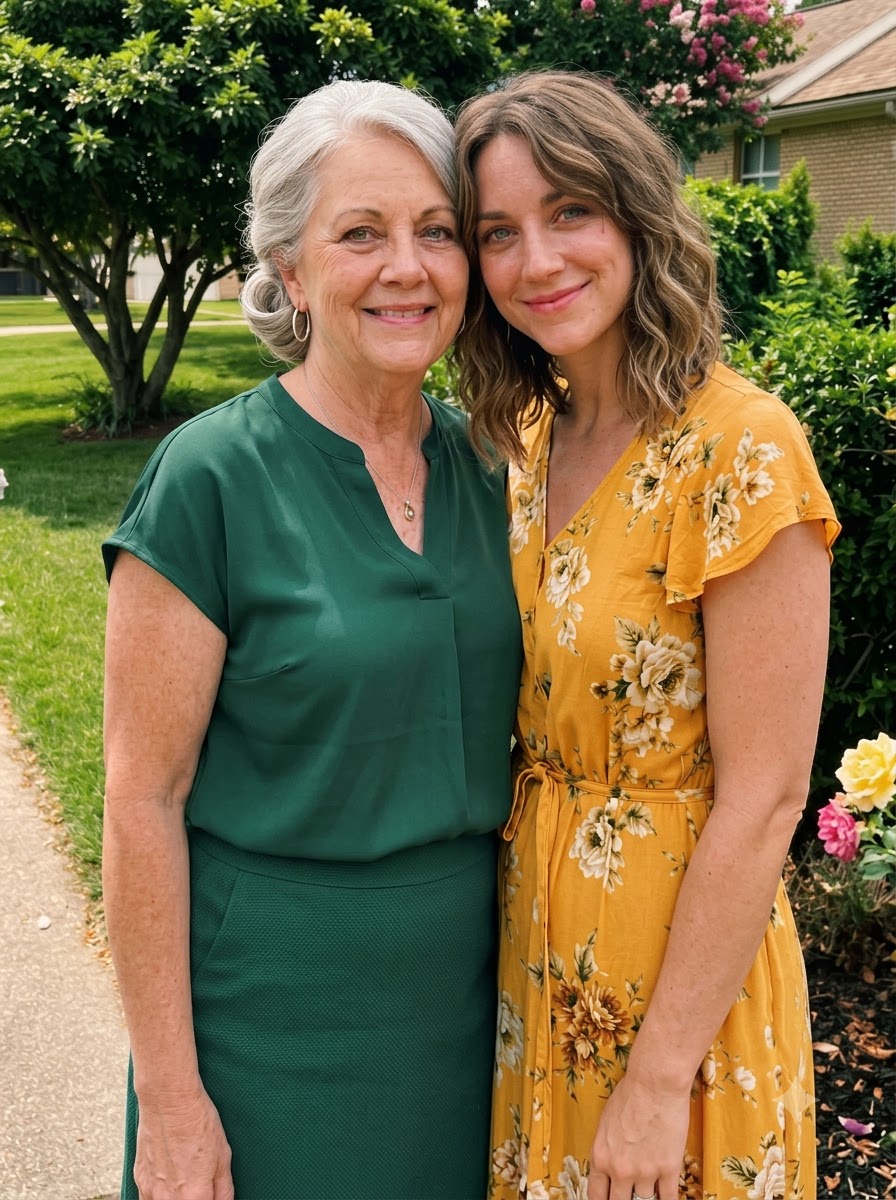
The night before my mother died, she made me swear that my sister would not stand beside her coffin. I assumed fear and medication were causing her to say things she did not mean. Then, during the funeral, a stranger gave me a sealed envelope and revealed that my mother had been waiting for this exact moment.
My mother, Evelyn, had a gift for becoming the heart of every room without ever asking for attention. After Dad walked away, she worked two jobs, raised Claire and me, and somehow turned our small house into a place that still felt peaceful, loving, and secure despite all our struggles.
“You know how demanding her work is.”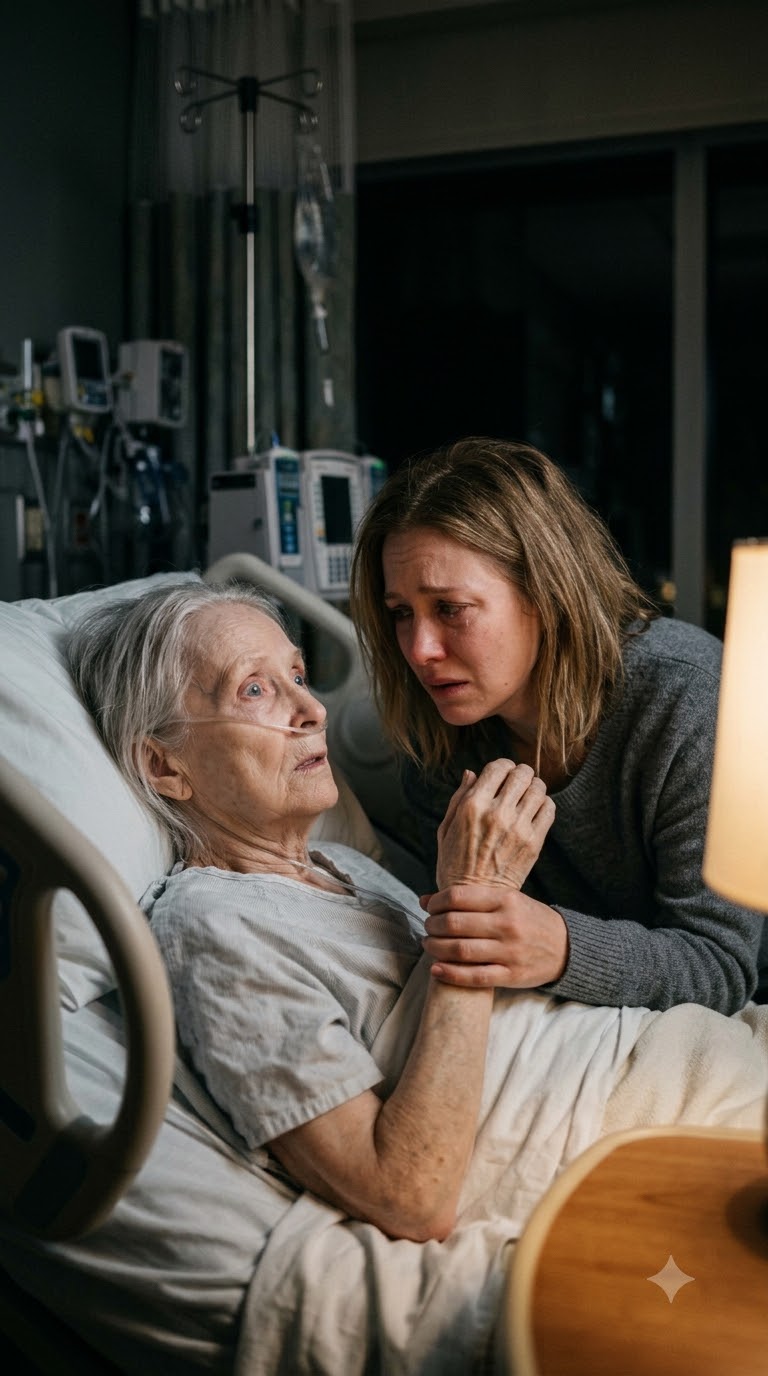
Claire was four years younger than me and fearless in ways I never managed to be. After college, she moved across the country, created a successful career, purchased her own apartment, and called home just often enough for Mom to keep defending her choices.
“She is busy,” Mom would say whenever Claire canceled.
“You know how demanding her work is.”
I understood.
I also knew Mom continued washing clean sheets for Claire’s room and keeping fresh milk in the refrigerator whenever Claire casually mentioned she might visit.
I tried not to hold it against her.
Then Mom became ill, and our lives became centered around medication, doctor visits, soft meals, and endless nights beside her bed. I returned to the old family home. Claire called from airports, offices, and hotels, always saying she would come soon but never actually showing up.
I tried not to resent her.
Some days, I managed.
Other days, while replacing sheets or fighting with insurance companies, I wanted to smash my phone every time Claire sent a message saying, “Tell Mom I love her so much, please.”
Mom never blamed her.
She only asked whether Claire sounded exhausted.
Even during her final days, she continued protecting my sister from every painful truth.
I believed the medication was affecting her thoughts.
Then, the night before she passed, Mom suddenly grabbed my wrist with surprising strength and pulled me closer.
Her eyes were wide with fear, clearer than they had been in days.
“Promise me Claire will not stand beside my coffin,” she whispered.
I thought the medication had confused her.
Then her fingers tightened around my wrist until it became painful.
“Mom, what are you talking about?” I asked. “Claire is your daughter.”
Mom shook her head weakly against the pillow.
“Please,” she said. “Keep her away from me.”
Those were the last words she spoke clearly before morning arrived.
By sunrise, she was gone.
Grief turned everything into a routine. I contacted hospice, completed paperwork, selected flowers, responded to relatives, and stared at Claire’s travel information without telling her what Mom had requested.
I wanted to explain the truth, but I couldn’t.
The funeral chapel carried the scent of lilies and polished wood. Claire arrived dressed in black, crying so intensely that she could barely stand. She wrapped her arms around me and whispered, “I should have come sooner.”
I wanted to answer honestly, but I couldn’t.
When she moved toward the coffin, my entire body became tense. Mom’s final request echoed in my mind, but Claire looked devastated, not threatening. I stepped aside.
She placed one hand on the polished coffin and whispered something only Mom would ever hear again.
“Your mother was terrified this would happen.”
That was when an elderly woman entered the chapel.
She walked a few steps, saw Claire standing beside the coffin, and suddenly stopped.
Her face turned pale.
Then she rushed toward me, holding a sealed envelope that shook so badly the paper trembled.
“Your mother was terrified this would happen,” she whispered.
Before I could question her, she placed the envelope into my hand. My name was written across the front in Mom’s uneven handwriting.
I opened it beside the flowers.
The first line said:
“If Claire comes to the funeral, ask her what happened at Lake Maren before she stands beside me again.”
Below those words was one name.
Ruth.
I looked up.
The elderly woman was still watching Claire from across the chapel.
“Who are you?”
“Ruth. I worked with Evelyn at a diner outside Lake Maren, before either of you would remember.”
Ruth finally turned her attention fully toward me.
Her eyes remained fixed on Claire.
“Your mother was afraid Claire had discovered that she wasn’t truly your sister, not in the way you were both raised to believe.”
“That makes no sense.” My voice sounded sharper than I intended. “I remember Mom bringing Claire home. Dad took pictures.”
Ruth looked directly at me.
“Do you remember the day itself, or do you remember hearing the story repeated for years?”
I opened my mouth, but no words came.
I had been four years old.
My memories were only photographs, repeated stories, Mom’s explanations, and one picture of me holding a bundled baby on our couch.
None of those things proved what I believed they proved.
Ruth explained that Mom had written to her several weeks earlier.
She had instructed Ruth to attend the funeral, but only approach me if Claire came close to the coffin.
Mom had apparently believed that if Claire stayed away, the secret could remain buried with her. Before Ruth could provide more details, Claire turned away from Mom, noticed us speaking quietly, and walked toward us while wiping her tears with both hands.
She read the first line, and her expression suddenly changed.
“What is happening?” Claire asked.
I handed the note to her.
She read the first line, and something shifted across her face.
Not confusion.
Recognition.
Claire reached for my arm.
“I have never been there,” she said too quickly.
Ruth watched her carefully without blinking.
“Then why did you call Evelyn from Lake Maren six months ago?”
Claire looked directly at me.
I remembered that call. She had promised she would visit, then canceled, saying an urgent client meeting had forced her to stay there overnight.
“I’ve been investigating Lake Maren for months.”
Claire reached for my arm.
“Can we talk outside?”
“No,” I said. “Mom asked me to keep you away from her coffin. You are going to tell me why.”
Her hand lowered. She looked toward Mom and swallowed.
“I’ve been investigating Lake Maren for months,” she said. “Does the name June mean anything to either of you?”
Claire opened her purse and pulled out a folder filled with documents.
Ruth grabbed the nearest pew for support.
“June was Evelyn’s cousin,” she said. “They looked like sisters. June vanished after you were brought home, Claire.”
Claire removed the records from the folder. Two ancestry tests showed that we were related but not biological sisters, most likely first cousins. Her birth certificate had been submitted months after she was born and listed a clinic that had already shut down by the date shown on the document.
“She remembered Mom arriving with June and a newborn.”
“I thought the tests were wrong,” Claire said. “Then I found the clerk who signed my record. She lives near Lake Maren.”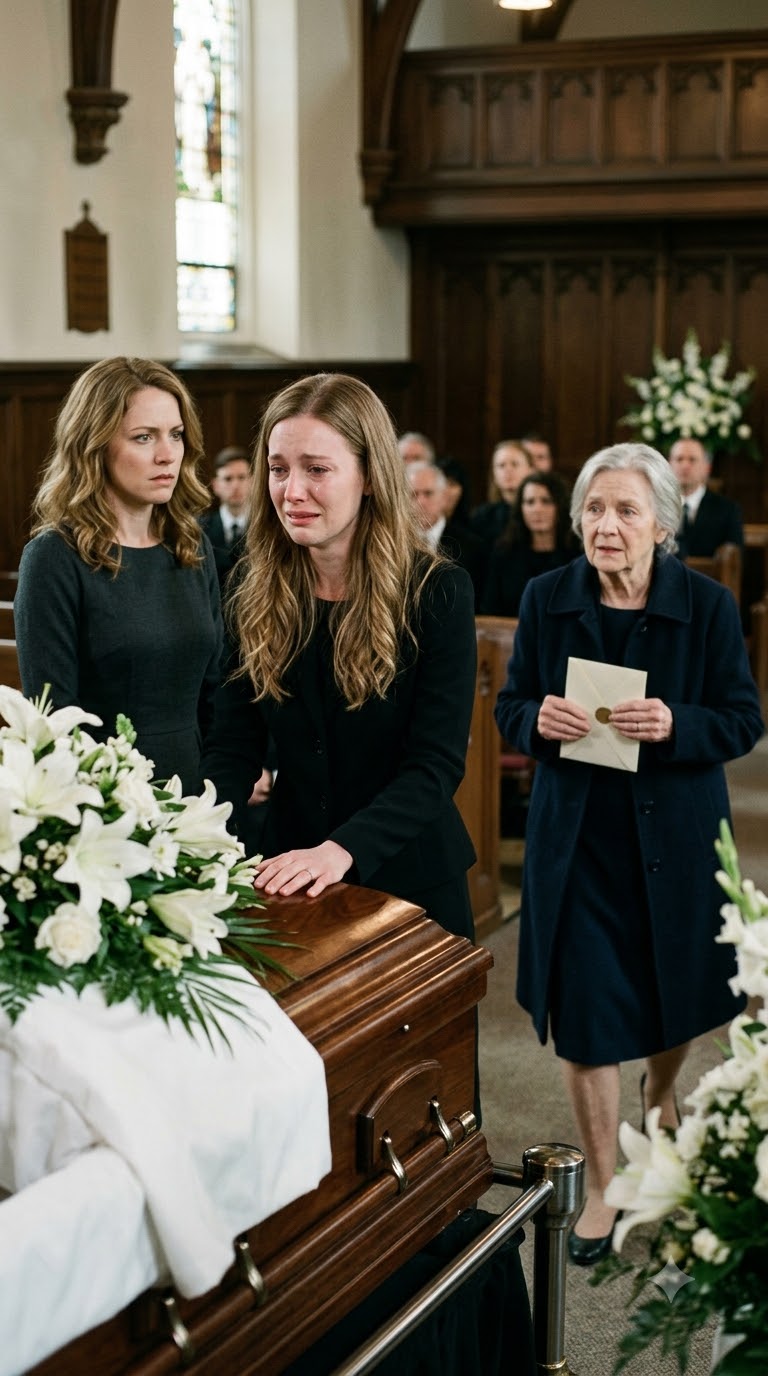
Ruth whispered, “What did she tell you?”
Claire crossed her arms tightly before answering.
“She remembered Mom arriving with June and a newborn. June wanted paperwork that allowed Mom to raise me temporarily. Instead, the clerk helped Mom submit a delayed birth certificate that listed Mom as my mother. She convinced herself she was protecting a frightened family.”
Anger pushed through my grief.
Claire looked at me.
“I went there three times afterward, searching for June on my own.”
“Three trips, but you could not drive home once? I bathed Mom. I changed her clothes. I listened when she cried at night. You left me alone with everything, Claire. Everything difficult and ugly.”
“Did you find June?”
Claire did not try to defend herself.
“You were caring for her body,” she said quietly. “I was trying to understand why she spent my entire life looking at me as though she expected someone to return and take me away.”
Ruth asked, “Did you find June?”
I told the funeral director we needed ten minutes alone.
Claire nodded.
“She lives in an assisted-living facility near the lake. She refused to come, but she recorded something.”
Before Claire could play the recording, the funeral director appeared and announced that the service was about to begin.
Claire looked at me.
“Do you want me to leave?”
I read Mom’s note again. It did not say Claire was dangerous. It said to ask her about Lake Maren before she stood beside the coffin again.
June had agreed to let Mom raise Claire, but she had one condition.
I told the funeral director we needed ten minutes alone.
Inside the family room, Claire pressed play.
June’s voice came through softly. She became pregnant at nineteen. Her parents cared more about the neighbors’ opinions than her fear. The father left. Evelyn was the only person who helped June survive the pregnancy and everything that followed.
Mom and Dad had already separated once. They were trying to rebuild their marriage, and Mom believed another baby might save it. June agreed to let Mom raise Claire, but she demanded one condition: she could return within a year if she changed her mind.
June sent letters for years. Mom returned them unopened.
Eleven months later, June came back.
By then, Claire called Evelyn “Mama,” and I followed Claire everywhere. Mom refused to let her go. June returned again and again. Dad eventually blocked the door and said Claire belonged with us now, as if saying it strongly enough could make it legally or morally true.
June sent letters for years. Mom returned them unopened.
Ruth began crying.
I wanted to argue, but the note in my hand stopped me.
“Evelyn told me June walked away.”
Claire paused the recording.
“She lied to everyone,” she said.
I wanted to argue, but the note in my hand stopped me.
The recording continued.
Mom believed Claire intended to expose her at the funeral.
Six months earlier, Claire had confronted Mom over the phone. Mom denied everything until Claire mentioned the clerk. Then Mom admitted what she and Dad had done. Claire demanded that she tell me the truth. Mom refused. Claire threatened to reveal everything herself if Mom died without confessing.
Mom believed Claire planned to expose her at the funeral. That explained her fear.
Claire shook her head.
“Fear does not excuse leaving me alone.”
“I planned to come earlier. Every time I packed, I pictured her collapsing, you hating me, and June being erased again if I handled any part of it badly.”
“Fear does not excuse leaving me alone,” I said.
“I know.” Claire met my eyes. “I should have trusted you with the truth. I kept telling myself I was protecting everyone, but really, I was protecting myself from having to choose between confronting Mom and caring for her.”
I asked why she came when she knew Mom wanted her to stay away.
Claire didn’t stand beside the coffin again.
Claire looked toward the chapel.
“Because she was still my mother. She packed my lunches, held me through fevers, and taught me to drive. I could not let anger become goodbye forever.”
We returned as the organ began playing. Claire did not stand beside the coffin again. Instead, she sat beside me.
Throughout the service, I mourned two women: the mother who rescued us and the mother who controlled our lives in the name of love.
Despite everything, we left together that afternoon.
Afterward, Claire asked me to visit June. At first, I refused. I was exhausted and furious.
Ruth said, “June has waited more than forty years to learn whether either of you would come.”
Despite everything, we left together that afternoon.
During the drive, Ruth told us about Mom before children and illness. She made diner customers laugh, saved money inside a coffee tin, and believed determination could fix anything.
June waited in a sunroom overlooking Lake Maren.
“Her strength was also her weakness,” Ruth said. “She decided for everyone.”
June waited in a sunroom overlooking Lake Maren. She looked so much like Mom that I stopped breathing for a moment.
Claire stopped too.
June stayed seated, letting Claire decide how close she wanted to get.
Claire placed a childhood photograph on the table. She was seven years old, wearing a red coat and missing one tooth.
June said she had tried for years.
June touched the edge of the picture.
“I imagined your face at every age,” she whispered.
Claire asked, “Why did you stop trying?”
June said she had tried for years. Then Mom warned that appearing would confuse us and destroy Claire’s home. June had no money, no vehicle, and no one standing beside her.
I asked whether Dad knew.
“I convinced myself staying away was kinder.”
“It was not,” Claire said.
June nodded.
“I know.”
I asked whether Dad knew.
Back home, Claire stayed.
June said he had convinced Mom to keep Claire. His guilt grew until he began avoiding the house, and eventually, he left permanently. Mom later simplified his departure into selfishness because an easier story was easier for her to control and easier for us to accept.
Back home, Claire stayed.
We sorted through Mom’s belongings and discovered thirty-seven unopened letters hidden behind her winter coats. They included birthday cards, questions about school, and a silver bracelet meant for Claire’s tenth birthday.
We also found photographs Mom had intended to send.
We read every letter together, crying quietly as the years between us slowly unfolded.
We also found photographs Mom had intended to send. On the backs of several, she had written messages to June and later crossed them out.
Her decisions were still wrong, but they were not simple. Love and fear had become tangled together inside her for decades.
We created three albums: one for Claire, one for June, and one for me.
I told Mom I was not ready to forgive everything, but her request would not become the final chapter between my sister and me.
A month later, we visited Mom’s grave. Claire brought the yellow blanket June had kept from her infancy. She placed one folded corner beside the marker and knelt there alone.
“I am grateful you raised me,” Claire said, “but I will not protect your version of the truth anymore.”
I told Mom I was not ready to forgive everything, but her request would not become the final chapter between my sister and me.
Claire asked whether I still considered her my sister.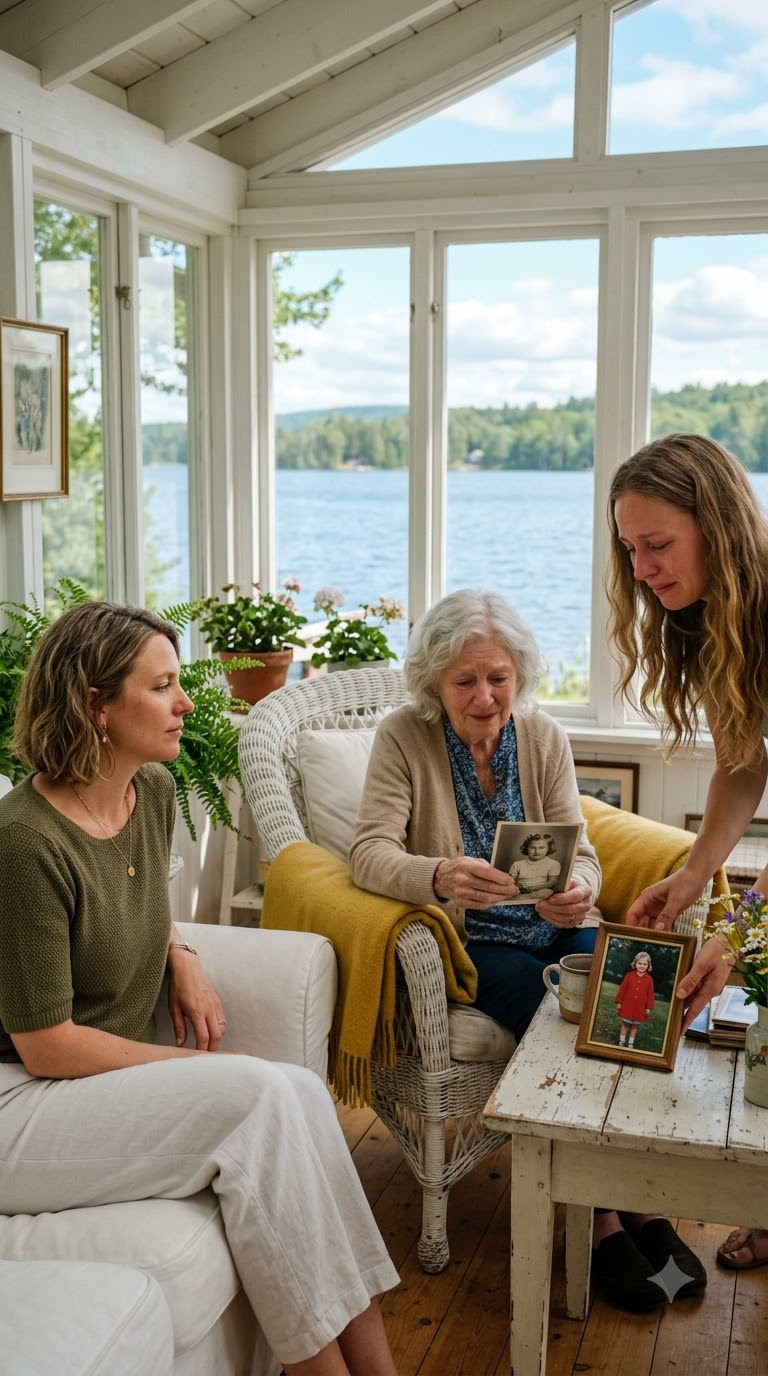
“Paperwork changes nothing important,” I said. “But you left me alone.”
She nodded.
“I know.”
She stayed nearby, helped clear the house, and visited June.
Months later, we gathered beside Lake Maren for Mom’s birthday.
For once, she did not promise to return someday. She was already there.
Months later, we gathered beside Lake Maren for Mom’s birthday. June brought cake. Claire placed the yellow blanket across our table. Ruth shared stories.
For most of my life, Mom decided which truths were allowed to exist.
Now, we tell them together, even the painful ones, honestly.
