

PART 1
“Would You Want Me, Too?” I Asked the Billionaire Who Knelt Beside My Wheelchair After Three Families Rejected Me on Adoption Day.
I Was Only Six, Sitting Alone Beneath an Oak Tree, When He Promised to Come Back—and He Kept His Word.
Three Months Later, While Preparing to Adopt Me, He Discovered My Original Birth Certificate.
The Moment He Saw My Last Name and My Mother’s Identity, His Face Went Pale.
A Secret Hidden for Seven Years Was About to Change Everything.
My name is Sadie Ellsworth, and I was six years old when I learned that sometimes people decide who you are before they even get to know you.
That Saturday morning, I wore my favorite lavender dress, the one with tiny embroidered flowers around the collar.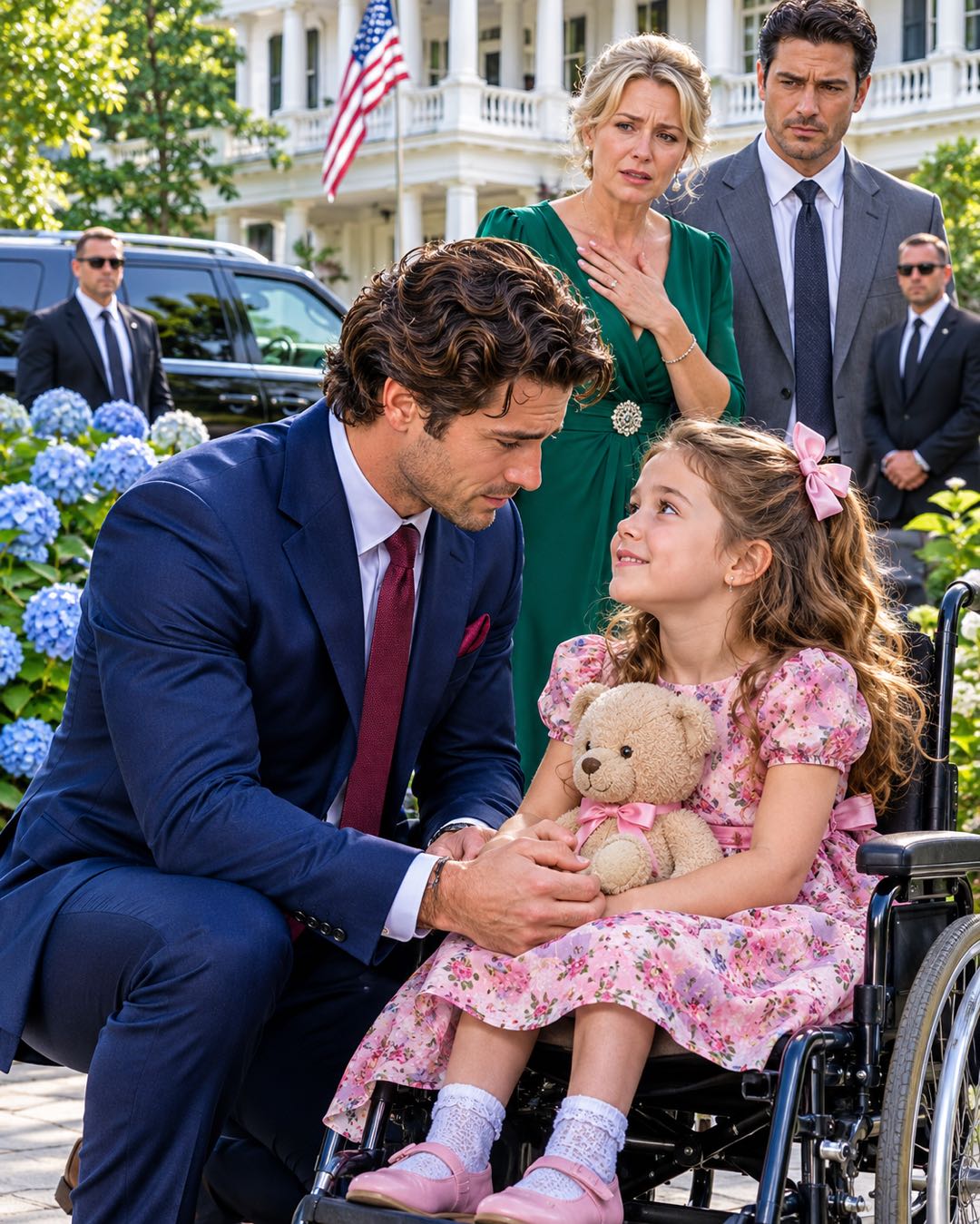
I had brushed my hair until it shone and tied a pink ribbon around my stuffed rabbit’s neck.
His name was Buttons, and he had been my closest companion for as long as I could remember.
It was adoption day at Willowbrook Children’s Home in Westchester County, New York.
The other children were excited.
Some practiced introducing themselves in front of the mirrors.
Others carried drawings they hoped to give to their future parents.
I had prepared something special, too.
Inside a blue folder were twelve drawings of the family I dreamed of having.
In every picture, there was a little girl in a wheelchair sitting at a kitchen table with two smiling adults.
I had never experienced a family breakfast, but I imagined it must be wonderful.
By noon, three families had stopped to speak with me.
And all three had walked away.
The first woman smiled until she noticed my wheelchair.
Her husband quietly asked the social worker whether caring for me would require expensive medical equipment.
The second couple barely stayed five minutes.
The third woman looked at my legs and whispered something I wished I hadn’t heard.
“We were hoping for a child without so many challenges.”
I stared at my hands.
I wanted to tell her that I could read chapter books, draw beautiful butterflies, and make the funniest animal noises.
I wanted her to know that I was more than a wheelchair.
But she was already leaving.
At three o’clock, I rolled my wheelchair beneath the enormous oak tree near the garden.
I placed Buttons in my lap and watched the other children laughing with their visitors.
Mrs. Whitcomb, one of our caregivers, approached me.
“Are you doing all right, sweetheart?”
I nodded, although my eyes were beginning to sting.
“Maybe somebody will want me next time.”
She knelt beside me.
“Sadie, you are a wonderful little girl. Please don’t forget that.”
I tried to smile.
“Then why does everybody keep leaving?”
She didn’t have an answer.
A few minutes later, three black SUVs entered the driveway.
Several men in dark suits stepped out, followed by a tall gentleman wearing a charcoal coat.
He had neatly styled brown hair, tired blue eyes, and the kind of serious expression that made people straighten their backs.
His name was Bennett Ashford.
He was forty years old and owned hotels, technology companies, and commercial properties across several states.
I didn’t know what any of that meant.
I only knew that everyone suddenly seemed very interested in him.
Mr. Ashford had arrived to announce a major donation through a charitable foundation established in memory of his mother.
The director hurried forward to welcome him.
But instead of looking at the building, he looked across the lawn.
At me.
“Why is that little girl sitting by herself?” he asked.
The director hesitated.
“She’s had a difficult afternoon. Several prospective families were concerned about her mobility needs.”
Mr. Ashford frowned.
“Did they spend any time getting to know her?”
Nobody answered.
He walked away from the welcoming committee and came directly toward me.
“Hello there,” he said, kneeling beside my wheelchair.
“I’m Bennett. What’s your name?”
“Sadie.”
“That’s a beautiful name.”
I studied his expensive watch.
“Are you famous?”
He laughed softly.
“Not particularly.”
“Are you rich?”
“I’ve been very fortunate.”
I tilted my head.
“Then why do you look lonely?”
His smile faded.
For a moment, he looked toward the distant trees.
“That’s a very good question, Sadie.”
He sat on the grass, completely unconcerned about his expensive trousers.
I found that strange.
Most adults stood above me when they spoke.
He wanted us to be at the same level.
“Can I ask you something?” I whispered.
“Anything.”
I looked toward the building.
“Three families talked to me today, but none of them wanted to take me home.”
His expression softened.
“I’m sorry that happened.”
“Do you think it’s because of my wheelchair?”
He paused.
“I think some people become frightened of things they don’t understand. But that doesn’t mean there’s anything wrong with you.”
I squeezed Buttons tightly.
“Would you want me, too?”
His eyes filled with emotion.
He gently reached for my hand.
“Sadie, I would be very lucky to have someone like you in my life.”
Then he reached inside his coat.
For a moment, I thought he might give me money or candy.
Instead, he removed a small photograph.
It showed a beautiful woman sitting in a wheelchair, surrounded by flowers.
“This was my mother,” he explained.
“She used a wheelchair for many years.”
I studied the photograph.
“She looks happy.”
“She was. She taught me that the most important things about a person have nothing to do with how they move through the world.”
“Where is she now?”
He swallowed.
“She passed away several years ago.”
I lowered my eyes.
“My mommy isn’t here anymore, either.”
Bennett looked at me for a long moment.
Then he asked a question I would remember forever.
“If you could have any kind of family, what would you wish for?”
I didn’t need to think.
“I want somebody who comes back.”
Bennett canceled his afternoon meetings.
For nearly two hours, we sat beneath the oak tree drawing pictures.
I showed him how to draw butterflies.
He attempted a giraffe that looked remarkably like a dog.
I laughed so hard that Mrs. Whitcomb came outside to see what was happening.
“You’re terrible at drawing!” I told him.
“Then I suppose I’ll need lessons.”
“I charge one cookie.”
“That’s a very reasonable price.”
When the afternoon ended, Bennett stood to leave.
My smile disappeared.
I had learned that goodbyes usually meant forever.
“Are you coming back?”
He crouched in front of me.
“Tomorrow morning.”
“Really?”
He raised his little finger.
“I promise.”
I linked mine with his.
“You can’t break a pinky promise.”
“Then I certainly won’t.”
That night, one of the caregivers warned me not to become too attached.
Mr. Ashford was an important businessman, she explained, and important businessmen had busy lives.
I understood.
But I still placed Buttons beside my pillow and whispered that perhaps tomorrow would be different.
At exactly nine the next morning, the black SUVs returned.
Bennett stepped out carrying a paper bag.
“Good morning, Miss Ellsworth.”
I nearly dropped my rabbit.
“You came back!”
“I made a promise, didn’t I?”
Inside the bag were two blueberry muffins, orange juice, and a new box of colored pencils.
“I thought we could have breakfast together.”
I stared at him.
“Like a real family?”
He smiled.
“Exactly like a real family.”
Bennett continued visiting throughout the following weeks.
Sometimes he came after work, still wearing his business suit.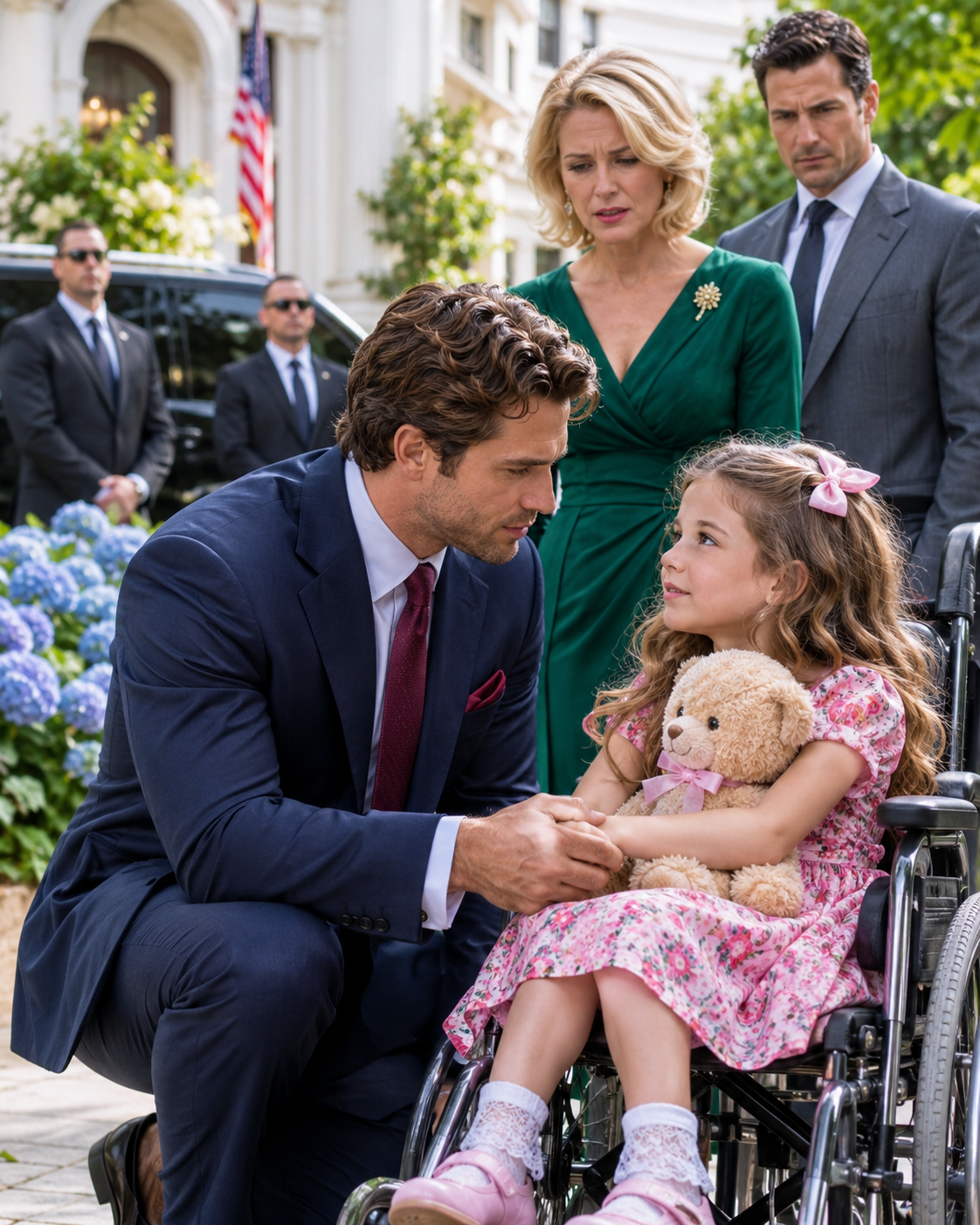
Other times he arrived on Saturday mornings carrying pancakes from a nearby bakery.
He learned which doors were difficult for my wheelchair.
He learned that I preferred doing things myself whenever possible.
Most importantly, he learned to ask before helping.
One afternoon, he watched me finish a drawing of a large blue house.
“Who’s that standing beside the little girl?” he asked.
“Her daddy.”
“And who’s the daddy supposed to be?”
I hesitated.
Then I pointed at him.
Bennett became very quiet.
A week later, he asked whether we could speak privately.
We sat beneath our favorite tree.
“Sadie, I’ve been talking with Mrs. Whitcomb and the adoption agency.”
My stomach tightened.
“Did I do something wrong?”
“No, sweetheart. Quite the opposite.”
He took my hands.
“I’d like to become your father, if that’s something you would want.”
I stared at him.
“My real daddy?”
“A real daddy who makes breakfast, helps with homework, and promises to stay.”
Tears rolled down my cheeks.
“But I need my wheelchair every day.”
“I know.”
“And sometimes I need help getting into the bathtub.”
“We’ll make sure you have everything you need.”
“And I can’t run.”
He smiled gently.
“I’m not looking for someone who can run, Sadie. I’m hoping for a daughter I can love.”
I threw my arms around his neck.
For the first time, I allowed myself to believe that my dream might come true.
Over the next three months, Bennett began the formal adoption process.
He attended meetings, completed paperwork, and welcomed social workers into his home.
His mansion in Bedford, New York, was enormous, but he seemed more interested in making it comfortable than impressive.
He arranged for accessible entrances, wider doorways, and a bedroom overlooking the garden.
He chose pale blue walls because I had told him that blue reminded me of summer skies.
He even purchased a large art desk.
“For your future masterpieces,” he explained.
I was delighted.
But just when everything seemed to be moving forward, the director discovered something unexpected.
While reviewing old records, an administrator found conflicting information in my original admission documents.
My birth certificate listed a different surname.
The director immediately contacted Bennett.
“Mr. Ashford, could you come to Willowbrook? There’s something important we need to discuss.”
PART 2
He arrived less than half an hour later.
The director placed a folder on her desk.
“We discovered that Sadie’s records were changed before she entered our care.”
Bennett leaned forward.
“Changed how?”
“Her legal surname was recorded as Ellsworth, but her original birth certificate shows something else.”
She turned the document toward him.
Across the top were three words.
Sadie Amelia Ashford.
Bennett stared at the paper.
“Where did you get this?”
“From the original county records.”
His hands began trembling.
Then he saw the mother’s name.
Amelia Prescott.
The woman he had once planned to marry.
The woman who had disappeared from his life seven years earlier.
Bennett had met Amelia Prescott at a charity event in Manhattan.
She was a children’s art teacher with a warm smile and an extraordinary ability to make everyone around her feel important.
Unlike many people in his social circle, Amelia had never been impressed by his money.
She preferred quiet dinners, secondhand bookstores, and weekend walks through Central Park.
They fell deeply in love.
Eventually, Bennett proposed.
But his wealthy family strongly opposed their relationship.
His aunt, Evelyn Ashford, believed Amelia was unsuitable for someone who would eventually inherit control of the family business.
Arguments became increasingly common.
Then, shortly before their wedding, Amelia disappeared.
Bennett received a letter stating that she no longer wished to marry him.
He tried calling her.
Her phone had been disconnected.
He visited her apartment.
She had moved out.
For months, he searched for answers.
Eventually, he convinced himself that she had chosen another life.
Now, seven years later, he was staring at a document suggesting that Amelia had given birth to his daughter.
“When was Sadie born?” he asked.
The director pointed to the date.
Bennett calculated silently.
The timing matched.
“I need to know whether this document is authentic.”
“We’ve already requested confirmation from the county office.”
He looked toward the window.
Outside, I was drawing flowers in the garden.
“Does Sadie know any of this?”
“No. We wanted to speak with you first.”
Bennett closed his eyes.
“Then please don’t tell her anything until we understand what happened.”
That evening, Bennett contacted a woman named Rebecca Sterling.
Rebecca had been Amelia’s closest friend.
They had not spoken in years.
When she answered, her voice sounded uncertain.
“Bennett? I never expected to hear from you again.”
“Rebecca, I need to ask you about Amelia.”
There was a long silence.
“What do you want to know?”
“Did she have a baby?”
Rebecca inhaled sharply.
“Where did you hear that?”
“I found a little girl. Her name is Sadie, and her birth certificate says Amelia was her mother.”
Rebecca began crying.
“Oh, Bennett. I hoped you would find out someday.”
His heart pounded.
“Find out what?”
“Amelia didn’t leave because she stopped loving you.”
“Then why did she disappear?”
Rebecca hesitated.
“Someone convinced her that staying would put her future with the baby at risk.”
“Who?”
Before Rebecca could answer, Bennett heard a knock at the director’s office door.
A staff member had arrived carrying an envelope.
There was no return address.
Only his name.
Inside was a photograph of Amelia holding a newborn baby.
On the back, written in her familiar handwriting, were the words:
If you ever find our daughter, please tell her that I loved her every single day.
Below the message were a date and an address.
Bennett recognized the location immediately.
It was a private rehabilitation center in upstate New York.
A facility once owned by the Ashford family.
Bennett drove to the rehabilitation center the following morning.
He brought an attorney and requested access to any records that could legally be released.
The administrator, an older woman named Patricia, recognized Amelia’s photograph.
“I remember her,” Patricia said quietly.
“She was a very kind young woman.”
Bennett struggled to remain calm.
“Was she a patient here?”
“Yes, for a short period after her daughter was born. She was recovering from complications and needed additional care.”
“Who arranged her stay?”
Patricia consulted an archived administrative record.
“Your aunt, Evelyn Ashford.”
Bennett felt his stomach drop.
Evelyn had always insisted that Amelia had abandoned him.
Now her name appeared in records connected to Amelia’s disappearance.
Patricia explained that the facility had undergone several management changes and that many records had been transferred to secure storage.
The documents did not establish exactly what had happened, but they revealed something Bennett had never known.
Amelia had repeatedly requested permission to contact him while recovering.
Those requests had been recorded but apparently never completed.
“Why wasn’t I told?” he asked.
Patricia shook her head.
“I can’t answer that. I wasn’t responsible for her case at the time.”
Bennett contacted Rebecca again.
This time, she told him everything she knew.
Amelia had been told that Bennett wanted nothing to do with her pregnancy.
Rebecca had later discovered that several messages intended for Bennett had never reached him.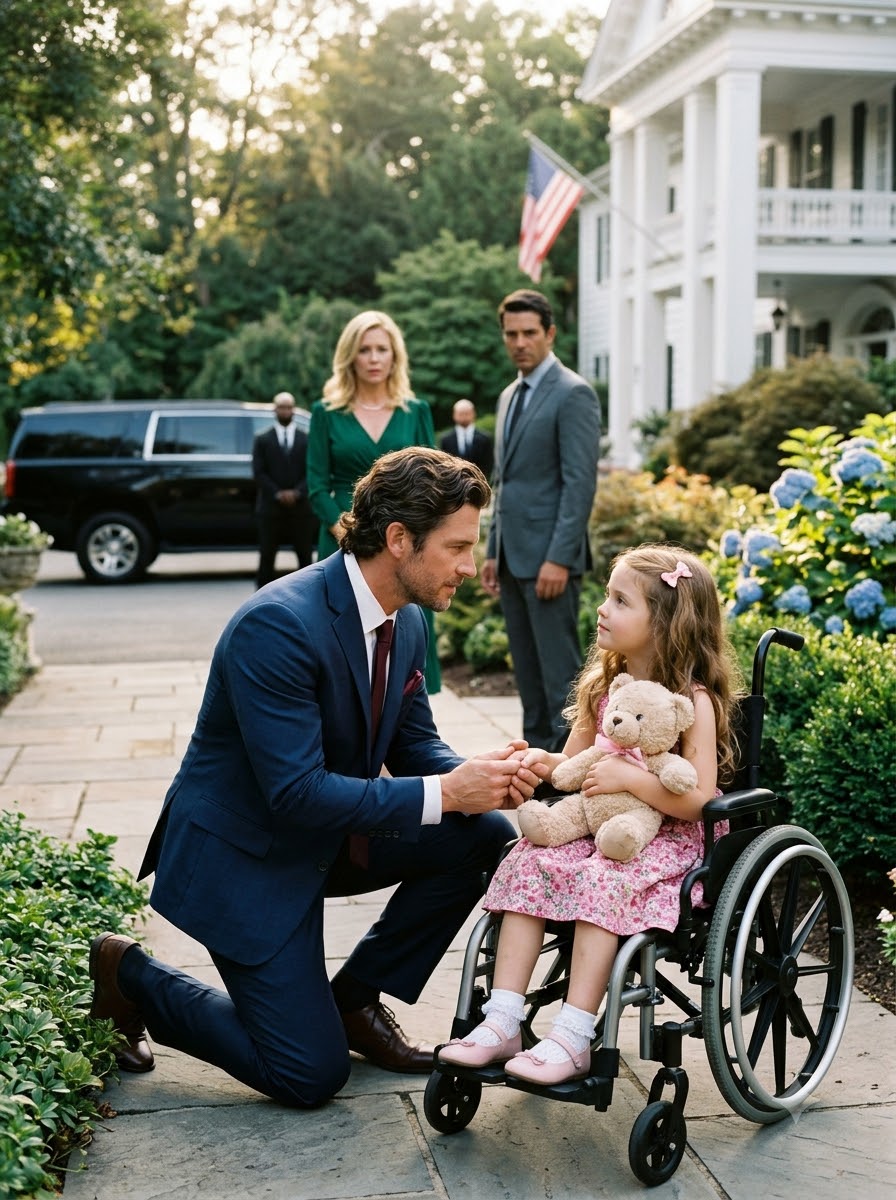
After her recovery, Amelia had struggled to establish a stable home while caring for a baby with significant medical needs.
She had eventually arranged temporary care for Sadie, hoping to reunite with her when her circumstances improved.
But Amelia’s health declined unexpectedly.
She passed away before she could return.
Bennett sat silently for several minutes.
The woman he had loved had spent her final months believing he had rejected both her and their child.
And he had spent seven years believing she had rejected him.
Bennett confronted Evelyn at the family estate.
She was sitting in the library when he entered.
“Did you know Amelia had my daughter?”
Evelyn looked startled.
“Bennett, I don’t understand.”
He placed copies of the documents on the table.
“I found Sadie. I found Amelia’s records. And I found your name.”
Evelyn’s face changed.
For a long moment, she said nothing.
Then she lowered her eyes.
“I thought I was protecting you.”
Bennett stared at her.
“Protecting me from what?”
“You were about to take over the company. I believed the marriage would complicate everything.”
“So you interfered in our lives?”
Her voice trembled.
“I made decisions I had no right to make.”
Bennett felt an overwhelming sadness.
“Amelia needed me. My daughter needed me. And you allowed us to believe we weren’t wanted.”
Evelyn began to cry.
But Bennett had already made his decision.
He instructed his attorney to preserve the records and examine the circumstances surrounding Amelia’s care and Sadie’s placement.
He also removed Evelyn from her position in the family foundation while the matter was reviewed.
Most importantly, he returned to Willowbrook.
He had promised Sadie that he would always come back.
And this time, he carried a truth that could change both their lives.
I was sitting at my art desk when Bennett arrived.
He looked tired, but his smile was gentle.
“Hey, sunshine.”
“You missed our drawing lesson.”
“I know. I’m sorry.”
I studied his face.
“Are you sad again?”
He pulled up a chair beside me.
“A little. But I also have something important to tell you.”
He showed me the photograph of Amelia holding a baby.
“Do you recognize this woman?”
I looked closely.
“That’s my mommy.”
Bennett nodded.
“Yes, sweetheart.”
“She used to sing to me. I don’t remember the words anymore.”
He brushed a tear from his cheek.
“She was someone I loved very much.”
I looked confused.
“You knew my mommy?”
“I did.”
He took my hand.
“Sadie, we’ve discovered something extraordinary. Your mother and I were together before you were born.”
I waited.
“And the records suggest that I may be your biological father.”
I stared at him.
“You mean you might be my daddy for real?”
“Yes, sweetheart. We’re arranging a test to confirm it.”
My eyes filled with tears.
“But you already wanted to be my daddy.”
His voice broke.
“I did. And I still do, no matter what the test says.”
I reached for him.
“Then can I call you Daddy now?”
Bennett hugged me carefully.
“I’d love that more than anything.”
Several weeks later, the DNA results confirmed what the documents had suggested.
Bennett Ashford was my biological father.
The adoption proceedings were replaced by the appropriate legal steps to recognize our parent-child relationship and establish my permanent home with him.
But to me, the most important part had happened long before the results arrived.
It happened the first morning he returned with blueberry muffins.
On the morning I moved into Bennett’s house, sunlight streamed through the enormous kitchen windows.
My new bedroom was beautiful.
There were shelves for my books, a large art desk, and enough room to move my wheelchair without bumping into furniture.
But I barely looked at any of it.
I wanted to see the kitchen.
Bennett was standing beside the stove, attempting to make pancakes.
One was shaped like a triangle.
Another looked suspiciously like a shoe.
“Daddy, what happened to those?”
He glanced at the pan.
“I believe they’re modern art.”
I burst out laughing.
“You need cooking lessons, too!”
“Apparently, I need quite a few lessons.”
He helped me position my wheelchair at the table.
Then he placed two plates between us.
For a moment, neither of us spoke.
I looked at the empty chair across from me, the sunshine on the table, and the man who had kept every promise he made.
“Daddy?”
“Yes, sweetheart?”
“Do families really eat breakfast together every day?”
He smiled.
“As often as we can.”
I reached across the table.
He took my hand.
“Can we do this tomorrow, too?”
“Tomorrow, the day after, and for as many mornings as we’re lucky enough to share.”
I looked down at my pancakes.
For six years, I had believed that being chosen meant convincing someone I was good enough.
But my father had never asked me to prove anything.
He had simply seen me sitting beneath an oak tree and decided that I mattered.
And somehow, in finding me, he had discovered the daughter he never knew he had.
I was no longer the little girl waiting for someone to come back.
I was finally home.
Sometimes, I still think about that Saturday afternoon when three families walked away from me.
I remember the lavender dress, my worn-out rabbit, and the feeling that perhaps nobody would ever want a daughter like me.
But I also remember the sound of expensive shoes crossing the grass.
I remember a stranger kneeling beside my wheelchair.
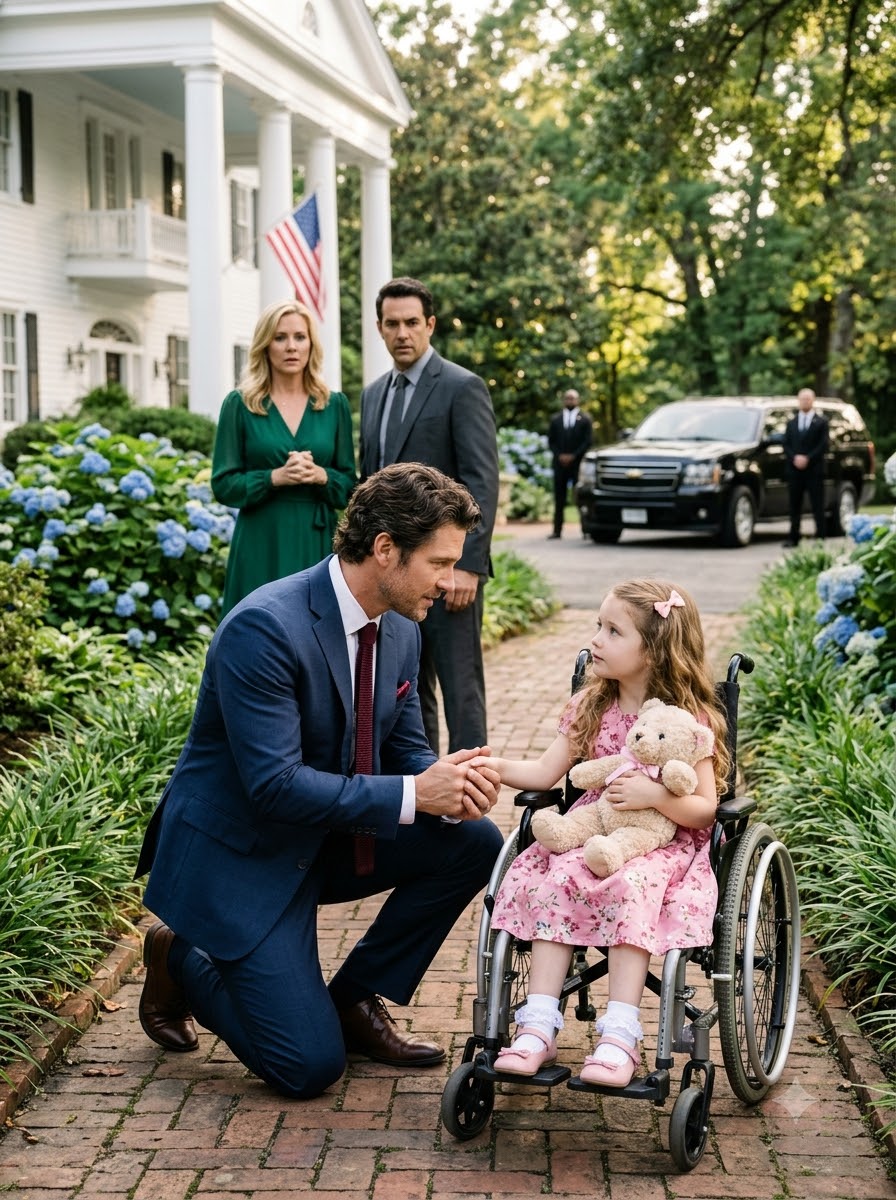
And I remember asking the question I had been afraid to ask anyone else.
“Would you want me, too?”
Now, whenever I look at my father, I know the answer.
He didn’t love me because I was easy to care for.
He didn’t love me because I had his last name.
He loved me before he knew we shared the same blood.
And that made our story even more beautiful.
Because sometimes the greatest gift in life isn’t finding someone who has everything.
It’s finding someone who makes you feel that you are everything.
