

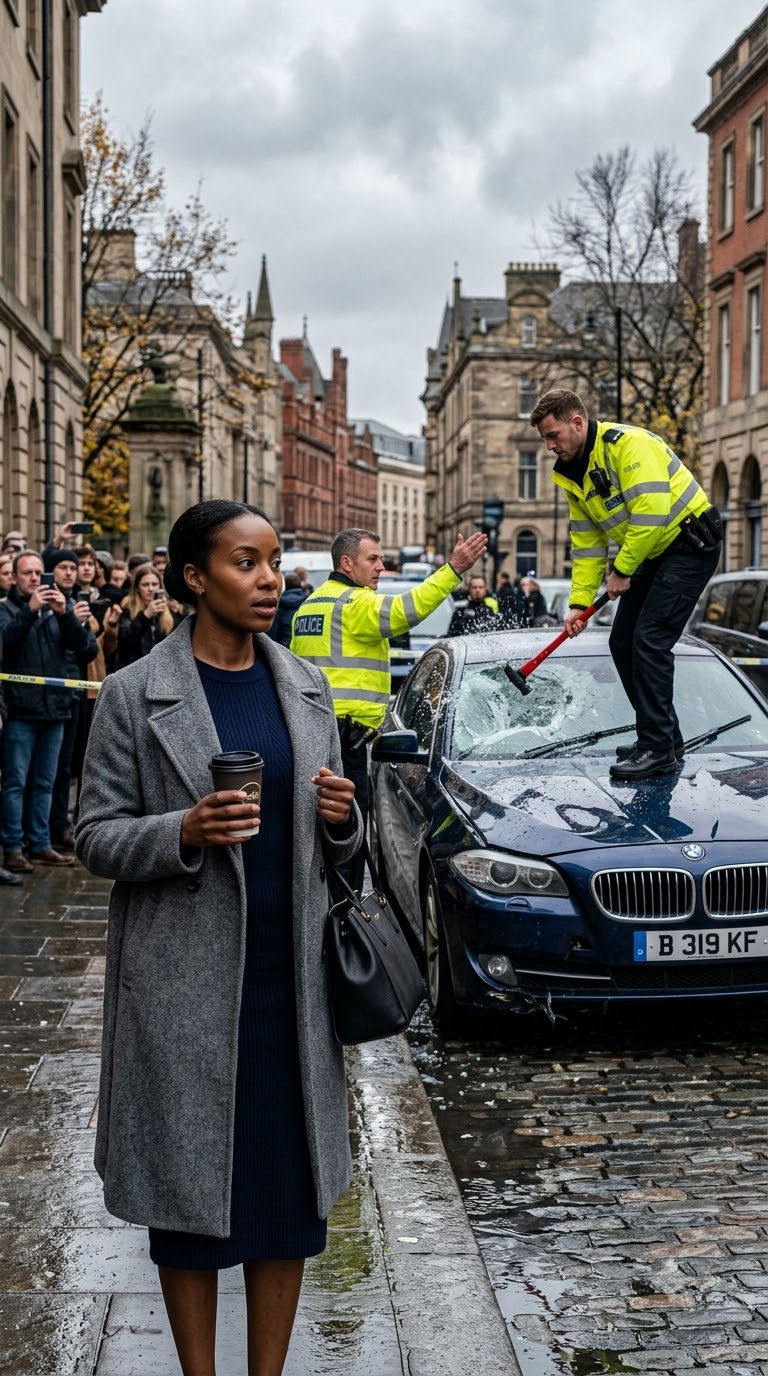
Dr. Renee Whitmore walked out of a classified national-security briefing shortly after three on a cold Washington afternoon. For nearly seven hours, she had been underground beneath federal headquarters listening to intelligence officials discuss foreign threats, cyber intrusions, and problems most Americans would never know had come dangerously close to their front doors. When the last secure folder disappeared into a locked case, Renee wanted only one thing.
Coffee.
Not another meeting. Not another call from Capitol Hill. And certainly not another aide telling her that someone important needed five minutes that would inevitably become forty. She wanted to sit inside a small Georgetown coffee shop where nobody stood when she entered and nobody called her Director.
The barista knew her simply as Renee, the woman who ordered plain black coffee and usually left too much money in the tip jar. On difficult days, that anonymity felt almost medicinal.
Her protective detail hated when she asked for twenty minutes alone. Her chief of staff hated it even more, partly because Renee had an irritating habit of treating security recommendations as suggestions whenever she decided a situation was harmless.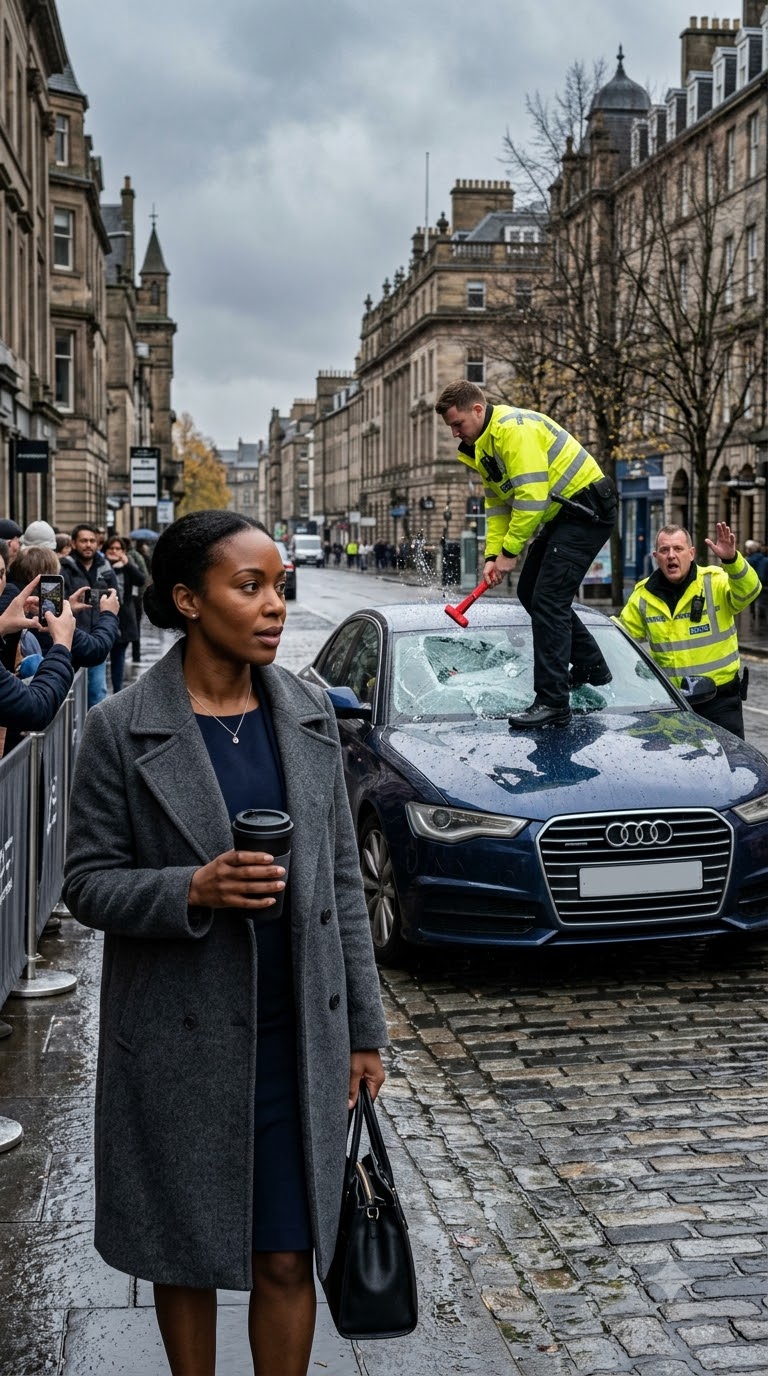
Still, after thirty years of living under rules written by other people, she occasionally insisted on buying her own coffee.
That afternoon, despite several objections, she dismissed her detail a few blocks away and drove herself.
Anyone who cared about automobiles would have noticed the vehicle immediately.
It was a dark sapphire Bentley Flying Spur, less than two years old, hand-finished and quiet enough that the engine seemed to vanish once the doors closed. Renee had purchased it with her own money after years of driving government-issued sedans and practical vehicles selected largely because nobody would notice them.
The Bentley was the first expensive thing she had ever bought simply because she wanted it.
That mattered more to her than its price.
Renee had grown up outside Detroit in a small duplex where her mother worked double shifts as a respiratory therapist and her father repaired city buses until arthritis made closing his hands difficult. Their family never went hungry, but luxury belonged to other neighborhoods, the kind her parents drove through without stopping.
When Renee bought the Bentley at fifty-four, she called her father from the dealership and listened to him laugh for almost a full minute.
“Make sure you actually drive it,” he told her. “Don’t spend all that money just to stare at it in a garage.”
She promised she would.
He died eight months later.
Since then, the car had carried more meaning than she usually admitted. It reminded her of law school classrooms where professors assumed the confident answer came from the white student beside her, early courtrooms where security staff directed her toward the clerks’ entrance, and federal meetings where strangers handed documents to her male deputy before realizing she was the person running the room.
Underestimation had followed Renee throughout most of her adult life.
Eventually, she stopped being surprised by it.
Instead, she began paying attention to what people revealed when they believed she had no power.
She legally parked along a Georgetown curb, checked the sign twice, paid through the meter app, and walked into the café wearing a charcoal coat over a navy dress. No badge showed at her waist. No government pin marked her lapel. Nothing about her appearance announced that she had just left a briefing where several classified decisions had required her final approval.
That was intentional.
For twenty minutes, Renee wanted to belong only to herself.
The bell above the café door rang softly.
A young barista named Sophie looked up and smiled.
“Renee. Usual?”
“Please.”
Renee paid cash, carried her cup to the window, and sat facing the street. For four quiet minutes, nobody asked her for anything more consequential than whether she wanted a lid.
She watched pedestrians move beneath the gray sky and thought perhaps the day might finally loosen its grip.
Then her secure phone rang.
The call came from the Bureau’s counterintelligence division. The first twelve words ended any hope of a peaceful coffee break. A foreign liaison had passed along intelligence that could not wait, a senior analyst needed authority to act, and another agency refused to move without Renee’s approval.
What should have taken three minutes lasted nearly twenty.
By the time she ended the call, the coffee beside her had gone cold.
She left it on the table and stepped outside.
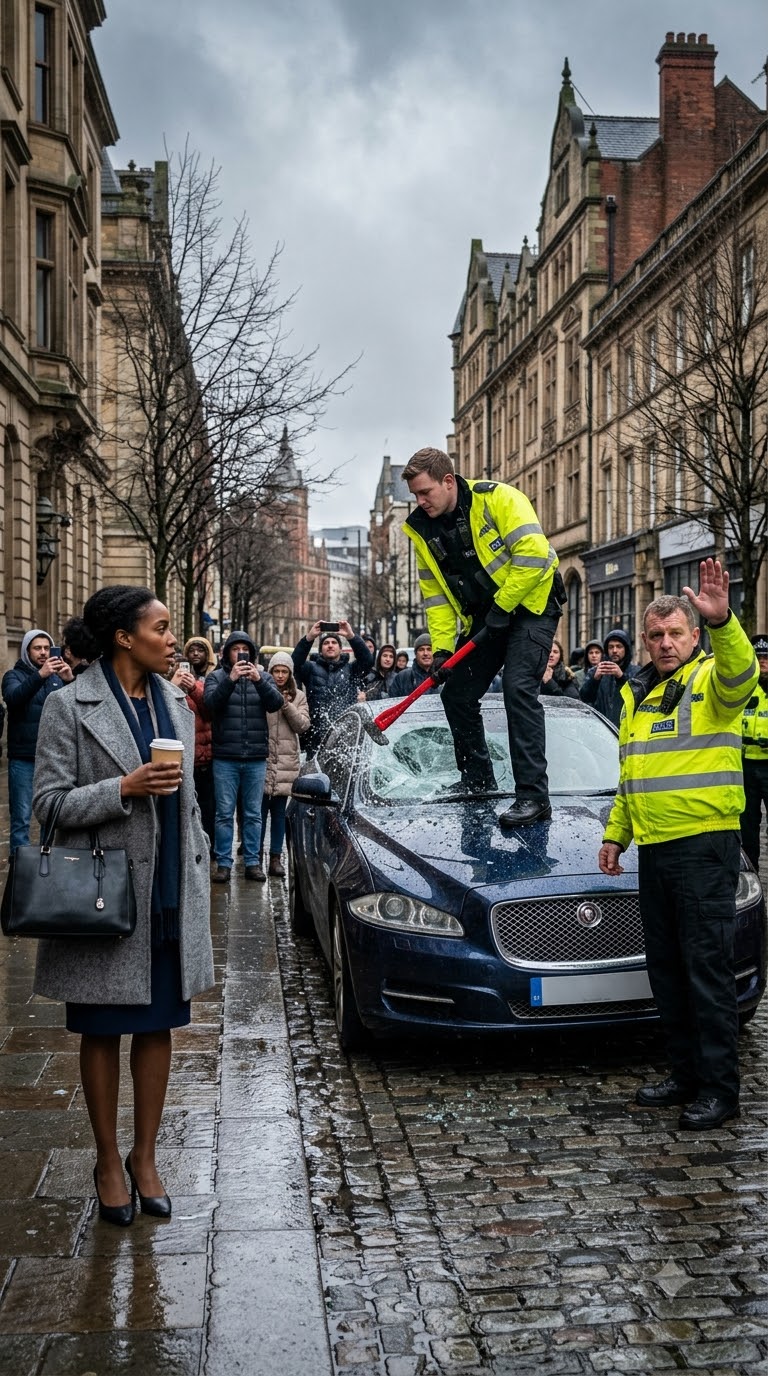
Her Bentley was halfway onto a tow truck.
Renee stopped at the curb, briefly convinced she had somehow mistaken the vehicle. Then she recognized the Virginia registration, the tiny scratch beside the left taillight, and the brown leather folder she kept visible near the center console.
Two Metropolitan Police cruisers sat behind the tow truck, their lights rotating slowly.
A handful of pedestrians had already gathered.
Nothing attracted spectators in a city faster than authority behaving as though something important was happening.
Renee crossed the street.
“That vehicle belongs to me.”
The closest officer barely turned. His nameplate read CARVER, and he appeared to be in his late thirties, heavy through the shoulders, with the impatient posture of someone who had already decided how the conversation would end.
“Stay back, ma’am.”
“I’m the registered owner.”
A younger officer beside the second cruiser gave a short laugh.
“Right.”
Renee looked toward him. His badge identified him as Officer Brandon Tate, and his expression told her exactly what kind of encounter she had entered.
“I can provide registration, identification, insurance, and proof of purchase,” Renee said. “The vehicle is legally parked.”
Carver turned toward the tow operator.
“Keep going.”
The hydraulic system groaned.
The Bentley moved.
Renee watched the front wheels rise another inch.
“Stop the tow.”
Nobody stopped.
Her voice became sharper without becoming louder.
“Stop. The. Tow.”
Several people nearby raised their phones.
That slightly changed Carver’s expression. He glanced toward the growing crowd and straightened his shoulders, as though public attention meant he had to perform rather than reconsider.
Renee recognized the move immediately.
“What exactly is the reason for impound?” she asked.
“We received information linking the vehicle to a theft investigation.”
“What information?”
“That doesn’t concern you.”
“It concerns the registered owner.”
Carver smiled faintly.
“We’ll determine who the registered owner is.”
Renee stared at him.
“I just told you.”
“You told me a lot of things.”
The younger officer laughed again.
Renee turned toward him.
“What is your name?”
“Tate.”
“Badge number?”
He tapped the metal on his chest.
“Right there.”
“State it for the record.”
His smile widened.
“You recording us?”
“Not yet.”
For the first time, he looked unsettled.
A third officer crossed over from the second cruiser.
Lieutenant Gregory Ames was in his late forties, square-faced and close-cropped, carrying the practiced confidence of a supervisor accustomed to having the final word. He looked at the Bentley first, then Renee, then the crowd.
His attention stayed on the car longer than it stayed on her.
“What’s happening?”
Renee answered before Carver could.
“Your officers are towing my vehicle without verifying ownership.”
Ames looked at Carver.
“Vehicle matches the Maryland luxury-theft bulletin.”
Renee turned toward the lieutenant.
“What model is listed in the bulletin?”
Ames paused.
“Luxury sedan.”
“That isn’t a model.”
His jaw tightened.
“What color?”
“Ma’am—”
“What year?”
“We know how to conduct an investigation.”
“Then run the plate.”
No answer.
“Run the VIN.”
Still nothing.
Renee studied his face.
“You haven’t done either.”
Ames moved closer.
“You need to stop interfering.”
“I am asking you to verify facts before taking my property.”
“You’re obstructing an active recovery.”
“No.”
She held his gaze.
“I am challenging whether there is a lawful recovery.”
The people around them grew quieter.
A delivery worker stood beside a stack of boxes without moving. An elderly couple stopped walking. A man in a tan wool coat lowered his newspaper completely and began recording.
Renee knew this kind of silence.
It was what people created when something felt wrong but nobody yet knew how dangerous speaking up might become.
She carefully reached toward her handbag.
“I am removing my wallet.”
Carver’s hand immediately moved toward his belt.
“Keep your hands where I can see them.”
Renee froze.
Several phones captured the moment.
“My hands are visible.”
“Then keep them there.”
“You asked me to establish ownership.”
“I didn’t ask you for anything.”
Renee let the sentence hang.
Then she looked toward Ames.
“Lieutenant, I have offered identification and vehicle documents.”
He shrugged.
“We’ll sort it out at impound.”
“No.”
The tow operator looked between them.
“Lieutenant, she says she’s got paperwork.”
Ames didn’t even look at him.
“Continue.”
The cable tightened.
The Bentley shifted sideways instead of straight.
Renee immediately saw the angle.
“Your front strap is misaligned.”
The driver stopped.
Ames gestured.
“Keep moving.”
The winch pulled again.
A sharp crack tore through the street.
The front bumper separated along the right side and dropped several inches, scraping against the pavement.
People gasped.
The tow operator muttered under his breath.
Renee looked at the damage.
For a moment, her face revealed nothing.
Then one hand tightened around the strap of her handbag.
The car was expensive.
That much was obvious.
But the money was not what hurt.
She had purchased it after years of being told, directly and indirectly, that certain rooms, titles, and symbols of success naturally belonged to other people. Nobody had given it to her. Nobody had leased it in her name. It wasn’t borrowed from a husband or assigned by an agency.
It was hers.
And these men had decided that fact was less believable than their assumption before anyone had bothered entering six characters into a computer.
Ames looked at the damaged bumper.
“Things happen during towing.”
Renee stared at him.
“That vehicle cost more than some houses.”
Tate laughed.
“Then maybe whoever owns it should’ve parked better.”
A woman in the crowd said, “She said it’s hers.”
Tate looked toward her.
“Stay out of this.”
The woman lowered her phone slightly.
Renee turned back toward Ames.
“Run the plate.”
His expression hardened.
“Enough.”
“No. Run it.”
“You’re close to being detained.”
“For requesting verification?”
“For interfering.”
“I have not touched anyone or obstructed the truck.”
Ames stepped closer.
“You’re making this harder than it needs to be.”
Renee almost smiled.
She had heard that sentence before.
Different courtroom.
Different decade.
Same purpose.
Make compliance sound like innocence.
Make objection sound like guilt.
Behind Ames, Officer Dana Price stood beside the second cruiser. She was younger than the others and had remained silent since Renee arrived. Her eyes moved repeatedly toward the Bentley’s plate and then toward the computer terminal inside the patrol car.
Renee noticed.
Price looked uneasy.
Not hostile.
Uneasy.
That distinction mattered.
“Officer Price,” Renee said.
The woman looked up.
“Would you please run the plate?”
Carver immediately turned.
“She doesn’t take orders from you.”
“I asked.”
Ames looked at Price.
“Stay where you are.”
Price hesitated.
“Yes, Lieutenant.”
Renee absorbed that too.
The tow operator lowered the ramp slightly and adjusted one hook.
The Bentley’s front rim struck the curb.
A clean metallic snap followed.
One expensive wheel cracked near the edge.
The man in the tan coat whispered, “Jesus.”
Renee finally took out her phone.
Ames pointed.
“Put that away.”
“No.”
“You don’t have permission to record an active investigation.”
“I don’t require your permission to use my phone on a public sidewalk.”
Tate laughed.
“There she goes again.”
Renee looked toward him.
“Officer Tate, you have repeatedly mocked a citizen attempting to establish lawful ownership.”
He rolled his eyes.
“Fancy words don’t make you right.”
“No.”
Renee looked toward the damaged Bentley.
“Facts do.”
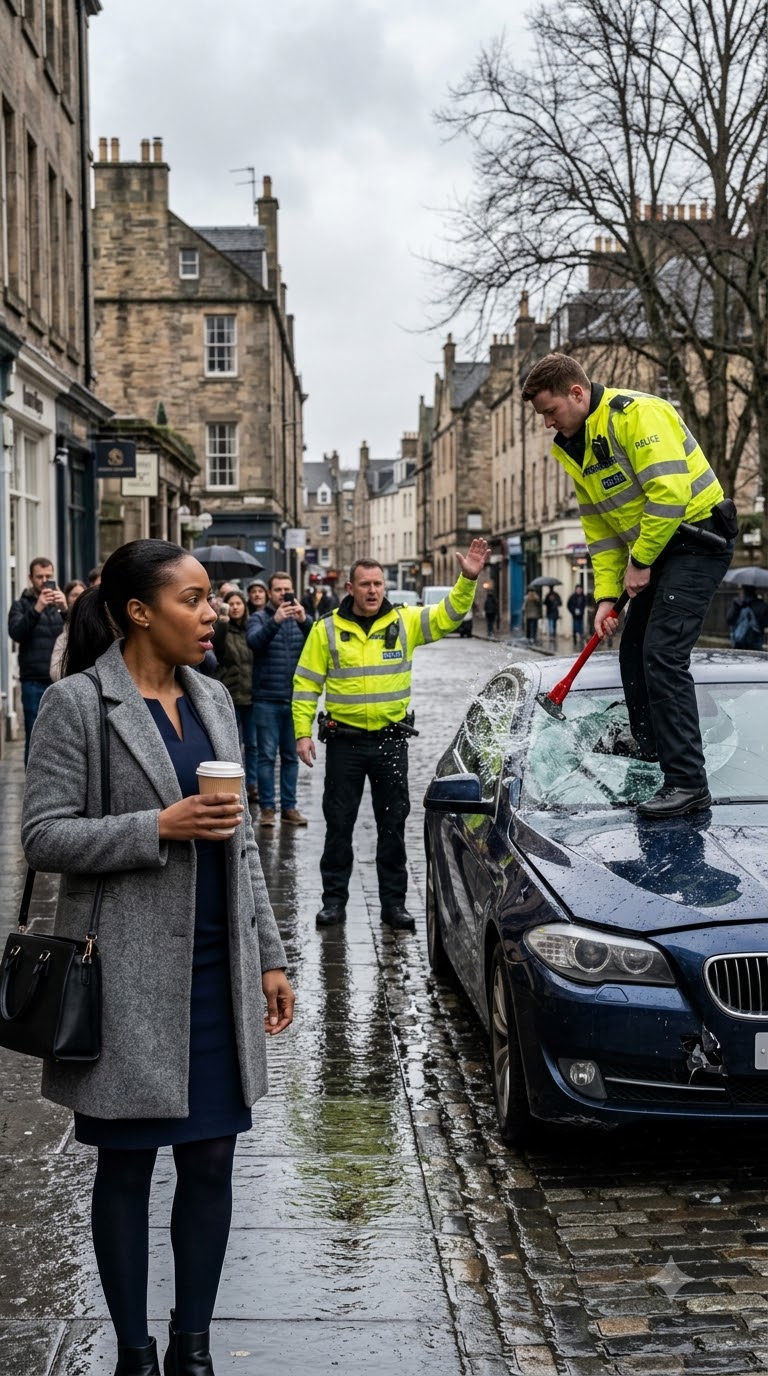
Ames stepped toward the driver’s door.
“Search the vehicle.”
The tow operator stopped.
“We’re searching?”
“Yes.”
The driver looked uncertainly at the lieutenant.
“Lieutenant, do you want me to open it?”
“Yes.”
Renee’s expression changed.
Not fear.
Something colder.
“Under what authority?”
Ames ignored the question and reached toward the driver’s door.
Renee stepped sideways, keeping her distance.
“I am formally objecting to the search.”
“You can explain your objections at the station.”
“I have not consented.”
Ames looked toward Carver.
“Open it.”
Carver moved toward the Bentley.
Then Dana Price spoke.
“Lieutenant.”
Everyone turned.
Price had finally stepped away from the cruiser.
“The plate is registered.”
Ames stared at her.
“To who?”
Price looked directly at Renee.
“Dr. Renee Whitmore.”
The crowd went silent.
Tate’s smile disappeared.
Ames held out his hand.
“Show me.”
Price walked toward him with the computer printout.
Ames read it.
Then he looked at Renee.
The expression on his face had changed, but not enough.
“Names can be transferred.”
Renee reached into her bag again.
This time, she slowly removed her wallet and held it where everyone could see it.
Inside was her driver’s license.
Beside it was a federal identification card.
Ames glanced at both.
Then his eyes moved to the Bentley.
Then back to Renee.
“Ma’am, we still have to verify the vehicle.”
“You have the registration.”
“And identification.”
“And the VIN is visible.”
No one answered.
The man in the tan coat stepped closer.
“Why haven’t you just run the VIN?”
Ames looked at him.
“This is police business.”
The man lifted his phone.
“Looks like everybody’s business now.”
Several people in the crowd murmured.
Then Renee’s secure phone vibrated again.
She looked at the screen.
Her chief of staff.
Three missed calls.
Then another incoming call.
This time, the caller identification displayed a number known only to a very small circle of senior federal officials.
Renee answered.
“Whitmore.”
A familiar voice spoke rapidly.
“General, we’ve been trying to reach you. Where are you?”
Renee looked around at the police cruisers, the tow truck, and the damaged Bentley.
“Georgetown.”
“Are you safe?”
She paused.
“I am currently in a dispute involving my vehicle.”
There was a brief silence on the other end.
Then:
“Send your location.”
Renee did.
Less than two minutes later, the sound began.
At first, it was distant.
Low engines.
Then another.
Then several more.
The crowd turned toward the intersection.
A black SUV appeared.
Behind it came another.
Then another.
A sedan followed, then a dark government vehicle, then another SUV.
The vehicles moved together with unmistakable coordination.
A federal convoy.
The lead SUV stopped at the curb.
Two agents stepped out.
Then four more.
The street seemed to change temperature.
Ames stared.
Carver took one step backward.
Tate lowered his phone.
The senior agent approached Renee.
“General Whitmore.”
She nodded.
“Agent.”
His eyes moved to the Bentley.
Then to the tow truck.
Then to the damaged bumper.
His expression hardened.
“Who authorized this?”
Nobody answered.
Ames finally stepped forward.
“Lieutenant Gregory Ames, Metropolitan Police.”
The agent looked at him.
“Are you the supervising officer?”
“Yes.”
“Then I need you to explain why a federally cleared senior official’s privately owned vehicle was being towed after she provided identification and registration.”
Ames opened his mouth.
Nothing came out.
The agent turned toward Price.
“Officer.”
Price straightened.
“Yes, sir.”
“Did you run the plate?”
“Yes.”
“And?”
“It belongs to Dr. Renee Whitmore.”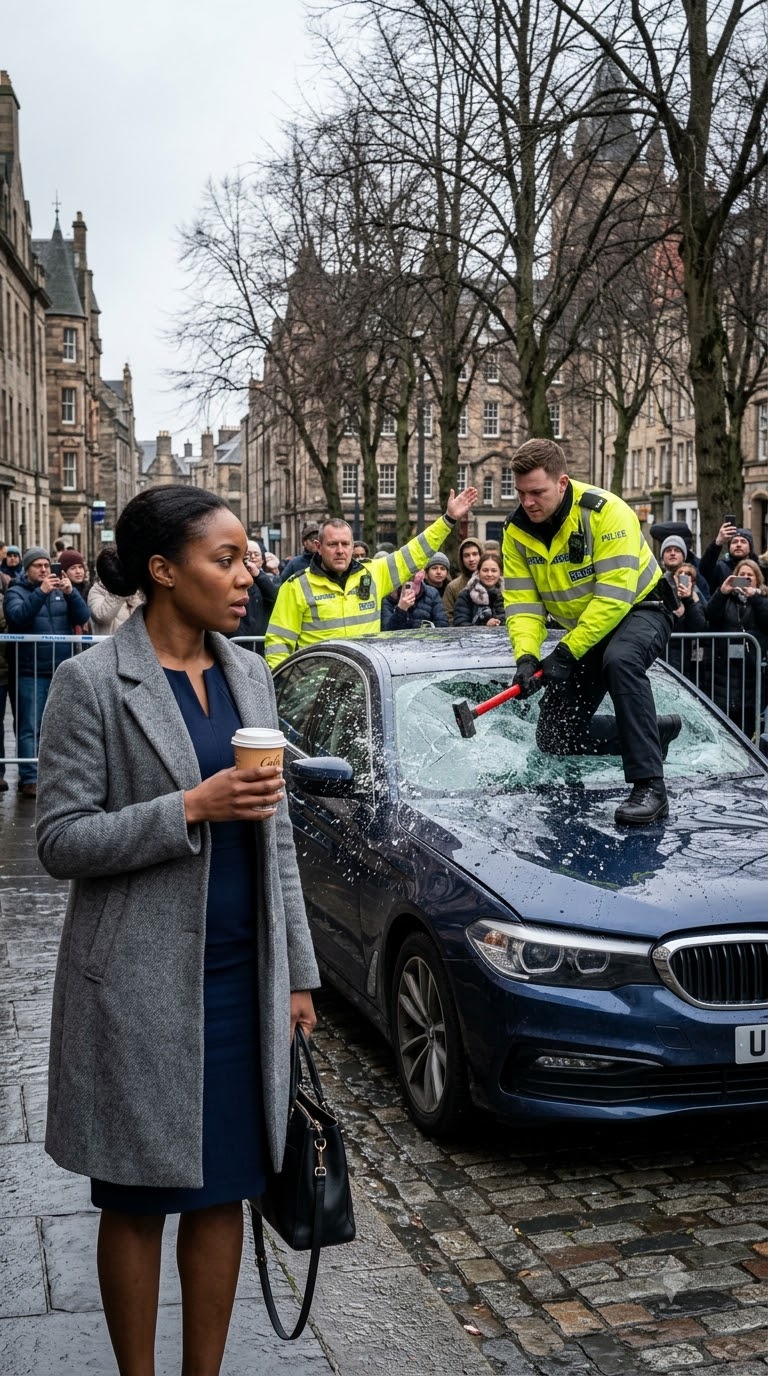
The agent nodded once.
“Thank you.”
Tate looked toward Ames.
Ames said nothing.
The senior agent then looked at the tow operator.
“Stop all movement of that vehicle.”
The driver immediately released the controls.
The Bentley settled onto the damaged ramp.
For several seconds, nobody spoke.
Then Renee noticed something on the pavement.
A small metal tag had fallen from beneath the tow truck.
She recognized it.
It was the identification tag attached to the recovery order.
She pointed toward it.
“Agent, that may be relevant.”
One of the federal agents picked it up.
He read the number.
Then looked at Ames.
“Where did this recovery order originate?”
Ames’s face tightened.
“I don’t know.”
The agent turned toward Carver.
“Who gave you the order?”
Carver looked at Ames.
Ames looked away.
The federal agent said nothing.
He simply handed the tag to another agent.
“Photograph it.”
The camera came out.
The street had become completely quiet.
The people who had been watching now understood that this was no longer simply an argument over a Bentley.
It was an investigation.
Ames finally spoke.
“We received information that the vehicle was connected to a theft case.”
The agent nodded.
“Then show me the case number.”
Ames hesitated.
“It’s in the system.”
“Show me.”
Another pause.
“It may take time.”
The agent looked at his watch.
“You had enough time to damage the vehicle.”
Nobody said anything.
The agent turned to Renee.
“General, we’re taking custody of the scene.”
Renee nodded.
“Understood.”
He then looked toward the crowd.
“Everyone who recorded this incident should preserve the original footage.”
Several people nodded immediately.
The woman who had spoken earlier raised her phone.
“I have the whole thing.”
“So do I,” said the man in the tan coat.
The delivery worker nodded.
“Me too.”
Tate looked down.
Renee watched him for a moment.
Then he finally met her eyes.
His earlier confidence was gone.
“I didn’t know who you were,” he said quietly.
Renee answered calmly.
“You didn’t need to know.”
He swallowed.
“You only needed to verify the facts.”
He looked away.
The federal team spent the next hour documenting everything.
The tow straps.
The damaged bumper.
The cracked wheel.
The police vehicles.
The recovery order.
The registration.
The body-camera footage.
The civilian recordings.
Every detail became part of the record.
The Bentley was eventually lowered from the truck.
It sat crooked at the curb, visibly damaged but still unmistakably hers.
Renee walked around it slowly.
She placed one hand on the roof.
For a moment, she thought about her father standing inside that dealership years earlier, laughing over the phone.
“Make sure you actually drive it,” he had told her.
She had kept that promise.
The next morning, an independent review began.
The original theft bulletin did exist, but the description did not match Renee’s vehicle in several important respects. More importantly, the recovery order presented by the tow company had been issued using information that should have been verified before enforcement.
The officers’ decision to proceed despite Renee providing documentation became a separate matter for review.
The civilian recordings proved crucial.
So did Officer Price’s testimony.
She reported exactly what she had seen.
The department opened an internal investigation into Ames, Carver, and Tate. The towing company suspended the driver involved while the incident was reviewed.
Renee did not ask for special treatment.
She asked for the same thing she had asked for on the street.
Facts.
Months later, the Bentley returned from repairs.
The bumper had been replaced.
The wheel had been repaired.
The scratches were gone.
But Renee kept one photograph from that afternoon.
Not of the damaged car.
Of the crowd.
People standing on a Georgetown sidewalk, phones raised, refusing to let what happened disappear into someone else’s version of events.
She returned to the coffee shop several weeks later.
The same bell rang above the door.
Sophie looked up.
“Renee. Usual?”
Renee smiled.
“Please.”
She sat by the same window.
This time, her protective detail waited outside.
Renee didn’t mind.
Sophie brought the coffee over.
“On the house today.”
Renee looked at her.
“You don’t have to do that.”
“I know.”
Renee smiled.
“Thank you.”
She took a sip.
It was still plain black.
Still hot.
Still exactly what she had wanted that afternoon.
Outside, Georgetown moved as it always did.
Cars passed.
Pedestrians hurried beneath the gray sky.
Nobody looking through the window would have known that the woman drinking coffee had spent the morning in classified meetings, had watched strangers question whether her own car belonged to her, or had seen a federal convoy shut down an entire street.
Renee preferred it that way.
She had spent most of her life being underestimated.
But she had learned something more valuable than how to prove people wrong.
She had learned that she didn’t have to announce who she was.
The truth could stand on its own.
And when someone refused to believe it, the answer was never to become louder.
It was to document everything.
Verify the facts.
And let the record speak.
